Santiago de Compostela Vs Porto
Santiago de Compostela, the pilgrim cathedral city at the end of the Camino de Santiago in Galicia, and Porto, the port wine city on Portugal's Douro River, sit close enough to visit both on one trip. Here is how the two honestly compare, using only verified facts for the Santiago side.
Short answer
Pick Santiago de Compostela for the Cathedral, the pilgrim arrival experience and the Galician countryside around it. Pick Porto for port wine cellars, a bigger riverside city buzz and lower-key charm. Better still, they are direct neighbours: travel between them and you get both.
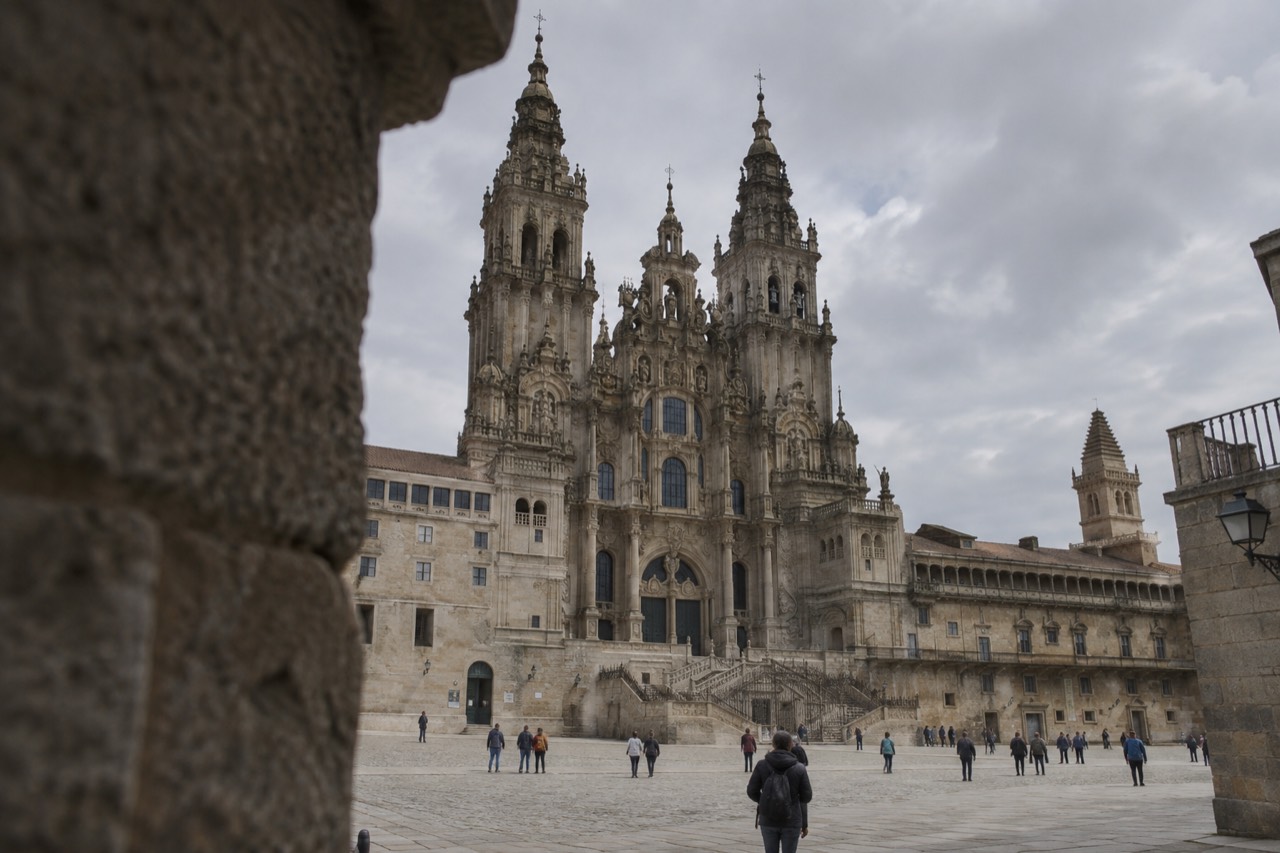
Santiago de Compostela in Galicia, Spain, is a small granite city built around one enormous idea: a medieval cathedral said to hold the remains of the apostle St. James, which for over a thousand years has pulled pilgrims in along the Camino de Santiago from every direction in Europe. The city's Old Town was inscribed on the UNESCO World Heritage list in 1985, and the Oficina del Peregrino's own figures record 530,987 Compostela certificates issued in 2025, the highest annual total on record. Porto, two hours' drive down the Atlantic coast across the Portuguese border, works on a different scale entirely: a large working port city on the Douro River, famous for the port wine lodges on its south bank and for the pleasure of drinking that wine while looking back at the city from across the water. The two are natural rivals for the same traveller's attention and, more usefully, natural companions on the same trip.
For Porto, no equivalent primary-source verification was done, so you will find no invented Porto population count, price or ranking anywhere in this article.
Which City Should You Visit, Santiago de Compostela Or Porto?
Visit Santiago de Compostela if the Camino, the Cathedral and a compact walkable old town are the point of your trip; visit Porto if you want a big, lively city with famous wine cellars, riverside drinking and a longer city-break rhythm. Santiago de Compostela is small and intensely focused on one square and one church, with the whole old town walkable in a morning. Porto spreads along a river with a much larger urban life around it, and the two experiences honestly feel like different categories of travel.
The honest framing is that these are not really competitors. Santiago de Compostela is a destination people arrive at on foot after weeks of walking, or fly into for two days of cathedral, tapas and granite streets. Porto is a city break in the classic sense: you stay longer, you move around more, you eat and drink your way through neighbourhoods.
The comparison question usually comes from one of three travellers. The first is deciding where to spend a short city break in the northwest corner of the Iberian peninsula. The second has already walked the Camino into Santiago de Compostela and is wondering whether to extend south into Portugal instead of heading home. The third is planning a road trip through Galicia and northern Portugal and wants to know how to split the time. All three get a straight answer in the sections below.
How Far Apart Are Santiago de Compostela And Porto, And How Do You Travel Between Them?
The two cities sit close enough that travelling between them is a normal day's journey rather than a big transfer, and the one fact to know about the train is that there is no direct rail line: you change at Vigo, roughly an hour from Santiago de Compostela by regional train, and continue south into Portugal from there. By car the route is a straightforward drive down the Atlantic coast, and both cities have their own airports, Santiago de Compostela's being about 12km from the old town.
The verified rail picture on the Santiago side comes from the route structure itself. Santiago de Compostela has direct high-speed services to Madrid taking roughly three to four hours, a short direct hop to A Coruna, and direct regional services to Vigo of roughly an hour. There is no direct rail line to Porto: the standard approach is to travel to Vigo and change there, because the cross-border connection into Portugal runs from that end of the Galician coast.
For the flight option, Santiago de Compostela airport is covered in detail in the Santiago de Compostela Airport Guide, including the current bus line and the fare change that is expected as the airport bus contract moves to a new operator. Planning a combined trip around the two airports works well: fly into one city and out of the other, and travel overland in one direction in between.
| Travel question | What is verified | What to plan around |
|---|---|---|
| Direct train Santiago to Porto | No direct line exists | Change at Vigo, roughly 1h from Santiago by rail |
| Train Santiago to Vigo | Direct regional services, roughly 1 hour | The connection point for Portugal-bound travel |
| Train Santiago to Madrid | Direct high-speed, roughly 3-4 hours | Useful if Madrid opens or closes your trip |
| Distance airport to Santiago old town | About 12km | A 20-30 minute drive or an urban bus ride |
| Driving the coast road | No verified journey figure | Count a full travel day, not an afternoon |
The Porto To Santiago de Compostela guide covers the reverse direction in full, including the practicalities of starting a Camino route from Porto itself. It pairs well with Camino de Santiago Routes if the border crossing is the start of a walk rather than a transfer.
Santiago de Compostela Vs Porto: What Is Each City Actually Famous For?
Santiago de Compostela is famous for being the end of the Camino de Santiago, for a Cathedral whose crypt is said to hold the tomb of St. James, and for a granite Old Town that UNESCO inscribed in 1985. Porto is famous for port wine, for the wine lodges on the south bank of the Douro, and for a riverside cityscape that most travellers know from photographs of the river and its bridges. The two fame stories barely overlap, which is exactly why combining them works so well.
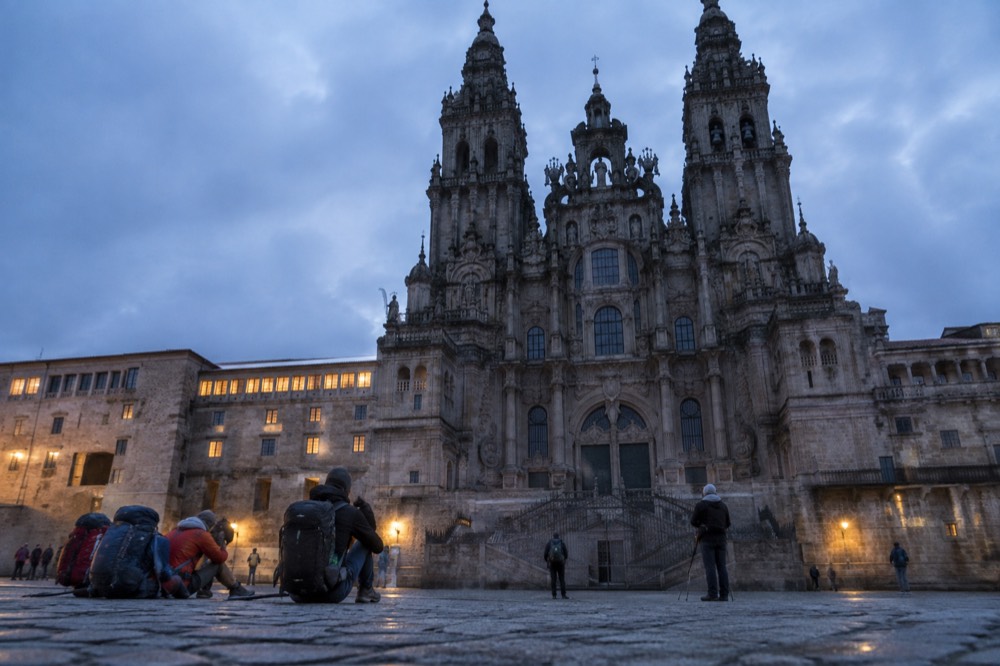
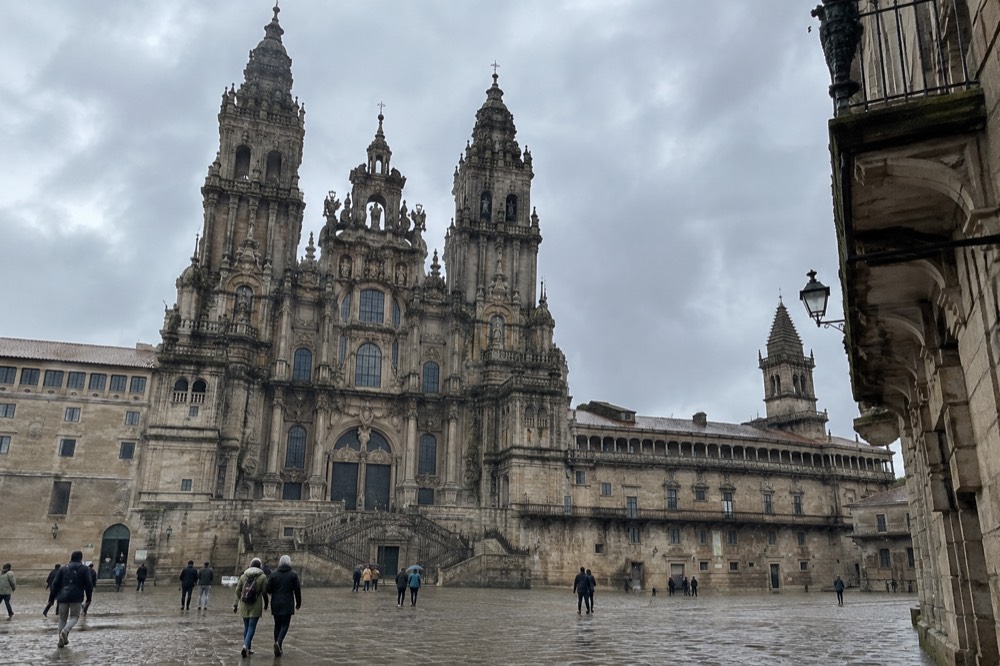
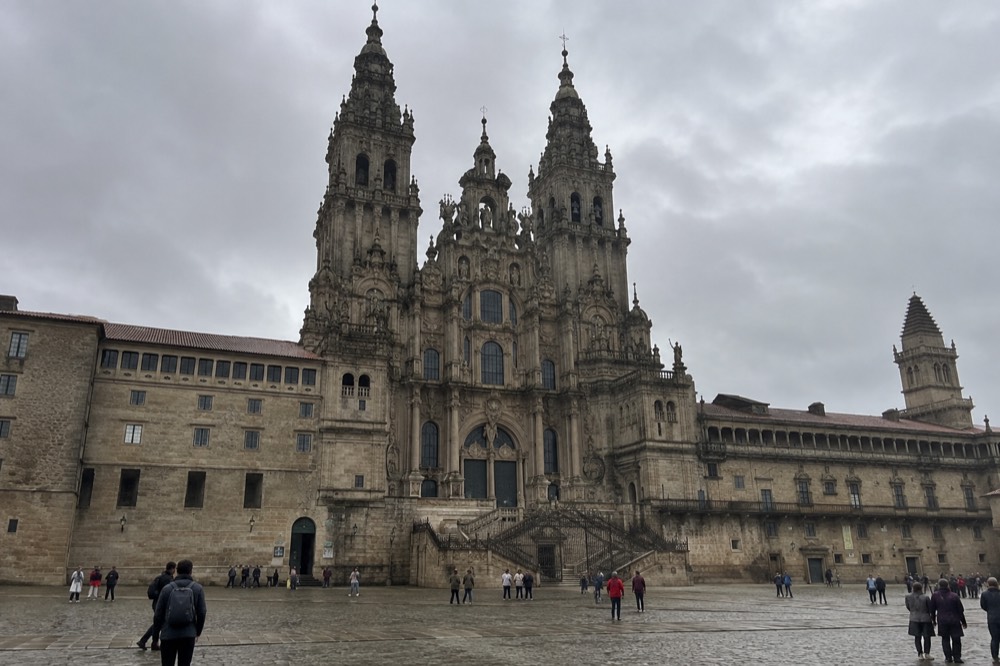
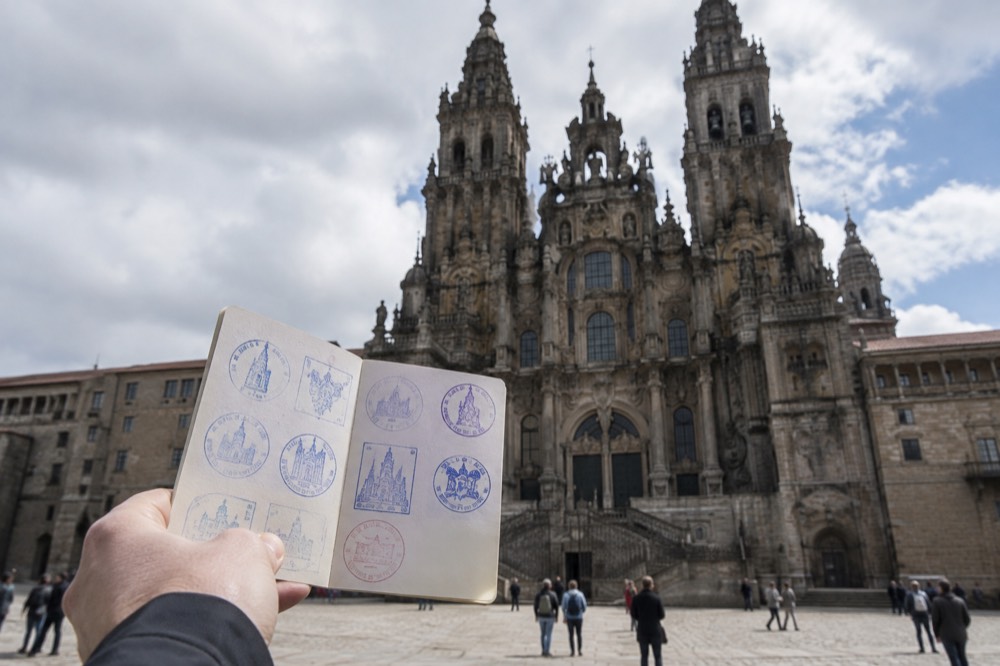
The Santiago fame story is unusually concentrated. Almost everything the city is known for sits within a few streets of Praza do Obradoiro: the Cathedral itself, the Hostal dos Reis Catolicos, the old monastery buildings, the Praza da Quintana with the Holy Door, and the short lanes of the old town dropping away toward the market. The pilgrim infrastructure that has grown around the Cathedral, from the Oficina del Peregrino at Rua das Carretas 33 to the pilgrim masses, defines the city's rhythm in a way few European cities still experience.
Porto's fame is commercial and gustatory rather than devotional. Port wine has been shipped down the Douro and matured in the city's lodges for centuries, and tasting it in its home cellars is the signature Porto activity the way the pilgrim mass is the signature Santiago one. The What Is Santiago de Compostela Famous For question deserves its own treatment, but the short version is that Santiago de Compostela's fame is a place people arrive at, while Porto's fame is a thing people go and consume.
| Dimension | Santiago de Compostela | Porto |
|---|---|---|
| Signature experience | Pilgrim mass at the Cathedral's High Altar | Port wine tasting in the riverside lodges |
| World Heritage status | Old Town inscribed 1985; Camino routes inscribed 1993 | Historic riverside centre, though this guide has not verified its listing year |
| Scale | Compact, one dominant square and church | Large port city spread along the Douro |
| Purpose most travellers give it | Camino finish or two-day cathedral visit | City break, food and wine |
| Best energy | Early morning pilgrims arriving | Evening riverside life |
Which Old Town Is Better For Wandering?
Santiago de Compostela's old town wins on density and atmosphere: nearly everything worth seeing sits within a few minutes' walk of Praza do Obradoiro, the granite is uniformly pale and weathered, and the whole thing can be walked end to end in a morning. Porto's riverside quarter offers a bigger, more varied urban landscape with the river as a constant, but its famous slopes mean genuine climbing. The honest verdict is Santiago for a concentrated wander, Porto for a full day of varied walking.
Santiago de Compostela rewards the slow walker. The old town's plan has barely changed in centuries, so the lanes between the Cathedral and the Mercado de Abastos still deliver the small surprises, a hidden cloister, an arch opening onto a view, that big cities have engineered away. An official guide can compress the whole story into a couple of hours, which matters because the stones here carry a lot of story.
The Santiago Cathedral side of the visit deserves its own planning. The basilica's interior is free to enter, generally from around 7:00am to 9:00pm, and the rooftop tour, the Cubiertas and Torre de la Carraca visit, is bookable online through the Cathedral's own ticketing at EUR15 general or EUR12 reduced, a guided hour involving about 140 steps and views from roughly 72 metres up. The Santiago Cathedral Tickets And Opening Hours guide carries the full breakdown, and the Cathedral Museum's ticket range runs EUR9-23 depending on type.
Santiago de Compostela Vs Porto For Food And Wine
Santiago de Compostela is the better city for Galician food: pulpo a la gallega, Padron peppers, empanada, Tarta de Santiago, and Albarino wine from the Rias Baixas, all served in a small city where the tapas lanes around Rua do Franco are five minutes from the Cathedral. Porto is the better city for wine specifically, because port is made and matured there, and for the richer, heavier cooking of northern Portugal. Each city eats differently and both eat well.
The Santiago food story is a market story as much as a restaurant story. The Mercado de Abastos supplies the city's kitchens, and the tapas bars clustered in the old town's lanes run off the same produce, so what is on the stalls in the morning tends to be on the plates at night. The dedicated Where To Eat In Santiago de Compostela guide covers the bars worth queuing for, and the Tapas Bars In Santiago de Compostela page maps the lanes.
| Galician classic | What it is | Where the Santiago guide covers it |
|---|---|---|
| Pulpo a la gallega | Boiled octopus with olive oil and paprika, served on a wooden plate | /guides/pulpo-a-la-gallega/ |
| Padron peppers | Small green peppers, most mild, famously occasionally hot | /guides/padron-peppers/ |
| Tarta de Santiago | Almond cake with a powdered sugar cross of St. James | /guides/tarta-de-santiago/ |
| Albarino | Crisp white wine from the Rias Baixas, Galicia's flagship grape | /guides/albarino-wine/ |
Porto's food identity is centred on the wine lodges and on the richer dishes of northern Portugal, and the honest way to split a combined trip is to drink the port where it is made and eat the octopus in Galicia where it comes off the Atlantic boats. The Santiago side can also be guided: a tapas tour of the city's bars runs from $52 per person with a 4.7 rating from 243 reviews on the operator's live listing, and a foodie walk with drinks, tapas and live music runs from $51 per person at 4.7 from 227 reviews.
Which City Is Better As A Base For Day Trips?
Santiago de Compostela is the stronger day-trip base, because an unusually rich set of coastlines sits within a single day's reach: Fisterra and Muxia at the end of the Costa da Morte, the Rias Baixas wine country and mussel-boat estuaries, and the Cies Islands off Vigo. Porto's classic excursions run inland along the Douro valley. Both cities deliver real trips, but the variety packed around Santiago, ending-of-the-world cliffs, wine valleys and island beaches, is hard to match anywhere on this coast.
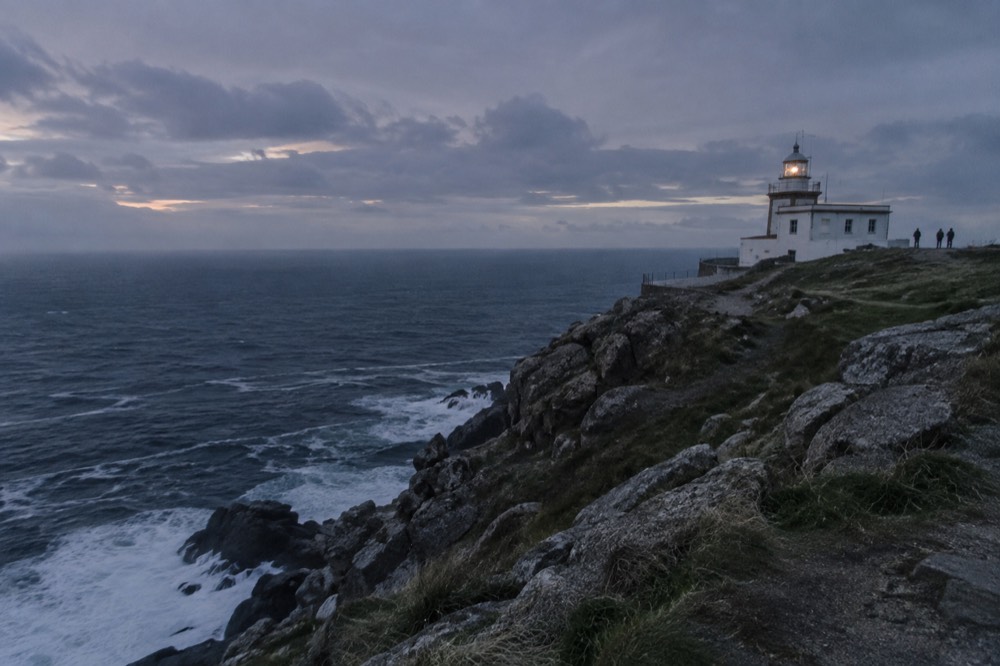
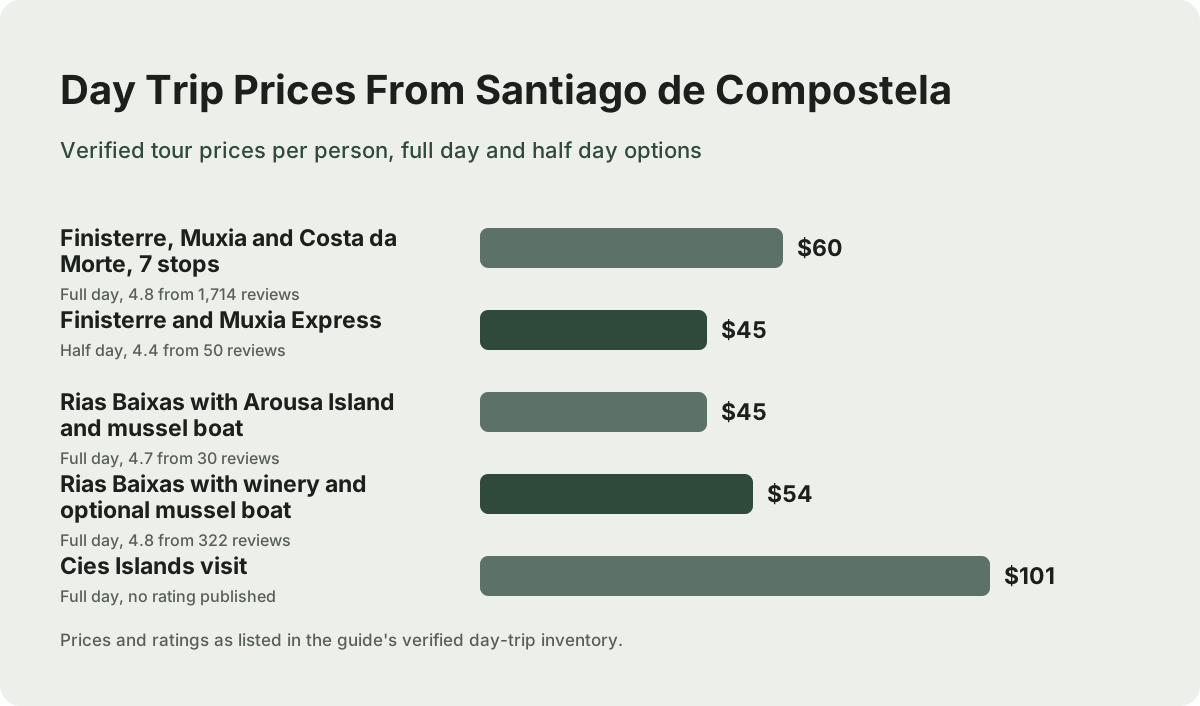
The verified day-trip inventory from Santiago is genuinely broad. The end-of-the-world trip to Fisterra, Muxia and the Costa da Morte can be done as a full day from $60 per person with a 4.8 rating from 1,714 reviews, or as a half-day express from $45. The Rias Baixas can be done with a winery and an optional mussel boat from $54 per person, or with Arousa island, Combarro and the mussel boat from $45. The Cies Islands are a full-day visit from $101. Dedicated pages cover Finisterre, Muxia, the Rias Baixas and the Cies Islands in depth.
| Day trip from Santiago | Type | From price | Rating |
|---|---|---|---|
| Finisterre, Muxia and Costa da Morte, 7 stops | Full day | $60 per person | 4.8 from 1,714 reviews |
| Finisterre and Muxia Express | Half day | $45 per person | 4.4 from 50 reviews |
| Rias Baixas with Arousa Island, Combarro and mussel boat | Full day | $45 per person | 4.7 from 30 reviews |
| Rias Baixas with winery and optional mussel boat | Full day | $54 per person | 4.8 from 322 reviews |
| Cies Islands visit | Full day | $101 per person | No rating published |
Porto's signature excursion is the Douro valley, the terraced vineyards upstream where the port grapes are grown, and it is a different category of trip: river and valley scenery rather than ocean and cliffs. If your travelling instinct runs toward standing at a lighthouse where the land runs out, Galicia wins. If it runs toward vineyard terraces and river cruises, Porto's hinterland wins.
Which City Suits A Camino de Santiago Pilgrimage Better?
There is only one answer here: Santiago de Compostela is the end of the Camino de Santiago, and no amount of Porto's charm changes that. What Porto genuinely offers is a starting point, because the Portuguese Camino routes begin there and walk north into Galicia over roughly two weeks, arriving at the Cathedral in Santiago de Compostela where the pilgrimage ends and the Compostela certificate is issued. Porto is a Camino origin; Santiago de Compostela is the destination.
The certificate rules come from the Oficina del Peregrino's own FAQs, and they are strict. The Compostela requires walking at least the last 100km of a recognized route, or the last 200km by bicycle, collecting at least two stamps per day in the pilgrim's credential along the way, and it is issued in person only, at the pilgrim's office on Rua das Carretas 33 in Santiago de Compostela. The full rules, and the practicalities of the office itself, are laid out in the Compostela Certificate and Pilgrim Office guides.
The Portuguese angle is covered properly in Camino Portugues, including the choice between the coastal and central variants from Porto. For travellers with less time, Sarria To Santiago covers the classic last-100km start on the French route, which fits inside a single week.
How Do The Costs Of A Trip To Each City Compare?
On the verified Santiago de Compostela side, the core visit is remarkably cheap: Cathedral entry is free, the pilgrim mass is free, the rooftop tour is EUR15 or EUR12 reduced, the museum range runs EUR9-23, and Santiago de Compostela has charged a municipal tourist tax since 1 October 2025 (a surcharge on Galicia's tourist-stay tax, upheld by Galicia's high court in September 2026): from 1 EUR per person per night for up to 5 nights in private albergues, campsites and tourist apartments up to 2.50 EUR in five-star hotels, with under-18s and stays in Xunta-run public albergues exempt. No Porto price figures are officially published, so treat both cities as mid-priced western European destinations and check live rates before booking rather than trusting any single number.
| Cost item in Santiago de Compostela | Verified figure | Source basis |
|---|---|---|
| Cathedral basilica entry | Free, roughly 7:00am-9:00pm | Cathedral's own visiting information |
| Rooftop tour, Cubiertas and Torre de la Carraca | EUR15 general, EUR12 reduced | Cathedral's own ticketing |
| Cathedral Museum tickets | EUR9-23 depending on type | Cathedral ticketing |
| Pilgrim mass | Free, at the High Altar | Cathedral's liturgy pages |
| Compostela certificate | Free, issued at Rua das Carretas 33 | Oficina del Peregrino |
| Airport bus, line 6A | EUR1 to the driver, EUR0.36 on card, subject to change | santiago.es transport pages |
Accommodation in Santiago spans pilgrim albergues through to the five-star Parador beside the Cathedral, so the full cost range is wide even before you leave the city. The budgeting caveat about the airport bus matters enough to repeat. As of late September 2026 the fare on line 6A was EUR1 paid to the driver or EUR0.36 on a rechargeable card, but a new bus contract with a higher unsubsidised fare of around EUR6 is expected to take effect by December 2026. The city's own transport page says as much and advises checking the fare after December. The tourist-tax point is similar: Santiago de Compostela has charged a municipal tourist tax since 1 October 2025, a surcharge on Galicia's tourist-stay tax upheld by Galicia's high court in September 2026, ranging from 1 EUR per person per night in private albergues, campsites and tourist apartments up to 2.50 EUR in five-star hotels for a maximum of 5 nights, with under-18s and stays in Xunta-run public albergues exempt. The Santiago de Compostela On A Budget page handles the frugal end of the range, including the albergue and hostel layers covered in Santiago de Compostela Hostels and Where To Stay In Santiago de Compostela.
When Is The Best Time To Visit Each City?
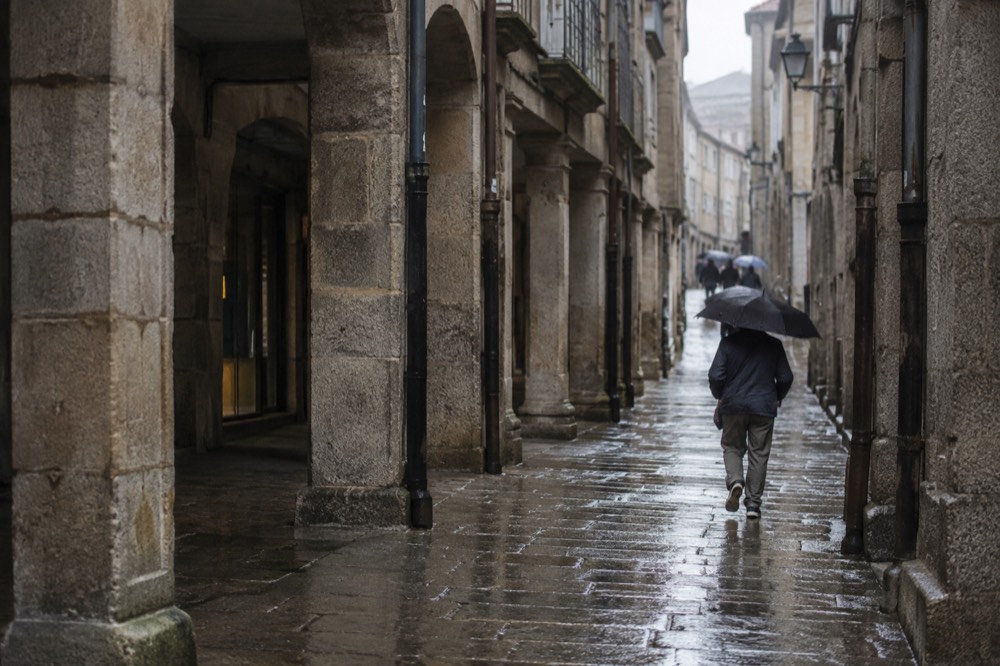
The best time for Santiago de Compostela is late spring through early autumn if you want the driest weather, because AEMET's climate data for the city shows a temperate oceanic pattern, wet year-round, wetter from October to March, and driest in July and August. The trade-off is that July and August are also the busiest months and late July brings the Feast of St. James on the 25th. Porto, on the same Atlantic coast a short way south, shares a broadly similar oceanic rhythm.
This article deliberately prints no month-by-month temperature or rainfall table because that granularity is not officially published by AEMET, and no Porto-specific figures were verified either, so the seasonal advice on the Portuguese side stays in honest general terms.
| Season in Santiago de Compostela | Verified character | What it means for a visit |
|---|---|---|
| October to March | Wet and cool, the wetter half of the year | Pack rain layers, enjoy empty squares |
| April to June | Between the wet and dry halves | The balance most travellers aim for |
| July and August | The driest months of the year | Busiest, and 25 July brings the city's feast |
| Late July | Feast of St. James, fixed date | Masses, fireworks, folk events, big crowds |
| 31 Dec 2026 to 31 Dec 2027 | Holy Year 2027, Holy Door open | Peak pilgrimage conditions |
Two date-specific points change the calculus. The Feast of St. James falls on 25 July every year and fills the city, and 2027 is a Holy Year because 25 July 2027 falls on a Sunday, with the Holy Door opening on the evening of 31 December 2026. Anyone weighing Santiago in 2027 should read Holy Year 2027 and expect the busiest conditions the city has seen in over a decade. The Best Time To Visit Santiago de Compostela guide carries the full seasonal decision tree.
Can You Combine Santiago de Compostela And Porto On One Trip?
Yes, and honestly you should, because the border between Galicia and northern Portugal is one of the most natural two-city pairings in western Europe: give Santiago de Compostela two or three days for the Cathedral, the old town and one day trip, then travel south with a change at Vigo and give Porto a full city break, or do the whole thing in reverse. The verified Santiago logistics, the airport about 12km out, the change at Vigo, the high-speed link to Madrid, all support this shape without strain.
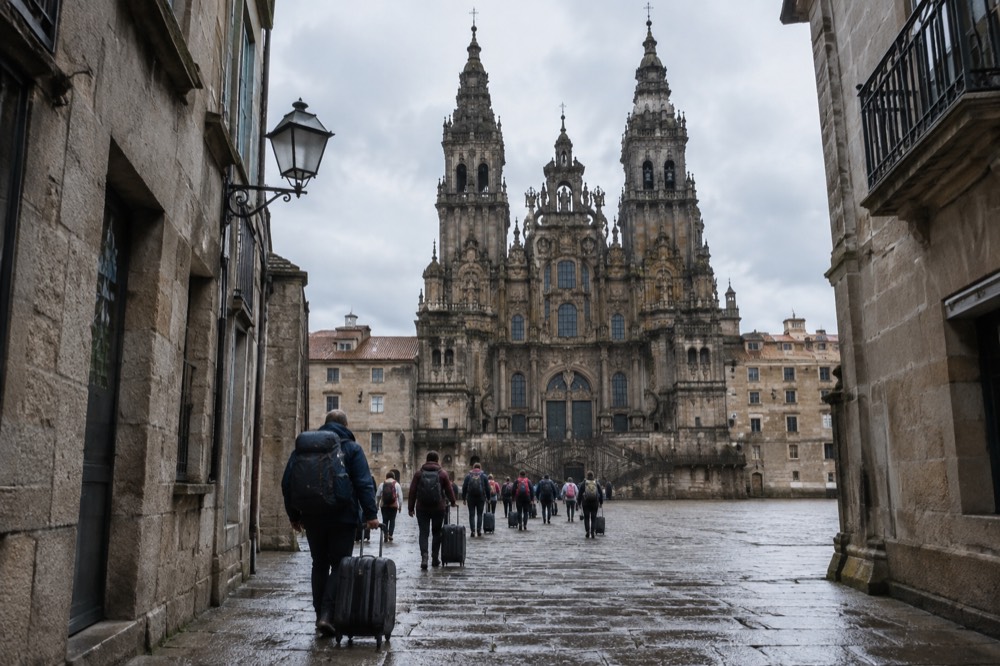
A sensible combined shape is a week. Days one to three in Santiago de Compostela: one for the Cathedral, the museum and the rooftops, one for the old town and a guided walk, one for a coast day trip to Fisterra and Muxia or the Rias Baixas. Then the transfer day south. Then Porto at whatever length your energy allows, with the Douro lodges as the anchor.
If you arrive walking the Camino, the shape flips. The Arriving In Santiago On The Camino guide covers what to do with your first hours as a pilgrim, and the Rest Day After The Camino page is honest about how tired you will actually be. Porto then becomes the reward: no walking required, a river to sit beside, and wine that predates your blisters.
For the fuller picture of the region that surrounds the Santiago half of this comparison, the Galicia Travel Guide and the One Week Galicia Road Trip pages cover the coasts, cities and estuaries between Santiago de Compostela and the Portuguese border, which is exactly the ground you cross on the way to Porto.
Common Questions About Santiago de Compostela Vs Porto
Is Porto or Santiago de Compostela better for a short city break?
For two days or fewer, Santiago de Compostela is the more efficient choice: the Cathedral, the old town, the rooftop tour and the tapas lanes are all within walking distance of each other, and Cathedral entry is free. Porto rewards a longer stay because it is a bigger city with more ground to cover.
Is it easy to travel between Santiago de Compostela and Porto?
It is a normal day's journey rather than a hop. There is no direct train line: you travel to Vigo, roughly an hour from Santiago de Compostela by rail, and continue into Portugal from there. By car the route runs down the Atlantic coast, and both cities have their own airports, so flying into one and out of the other also works.
Is Santiago de Compostela more expensive than Porto?
On the verified Santiago side the core visit is cheap: Cathedral entry is free, the rooftop tour is EUR15 or EUR12 reduced, and a municipal tourist tax has applied since 1 October 2025 (a surcharge on Galicia's tourist-stay tax, from 1 EUR to 2.50 EUR per person per night for up to 5 nights). No Porto price figures are officially published, so check live rates for both cities rather than trusting a single comparison number.
Can you start the Camino de Santiago in Porto?
Yes. The Portuguese Camino routes begin in Porto and walk north into Galicia to finish at the Cathedral in Santiago de Compostela. The Compostela certificate still requires the last 100km walked with two credential stamps per day, and it is issued in person only at the pilgrim's office on Rua das Carretas 33.
Which city has better day trips?
Santiago de Compostela. Within a single day you can reach Fisterra and Muxia at the end of the Costa da Morte, the Rias Baixas wine and mussel-boat estuaries, and the Cies Islands. Porto's classic excursions run inland along the Douro valley instead, so the winner depends on whether you want ocean or river.
Does it rain a lot in Santiago de Compostela compared with Porto?
Yes, by Spanish standards. AEMET's data for the Santiago station shows a wet, temperate oceanic climate with annual precipitation on the order of 1,690-1,890mm, wetter from October to March and driest in July and August. Porto sits on the same Atlantic coast and shares a broadly similar rhythm.
The honest conclusion from the Santiago de Compostela Travel Guide editorial desk is that this comparison has no loser. Santiago de Compostela delivers one of Europe's great destination moments, the pilgrim arrival under the Obradoiro facade, in a city you can learn on foot in a day. Porto delivers a bigger, hungrier, wine-soaked city break. The border is close, the train reaches it with one change at Vigo, and the traveller who refuses to choose gets both.