Camino de Santiago Routes: Every Path Into Santiago de Compostela
Santiago de Compostela, the cathedral city in Galicia where the Camino ends, is reached by a whole network of historic routes, not one path. This guide compares them and explains the rules that apply to every one.
Short answer
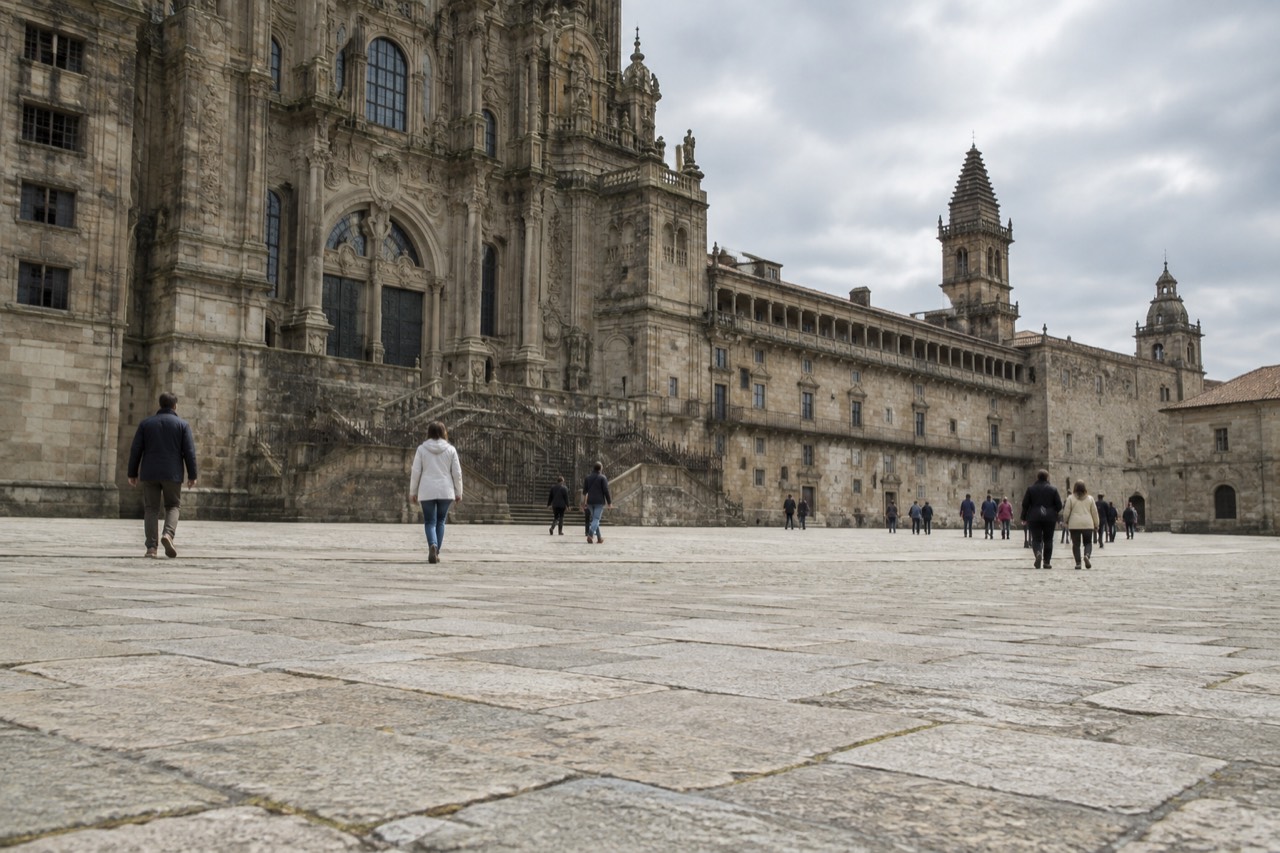
The Camino de Santiago is a network of pilgrimage routes converging on the Cathedral of Santiago de Compostela in Galicia, Spain. The main walking routes are the Frances, Portugues, Norte, Primitivo, Ingles and Finisterre, and all of them earn the same Compostela certificate under the same distance and stamp rules set by the Pilgrim's Office.
Santiago de Compostela, the pilgrim cathedral city at the heart of Galicia in northwest Spain, issued a record 530,987 Compostela certificates in 2025 according to figures reported from the Oficina del Peregrino, and every single one of those walkers arrived along one of the Camino de Santiago routes. There is no single Camino. What exists instead is a fan of historic pilgrimage paths, each with its own start point, character and scenery, all converging on the same tomb in the same Cathedral. The Oficina del Peregrino's FAQs make clear that the route you walk matters less than the distance you cover and the stamps you collect, which is why comparing the routes honestly, rather than ranking them by myth, is the most useful thing a guide can do. This page, maintained by the Santiago de Compostela Travel Guide editorial desk, lays out the routes, the shared rules, the Holy Year calendar and the finish itself, all from primary sources.
What Are The Camino de Santiago Routes?
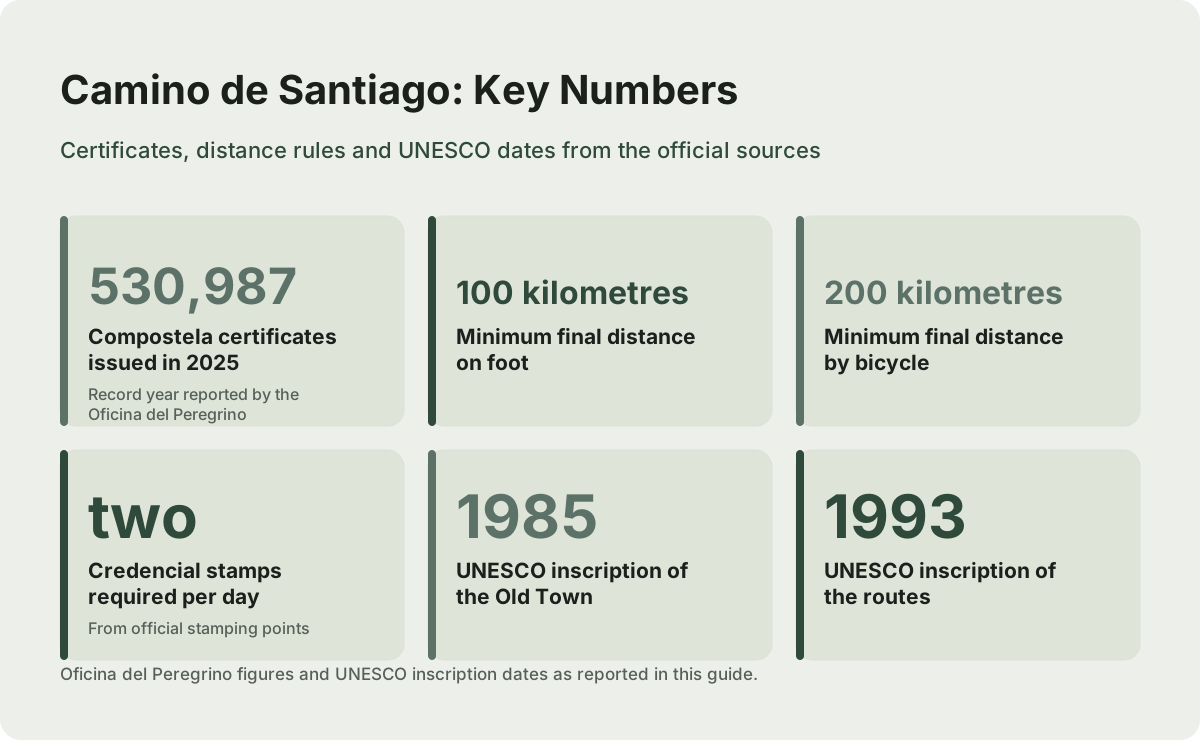
The Camino de Santiago routes are the network of historic pilgrimage paths that all converge on the Cathedral of Santiago de Compostela in Galicia, Spain, where the relics of St James the Apostle are venerated. The network is so significant that UNESCO inscribes the routes themselves as a World Heritage listing, separate from the Old Town of Santiago de Compostela, which carries its own earlier 1985 inscription.
Those two UNESCO inscriptions are the detail almost every general travel article flattens into one date. The Old Town of the city was inscribed in 1985 for its architecture and urban fabric. The routes, formally the Routes of Santiago de Compostela: Camino Frances and the Routes of Northern Spain, were inscribed separately in 1993 for the pilgrimage infrastructure that grew along the roads: bridges, hospitals, churches and hostels built over a thousand years of travel. A walker on any recognized route is therefore walking inside a World Heritage property long before the Cathedral spires appear.
The routes are waymarked with two symbols every pilgrim learns within an hour: the yellow arrow, painted or mounted on posts, trees and walls, and the scallop shell, the medieval emblem of the pilgrimage. The system is maintained locally, and marking quality varies between routes and regions, which is one genuine difference between them that no distance table captures.
For the deep background on how a Galician city became the endpoint of a continental road system, read the Camino de Santiago history guide, which traces the road system from its medieval origins to the modern revival.
| UNESCO inscription | Year | What it recognizes |
|---|---|---|
| Old Town of Santiago de Compostela | 1985 | The historic city and its architecture |
| Routes of Santiago de Compostela: Camino Frances and the Routes of Northern Spain | 1993 | The pilgrimage routes and their historic infrastructure |
How Many Camino de Santiago Routes Reach Santiago de Compostela?
Six routes carry the practical bulk of today's walking: the Camino Frances, the Camino Portugues, the Camino del Norte, the Camino Primitivo, the Camino Ingles and the Camino Finisterre, which uniquely runs outward from Santiago de Compostela toward the sea rather than toward the city. Each is waymarked with the yellow arrow and the scallop shell, each has a distinct character, and each has a dedicated guide on this site.
The Camino Frances is the classic, the busiest and the best-served of the routes, the one most people picture when they hear the word Camino. The Camino Portugues runs up from Portugal, through Porto and the north of the country before crossing into Galicia. The Camino del Norte keeps to the northern Spanish coast. The Camino Primitivo is the original mountain route, short and demanding. The Camino Ingles is the compact inland option from Galicia's northern coast, and the Camino Finisterre is the continuation westward that some pilgrims walk after reaching the Cathedral, out to what the Romans treated as the end of the known world.
Choosing between them is the single biggest decision in planning a walk, and it interacts with how long you have, when you can go and how much solitude you want. The walking tours below are not Camino routes themselves, but they are the experiences arriving walkers most often add in the city, from the Cathedral's own rooftop visit to a guided old-town walk.
| Route | Character | Read more |
|---|---|---|
| Camino Frances | The busiest classic, deepest infrastructure and services | Camino Frances guide |
| Camino Portugues | Runs north from Portugal, quieter pace | Camino Portugues guide |
| Camino del Norte | Coastal path with more solitude and variable weather | Camino del Norte guide |
| Camino Primitivo | The original mountain route, short and demanding | Camino Primitivo guide |
| Camino Ingles | Compact inland route from Galicia's coast | Camino Ingles guide |
| Camino Finisterre | Continues west from Santiago de Compostela to the sea | Camino Finisterre guide |
Which Camino de Santiago Route Fits You Best?
The Camino Frances suits first-time walkers who want company and full infrastructure, the Camino Portugues suits those starting from Porto, the Camino Primitivo is the short, demanding original, the Camino del Norte rewards coastal walkers who accept more solitude, and the Camino Ingles is the compact inland option for walkers short on time. Choosing well matters more than choosing long.
Honesty about trade-offs beats hype here. The Frances is busy precisely because it works: beds, bars and pharmacies appear at regular intervals, and a solo walker will rarely be alone. The Norte trades that security for coastline and quiet, and the Primitivo folds mountain terrain into a short distance, which makes it a poor first walk and a brilliant second one. The Ingles exists largely because of the Compostela's distance rules, which the next section covers: it is long enough, walking inland, for the certificate.
Several of this site's answer pages take these questions one at a time. The duration question, how long it takes to walk the Camino de Santiago, is broken down route by route in its own answer page, and the first-timer question of which Camino is best for beginners is handled directly there too. The age and solo questions this page gets asked most, whether a 70 year old can walk the Camino and whether it is safe for a woman to walk it alone, each have dedicated answers as well. There is also a full Camino de Santiago map guide for seeing the network laid out at once.
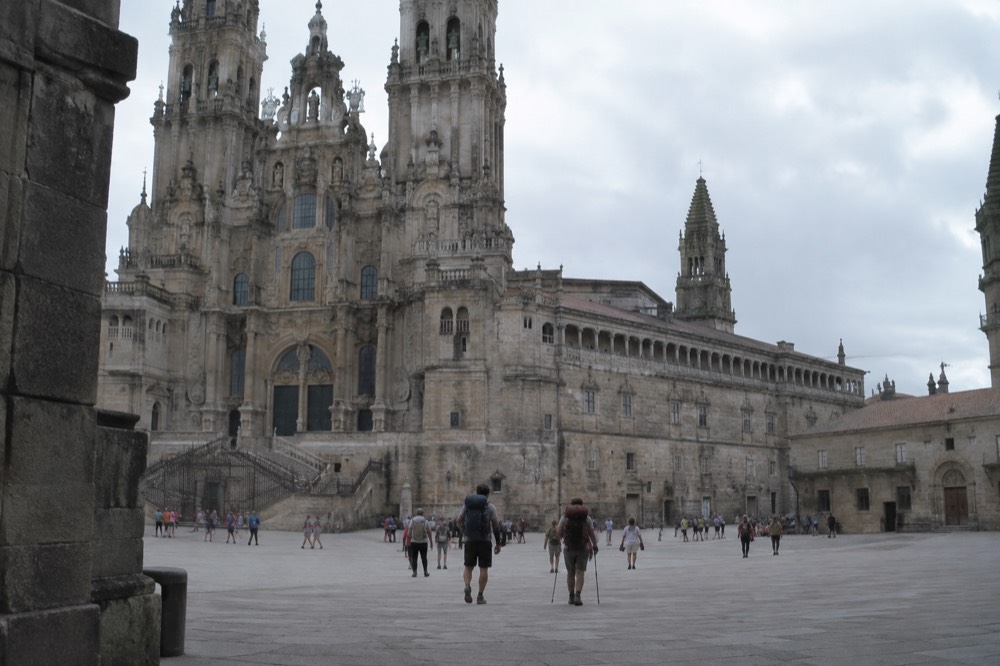
Once you know your route, the practical planning is shared across all of them: the Camino packing list, the pilgrim passport and credencial guide, and the albergues and Camino accommodation guide. When you finally stand in the city, a guided walk with an official guide adds the history the waymarks never explain, and the hidden city walking tour is the compact option.
What Are The Rules For Earning The Compostela On Any Route?
Every route earns the same Compostela certificate under the same rules, set by the Oficina del Peregrino: cover at least the final 100 kilometres on foot or horseback, or at least the final 200 kilometres by bicycle, collect at least two stamps per day in the credencial from official stamping points, and receive the certificate in person at Rua das Carretas 33 in Santiago de Compostela. The route you choose does not change the requirement.
The Oficina del Peregrino's FAQs state these conditions plainly, and two details deserve emphasis. First, the distance is a minimum on a recognized route, not a minimum on your chosen route alone: walkers commonly start a shorter route such as the Ingles specifically because it clears the threshold. Second, the two-stamps-per-day rule applies only to the final qualifying stretch, but gaps in the record can void the certificate, so the credencial should be stamped habitually, not sparingly. The full breakdown lives in the Compostela certificate guide, and the Pilgrim's Office itself is covered in the pilgrim office guide, which also explains the office's seasonal hours.
| Requirement | Rule set by the Oficina del Peregrino |
|---|---|
| On foot or horseback | At least the final 100 kilometres of a recognized route |
| By bicycle | At least the final 200 kilometres of a recognized route |
| Credencial stamps | At least two per day from official stamping points |
| Where the certificate is issued | In person only, at Rua das Carretas 33, Santiago de Compostela |
For cyclists, the answer page on how long it takes to do the Camino de Santiago by bike applies the 200km rule to route choice, and for families, the question of whether you can do the Camino de Santiago with kids addresses what the distance rules mean for younger walkers. Rules do shift occasionally; the current position is tracked in this site's answer on the new rules for the Camino de Santiago, and this page states nothing beyond what the Pilgrim's Office itself publishes.
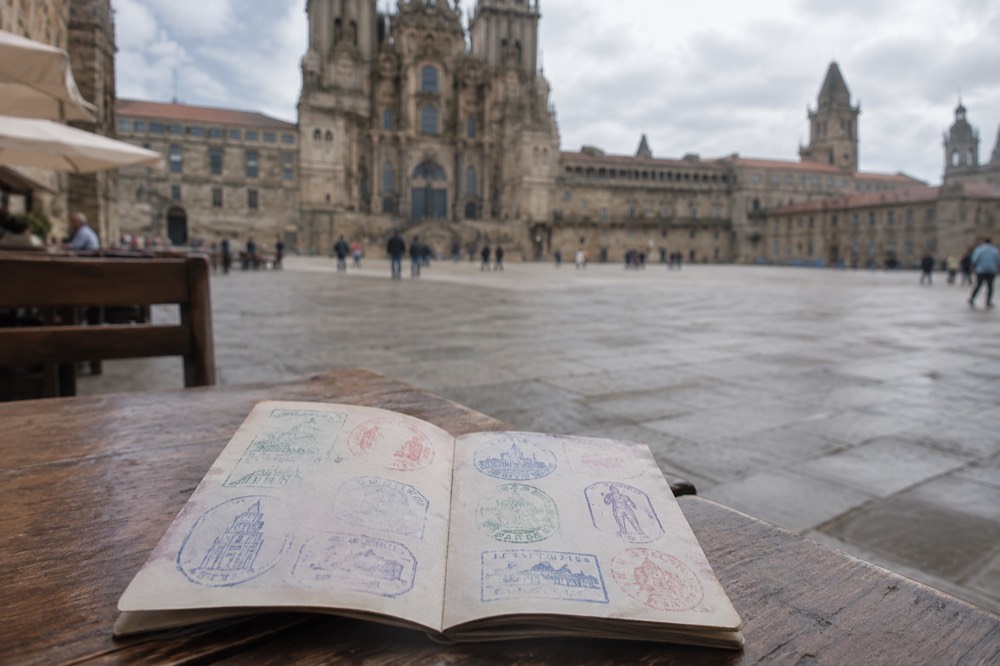
What Happens At The End Of Every Route In Santiago de Compostela?
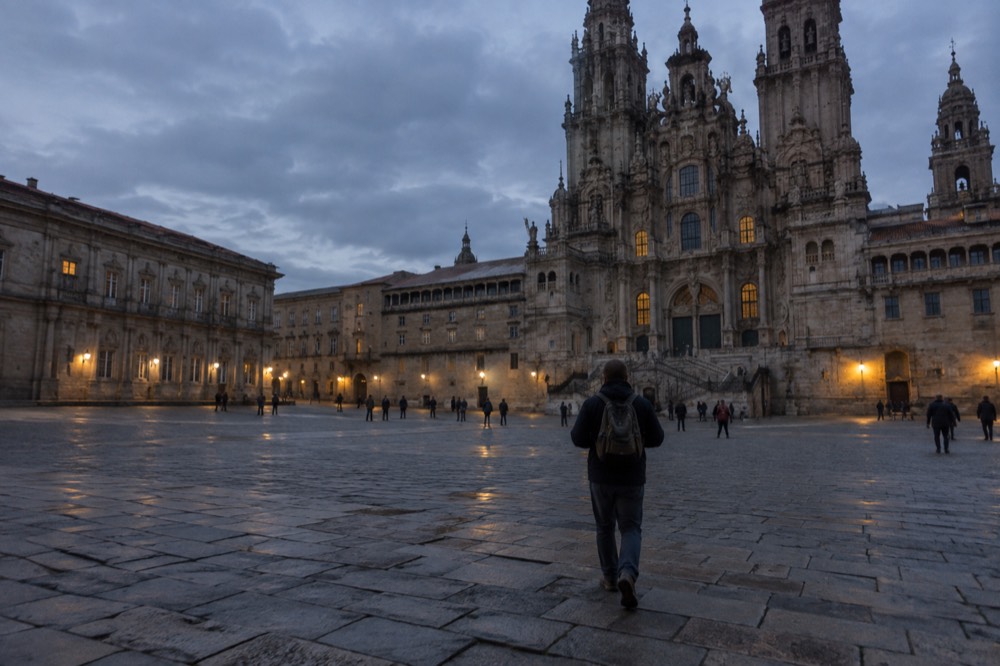
Every route ends at the same place: the Cathedral of Santiago de Compostela, where the Pilgrim's Office at Rua das Carretas 33 issues the Compostela in person, and where pilgrim masses are held daily. Until 15 October 2026 the 9:30am, noon and 7:30pm masses are said at the Cathedral's High Altar, but from 16 October 2026 those three masses relocate to the nearby Church of San Agustin, with only the 7:30am mass remaining inside the Cathedral's Communion chapel.
That mass relocation is the fact most guides published before mid-2026 get wrong, and it matters to arriving pilgrims who plan their first evening around the pilgrim mass. The Cathedral's own liturgy page carries the current times: 7:30am, 9:30am, noon and 7:30pm daily. The move stems from main chapel remodelling works preparing the Cathedral for the 2027 Holy Year, and there is no published end date, so walkers arriving after mid-October 2026 should check the arrangement for their own dates. The relocation does not close the Cathedral to visitors: general entry to the interior remains free and roughly 7:00am to 9:00pm through the Praterias door, per the Cathedral's own visitor information.
| Pilgrim mass | Until 15 October 2026 | From 16 October 2026 |
|---|---|---|
| 7:30am | Cathedral, Communion chapel | Cathedral, Communion chapel |
| 9:30am | Cathedral, High Altar | Church of San Agustin |
| 12:00 noon | Cathedral, High Altar | Church of San Agustin |
| 7:30pm | Cathedral, High Altar | Church of San Agustin |
On the Botafumeiro, honesty is required. The Cathedral's giant censer normally swings on 12 fixed solemnities a year, and the schedule below lists the solemnities remaining in 2026 after this guide's research date. But the Cathedral confirmed in writing on 5 September 2026 that the Botafumeiro is temporarily suspended because restoration scaffolding over the dome covers its hanging mechanism, with no return date published. No walker should plan an arrival around seeing it swing.
| Solemnity (normally a Botafumeiro date) | 2026 date |
|---|---|
| All Saints | 1 November |
| Christ the King | 22 November |
| Immaculate Conception | 8 December |
| Christmas | 25 December |
| Transfer of the Apostle | 30 December |
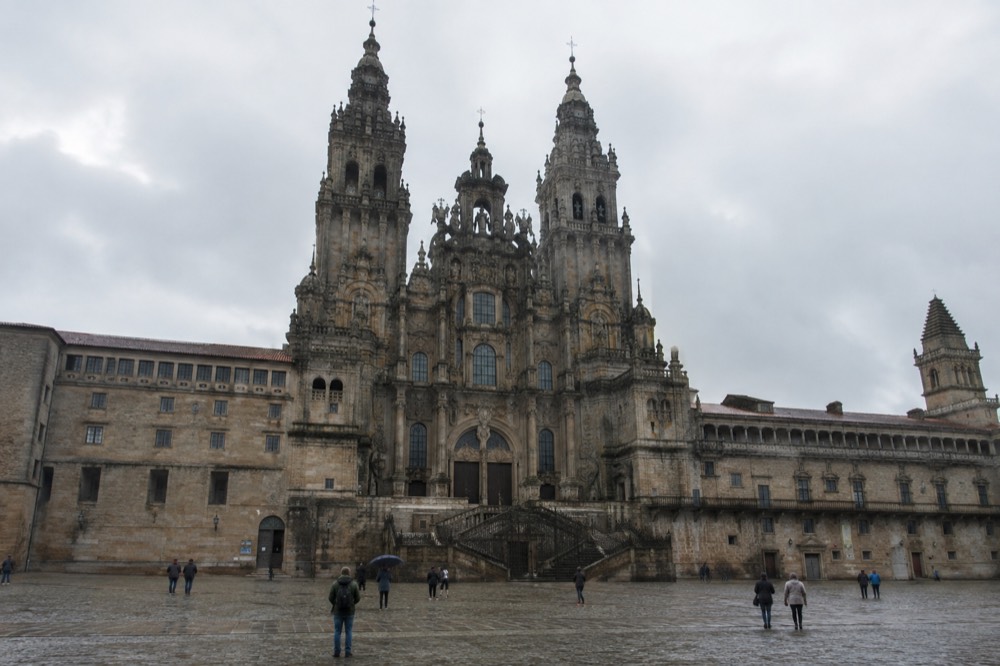
The days immediately after arrival have their own rhythm, and this site's rest day after the Camino itinerary covers them hour by hour. The classic finishing sequence is the Compostela, the Praza do Obradoiro in front of the west facade, and then the Cathedral's own ticketed visits. The Cathedral rooftops tour guide explains the official Cubiertas and Carraca Tower visit, which the Cathedral's ticketing lists at EUR15 general, EUR12 reduced, roughly 60 minutes and 140 steps; it is bookable on the Cathedral's own ticket site with timed slots. The full rundown of options and prices is in the Cathedral tickets and opening hours guide. The combined Portico, roofs and museum experience is also available as a guided visit, Check availability on the operator's live listing.
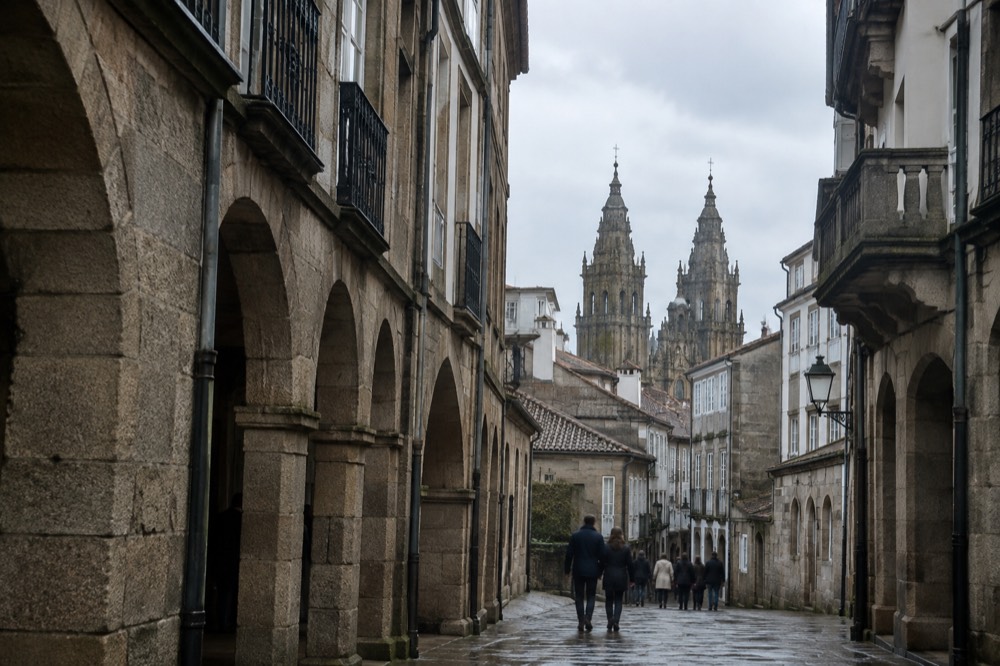
Is 2027 The Next Holy Year On The Camino de Santiago Routes?
The next Holy Year is 2027, not 2026. A Xacobeo is declared whenever 25 July, the Feast of St James, falls on a Sunday, and in 2027 it does. The Holy Door of the Cathedral opens on the evening of 31 December 2026, and the Holy Year runs through 31 December 2027, after which the next Holy Years fall in 2032, 2038 and 2049.
Walkers planning around the Holy Year need two dates, not one. The door ceremony itself happens on 31 December 2026 at the Praza da Quintana side of the Cathedral, and the elevated pilgrim traffic runs all of 2027. santiago.es's Xacobeo 2027 announcement carries the official detail, and this site's Holy Year 2027 guide covers what the July festival itself looks like, from the Pontifical Mass to the fireworks. Route choice becomes more consequential in a Holy Year simply because beds near Santiago de Compostela fill earlier, so booking accommodation ahead matters more than in ordinary years.
| Holy Year | Notes |
|---|---|
| 2027 | Next Xacobeo; Holy Door opens 31 December 2026, Holy Year runs through 31 December 2027 |
| 2032 | Following Holy Year per the official calendar |
| 2038 | Subsequent Holy Year per the official calendar |
| 2049 | Later Holy Year per the official calendar |
The door itself is visible on any ordinary year from the Praza da Quintana, on the east side of the Cathedral, and this site's Praza da Quintana and Holy Door guide explains what you are looking at when the door is closed, as it is throughout 2026.
What Do The Camino de Santiago Routes Cost?
The routes themselves cost nothing to walk: no toll, no registration fee, no charge for the waymarks. What you spend goes on accommodation, food, transport to your start point and gear, and it varies enormously with the season, the route and whether you sleep in municipal albergues or private rooms. This guide deliberately quotes no figures for those lines, because the verified research behind this site has not attached a number to them, and guessed budgets are worse than none.
Instead of inventing a budget table, this page points to where the numbers are done properly. This site's answer on the average cost to walk the Camino de Santiago works through the per-day and per-route lines, and the Santiago de Compostela on a budget guide covers the spending at the finish, which catches many pilgrims by surprise after weeks of albergue prices. Two things can be stated without a single number: the Cathedral interior itself is free to enter, and Santiago de Compostela has charged a municipal tourist tax since 1 October 2025, a surcharge on Galicia's tourist-stay tax ranging from 1 EUR per person per night in private albergues, campsites and tourist apartments up to 2.50 EUR in five-star hotels, for a maximum of 5 nights, with under-18s and stays in Xunta-run public albergues exempt.
Timing also moves the bill more than route choice does. The answer page on the best month to walk the Camino de Santiago matches the seasons to the routes, and the best time to visit Santiago de Compostela guide adds the city-side view. AEMET's climate data for the Santiago de Compostela station describes a temperate oceanic pattern, wet year-round, wetter from October to March and driest in July and August, so the shoulder seasons trade better walking weather against busier beds.
What Can You See In And Around Santiago de Compostela Once Your Route Ends?
Most walkers spend at least a day or two in Santiago de Compostela after arriving, and the city rewards it: the Cathedral's rooftops, museum and old town can fill a full day on their own, and guided day trips reach Fisterra and the Costa da Morte, the Rias Baixas wine country and the Catedrais Beach and Lugo country to the east. The Camino Finisterre even continues the walk westward from the Cathedral for those not finished walking.
The city-side options are covered in depth across this site: one day in Santiago de Compostela, two days and three days for those who can stay longer, plus the where to eat in Santiago de Compostela guide for the first proper restaurant meal after weeks of pilgrim menus. For the region, the Fisterra guide and the Costa da Morte guide cover the end-of-the-world coast the Finisterre route reaches, and the Rias Baixas wine guide covers the Albarino country to the south.
The three experiences below are the ones walkers most often add in the days after arrival: the Cathedral's combined guided visit, a walking tour of the old town, and the full-day excursion to Catedrais Beach with Lugo and Asturias, which reaches the dramatic rock-arch coast of the neighbouring province.
| Experience | Type | From (per person) | Rating |
|---|---|---|---|
| Cathedral, Portico, Roofs and Museum guided tour | Cathedral visit, half a day | $56 | 4.6 from 79 reviews |
| Hidden City Walking Tour | City walking tour | $17 | 5 from 13 reviews |
| Catedrais Beach, Lugo and Asturias excursion | Full-day day trip | $68 | 4.9 from 181 reviews |
The Catedrais excursion deserves a note for Camino Primitivo walkers in particular: it is the comfortable, seated way to revisit the northern country the mountain route crosses. For those flying out rather than continuing, the Santiago de Compostela airport guide covers the transfer, currently the Tussa line 6A bus at EUR1 to the driver, EUR0.36 by card, with a new Monbus contract and a higher fare expected as autumn 2026 proceeds, so treat that fare as subject to change.
How Do You Get To The Start Of The Camino de Santiago Routes?
Most international walkers reach their start point through Santiago de Compostela itself or through Madrid, Porto or a northern Spanish city, because the routes fan out across Iberia while the transport network funnels through a few hubs. Direct high-speed trains link Santiago de Compostela with Madrid in roughly three to four hours, Santiago to Vigo takes about an hour, and there is no direct rail line to Porto, so Portugal-bound walkers change at Vigo.
Those are ranges, not timetabled minutes, and current schedules should be checked before booking. The practical logistics are covered route by route in this site's answer pages: how to get to the Camino de Santiago from Madrid, and which airport is best to fly into to walk the Camino de Santiago, plus the Madrid to Santiago de Compostela train guide for rail travellers. One pattern repeats across all of them: it is usually easier to travel to a hub and then ride a regional bus or train to your start town than to hunt for a single long-distance connection.
For the walk itself, this site's answer on which tour company is best for walking the Camino de Santiago addresses the supported-versus-independent question, and the Sarria to Santiago guide covers the classic final-stretch start that most time-pressed walkers choose, since it clears the 100km Compostela minimum.
Common Questions About Camino de Santiago Routes
How long does it take to walk the Camino de Santiago?
It depends entirely on the route and how many kilometres you cover per day, and the honest answer is a range rather than a figure. This site's dedicated answer on how long it takes to walk the Camino de Santiago breaks the duration down route by route.
What are the new rules for the Camino de Santiago?
The verified rules are the Pilgrim's Office requirements stated above: at least the final 100km on foot or horseback, or 200km by bicycle, two credencial stamps per day, and in-person issue at Rua das Carretas 33. For anything newer, see this site's answer on the new rules for the Camino de Santiago, which tracks changes against the Pilgrim's Office's own publications.
Which Camino de Santiago route is best for beginners?
The Camino Frances, for its infrastructure and company, with the Camino Ingles as the compact alternative for walkers short on time. The full comparison is in this site's answer on which Camino is best for beginners.
Can a 70 year old walk the Camino?
Age is not a barrier the routes themselves impose, and plenty of walkers in their seventies finish the qualifying stretches each year. The honest factors are pace, route choice and daily distance, covered in this site's answer on whether a 70 year old can walk the Camino.
Is it safe for a woman to walk the Camino de Santiago alone?
The routes are walked solo by women in large numbers every season, and the Frances in particular is rarely a solitary experience. The practical, non-euphemistic answer is in this site's answer on whether it is safe for a woman to walk the Camino de Santiago alone.
Is 2026 a Holy Year on the Camino de Santiago?
No. The next Holy Year is 2027: the Holy Door opens on 31 December 2026 and the Xacobeo runs through 31 December 2027, because 25 July falls on a Sunday in 2027. Full detail is in the Holy Year 2027 guide above.
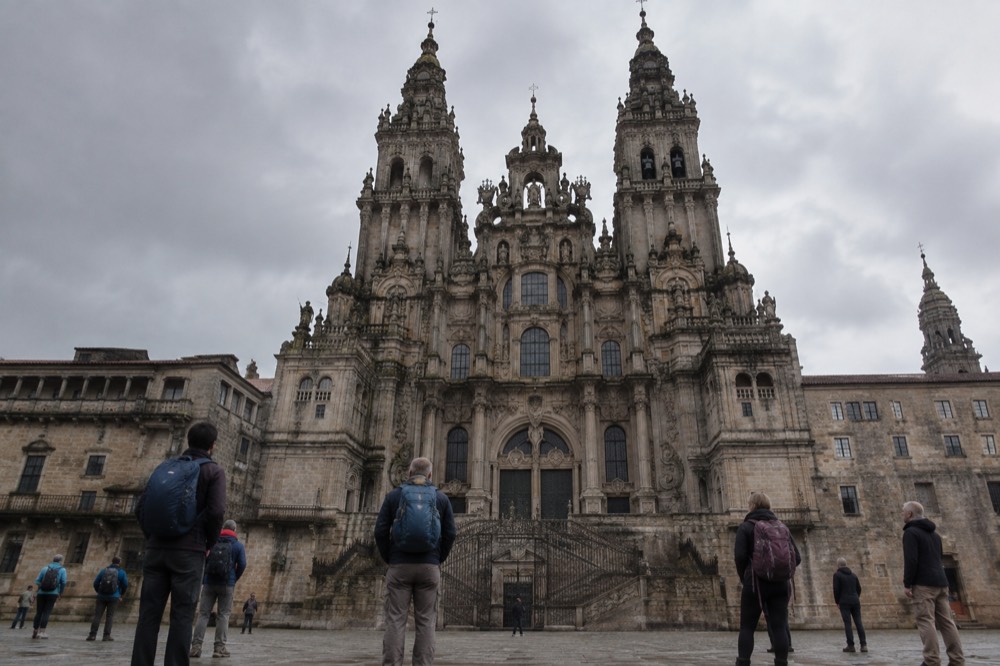
Whichever route you choose, the finish is the same and so is the paperwork: walk the qualifying distance, stamp the credencial twice a day, and collect the Compostela in person in Santiago de Compostela. Pick the path that fits your calendar and your legs rather than the one with the loudest reputation, and let the yellow arrows handle the rest.