Camino Inglés To Santiago de Compostela: The Short Sea Route Explained
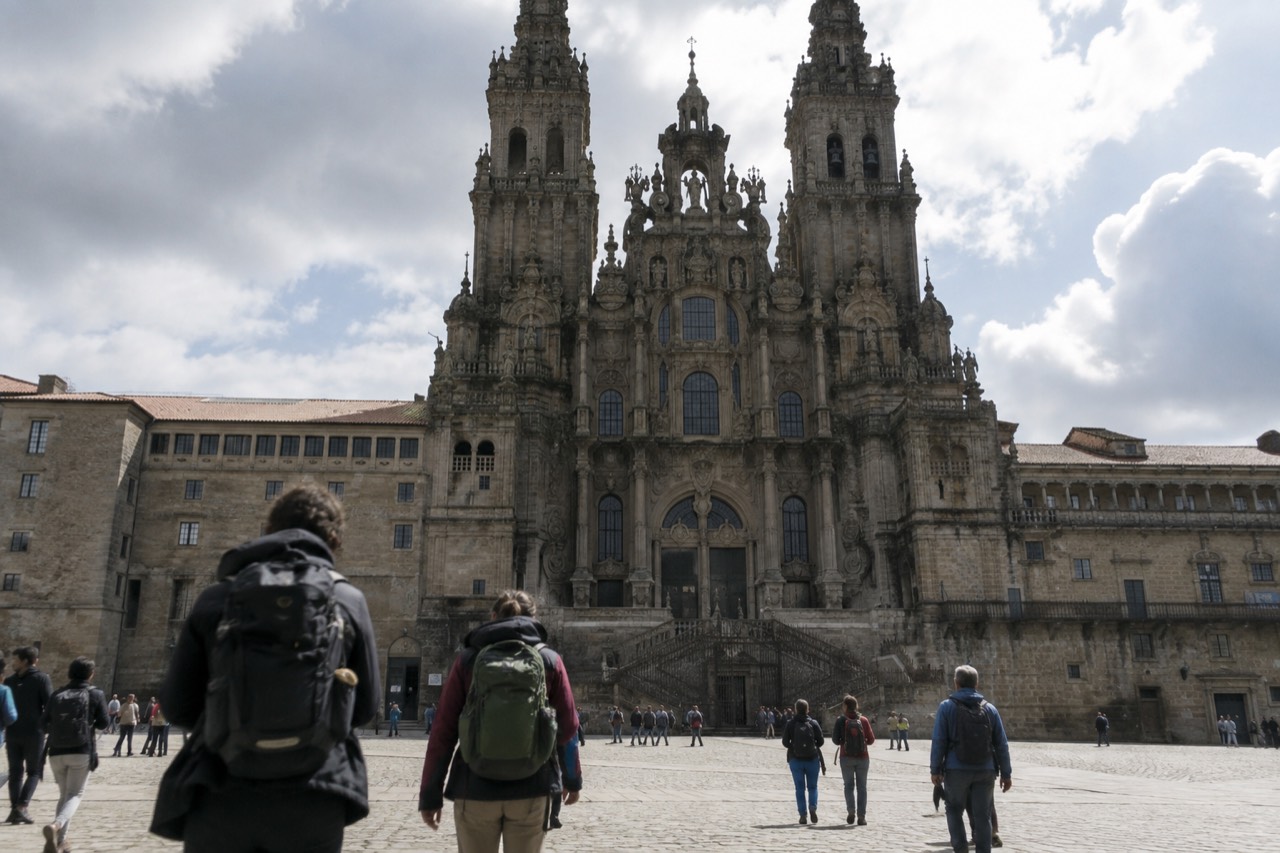
The Camino Inglés is the shortest of the recognized Camino de Santiago routes into Santiago de Compostela, the pilgrim cathedral city in Galicia, Spain, following the path medieval English pilgrims took after landing by sea on the Galician coast.
Short answer
The Camino Inglés is a recognized Camino de Santiago route that starts at the Galician ports of Ferrol or A Coruña and ends at the Cathedral of Santiago de Compostela. The Ferrol start is the branch long enough to satisfy the 100km minimum for the Compostela certificate; the shorter A Coruña branch is not.
The Camino Inglés is the pilgrim route that medieval sailors, merchants and pilgrims from Britain, Ireland and the Low Countries created by accident of geography: they came by ship, landed on the Galician coast, and walked the last stretch inland to Santiago de Compostela, the cathedral city in northwest Spain where the remains of St. James are venerated. Of all the recognized routes into the city it is the shortest, and that single fact shapes everything about how people walk it today. Where the Camino Francés demands weeks of commitment, the Inglés asks for a long weekend and a pair of broken-in boots. The Oficina del Peregrino's own figures put the phenomenon in scale: 530,987 Compostelas were issued in 2025, a record year, and the Inglés is one of the recognized routes feeding that count.
What Is The Camino Inglés To Santiago de Compostela?
The Camino Inglés, or English Way, is one of the officially recognized Camino de Santiago routes, the one historically walked by pilgrims who reached Galicia by sea rather than overland through France or Spain. It runs from the Atlantic port of Ferrol, with a shorter branch from A Coruña, inland across Galicia to the Cathedral of Santiago de Compostela. It is the shortest recognized route, and UNESCO inscribed the Routes of Santiago de Compostela in 1993, separate from the Old Town's 1985 listing.
Two UNESCO inscriptions exist for this destination and they are genuinely different listings: the Old Town of Santiago de Compostela was inscribed in 1985, and the Routes of Santiago de Compostela: Camino Francés and Routes of Northern Spain were inscribed in 1993. Pilgrims sometimes merge the two dates into one vague "UNESCO city" claim. The routes listing is what covers the pilgrim infrastructure, the paths, bridges and hospitals that made the journey possible, and the Camino Inglés belongs to that world even though its modern certification comes from the pilgrim authorities rather than the heritage list.
The name is not decorative. Medieval English pilgrims genuinely dominated this sea traffic, sailing from ports such as Bristol and Southampton to Galicia, and the route's character still reflects its maritime origin. It is a route that begins at dockside rather than at a mountain pass, and its first hours smell of harbor rather than farmland. For a fuller account of how the whole pilgrimage system grew, the history of the Camino de Santiago covers it in depth, and this site's overview page on Santiago de Compostela Travel Guide places the route in its wider context.
Where Does The Camino Inglés Start From, And Where Does It Finish?
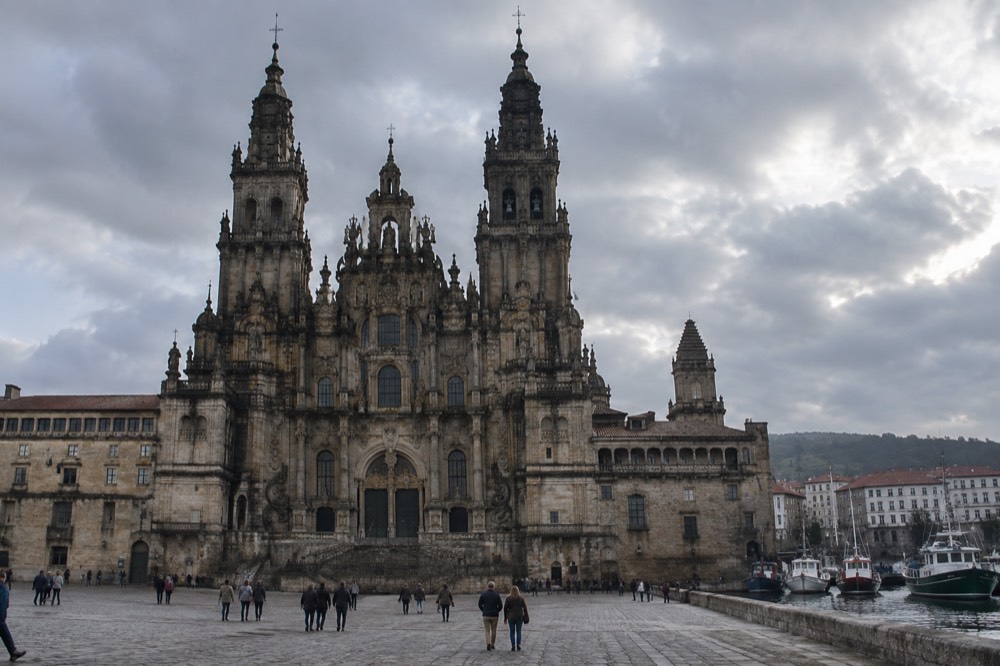
The Camino Inglés has two traditional starting points, both on the Galician coast: Ferrol and A Coruña. Both branches converge before Hospital de Bruma and continue through Sigüeiro into Santiago de Compostela, finishing at the Cathedral in Praza do Obradoiro. The Ferrol start is the longer branch and the one that satisfies the 100km walked minimum for the Compostela; the A Coruña branch is shorter than that threshold and does not qualify walkers for the certificate on its own.
That certificate distinction is the single most important practical difference between the two branches, and it comes straight from the Oficina del Peregrino's rules: the last 100km must be walked, or the last 200km cycled, on a recognized route. The office's FAQs treat the minimum as absolute, with no rounding in a walker's favor. Walkers who begin in A Coruña therefore walk a beautiful coastal and inland path but arrive without entitlement to the Compostela, unless they first walk to A Coruña from somewhere else, an old trick with its own history.
| Branch | Starting point | Character of the walk | Compostela eligibility |
|---|---|---|---|
| Northern branch | Ferrol, on the Ferrol estuary | Dockside start, coastal stretches, then inland woodland | Yes, the Ferrol start covers the 100km walked minimum |
| Southern branch | A Coruña | Port city start, lighter traffic, joins the Ferrol branch before Bruma | No, the branch falls short of the 100km minimum |
| Converged section | Hospital de Bruma to Santiago de Compostela | Hill country, oak woods, the Sigüeiro valley, arrival into the old town | Shared by both branches |
Both cities are easy to reach. Ferrol and A Coruña both sit on Galicia's Atlantic coast, connected to Santiago de Compostela by direct regional rail: Santiago to A Coruña is a short hop on direct services, per the verified rail research. Anyone comparing routes should read the full guide to Camino de Santiago routes before committing, since the choice of start point is the one decision on this walk that cannot be fixed halfway through.
For travelers who want the city's story told rather than only its geography, a guided walk is the efficient first move. These three options cover the ground well:
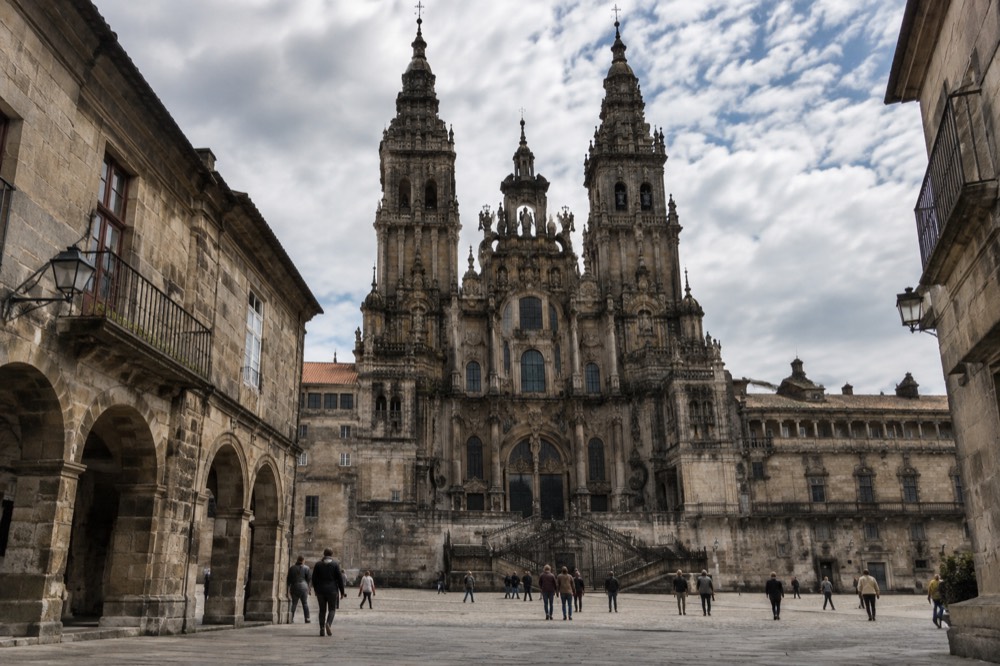
How Do You Earn The Compostela On The Camino Inglés?
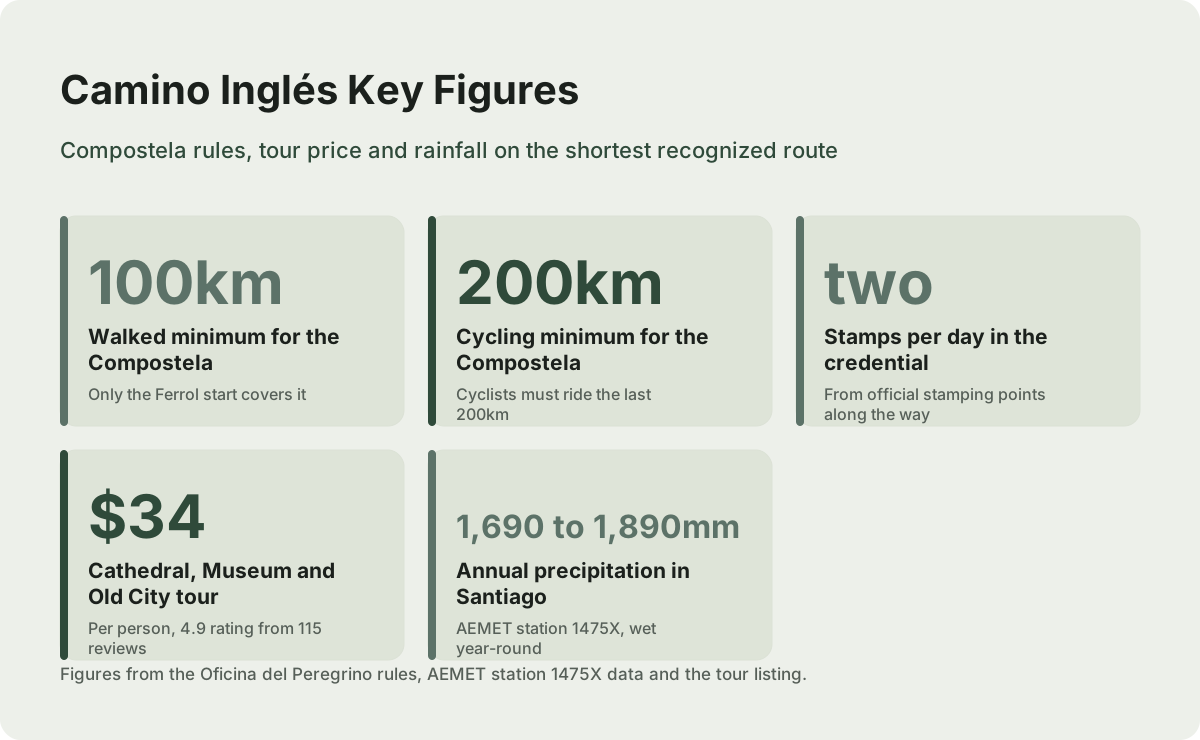
To earn the Compostela certificate you must walk the last 100km of a recognized route, meaning the Ferrol start on the Inglés, collect at least two stamps per day in your pilgrim passport from official stamping points along the way, and present the completed credential in person at the Oficina del Peregrino at Rua das Carretas 33 in Santiago de Compostela. Cyclists must cover the last 200km instead. The office issued 530,987 Compostelas in 2025, its record year.
The rules are mechanical and the office enforces them literally. Two stamps per day is a minimum, not a suggestion, and stamps must come from official stamping points, typically albergues, churches, bars and town halls that display the credential stamp. Walkers who collect a single stamp on a short day, or who ride a stretch of road in a vehicle, can find the whole walk discounted at the counter. The credential itself, the folded pilgrim passport that collects those stamps, has its own dedicated guide.
| Requirement | Walkers | Cyclists |
|---|---|---|
| Minimum recognized distance | Last 100km | Last 200km |
| Stamps in the credential | At least two per day | At least two per day |
| Eligible Inglés start | Ferrol branch | Ferrol branch, covering the 200km minimum from further back along the route |
| Where the certificate is issued | In person only, Rua das Carretas 33, Santiago de Compostela | In person only, Rua das Carretas 33, Santiago de Compostela |
| Office closures | 25 December and 1 January | 25 December and 1 January |
The office's hours shift with the seasons, roughly 8/9/10am to 7/8pm, and queues build in summer. Arriving pilgrims should plan their first afternoon in the city around the visit rather than assuming a five-minute stop. The full arrival picture, including what to do in the hours after you stop walking, is in arriving in Santiago on the Camino.
Once the credential business is done, most pilgrims head straight for the Cathedral, and a guided visit does more for comprehension than a solo wander. The Cathedral, Museum and Old City guided tour runs from $34 per person and carries a 4.9 rating from 115 reviews on its live listing.
For walkers who prefer a purely local-led introduction at a lower price point, the same finish line can also be approached on foot with an official guide first, then the cathedral in depth, which is exactly how the next section sequences it.
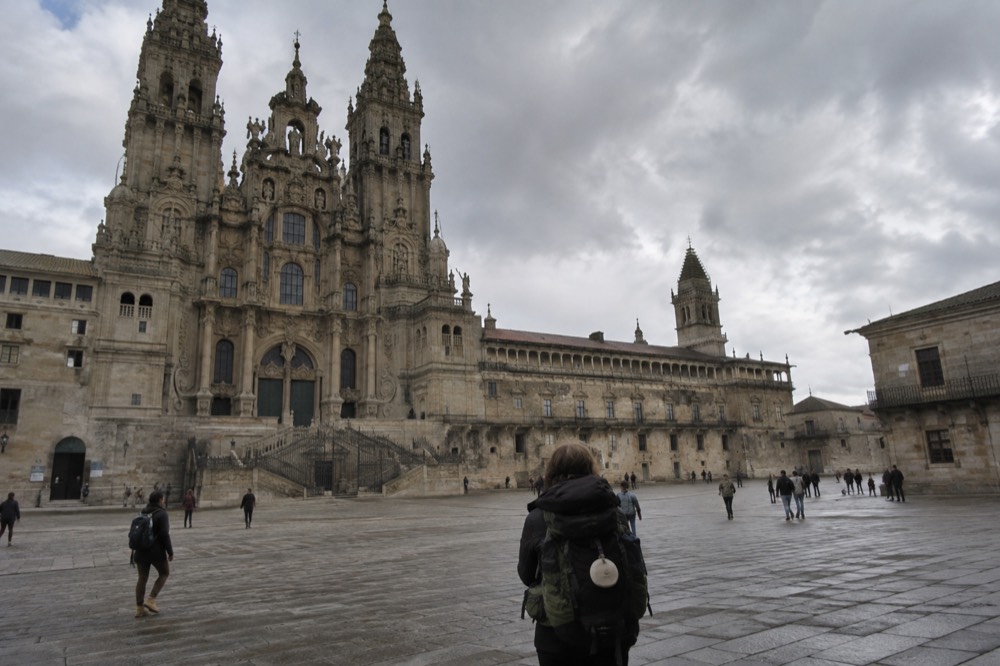
How Many Days Does The Camino Inglés Take, And What Are Its Stages?
Most walkers spread the Camino Inglés from Ferrol across five or six walking days, which is why it appeals to people with a single free week. The route moves from the Ferrol estuary through Pontedeume and Betanzos, climbs to the high ground at Hospital de Bruma, the route's high point, then descends through woodland to Sigüeiro for the final walk into Santiago de Compostela. Stage lengths are short enough to leave afternoons free.
The shape of the route is a narrative rather than a list. The opening stretch from Ferrol keeps the estuary in view before turning inland toward Pontedeume, a small town on a tidal river crossing. Betanzos, one of Galicia's oldest towns, marks the point where the two branches are about to meet, and its medieval streets are worth the slow morning. The climb to Hospital de Bruma is the physical peak of the walk, a modest ascent by Camino standards but enough to reorder the day. From Bruma the path descends through Galician oak country toward Sigüeiro, the last real town before the city, and the final day finishes across the modern outskirts and into the old town at Praza do Obradoiro.
What the Inglés does not have is the long social rolling mass of the Camino Francés. Groups are smaller, albergues are fewer, and the trail is quieter. Walkers who want the crowd energy should read about that route honestly before choosing the Inglés for the wrong reasons, and beginners can compare options in which Camino is best for beginners.
Accommodation along the way is the standard Camino mix: municipal and private albergues, small guesthouses and the occasional historic property. The guide to albergues and Camino accommodation covers the tiers, booking norms and etiquette, and luggage transfer services let walkers skip carrying a full pack altogether.
When Is The Best Time Of Year To Walk The Camino Inglés?
The best walking window on the Camino Inglés is late spring through early autumn, with May, June and September as the sweet spot. AEMET's climate data for station 1475X at Santiago de Compostela shows a temperate oceanic climate, wet year-round, wetter from October to March and driest in July and August, with annual precipitation on the order of 1,690 to 1,890mm depending on the station year measured. Summer walks are the driest but the busiest and warmest.
Galicia is not Andalusia. Rain is the default setting here, and the route's coastal sections can be wet even in months the calendar calls dry. The practical advice is not to chase a rain-free week, since the data says none reliably exists, but to pack for rain and walk in the shoulder seasons when the ground is green and the albergues are not full. Midsummer brings the largest crowds around the Feast of St. James on 25 July, the city's fixed festival date, with the national offering to the Apostle, fireworks and concerts.
| Season | What AEMET's data and the city calendar show | Walking implications |
|---|---|---|
| October to March | Wettest part of the year in a climate that is wet year-round | Quietest trails, shorter days, full rain gear non-negotiable |
| April to June | Rain easing, landscapes at their greenest | Best balance of conditions and crowd levels |
| July and August | Driest months of the year; 25 July is the Feast of St. James | Warmest and busiest; book beds ahead in high season |
| September to early October | Summer crowds gone, rain returning gradually | Strong shoulder-season choice, especially early September |
There is one date worth planning around in the medium term: 2027 is the next Holy Year, the Xacobeo. The Holy Door opens on the evening of 31 December 2026 in a ceremony at Praza da Quintana and stays open through 31 December 2027. A Holy Year happens whenever 25 July falls on a Sunday, which 2027's date does. Anyone walking the Inglés in 2027 will find the city at maximum intensity, and the Holy Year 2027 guide covers what that means in practice.
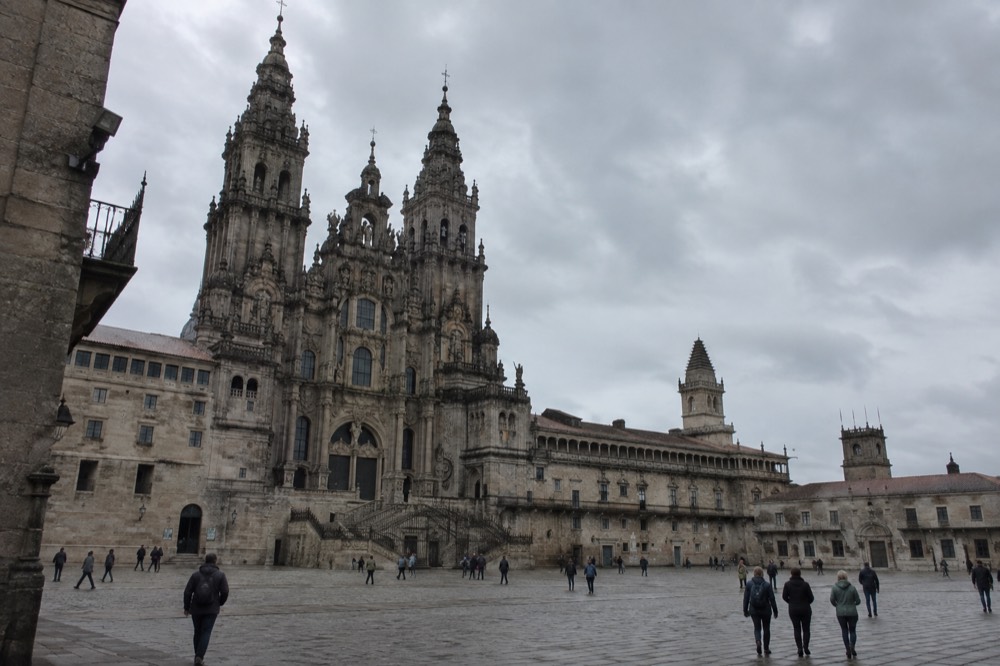
What Should You Pack For The Camino Inglés?
Pack for rain first and warmth second, because AEMET's data shows a wet year-round oceanic climate on this route. The essentials are broken-in walking shoes, a rain shell and pack cover, a sleeping bag liner for albergues, the pilgrim passport for stamps, a modest first-aid kit and blister care, and layers rather than a heavy jacket. Total packed weight should sit low, roughly 10 percent of body weight or less, since the Inglés is short enough that nothing extreme is needed.
Short routes invite overpacking, and overpacking is what turns a five-day stroll into a five-day grind. The Inglés crosses inhabited Galicia the whole way, with towns at regular intervals, so the logistics burden is genuinely light. The full breakdown, including what to leave behind, is in the Camino packing list.
| Packing category | What the route demands | Notes |
|---|---|---|
| Footwear | Broken-in trail shoes or boots, plus sandals for evenings | Wet ground is normal; waterproofing helps more than on drier routes |
| Rain protection | Rain shell, pack cover, dry bags for the credential and phone | AEMET data shows rain in every season |
| Sleeping | Lightweight liner for albergue use | Many municipal albergues provide mattresses, not bedding |
| Documents | Pilgrim passport (credential), ID, proof of insurance | Two stamps per day minimum applies from day one |
| Blister care | Compeed-style dressings, needle and thread or safety pin, tape | The most-used item in any Camino pack |
| Layers | Merino base layer, fleece, warm hat for coastal wind | Coastal sections stay cool even in summer |
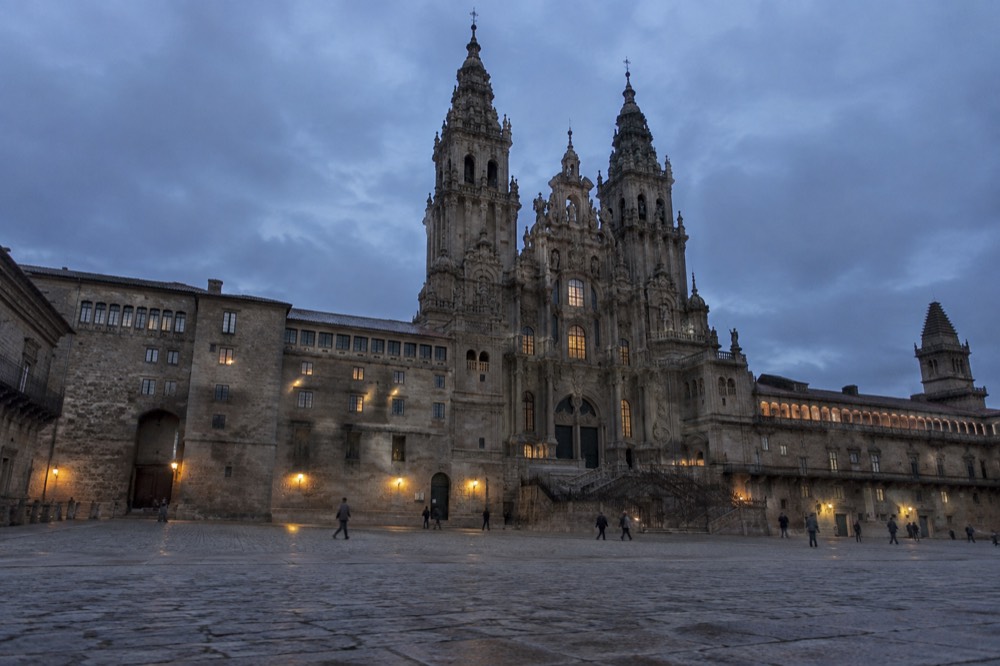
What Does Walking The Camino Inglés Cost?
The Camino Inglés can be walked cheaply, because its cost base is the same as the wider Camino: albergue beds and simple pilgrim menus dominate the budget, and the certificate itself is free. Santiago de Compostela has charged a municipal tourist tax since 1 October 2025, a surcharge on Galicia's tourist-stay tax running from 1 EUR per person per night (maximum 5 nights) in private albergues, campsites and tourist apartments up to 2.50 EUR in five-star hotels, with under-18s and stays in Xunta-run public albergues exempt. Verified paid items in the city include the Cathedral Museum at EUR9 to 23 depending on ticket type and the cathedral's own rooftop tour at EUR15 general, EUR12 reduced.
The honest framing is that no verified per-night albergue price range for this route is officially published, so no number is printed here. What can be said from verified data is the structure: municipal albergues are the cheapest tier, private albergues and guesthouses sit above them, and paradores, including the Hostal dos Reis Católicos on Praza do Obradoiro, sit at the top. Travelers wanting the upper tier priced can check how much a parador night costs in Santiago de Compostela.
| Cost item | Verified status | What to write on your budget sheet |
|---|---|---|
| Compostela certificate | Free on qualification | Issued in person at Rua das Carretas 33 |
| Cathedral interior entry | Free, general entry | Open daily roughly 7:00am to 9:00pm, closing earlier on Saturdays in summer for the pilgrim vigil |
| Cathedral Museum | EUR9 to 23 depending on ticket type | Open daily roughly 10:00am to 8:00pm, ticket office closes 30 minutes earlier |
| Rooftop and Carraca Tower tour | EUR15 general, EUR12 reduced | Bookable online with timed slots on the cathedral's own ticketing site |
| Guided city walking tours | From $12 per person | The Old Town walk with an official guide runs from $12 and is rated 4.8 from 338 reviews |
| Tourist tax | Santiago de Compostela has charged a municipal tourist tax since 1 October 2025, a surcharge on Galicia's tourist-stay tax, from 1 EUR to 2.50 EUR per person per night for up to 5 nights, with under-18s and Xunta-run public albergues exempt | Live policy area across Spanish regions, re-check before travel |
The Old Town walk with an official guide, from $12 per person, is the standout value item on that table: it is the cheapest guided introduction to the city on this site's roster and it is led by an officially accredited guide.
Beyond the walk itself, free options exist for arrival days too. GuruWalk runs a Free Tour Santiago Essential rated 4.91 from 4,797 reviews, tip-based rather than ticketed, and GuruWalk's model means the price is whatever the walker chooses to give the guide at the end.
What Should You Expect When You Arrive In Santiago de Compostela?
Arrival in Santiago de Compostela currently comes with three dated caveats. The Botafumeiro, the cathedral's giant censer, is out of action because dome restoration scaffolding covers its hanging mechanism, confirmed by the Cathedral in writing on 5 September 2026 with no return date published. From 16 October 2026 the 9:30am, noon and 7:30pm pilgrim masses move to the Church of San Agustin, with only the 7:30am mass staying in the Cathedral. And 2027, not 2026, is the next Holy Year.
The mass relocation deserves its own table, because pilgrims plan arrival days around the noon mass and the change catches people out. Before 16 October 2026, the pilgrim masses are held at the Cathedral's main altar at 7:30am, 9:30am, noon and 7:30pm daily. After that date, the three later services relocate while the early one stays. Any page of advice written after October 2026 that still sends walkers to a noon mass at the High Altar is out of date, and this site will not do that.
| Pilgrim mass | Until 15 October 2026 | From 16 October 2026 until further notice |
|---|---|---|
| 7:30am | Cathedral, Communion chapel | Cathedral, Communion chapel, unchanged |
| 9:30am | Cathedral, High Altar | Church of San Agustin, near the Cathedral |
| 12:00 noon | Cathedral, High Altar | Church of San Agustin, near the Cathedral |
| 7:30pm | Cathedral, High Altar | Church of San Agustin, near the Cathedral |
The Botafumeiro situation is simpler to state than to fix. In a normal year it swings on 12 fixed liturgical solemnities, among them Epiphany on 6 January, Easter Sunday, the Feast of St. James on 25 July, the Assumption on 15 August, All Saints on 1 November, the Immaculate Conception on 8 December and Christmas Day, always at the end of the Eucharist. That is how it normally works. At present, none of those dates produce a swinging censer, because the scaffolding for the cimborrio restoration blocks the mechanism, and the private-request option, normally around EUR450 to 500, is equally unavailable. Walkers arriving in late 2026 should treat any sighting claim from any source with suspicion and check the Cathedral's liturgy information close to their date. The dedicated Botafumeiro guide carries the fuller schedule.
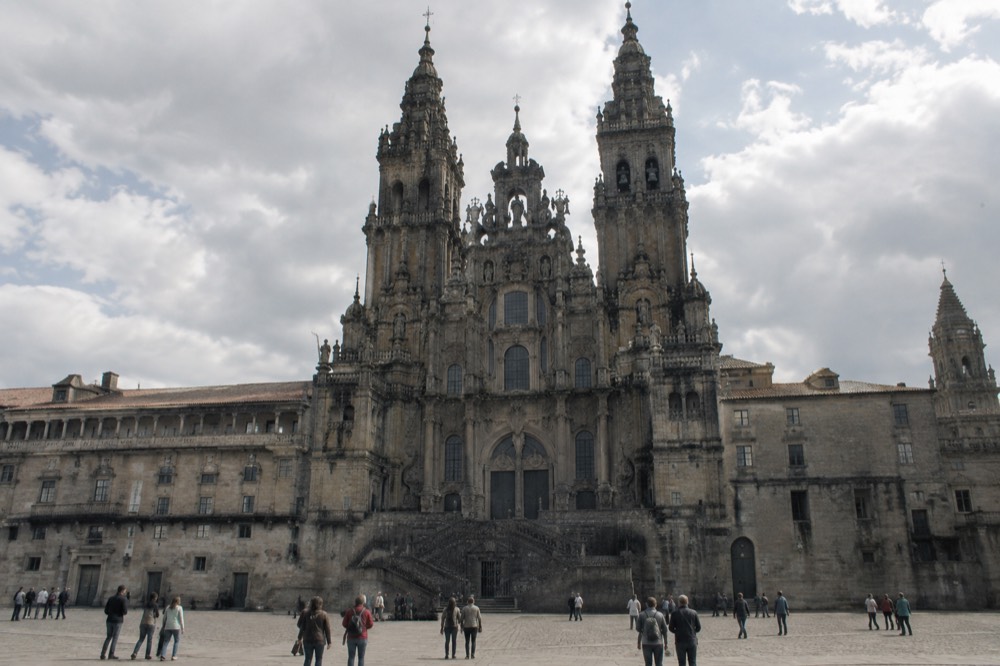
The arrival experience is otherwise unchanged. The Cathedral interior stays open daily, roughly 7:00am to 9:00pm with free general entry, and the tomb, crypt and nave remain fully accessible, per the verified status of the works: the scaffolding affects the crossing and the censer, not the visiting spaces. The Portico da Gloria, Master Mateo's carved west entrance, completed its major restoration back in 2018, and visits are time-limited for conservation reasons. Full ticketing detail lives in the cathedral tickets and opening hours guide on this site.
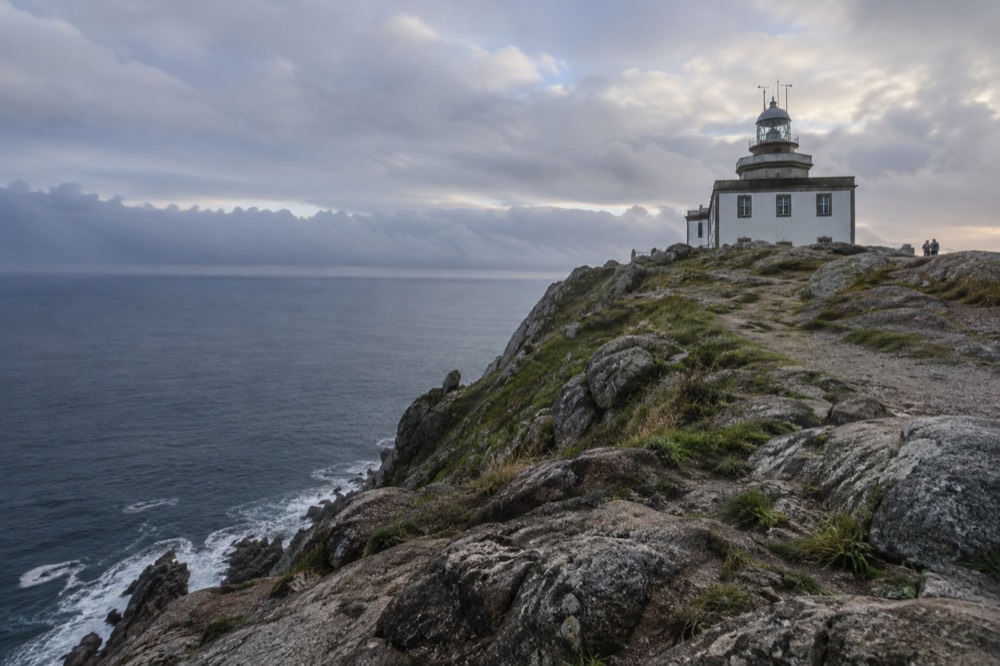
Many Inglés walkers add one more journey after arrival: the extension walk from Santiago to Fisterra on the coast, the Camino Finisterre, traditionally treated as the true end of the road at what the Romans called the end of the world. For those who would rather ride than walk the coast, these are the strongest options:
The Costa da Morte full-day excursion from $60 per person, rated 4.8 from 267 reviews, covers Finisterre, Muxía and the Cabo Vilán lighthouse stop, and pairs naturally with an Inglés finish.
Is The Camino Inglés The Right Route For You?
The Camino Inglés is the right route for walkers with one week or less, anyone starting from Britain or Ireland who wants to echo the original sea journey, and pilgrims who want a recognized route with a valid Compostela claim without the commitment of the Camino Francés. It is the wrong route for anyone seeking the big social pilgrimage, large albergue scenes or alpine scenery, because the Inglés is short, quiet and green rather than epic. Its certificate eligibility depends entirely on starting at Ferrol.
Choosing between routes is mostly a question of time and temperament. The Camino Portugués offers a comparable short-ish walk from the south, with its own coastal and inland variants, and the northern and mountain routes suit walkers with more time and a taste for elevation. Reaching the start matters too: comparing the practical entry points, including the airport bus, currently line 6A at EUR1 to the driver or EUR0.36 by card, though a new Monbus contract with a fare near EUR6 is expected as early as December 2026, so the fare must be treated as subject to change.
The broader context is in this site's Camino de Santiago guide, and the one-week format that fits the Inglés best suits travelers combining the walk with more of the region.
Common Questions About The Camino Inglés
Can You Get The Compostela Walking The Camino Inglés?
Yes, but only from the Ferrol start. The Oficina del Peregrino requires the last 100km to be walked on a recognized route, and the Ferrol branch of the Camino Inglés is the one that covers that minimum. The shorter branch from A Coruña falls short and does not qualify walkers for the certificate.
How Many Days Does The Camino Inglés Take?
Most walkers spread the route from Ferrol over five or six walking days, which is why it suits a single free week. The route is short by Camino standards, with the climb to Hospital de Bruma and the descent through Sigüeiro shaping the middle of the walk.
Where Does The Camino Inglés Start?
It has two traditional starts, both on the Galician coast: Ferrol, on the Ferrol estuary, and A Coruña. The two branches converge before Hospital de Bruma and share the rest of the path into Santiago de Compostela.
Is The Camino Inglés Well Marked?
It is a recognized official route, waymarked with the standard Camino yellow arrow and scallop shell signage, and it is walked by far fewer people than the Camino Francés. Walkers should still carry the credential, a map or guide, and note that services are sparser than on the busier routes.
Can The Botafumeiro Be Seen On Arrival In 2026?
Not at present. The Botafumeiro is out of action because scaffolding for the cathedral dome restoration covers its hanging mechanism, confirmed by the Cathedral in writing on 5 September 2026, with no return date published. It normally swings on 12 fixed solemnities a year, but no visitor should currently expect to see it.
Do The Pilgrim Masses Still Happen In The Cathedral?
Until 15 October 2026 the pilgrim masses are held at the Cathedral's main altar at 7:30am, 9:30am, noon and 7:30pm. From 16 October 2026 the 9:30am, noon and 7:30pm masses move to the nearby Church of San Agustin, while the 7:30am mass stays in the Cathedral's Communion chapel.
The Camino Inglés earns its place in the pilgrim system the honest way: it is short, it is real, it ends at the same cathedral door, and from Ferrol it carries the same certificate weight as any long route. Walk it in late spring, stamp the credential twice a day, and finish in time to book the rooftop tour before the evening light goes.