Camino de Santiago Packing List: What To Pack For The Walk To Santiago de Compostela
A practical, item-by-item Camino de Santiago packing list for the walk into Santiago de Compostela, built around verified rules on pilgrim documents, Galicia's wet climate and the Cathedral's own requirements.
Short answer
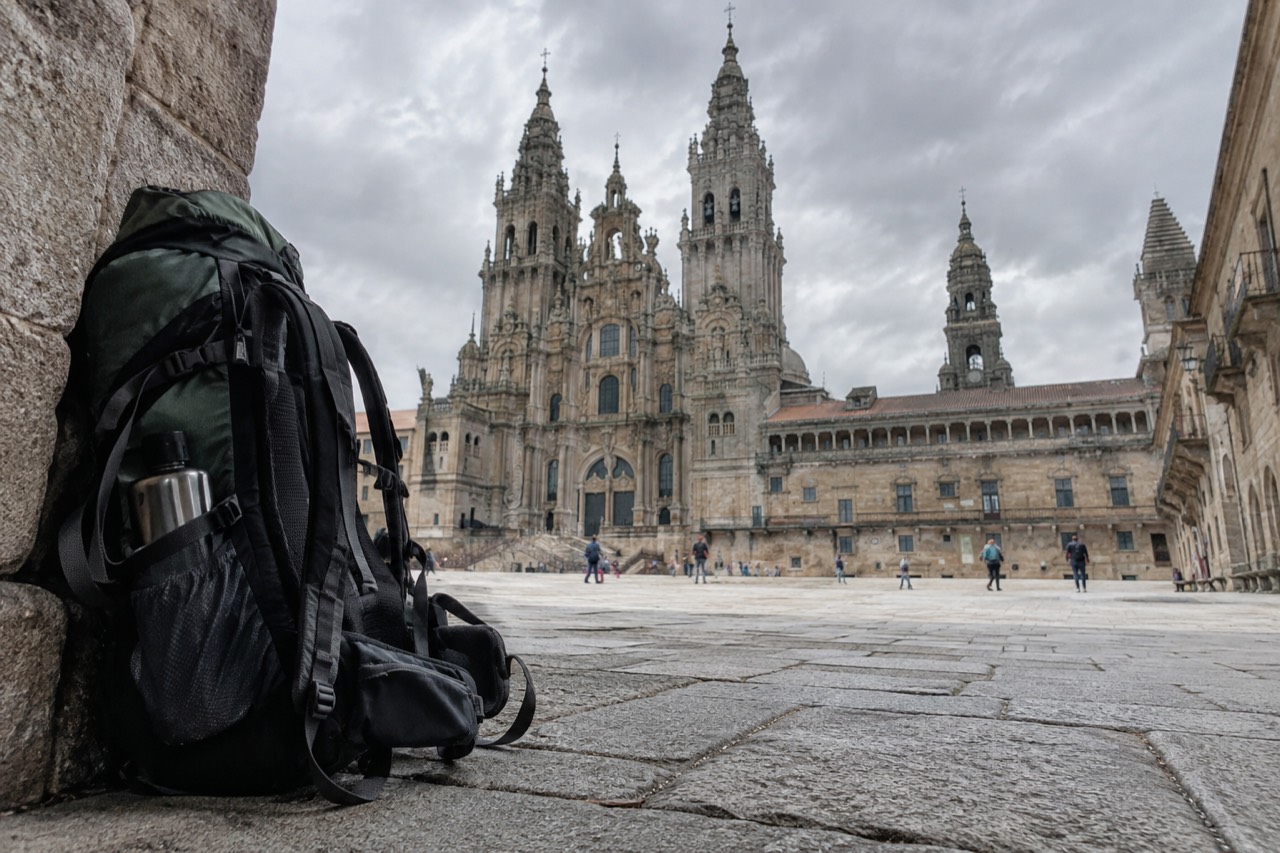
Pack one 30-40 litre backpack carrying no more than about 10 percent of your body weight: two sets of walking clothes, broken-in trail shoes, a rain jacket and pack cover, a sleeping bag liner for albergues, a credencial with two stamps per day, and minimal electronics. The Camino de Santiago rewards the lightest possible pack.
Every pilgrim who reaches Santiago de Compostela learns the same lesson somewhere on the trail, usually on the second climb out of a river valley: the Camino de Santiago punishes heavy luggage and forgives almost everything else. The route into the pilgrim cathedral city of Galicia passes through wet Atlantic weather, stone villages and long stretches with no shop, and the people who arrive smiling are the ones carrying the least. The Oficina del Peregrino's own rules reward documentation over equipment, two stamps per day in a credencial, while AEMET's climate data for the city shows a wet, temperate oceanic pattern with heavier rain from October to March and the driest months in July and August. A packing list for this walk is therefore less a shopping trip and more a discipline of refusal.
This guide, from the editors at Santiago de Compostela Travel Guide, covers clothing, footwear, pack weight, documents, rain protection, electronics and the things best left behind. The rules on pilgrim documents come straight from the Pilgrim's Office, and the practicalities around arrival come from the Cathedral's own published arrangements, including the changes that took effect in 2026. Start with the broader picture if you are new to the route: the Camino de Santiago itself, its history and its routes, and the full network of Camino routes that lead into the city.
What Goes In A Camino de Santiago Packing List?
A Camino de Santiago packing list covers seven groups: one set of walking clothes plus one spare, broken-in trail shoes with hiking socks, a 30-40 litre backpack kept under about 10 percent of your body weight, rain protection for body and pack, a sleeping bag liner for albergue bunks, your credencial and identification, and a small wash kit with blister care. Nothing else earns its place. The walk is a hostel-to-hostel trek, not a wilderness expedition, and shops appear every few hours.
The single biggest mistake first-time pilgrims make is packing for a hiking holiday in the mountains. The Camino is a serviced route: beds, food, water and pharmacies appear daily on all the main branches, including the Camino Frances, the busiest of them all. Water sources are frequent, so large water capacity is unnecessary. Evening meals and breakfast are available in nearly every town, so cooking gear is dead weight.
The second mistake is packing for the arrival rather than the journey. Nice clothes for Santiago de Compostela itself can be bought or shipped ahead, or carried in a small separate bag transferred between hostels. Your Camino accommodation in albergues will be basic municipal and private hostels with bunks, and everything you carry needs to fit in one locker or beside your bed.
| Packing group | What it covers | Typical quantity |
|---|---|---|
| Walking clothes | Shirts, trousers, underwear, socks | 2 sets total |
| Footwear | Broken-in shoes, sandals for evenings | 1 pair each |
| Pack | 30-40 litre backpack, rain cover | 1 |
| Sleeping | Bag liner or light sleeping bag | 1 |
| Documents | Credencial, ID, insurance card | 3 items |
| Health | Blister kit, sunscreen, personal meds | 1 small kit |
That table is the whole list in miniature. The rest of this guide expands each group, explains what the verified rules require for the Compostela certificate, and flags the one document that matters more than any piece of gear: the pilgrim passport described in our guide to the credencial.
Which Clothing Items Do You Actually Need On The Camino de Santiago?
Two complete sets of walking clothes, one worn and one spare, plus a warm midlayer, a sun hat and underwear for a few days. That is the full clothing list for the Camino de Santiago: two quick-dry shirts, two pairs of walking trousers or one pair plus shorts, two or three pairs of socks, and a fleece or light down layer for cold mornings. Albergues have hand-basins and drying lines, so one spare set is enough to wash and rotate daily.
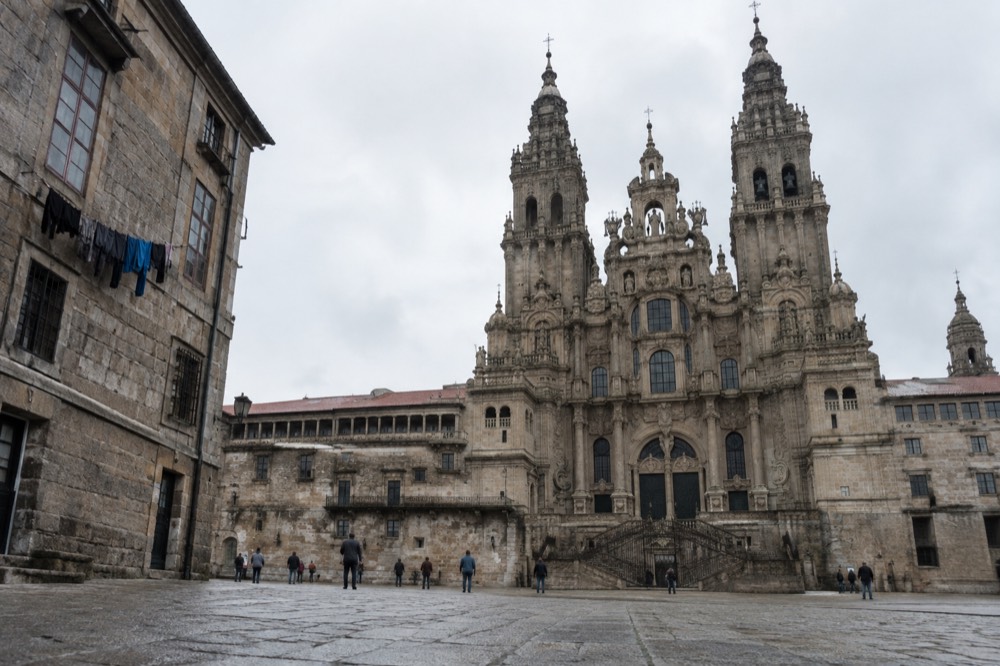
Fabric choice matters more than brand. Merino wool and synthetic quick-dry materials can be washed in a basin in the evening and worn again the next morning. Cotton takes too long to dry in Galicia's humid climate, and AEMET's data for the Santiago de Compostela station shows why: the region is wet year-round, with annual precipitation on the order of 1,690 to 1,890mm depending on the station and year. Anything that stays damp stays heavy.
Even in summer, mornings on the meseta and in the Galician hills can start cold. One warm midlayer handles this, and it doubles as a pillow in a stuff sack. A sun hat and a warm hat together weigh almost nothing and cover both ends of the year, since the best month to walk depends heavily on temperature and rain.
| Clothing item | Quantity | Why it earns its place |
|---|---|---|
| Quick-dry shirt, short or long sleeve | 2 | Wash one, wear one, daily rotation |
| Walking trousers or shorts | 2 | Same rotation, one convertible pair works |
| Underwear | 3-4 | Light, washable, no laundry dependence |
| Merino hiking socks | 3 | Rotate pairs, dry overnight |
| Fleece or light down midlayer | 1 | Cold starts, evenings, doubles as pillow |
| Sun hat | 1 | Exposed stages across the meseta |
| Warm hat | 1 | Cool mornings, shoulder seasons |
Resist the urge to add. If you walk in shoulder season, one extra midlayer is defensible; a second outfit for evenings is not. Albergue culture is forgiving about worn, simple clothes.
Once you have trimmed the wardrobe, the reward for arriving light in the city is real. A well-reviewed option for the days after you finish is below.
What Footwear Works For Walking To Santiago de Compostela?
Broken-in trail shoes or runners, not new hiking boots, are the standard footwear for the Camino de Santiago, worn with merino hiking socks and carried-pole sandals for evenings. The route into Santiago de Compostela runs mostly on tracks, farm lanes and some asphalt, so cushioning and fit beat ankle support. One pair on your feet, one spare sock rotation, one pair of light sandals in the pack.
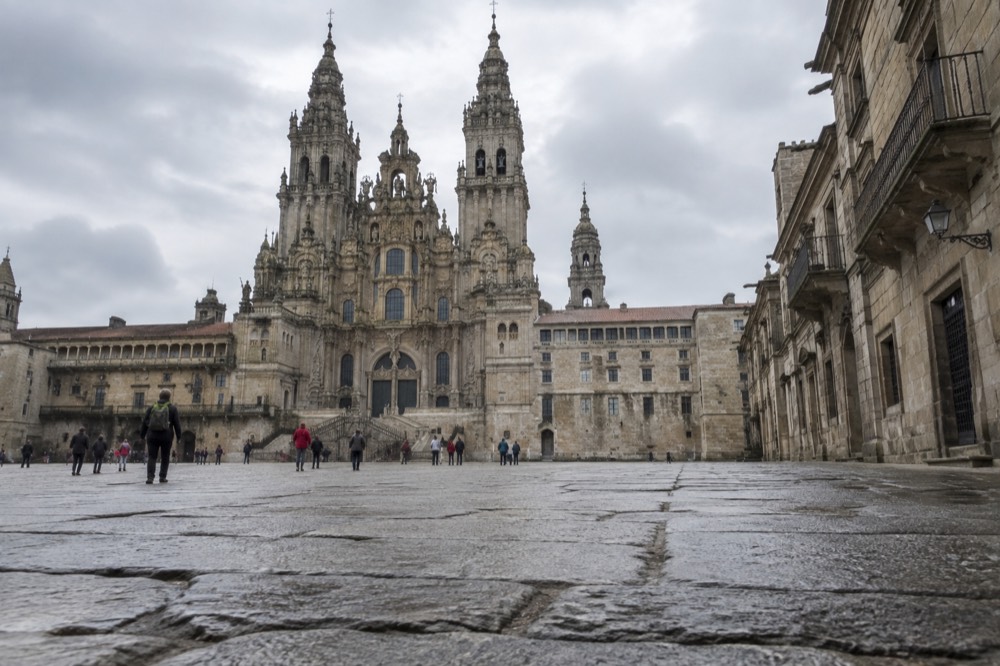
The blister question decides more Camino endings than weather or fitness. Blisters come from friction: new shoes, damp socks, and downhill sections where feet slide forward. The prevention kit is small and non-negotiable:Compeed-style blister plasters in several sizes, a needle and thread or small scissors, antiseptic wipes, and a small roll of sports tape. Treat hot spots the moment they appear, not at the end of the day.
Evening sandals let your feet breathe and get you to the shower without wet socks. Choose something that can survive a shared shower floor. Trekking poles are genuinely useful on the descents into the Galician river valleys and are permitted, though some pilgrims prefer to walk without them; if you fly in, check whether your airline accepts poles in checked luggage or buy cheap ones at the start.
| Footwear item | Quantity | Notes |
|---|---|---|
| Trail shoes or runners | 1 pair, worn in | Not new. Break them in for weeks beforehand |
| Evening sandals or flip-flops | 1 pair | Showers, evenings, swollen-feet days |
| Merino socks | 3 pairs | Rotate, wash nightly, dry on the pack |
| Blister plasters | 1 pack, several sizes | The most-used item in any pack |
| Sports tape | 1 small roll | Prevention on hot spots |
| Trekking poles | 0-2 | Personal choice, useful on descents |
If your arrival in the city coincides with the sightseeing rush, a timed tour of the Cathedral complex saves queuing for the things you most want to see after walking hundreds of kilometres. Check availability for the Cathedral, Portico, Roofs and Museum tour, from $56 per person and rated 4.6 from 79 reviews.
How Heavy Should Your Camino Backpack Be?
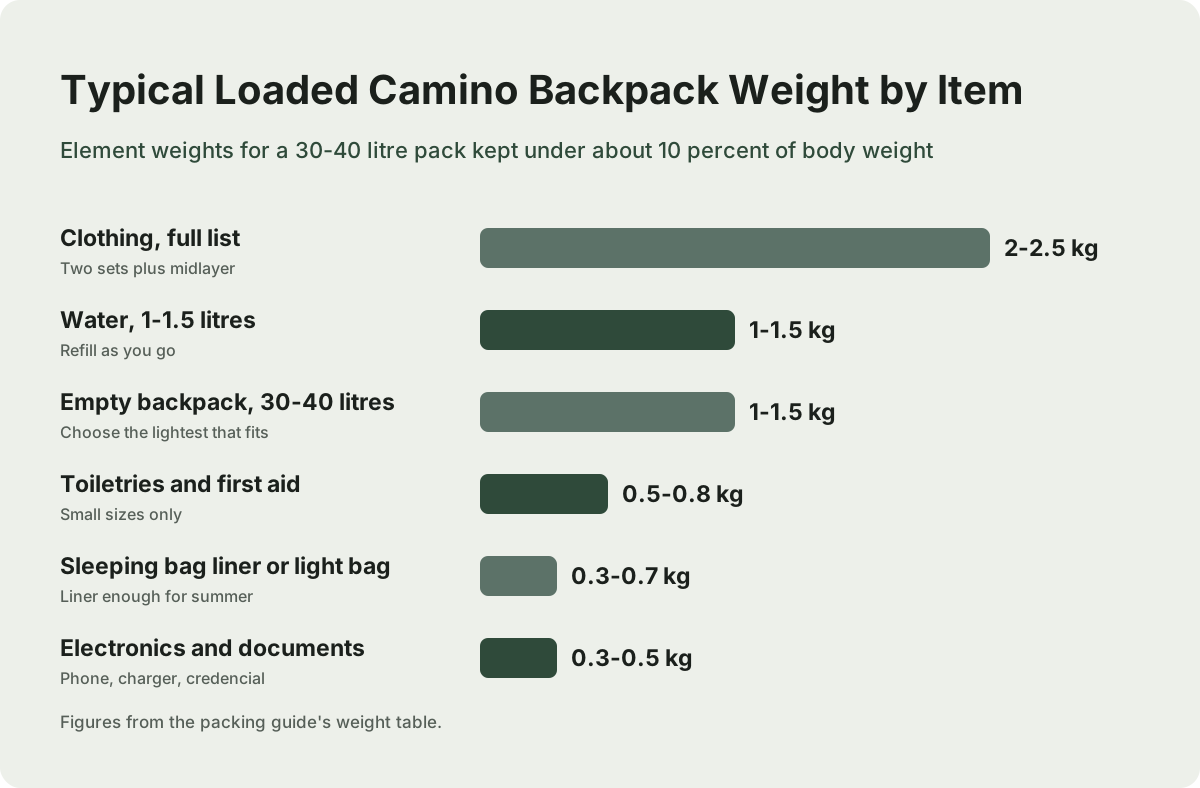
Aim for a total pack weight of no more than about 10 percent of your body weight, which for most walkers means 6-8 kilograms loaded including water, and a 30-40 litre backpack to carry it. The Camino de Santiago is walked daily for weeks, and the standard advice from every established pilgrim association is that lighter is better. If the pack weighs more than 10 percent of body weight, something in it has not earned its place.
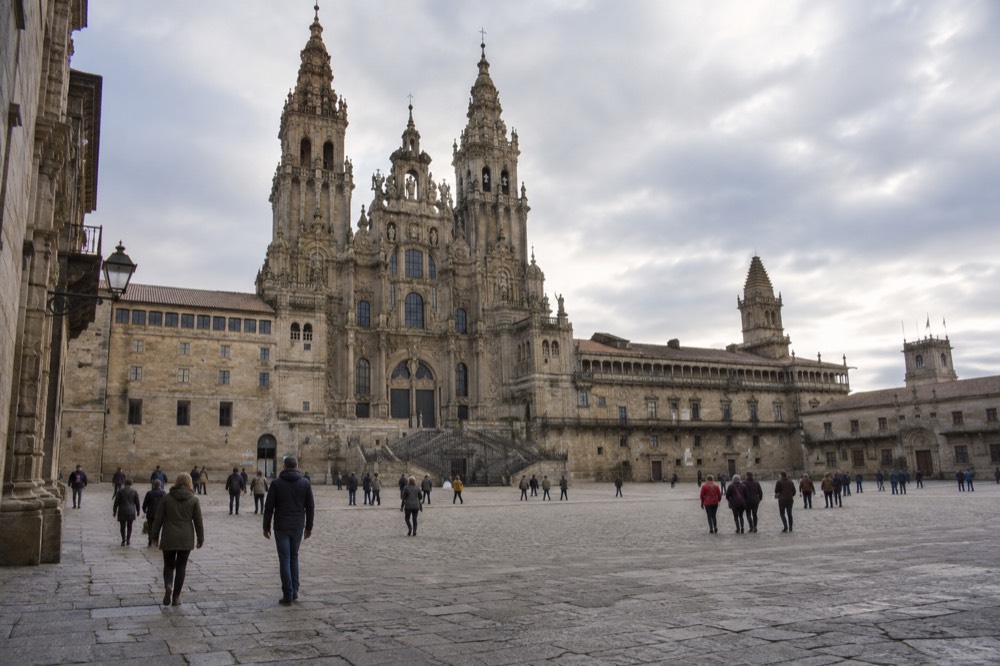
Pack size enforces pack discipline. A 30-40 litre pack simply cannot swallow the extras, and that is its virtue. Look for a light pack with a good hip belt, a back system that lets sweat escape, and a rain cover that fits over it. A pack liner or heavy-duty bin bag inside adds insurance for Galician downpours, which are part of the walk regardless of season.
Distribute weight high and close to the spine, keep the heaviest items against your back, and fill water bottles only partway at the start of each stage: shops and fountains appear regularly along all main routes, and the stages themselves are well documented on our Camino de Santiago map page. How long each route takes is its own question, answered in how long it takes to walk the Camino de Santiago.
| Weight element | Typical loaded weight | Notes |
|---|---|---|
| Empty backpack, 30-40 litres | 1-1.5 kg | Choose the lightest that fits |
| Clothing, full list above | 2-2.5 kg | Two sets plus midlayer |
| Sleeping bag liner or light bag | 0.3-0.7 kg | Liner enough for summer |
| Toiletries and first aid | 0.5-0.8 kg | Small sizes only |
| Electronics and documents | 0.3-0.5 kg | Phone, charger, credencial |
| Water, 1-1.5 litres | 1-1.5 kg | Refill as you go |
Add the rows and the discipline becomes obvious: every category competes for the same couple of spare kilograms. The average cost of walking the Camino is largely a function of accommodation and food choices, but weight is the one variable you fix before you leave home.
What Documents And Pilgrim Gear Do You Need?
Three documents matter on the Camino de Santiago: the credencial, the pilgrim passport you stamp twice per day, your passport or national ID, and an insurance card or travel policy number. The Oficina del Peregrino's FAQs state the Compostela requires the last 100km walked or the last 200km cycled on a recognized route, continuous, with at least two stamps per day from official stamping points, and the certificate is issued in person only.
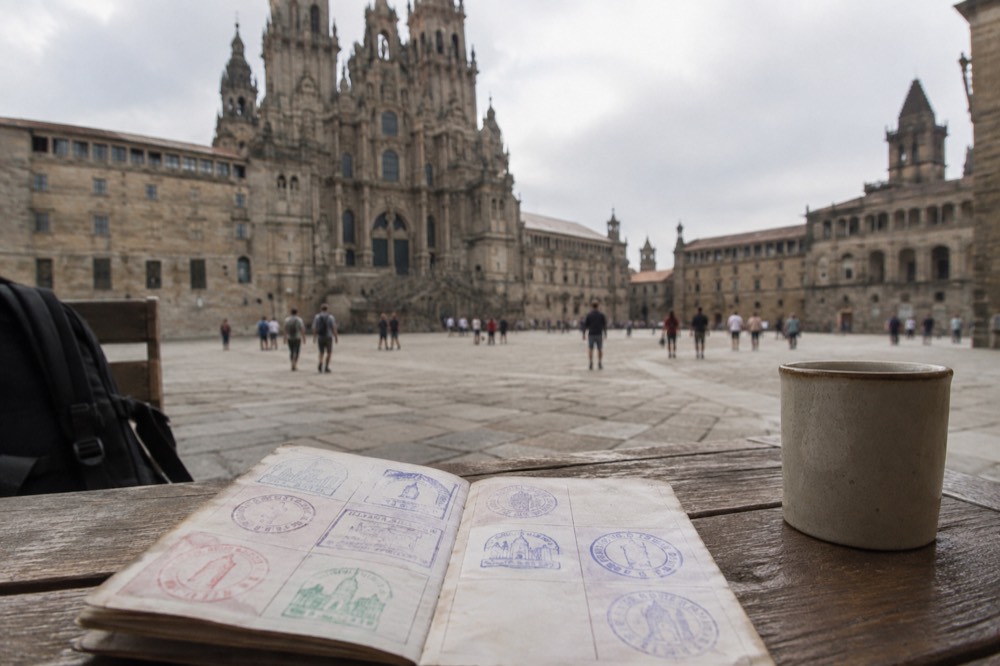
The credencial is the one item that turns a long walk into a pilgrimage. It is issued by pilgrim associations, churches and the Oficina del Peregrino itself, and every albergue, many bars and cafés along the route, and the official stamping points carry their own sellos. Collect at least two per day, spaced across the stage, because that pattern is what the office verifies when you arrive. The office is located at Rua das Carretas 33 in Santiago de Compostela, and its hours vary seasonally, so do not leave the collection to your final afternoon.
Two stamps per day also serve a second purpose: many albergues give priority or access to credencial holders, and some private hostels offer a pilgrim rate. Carry the credencial in a waterproof sleeve, because rain will find it eventually. A plastic wallet with your ID, insurance details and a small amount of emergency cash completes the document kit.
| Document | Carried how | Why |
|---|---|---|
| Credencial, pilgrim passport | Waterproof sleeve, day accessible | Two stamps per day, Compostela eligibility |
| Passport or national ID | Same sleeve | Albergue check-in, certificate identity |
| Insurance card or policy number | Same sleeve | Access to the Spanish health system top-up |
| Emergency cash, small amount | Hidden pocket | Rural stages, early departures |
| Credencial spare sleeve | Inside pack | Rain damage insurance |
For anyone arriving by air, the choice of entry point affects logistics more than gear: see the best airport to fly into to walk the Camino de Santiago and our guide to Santiago de Compostela airport.
What Should You Pack For Rain In Galicia?
A rain jacket with a hood, a rain cover or liner for the backpack, one spare dry layer sealed in a plastic bag, and dry bags for the credencial and electronics: this is the complete rain kit for the Camino de Santiago. Galicia's climate is wet year-round, and AEMET's station data for Santiago de Compostela shows wetter conditions from October to March with the driest months in July and August. Rain is not a risk here, it is a schedule item.
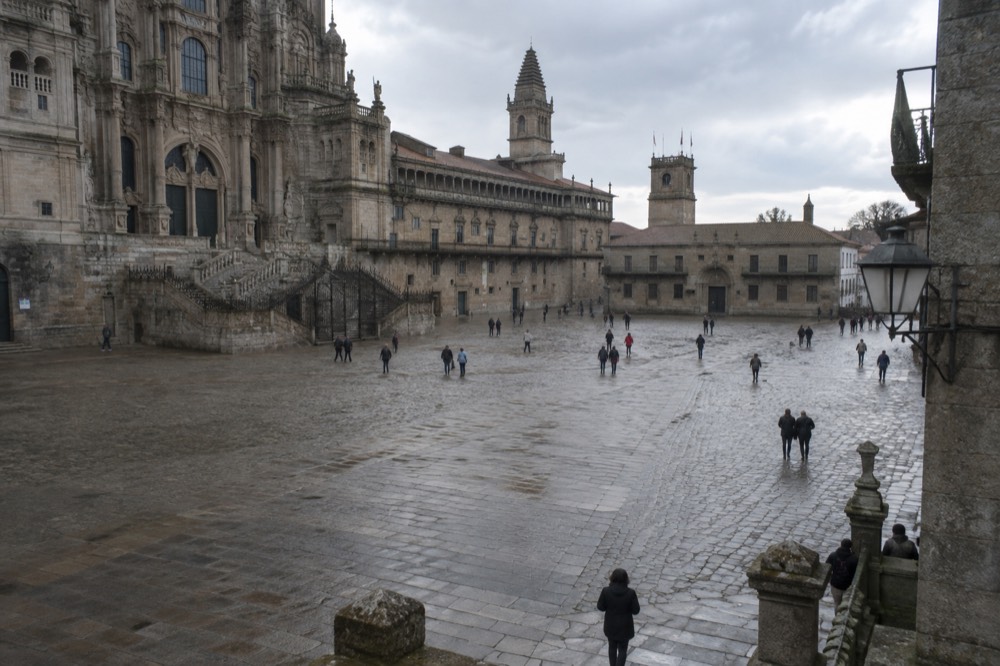
The classic Galician rain is horizontal and arrives in long drizzle rather than single downpours. A hood matters more than it seems, because wet hooded-jacket walkers keep walking while umbrella-carriers stop. Rain trousers divide opinion: in the wetter months they earn their weight, in July and August they usually do not. Check the seasonal question in does it rain a lot in Santiago de Compostela before deciding.
Pack protection is as important as body protection. A soaked sleeping bag is the fastest way to ruin a stage, so the liner approach, a pack rain cover plus an internal bin bag, gives two layers of defence. Keep one dry shirt sealed in a plastic bag as an evening fallback, and accept that walking clothes will be damp by afternoon.
| Rain item | Weight cost | When it earns its place |
|---|---|---|
| Rain jacket with hood | 0.3-0.5 kg | Every month, every route |
| Pack rain cover | 0.1-0.15 kg | Every month |
| Internal pack liner, bin bag | 0.05 kg | Always, near-zero cost |
| Rain trousers | 0.2-0.3 kg | October to March mainly |
| Dry bag for credencial and phone | 0.05 kg | Always |
| Spare dry shirt, sealed | 0.15 kg | Long wet stages |
The final approach into the city crosses wooded hills where the weather can change within an hour. That last morning is a common place to meet the rain that defines this corner of Spain, and arriving with a dry credencial and dry evening clothes makes the arrival itself what it should be, the moment described in our guide to arriving in Santiago on the Camino.
What Electronics And Toiletries Are Worth Carrying?
One smartphone with its charger, a small power bank, earplugs, a sleeping blindfold, and a toiletry kit in travel sizes: that is the full electronics and wash list for the Camino de Santiago. Power sockets in albergues are shared, adapters for Spanish plugs matter for non-European walkers, and earplugs are the single most-cited piece of Camino equipment by pilgrims who slept badly. Nothing larger than a phone earns its weight.
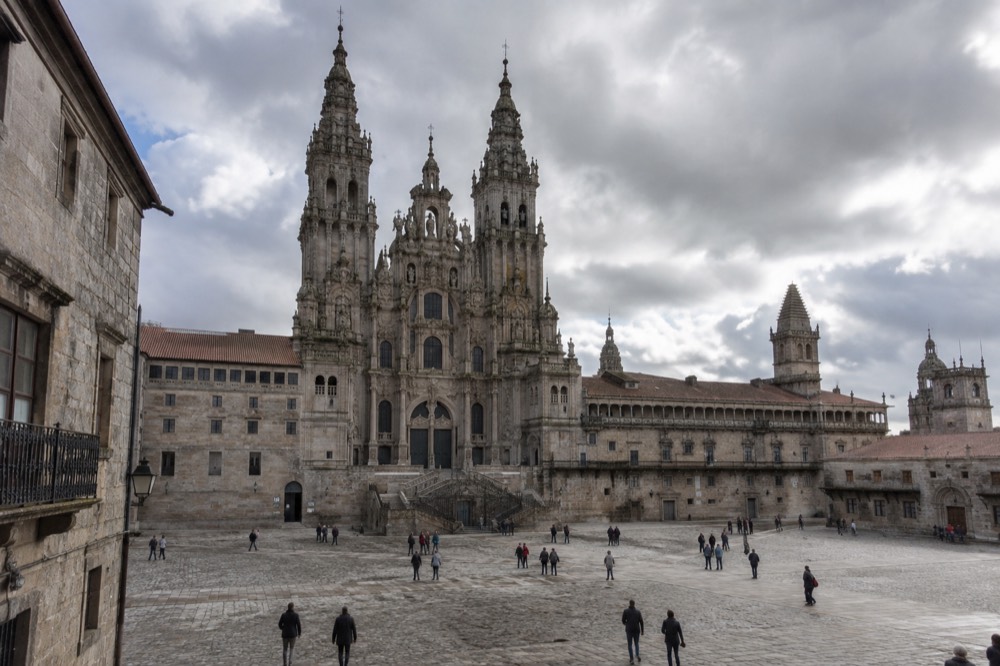
The smartphone covers maps, the credencial stamp log, booking, camera and translation, and every albergue on the main routes expects to see them. A power bank covers long stages between sockets, and a two-socket travel adapter lets you charge alongside a bunkmate. Leave the laptop, the drone, the full-size camera unless photography is the point of your trip, and the hairdryer at home.
The toiletry kit follows the same small-is-better rule. Sunscreen belongs in it even under Galician clouds, because long stages in open country burn quietly. A small first-aid layer, blister care, antiseptic, painkillers and any personal medication, merges into the same bag. Spain's emergency number is 112, and pharmacies in the towns along the route are well used to pilgrims.
| Item | Travel size | Notes |
|---|---|---|
| Smartphone and charger | 1 | Maps, booking, camera |
| Power bank | 1 | Long stages without sockets |
| Plug adapter for Spain | 1 | Type C/F sockets, European |
| Earplugs | 1-2 pairs | Shared dormitories |
| Sleep blindfold | 1 | Lights come on at 6am |
| Sunscreen, small | 1 tube | Open stages, quiet burning |
| First aid, small kit | 1 | Blister care is the core |
What Should You Leave Behind When Walking The Camino de Santiago?
Leave behind cooking gear, water filters, cotton jeans, books beyond one, a second outfit, a hairdryer, a laptop, and anything you cannot bear to lose: the Camino de Santiago is a serviced route with shops, beds and pharmacies daily. Also leave behind the assumption that you will see the Botafumeiro swing, because it is currently suspended for dome restoration with no return date published, and pilgrim masses move to the Church of San Agustin from 16 October 2026.
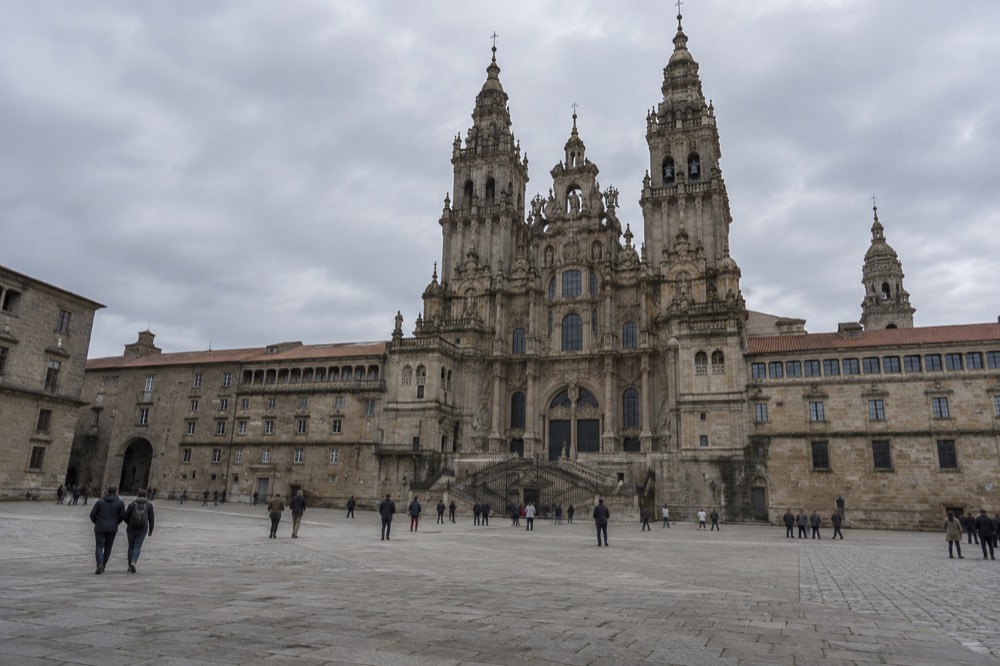
Every recurring piece of Camino folklore about overpacking turns out to be true, and the pattern repeats every season: walkers post boxes home from the first towns with post offices. Plan the refusal instead. A useful test for each item: if it serves only one day out of thirty, or only one evening scenario, it stays home. A related test: if losing it would upset you, it stays home too, because packs get left outside showers and bags ride on luggage racks.
The recurring offenders are easy to list. Cooking stoves and pans are dead weight when cafés and bars appear daily on every main route. Water filters are unnecessary where potable water points and shops are frequent. Cotton jeans never dry, weigh more than any alternative, and belong in no rotation. A laptop or full-size tablet duplicates what the phone already does. A full-size bath towel can be replaced by a quick-dry pack towel that weighs a fraction. More than one book is excess when books trade freely along the route, and valuables or jewellery carry loss risk with zero benefit.
Time your walk with crowds in mind as well. The record 530,987 Compostelas issued in 2025 means the busiest months are busier than ever, and the 2027 Holy Year, running from the Holy Door's opening on 31 December 2026, will raise numbers further. Fewer crowds in shoulder season also mean less competition for bunks, which lightens the pressure to carry extras like a full sleeping bag.
After the walk ends, the city deserves more than the inside of an albergue. These picks are the ones consistently worth booking once the boots come off.
A fitting first evening is a short guided walk through the old town, the Historic Walking Tour and Highlights option from $17 per person, rated 4.9 from 29 reviews. For a bigger reward after the rest day, the full-day excursion to Catedrais Beach, Lugo and Asturias from $68 per person, rated 4.9 from 181 reviews, is a strong pick. Both are covered in our rest day after the Camino planning, alongside the deeper background in how do I get to Camino de Santiago from Madrid for the journey home.
Common Questions About Camino de Santiago Packing
How heavy should a Camino de Santiago backpack be?
No more than about 10 percent of your body weight, which usually means 6-8 kilograms loaded including water. Use a 30-40 litre pack, because the size itself prevents overpacking.
Do I need a sleeping bag on the Camino de Santiago?
A sleeping bag liner is enough for summer and covers most albergues' blanket policies. In the cooler months from October to March, a lightweight sleeping bag rated for cool conditions is the safer choice, since not every hostel provides blankets.
Should I bring hiking boots or trail shoes for the Camino de Santiago?
Broken-in trail shoes or runners are the standard choice, because the route is mostly tracks, lanes and some asphalt rather than rocky mountain terrain. Cushioning and fit matter more than ankle support. Never start with new shoes, whatever type you choose.
What documents do I need for the Compostela certificate?
The Oficina del Peregrino's FAQs state you must walk at least the last 100km on foot, or cycle the last 200km, on a recognized route, with at least two stamps per day in your credencial. The certificate is issued in person at Rua das Carretas 33 in Santiago de Compostela.
Do I need rain gear if I walk the Camino in summer?
Yes. AEMET's climate data shows the Santiago de Compostela area is wet year-round, with July and August only the driest months rather than dry ones. A hooded rain jacket and a pack cover belong in your bag every month of the year.
Can I buy things on the route instead of packing them?
Yes, and you should plan to. Shops and pharmacies appear every few hours on all the main routes, so consumables like sunscreen, blister plasters and even socks can be bought as needed rather than carried in bulk from day one.
The packing list that gets you to Santiago de Compostela is short on purpose: two sets of clothes, one pair of worn-in shoes, rain protection, a liner, your credencial and a phone. Everything else is weight on a walk that measures you daily, and the lightest pack is the one that arrives with the most left to give.