Camino de Santiago Accommodation: Where To Sleep On The Way To Santiago de Compostela
Accommodation on the Camino de Santiago is its own small system: pilgrim albergues tied to the credential, private rooms in villages, and a final night in Santiago de Compostela before the Pilgrim's Office queue. This guide explains how each layer works, what the rules are, and what changes in the city in late 2026.
Short answer
Camino de Santiago accommodation ranges from public and private pilgrim albergues, which require a pilgrim passport (credencial) and are meant for walkers and cyclists in transit, to hostals, small hotels and casas rurales in the towns along the routes. The credential with its two daily stamps is the thread that ties it all together, because it is also what qualifies you for the Compostela certificate at the end.
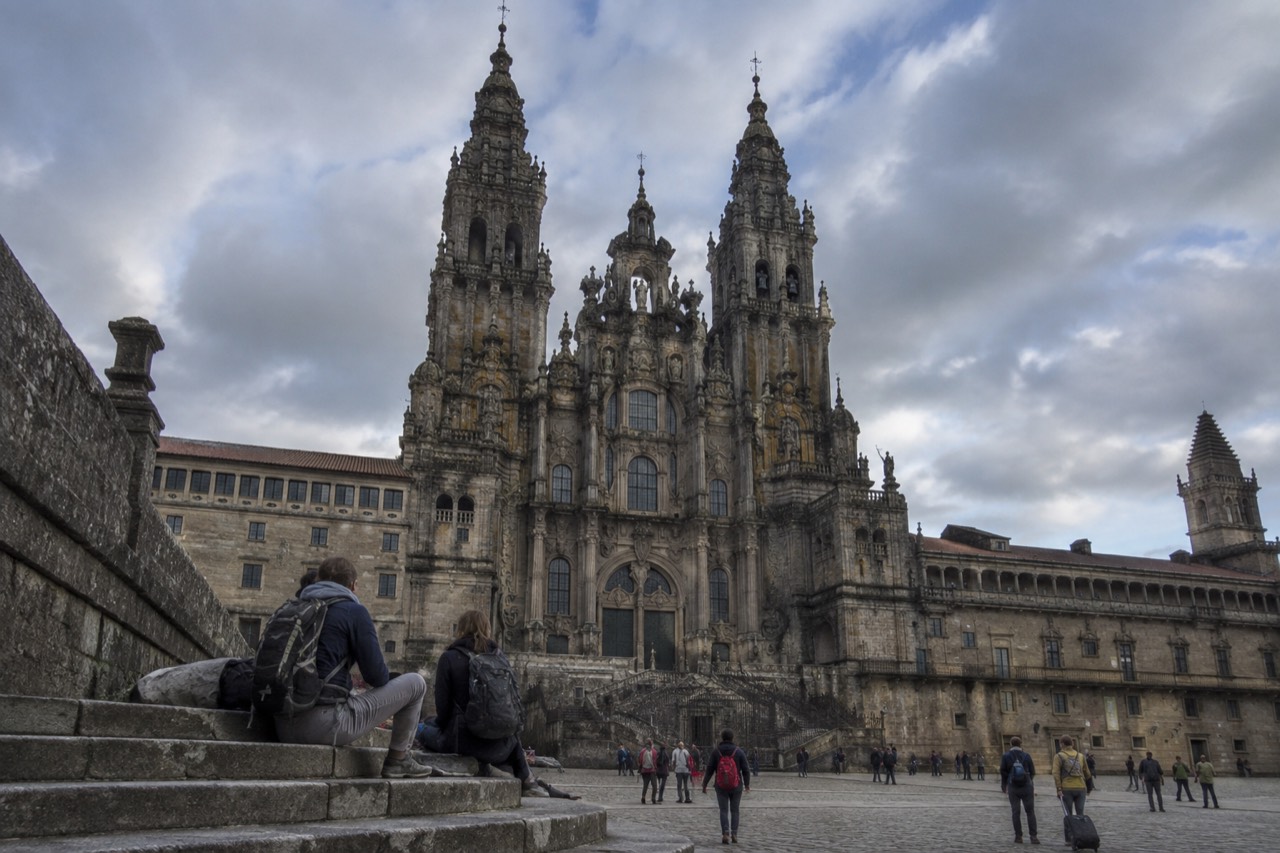
The Camino de Santiago ends at a tomb in Santiago de Compostela, but every walker gets there one bed at a time, and the system of beds along the route is unlike ordinary travel booking. Pilgrim albergues exist specifically for people carrying a credencial, the pilgrim passport stamped twice a day, and the whole accommodation chain from the Pyrenees or from Sarria to the final night in Galicia is built around that document. The Oficina del Peregrino's FAQs state the rule plainly: the Compostela certificate requires the last 100km walked, or the last 200km cycled, on a recognized route, with at least two stamps per day collected in the credencial. Where you sleep, how you prove you walked, and how you finish in the city all connect. This guide from the Santiago de Compostela Travel Guide editors covers how albergues work, what to pack for them, how booking has changed, and what to expect from your arrival accommodation in the city itself, including the mass relocation that takes effect on 16 October 2026.
What Is Camino de Santiago Accommodation?
Camino de Santiago accommodation is a layered system of overnight stays built for people walking or cycling a recognized pilgrim route toward Santiago de Compostela: municipal and parish albergues that ask for a credencial, private albergues run as small businesses, hostals and guesthouses in the towns, casas rurales in the countryside, and conventional hotels at the end. The cheapest tier, the public albergue, is not open to ordinary tourists: it exists for credencial holders in transit.
The distinguishing feature is that the bottom tier is reserved. Public albergues sell a bed, usually a bunk in a shared dormitory, for a single night only, expect you to arrive on foot or by bike, and ask to see the credencial at the door. Private albergues offer similar dormitory sleeping with the option to reserve ahead, and often add private rooms, meals and laundry. Everything else, the private rooms and small hotels, is normal lodging that happens to sit on a thousand-year-old footpath.
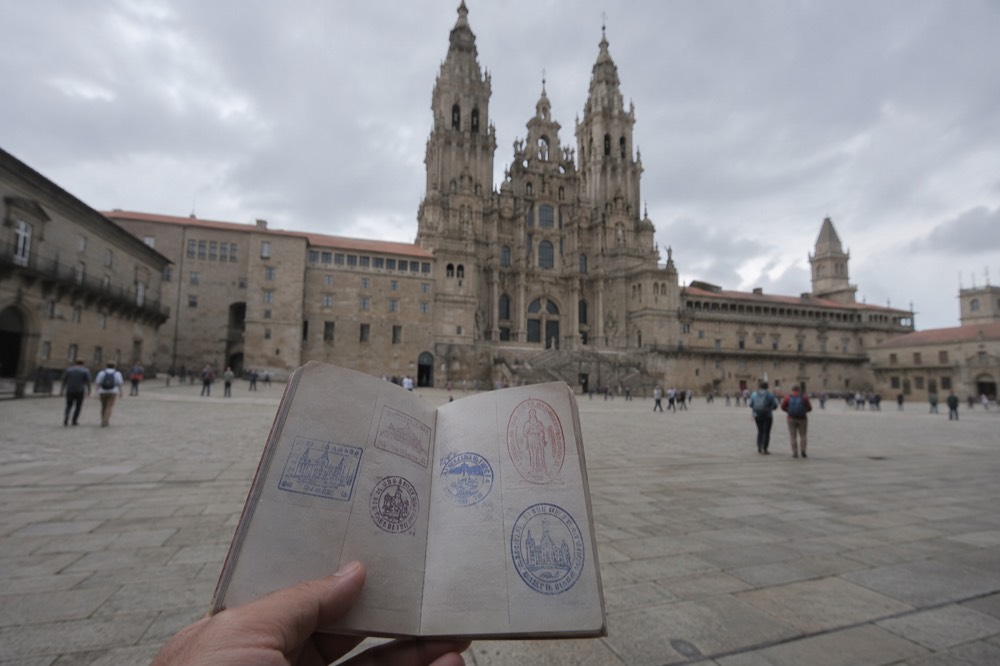
The credential is the key that unlocks the cheapest beds, and it is also the document the Pilgrim's Office in Santiago de Compostela inspects at the finish. The Oficina del Peregrino's FAQs say the credencial must show at least two stamps per day from official stamping points, and many albergues, bars and churches along the routes stamp it as a matter of routine. Collecting stamps while you sleep your way along the route is not separate from the pilgrimage: it is the paperwork of it.
If you are still choosing which route to walk, our Camino de Santiago routes overview compares the main paths, and the Camino de Santiago map guide shows how they converge on the city. The two UNESCO inscriptions underline why the route infrastructure matters as much as the destination: the Old Town of Santiago de Compostela was inscribed in 1985, and the Routes of Santiago de Compostela, the Camino Frances and the Northern Routes, were inscribed separately in 1993. They are two listings, never one date.
| Camino Accommodation Layer | Who It Serves | Typical Access Rule |
|---|---|---|
| Municipal / parish albergue | Walkers and cyclists with a credencial | First-come, first-served, one night usually |
| Private albergue | Pilgrims, bookable in advance | Credencial normally expected, reservations accepted |
| Hostal / guesthouse | Pilgrims and general travellers | Open booking, no credencial needed |
| Casa rural | Families and groups, quieter stops | Open booking, often self-catering |
| Hotel in Santiago de Compostela | End-of-route and city visitors | Open booking, no credencial needed |
What Are Albergues And How Do They Work?
Albergues are pilgrim hostels strung along the Camino routes, and they divide into public ones run by municipalities, parishes or pilgrim associations, and private ones run as businesses. Public albergues sell a bunk in a shared dormitory for a single night only and ask to see the credencial at the door; private albergues offer similar dormitory sleeping with the option to reserve ahead, and often add private rooms, meals and laundry.
Neither tier is a youth hostel in the ordinary sense: the whole point of the bed is that you are passing through on pilgrimage. The public tier is meant for people in transit, and the private tier is a small business that happens to serve the same traffic with more services.
The rhythm of an albergue day is dictated by walking. Doors often open in the early afternoon, beds are claimed in arrival order, lights go out early because everyone rises before dawn. Facilities vary enormously between a stone barn with twenty bunks and a purpose-built hostel with a kitchen and drying room, so the pack you carry matters more than the bed you get. Our Camino packing list guide covers what a dormitory night actually demands: earplugs, a sleeping liner, a quick-dry towel and a headtorch earn their weight on the first night.
The credential interacts with albergues in both directions. The albergue stamps your credencial, and the credencial gets you the albergue bed. The Pilgrim's Office's own FAQs are the authority on what the document must contain at the finish, and walkers aiming for the Compostela should treat the stamp routine as seriously as the walking itself. For anyone wondering whether the whole undertaking suits them, the answer pages on how long it takes to walk the Camino and whether a 70-year-old can walk the Camino cover the same ground.
| Albergue Type | Booking | Nights Allowed | Atmosphere |
|---|---|---|---|
| Municipal | Usually none, walk-in | One | Sparse, communal, cheapest |
| Parish / association | Usually none, walk-in | One | Simple, often donation-based |
| Private albergue | Often bookable | Sometimes two | More services, mixed dorms and rooms |
| Private albergue with rooms | Bookable | Flexible | Quietest of the albergue tiers |
Walking the Camino Frances remains the classic way to experience this system, simply because its infrastructure is the densest, and families weighing the same question can read our page on doing the Camino de Santiago with kids for how the accommodation layer changes with children in tow.
How Do You Book Beds On The Camino de Santiago?
Booking splits depending on the tier: public albergues generally cannot be reserved at all, so you walk and take your chances on arrival, while private albergues, hostals and small hotels increasingly take online reservations, and in peak season, July and August and the last 100km into Santiago de Compostela, pre-booking the private tier is the reliable strategy. Many walkers book only every second or third night and keep the in-between nights flexible.
That flexibility preserves the spontaneous character of the route without gambling on a bed in the busy final stages, which is the trade every walker calibrates for themselves.
The last 100km is where the pressure concentrates, and it is not an arbitrary distance: it is the exact minimum the Oficina del Peregrino requires for the Compostela on foot. Sarria is the classic starting point for that final stretch precisely because it sits at roughly that threshold, and our Sarria to Santiago guide walks through the stage-by-stage reality of it. The record 530,987 Compostelas the office issued in 2025 explain why beds near the finish are under real demand.
Peak-season strategy deserves the honest version. The climate data from AEMET's station at Santiago de Compostela shows a temperate oceanic pattern: wet year-round, wetter from October to March, and driest in July and August, which is exactly when bed competition peaks. Walking in spring or early autumn trades a higher chance of rain for an easier bed. Solo women walkers planning their accommodation more deliberately, booking the private tier in advance on quieter stages, are making sound use of the reservation system rather than compromising the spirit of the route.
| Season | Bed Pressure | Weather Context (AEMET Station 1475X) |
|---|---|---|
| July and August | Highest, book ahead in the last 100km | Driest months of the year |
| May and June | Moderate | Warming, showers still common |
| September and October | Moderate to easing | Wet season builds from October |
| November to March | Lowest | Wettest period, coolest, shortest days |
Where Do You Stay Once You Arrive In Santiago de Compostela?
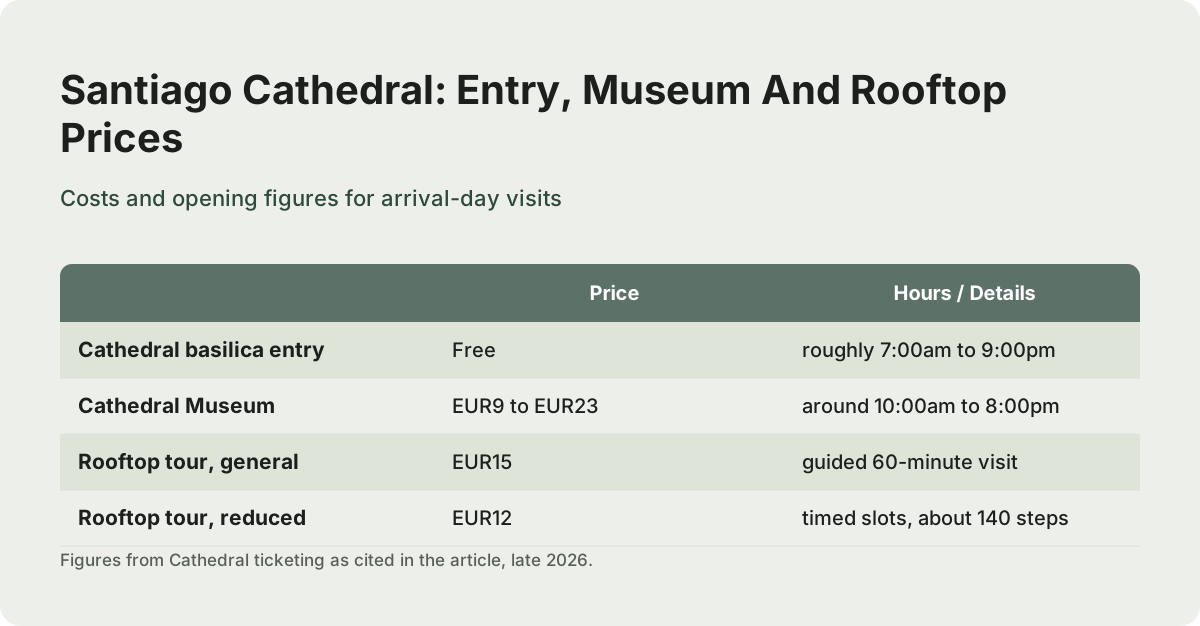
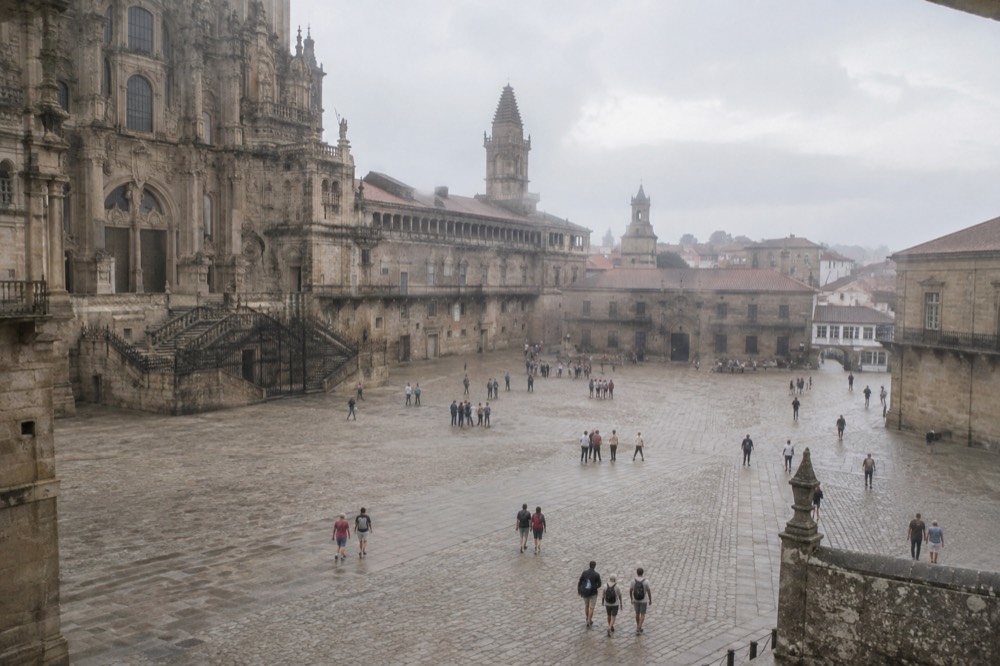
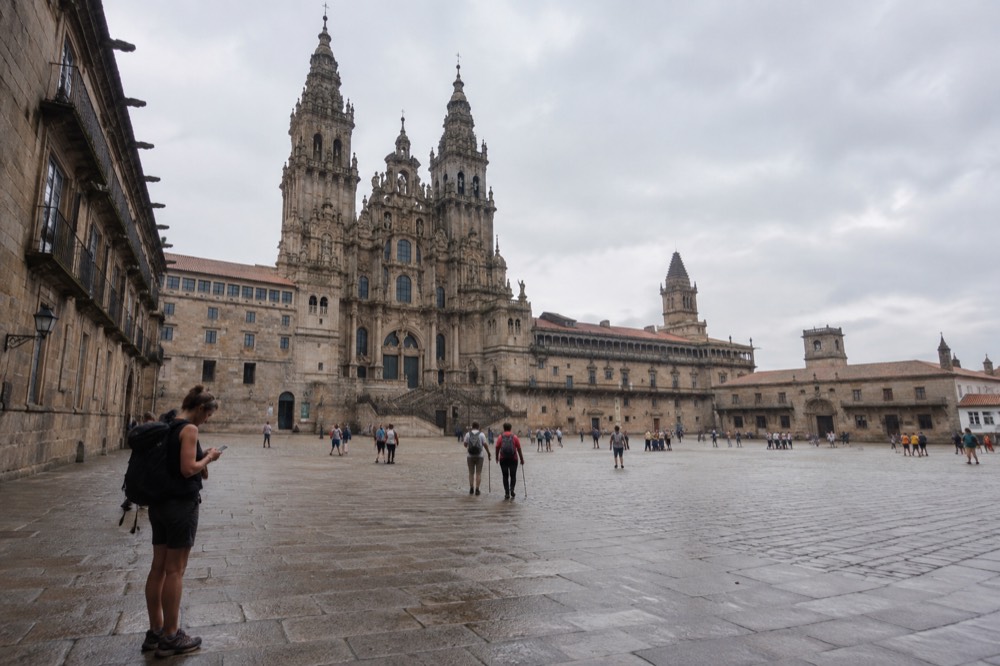
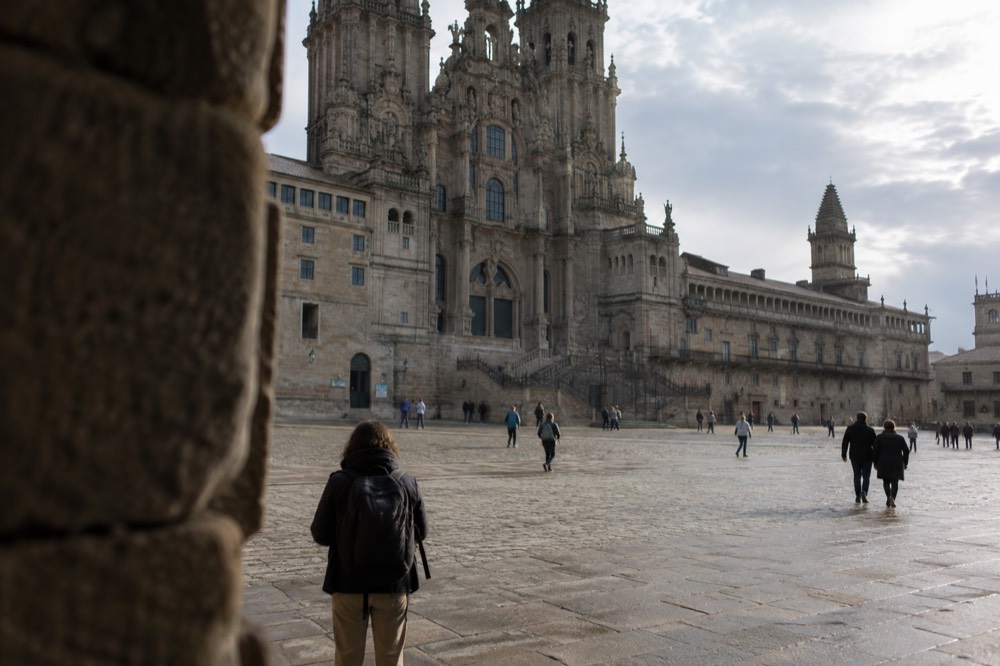
Most pilgrims book their Santiago de Compostela night, or ideally two, in advance, because the arrival day involves the Pilgrim's Office queue at Rua das Carretas 33, a visit to the Cathedral, and ideally a pilgrim mass, and a single rushed afternoon does none of them justice. The Old Town has hostels, hostals and hotels within minutes of Praza do Obradoiro, so stay central, collect the Compostela in person on arrival day, and use the second day for the Cathedral rooftops.
One night in an albergue-style bed at the finish is possible, but the city's own hostel and hotel stock is the comfortable end of the route, and a second day in the old town is what turns the finish into a reward rather than a queue.
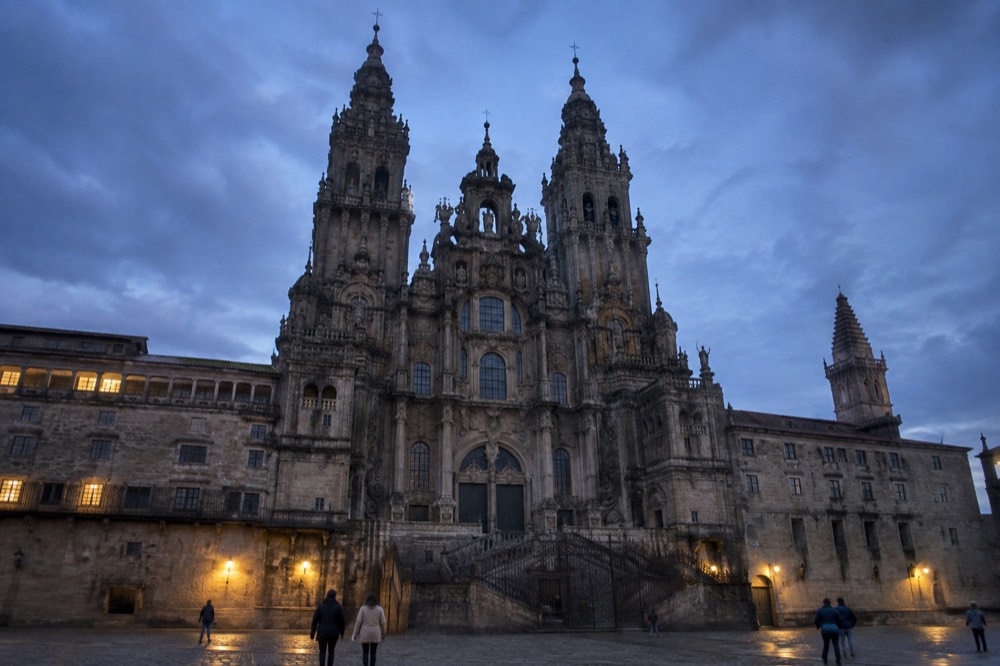
The mass schedule is the one thing that changes while you are packing. Until 15 October 2026, pilgrim masses are held at the Cathedral's High Altar at 7:30am, 9:30am, noon and 7:30pm. From 16 October 2026, while main-chapel works prepare for the 2027 Holy Year, the 9:30am, noon and 7:30pm masses relocate to the nearby Church of San Agustin, and only the 7:30am mass stays in the Cathedral, in its Communion chapel. Our pilgrim mass guide keeps the current arrangement, and any walker arriving from mid-October 2026 onward should plan around the relocation.
Two more Cathedral facts shape an arrival night. The Cathedral's own ticketing shows general entry to the basilica is free, with the interior open roughly 7:00am to 9:00pm, and the Cathedral Museum runs from around 10:00am to 8:00pm with ticket prices between EUR9 and EUR23 depending on ticket type. The rooftop tour, Cubiertas and Torre de la Carraca, is a guided 60-minute visit with about 140 steps and views from roughly 72 metres, at EUR15 general or EUR12 reduced on the Cathedral's own ticketing site, and the ticket also covers the museum's permanent collection for seven days. Booking that ahead is the one arrival-day activity that genuinely sells out.
| Arrival-Day Item | Current Status (Late 2026) |
|---|---|
| Compostela certificate | Issued in person only, Rua das Carretas 33 |
| Requirement (on foot) | Last 100km walked, two stamps per day |
| Requirement (by bike) | Last 200km cycled, two stamps per day |
| Cathedral entry | Free, roughly 7:00am to 9:00pm |
| Rooftop tour | EUR15 general, EUR12 reduced, timed slots |
| Botafumeiro | Currently suspended, dome-restoration scaffolding, no return date published |
The Botafumeiro line in that table is the fact most other guides get wrong. The Cathedral confirmed in writing on 5 September 2026 that the giant censer is temporarily out of action because scaffolding for the cimborrio restoration covers its hanging mechanism, and no return date has been published. It normally swings on twelve fixed solemnities a year, from Epiphany on 6 January to the Transfer of the Apostle on 30 December, but no walker arriving in late 2026 should plan their arrival night around seeing it fly. Our Botafumeiro guide explains the full schedule and the suspension.
The 2027 Holy Year adds a forward-looking reason to think about when you finish. The Holy Door opens on the evening of 31 December 2026 and the Xacobeo runs through 31 December 2027, because 25 July 2027 falls on a Sunday, and our Holy Year 2027 guide covers what that means for crowds and beds. Accommodation in Santiago de Compostela during a Holy Year tightens exactly the way last-100km beds tighten in August, only more so.
What Comes After The Final Night In Santiago de Compostela?
The day or two after arriving is when the city itself becomes the destination, and the two reliable moves are a guided visit of the Cathedral complex with tickets included, and a day trip west to the coast at Fisterra and Muxia, the traditional "end of the world" extension many walkers add after reaching the tomb. A half-day guided option with Cathedral tickets included removes the ticketing and queue guesswork from the arrival visit, and the coastal day trips run full-day itineraries at higher prices.
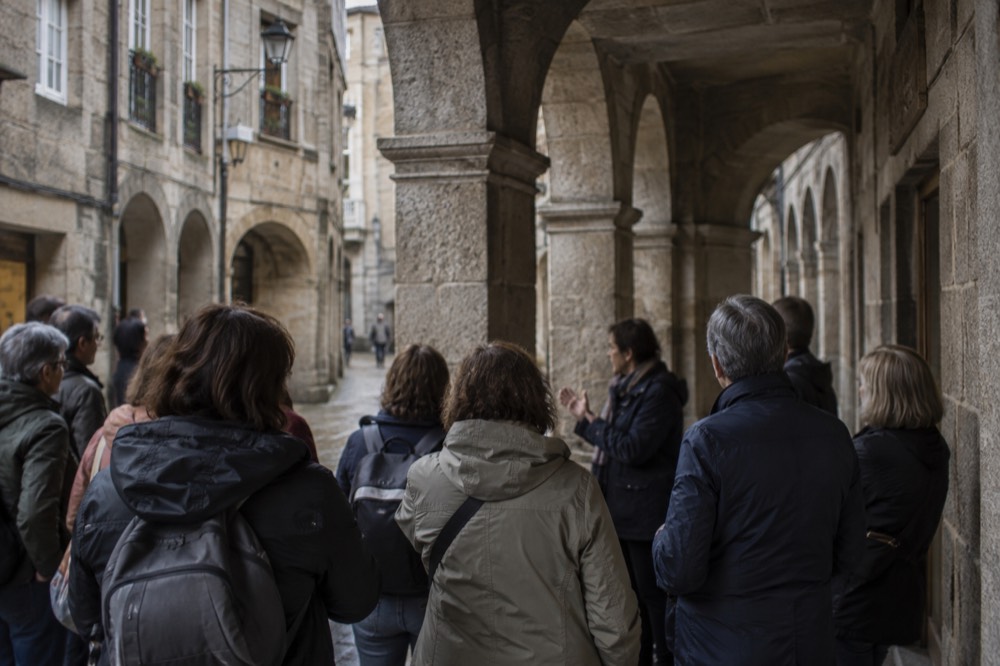
The listing for that half-day guided visit, currently from $45 per person and rated 4.9 from 47 reviews, is worth checking for your dates, since ticket-included options shift with Cathedral availability. Beyond the Cathedral, the old town rewards a slow half day, and an official-guide walking tour of the historic centre, from $12 per person and rated 4.8 from 338 reviews, covers the squares and the stonework that a tired pilgrim's eyes tend to miss on arrival day. The city walk pairs naturally with a rest afternoon, and our rest day after the Camino itinerary is built around exactly this: the rooftop tour, the markets and the quiet corners, paced for legs that have just walked a hundred kilometres or more.
The Fisterra extension has its own pull. The express half-day tour to Fisterra and Muxia, from $45 per person and rated 4.4 from 50 reviews, suits pilgrims with an afternoon to spare, while the full-day Finisterre, Muxia and Costa da Morte itineraries, from around $59 to $60 per person, stretch to the lighthouse, the coast and the beaches of the Costa da Morte. Our Finisterre guide covers the coast itself, and the question of whether the walk from Santiago to Fisterra is worth doing on foot deserves its own weighing.
| Post-Camino Add-On | Format | From (Listing) | Rating (Listing) |
|---|---|---|---|
| Half day, Cathedral tickets included | Half-day guided visit | $45 per person | 4.9 from 47 reviews |
| Old town walk with official guide | Guided city walk | $12 per person | 4.8 from 338 reviews |
| Fisterra and Muxia express | Half-day coach tour | $45 per person | 4.4 from 50 reviews |
| Finisterre, Muxia and Costa da Morte | Full-day coach tour | $59 per person | 4.7 from 2,312 reviews |
For anyone with several spare days after the walk, the rest of Galicia opens up quickly: A Coruna, Vigo, Pontevedra and the Rias Baixas wine country are all reachable for day trips or a short loop. But most pilgrims do the sensible thing: one good hotel bed, one slow day, one coastal trip, and a flight home from Santiago de Compostela airport, which sits about 12km from the old town.
How Do You Get Home After The Camino?
Most walkers fly out of Santiago de Compostela airport (SCQ), about 12km from the old town, where bus line 6A currently runs to the city centre for EUR1 paid to the driver or EUR0.36 on a rechargeable card, though a new Monbus contract expected in autumn 2026 is set to replace the service with a higher fare of around EUR6, so the EUR1 figure should be treated as subject to change. Trains connect the city to Madrid in roughly 3 to 4 hours on direct high-speed services.
A Coruna is a short hop by train and Vigo about an hour, while there is no direct rail line to Porto: the route runs via Vigo. If you sleep near the old town, the airport is a short bus or taxi ride from Praza do Obradoiro, and our Santiago de Compostela airport guide covers the routes, while the question of getting to the Camino from Madrid handles the inbound end of the same journey. Cyclists who rode the last 200km instead of walking can check our page on doing the Camino by bike for how the timing and the certificate rules shift on two wheels.
| Homebound Option | Route | Verified Range |
|---|---|---|
| Train | Santiago de Compostela to Madrid | Roughly 3 to 4 hours, direct |
| Train | Santiago de Compostela to A Coruna | Short hop, direct |
| Train | Santiago de Compostela to Vigo | About 1 hour |
| Rail to Porto | No direct line | Change at Vigo |
| Airport bus | Line 6A, old town to SCQ | EUR1 to driver, EUR0.36 on card, fare subject to change |
One planning footnote belongs here: Santiago de Compostela has charged a municipal tourist tax since 1 October 2025 (a surcharge on Galicia's tourist-stay tax), from 1 EUR per person per night in private albergues, campsites and tourist apartments up to 2.50 EUR in five-star hotels, for a maximum of 5 nights, with under-18s and stays in Xunta-run public albergues exempt, so check the position close to travel rather than treating it as permanent.
How Many Nights Do You Need At The Finish?
Two nights in Santiago de Compostela is the practical minimum for most walkers: the first for the Pilgrim's Office, the Cathedral and a celebratory meal, the second for the rooftop tour, the old town and either the pilgrim mass or a coastal day trip. One night works only if you arrive early, since the Compostela is issued in person only and queues at Rua das Carretas 33 move on their own schedule, and three nights turn the finish into a genuine city break rather than a postscript.
The record 530,987 Compostelas issued in 2025 mean the finish is busy even outside peak months, and the 2027 Holy Year, opening with the Holy Door ceremony on 31 December 2026, will compress the whole route's bed situation further. Walkers finishing in the second half of 2026 get a quieter city than 2027 will offer, with the caveat that the main-chapel works and the mass relocation to San Agustin are already in force from 16 October 2026. Our where to stay in Santiago de Compostela guide frames the same question for travellers rather than pilgrims, and how many days to spend in the city depends mostly on how much of the old town you want beyond the Cathedral.
For the full picture of the route itself, the Camino de Santiago guide and its history companion cover the tradition your bed each night is part of, and the arriving in Santiago on the Camino guide covers the final approach stages and the arrival moment in detail.
Common Questions About Camino de Santiago Accommodation
Do You Need A Credencial To Stay In Albergues?
Public and most private albergues expect to see a credencial, because the bed exists for pilgrims in transit and the document is the proof. The Oficina del Peregrino's FAQs are also clear that the credencial, with two stamps per day, is the same document that qualifies you for the Compostela, so it earns its place in your pack from day one.
What Are The New Rules For The Camino de Santiago?
The verified certificate rules are unchanged: the last 100km on foot or horseback, or the last 200km by bicycle, on a recognized route, with at least two stamps per day in the credencial, and the Compostela issued in person only at Rua das Carretas 33 in Santiago de Compostela. The requirement itself has not moved in the current verified sources.
Can You Book Albergues In Advance?
The public tier generally cannot be reserved, and operates first-come, first-served for credencial holders. Private albergues, hostals and small hotels increasingly take online bookings, and in July, August and the busy last 100km into Santiago de Compostela, reserving the private tier ahead is the reliable strategy.
Where Do You Sleep In Santiago de Compostela After Walking?
Most walkers book one or two nights in the Old Town in advance, close enough to reach the Pilgrim's Office, the Cathedral and Praza do Obradoiro on foot. The city has hostels, hostals and hotels at every level, and the rooftop tour at EUR15 general or EUR12 reduced is the one arrival activity worth booking ahead on the Cathedral's own ticketing site.
Do The Pilgrim Mass Times Change In Santiago de Compostela?
Yes, from 16 October 2026. Until 15 October 2026 the pilgrim masses are at the Cathedral's High Altar at 7:30am, 9:30am, noon and 7:30pm. From 16 October 2026 the 9:30am, noon and 7:30pm masses move to the nearby Church of San Agustin, and only the 7:30am mass remains in the Cathedral, in its Communion chapel.
When Is The Best Time To Walk For Easier Beds?
AEMET's climate data for Santiago de Compostela shows the driest months are July and August, which is exactly when bed pressure peaks. Spring and early autumn trade a higher chance of rain for noticeably easier accommodation, and the November-to-March wet season has the lowest demand of all, with shorter daylight hours.
The Camino de Santiago's accommodation system looks improvised from the outside, bunk beds and rubber stamps and a queue in Galicia, but it is the machinery that has moved more than half a million pilgrims a year to the tomb in Santiago de Compostela, and it works best for walkers who understand it before the first night.