Santiago de Compostela Mass Times
The pilgrim mass is the reason many people walk for weeks to reach Santiago de Compostela. Here is the current schedule, what changes from 16 October 2026, and what the Cathedral's own liturgy page says about attending.
Short answer
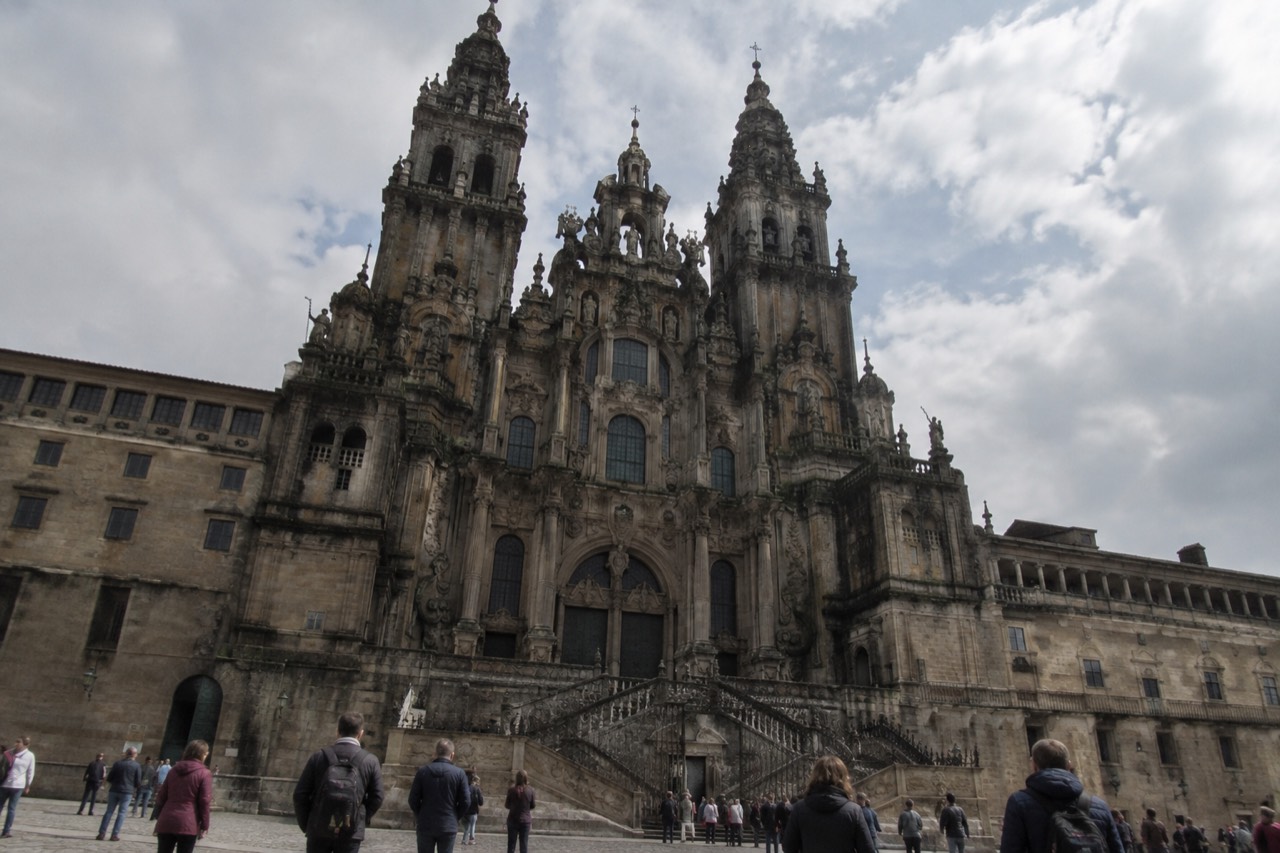
Pilgrim masses in Santiago de Compostela are currently held at 7:30am, 9:30am, noon and 7:30pm daily at the Cathedral's High Altar. From 16 October 2026 the 9:30am, noon and 7:30pm masses move to the Church of San Agustin while the main chapel is remodelled ahead of the 2027 Holy Year. Only the 7:30am mass stays in the Cathedral, in its Communion chapel.
The noon pilgrim mass at Santiago de Compostela Cathedral is the single most attended religious service in Galicia, and it is the moment most Camino walkers have in mind from the day they first clip on a backpack. The Cathedral's own liturgy page lists four masses a day for pilgrims, and the Oficina del Peregrino's figures show why the pews fill: 530,987 Compostela certificates were issued in 2025, a record year, and every one of those pilgrims arrived in a city whose medieval core was built around this one altar.
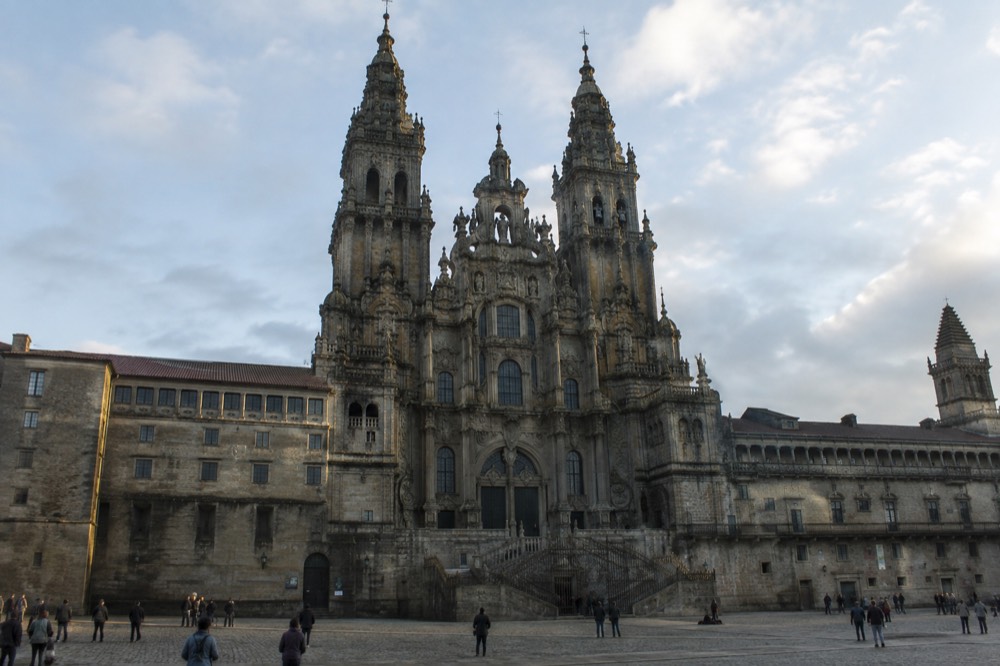
There is a complication every visitor arriving in late 2026 needs to know about. The Cathedral is remodelling its main chapel ahead of the 2027 Holy Year, and from 16 October 2026 most pilgrim masses relocate to the nearby Church of San Agustin. This guide, prepared by the Santiago de Compostela Travel Guide editors, sets out both arrangements, dated, so nobody walks to Praza do Obradoiro expecting a noon mass that is being celebrated two streets away.
What Are The Santiago de Compostela Mass Times?
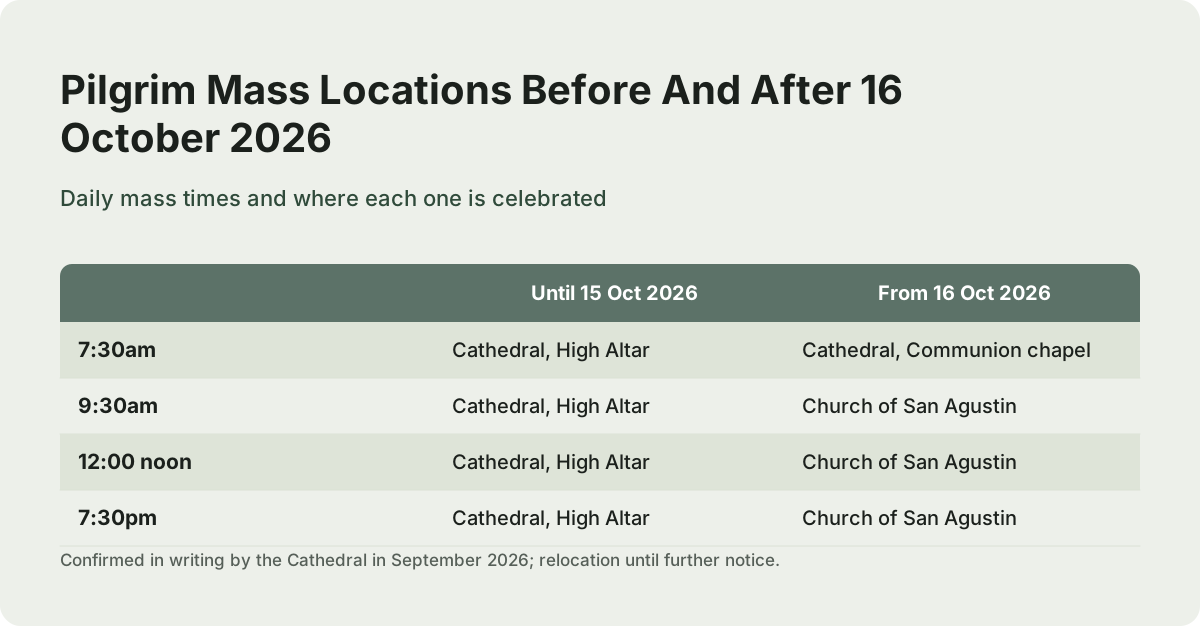
Pilgrim masses at Santiago de Compostela Cathedral are currently celebrated at 7:30am, 9:30am, noon and 7:30pm, daily, at the High Altar. From 16 October 2026, until further notice, the 9:30am, noon and 7:30pm masses move to the Church of San Agustin, a short walk from the Cathedral, while the 7:30am mass remains in the Cathedral itself, celebrated in the Communion chapel. Both schedules are official, and the change is driven by main-chapel remodelling ahead of the 2027 Holy Year.
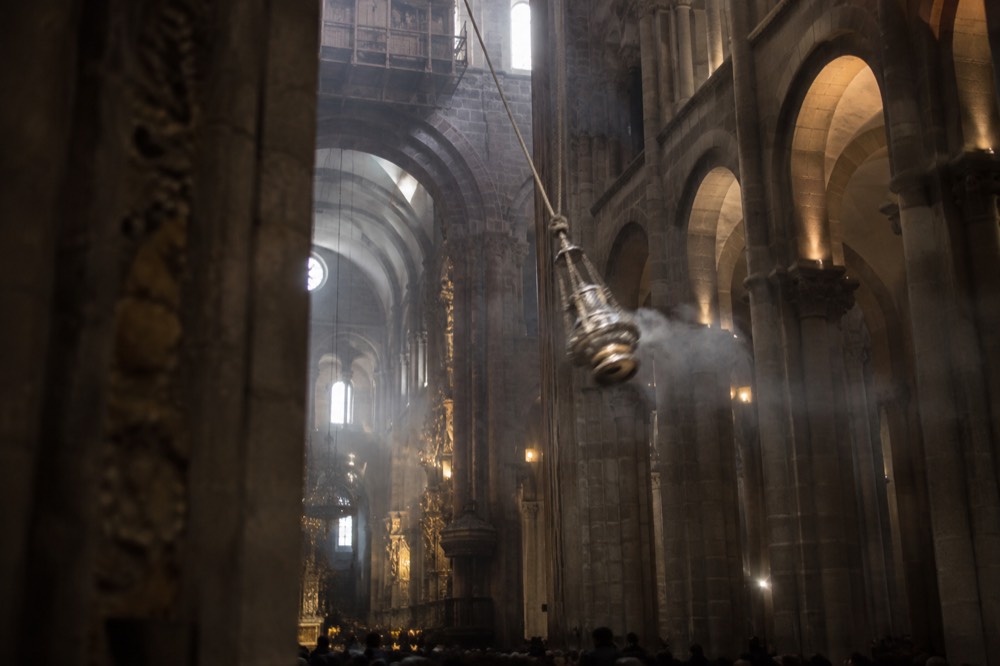
The four daily times come from the Cathedral's own liturgy page, which lists them as the pilgrim mass schedule at the main altar. The noon mass is the one most pilgrims target: it is the largest, the one where groups of just-arrived walkers gather with their credencials, and, on the twelve solemnities when the Botafumeiro's schedule normally operates, the service at which the great censer would fly at the end of the Eucharist, roughly forty-five minutes after the mass begins.
The relocation changes the practical calculus. San Agustin is close to the Cathedral, but the noon mass there will not have the High Altar, the apostle's tomb behind it, or the same capacity. Anyone whose heart is set on attending mass inside the Cathedral itself after 16 October 2026 has one option on the ordinary schedule: the 7:30am celebration in the Communion chapel. Early risers get the building; everyone else gets a short walk.
| Mass | Until 15 October 2026 | From 16 October 2026 | Language notes |
|---|---|---|---|
| 7:30am | Cathedral, High Altar | Cathedral, Communion chapel | Daily, smaller congregation |
| 9:30am | Cathedral, High Altar | Church of San Agustin | Relocated during works |
| 12:00 noon | Cathedral, High Altar | Church of San Agustin | The main pilgrim mass |
| 7:30pm | Cathedral, High Altar | Church of San Agustin | Relocated during works |
The dates matter because this change is not a rumour: it was confirmed in writing by the Cathedral in September 2026 and reported consistently across the city's own tourism site. Pilgrims arriving in the first half of October 2026 attend under the old arrangement; pilgrims arriving from the second half onward attend under the new one, and the end date is published only as "until further notice". Check the Cathedral's liturgy page in the days before you arrive, because the works are scheduled around the Holy Year that begins 31 December 2026, not around visitor convenience.
Why Do The Pilgrim Masses Move To San Agustin From 16 October 2026?
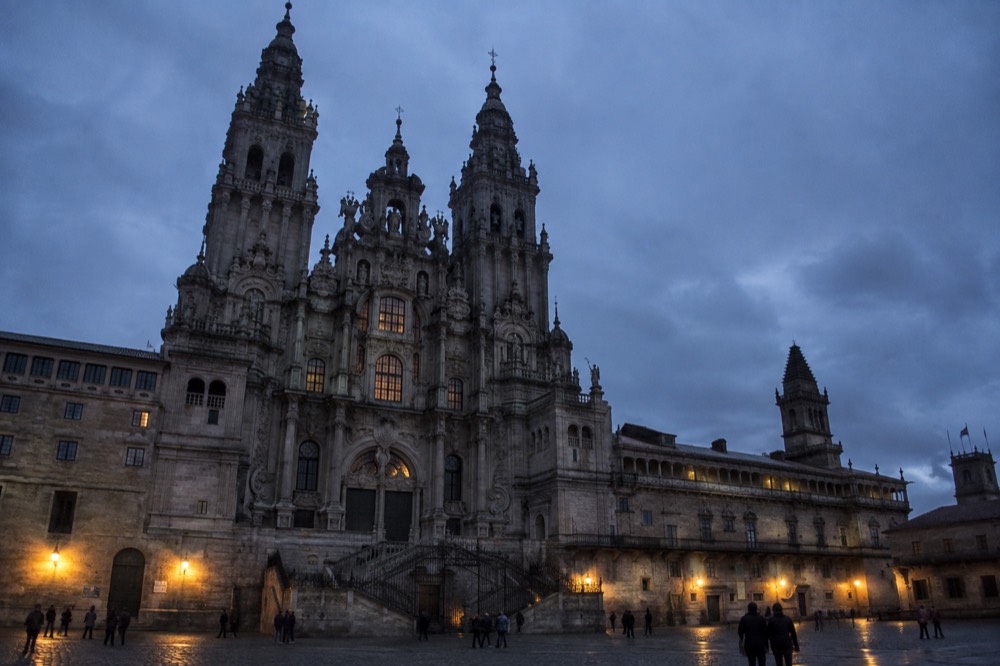
The masses move because the Cathedral's main chapel is being remodelled to prepare for the 2027 Holy Year, and from 16 October 2026 the High Altar area is a construction zone rather than a functioning sanctuary. The 9:30am, noon and 7:30pm pilgrim masses relocate to the Church of San Agustin until further notice, and only the 7:30am mass continues inside the Cathedral, in the Communion chapel, which the works do not reach.
This is one strand of a wider restoration programme. The same September 2026 confirmation that announced the mass relocation also documented two other active projects: scaffolding over the cimborrio, the lantern above the crossing, which has grounded the Botafumeiro, and exterior restoration of the Berenguela clock tower spanning 2026 and 2027. A second phase of chapel-roof restoration, authorised in May 2026, addresses leaks. None of this closes the Cathedral: the naves, the apostle's tomb and the embrace of St. James remain open with normal visiting hours, and general entry stays free, generally 7:00am to 9:00pm via the Praterias door.
The Holy Year context explains the timing. 2027 is the next Xacobeo: 25 July 2027 falls on a Sunday, the Holy Door opens solemnly on the evening of 31 December 2026, and the Holy Year runs through 31 December 2027. The Cathedral wants its main chapel finished before hundreds of thousands of extra pilgrims arrive, so the disruption is being front-loaded into late 2026 rather than spread across the Holy Year itself. The scale is not speculative: 2025 was a record with 530,987 Compostelas issued, and Holy Years historically run well above ordinary ones.
| Cathedral work project | Status | Effect on pilgrim masses |
|---|---|---|
| Main chapel remodelling | In preparation for 2027 Holy Year | 9:30am, noon, 7:30pm masses move to San Agustin from 16 October 2026 |
| Cimborrio (crossing lantern) restoration | Active interior scaffolding | Botafumeiro grounded, no mass impact |
| Berenguela clock tower | Exterior works, 2026-2027 project | None |
| Chapel roofs, second phase | Authorised May 2026, works ongoing | Exterior only, none |
For pilgrims this is mostly a matter of a changed walk. San Agustin sits within the historic core, a few minutes from Praza do Obradoiro, and the city's signage and the Cathedral's own channels are the place to confirm the exact entrance in use. Arriving walkers who planned to attend the noon mass, receive the pilgrim blessing and then queue for the pilgrim office on Rua das Carretas should simply reverse the order if necessary: the office issues the Compostela certificate in person, and its hours, roughly 8 or 9 or 10am to 7 or 8pm depending on season, comfortably bracket the noon mass.
What Is The Pilgrim Mass And Who Can Attend?
The pilgrim mass in Santiago de Compostela is an ordinary daily mass with a particular pastoral focus on arriving pilgrims: it is where the Cathedral community welcomes walkers, blesses them and names their origins, and it is open to everyone, Catholic or not, pilgrim or not, at no charge and with no ticket. After 16 October 2026 the same welcome simply happens at the Church of San Agustin for three of the four daily times, while the 7:30am celebration keeps its place in the Cathedral's Communion chapel.
Nothing in the Cathedral's stated arrangement restricts attendance to credencial holders. The pilgrim character comes from the congregation and the intention, not from a checkpoint at the door. Walkers arriving off the Camino Frances or any other recognized route sit among parishioners, tourists who have slipped in quietly, and locals at every service. The noon mass tends to be the most pilgrim-heavy, and it is the service at which groups of recently arrived walkers are most visibly present, sometimes still carrying their packs.
The blessing that pilgrims most associate with the mass is distinct from the Compostela certificate. The certificate is issued by the Oficina del Peregrino, not by the Cathedral, and its rules are strict: the last 100km walked or on horseback, or the last 200km cycled, on a recognized route, continuous, with at least two stamps per day in the credencial from official stamping points, and issued in person only at Rua das Carretas 33. A walker who completes the distance but skips the stamps gets neither the certificate nor any different standing at mass, because there is no such requirement at the door. The pilgrim passport is a document of proof for the office, not a ticket for the liturgy.
Attending well is a matter of ordinary church etiquette. Silence in the naves, shoulders covered, no flash photography during the service, and packs left at the entrance or at your accommodation rather than blocking aisles. Arriving twenty minutes early for the noon mass is the standard advice in every pilgrim forum, and it holds doubly after 16 October 2026, because San Agustin is a smaller building and its seats for the main pilgrim mass will fill faster than the Cathedral's naves ever did.
| Aspect | Pilgrim mass | Cathedral visit as a tourist |
|---|---|---|
| Entry | Free, open to all | Free general entry, around 7:00am to 9:00pm |
| Ticket needed | No | No for the interior; museum and rooftop sold separately |
| Best time to arrive | 20-30 minutes early for noon | Early morning or after 6pm in high season |
| Where after 16 Oct 2026 | San Agustin for 9:30am, noon, 7:30pm | Cathedral interior unaffected by the relocation |
Does The Botafumeiro Swing At Mass In Santiago de Compostela?
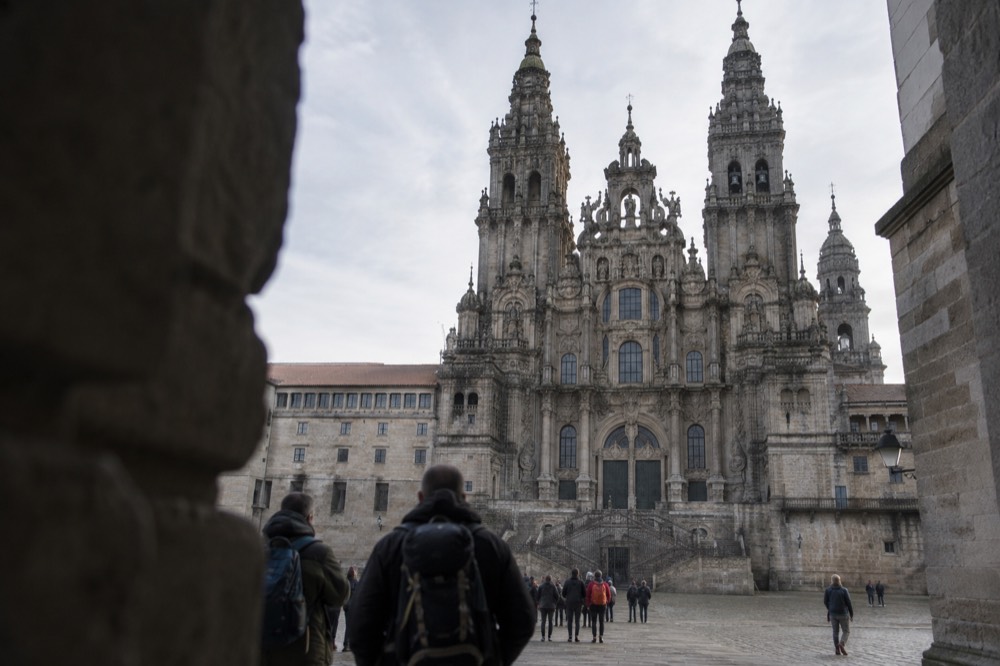
No, and no page about Santiago de Compostela mass times should currently promise that it will: the Botafumeiro is temporarily out of action, confirmed in writing by the Cathedral on 5 September 2026, because scaffolding for the cimborrio restoration covers its hanging mechanism. Normally it swings on twelve fixed liturgical solemnities a year, at the end of the Eucharist, but there is no published return date, and private requests, normally arranged for around 450-500 euros, are also unavailable while it is grounded.
The normal schedule is worth knowing anyway, because the works will end. The Cathedral Chapter guarantees the flight on twelve solemnities: Epiphany on 6 January, Easter Sunday, the Ascension, the Apparition of the Apostle at Clavijo on 23 May, Pentecost, the Feast of St. James on 25 July, the Assumption on 15 August, All Saints on 1 November, Christ the King, the Immaculate Conception on 8 December, Christmas Day, and the Transfer of the Apostle on 30 December. On those days the censer flies at the end of the main solemn mass, roughly forty-five minutes after it begins, and it does not operate at ordinary daily pilgrim masses even in a normal year.
The suspension is the detail that trips up visitors who read older guides. Nothing is broken and nothing has been cancelled as a tradition; the mechanism simply cannot be rigged while the crossing is scaffolded. The Cathedral has published no return date, so any source that tells you the Botafumeiro will swing on a given date in 2026 or 2027 is inventing one. Treat the twelve-solemnity list as the standing rule and check the Cathedral's liturgy page before building an itinerary around it. The full history of the censer is covered separately, including how its normal flight looks from the nave.
Pilgrims timing an arrival around a solemnity should weigh a different trade-off now. The Feast of St. James on 25 July brings the pontifical mass, the national offering and city-wide festivities, and the feast day itself is the most crowded date on the calendar, but under current works a 25 July arrival will not include the Botafumeiro. The consolation is structural: the 2027 Holy Year is the reason the works are happening at all, and the main chapel will reopen for it.
| Solemnity | Date | Botafumeiro status under current works |
|---|---|---|
| Epiphany | 6 January | Suspended until restoration completes |
| Easter Sunday | Moves with Easter | Suspended until restoration completes |
| Apparition at Clavijo | 23 May | Suspended until restoration completes |
| Feast of St. James | 25 July | Suspended until restoration completes |
| Assumption | 15 August | Suspended until restoration completes |
| All Saints | 1 November | Suspended until restoration completes |
| Immaculate Conception | 8 December | Suspended until restoration completes |
| Christmas | 25 December | Suspended until restoration completes |
Which Mass Should A Pilgrim Attend After Arriving In Santiago de Compostela?
The noon pilgrim mass is the one most walkers attend, because it is the largest daily service, the one where arriving pilgrims are most visibly welcomed as a group, and the one that fits the natural rhythm of an arrival morning: check in, collect the Compostela at the pilgrim office, then mass. After 16 October 2026 that noon mass is held at the Church of San Agustin, so pilgrims who specifically want to pray inside the Cathedral should choose the 7:30am mass in the Communion chapel instead.
The arrival day itself has a well-worn sequence, and the mass slots into it at different points depending on when you finish walking. Pilgrims arriving in the afternoon or evening often attend the 7:30pm mass, though under the new arrangement that too is at San Agustin. Pilgrims who want the Cathedral interior in near silence go early: the 7:30am Communion chapel mass after 16 October 2026 is small, intimate, and the only ordinary service keeping its place in the building. What no option loses is the tomb itself: the apostle's crypt and the embrace of St. James above it are part of the visiting route, separate from the liturgy.
Planning the arrival day is worth doing deliberately, and the arrival guide walks through the whole sequence. The office queue is the main variable: the Oficina del Peregrino issues Compostelas in person only, and on peak days in July the wait can consume the gap between checking in and the noon mass. Arriving in the evening and doing office, mass and the embrace the next morning is a legitimate and calmer pattern, and it pairs naturally with the 7:30am Cathedral mass under the post-October arrangement.
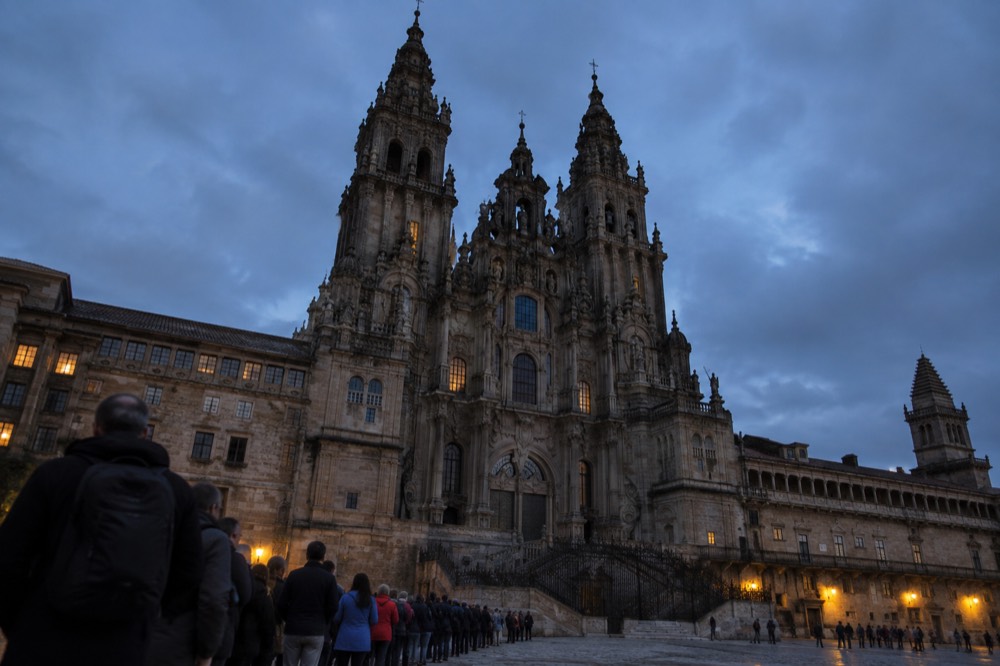
For walkers finishing on one of the popular final stages, the timing of the last day decides everything. Someone finishing the classic Sarria to Santiago route, the minimum distance that qualifies for the Compostela at 100km, typically needs most of a final day to cover the last stage, and arrives too late for the noon mass. That walker's realistic options are the 7:30pm mass or the next morning's early service, and from 16 October 2026 the morning service has the added value of being the one mass still inside the Cathedral.
How Much Do Cathedral Tickets Cost When No Mass Is On?
Entry to the Cathedral's naves in Santiago de Compostela is free, including the apostle's tomb and the embrace of St. James, and no ticket is needed for the interior or for attending any pilgrim mass. Paid tickets apply to the Cathedral Museum, the Portico da Gloria and the rooftop tour: the museum's tickets run from 9 to 23 euros depending on type, and the cathedral-run rooftop and Carraca tower visit costs 15 euros general, 12 euros reduced, booked online with timed slots.
The paid layers are where most visitors' money goes, and the pricing structure rewards a little planning. The rooftop option is the cathedral's own guided visit: roughly 60 minutes, about 140 steps, views from around 72 metres, and it bundles free access to the museum's permanent collection, the Gelmirez Palace, the crypt of the Portico da Gloria and the Diocesan Museum, valid for seven days with one use per space. Reduced rates apply to accredited pilgrims, students, over-65s and several other categories with proof. The museum itself runs around 10:00am to 8:00pm daily, with the ticket office closing thirty minutes earlier.
| Cathedral access | Price | Notes |
|---|---|---|
| Naves, tomb, embrace of St. James | Free | Open around 7:00am to 9:00pm, Praterias door |
| Pilgrim mass attendance | Free | No ticket, all welcome |
| Cathedral Museum tickets | 9-23 EUR depending on type | Around 10:00am to 8:00pm daily |
| Rooftop and Carraca tower tour | 15 EUR general, 12 EUR reduced | Guided, timed slots, bookable online, includes museum access |
Visitors who prefer everything handled in one booking can take a guided visit instead. The Cathedral, Museum and Old City guided tour, from $34 per person and rated 4.9 from 115 reviews on the operator's live listing, pairs the interior with the museum and a walk through the historic streets. Check availability on the listing for current dates. The official-guide version of the old-town walk, from $12 per person and rated 4.8 from 338 reviews, covers the city side. The full details of every ticket type are broken out in the Cathedral tickets and opening hours guide, which also covers what changes when a solemnity or a works phase shifts access.
What Time Does The Cathedral Open Around Mass Times?
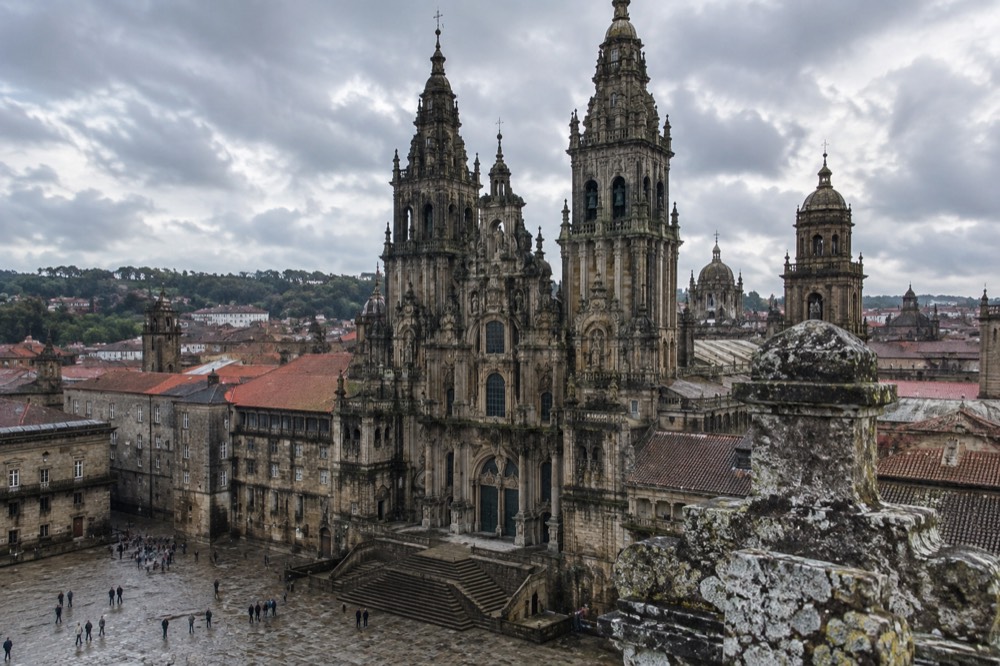
The Cathedral interior in Santiago de Compostela is open to visitors generally from 7:00am to 9:00pm, entering free via the Praterias door, and in summer it closes around 8:30pm on Saturdays to prepare for the pilgrim vigil. That means the building already welcomes visitors before the 9:30am mass and stays open past the 7:30pm one, so a visitor can combine quiet sightseeing, a mass and a museum visit across one day.
The overlap is generous but not unlimited. Tourist flow and liturgical use share the same naves, and on days when a solemnity falls, the balance tips toward the liturgy: the Feast of St. James on 25 July brings processions, the national offering, and crowds that reshape the whole day. The visiting hours also sit alongside the museum's roughly 10:00am to 8:00pm schedule and the timed rooftop slots, so the practical pattern for a full day is early interior visit, 9:30am or noon mass, museum after lunch, rooftop slot in the late afternoon when the light across the Compostela rooftops is at its best.
Saturdays in summer carry the one quirk worth flagging: the earlier close at about 8:30pm exists for the pilgrim vigil, a distinctly Galician tradition in which pilgrims may spend a night of prayer inside the Cathedral, places limited, arranged through the pilgrim office. Walkers finishing the Camino on a summer Saturday sometimes plan their whole arrival around it. Note that the vigil is a separate arrangement from the daily mass schedule, and its availability, like everything liturgical in this building, should be confirmed with the Cathedral or the office rather than assumed from an older guide.
Weather barely affects the schedule, though it affects the walk to it: Santiago de Compostela has a temperate oceanic climate, wet year-round, wetter from October to March, and driest in July and August, with annual precipitation on the order of 1,690 to 1,890mm depending on the station and year measured. The weather guide and the best time to visit pages carry the planning detail, but the liturgy itself runs in rain. The only seasonal lever on the mass schedule is the works calendar, not the clouds.
Where Do The Masses Fit In A First Day In Santiago de Compostela?
A workable first-day sequence is: arrive and check in, go to the pilgrim office at Rua das Carretas 33 for the Compostela, attend the noon mass, then visit the tomb and the embrace of St. James when the queue has thinned. After 16 October 2026, insert a short walk to the Church of San Agustin for the noon mass, or restructure around the 7:30am Cathedral mass the next morning if praying inside the Cathedral itself is the priority.
The order is flexible for good reason. The office and the mass do not depend on each other: the Compostela is earned on the road and certified at the office, while the mass is open regardless of certification. What ties them together is the emotional arc of arrival, and most pilgrims want the mass close to the moment of finishing. The afternoon in the old town fills itself: Praza do Obradoiro, the Hostal dos Reis Catolicos, the Alameda park view of the Cathedral's west front, and a first plate of pulpo a la gallega. The where to eat guide covers the food end of that day.
Many pilgrims then keep walking. The Camino does not officially end at the Cathedral for everyone: a traditional extension continues to Fisterra on the coast, the old "end of the world", and a half-day express excursion to Fisterra and Muxia, from $45 per person and rated 4.4 from 50 reviews on the operator's live listing, exists for pilgrims who have run out of walking days but not out of pilgrimage. It pairs naturally with the 7:30am Cathedral mass: pray at the altar in the morning, stand at the Atlantic in the afternoon.
Pilgrims who take that coastal extension should still plan the liturgy first and the scenery second, because the two halves of the day run on different clocks. The morning mass inside the Cathedral under the post-October arrangement is fixed and small; the express excursion to the coast runs on a pickup schedule and a coastline that does not care about either. Booking the coast day for the morning after arrival, rather than the arrival day itself, leaves the evening free for the 7:30pm mass and a first unhurried dinner on Rua do Franco.
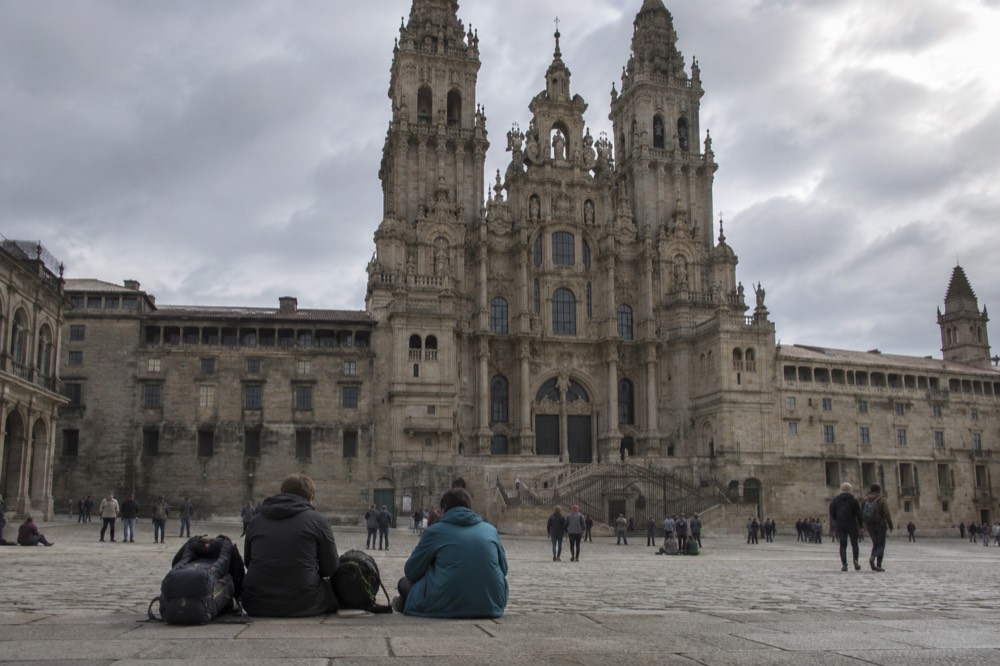
For pilgrims who arrive without a mass plan at all, one reassurance holds: the schedule is daily, and it has been daily for a very long time. The history of the Camino and the main Camino guide place the liturgy in its thousand-year context; the practical point is simpler. Miss the noon mass and there is a 7:30pm one. Miss that and there is a 7:30am one tomorrow, in the Cathedral itself under the current arrangement, in front of the altar the whole journey was aimed at.
Common Questions About Mass Times In Santiago de Compostela
What are the Santiago de Compostela mass times?
Pilgrim masses are held at 7:30am, 9:30am, noon and 7:30pm daily. From 16 October 2026 the 9:30am, noon and 7:30pm masses move to the Church of San Agustin for the main-chapel remodelling, and only the 7:30am mass stays in the Cathedral, in the Communion chapel.
Do the pilgrim masses move from the Cathedral of Santiago de Compostela?
Yes, from 16 October 2026 until further notice, the 9:30am, noon and 7:30pm pilgrim masses relocate to the Church of San Agustin while the main chapel is remodelled ahead of the 2027 Holy Year. The 7:30am mass remains in the Cathedral's Communion chapel.
Can tourists attend the pilgrim mass in Santiago de Compostela?
Yes. The pilgrim mass is open to everyone, free, with no ticket or credential required. Arrive twenty to thirty minutes early for the noon mass, dress modestly and keep packs and photography discreet.
Does the Botafumeiro swing at the pilgrim mass?
Normally it swings only on twelve fixed liturgical solemnities a year, at the end of the main solemn mass. It is temporarily out of action because restoration scaffolding over the cimborrio covers its hanging mechanism, and no return date has been published.
How much does it cost to attend mass at Santiago de Compostela Cathedral?
Nothing. The pilgrim mass, like general entry to the Cathedral's naves, is free. Paid tickets apply only to the Cathedral Museum, the Portico da Gloria visit and the rooftop tour, which cost 15 euros general or 12 euros reduced.
Which mass should a pilgrim attend after arriving in Santiago de Compostela?
The noon mass is the traditional choice and the largest, but from 16 October 2026 it is held at San Agustin. Pilgrims who want to attend mass inside the Cathedral itself should choose the 7:30am celebration in the Communion chapel.
Whatever the schedule says on the day you finish walking, the sequence that has defined arrival in Santiago de Compostela for a thousand years still holds: office, mass, tomb, and the west front at dusk.