Praza do Obradoiro In Santiago de Compostela: What To See On The City's Grand Square
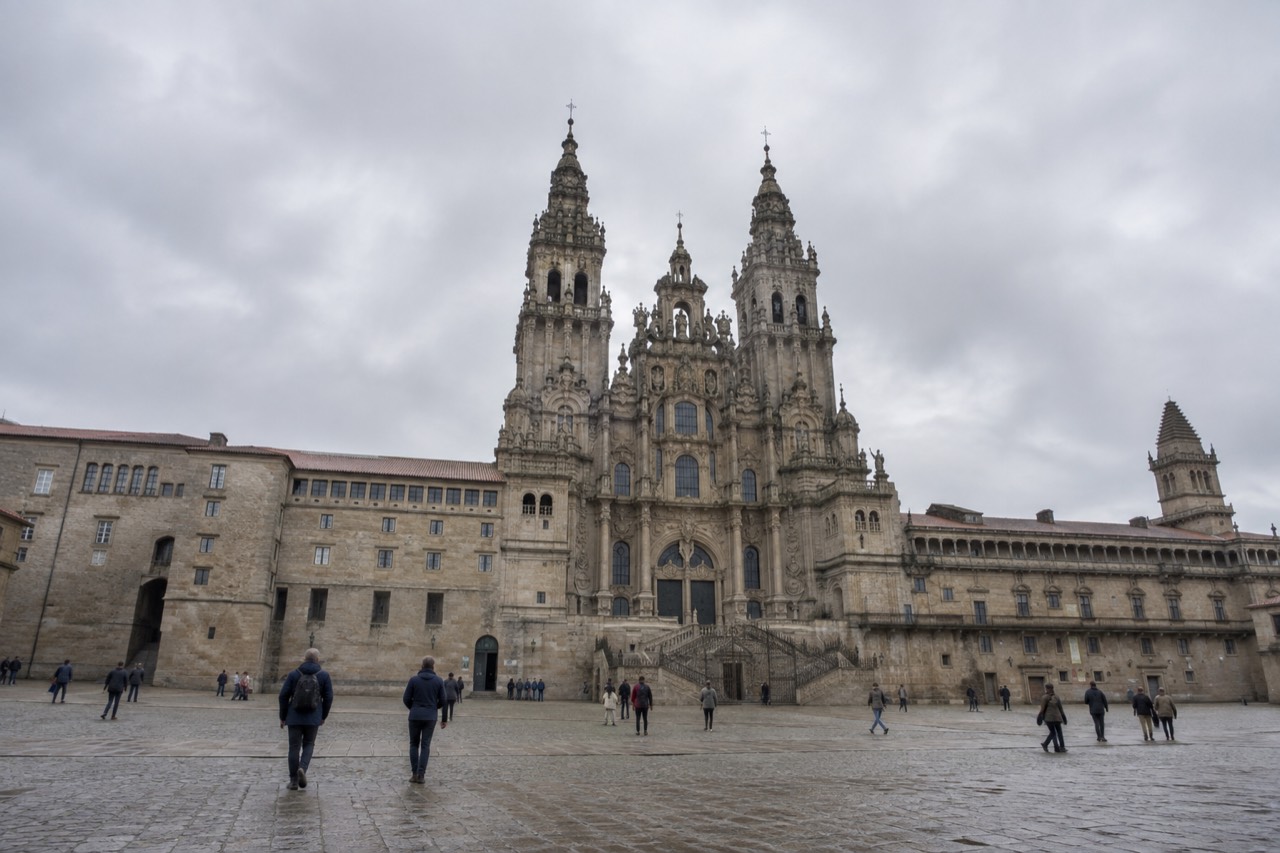
Praza do Obradoiro is the monumental heart of Santiago de Compostela, framed by the Cathedral's Obradoiro facade, the Hostal dos Reis Catolicos and the Pazo de Raxoi. Here is what to see, what is changing in 2026 and 2027, and how to plan a visit.
Short answer
Praza do Obradoiro is the main square of Santiago de Compostela, opening onto the Cathedral's baroque Obradoiro facade and three other historic buildings. Entry to the square is free at any hour; the Cathedral interior is free, its museum tickets run EUR9-23, and the rooftop tour costs EUR15 general or EUR12 reduced.
Every pilgrim who finishes the Camino de Santiago walks off Rua do Franco or down the steps from Praza da Quintana and arrives, finally, on the wide stone expanse of Praza do Obradoiro, the square that holds the west front of the Cathedral of Santiago de Compostela. The name comes from the Galician word for workshop, obradoiro, because the stonemasons who carved the Cathedral's facade worked on this spot, their dust settling into the flagstones that now receive the footsteps of more than half a million recorded pilgrims a year. The Oficina del Peregrino's own figures counted 530,987 Compostela certificates issued in 2025, a record year, and nearly every one of those journeys ended with the same view: the twin towers of the Obradoiro facade framed against a Galician sky.
The square is not large by European plaza standards, but it carries an unusually heavy load of history on its sides. One corner belongs to the Cathedral itself, another to the Hostal dos Reis Catolicos, once a pilgrim hospital and today a Parador hotel. Together they make the square a single, walkable lesson in how one city was built entirely around one shrine, and this guide walks through all of it: what each building is, which tours start from the flagstones, what the current Cathedral restoration means for your visit, and the practical details that make the difference between a hurried photo stop and a proper morning.
What Is Praza do Obradoiro In Santiago de Compostela?
Praza do Obradoiro is the main ceremonial square of Santiago de Compostela, the point where the Camino's arriving pilgrims first see the Cathedral, and it takes its name from the stonemasons' workshops, called obradoiros in Galician, that once occupied the site while the west facade was being carved. The square is fully public, open at every hour, free to enter, and it is flanked by the Cathedral's Obradoiro facade, the Hostal dos Reis Catolicos and the Pazo de Raxoi.
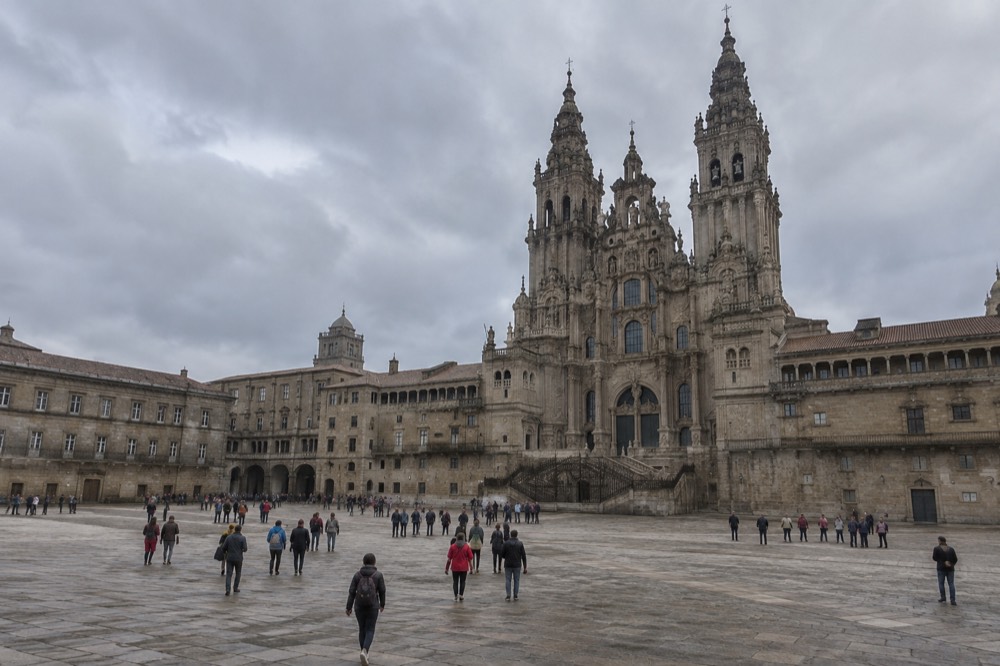
The square was not always open. For centuries, the space in front of the west facade was a cramped jumble of workshops, stalls and houses, and the Cathedral's west front was nearly invisible behind them. When the baroque Obradoiro facade was complete, the city cleared the ground in front of it so the new facade could be seen whole, and the square has kept that cleared, theatrical layout ever since. That is why the square today feels like a stage set: every building was placed or revealed deliberately, and the whole composition faces the pilgrim arriving from the west, the traditional direction of arrival from the Camino Frances.
The Old Town of Santiago de Compostela, which includes this square, was inscribed on the UNESCO World Heritage list in 1985. That listing is separate from a second inscription, the Routes of Santiago de Compostela: Camino Frances and the Routes of Northern Spain, which was added in 1993; the two are distinct listings and are never one date. Standing on Praza do Obradoiro you are inside the first of them, looking at the monument the whole network of Camino routes exists to serve.
It is also, simply, where the city gathers. On the Feast of St James on 25 July, the square fills for the civic and religious celebrations that mark the Apostle's day. When a Holy Year arrives, the ceremonies around the Holy Door on the far side of the Cathedral begin and end here in public view. On ordinary afternoons it belongs to backpacking pilgrims, tour groups and the bagpipers, Galicia keeps its own gaita tradition, who work the corners.
What Can You See From Each Side Of Praza do Obradoiro?
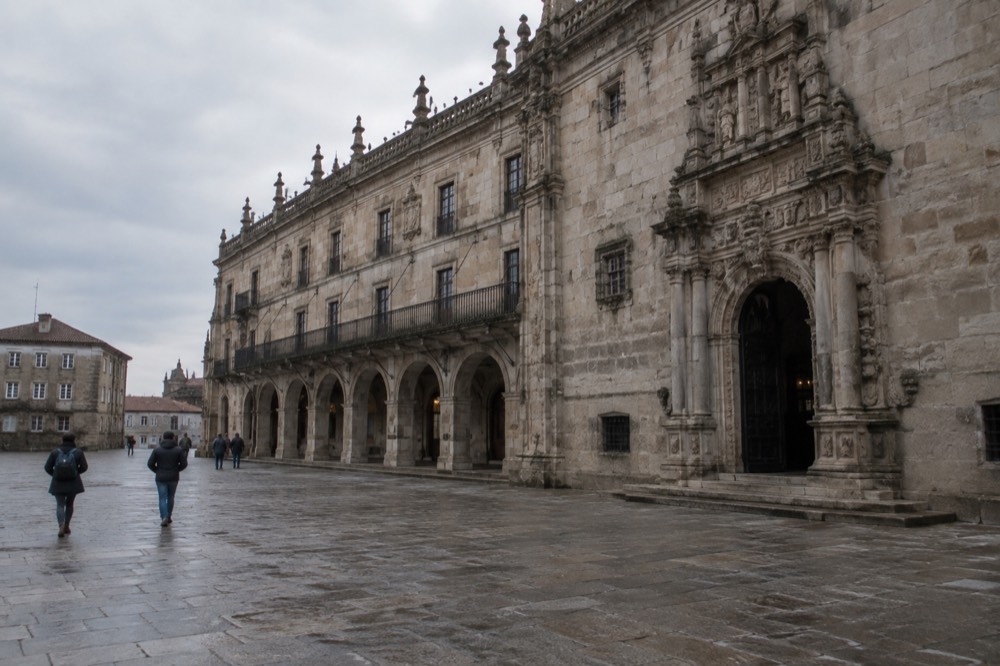
Three of the sides of Praza do Obradoiro hold Santiago de Compostela's landmark buildings: the Obradoiro facade and towers of the Cathedral on the east, the Hostal dos Reis Catolicos Parador on the north, and the Pazo de Raxoi on the west. Each is visible in full from the centre of the square, and two of the three can be visited, on separate terms.
The Cathedral side is the reason the square exists. The Obradoiro facade is the Cathedral's grand west front, a baroque composition built to frame the medieval towers behind it, and its twin towers are the single most photographed structure in Galicia. General entry to the Cathedral interior is free, with opening hours of roughly 7:00am to 9:00pm daily, closing earlier on Saturday evenings in summer for the pilgrim vigil; the interior, the Apostle's tomb and the crypt are all part of that free entry. Full detail on what is inside, and the current state of restoration works, is covered in the companion guide to the Cathedral of Santiago de Compostela, and the suspended Botafumeiro has its own page at Botafumeiro.
The Hostal dos Reis Catolicos, on the north side, was founded as a royal hospital for pilgrims and is now run as a Parador hotel, generally counted among the oldest hotels in continuous operation in the world. Even travellers not staying there can appreciate its four small courtyards and its plateresque frontage from the square; the full history and current booking picture is on the Hostal dos Reis Catolicos Parador page.
| Side of the square | Building | What it is today | Can you visit? |
|---|---|---|---|
| East | Cathedral of Santiago de Compostela, Obradoiro facade | Active cathedral and pilgrimage shrine; interior free to enter | Yes, free; museum and rooftop tours are separate paid tickets |
| North | Hostal dos Reis Catolicos | Parador hotel, former royal pilgrim hospital | Interior generally for guests and restaurant patrons; facade visible from the square |
| West | Pazo de Raxoi | Historic palace | Facade only; not a public attraction |
Which Tours Start Near Praza do Obradoiro?
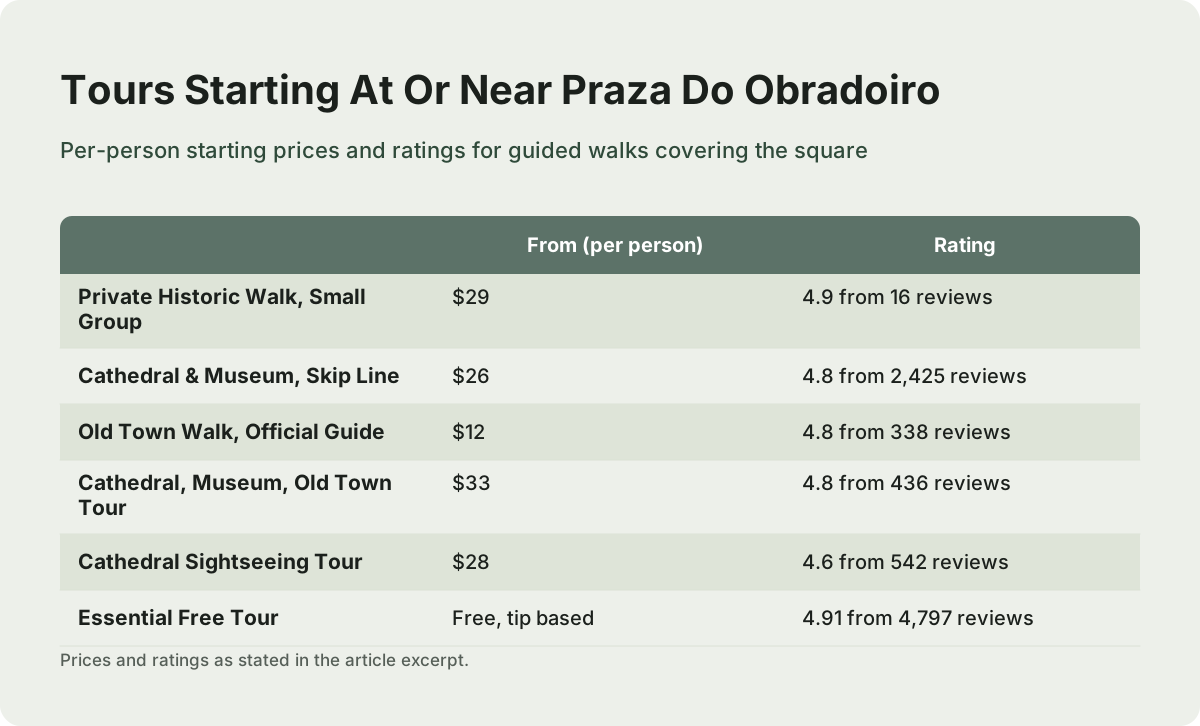
Guided tours of Santiago de Compostela's old town and Cathedral almost all begin or pass through Praza do Obradoiro, since it is the city's natural meeting point. Options range from an official-guide historic walking tour from $12 per person with a 4.8 rating from 338 reviews, to a small-group private historic walk from $29 per person rated 4.9 from 16 reviews, to free, tip-based tours where the price is whatever you choose to give the guide.
The strongest fit for this square specifically is the Private Historic Walk, Small Group, a Santiago de Compostela Historic Walking Tour in Small Group format rated 4.9 from 16 reviews, from $29 per person. Small-group formats matter on Praza do Obradoiro because the square's acoustics are poor when several large tour groups are talking at once, and a licensed guide with a dozen people can hold the group's attention at the spots a forty-person crowd has to abandon. Check availability
The Cathedral, Museum, Old Town Tour and the Old Town Walk with an official guide both cover the square as their opening act, with the official-guide walk priced from $12 per person and rated 4.8 from 338 reviews. For the free, tip-based end of the scale, the roster includes GuruWalk options, and honesty requires naming GuruWalk and the guide directly on any page routing to one of those walks: the "Free Tour Santiago Essential" walk on GuruWalk, rated 4.91 from 4,797 reviews, and the "Free Tour Santiago de Compostela Historic Center" walk, rated 4.67 from 217 reviews, both tip-based with no fixed price.
| Tour | Decision name | Format | From (per person) | Rating |
|---|---|---|---|---|
| Santiago de Compostela Historic Walking Tour in Small Group | Private Historic Walk, Small Group | Small-group old-town walk | $29 | 4.9 from 16 reviews |
| Santiago: Cathedral & Museum Tour. Skip the line! | Cathedral & Museum, Skip Line | Cathedral + museum | $26 | 4.8 from 2,425 reviews |
| Old town walking tour with an official guide | Old Town Walk, Official Guide | Guided old-town walk | $12 | 4.8 from 338 reviews |
| Cathedral, Museum, and Old Town Tour | Cathedral, Museum, Old Town Tour | Combined walk | $33 | 4.8 from 436 reviews |
| Santiago Cathedral Sightseeing Tour | Cathedral Sightseeing Tour | Cathedral focused | $28 | 4.6 from 542 reviews |
| Free Tour Santiago Essential (GuruWalk, tip based) | Essential Free Tour | Free, tip based | Free, tip based | 4.91 from 4,797 reviews |
The table's prices and ratings are drawn from the operators' listings as confirmed by this site; a tour's live listing always carries the current figure, and the operator's own page is the place to confirm the departure point, which for most of these is within a few minutes' walk of the square.
When Is The Best Time To Photograph Praza do Obradoiro?
Early morning, roughly the first two hours after sunrise, is the best time to photograph Praza do Obradoiro with people in the frame, because the square is quietest then, while late afternoon into the blue half hour of dusk gives the best light on the Obradoiro facade itself, which faces west and catches the day's last sun. Midday is the most crowded and least flattering, as tour groups peak between 11am and 4pm.
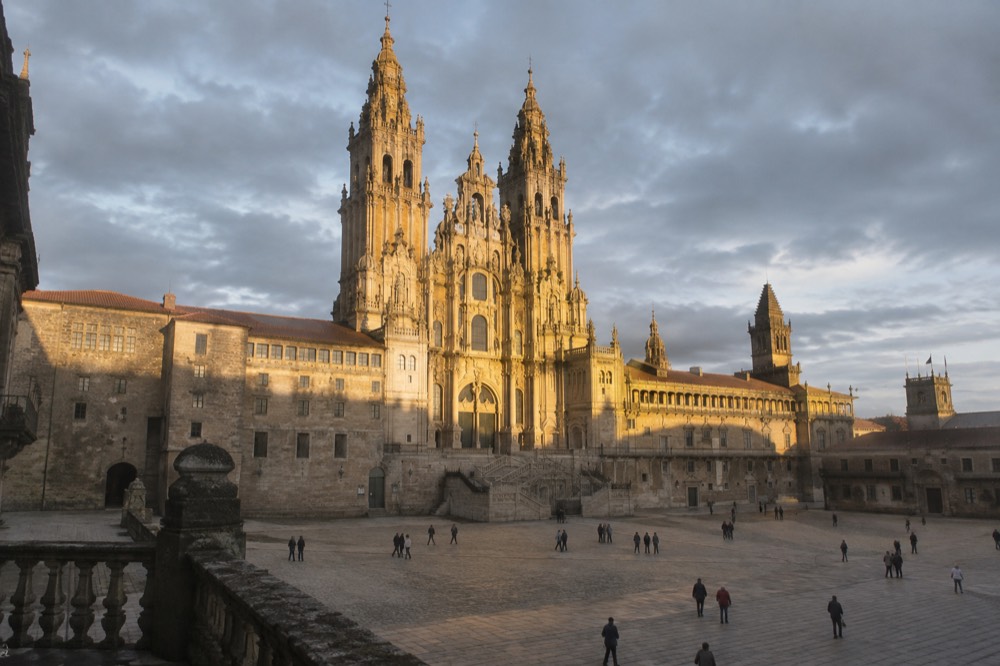
There is a seasonal layer to this. Santiago de Compostela's climate is temperate oceanic, wet year-round, wetter from October to March and driest in July and August, with annual precipitation on the order of 1,690 to 1,890mm depending on the station and year measured, according to AEMET's climate data for the Santiago de Compostela station. What that means in practice for a photographer is that wet flagstones are a realistic possibility on any given day, and they are not a problem: a slick Praza do Obradoiro after rain reflects the Cathedral's lit facade and often produces the square's best pictures. The trade-off is patience, since the rain that makes the reflection can also drive you under an arcade for an hour. Overcast skies, meanwhile, flatten the facade's baroque relief, so the sharpest detail shots come on a clear morning.
A practical sequence works well: photograph the square itself early, before the tour groups arrive, then visit the Cathedral interior, whose free entry hours begin around 7:00am, while the museum opens later in the morning. For the wider city view that includes the Cathedral towers from outside the square, the Alameda Park viewpoint a short walk west is the classic spot, and its silhouette view of the skyline is the picture most postcards of the city actually use.
What Are The 2026 Cathedral Works On The Square's Biggest Building?
The Cathedral beside Praza do Obradoiro remains fully open to visitors, but as of late September 2026 it has three active restoration projects: interior scaffolding over the crossing for the cimborrio or dome, which has grounded the Botafumeiro with no return date published, exterior works on the Berenguela clock tower running through 2026 and 2027, and a second phase of chapel roof restoration authorized in May 2026. None of these closes the naves, the Apostle's tomb or the museum.
The Botafumeiro suspension deserves its own emphasis, because it is the single most common visitor expectation this square generates. The Botafumeiro normally swings at the end of the main solemn Mass on twelve fixed liturgical solemnities each year, from Epiphany on 6 January through the Feast of St James on 25 July to the Transfer of the Apostle on 30 December, and outside those dates it flies only by private request at an indicative cost of roughly EUR450-500. The Cathedral confirmed in writing on 5 September 2026 that it is currently out of action: the cimborrio scaffolding covers its hanging mechanism. No page should promise a visitor will see it swing, and its full schedule and current status are covered on the Botafumeiro status page.
Pilgrim Mass times carry a second dated change. Until 15 October 2026, the daily masses at 7:30am, 9:30am, noon and 7:30pm are held at the Cathedral's High Altar. From 16 October 2026, as main chapel remodelling ahead of the 2027 Holy Year advances, the 9:30am, noon and 7:30pm masses relocate to the nearby Church of San Agustin; only the 7:30am mass remains in the Cathedral itself, in its Communion chapel. A visitor planning to attend the pilgrim Mass, which many arriving pilgrims treat as the emotional close of their walk, needs both arrangements in mind depending on their date.
| What | Status as of late September 2026 | Effect on a Praza do Obradoiro visit |
|---|---|---|
| Cathedral interior (naves, tomb, crypt) | Open, free entry, roughly 7:00am-9:00pm | No change; the facade view from the square is unaffected |
| Botafumeiro | Suspended, dome restoration scaffolding, no return date published | Do not plan around seeing it swing; describe its normal schedule instead |
| Berenguela clock tower | Exterior restoration, project spans 2026-2027 | Scaffold may appear in photos of the towers |
| Pilgrim Masses | At the High Altar until 15 Oct 2026, then to Church of San Agustin except the 7:30am | Check your date against both arrangements |
| Museum and rooftop tours | Operating normally, timed tickets | Rooftop tour EUR15 general, EUR12 reduced; museum EUR9-23 by ticket type |
The rooftop tour is worth flagging for anyone whose visit to the square leaves them wanting more of the Cathedral. The Cubiertas and Torre de la Carraca guided visit costs EUR15 general or EUR12 reduced, takes around 60 minutes, involves roughly 140 steps, and reaches a height of about 72m, per the Cathedral's own ticketing page. It also grants seven days' access to the museum's permanent collection and associated spaces. Full detail is on the Cathedral Rooftops Tour page, and the collections themselves are covered at Cathedral Museum. A combined Cathedral, museum and old-town ticketed walk covers the same ground with a guide, if you would rather not arrange each element separately.
Why Does Praza do Obradoiro Matter To The Camino de Santiago?
Praza do Obradoiro is the finishing point of every Camino de Santiago route, the place where arriving pilgrims see the Cathedral's facade after their final day of walking, and it sits at the end of the last stage of the Camino Frances, which most of the 530,987 pilgrims who collected a Compostela certificate in 2025 walked, a record figure reported by the Oficina del Peregrino. The Pilgrim's Office that issues the certificate is a few minutes' walk from the square.
The certificate rules are strict, and the Oficina del Peregrino's FAQs state them plainly: the last 100km must be walked, or covered on horseback, or the last 200km cycled on a recognized route, continuously, with at least two stamps per day in the pilgrim passport, the credencial, collected from official stamping points. The Compostela is issued in person only, at Rua das Carretas 33. The office is closed on 25 December and 1 January, and its hours vary seasonally, so a late-afternoon arrival should not assume the desk is still open.
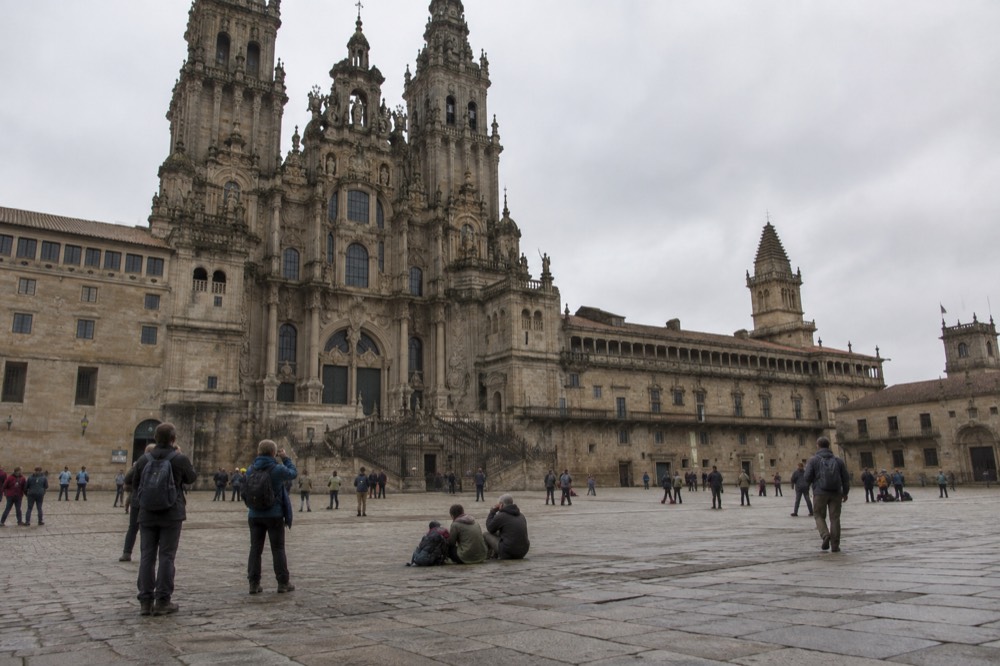
What this means for the square is rhythm. On any afternoon in the walking season, the emotional register of Praza do Obradoiro is set by people finishing a weeks-long project: some arriving in tears, some queuing for a photo under the Cathedral's facade sign, some lying flat on the flagstones with their boots off. The practical questions that follow are covered in the site's answer pages, including How Long Does It Take To Walk The Camino de Santiago and What Is The Best Month To Walk The Camino de Santiago.
How Does Praza do Obradoiro Compare To The City's Other Squares?
Praza do Obradoiro is the grandest and most public of Santiago de Compostela's four Cathedral squares, but three others ring the same building: Praza da Quintana behind the east end, where the Holy Door sits, Praza das Pratarías on the south side, at the facade of the same name, and the small Praza da Inmaculada beside San Martino Pinario. Each shows the Cathedral from a different era of its construction, and all four sit within a two-minute walk of one another.
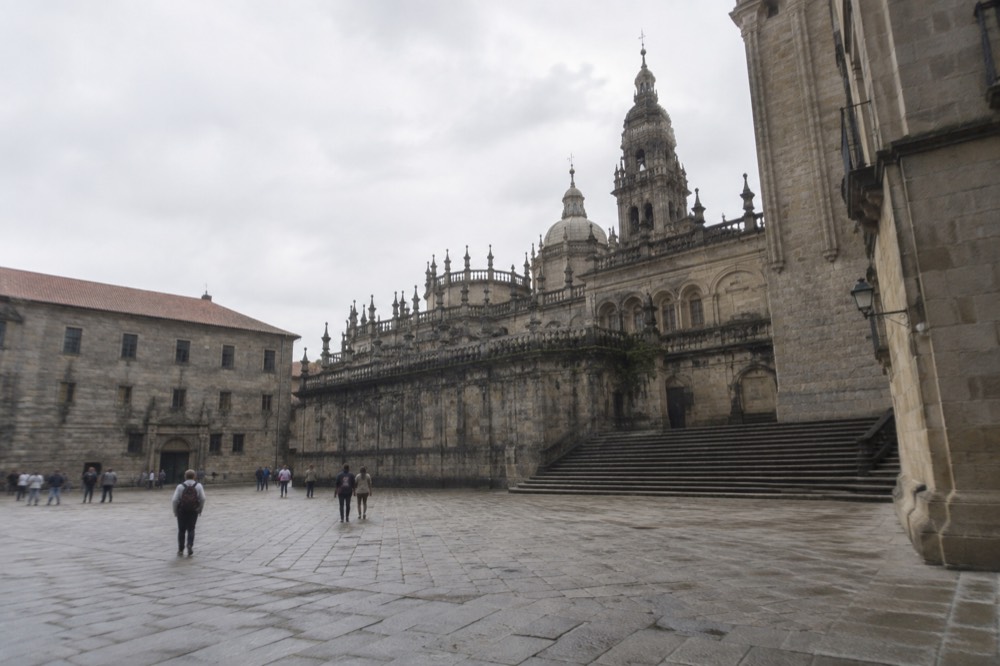
The most meaningful comparison is with Praza da Quintana and the Holy Door. The Holy Door, normally walled up, is opened only in Holy Years, and the next Holy Year, the Xacobeo, is 2027, not 2026: the door opens solemnly on 31 December 2026 and the Holy Year runs through 31 December 2027, per the official city announcements. A Holy Year is declared whenever 25 July, the Feast of St James, falls on a Sunday, which it does in 2027. The practical consequence for the square is scale: when the door is open, pilgrim numbers swell well beyond even the record 2025 figures, and Praza do Obradoiro becomes the staging ground for the opening and closing ceremonies of that year.
The other comparison worth making is atmospheric. Obradoiro is monumental and exposed; Quintana is steep and worn, with the famous stairs leading up to the Portico da Gloria's rear; Pratarías is smaller and carries the oldest sculpted facade of the set; Inmaculada is almost a corridor beside the monastery. A walking tour that strings all four together, which is what most old-town tours do, gives you the Cathedral as a four-sided object rather than a single postcard, and the official-guide old-town walk is the most economical way to do it.
| Square | Side of the Cathedral | Character | Best for |
|---|---|---|---|
| Praza do Obradoiro | West, Obradoiro facade | Monumental, ceremonial, busiest | The classic view, arrival moment, ceremonies |
| Praza da Quintana | East, Holy Door side | Stepped, worn, quieter | Holy Door, monastery facades, evening atmosphere |
| Praza das Pratarías | South, Pratarías facade | Small, oldest sculpted facade | Romanesque sculpture detail |
| Praza da Inmaculada | Beside San Martino Pinario | Narrow, monastic | Views of the monastery's front, quiet corners |
What Should You Know Before Visiting Praza do Obradoiro?
Visiting Praza do Obradoiro itself is free, unticketed and possible at any hour, since it is a public square, so the planning decisions are all around it: Cathedral entry is free but the museum costs EUR9-23 by ticket type, the rooftop tour costs EUR15 or EUR12 reduced and should be booked in advance, and Santiago de Compostela has charged a municipal tourist tax since 1 October 2025, from 1 EUR to 2.50 EUR per person per night for up to 5 nights, with under-18s and stays in Xunta-run public albergues exempt.
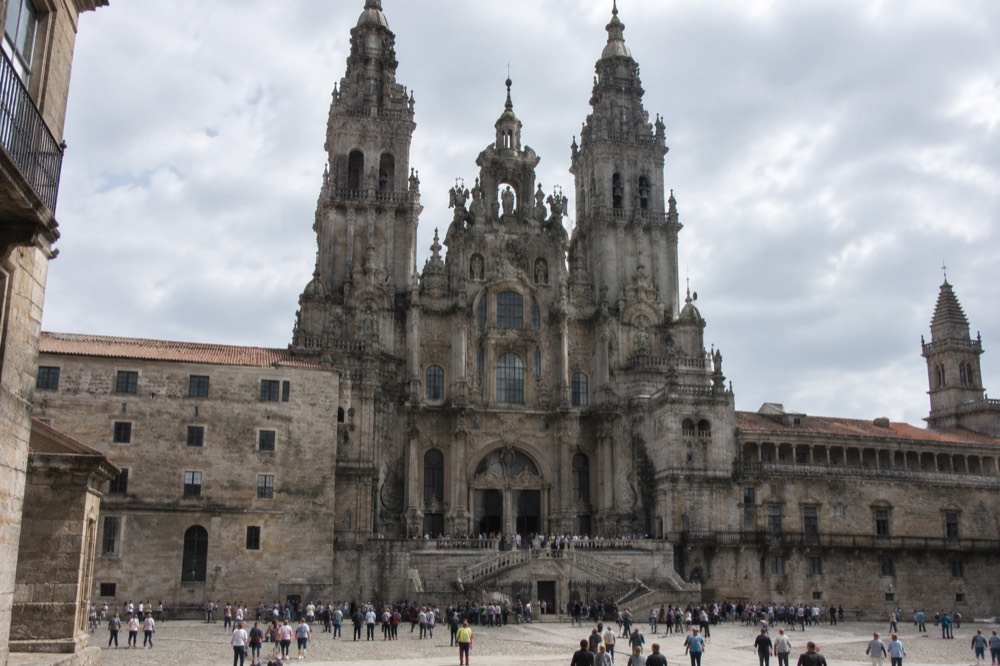
Three practical notes make the difference between a good visit and a frustrated one. First, time your Cathedral entry: the interior opens early, around 7:00am, and the late-morning tour-group peak makes midday the worst hour for both the square and the naves. Second, if the rooftop tour is on your list, book it: slots are timed and they sell out in peak season, and the reduced EUR12 rate applies to accredited pilgrims, students, over-65s, under-12s and several other categories with proof required at entry, per the Cathedral's ticketing page. Third, the square is cobbled and the surrounding lanes are steep and often wet; waterproofs matter more here than in most of Spain, and AEMET's data for the station at Santiago de Compostela shows precipitation is a year-round feature of the climate rather than a winter exception.
Eating and drinking around the square deserves a word of caution. The nearest street, Rua do Franco, runs downhill from the square toward the market quarter and is lined with restaurants of very mixed quality aimed squarely at one-visit tourists, so it pays to be selective about where you sit down. For a fuller meal without the premium of a plaza-front table, walking ten minutes in almost any direction pays for itself, and the question of whether the city justifies the trip at all is weighed honestly in Is Santiago de Compostela Worth Visiting.
If your stay in the city is short, the square also works as a departure point: most full-day excursions to the coast and the Rias Baixas pick up within a few minutes' walk, and the options are compared in What Is The Best Day Trip From Santiago de Compostela. Whether the square itself is a morning or an afternoon is a matter of light rather than logistics, as the earlier section on photography sets out.
Common Questions About Praza do Obradoiro
Is Praza do Obradoiro free to visit?
Yes. It is a public square open at every hour and there is no entry fee of any kind. The paid elements start inside the surrounding buildings: the Cathedral interior is free, but the museum costs EUR9-23 depending on ticket type and the rooftop tour costs EUR15 general or EUR12 reduced.
What does Obradoiro mean?
Obradoiro is the Galician word for a stonemason's workshop. The square, and the baroque Cathedral facade that faces it, take their name from the workshops that stood on this ground while the west front was being carved. The name survives in the facade's own title, the Obradoiro facade, and in the Praza do Obradoiro itself.
Can you see the Botafumeiro from Praza do Obradoiro?
The Botafumeiro is currently out of action, as the Cathedral confirmed in writing on 5 September 2026: scaffolding for the dome restoration covers its hanging mechanism, and no return date has been published. It normally swings on twelve fixed liturgical solemnities a year, but no visitor should plan a trip around seeing it swing until the Cathedral announces its return.
Why do pilgrims arrive at Praza do Obradoiro?
Because the square is the finishing point of the Camino de Santiago. Pilgrims walking any recognized route, and 530,987 of them collected a Compostela certificate in 2025, a record year per the Oficina del Peregrino's figures, end their walk here, in front of the Cathedral's west facade, before collecting their certificate in person at Rua das Carretas 33.
Is 2027 a Holy Year in Santiago de Compostela?
Yes. The next Holy Year, the Xacobeo, is 2027, not 2026, because 25 July, the Feast of St James, falls on a Sunday that year. The Holy Door opens solemnly on 31 December 2026 and the Holy Year runs through 31 December 2027, and the square will host the public ceremonies around both dates.
What is the best time of day for the square without crowds?
Early morning, in the first two hours after sunrise, when the square is quietest and the Cathedral interior's free entry hours have already begun. Midday between roughly 11am and 4pm is the busiest period, when the walking tours cluster, and late afternoon into dusk gives the best light on the west-facing facade.
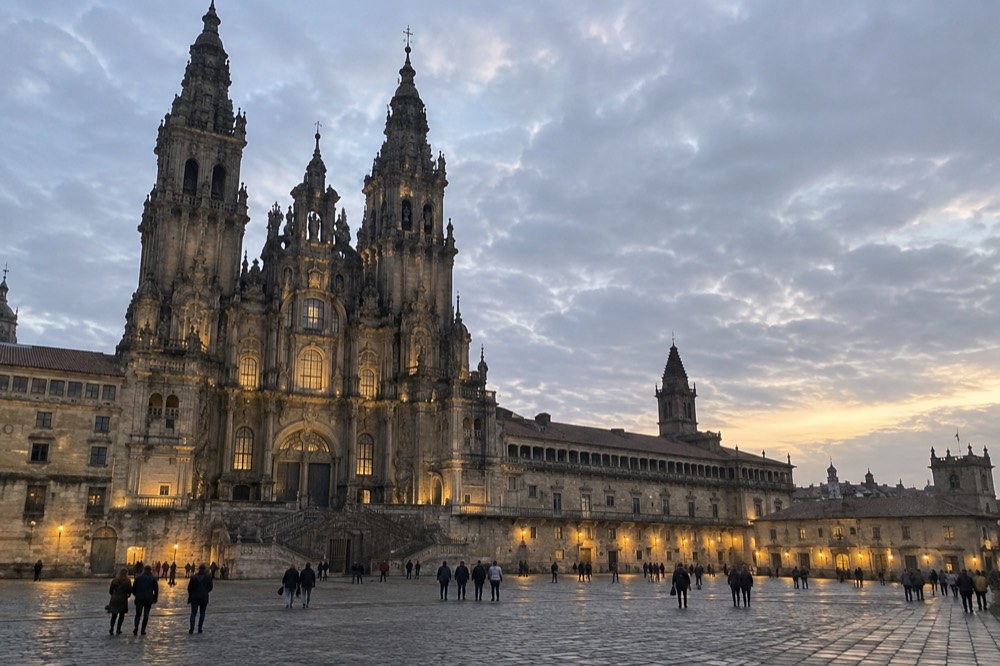
One closing thought from the editors of this Santiago de Compostela Travel Guide: Praza do Obradoiro rewards the same patience the Camino rewards. Arrive early, walk all four of the Cathedral's squares before you commit your camera to one of them, and check the dated works noted above against your travel dates, because the 2026 restorations and the 2027 Holy Year are changing how this square looks and how its ceremonies run. The stone has absorbed a thousand years of arrivals; an unhurried morning costs very little to be part of the next one.