Cathedral Of Santiago de Compostela
The Cathedral of Santiago de Compostela has drawn pilgrims to Galicia for over a thousand years, and its interior is free to enter every day of the week. Here is what the verified sources say about hours, tickets, masses, the Botafumeiro's current suspension, and the restoration works running into the 2027 Holy Year.
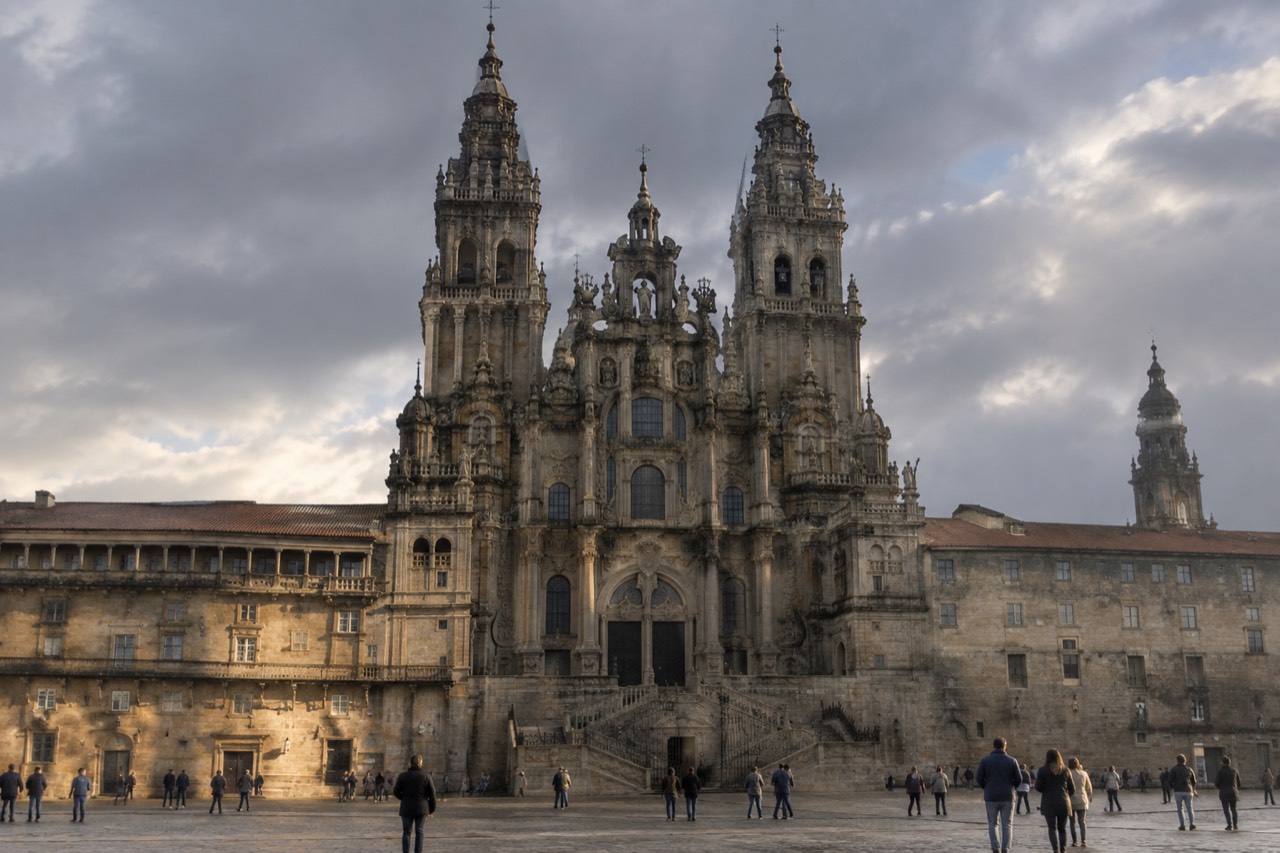
Short answer
The Cathedral of Santiago de Compostela is open daily roughly 7:00am to 9:00pm, and entry to the naves, the Apostle's tomb and the embrace of St. James is free. The museum costs EUR 9-23 depending on ticket type, the rooftop and Carraca tower tour costs EUR 15 general or EUR 12 reduced, and the Botafumeiro is currently suspended because of dome restoration scaffolding, with no return date published.
The Cathedral of Santiago de Compostela stands at the end of every Camino route, the tomb that a record 530,987 pilgrims collected a Compostela certificate for in 2025 alone, and the single reason this Galician city exists where it does. The Oficina del Peregrino's own figures put 2025 at a record high, and every one of those walks finished within sight of these towers. General entry to the basilica is free, the doors open around 7:00am and close around 9:00pm, and as of late September 2026 the naves, the tomb and the embrace of the Apostle remain fully open despite a cluster of restoration projects on the dome, the clock tower and several chapel roofs. This guide assembles what the Cathedral's own ticketing, the city's official pages and the Oficina del Peregrino actually publish, including the details most first-page summaries get wrong.
What Is The Cathedral Of Santiago de Compostela?
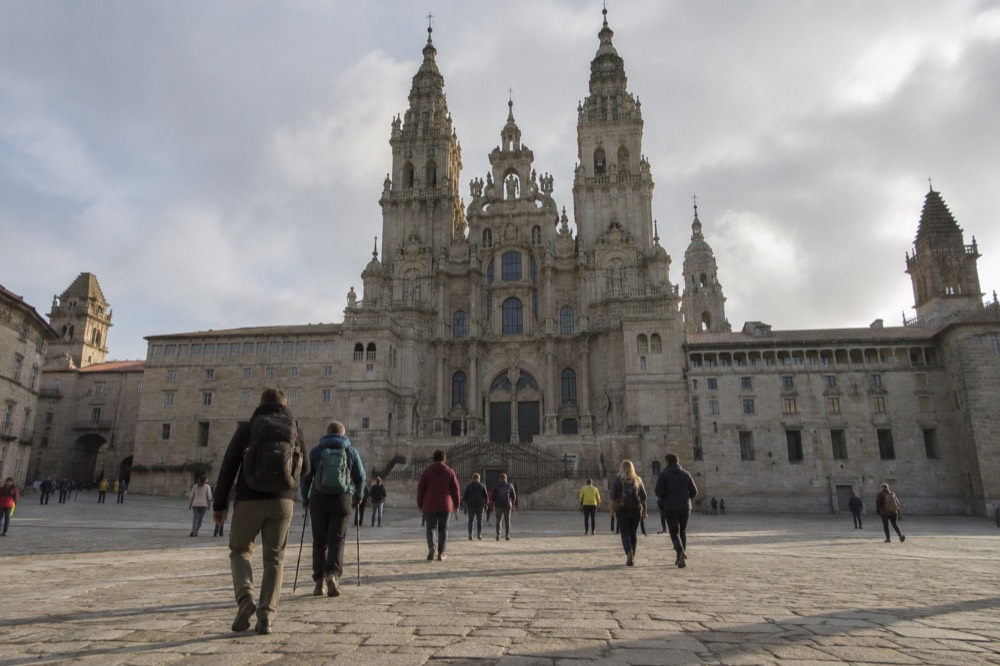
The Cathedral of Santiago de Compostela is the reported burial place of St. James the Apostle and the destination of all Camino de Santiago routes, a Romanesque-origin basilica rebuilt in Baroque stone whose Old Town surroundings were inscribed on the UNESCO World Heritage list in 1985. Its western facade opens onto Praza do Obradoiro, its Holy Door faces Praza da Quintana, and its museum, rooftops and Portico da Gloria are ticketed separately from the free basilica interior. Pilgrim masses are held daily inside, and the building has been under continuous restoration work of one kind or another for most of the last four decades.
The story the building tells is layered rather than single. A Romanesque core sits inside a later Baroque shell, because the earlier fabric, cracked and leaning, was progressively encased rather than demolished. The result is a building you read in cross-section: the Portico da Gloria, master sculptor Mateo's carved portal, is now inside behind the Baroque facade, visited on a time-limited ticket for conservation reasons after a major restoration completed in 2018.
The UNESCO listings are a detail worth getting right. The Old Town of Santiago de Compostela was inscribed in 1985 on its own merit. The Routes of Santiago de Compostela, the Camino Frances and the Northern Spain routes, form a separate 1993 inscription covering the paths themselves. Two listings, one institution, and a claim staked on both the building and the act of walking to it. For the full backstory of why the cathedral matters so much, the companion piece Why Is The Cathedral Of Santiago de Compostela So Famous? goes deeper.
Cathedral Essentials At A Glance
| Fact | Detail | Source basis |
|---|---|---|
| Location | Praza do Obradoiro, Santiago de Compostela, Galicia, Spain | City tourism listing |
| Origin | Romanesque basilica, encased in Baroque facades | UNESCO Old Town inscription, 1985 |
| Basilica entry | Free, daily roughly 7:00am to 9:00pm | santiago.es cathedral page |
| Cathedral Museum | Ticketed, roughly 10:00am to 8:00pm, EUR 9-23 by ticket type | Official ticket site |
| Rooftops and Carraca tower | Guided only, EUR 15 general, EUR 12 reduced | Official ticket site |
| Pilgrim masses | Daily, 7:30am, 9:30am, noon, 7:30pm | Cathedral liturgy page |
| Botafumeiro | Currently suspended, no return date | Cathedral confirmation, 5 September 2026 |
When Is The Cathedral Open, And What Does Entry Cost?
The basilica interior, including the naves, the high altar, the crypt and the embrace of the Apostle, is open daily from roughly 7:00am to 9:00pm and general entry is free, with the doors closing nearer 8:30pm on summer Saturdays for the pilgrim vigil. Entry is through the Praterias door, no ticket is needed for the naves, and the free interior has stayed fully open through September 2026 despite the restoration works described below. Only the museum, the Portico da Gloria and the rooftop tours carry charges.
The distinction between free and paid zones trips up a surprising number of visitors. Walking into the basilica to see the tomb costs nothing. The museum and palace complex behind it costs EUR 9-23 depending on ticket type. The rooftops and the ratchet tower cost EUR 15, or EUR 12 for accredited pilgrims, students, over-65s and the other reduced categories. Timed slots for the paid areas can sell out in peak season, which is the single practical argument for booking ahead or joining a guided visit, and the Cathedral Tickets And Opening Hours guide covers the booking mechanics in detail.
The cathedral is not a museum that empties at closing time, it is a working parish and pilgrimage basilica, and the day is shaped around its liturgy. That means quiet zones during mass, crowds surging after each service ends, and a rhythm that rewards arriving either very early or between the noon and evening masses. Visitors weighing how the cathedral fits a longer stay usually settle on two or three days in the city, enough for the interior, one ticketed area and a day trip.
Daily Rhythm Around The Basilica
| Time of day | What happens | Visitor implication |
|---|---|---|
| ~7:00am | Doors open, first pilgrim mass at 7:30am | Quietest hour for the interior |
| 9:30am | Second pilgrim mass | Tomb queue builds afterward |
| Midday | Main pilgrim mass at 12:00 | Largest crowd of the day |
| Afternoon | Museum and rooftop slots run continuously | Best window for paid areas |
| 7:30pm | Evening pilgrim mass | Day winds down, vigil on summer Saturdays |
| ~9:00pm | Doors close (nearer 8:30pm summer Saturdays) | Evening exterior viewing remains free |
Two questions dominate most visitors' plans, and both can be solved in one booking decision:
How Do You Book The Museum, The Rooftops And The Portico?
The Cathedral Museum's permanent collection runs roughly 10:00am to 8:00pm with ticket prices from EUR 9 to EUR 23 depending on ticket type, and the Cubiertas rooftop tour with the Torre de la Carraca costs EUR 15 general or EUR 12 reduced, booked in timed slots on the Cathedral's own ticketing site at visitas.catedraldesantiago.es. The rooftop visit is guided only, lasts about 60 minutes, climbs roughly 140 steps and reaches about 72 metres above the square. English-language rooftop visits are a flat EUR 15.
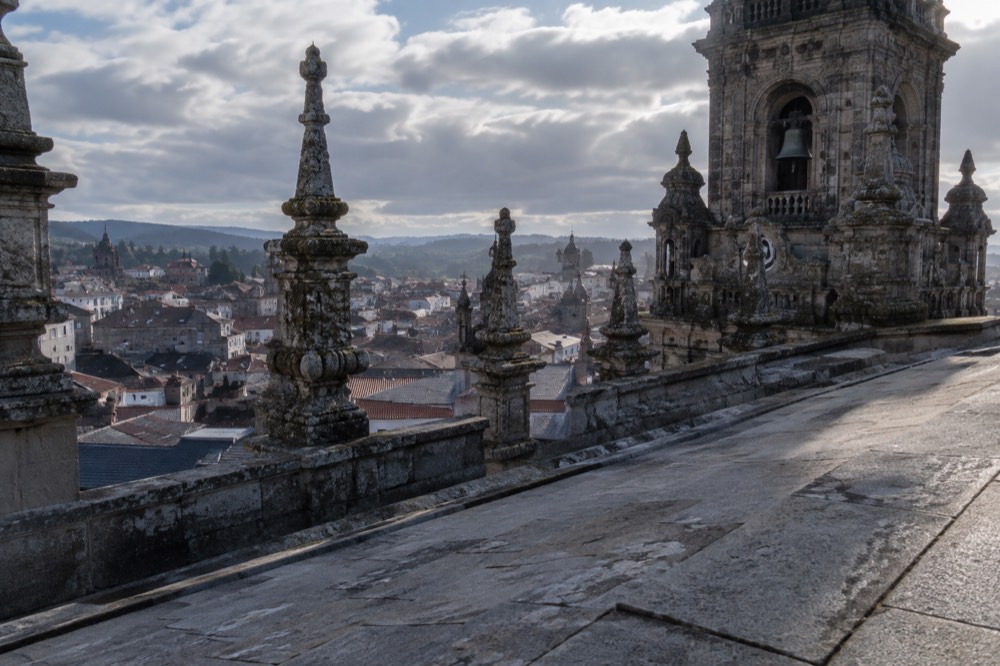
The rooftop tour, called Cubiertas on the official ticketing, is the cathedral's most physically demanding and most photographed product. Groups only, a guide in attendance the whole way, and the ticket also grants access to the museum's permanent collection, the Gelmirez Palace, the crypt of the Portico da Gloria, MuSar and the Diocesan Museum, valid for seven days with one use per space. The Cathedral Rooftops Tour guide and the Cathedral Museum guide cover each area separately.
Booking direct on the official site is the cheapest route. A guided third-party visit costs more but bundles a guide's commentary and, in the skip-the-line versions, removes the queue risk on busy days. The operator's live listing shows current slots and free cancellation terms.
Ticketed Areas Compared
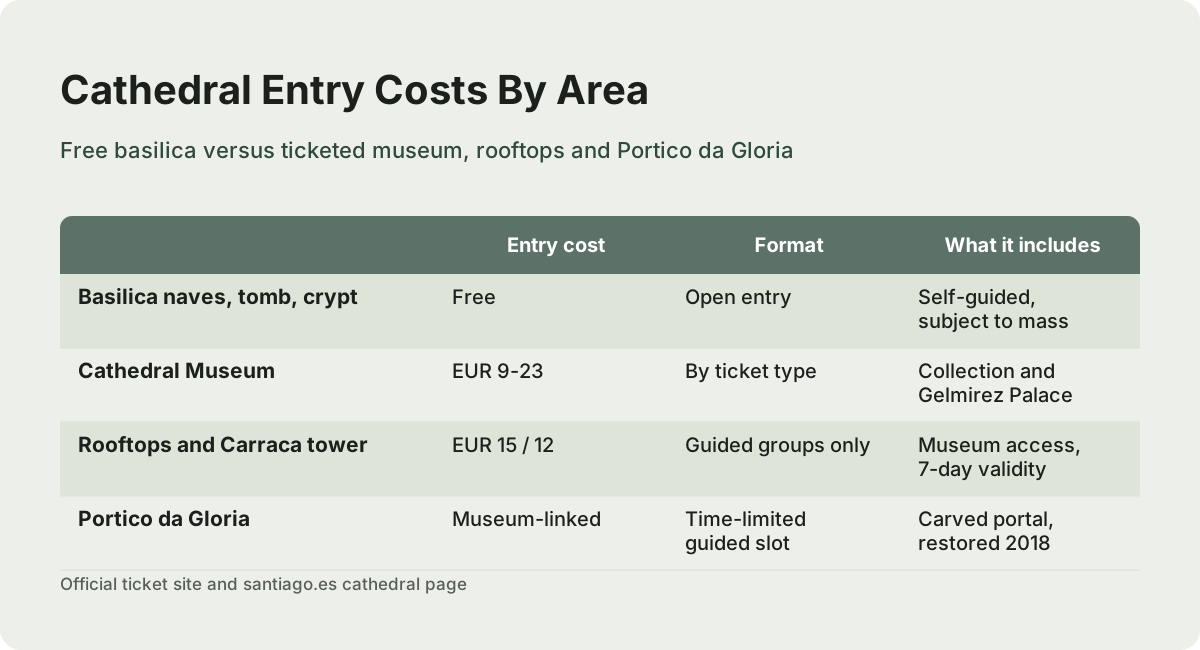
| Area | Entry cost | Format | What it includes |
|---|---|---|---|
| Basilica naves, tomb, crypt | Free | Open entry | Self-guided, subject to mass times |
| Cathedral Museum, EUR 9-23 | By ticket type | Self-guided with audio options | Permanent collection, Gelmirez Palace |
| Rooftops and Carraca tower, EUR 15 / 12 | Flat / reduced | Guided groups only | Museum collection access, 7-day validity |
| Portico da Gloria | Museum-linked | Time-limited guided slot | Mateo's carved portal, restored 2018 |
The skip-the-line cathedral and museum visit is the one most first-time visitors choose, from $26 per person with a 4.8 rating across more than two thousand reviews on the operator's listing, and it pairs naturally with a licensed guide's old-town walk for the rest of the day.
Does The Botafumeiro Still Swing?
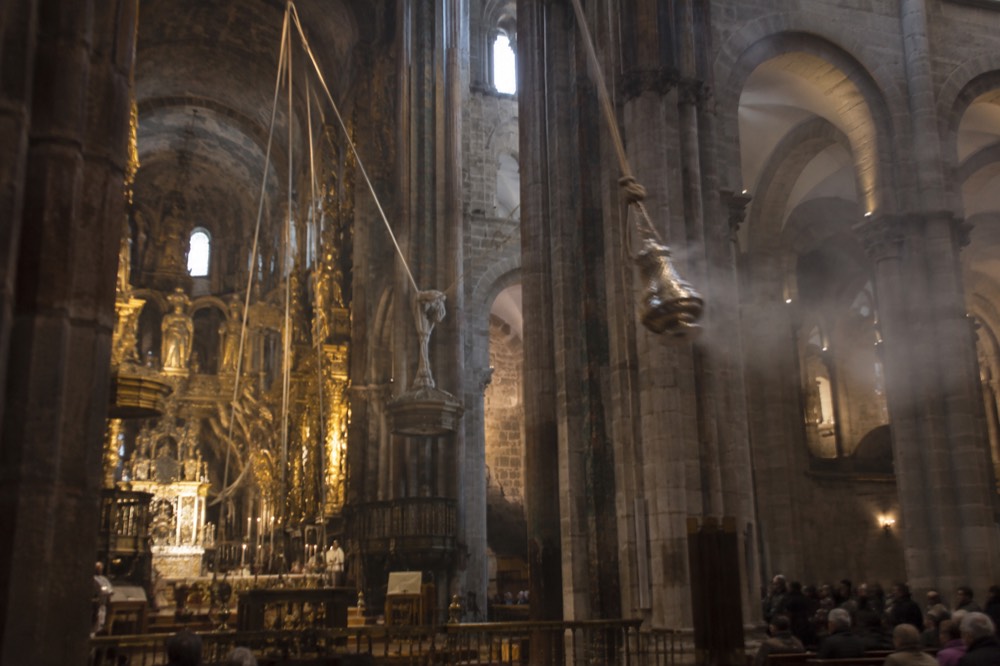
No, the Botafumeiro is currently out of action and no return date has been published, because scaffolding for the cimborrio, the dome over the crossing, covers its hanging mechanism; the Cathedral confirmed this in writing on 5 September 2026. This is a suspension caused by ongoing restoration work rather than a breakage, and it also blocks the private-request option that normally costs in the region of EUR 450-500. Under normal conditions the great censer swings on twelve fixed liturgical solemnities each year and at no other time without a private request.
Guides that promise a Botafumeiro swing on a specific upcoming date are promising something the Cathedral itself has not committed to. What the verified sources do give is the normal annual calendar, worth knowing both for planning future visits and for understanding what you are looking at when you see the empty roping above the crossing.
The Botafumeiro's Normal Annual Calendar
| Solemnity | Date | Notes |
|---|---|---|
| Epiphany | 6 January | Fixed date |
| Easter Sunday | Moves with Easter | Resurrection solemnity |
| Ascension of the Lord | Moves, ~May | Sometimes transferred |
| Apparition at Clavijo | 23 May | Sometimes transferred |
| Pentecost | Moves, ~May | 50 days after Easter |
| St. James the Apostle | 25 July | Principal feast of the city |
| Assumption | 15 August | Fixed date |
| All Saints | 1 November | Fixed date |
| Christ the King | Last Sunday before Advent | Moves |
| Immaculate Conception | 8 December | Fixed date |
| Christmas | 25 December | Fixed date |
| Transfer of the Apostle | 30 December | Fixed date |
The Botafumeiro normally flies at the end of the Eucharist, roughly 45 minutes after the mass begins, and the St. James day swing on 25 July is the one the city builds its Feast Of St. James celebrations around. Until the cimborrio works finish, none of these are schedulable promises, and any visitor whose heart is set on seeing the censer fly should check the Cathedral's own liturgy page before booking travel around it.
Where Do Pilgrim Masses Take Place After October 2026?
Until 15 October 2026 the daily pilgrim masses are held at the Cathedral's High Altar at 7:30am, 9:30am, noon and 7:30pm, but from 16 October 2026 the 9:30am, noon and 7:30pm masses relocate to the nearby Church of San Agustin while main-chapel remodelling continues, and only the 7:30am mass stays inside the Cathedral in its Communion chapel. The Cathedral itself does not close to visitors; the relocation affects the liturgy's location only.
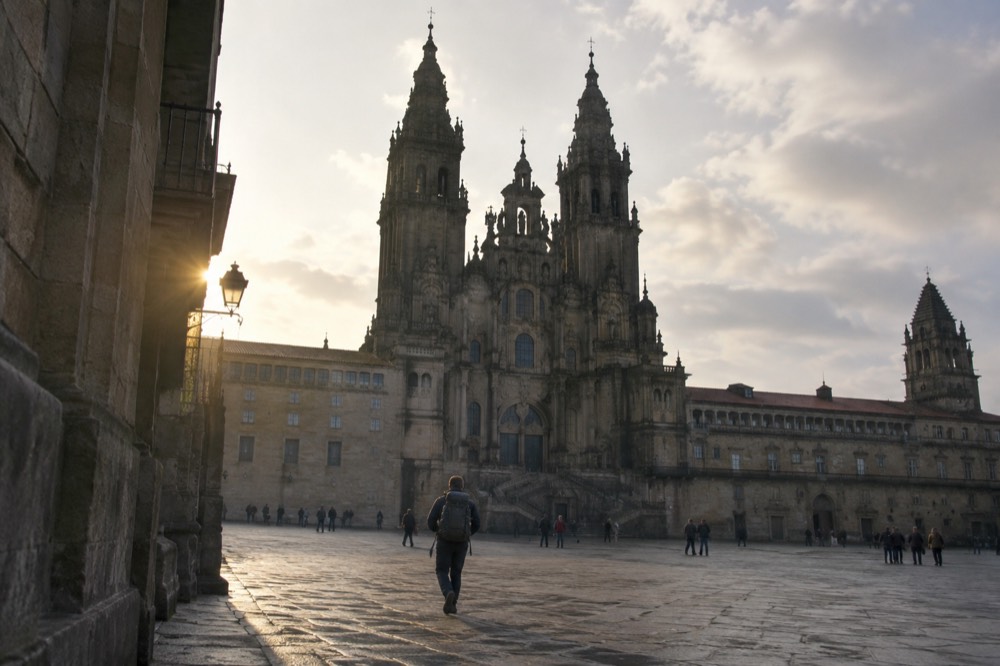
The change is tied to preparation works for the 2027 Holy Year, the same programme reshaping other parts of the building. Pilgrims arriving on the Camino and hoping to attend the noon pilgrim mass, the traditional endpoint of the walk, should read the dates carefully: before mid-October 2026 it happens at the High Altar, after that date at San Agustin, a short walk from the cathedral. The dedicated Pilgrim Mass guide keeps the fuller detail.
For walkers still on the road, the length of the journey itself is the bigger planning question, and it varies sharply by route, from the full Camino Frances to the final stretch from Sarria that most certificate-collecting walkers choose. Everything else covered here is indexed on Santiago de Compostela Travel Guide.
Mass Schedule, Before And After 16 October 2026
| Mass time | Until 15 October 2026 | From 16 October 2026 |
|---|---|---|
| 7:30am | Cathedral, High Altar | Cathedral, Communion chapel |
| 9:30am | Cathedral, High Altar | Church of San Agustin |
| 12:00 noon | Cathedral, High Altar | Church of San Agustin |
| 7:30pm | Cathedral, High Altar | Church of San Agustin |
What Restoration Works Are Running In 2026 And 2027?
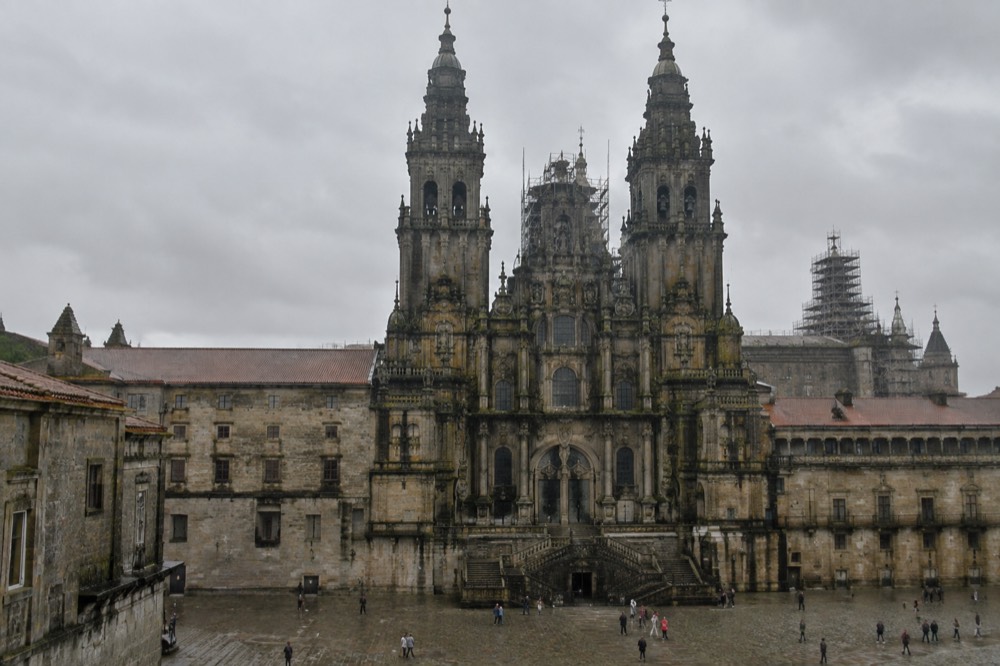
Four separate projects are active as of September 2026, none of them closing the basilica to visitors: cimborrio dome restoration with interior scaffolding over the crossing, Berenguela clock tower restoration running through 2027, a second phase of chapel roof works authorised in May 2026 on a roughly seven-month timeline, and main-chapel remodelling for the 2027 Holy Year. The Portico da Gloria, the museum and rooftop access all operate normally within timed ticketing, and the Portico's own major restoration finished in 2018.
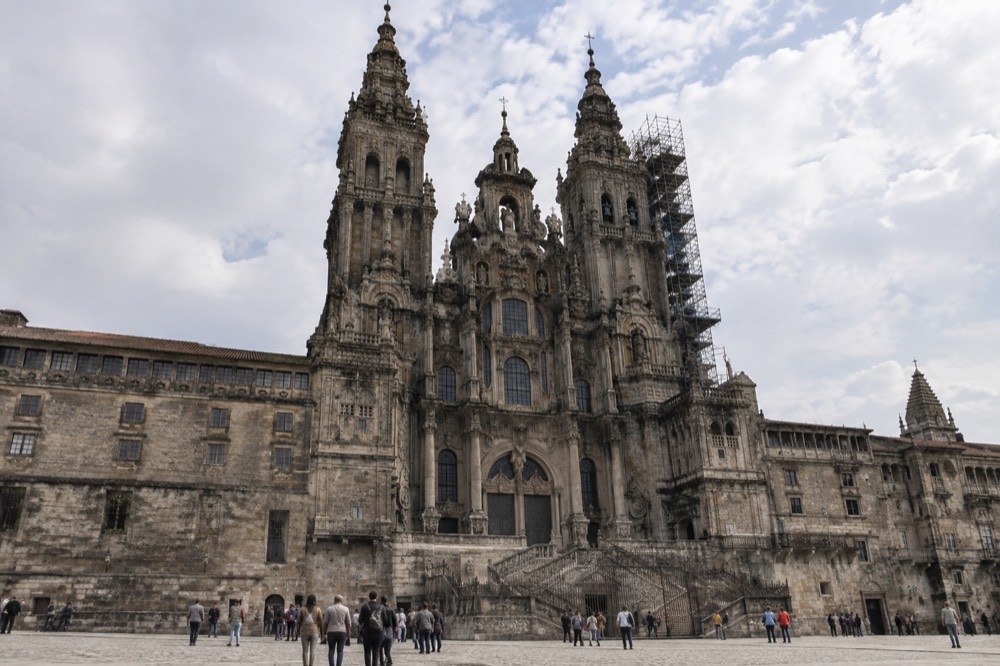
The Berenguela tower project is the most visible from the square, scaffolding climbing the clock tower that carries the cathedral's bells, with stonework, clock machinery, wooden structures and the Berenguela bell itself all in scope across 2026 and 2027. The chapel-roof phase addresses leaks and materials on various roofs, all exterior. What a visitor actually notices inside is limited to the crossing scaffolding overhead, and even that reads as part of the architecture's long restoration story rather than a disruption.
Restoration is a permanent condition here, not an anomaly. The Portico da Gloria spent years behind scaffolding before its 2018 reopening, and the Holy Year cycle guarantees fresh works each decade. The next milestone is fixed and close: the Holy Door opens on the evening of 31 December 2026, and the Holy Year 2027 guide and the Praza da Quintana And The Holy Door guide cover what changes when it does.
Current Works And Their Visitor Impact
| Project | Period | Visible effect | Closes anything? |
|---|---|---|---|
| Cimborrio dome restoration | Active, ongoing | Interior scaffolding over the crossing; Botafumeiro grounded | No |
| Berenguela clock tower | 2026-2027 | Exterior scaffolding on the tower | No |
| Chapel roofs, second phase | From May 2026, ~7 months | Exterior works on chapel roofs | No |
| Main chapel remodelling | Into 2027 | Masses relocate from 16 Oct 2026 | No |
What Should You Not Miss Inside The Cathedral?
The free basilica circuit covers the naves, the crypt containing the Apostle's tomb, and the embrace of the Apostle, the statue of St. James on the High Altar that pilgrims traditionally touch or kiss from behind, and all three are reachable without a ticket during opening hours. The ticketed additions are the Portico da Gloria with Mateo's carving, the museum collection in Gelmirez Palace, and the rooftop circuit above it all. Done in that order, free interior first, then one ticketed layer, the building makes chronological sense.
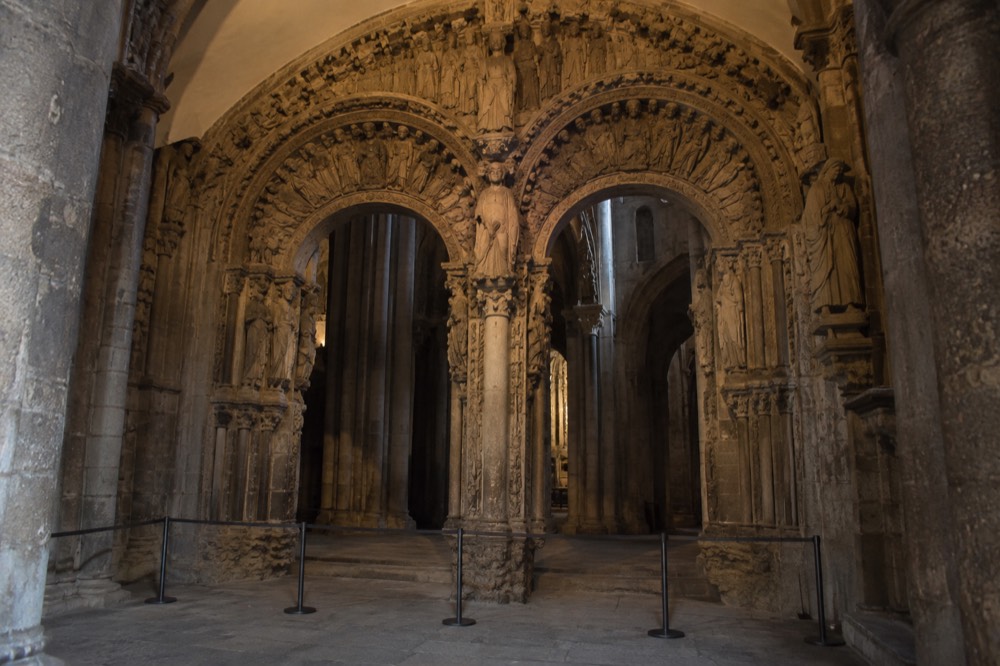
The Portico da Gloria is the artistic argument for a museum ticket. What the Baroque facade hides is a complete Romanesque portal, polychrome traces restored, its prophets and the smiling Saint James among the most significant carved sculpture in Spain, now on a time-limited visit for conservation. The tomb below is the devotional argument, a plain crypt chamber under the altar where the queue moves in silence. There is no dress code enforced as strictly as visitors fear, though shoulders covered is the working convention, and Is There A Dress Code For The Cathedral Of Santiago de Compostela? settles it fully.
Around the cathedral, the rest of the ensemble deserves the walk: the Hostal dos Reis Catolicos Parador on the square's north side, once the royal hospital for pilgrims, the old town lanes falling away east, and the Museo das Peregrinacions telling the pilgrimage story the building can only imply.
What Each Interior Area Offers
| Area | Cost | Time needed | Best for |
|---|---|---|---|
| Naves and High Altar | Free | 15-30 minutes | Architecture, atmosphere |
| Crypt and Apostle's tomb | Free | 10-15 minutes | The devotional core |
| Portico da Gloria | Museum ticket | 20-30 minutes | Carved portal sculpture |
| Cathedral Museum and palace | EUR 9-23 | 45-90 minutes | History, tapestries, Gelmirez Palace |
| Rooftops and Carraca tower | EUR 15 / 12 | About 60 minutes | Views, engineering, the full skyline |
Which Guided Visit Should You Choose?
Choose a skip-the-line cathedral and museum visit if you want the interior explained without queue risk, the full cathedral-and-rooftops ticket if the views are the priority and you are comfortable with 140 steps, and the free GuruWalk city walks if you want context first and the cathedral as one stop among many. A licensed guide's old-town walk with official certification costs from $12 per person, and the rooftop-focused guided options bundle the tower, the roofs and museum access into one slot.
The pairing that works for most first visits is a cathedral-and-museum guided visit, then an afternoon walking tour that takes in the squares and the Alameda Park viewpoint where the whole cathedral skyline is framed in one glance. Visitors staying longer add a day trip, and the Rias Baixas winery and mussel-boat excursion is the most-booked regional pairing from the city, a full-day run to the estuaries and vineyards south of the city.
The Portico, roofs and museum bundle is the deepest single visit available, from $56 per person with a 4.6 rating, covering the portal, the rooftop circuit and the museum in one guided sequence.
For a guided alternative covering the museum and the old city together with a 4.9 rating from 115 reviews, this option runs from $34 per person:
Practical Tips For Visiting The Cathedral
Arrive before 8:30am or between 2pm and 5pm for the quietest basilica interior, book rooftop and Portico slots in advance because timed entries sell out in peak season, and check the Cathedral's own liturgy page the week you travel, because mass locations, works and the Botafumeiro's status are all live conditions in 2026 and 2027. Entry through the Praterias door is free and un-ticketed, and summer Saturdays close earlier for the pilgrim vigil, nearer 8:30pm than 9:00pm.
Three practical notes the details below are confirmed. First, the airport is about 12km from the old town, with bus line 6A currently 1 EUR paid to the driver, though a new Monbus contract with a fare nearer 6 EUR is expected in autumn 2026, so treat the current fare as subject to change. Second, Santiago de Compostela has charged a municipal tourist tax since 1 October 2025, a surcharge on Galicia's tourist-stay tax upheld by Galicia's high court in September 2026, of 1 EUR to 2.50 EUR per person per night for a maximum of 5 nights, from 1 EUR in private albergues, campsites and tourist apartments up to 2.50 EUR in five-star hotels, with under-18s and stays in Xunta-run public albergues exempt. Third, the pilgrim credential rules matter if you are collecting a Compostela: the last 100km on foot or horseback, 200km cycled, two stamps per day minimum, issued in person at Rua das Carretas 33, all covered in the Compostela Certificate guide.
Budget-wise the cathedral is the cheapest major attraction in Galicia: free interior, museum from EUR 9, and the whole paid stack under EUR 40, which leaves room in almost any itinerary for a guided visit or a coastal excursion.
Common Questions About The Cathedral Of Santiago de Compostela
Is entry to the Cathedral of Santiago de Compostela free?
Yes. General entry to the basilica interior, including the naves, the high altar, the crypt and the Apostle's tomb, is free, with doors open roughly 7:00am to 9:00pm daily. Only the museum, the Portico da Gloria and the rooftop tours are ticketed, with the museum at EUR 9-23 by ticket type and the rooftops at EUR 15 general or EUR 12 reduced.
Can you see the Botafumeiro swing in 2026 or 2027?
Not currently. The Botafumeiro is suspended because cimborrio restoration scaffolding covers its hanging mechanism, confirmed in writing by the Cathedral on 5 September 2026, with no return date published. The private-request option is also unavailable. Normally it swings on twelve fixed solemnities a year, from Epiphany on 6 January to the Transfer of the Apostle on 30 December, and the Cathedral's liturgy page is the only reliable source for its return.
Where are pilgrim masses held after October 2026?
From 16 October 2026 the 9:30am, noon and 7:30pm masses move from the Cathedral's High Altar to the nearby Church of San Agustin while main-chapel remodelling continues. Only the 7:30am mass stays inside the Cathedral, in its Communion chapel. The Cathedral itself remains open to visitors throughout.
How much does the rooftop tour of the cathedral cost?
The Cubiertas and Torre de la Carraca guided tour costs EUR 15 general or EUR 12 reduced for accredited pilgrims, students, over-65s and other qualifying categories, with English visits at a flat EUR 15. It lasts about 60 minutes, climbs roughly 140 steps and reaches about 72 metres, and the ticket includes access to the museum's permanent collection, valid for seven days.
Is the cathedral closed for restoration works in 2026?
No. As of 24 September 2026 the naves, the Apostle's tomb and the embrace remain fully open. Active projects include the cimborrio dome, the Berenguela clock tower, chapel roofs and the main chapel, but all are either exterior or structural, and none closes the basilica to visitors. The Portico da Gloria and the museum operate normally on timed tickets.
When does the Holy Door open?
The Holy Door opens solemnly on the evening of 31 December 2026, at a Praza da Quintana ceremony, and remains open through 31 December 2027, which is the next Holy Year, or Xacobeo. 2026 is not a Holy Year. The Holy Year falls whenever 25 July, the feast of St. James, lands on a Sunday.
How long should you allow for a cathedral visit?
Count on 45 minutes to an hour for the free interior including the tomb queue, 45 to 90 minutes more for the museum and palace, and a further hour if you add the rooftop tour. A full cathedral morning with a guided visit and the rooftop circuit comfortably fills half a day, and the rest of the old town wraps around it on foot.
The cathedral rewards both the five-minute walk-through and the half-day deep visit, and the difference between the two is mostly a matter of tickets booked in advance. The building's live conditions, the suspended Botafumeiro, the October 2026 mass relocation and the tower scaffolding, are exactly the ones to re-check against the Cathedral's liturgy and ticketing pages close to your travel date.