Why Is The Cathedral Of Santiago de Compostela So Famous?
The Cathedral of Santiago de Compostela is famous as the burial place of St. James and the finish point of the Camino de Santiago. This guide explains the tomb, the Portico da Gloria, the Botafumeiro and the Holy Year.
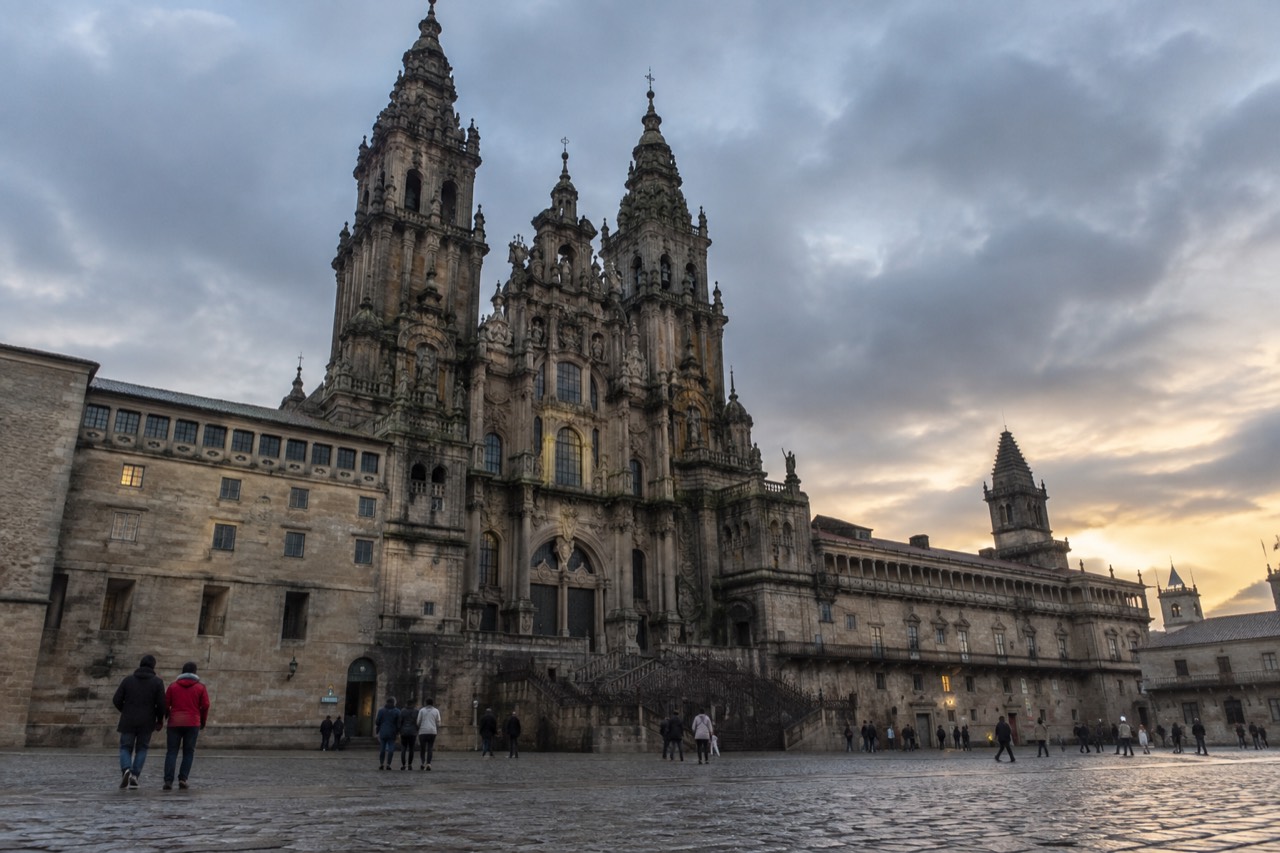
The Cathedral of Santiago de Compostela, in Galicia in northwest Spain, is the only great pilgrimage cathedral in Europe still receiving pilgrims on the scale it did in the Middle Ages. In 2025 the Pilgrim's Office in the city issued a record 530,987 Compostela certificates, each one earned by walking, cycling or riding the final stretch of a Camino route to this single building. The reason for that pull is simple and strange at once: the cathedral is built over the tomb of St. James the Apostle, and pilgrims have been travelling to it for well over a thousand years. This Santiago de Compostela Travel Guide article sets out why that tomb, and the church raised above it, became so famous, and what a visitor can actually see there today.
Why Is The Cathedral Of Santiago de Compostela So Famous?
The Cathedral of Santiago de Compostela is famous because it is built over the tomb of St. James the Apostle, which made it, alongside Rome and Jerusalem, one of the three great pilgrimage destinations of medieval Christianity. It is the finish point of the Camino de Santiago, it guards the Romanesque Portico da Gloria, and its Old Town has been UNESCO-inscribed since 1985, with the Camino routes themselves inscribed in 1993.
Those four threads, the tomb, the pilgrimage, the stone and the UNESCO recognition, explain almost everything about the cathedral's fame. Strip away the Camino and the building would still be a remarkable Romanesque and Baroque church. Strip away the tomb and the Camino would never have existed, because the whole network of routes across Europe exists to bring people to this one spot in Galicia.
The fame is also self-renewing. Every pilgrim who arrives in Praza do Obradoiro and climbs the steps into the cathedral becomes part of the story that draws the next one. The city's own tourism and heritage bodies describe the cathedral as the spiritual destination of all Jacobean routes, and the numbers back them up: half a million Compostelas in a single year is not a museum's annual visitation, it is a living movement.
What Can You See Inside The Cathedral Of Santiago de Compostela?
Inside the cathedral, visitors can see the tomb of St. James in the crypt beneath the main altar, embrace the silver statue of the Apostle behind the altar, the Botafumeiro hanging in the crossing, the Romanesque Portico da Gloria on the west front, the Cathedral Museum with Gelmirez Palace, and the rooftops with the Torre de la Carraca. General entry to the interior is free, with paid timed visits for the museum and the rooftop tour.
The interior of the basilica, including the naves, high altar, crypt and the embrace of the Apostle, is open daily from roughly 7:00am to 9:00pm, closing nearer 8:30pm on summer Saturdays for the pilgrim vigil. The Cathedral Museum's permanent collection runs to about 8:00pm daily, with tickets ranging from EUR9 to EUR23 depending on type. The rooftop and Carraca Tower visit is guided, lasts around 60 minutes, climbs about 140 steps and reaches roughly 72 metres above the city; the cathedral's own ticketing site lists it at EUR15 general and EUR12 reduced. Full current details are in the cathedral tickets and opening hours guide.
| Part of the cathedral | What you see | Entry |
|---|---|---|
| Naves, high altar, crypt and embrace of the Apostle | Tomb of St. James, silver Apostle statue, botafumeiro fixing point | Free, roughly 7:00am-9:00pm daily |
| Cathedral Museum and Gelmirez Palace | Permanent collection, tapestries, crypt of the Portico da Gloria | Paid, EUR9-23 depending on ticket type |
| Rooftops and Torre de la Carraca | Guided walk over the stone roofs, about 140 steps, about 72m height | Paid, EUR15 general, EUR12 reduced |
As of late September 2026 the cathedral reports no visitor-facing closures: the naves, tomb and embrace remain fully open. Interior scaffolding exists only over the crossing, for the cimborrio restoration, and works on the Berenguela clock tower and some chapel roofs are exterior and structural. The cathedral's own attraction page tracks any change to that picture.
For visitors who want the building explained rather than just entered, a guided visit is the practical route. The most complete of the cathedral tours on this site covers the Portico da Gloria, the rooftops and the museum in one ticketed walk.
Does The Botafumeiro Swing At Santiago de Compostela Cathedral?
The Botafumeiro, the cathedral's famous flying censer, normally swings at the main Mass on 12 fixed liturgical solemnities each year, including the Feast of St. James on 25 July. It is currently out of action: scaffolding for the cimborrio restoration covers its hanging mechanism, and the Cathedral confirmed in writing on 5 September 2026 that it cannot swing, with no return date published.
That suspension is the single most important thing for a visitor hoping to see it to understand. The great censer is not broken and it is not retired. The Cathedral Chapter guarantees its flights on the twelve solemnities as a matter of liturgy, and once the dome works finish it is expected to resume. What no source currently supplies is a date for that resumption, so no visitor should plan a trip around seeing it swing in 2026.
| Solemnity | Usual date |
|---|---|
| Epiphany | 6 January |
| Easter Sunday | Date moves each year |
| Ascension of the Lord | Date moves each year |
| Apparition of the Apostle in Clavijo | 23 May, or transferred |
| Pentecost | Date moves each year |
| Feast of St. James the Apostle | 25 July |
| Assumption of the Virgin | 15 August |
| All Saints | 1 November |
| Christ the King | Last Sunday before Advent |
| Immaculate Conception | 8 December |
| Christmas | 25 December |
| Transfer of the Apostle | 30 December |
The censer's fame is earned partly by scale. It is a giant thurible, swung on a rope across the transept by a team of tiraboleiros, and its flights were designed to perfume a cathedral packed with medieval pilgrims. The 12-date schedule above is how it normally operates, clearly flagged here as currently suspended.
How Does The Camino de Santiago Make The Cathedral Famous?
The Camino de Santiago makes the cathedral famous by making it a destination rather than a monument: to earn the Compostela certificate, a pilgrim must cover at least the last 100km on foot or horseback, or the last 200km by bicycle, collecting two stamps per day in a credencial, and the certificate is issued only in person at the Pilgrim's Office at Rua das Carretas 33 in Santiago de Compostela.
Those rules, published by the Oficina del Peregrino, mean that fame arrives at the cathedral on foot. A record 530,987 Compostelas were issued in 2025, and every one of those pilgrims finished at the same square. The how long does it take to walk the Camino question has a different answer for every route, but the ending is always this cathedral.
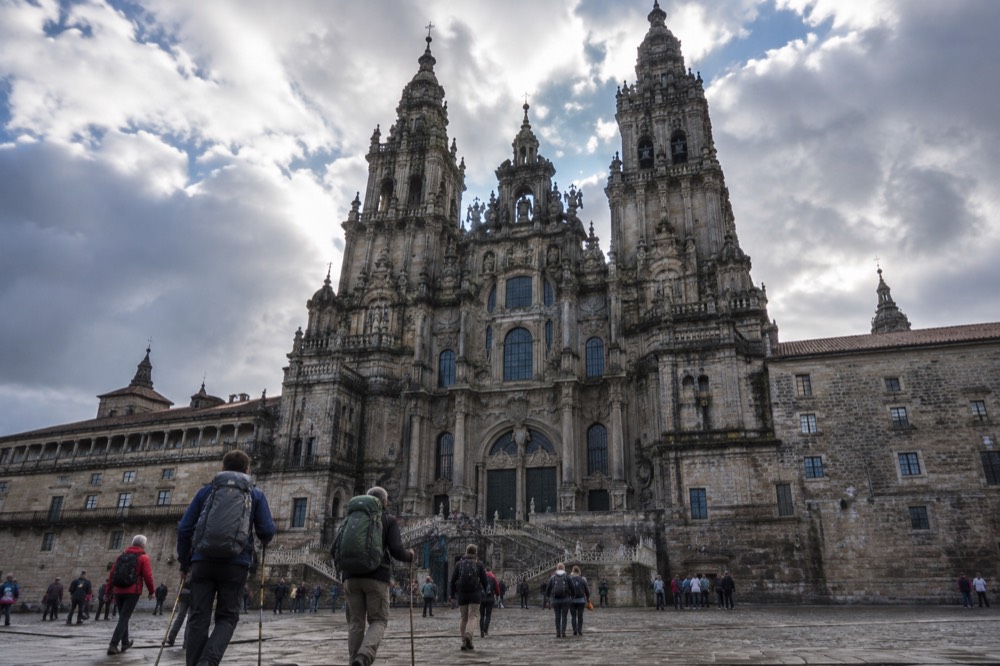
The pilgrim masses tie the flow of walkers to the building itself. The Cathedral's liturgy page lists daily pilgrim masses at 7:30am, 9:30am, noon and 7:30pm at the main altar. From 16 October 2026, because of main chapel remodelling ahead of the Holy Year, the 9:30am, noon and 7:30pm masses relocate to the nearby Church of San Agustin, and only the 7:30am mass stays in the Cathedral's own Communion chapel. The Cathedral remains open to visitors throughout.
What Comes Next: The Holy Year 2027 At Santiago de Compostela
The next Holy Year, or Xacobeo, at Santiago de Compostela is 2027, not 2026, because 25 July 2027 falls on a Sunday. The Holy Door opens on the evening of 31 December 2026 in a ceremony at Praza da Quintana and stays open through 31 December 2027, after which the next Holy Years fall in 2032, 2038 and 2049.
The Holy Year cycle is the cathedral's fame expressed in calendar form. A Holy Year is declared whenever the Feast of St. James lands on a Sunday, and in those years pilgrims can pass through the Holy Door, on the east side of the cathedral facing Praza da Quintana, to gain the plenary indulgence attached to it. The current wave of restoration work inside the cathedral, the chapel remodelling that moves the masses, the Berenguela tower works spanning 2026 and 2027, is all preparation for the crowds 2027 will bring.
For planning purposes, this means a visit in late 2026 or through 2027 carries extra weight: the Holy Door ceremony on 31 December 2026 is one of the most significant events in the cathedral's annual life, and the what is Santiago de Compostela famous for question gets a visible answer in the city's streets that year.
What Makes The Architecture Of The Cathedral So Significant?
The architecture of Santiago de Compostela Cathedral is significant because it is a Romanesque pilgrimage church, a building type designed around a processional route to a tomb, and it preserves the Portico da Gloria, the carved stone portal by Master Mateo whose major restoration was completed in 2018. The Baroque Obradoiro facade that visitors see from the square was built to encase and protect the earlier church, and the whole Old Town around it was UNESCO-inscribed in 1985.
The Portico da Gloria is the artistic heart of the building. Master Mateo's portal, with its carved prophets, apostles and musicians framing the entrance, was the gateway through which medieval pilgrims entered, and its sculpture influenced Romanesque art across Galicia and beyond. Its most recent restoration finished in 2018, and visits today are timed and limited for conservation reasons.
The UNESCO story is double. The Old Town of Santiago de Compostela was inscribed on the World Heritage list in 1985, and the Routes of Santiago de Compostela, the Camino Frances and the Northern Routes, received their own inscription in 1993. That second listing is unusual: it recognises a network of paths, monasteries and bridges rather than a single site, and it exists because of what the cathedral represents at the end of them.
To see the architecture at its best angle, above street level rather than in it, the cathedral rooftops tour page explains the guided Cubiertas and Carraca Tower visit, the one that climbs 140 steps to look down on the granite roofs and the Berenguela tower. The tower's own restoration works, running through 2026 and 2027, cover stonework, the clock machinery and the Berenguela bell, and they do not affect visits.
Common Questions About The Santiago de Compostela Cathedral
Why is the Cathedral of Santiago de Compostela so famous?
It is famous because it holds the tomb of St. James the Apostle, which made it one of the three great medieval pilgrimage destinations alongside Rome and Jerusalem, and because it remains the living finish point of the Camino de Santiago, receiving over half a million registered pilgrims in 2025.
Is the Cathedral of Santiago de Compostela free to enter?
Yes. General entry to the interior, including the naves, high altar, crypt and the embrace of the Apostle, is free, and the cathedral is open daily from roughly 7:00am to 9:00pm. The Cathedral Museum and the rooftop and tower visits are paid, with museum tickets ranging from EUR9 to EUR23 and the rooftop tour at EUR15 general or EUR12 reduced.
Can you see the Botafumeiro swing at Santiago de Compostela Cathedral?
Not at present. The Botafumeiro is temporarily out of action because scaffolding for the cimborrio restoration covers its hanging mechanism, and the Cathedral confirmed this in writing on 5 September 2026 with no return date published. It normally swings on 12 fixed liturgical solemnities each year.
Where are the pilgrim masses held during the restoration works?
Until 15 October 2026 the daily pilgrim masses at 7:30am, 9:30am, noon and 7:30pm are held at the Cathedral's main altar. From 16 October 2026 the 9:30am, noon and 7:30pm masses move to the nearby Church of San Agustin, while the 7:30am mass stays in the Cathedral's Communion chapel.
When is the next Holy Year at Santiago de Compostela?
The next Holy Year is 2027, because 25 July 2027 falls on a Sunday. The Holy Door opens on the evening of 31 December 2026 at Praza da Quintana and remains open through 31 December 2027. The Holy Years after that fall in 2032, 2038 and 2049.
Is St. James really buried in the Cathedral of Santiago de Compostela?
The Cathedral, the pilgrimage and the city all exist because a tomb identified as that of St. James the Apostle was discovered here in the early Middle Ages, and the crypt beneath the main altar has been venerated as his resting place ever since. The current statement of the site's own heritage bodies describes the tomb as the apostle's, and pilgrims have travelled to it for over a thousand years.
The cathedral's fame, in the end, is not one thing. It is a tomb, a route, a portal, a swinging censer and a door that opens once every few years, all stacked on the same granite hill in Galicia. A visitor who walks in through the Obradoiro facade stands inside every one of those layers at once.