Camino Frances: The Pilgrim Route To Santiago de Compostela
The Camino Frances is the main artery of the Camino de Santiago, the medieval pilgrim network that ends at the tomb of St. James beneath the cathedral of Santiago de Compostela in Galicia, Spain.
Short answer
The Camino Frances is the classic and busiest Camino de Santiago route, traditionally walked from Saint-Jean-Pied-de-Port across northern Spain to Santiago de Compostela. To earn the Compostela certificate you must walk at least the final 100km, collect two stamps per day, and present your pilgrim passport in person at the Pilgrim's Office on Rua das Carretas 33.
The Camino Frances is the backbone of the Camino de Santiago, the network of medieval pilgrim routes that converge on the cathedral city of Santiago de Compostela in Galicia, northwest Spain. Pilgrims have followed it for more than a thousand years, and its final stretch still carries the majority of everyone who arrives in the city on foot: the Oficina del Peregrino's own figures recorded 530,987 Compostelas issued in 2025, a record year, and the Camino Frances accounts for the largest share of walkers in every annual breakdown the office publishes. This guide from the Santiago de Compostela Travel Guide editors covers what the route is, how the certificate rules actually work, what happens when you arrive in Santiago de Compostela, and what to do once the boots come off.
What Is The Camino Frances To Santiago de Compostela?
The Camino Frances is the classic pilgrim route across northern Spain to the tomb of St. James in the Cathedral of Santiago de Compostela, traditionally starting at Saint-Jean-Pied-de-Port in the French Pyrenees and crossing Navarra, Rioja, Castilla y Leon and Galicia.
It is the busiest and best-served of all the Camino routes, and in 1993 UNESCO inscribed it, with the Routes of Northern Spain, as a World Heritage listing in its own right, separate from the 1985 inscription of the Old Town of Santiago de Compostela.
Those two UNESCO listings are worth keeping apart, because they are often merged by mistake. The Old Town of the city was inscribed in 1985 for its architecture and urban fabric. The routes themselves, the Camino Frances and the Northern Routes, received their own inscription in 1993 for the cultural landscape, the hospitals, bridges and churches built along them. A pilgrim walking the final week is therefore travelling through two World Heritage designations at once: the route for most of the way, and the city at the end.
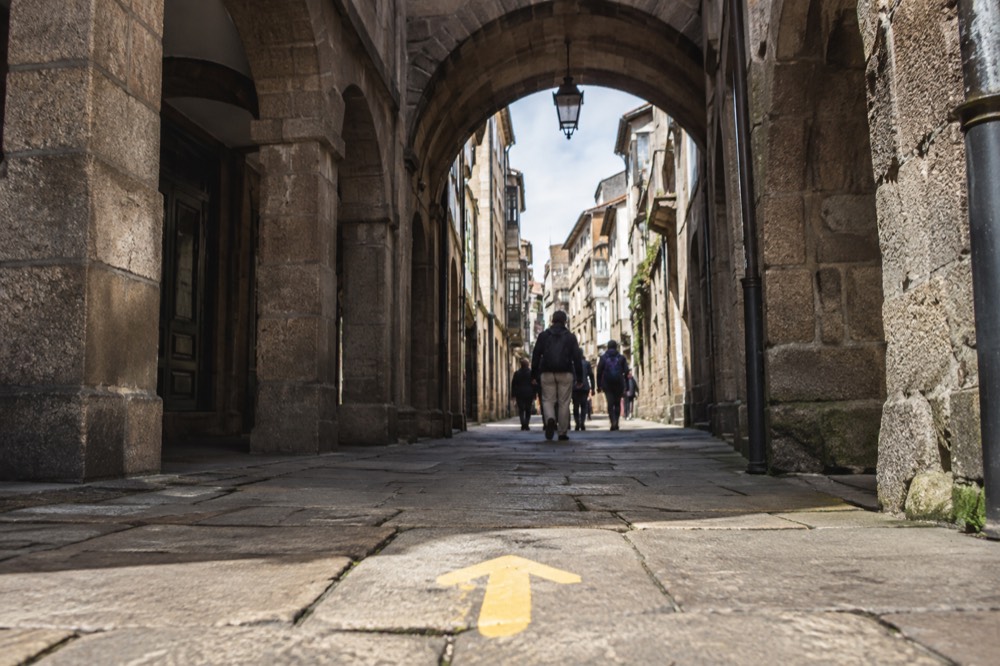
The route's identity rests on two things above all. The first is infrastructure: albergues, stamping points, yellow arrows and scallop shells mark the whole way, which is why so many first-time pilgrims choose it. The second is crowd. Walking the Camino Frances is a shared experience in a way few long-distance walks are, and the busiest section by far is the final stretch from Sarria, the point where the 100km certificate minimum begins.
For orientation, the wider Camino de Santiago guide explains the whole network, and the Camino routes overview compares each variant side by side, from the Portugues to the Norte and the Primitivo. First-timers usually find that a map of the full network is the moment the whole undertaking clicks into place.
How Do You Earn The Compostela On The Camino Frances?
You earn the Compostela certificate by walking at least the final 100km of the Camino Frances, or on horseback, or the final 200km by bicycle, collecting at least two stamps per day in your pilgrim passport from official stamping points, and presenting the completed credential in person at the Pilgrim's Office at Rua das Carretas 33 in Santiago de Compostela. There is no distance requirement to simply walk the route, only to receive the certificate.
Cyclists face the 200km minimum because they move faster and would otherwise compress the journey into a weekend, while horseback riders use the 100km walking threshold.
| Requirement | Rule | Source Detail |
|---|---|---|
| Minimum walking distance | Final 100km on foot | Oficina del Peregrino FAQs |
| Minimum cycling distance | Final 200km | Oficina del Peregrino FAQs |
| Stamp minimum | Two stamps per day, from official stamping points | Recorded on the credencial |
| Where it is issued | In person only, Rua das Carretas 33, Santiago de Compostela | Pilgrim's Office location |
| Closure days | 25 December and 1 January | Office seasonal hours |
The credential itself deserves attention before departure. The pilgrim passport and credential guide explains where to obtain one, how stamping works in practice, and what counts as an official stamping point, which is where most first-time walkers go wrong: a bar stamp is fine, but the office wants evidence of progression through the day, not a single start-and-finish pair. The full certificate process, including the distinction between the religious Compostela and the secular certificate of distance, is laid out in the Compostela certificate guide.
Practical planning around the credential is straightforward. Carry it from day one even if you do not expect to walk the minimum distance, because many pilgrims extend their walk once they are on the road. Keep it dry. And when you arrive, expect the queue at Rua das Carretas to be part of the experience: the office's own pages describe seasonal hours of roughly 8am to 8pm depending on the month, and the line moves steadily because the process per pilgrim is short.
For anyone weighing whether the whole undertaking is realistic, the questions of how long the walk takes and what it costs have fuller answers elsewhere on this site, and the albergues and Camino accommodation guide goes deeper on where you sleep each night, from municipal bunks to private rooms.
Where Does The Camino Frances Finish In Santiago de Compostela?
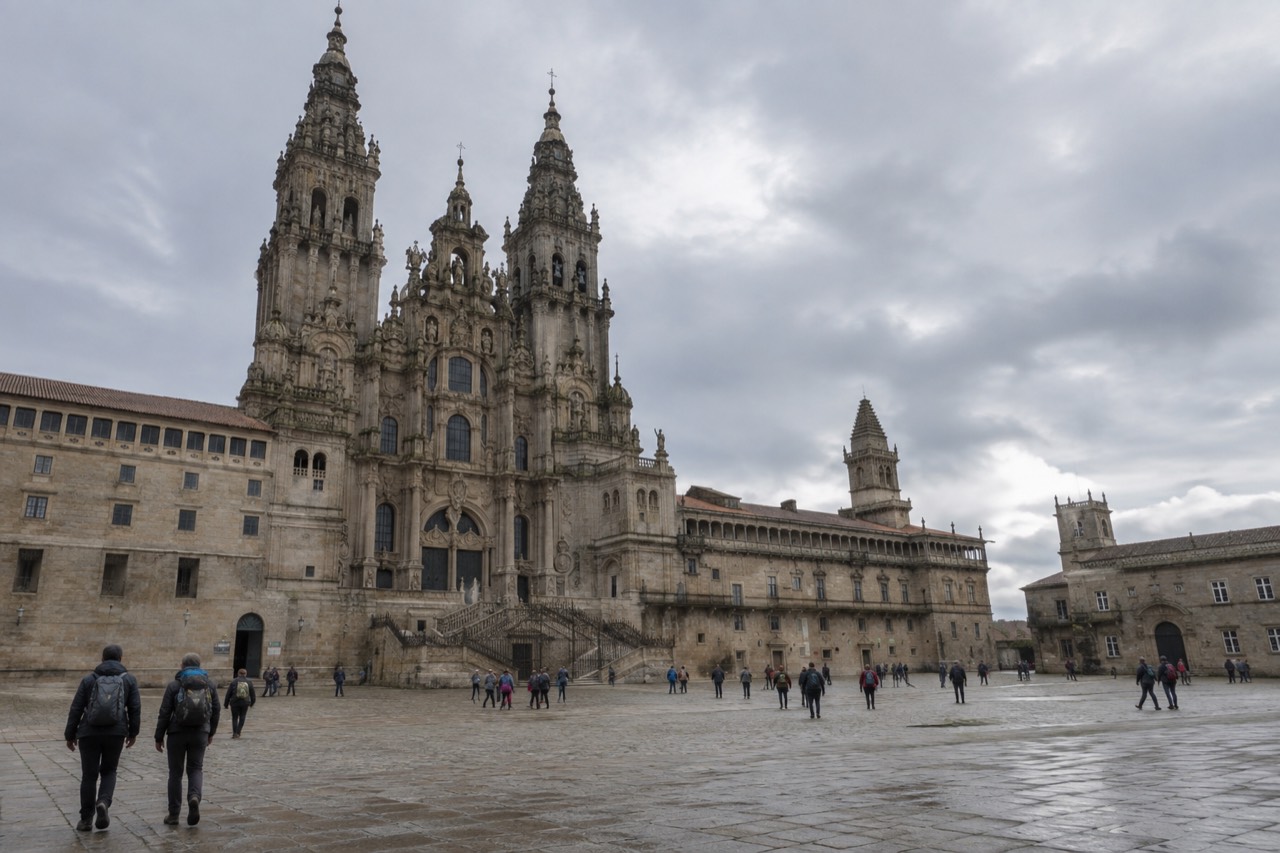
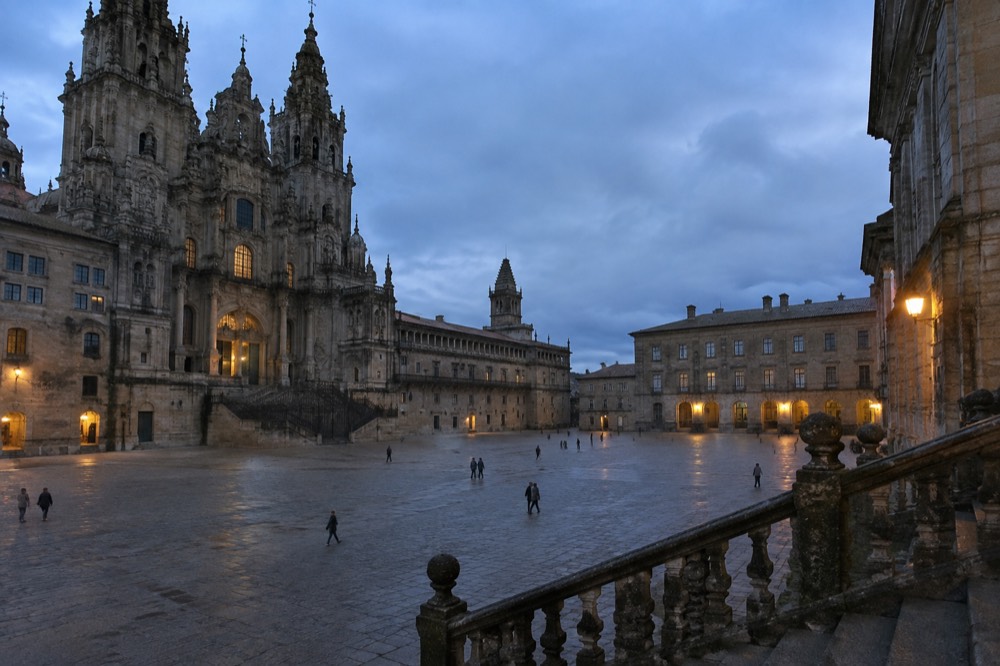
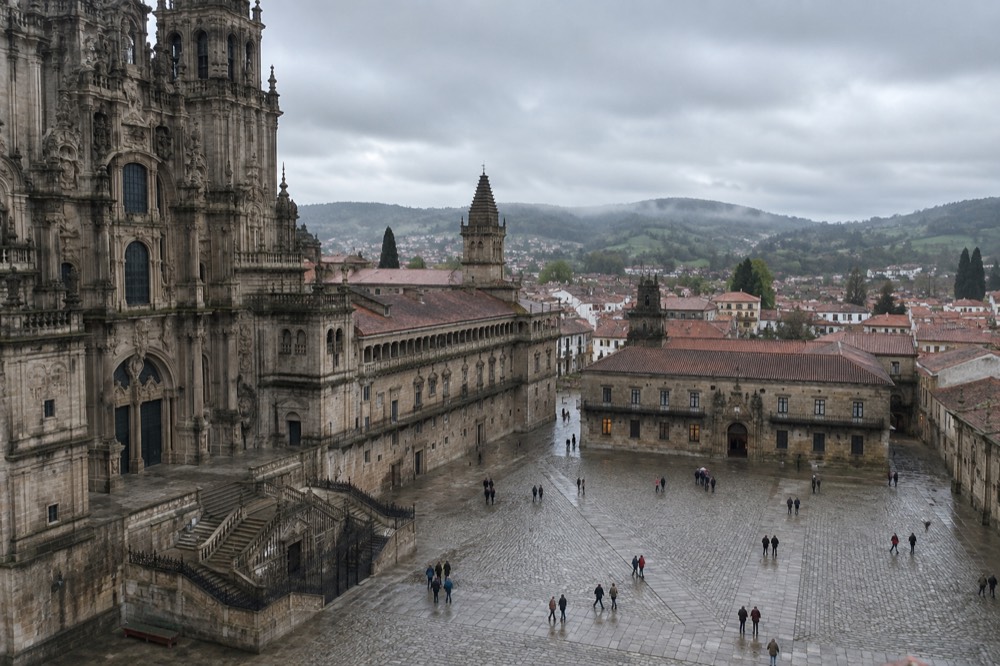
The Camino Frances finishes at the Cathedral of Santiago de Compostela on Praza do Obradoiro, where arriving pilgrims traditionally touch the pillar of the Portico da Gloria, visit the tomb of St. James in the crypt beneath the high altar, and then walk a few minutes to the Pilgrim's Office at Rua das Carretas 33 to claim the Compostela. Most walkers enter the old town from the west, along Rua das Hortas, and reach the square with the cathedral facade directly ahead.
Arrival is the emotional peak of the route and also the most disorienting hour of it. After days of village rhythms, Praza do Obradoiro is enormous, full of other pilgrims lying on the stones and photographing the baroque facade of the Hostal dos Reis Catolicos on the north side. The arriving in Santiago on the Camino guide walks through the first hours in sequence: the square, the credential, the mass, the first proper meal. The buildings that close the square, the cathedral, the Parador, the town hall and the Colexio de San Xerome, reward a slow lap before anything else.
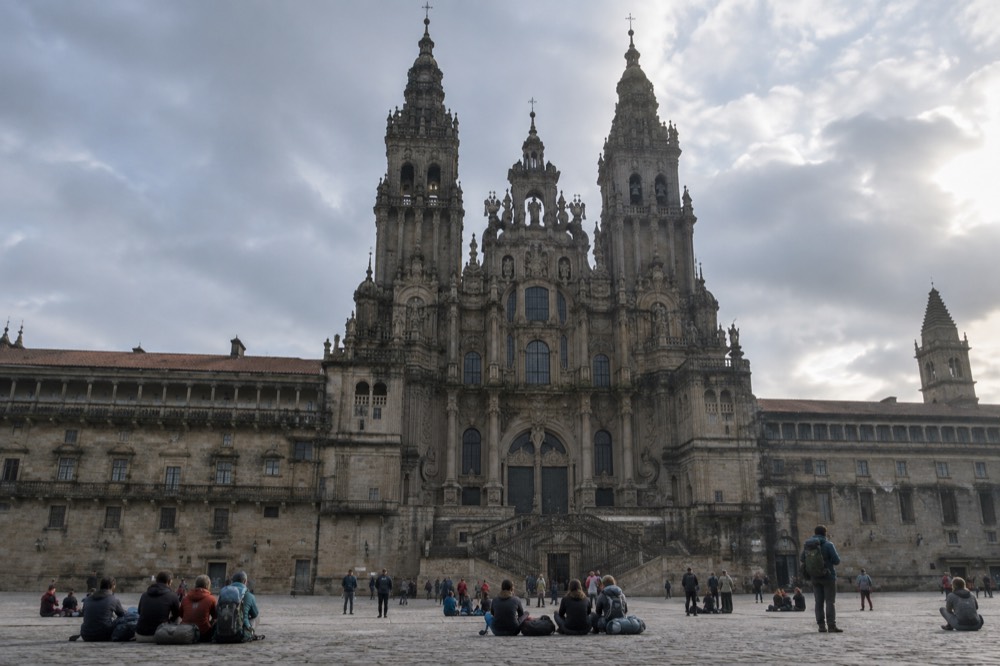
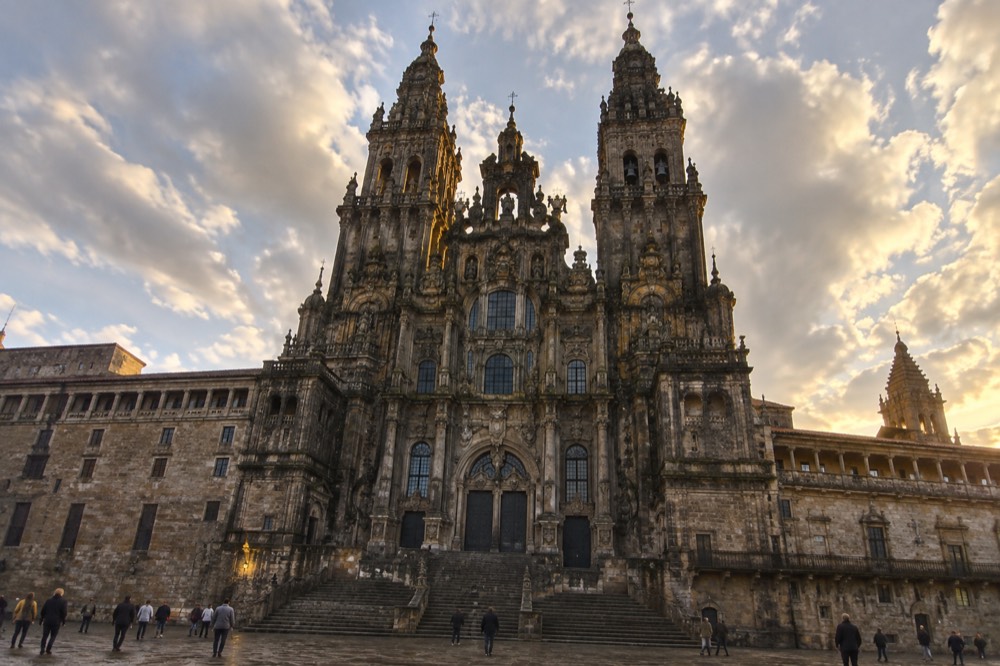
The cathedral itself is free to enter for general visits, open daily from roughly 7:00am to 9:00pm through the Praterias door, and the interior holds the reason the whole route exists: the apostle's tomb in the crypt, with the statue of St. James above it that pilgrims embrace from behind. The cathedral tickets and opening hours guide explains which parts need a paid ticket, since the museum, the rooftops and the Portico da Gloria visits are separate from free entry to the nave.
For the certificate claim, the sequence matters. Visit the Pilgrim's Office before or after the cathedral; the two are a few streets apart. The office is closed 25 December and 1 January, and its hours shift seasonally, so the day of arrival is not always the day the Compostela can be collected. Pilgrims arriving on a Sunday evening in low season sometimes collect the certificate the next morning.
What Should You See In Santiago de Compostela After The Camino Frances?
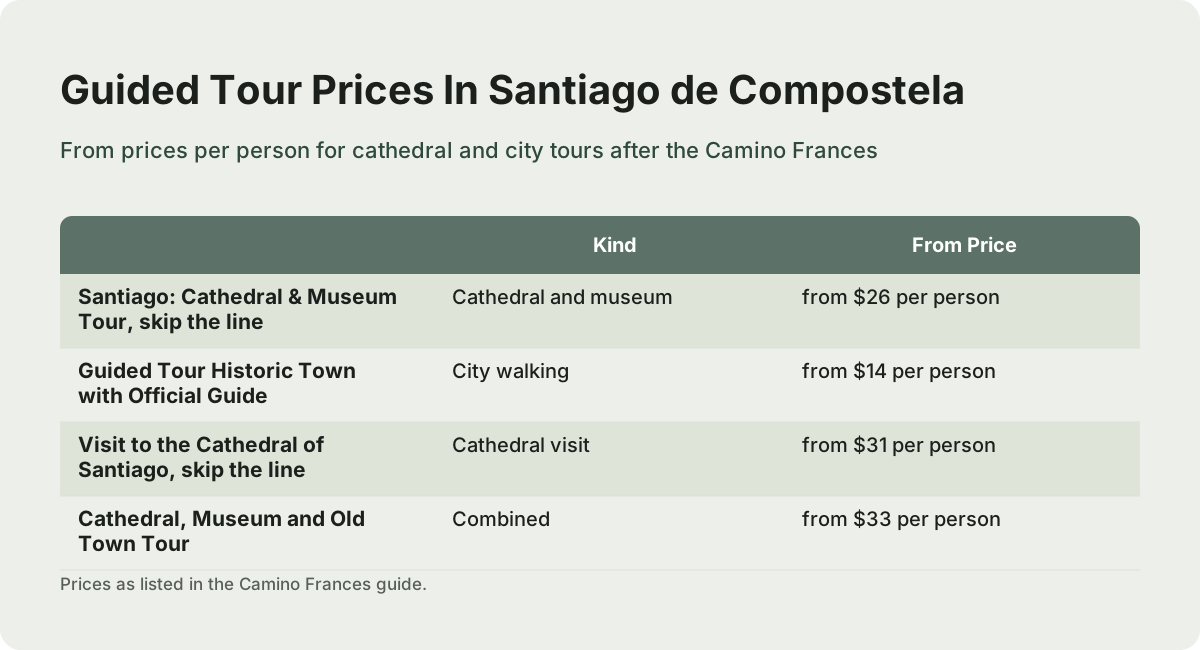
Most pilgrims spend at least two extra days in Santiago de Compostela after arriving: one for the cathedral, the museum and the pilgrim mass, and one for the old town itself, including the Portico da Gloria, the rooftops tour, the Mercado de Abastos and the tapas streets around Rua do Franco. Guided visits of the cathedral and museum run from about $26 to $56 per person depending on what they include, and the cathedral's own rooftop tour costs EUR15 general, EUR12 reduced.
The paid options inside the cathedral compound are more varied than most pilgrims expect. The Cathedral Museum's permanent collection sits in the Gelmirez Palace and opens daily from about 10:00am to 8:00pm, with ticket prices from EUR9 to EUR23 depending on type. The rooftop visit, the Cubiertas and Torre de la Carraca guided tour, climbs about 140 steps to roughly 72 metres above the square in about 60 minutes, and includes access to the museum's permanent collection and the other cathedral sites for seven days.
| Tour Option In The City | Kind | From Price | Rating |
|---|---|---|---|
| Santiago: Cathedral & Museum Tour, skip the line | Cathedral and museum | from $26 per person | 4.8 from 2,425 reviews |
| Guided Tour Historic Town with Official Guide | City walking | from $14 per person | 4.8 from 144 reviews |
| Visit to the Cathedral of Santiago, skip the line | Cathedral visit | from $31 per person | 4.7 from 582 reviews |
| Cathedral, Museum and Old Town Tour | Combined | from $33 per person | 4.8 from 436 reviews |
| Secrets of Compostela Night Tour | Evening walk | from $17 per person | 4.9 from 74 reviews |
The skip-the-line cathedral and museum visit is the one most arriving pilgrims book, because the day after a 100km week is not a day for standing in a ticket line; Check availability on the operator's live listing for your dates. The historic town walk with an official guide suits anyone who wants the old town's layers, Romanesque to baroque, explained in an afternoon. The old town guide covers the same streets for independent walkers.
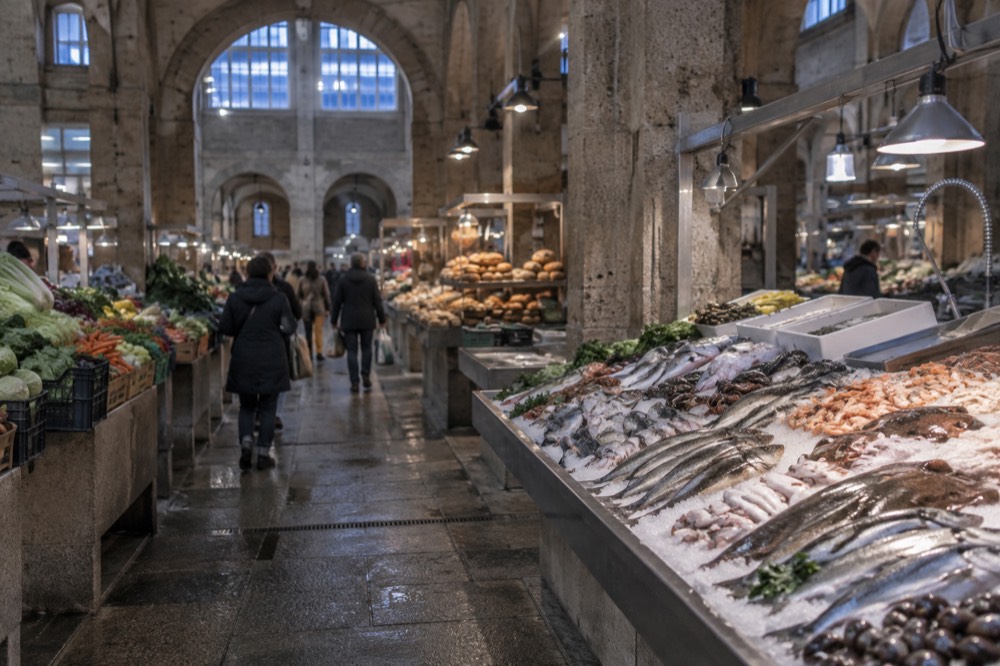
Beyond the cathedral, Master Mateo's carved Portico da Gloria is the artistic high point of the whole building, and its visits are time-limited for conservation reasons. The Mercado de Abastos is the city's second most visited spot after the cathedral, and its market hours should be checked on the venue's own site. For eating, the classics run from pulpo a la gallega to tarta de Santiago, and Rua do Franco is the street most pilgrims find first, though the quieter lanes off Praza das Praterias usually eat better.
How Does The Camino Frances Compare With Other Camino Routes?
The Camino Frances is the busiest, best-marked and best-served route, and the one most first-time pilgrims choose, while the Portugues, Norte, Primitivo and Ingles each trade some of that infrastructure for fewer people, coastal scenery or a shorter certificate-eligible distance. All of them end at the same place, the Cathedral of Santiago de Compostela, and all of them count toward the same Compostela rules: the last 100km on foot, two stamps a day.
The choice between them is really a choice about company and terrain. The Frances has the deepest albergue network, which makes daily planning almost unnecessary, and the biggest crowds, which in Holy Year season can mean queuing for beds by early afternoon. The Portugues runs up from Porto and Lisbon and is the strongest alternative for anyone already in Portugal. The Norte follows the northern coastline, the Primitivo is the oldest recorded route out of Oviedo, and the Ingles is the short historical entry from Ferrol and A Coruna.
| Route | Character | |
|---|---|---|
| Camino Frances | The classic, busiest, best-served route across northern Spain | This guide |
| Camino Portugues | The main alternative, arriving from Porto and Lisbon | Camino Portugues guide |
| Camino del Norte | The northern coastline route, quieter and greener | Covered in the routes overview |
| Camino Primitivo | The oldest route, mountainous, out of Oviedo | Covered in the routes overview |
| Camino Ingles | The short historical route from the Galician ports | Covered in the routes overview |
| Camino Finisterre | The continuation west, beyond Santiago to the sea | Camino Finisterre guide |
For beginners, the choice usually resolves to the Frances or the Portugues, because both offer dense accommodation and no navigational doubt. The history of how the Frances became the dominant route in the first place, and what to carry when you walk it, are covered in depth elsewhere on this site.
One continuation deserves its own mention. The Camino Finisterre runs west from Santiago de Compostela to the Atlantic at Fisterra, and many Frances walkers keep going for a few more days to reach the coast. The express Muxía and Cape Finisterre excursion covers the same coastline for anyone whose legs have finished walking.
What Are The Pilgrim Mass Times In Santiago de Compostela Right Now?
The Cathedral of Santiago de Compostela normally holds pilgrim masses daily at 7:30am, 9:30am, 12:00 noon and 7:30pm at the main altar, but from 16 October 2026 the 9:30am, noon and 7:30pm masses relocate to the nearby Church of San Agustin because of main chapel remodelling ahead of the 2027 Holy Year, and only the 7:30am mass stays in the Cathedral's own Communion chapel. Any page still listing four daily masses in the cathedral is out of date.
The change is dated and specific, and it matters for arrival planning. Pilgrims arriving before 16 October 2026 can attend the noon pilgrim mass in the cathedral as usual. Arriving after that date, the midday and evening masses happen at San Agustin, a short walk from Praza do Obradoiro, while the cathedral itself remains fully open to visitors, with free entry through the Praterias door and no closure of the naves, the tomb or the embrace area.
| Mass | Until 15 October 2026 | From 16 October 2026 |
|---|---|---|
| 7:30am | Cathedral, main altar | Cathedral, Communion chapel |
| 9:30am | Cathedral, main altar | Church of San Agustin |
| 12:00 noon | Cathedral, main altar | Church of San Agustin |
| 7:30pm | Cathedral, main altar | Church of San Agustin |
The pilgrim mass guide covers the ceremony itself, including the reading of pilgrims' home countries that makes the noon mass the one most walkers attend. One caution belongs here in plain terms: the Botafumeiro is currently out of action. Scaffolding for the cimborrio, the cathedral's dome, covers its hanging mechanism, the Cathedral confirmed the suspension in writing on 5 September 2026, and no return date has been published. Normally it swings on 12 fixed solemnities a year, from Epiphany on 6 January to the Transfer of the Apostle on 30 December, but no visitor should plan a trip around seeing it swing until the cathedral's own liturgy page says otherwise.
When Is The Best Month To Walk The Camino Frances?
AEMET's climate data for the Santiago de Compostela station shows a temperate oceanic climate that is wet year-round, wetter and cooler from October to March, and driest in July and August, so most pilgrims walk the Camino Frances between May and September, trading the best weather of July and August against the biggest crowds, while May, June and September split the difference with fewer walkers and a real chance of rain.
The trade-off is unavoidable. July and August bring the most reliable dry weather and the fullest albergues, and late July adds the Feast of St. James on 25 July, the city's biggest annual celebration with fireworks, concerts and the national offering to the apostle. May, June and September bring green landscapes, empty beds and wet boots. The best-month question has a fuller breakdown elsewhere on this site, and the city end of the same decision follows the same curve.
| Season | Weather On The Route | Crowd Level |
|---|---|---|
| July and August | Driest months per AEMET data | Highest, peaking around 25 July |
| May and June | Mild, showers possible | Moderate |
| September | Cooling, rain increasing | Moderate to high |
| October to March | Wettest and coolest period | Low |
One date changes the whole calculus. The next Holy Year, the Xacobeo of 2027, begins when the Holy Door opens on 31 December 2026 and runs through 31 December 2027, because 25 July 2027 falls on a Sunday. 2026 is not a Holy Year. Anyone planning around the ceremony should read the Holy Year 2027 guide before choosing dates, since Holy Year crowds reshape the entire route's accommodation situation.
What Day Trips From Santiago de Compostela Extend The Camino Frances Story?
The most popular extensions from Santiago de Compostela are the Finisterre, Muxia and Costa da Morte day trips from about $45 per person, the Rias Baixas winery and mussel-boat trips from about $53, and the Ribeira Sacra and Lugo excursions from about $64, all rated above 4.1 on their listings and all reaching the landscapes the Camino Frances never touches: the Atlantic end of Galicia, the estuaries and the Sil river canyons.
The logic is simple: after a week or more of inland walking, the coast is what most pilgrims want. Fisterra, the Roman end of the world, sits at the tip of the Costa da Morte, and the lighthouse there is where many walkers symbolically finish the journey the cathedral started. The full-day Finisterre, Muxia and Costa da Morte excursions stop at seven points along the coast, from about $60 per person and rated 4.8 from 1,714 reviews, and the express half-day version covers Fisterra and Muxia in a shorter loop, from about $45.
| Day Trip From Santiago | Kind | From Price | Rating |
|---|---|---|---|
| Finisterre, Muxia and Costa da Morte, 7 stops | Full day, coast | from $60 per person | 4.8 from 1,714 reviews |
| Finisterre, Muxia and Costa da Morte, alternative operator | Full day, coast | from $59 per person | 4.7 from 2,312 reviews |
| Rias Baixas with winery, optional mussel boat | Full day, estuary | from $54 per person | 4.8 from 322 reviews |
| Ribeira Sacra, Sil river and Ourense | Full day, canyons | from $64 per person | 4.3 from 11 reviews |
| Catedrais Beach, Lugo and Asturias | Full day, north coast | from $68 per person | 4.9 from 181 reviews |
The Finisterre guide covers the lighthouse and the final kilometer in detail, while the Costa da Morte, Muxia, the Rias Baixas albarino country around Cambados and the Roman wall at Lugo each have their own pages on this site for anyone building a longer Galician stay.
Common Questions About The Camino Frances
How long does it take to walk the Camino Frances?
The full route from Saint-Jean-Pied-de-Port is a multi-week undertaking, while the certificate-eligible final 100km from Sarria takes most walkers five to seven days. The full answer to how long it takes to walk the Camino de Santiago, including the cycling minimum of 200km, is covered in the dedicated guide on this site.
Do I have to walk the whole Camino Frances to get the Compostela?
No. The Oficina del Peregrino's FAQs state the requirement is the last 100km on foot or on horseback, or the last 200km by bicycle, on a recognized route, continuous, with at least two stamps per day. The certificate is issued in person at Rua das Carretas 33 in Santiago de Compostela.
Where does the Camino Frances start?
The traditional starting point is Saint-Jean-Pied-de-Port on the French side of the Pyrenees, though pilgrims legally and practically start anywhere along the route. The only distance that carries official meaning is the final 100km, which is why Sarria is the most common starting town.
Can I see the Botafumeiro swing after finishing the Camino Frances?
Not currently. The Cathedral confirmed in writing on 5 September 2026 that the Botafumeiro is suspended because cimborrio restoration scaffolding covers its hanging mechanism, and no return date has been published. It normally swings on 12 fixed solemnities a year, but no arrival date should be planned around it until the Cathedral's own liturgy page announces its return.
Is the Camino Frances the best Camino for beginners?
Most first-time pilgrims choose it for its dense infrastructure, marking and albergue network, though the Portugues is a close alternative. The trade-off is crowds, especially in July and August and in the Sarria to Santiago stretch.
Where do I collect the Compostela in Santiago de Compostela?
In person only, at the Pilgrim's Office at Rua das Carretas 33, a short walk from the cathedral. The office closes on 25 December and 1 January, and its hours shift seasonally, so check the office's own site for the day you arrive.
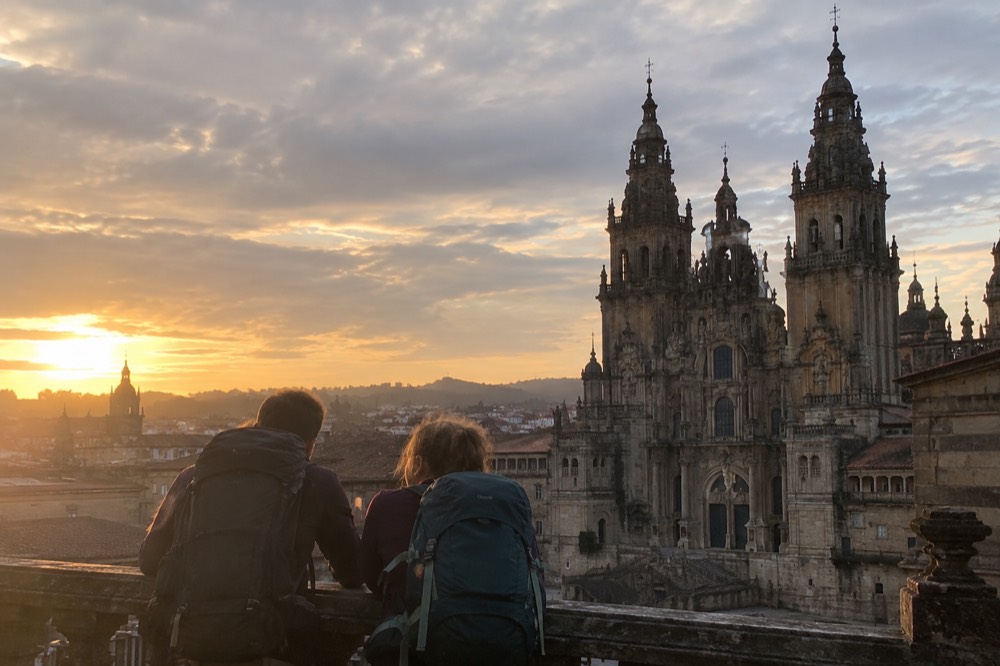
The Camino Frances ends where every account of it ends, in front of the Cathedral of Santiago de Compostela, with a stamped credential in hand and the old town still waiting to be explored. Walkers who plan the city days as carefully as the walking days, the mass times, the museum tickets, the day after the queue at the Pilgrim's Office, get the fullest version of the arrival that a thousand years of pilgrims have been walking toward.