Compostela Certificate In Santiago de Compostela: Rules, Stamps And How To Claim It
The Compostela certificate is the official document the Pilgrim's Office in Santiago de Compostela issues to walkers, cyclists and horseback riders who meet the Camino's distance and stamp rules. Here is exactly what those rules are, verified against the Office's own published requirements.
Short answer
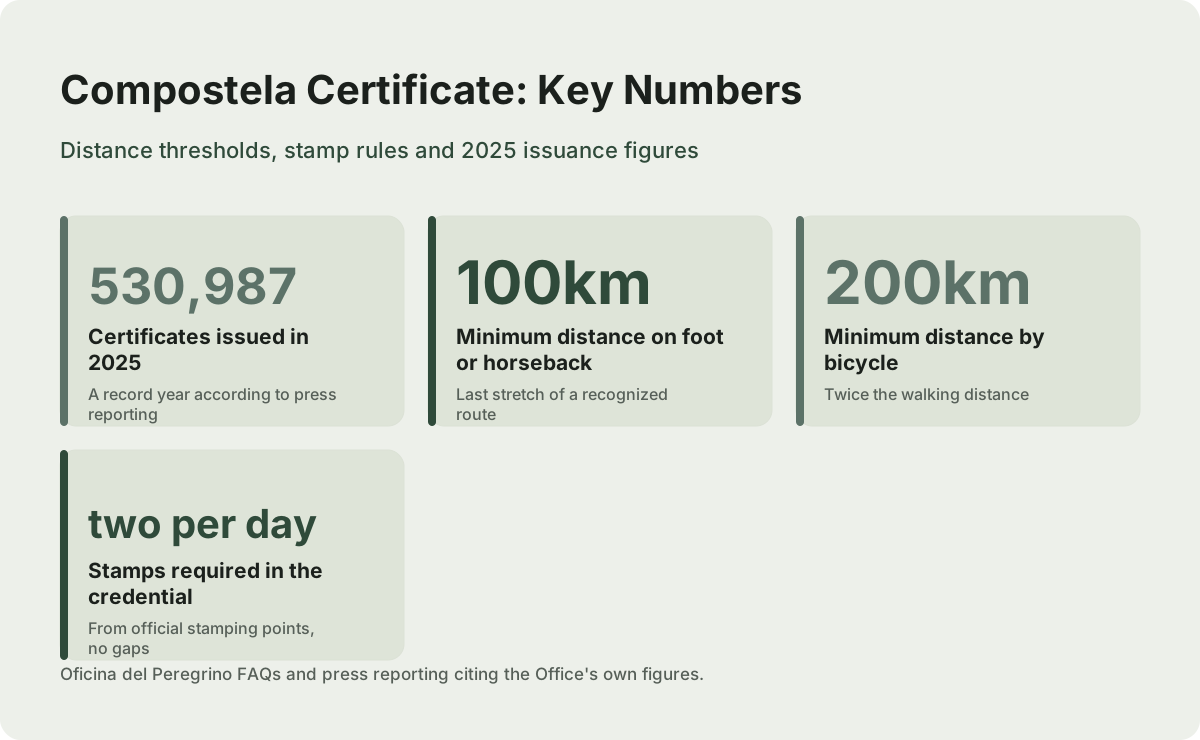
The Compostela requires the last 100km walked or ridden on horseback, or the last 200km cycled, on a recognized Camino route, with at least two stamps per day from official stamping points. It is issued in person only at Rua das Carretas 33 in Santiago de Compostela. 530,987 were issued in 2025, a record year.
The Pilgrim's Office in Santiago de Compostela issued 530,987 Compostela certificates in 2025, a record year according to press reporting that cites the Office's own figures. Each one of those documents represents a walker, cyclist or horseback rider who arrived in the city after meeting a strict set of distance and stamp rules set by the Church, not by any tour company or tourism board. The Compostela certificate is not a souvenir, and it is not handed out for a stroll into town. It is a formal attestation, in Latin, that the bearer completed a genuine pilgrimage, and the Office checks for exactly two things before it prints one: enough distance, and enough stamps.
The certificate sits at the end of a chain of small administrative acts that begin on the first day of walking: buying or collecting a credential, the pilgrim passport, and getting it stamped at churches, albergues and official points along the route. Walkers who arrive in Santiago de Compostela with a thin or patchy credential discover that the Office applies its rules evenly, in a busy queue, in front of everyone. The good news is that the rules themselves are short, published openly on the Office's own FAQ page, and easy to follow if you know them before you start, which is why the editors at Santiago de Compostela Travel Guide have pulled the Office's own published requirements together here. This guide sets out what the certificate is, who qualifies, how the stamping works, where to claim it and what to do afterwards.
What Is The Compostela Certificate?
The Compostela is the official document, written in Latin, that the Oficina del Peregrino in Santiago de Compostela issues to pilgrims who have completed the qualifying distance of a recognized Camino route on foot, on horseback or by bicycle, with proof of the journey in the form of daily stamps in a credential. It is a religious attestation of a completed pilgrimage, not a trophy or a commercial product, and it can only be issued in person, in Santiago de Compostela itself.
The Office, whose full English name is the Pilgrim's Office, exists to do two jobs: register arriving pilgrims and issue the Compostela to those who qualify. Its FAQs state plainly that the document attests the pilgrim has travelled the route for a pious purpose, which is why the Office also asks a short question about motivation at the counter. A walker who says the walk was purely athletic or touristic may be offered a different, non-religious attestation of the journey rather than the Compostela itself, a distinction that catches many pilgrims by surprise on their arrival day. The Office does not sell the certificate and never has. It is free at the point of issue to those who qualify.
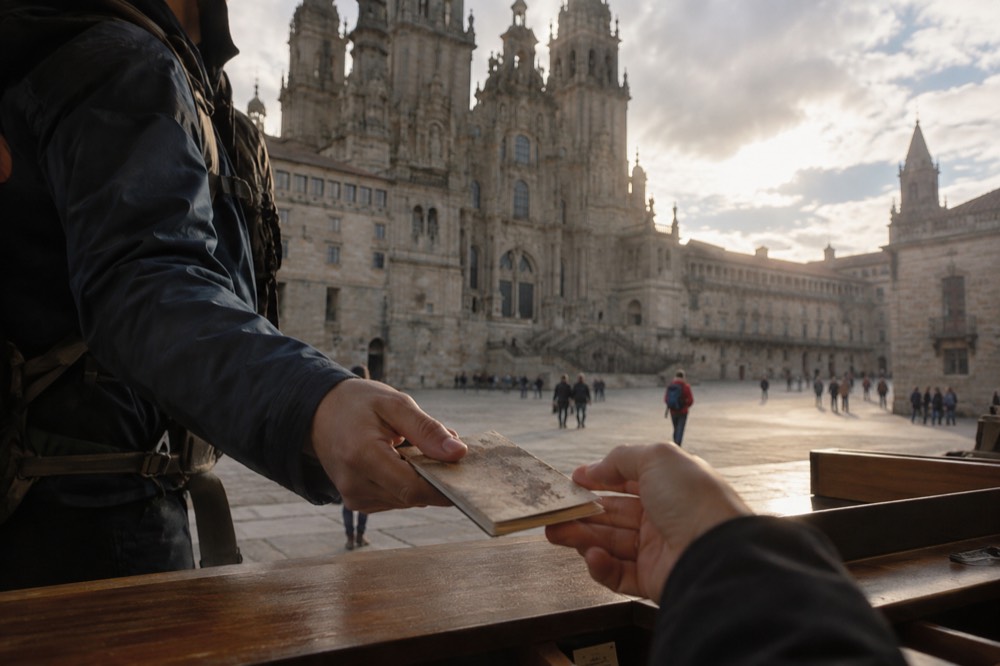
The credential is the certificate's paper twin. Without a properly stamped credential there is no Compostela, because the credential is the only evidence the Office accepts that the distance was covered continuously. The pilgrim passport and credential guide on this site covers how to obtain one before you leave, where the official stamping points are, and how the document doubles as practical identification at pilgrim accommodation along the way. Many walkers treat the credential as an afterthought and discover at the final counter that two or three missing days of stamps have cost them the certificate after weeks of walking.
| What the Office checks | What it looks for | Where the rule comes from |
|---|---|---|
| Distance | Last 100km walked or on horseback, last 200km cycled | Oficina del Peregrino FAQs |
| Continuity | The qualifying distance covered on consecutive days of one route | Oficina del Peregrino FAQs |
| Stamps | At least two per day from official stamping points | Oficina del Peregrino FAQs |
| Motivation | A pious or searching reason for the pilgrimage, asked at the counter | Oficina del Peregrino FAQs |
| Collection | In person only, at Rua das Carretas 33 | Oficina del Peregrino FAQs |
Who Qualifies For The Compostela Certificate?
To qualify you must cover the final 100 kilometres of a recognized Camino route on foot or on horseback, or the final 200 kilometres by bicycle, and you must do it continuously on one route with at least two stamps in your credential per day from official stamping points. The Office publishes these thresholds on its own FAQ page, applies them to every pilgrim without exception, and issues the document only in person at its office at Rua das Carretas 33 in Santiago de Compostela.
The distance rules are the part most first-time pilgrims get wrong, and the errors cluster in predictable places. Walking 90 kilometres and claiming the last stretch by taxi invalidates the certificate, because the Office reads the stamps as a continuous record and a gap shows up as a missing day. Cycling the last 150 kilometres falls 50 kilometres short of the bike threshold even though it is well past the walking one, since cyclists must cover twice the distance to qualify. A walker who starts at Sarria, the classic launch point on the Camino Frances, begins just beyond the 100-kilometre line with a small margin in hand, which is why that start has become the single most popular place to begin in Galicia.
Route recognition matters as much as distance. The Office accepts the historic Jacobean routes, the family of paths described in the Camino de Santiago routes overview, which includes the Camino Frances, the Camino Portugues, the Camino del Norte, the Camino Primitivo, the Camino Ingles and the route from Fisterra among others. A long walk across Galicia that leaves the marked route network does not count, however far it covers, because the certificate is tied to the pilgrimage roads that lead to the Apostle's tomb rather than to raw distance. The walk from Sarria to Santiago guide works through the most common qualifying stretch day by day, including where the stamping points sit.
| Means of travel | Minimum qualifying distance | Notes |
|---|---|---|
| On foot | Last 100km of a recognized route | Continuous walking, two stamps per day |
| On horseback | Last 100km of a recognized route | Same rules as walking |
| By bicycle | Last 200km of a recognized route | Twice the walking distance |
| Mixed transport | Not recognized | Motorized stages break the record |
| Off-route walking | Not recognized | Must follow a recognized Camino route |
Every line in that table comes from the same published rule set, and the Office applies it identically to a first-time walker from another continent and a local Galician completing the route for the twentieth summer in a row. Nobody is waved through on familiarity, and nobody is refused for asking polite questions about how the record is read.
How Many Stamps Do You Need Each Day?
You need at least two stamps per day in your credential, taken from official stamping points along the route, covering every day of the qualifying distance, with no gaps between the day you start and the day you arrive. The Office's FAQs set this rule, and it applies from the first stamped day of the qualifying stretch onward, which means a single unstamped day anywhere inside those 100 or 200 kilometres can disqualify the whole journey.
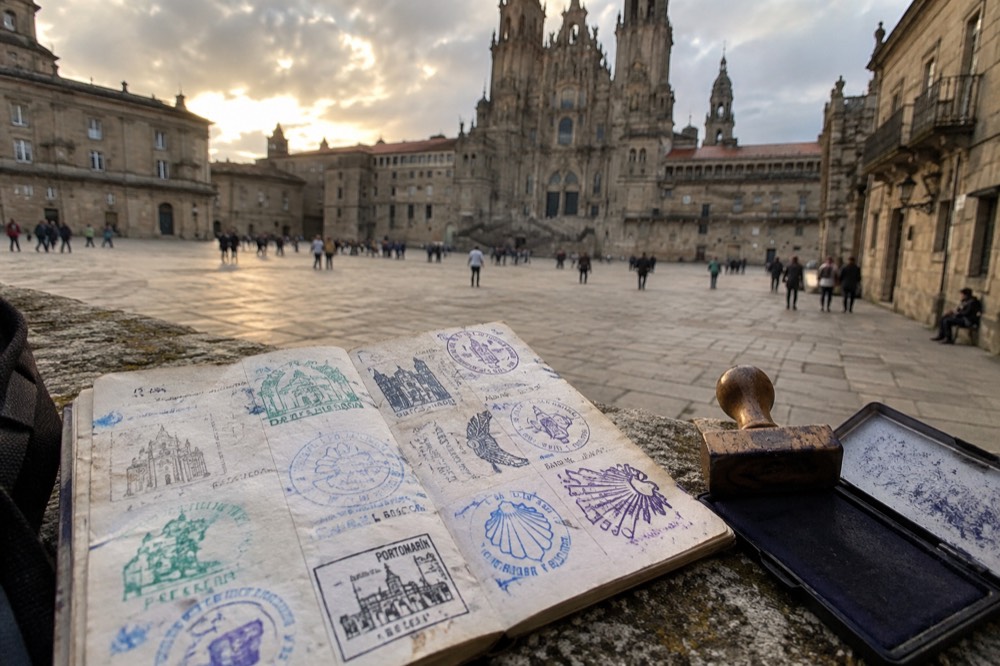
The stamp rule exists to prove continuity rather than devotion. Two stamps per day, spaced along the day's walking, show the Office that you were on the route in the morning and still on it later, rather than covering ground by other means. Churches, cathedrals, albergues, some bars and hotels, and municipal offices along the Camino carry the official stamp, and most will stamp a credential without any purchase. The habit to build is simple: stamp when you leave, stamp when you stop for lunch, stamp when you arrive for the night. Three stamps a day costs nothing extra and builds a margin for the days when one point turns out to be closed.
The final stages into Santiago de Compostela matter most, because that is where tired pilgrims skip stamping on the assumption that the end is near. The last 100 kilometres is exactly the stretch the Office examines, and the last two walking days before arrival are the ones that need the most care. The credential and stamping guide lists the categories of official stamping point and the practicalities, including what to do when a church is locked and the next official point is several villages ahead.
| Daily stamping pattern | What it proves | Risk level |
|---|---|---|
| Two stamps, spaced through the day | Standard compliant record | Safe |
| Three or more stamps | Extra margin on the same rule | Safe |
| One stamp per day | Below the published minimum | Will be questioned |
| Stamps only in albergues, none en route | May fail the spacing expectation | Risky |
| A full unstamped day inside the stretch | Breaks continuity | Disqualifying |
The pattern in that table is worth following exactly, because the Office reads the credential as one continuous record rather than as a set of separate days, and a single clean break in the sequence is the one error no amount of explanation repairs at the counter.
Where Do You Collect The Compostela Certificate?
You collect the Compostela in person only, at the Oficina del Peregrino at Rua das Carretas 33 in Santiago de Compostela, which operates seasonally variable hours of roughly 8, 9 or 10 in the morning until 7 or 8 in the evening and closes only on 25 December and 1 January. There is no postal, digital or third-party channel, and no representative of the Office stamps or issues certificates anywhere else in the city.
The in-person rule is deliberate. The Compostela completes a pilgrimage that ends at the Apostle's tomb, and the Office treats the counter visit as part of that ending. Arriving pilgrims join a queue that moves quickly in the off-season and slowly in July and August, when the city receives a large share of its annual pilgrims. Bring the credential itself, not photographs of it, and be ready to give your name, your starting point, your means of travel and a short answer on why you walked. The Office staff process thousands of credentials a week in peak season and can read a stamp record at a glance. The Pilgrim's Office guide on this site covers the building, the seasonal hours pattern and the queue in detail.
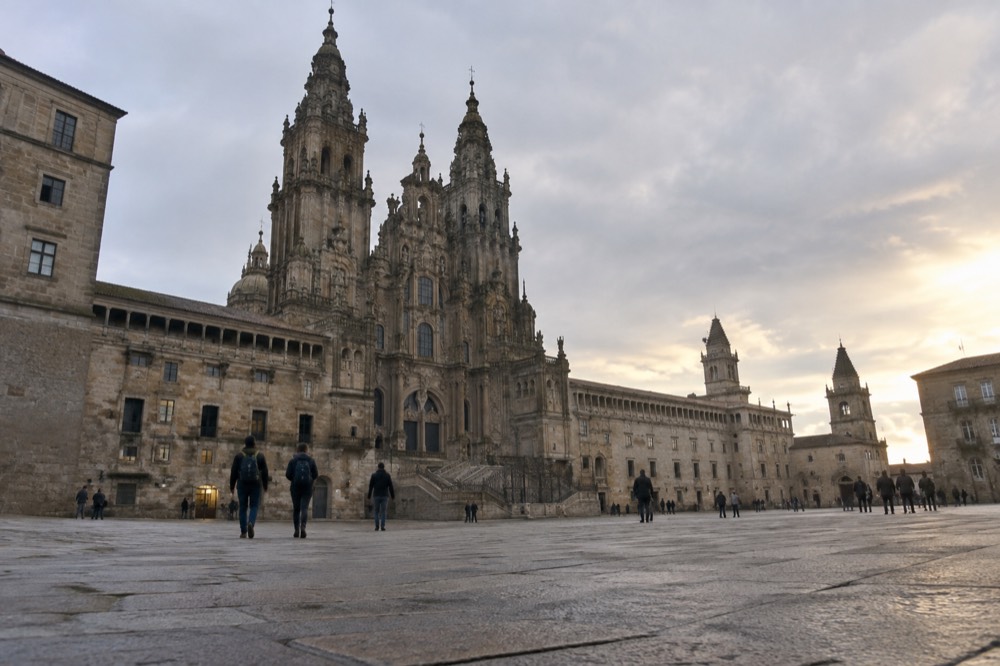
Two practical points are worth fixing in mind before arrival day. First, the Office's hours shift with the seasons, so a pilgrim landing in November cannot rely on the July closing time; the Office's own site carries the current pattern, and the roughly 8am to 8pm spread is a range across the year, not a single schedule. Second, the Office's closure days are 25 December and 1 January, which catches pilgrims walking the final week of the year on the Camino Ingles or the winter Camino Frances. Pilgrims who collect the certificate and then want to attend the pilgrim mass at the cathedral should check current arrangements rather than assuming the historic timetable, since scheduled works are moving some masses to the Church of San Agustin from 16 October 2026.
| Practical detail | What to know |
|---|---|
| Address | Rua das Carretas 33, Santiago de Compostela |
| Hours | Seasonal, roughly morning 8/9/10am to evening 7/8pm |
| Closed | 25 December and 1 January |
| What to bring | The original credential, stamped |
| What you give | Name, start point, means of travel, motivation |
| What you receive | The Compostela, printed while you wait |
Can You Earn The Compostela By Bike Or On Horseback?
Cyclists qualify at 200 kilometres, double the walking threshold, and horseback riders at the same 100 kilometres as walkers, in every case on a recognized route with the two-stamps-per-day rule applied to each day of the qualifying stretch. The Oficina del Peregrino's FAQs treat the means of travel as a fixed category, so the distance cannot be averaged, mixed or credited across categories, and the Office records your means of travel on the certificate itself.
The bike threshold rewards the fact that a cyclist covers the walking distance in roughly half the number of days, so the Office asks for twice the distance to keep the pilgrimage comparable. A cyclist starting from a point 200 kilometres out will typically need several riding days, and the stamp rule bites harder for bikes because a full day in the saddle passes more stamping points than a walking day, so there is no excuse for a thin record. Riders on horseback follow the walking rules, which reflects the historic character of the pilgrimage, where the horse was the pilgrim's alternative to boots rather than a speed advantage.
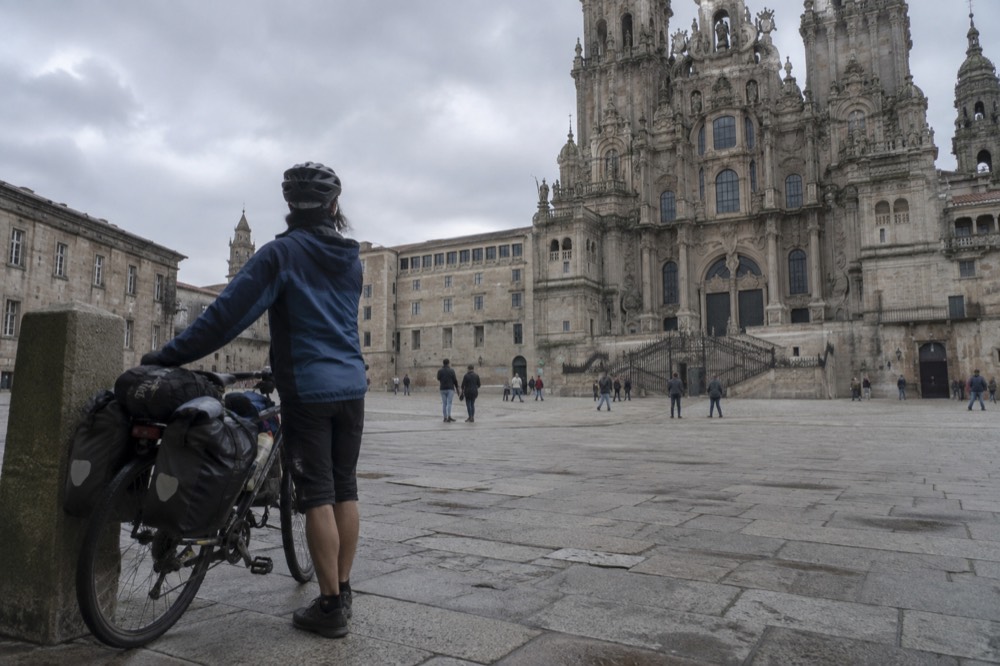
Cyclists should also know that the credential serves a second purpose on the road: at albergues it establishes priority for a bed in the same way it does for walkers. The Camino Frances guide covers the stages most cyclists ride for the qualifying distance, and the albergues and Camino accommodation guide explains how the credential interacts with bed allocation once the day's distance is done. Neither the Office nor any other body tracks your speed, only your stamps, so a slow cyclist and a fast walker meet exactly the same administrative standard at Rua das Carretas 33. The means of travel you declare at the counter is the one that gets recorded, so a pilgrim who cycles the qualifying stretch after walking earlier stages declares the bike, and the 200-kilometre threshold is the one that applies.
How Many Compostelas Were Issued In 2025?
Press reporting that cites the Oficina del Peregrino's own figures records 530,987 Compostelas issued in 2025, the highest annual total ever issued, which makes the certificate one of the most frequently completed pilgrimage documents in the world and makes Santiago de Compostela one of the most statistically documented pilgrimage destinations anywhere.
It comes from press coverage citing the Office, not from the Office's own published statistics page reached directly, so it is reported here as press-reported rather than as the Office's own headline number.
The seasonal shape of arrivals is the practical takeaway. The best time to visit Santiago de Compostela guide maps the year against crowd and weather patterns, and the short version for certificate collectors is that the shoulder months combine shorter Office queues with walking conditions that Galicia's oceanic climate still treats generously. July brings the Feast of St. James on 25 July, the most atmospheric date to arrive, and also the longest queues of the year. A pilgrim whose schedule is flexible can weigh the festival atmosphere of high summer against the quieter counters of spring or autumn, and the credential does not care which month it was stamped in.
| Arrival period | What it means for the certificate |
|---|---|
| July and August | Highest pilgrim volume, longest Office queues |
| Shoulder spring and autumn | Shorter queues, reliable stamping points open |
| Winter weeks | Quietest counters, some points closed |
| Late July around 25 July | Festival atmosphere, peak demand |
| Holy Year 2027 | Opens 31 December 2026, volumes expected to rise |
What Should You Do After Collecting Your Compostela?
Most pilgrims head straight from Rua das Carretas 33 to the Cathedral, to visit the Apostle's tomb and attend the pilgrim mass, and then use the remaining days in the city for the rooftops tour, the old town and, time permitting, a boat or coastal day trip: a sequence that turns an administrative errand into a proper arrival. The certificate marks the end of the walk, but Santiago de Compostela rewards at least one full day beyond it.
The tomb visit is the traditional first act, free with the Cathedral's general entry, and the Cathedral tickets and opening hours guide covers what is open and what needs a timed booking. Pilgrims who want a structured visit to the building itself often book the half-day Santiago al Complete tour, which from $45 per person includes cathedral tickets alongside the city walk and is rated 4.9 from 47 reviews on the operator's live listing. For walkers who spent the whole route looking at the road, the guided Historic Walking Tour and Highlights, from $17 per person and rated 4.9 from 29 reviews on the operator's live listing, covers the old town's stories in a couple of hours.
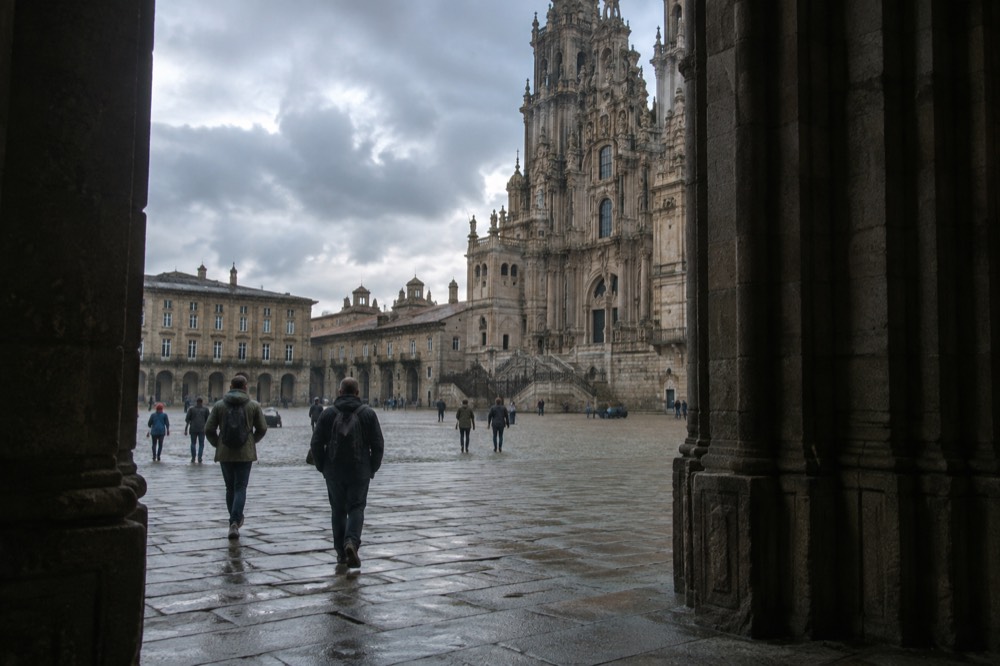
The rooftops deserve particular mention. The Cathedral's own ticket site lists the Cubiertas and Torre de la Carraca guided visit at EUR15 general rate, EUR12 reduced, with the reduced rate applying to accredited pilgrims among other groups, so carrying the credential and the fresh Compostela to the counter has a small financial upside. The visit runs about 60 minutes, includes around 140 steps, and reaches roughly 72 metres above the square, with the ticket also granting access to the museum's permanent collection and related spaces for seven days.
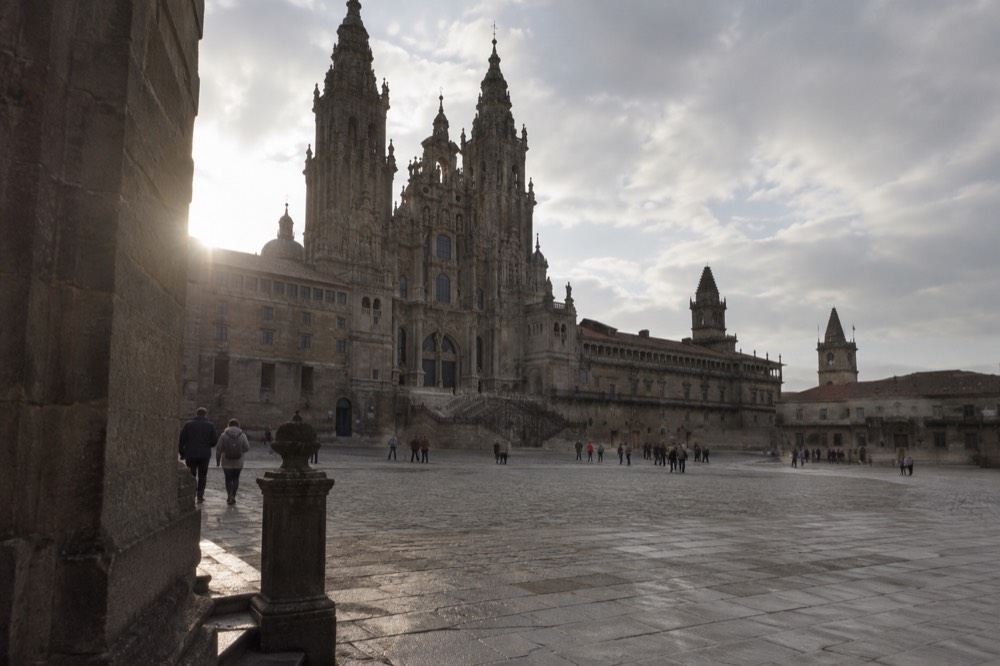
Beyond the city, two endings compete for the pilgrim's spare days. The traditional continuation is the walk to Fisterra on the coast, the medieval "end of the world", covered in the site's Camino de Santiago overview alongside the route choices. The alternative is the Cies Islands, the Atlantic archipelago off Vigo, reachable as a full-day visit from Santiago de Compostela from $101 per person with no rating published on the current listing, a rare place where the certificate's disciplined world of stamps gives way to white sand and clear water. Pilgrims who finish in the city and want one last Galician experience can weigh a Cies Islands visit against a day of Galician food closer to the Cathedral, and either makes a fair celebration.
One last practical note before the city takes over completely: the credential stays useful even after the Compostela is in hand. Many pilgrims frame both documents together, and the stamps become the only day-by-day record of the route once the boots have dried out. Keep the credential flat and protected for the journey home, because it is the one physical thing the whole walk produced, apart from the certificate itself, and the Office will not reissue either from memory.
Common Questions About The Compostela Certificate
What is the Compostela certificate?
It is the official Latin document, issued by the Oficina del Peregrino in Santiago de Compostela, attesting that the bearer completed a recognized Camino pilgrimage on foot, on horseback or by bicycle over the qualifying distance, with the required daily stamps in a credential.
Who qualifies for the Compostela certificate?
Anyone who covers the last 100km of a recognized Camino route on foot or on horseback, or the last 200km by bicycle, continuously, with at least two stamps per day in the credential from official stamping points, and who collects the document in person at Rua das Carretas 33.
How many stamps do you need each day?
At least two per day, from official stamping points, covering every day of the qualifying distance. The rule comes from the Oficina del Peregrino's own FAQs, and a single unstamped day inside the qualifying stretch can break the continuity of the record.
Where do you collect the Compostela certificate?
In person only, at the Oficina del Peregrino, Rua das Carretas 33, Santiago de Compostela. Hours vary seasonally, roughly 8/9/10am to 7/8pm, and the office closes on 25 December and 1 January.
Can you earn the Compostela by bike?
Yes, at 200km, double the walking distance, on a recognized route with the same two-stamps-per-day rule. Horseback riders qualify at the walking distance of 100km.
How many Compostelas were issued in 2025?
Press reporting citing the Pilgrim's Office's own figures puts the 2025 total at 530,987, a record year for the certificate.
The Compostela is earned one stamped day at a time, and every rule in this guide traces back to a single counter on Rua das Carretas 33, where the record in your hand is the only argument that counts.