Best Time To Visit Santiago de Compostela
Santiago de Compostela rewards some months far more than others. This guide breaks down the city's wet-oceanic seasons, the July feast of St. James, the 2027 Holy Year and the quiet shoulder windows that locals keep to themselves.
Short answer
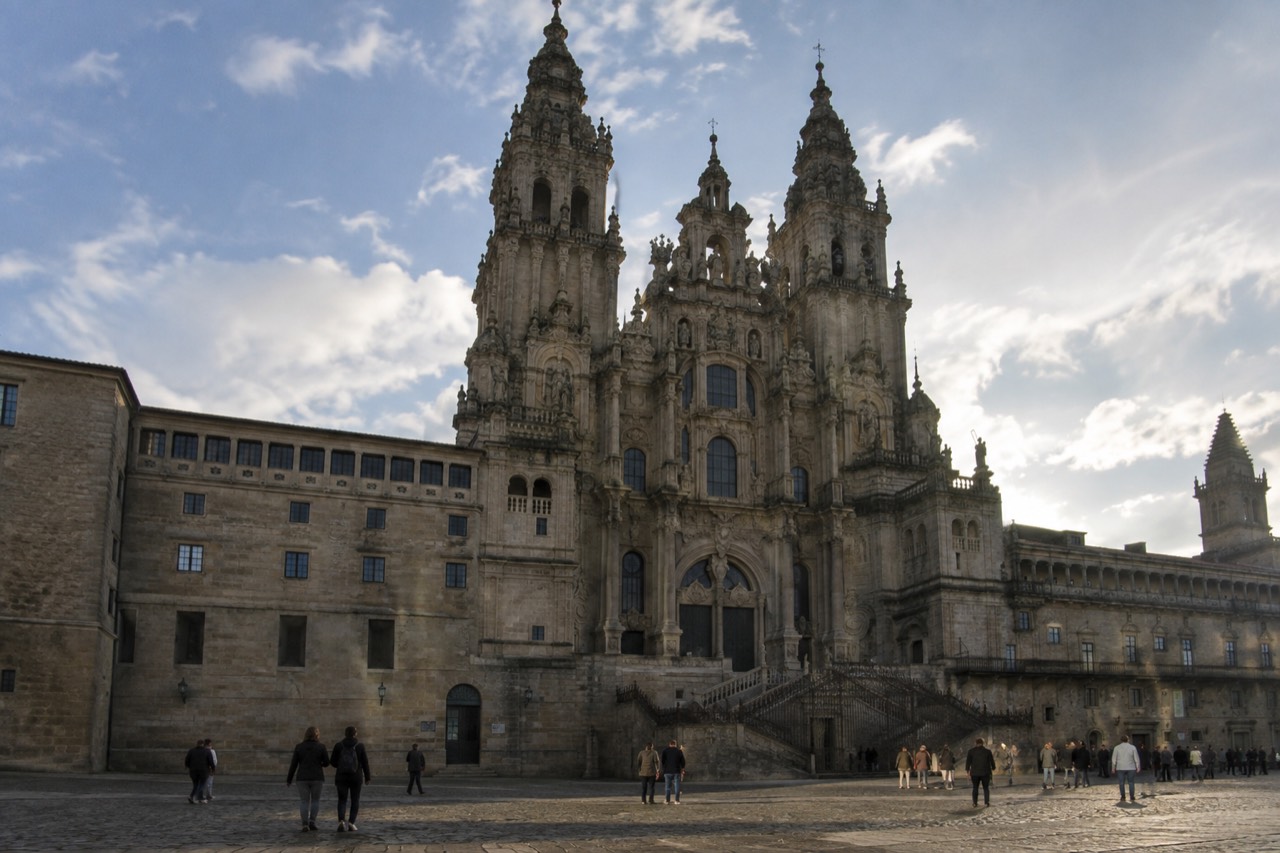
Late May, June and September are the best all-round months to visit Santiago de Compostela: mild, drier than the October-March wet season and outside the peak July-August crush. July only wins for the Feast of St. James on 25 July; 2027 wins for the Holy Year, with the Holy Door opening 31 December 2026.
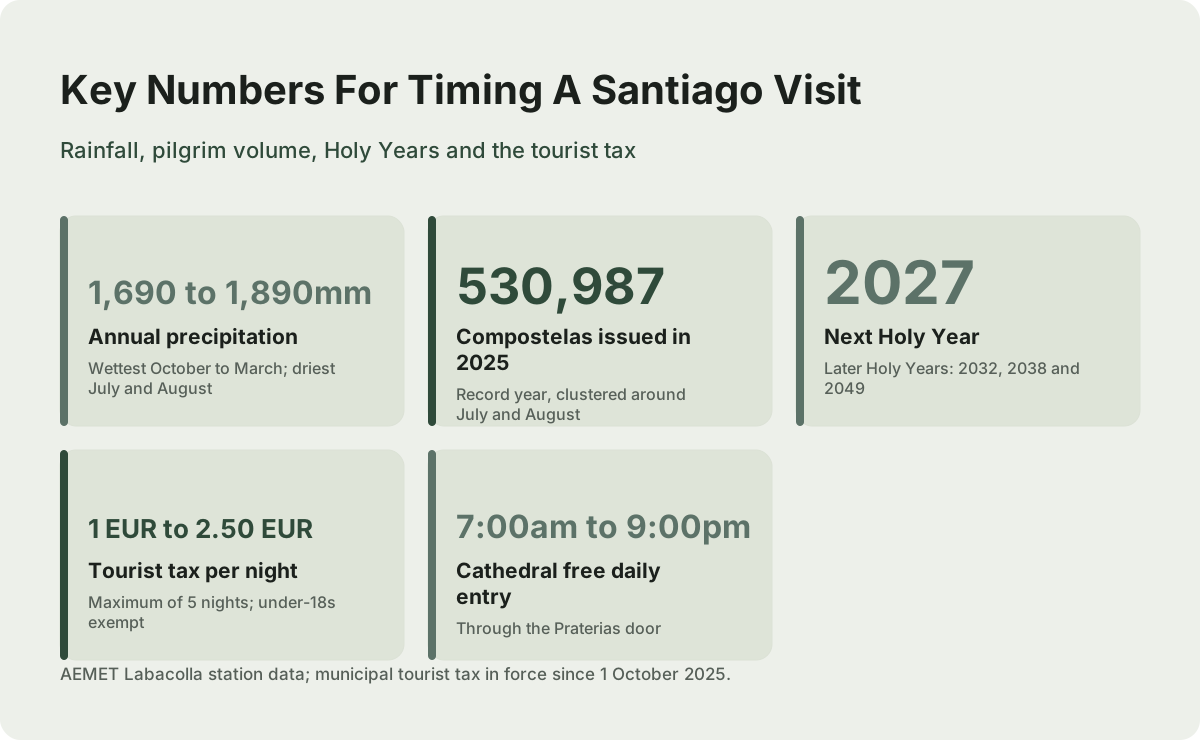
Santiago de Compostela sits in one of the wettest corners of Europe, and that single fact shapes every answer to the timing question. AEMET's climate data for the city's own weather station, Labacolla, records annual precipitation on the order of 1,690 to 1,890mm, spread unevenly across the year: wet and cool from October to March, with July and August the driest months. The pilgrim calendar shapes the rest. A record 530,987 Compostela certificates were issued by the Pilgrim's Office in 2025, most of them in summer, and the next Holy Year, 2027, opens its Holy Door on the evening of 31 December 2026. Picking the right month means weighing rain against crowds, and one solemnity, the Feast of St. James on 25 July, against everything else.
What Is The Best Month To Visit Santiago de Compostela?
Late May, June and September are the best months to visit Santiago de Compostela for most travellers. The weather sits in the mild, drier window between the October-to-March wet season and the July-August heat and crowds, hotel demand eases once the pilgrim high tide passes, and the Cathedral, museum and rooftop tours all run their full schedules. July wins only if the Feast of St. James on 25 July is the point of the trip, and 2027 wins for the Holy Year itself.
June carries a particular advantage: the days are long, the stone of the Old Town has warmed up, and the summer pilgrim surge is building but has not yet peaked. September is the mirror image. The record 530,987 Compostelas issued in 2025 clustered around July and August, so by September the albergue-to-queue pressure drops noticeably while sea breezes off the Atlantic keep the afternoons pleasant. Rain never fully leaves the forecast in Galicia, so pack a layer and a shell whatever the month, but the odds shift meaningfully in these windows.
Travellers whose real question is when to walk the Camino rather than when to tour the city have a slightly different calculation, and the site's dedicated answer page on the best month to walk the Camino de Santiago covers that in detail. The short version: the same shoulder months serve both, because most Camino routes end at this city's cathedral.
What Is The Weather Like In Santiago de Compostela Month By Month?
Santiago de Compostela has a temperate oceanic climate: wet year-round, wetter and cooler from October to March, and driest in July and August, with annual precipitation on the order of 1,690-1,890mm according to AEMET's data for the Labacolla station. There is no dry Mediterranean summer here; the city is green because it rains, and even the driest weeks can turn quickly. The practical reading is seasonal, not month-by-month extremes.
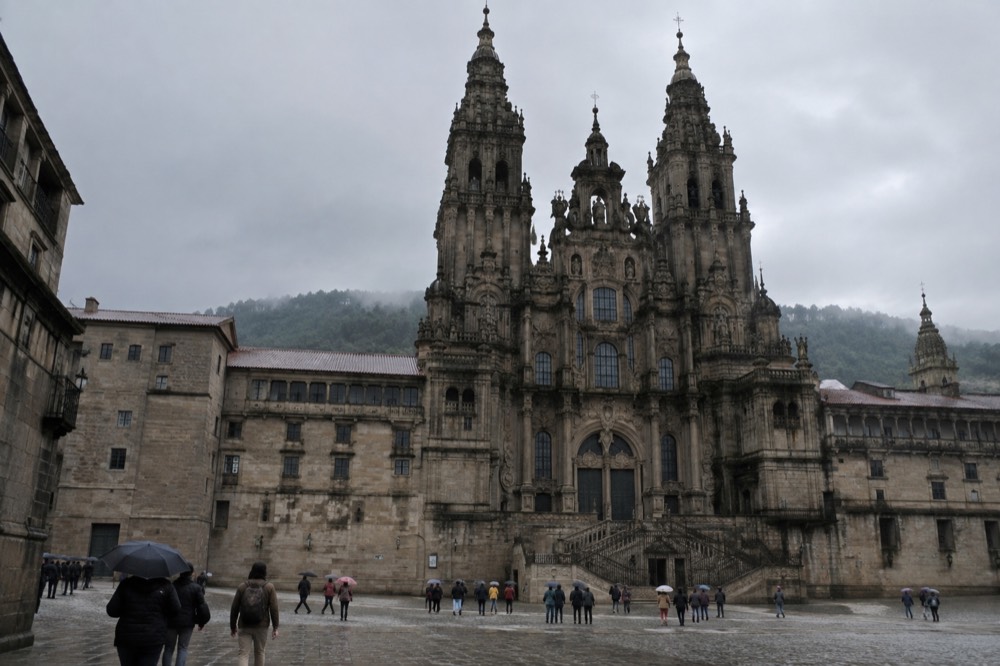
A full month-by-month temperature and rainfall normals table has not been extracted from AEMET, so this guide deliberately stays at the level the verified data supports: named seasons and ranges, not invented monthly figures. What the data does establish is the shape of the year. October through March is the wet half, when Atlantic fronts arrive in long queues and the granite of the Old Town glistens more often than it dries. July and August are the driest months, the point at which the city's parks look parched by local standards and the Praza do Obradoiro fills with tour groups. April, May, June and September sit between the two, trading some showers for mild temperatures and thinner crowds.
| Season | Months | Character | Best For |
|---|---|---|---|
| Wet winter | October-March | Cool, frequent Atlantic rain, wettest period of the year | Museums, cathedral interiors, low hotel demand |
| Spring shoulder | April-June | Mild, showers easing toward June, greening countryside | City breaks, starting a Camino before peak season |
| High summer | July-August | Driest months, warmest weather, peak crowds and pilgrim numbers | The 25 July Feast of St. James, rooftop views |
| Autumn shoulder | September | Mild, crowds thinning after the August peak, sea-warmed air | All-round sightseeing, day trips to the coast |
The companion piece on Santiago de Compostela weather goes deeper on what the oceanic pattern means for packing and for planning day trips to the coast, where the Rias Baixas and the Costa da Morte add their own wind and swell to the picture.
For anyone using the good months to explore beyond the city, three of the site's highest-rated day trips are worth matching to the calendar:
The Costa da Morte and Rias Baixas circuits in particular reward the drier windows, since their highlights, cliff lighthouses, mussel-boat crossings and waterfront villages, are outdoor businesses.
When Is Peak Season In Santiago de Compostela?
Peak season runs July and August, with the absolute high point around the Feast of St. James on 25 July. That fixed feast day, the city's largest annual celebration, brings a Pontifical Mass, the national offering to the Apostle, fireworks, concerts and folk events, and in Holy Years it falls at the centre of the entire Jacobean calendar. Summer also carries the year's biggest pilgrim arrivals, which is why queues and prices both climb.
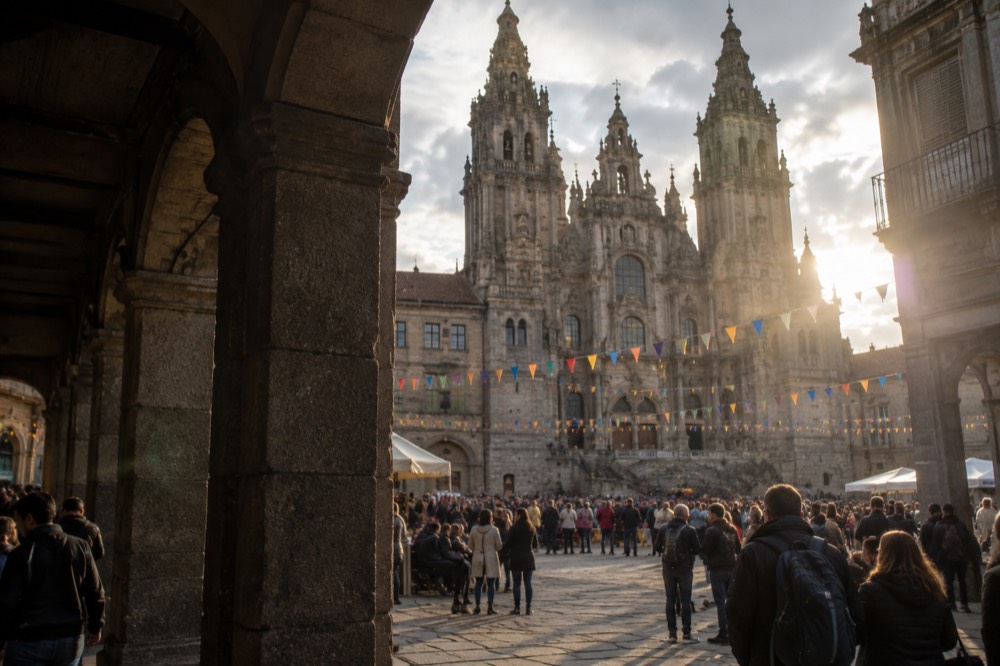
The logic of the peak is liturgical before it is meteorological. St. James, the apostle whose reputed tomb under the Cathedral built this city, is honoured on 25 July every year, and the celebrations around that date, from the solemn Mass to the fireworks, are documented in the site's full guide to the Feast of St. James on 25 July. Pilgrim numbers follow the same clock: families walk in summer holidays, Europeans drive the August wave, and the Pilgrim's Office's record 2025 total of 530,987 Compostelas leaned heavily on these weeks.
What peak season means in practice is bookable scarcity. The Cathedral's own rooftop tour, the Cubiertas and Torre de la Carraca visit, is timed-ticketed and sells out first, and the city's hotel stock tightens around feast week. Anyone set on July should book rooms and the Cathedral's tickets and timed entries well ahead, and expect the Old Town's lanes to be at their densest.
Is The 2027 Holy Year The Best Time To Come?
For pilgrims and Jacobean enthusiasts, yes: 2027 is the next Holy Year, the Holy Door opens solemnly on the evening of 31 December 2026 at the Praza da Quintana ceremony and stays open through 31 December 2027, after which the next Holy Years are 2032, 2038 and 2049. Holy Years fall whenever 25 July lands on a Sunday, and 2027's Sunday feast makes it the biggest Santiago de Compostela event of the decade.
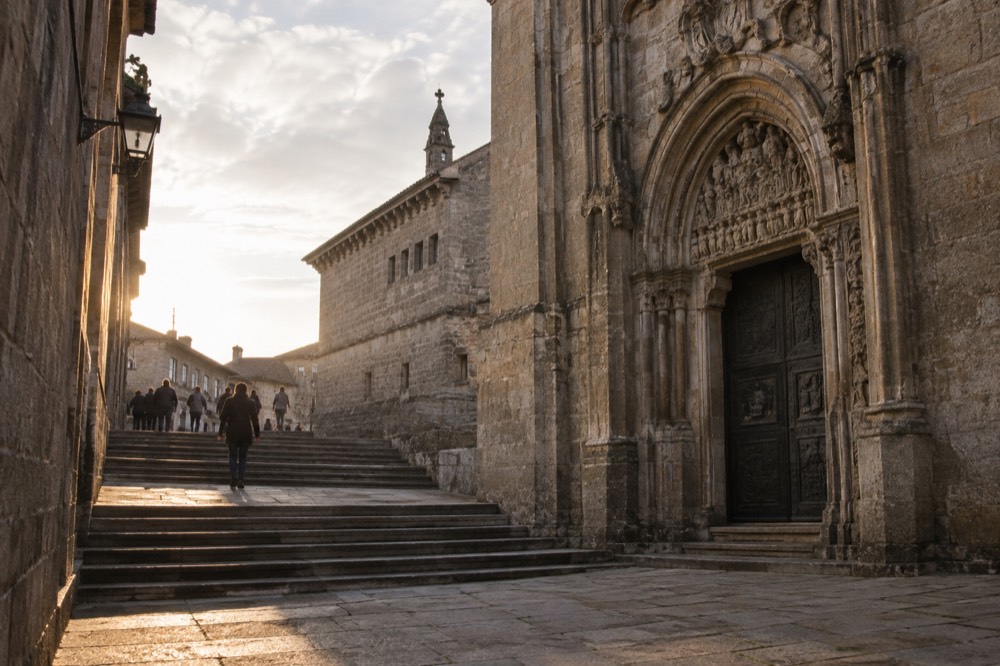
The Holy Door is normally sealed between Holy Years; the site's Holy Year 2027 guide tracks what changes when it opens. The honest trade-off is that a Holy Year multiplies everything: pilgrim traffic, festivity, and demand for beds. A Holy Year visit is the best time to come if walking the Camino or passing through the Holy Door is the point, and the worst time to come if quiet sightseeing is the goal. Anyone walking in 2027 should read up on Camino routes and albergue accommodation early, because beds on the popular routes fill first in a Xacobeo.
Two practical consequences follow for anyone timing a trip around 2027. First, late December 2026 and early January 2027 will be unusually busy for the season, as pilgrims come for the opening. Second, the whole 2027 calendar, especially July, will run hotter than usual for demand, so the shoulder months of May, June and September inside the Holy Year become the smart compromise: the Door is open, the weather cooperates, and the worst of the crush is avoidable. Everything else covered here is indexed on Santiago de Compostela Travel Guide.
When Is The Cheapest And Quietest Time To Visit?
October to March, excluding the Christmas-to-New Year week, is the cheapest and quietest time to visit Santiago de Compostela, when the Atlantic wet season thins the crowds and hotel demand drops across the Old Town. The trade is honest: rain is frequent, daylight is short, and the rooftop tour and Portico visits are the only outdoor highlights that keep reliably dry-ish schedules. Late January, February and early March are the truest quiet windows.
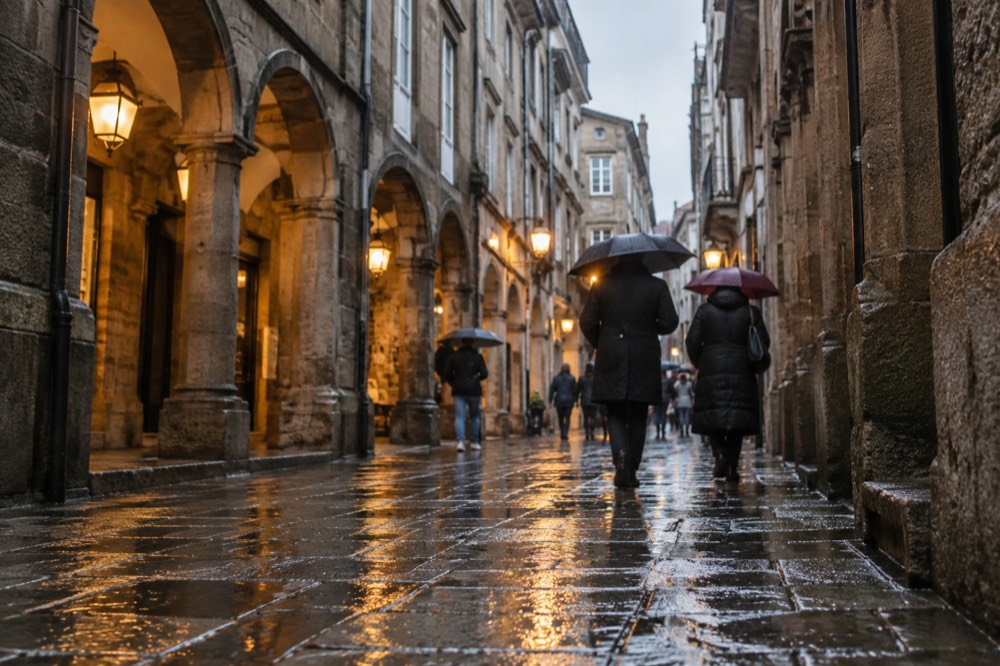
This is also the season the city belongs to its residents. Rua do Franco's dining rooms fill with locals rather than pilgrims, the Cathedral's free daily entry from about 7:00am to 9:00pm through the Praterias door needs no queue strategy, and the market, tapas bars and covered sights carry the visit on the wet days. The Pilgrim's Office at Rua das Carretas 33 keeps roughly seasonal hours, closed only on 25 December and 1 January, so even winter walkers can collect a Compostela provided they have met the last-100km rule.
Budget travellers should pair the low season with the city's free entry points. The Cathedral interior itself is free, and Santiago de Compostela has charged a municipal tourist tax since 1 October 2025 (per person per night for a maximum of 5 nights, from 1 EUR in private albergues, campsites and tourist apartments up to 2.50 EUR in five-star hotels, with under-18s and stays in Xunta-run public albergues exempt). The detailed breakdown lives in the site's accommodation companion on where to stay.
| Time Of Year | Crowd Level | Cost Level | Weather Risk | Verdict |
|---|---|---|---|---|
| Late January-March | Lowest of the year | Lowest of the year | Highest rain frequency | Best for budget and quiet |
| April-June | Building toward July | Moderate | Showers easing toward June | Best balance for most visits |
| July-August | Highest, peaking at 25 July | Highest | Lowest rain, warmest | Best for the feast and pilgrim atmosphere |
| September | Dropping after August | Moderate | Mild, showers returning | Best all-round month |
| October-December | Low until mid-December | Low | Rising rain | Good value, wet |
| Late December-early January | High around the Holy Year opening | High | Cold and wet | Only for the 31 December ceremony |
What Annual Events Should Shape The Timing?
The Feast of St. James on 25 July is the fixed anchor of the Santiago de Compostela year, and the Holy Door ceremonies bracket the Holy Year, opening on the evening of 31 December 2026 and running through 31 December 2027. Around those sit the Botafumeiro's normal schedule of 12 liturgical solemnities, though the Cathedral has confirmed in writing that the censer is currently suspended with no return date, and the relocation of three daily pilgrim masses to the Church of San Agustin from 16 October 2026.
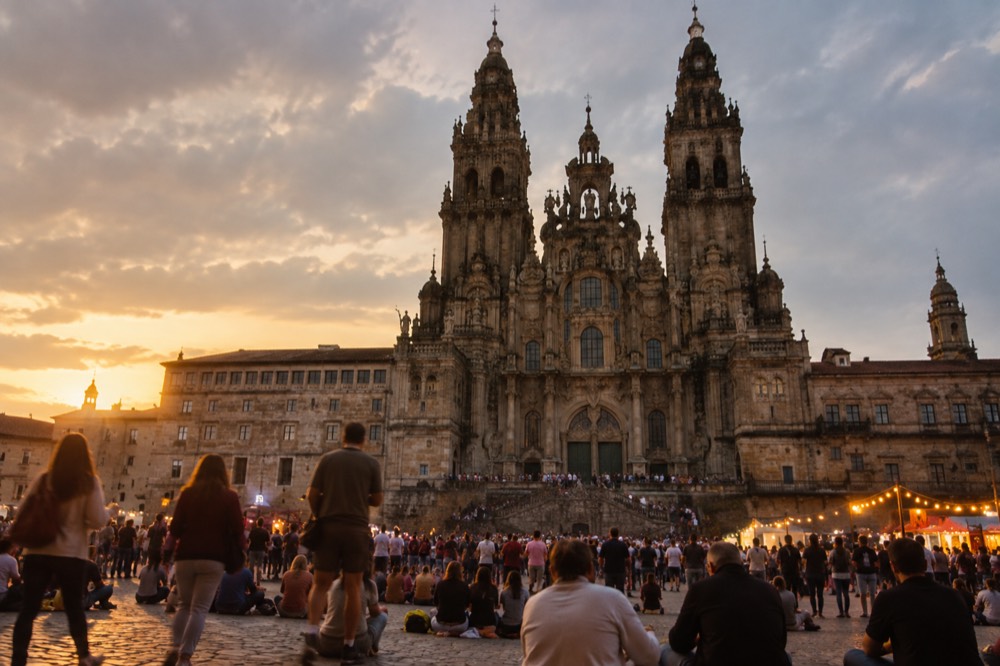
The full events picture, from the fireworks of the July feast to the concert and folk calendar, is covered in the site's festivals and events coverage. The solemnity schedule matters for one specific reason: many visitors plan a whole trip hoping to see the Botafumeiro swing, and the honest current answer, per the Cathedral's own written confirmation of 5 September 2026, is that it cannot be promised. Under normal operation it swings at the end of the main solemn Mass on 12 dates a year, listed below, and outside those dates only by private request.
| Solemnity (Normal Annual Schedule) | Usual Date | Notes |
|---|---|---|
| Epiphany | 6 January | Part of the Botafumeiro's normal 12-date schedule |
| Easter Sunday | Moveable, spring | Liturgical calendar sets the date each year |
| Ascension of the Lord | Moveable, May | Sometimes transferred to the Seventh Sunday |
| Apparition of the Apostle in Clavijo | 23 May | Sometimes transferred |
| Pentecost | Moveable, May-June | Follows Easter by seven weeks |
| Feast of St. James the Apostle | 25 July | The city's principal feast, with national offering |
| Assumption of the Virgin | 15 August | Peak-season solemnity |
| All Saints | 1 November | Autumn date |
| Christ the King | Last Sunday before Advent | November |
| Immaculate Conception | 8 December | Early December |
| Christmas | 25 December | Winter solemnity |
| Transfer of the Apostle | 30 December | Closes the liturgical year |
Every line in that table comes with the same caveat in 2026: the schedule describes how the Botafumeiro normally works, and the current suspension for cimborrio restoration has no published end date. The site's dedicated Botafumeiro guide tracks the status in detail. The same honesty applies to the pilgrim mass schedule: the 7:30am, 9:30am, noon and 7:30pm masses at the High Altar run until 15 October 2026, and from 16 October 2026 the 9:30am, noon and 7:30pm services move to the Church of San Agustin, with only the 7:30am mass staying inside the Cathedral's Communion chapel. The pilgrim mass guide carries both arrangements, dated.
What Times Of Day Work In Every Season?
Mid-morning to early afternoon is the most reliable window in every season, roughly 10:00am to 2:00pm, when the Cathedral Museum opens daily around 10:00am with the ticket office closing 30 minutes earlier than the museum itself, and the rooftop tours run their timed slots. Early evening serves the Old Town best, when day-trippers leave and the granite lanes open up, and the Cathedral's free interior entry runs from about 7:00am to 9:00pm daily through the Praterias door.
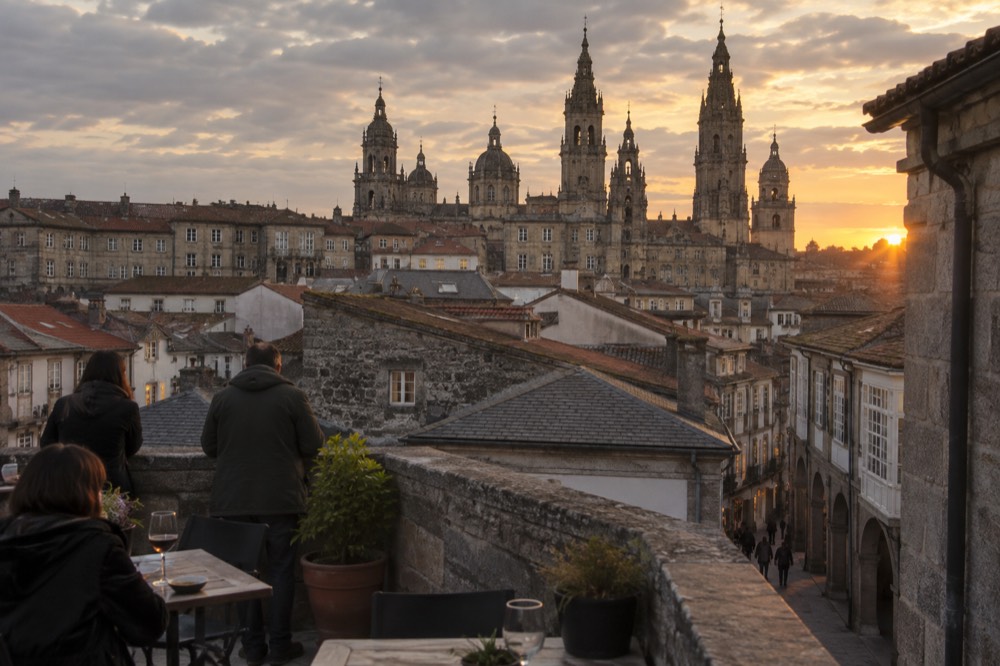
The rooftop tour deserves the earliest booking of any timed activity. It is a guided visit of about 60 minutes, involves about 140 steps and reaches a height of about 72m, and the Cathedral's own ticket site lists the general rate at EUR15 with a reduced rate of EUR12 for accredited pilgrims, students, over-65s and several other groups. The ticket also includes access to the museum's permanent collection and other spaces, valid for seven days with one use per space. The full ticketing picture, including the museum's EUR9-23 range depending on ticket type, is in the site's guide to Cathedral tickets and opening hours.
| Timed Experience | Approximate Schedule | Entry Basis |
|---|---|---|
| Cathedral interior | About 7:00am-9:00pm daily, via the Praterias door | Free |
| Cathedral Museum | About 10:00am-8:00pm daily, ticket office closes 30 min earlier | EUR9-23 depending on ticket type |
| Rooftop tour, Cubiertas and Torre de la Carraca | Timed guided slots, about 60 minutes, about 140 steps, about 72m height | EUR15 general, EUR12 reduced |
| Pilgrim masses, until 15 October 2026 | 7:30am, 9:30am, noon and 7:30pm at the High Altar | Free |
| Pilgrim masses, from 16 October 2026 | 9:30am, noon and 7:30pm at San Agustin; 7:30am stays in the Cathedral's Communion chapel | Free |
How Does Timing Change If You Are Arriving On The Camino?
Camino timing runs about a month ahead of ordinary tourist timing: the walking season peaks July-August with the city's tourist peak, but the smart Camino windows are May-June and September, when the routes are walkable, the albergue network is fully open and the bed race is calmer. The last 100km from Sarria is the most popular starting frame for the Compostela certificate, so those final stages carry the heaviest footfall of all.
The reason is arithmetic as much as weather. The certificate rules, last 100km on foot or horseback or last 200km by bicycle, with at least two stamps per day, mean the Sarria-to-Santiago stretch concentrates the walking population, and the site's Sarria to Santiago guide maps exactly where the density sits. Walkers aiming for a 2027 Holy Year arrival, with the Holy Door open, should add margin: beds within the final 100km will be tightest in a Xacobeo, and the Camino de Santiago overview and the Camino map help with route selection and staging.
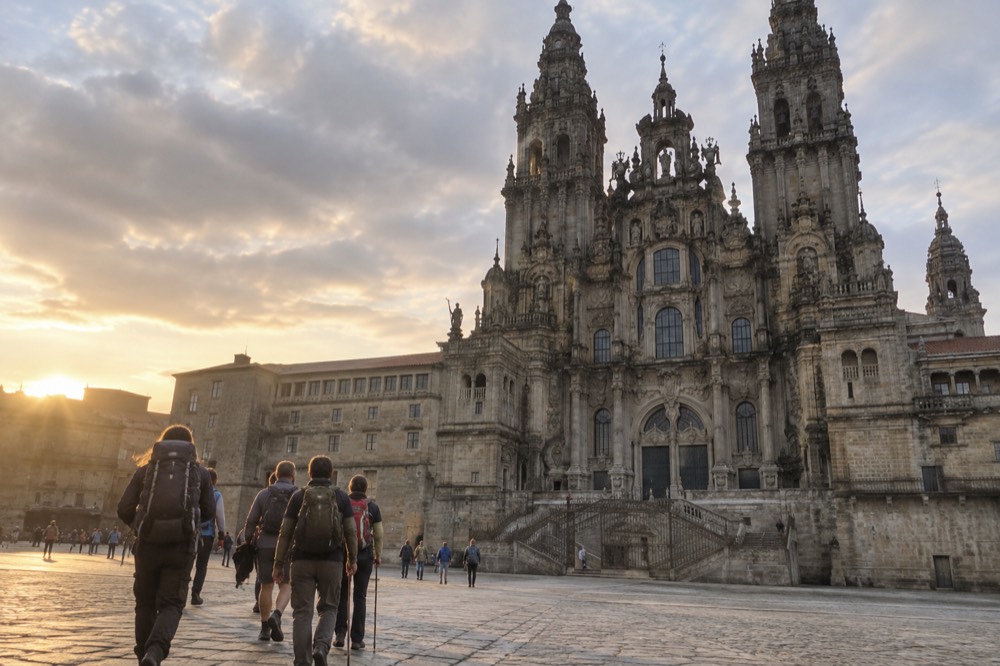
For those finishing the walk and staying on to enjoy the city, the site's rest day after the Camino guide is built around exactly that transition, and the timing advice in it matches this page: treat your arrival day as a rest day, then use a shoulder-season or September window for the cathedral's timed visits while your legs recover. Pilgrims collecting the certificate itself go in person to the Pilgrim's Office, and the pilgrim office guide covers what to bring.
If a day trip fits between the finish and the flight home, the two most season-sensitive options are the coast west and the estuaries south, and both are covered by the site's day-trip picks:
The full first-day itinerary for the city itself is in the site's one day in Santiago de Compostela plan, which works in any month with a rain plan attached.
Common Questions About The Best Time To Visit Santiago de Compostela
What is the best time to visit Santiago de Compostela?
Late May, June and September are the best months for most visitors: mild weather, the drier side of the city's oceanic pattern, and crowds below the July-August peak. July is the best month only for the Feast of St. James on 25 July, and the 2027 Holy Year, with its Holy Door open from 31 December 2026, is the best time for pilgrims specifically.
Is summer the best season for Santiago de Compostela?
Summer, July and August, is the driest and warmest season and the busiest. It is the right season if the 25 July feast or the peak Camino atmosphere is the goal, but hotel demand and timed-ticket competition are at their highest, so book well ahead.
Is winter a bad time to visit Santiago de Compostela?
Winter, October to March, is the wettest period of the year, but it is also the cheapest and quietest. Museums, the free Cathedral interior, tapas bars and the covered sights all carry a winter visit, and only outdoor-heavy plans, like coastal day trips, suffer. A municipal tourist tax has applied since 1 October 2025, from 1 EUR to 2.50 EUR per person per night for up to 5 nights, with under-18s and Xunta-run public albergues exempt.
When does the Holy Year 2027 start and end?
The Holy Door opens solemnly on the evening of 31 December 2026 at the Praza da Quintana ceremony and remains open through 31 December 2027. The next Holy Years after that are 2032, 2038 and 2049. Holy Years fall whenever 25 July, the feast of St. James, lands on a Sunday.
Does the Botafumeiro swing on set dates?
Normally it swings at the end of the main solemn Mass on 12 liturgical dates a year, including 25 July. As of 2026 it is suspended: the Cathedral confirmed in writing on 5 September 2026 that cimborrio restoration scaffolding covers its hanging mechanism, and no return date has been published, so no visit should be planned around seeing it swing.
Which months are cheapest in Santiago de Compostela?
Late January, February and early March are the cheapest and quietest months, followed by late October and November. Avoid the 31 December 2026 Holy Door opening period, when Holy Year demand lifts prices even in the wet season.
The short version stands: match the month to the purpose. Feast and pilgrim energy, come July, and in 2027 the whole Holy Year makes the calendar itself the attraction. Everything else, the shoulder months of May, June and September give this granite city at its most livable, with rain coats packed and the rooftops booked.