Where To Stay In Santiago de Compostela
Santiago de Compostela's old town is small enough that almost any bed inside it puts the Cathedral within a short walk, so the real choice is between atmosphere, price and what kind of trip you are on.
Short answer
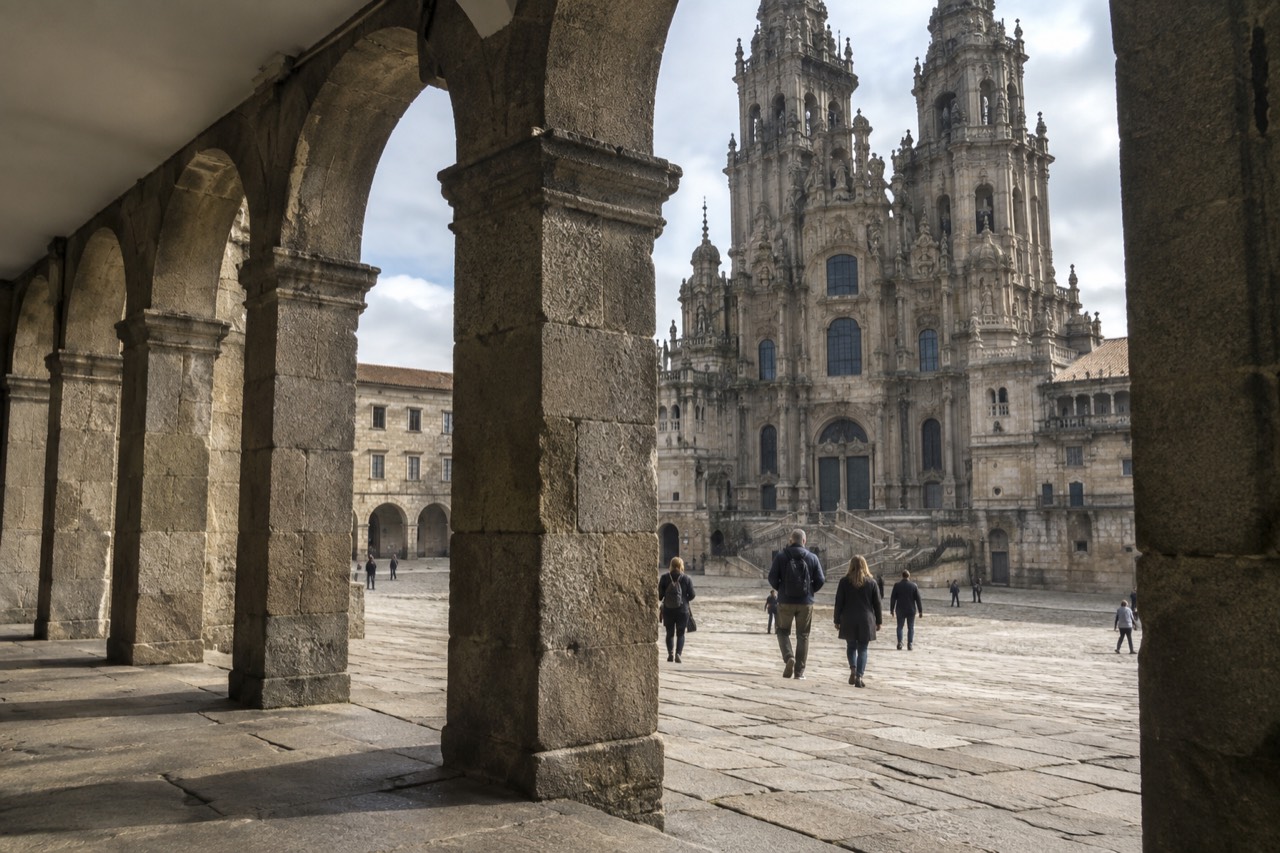
Stay in the old town around the Cathedral if sightseeing comes first, near Rua das Carretas and the pilgrim quarter if you have just walked the Camino, or around the Alameda and the newer streets if you want easier driving and quieter nights. The Parador fronts Praza do Obradoiro, and pilgrim albergues sit closest to the Pilgrim's Office.
Santiago de Compostela's old town has been a UNESCO World Heritage Site since 1985, and the whole protected core wraps around one building. Every practical decision about where to stay in Santiago de Compostela comes down to how close you want to be to the Cathedral, how much you are paying for that proximity, and whether your legs have just covered the last 100km of a Camino route or arrived fresh off a flight. The city is compact, the granite streets are mostly pedestrianized, and the difference between neighborhoods is measured in atmosphere and price rather than in long transfers.
The editors behind this Santiago de Compostela Travel Guide have sorted the verified basics below: which quarter suits which traveler, what the parador-versus-hotel-versus-albergue trade-off actually looks like, what the Cathedral's own ticketing says about the costs that surround any stay, and how the airport bus reaches the center. Nothing here invents a nightly rate, because accommodation prices move with demand, especially toward the 2027 Holy Year.
What Is The Best Area To Stay In Santiago de Compostela?
The best base for almost every visitor is the old town, the UNESCO-inscribed granite core where the Cathedral, the tapas streets and the Pilgrim's Office all sit within a short walk of one another. Pilgrims finishing a Camino route usually sleep better one or two streets back from the busiest squares, while drivers and families tend to prefer the newer streets around the Alameda, where hotel access by car is simpler and nights are quieter.
The old town is the city's entire reason for being on most itineraries. The 1985 UNESCO listing covers this core specifically, and the separate 1993 inscription covers the Camino routes themselves, so staying inside the older streets puts you in the protected zone rather than beside it. The trade-off is predictable: granite buildings mean character, and character plus a prime address means the highest rates in the city, plus the noise of festival nights and pilgrim celebrations that run late in July.
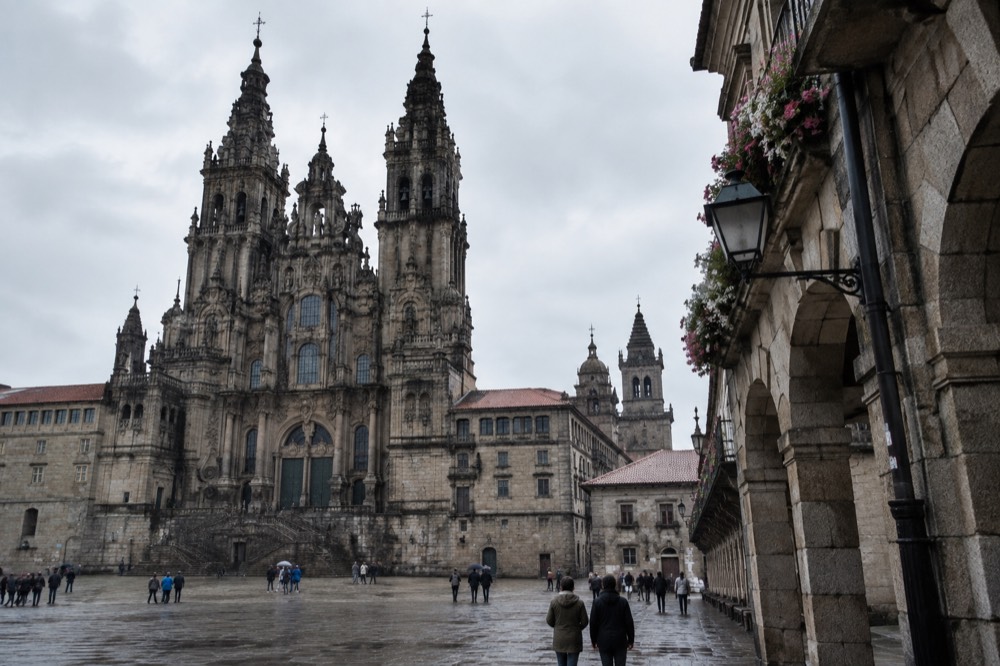
Here is how the practical zones compare:
| Area | Best for | Main trade-off | Verified anchor |
|---|---|---|---|
| Old town core (around the Cathedral) | First visits, short stays, sightseeing | Highest rates, festival noise | UNESCO Old Town listing, 1985 |
| Praza do Obradoiro frontage | Atmosphere and arrival photos | Premium price for a prime square | The Parador fronts the square |
| Rua das Carretas and pilgrim quarter | Pilgrims collecting the Compostela | Simple beds, busy mornings at the office | Pilgrim's Office at number 33 |
| Rua do Franco side streets | Tapas-focused stays | Late-evening noise near the bars | Named bar street in the old town |
| Alameda and newer streets | Drivers, families, quieter nights | A longer walk to the Cathedral | Park grounds west of the center |
If the trip is your first, bias toward the old town and accept the premium. If you have walked for a week, the calculus flips, and the area around the Pilgrim's Office, described in our Pilgrim's Office guide, is the more logical bed. For a longer, slower visit with a rental car, the Alameda side wins on parking and sleep. Weather matters too: Santiago de Compostela is wet year-round and wetter from October to March, and the city's climate overview is worth reading before you pick a month at all.
Where To Stay Near The Cathedral And Praza do Obradoiro
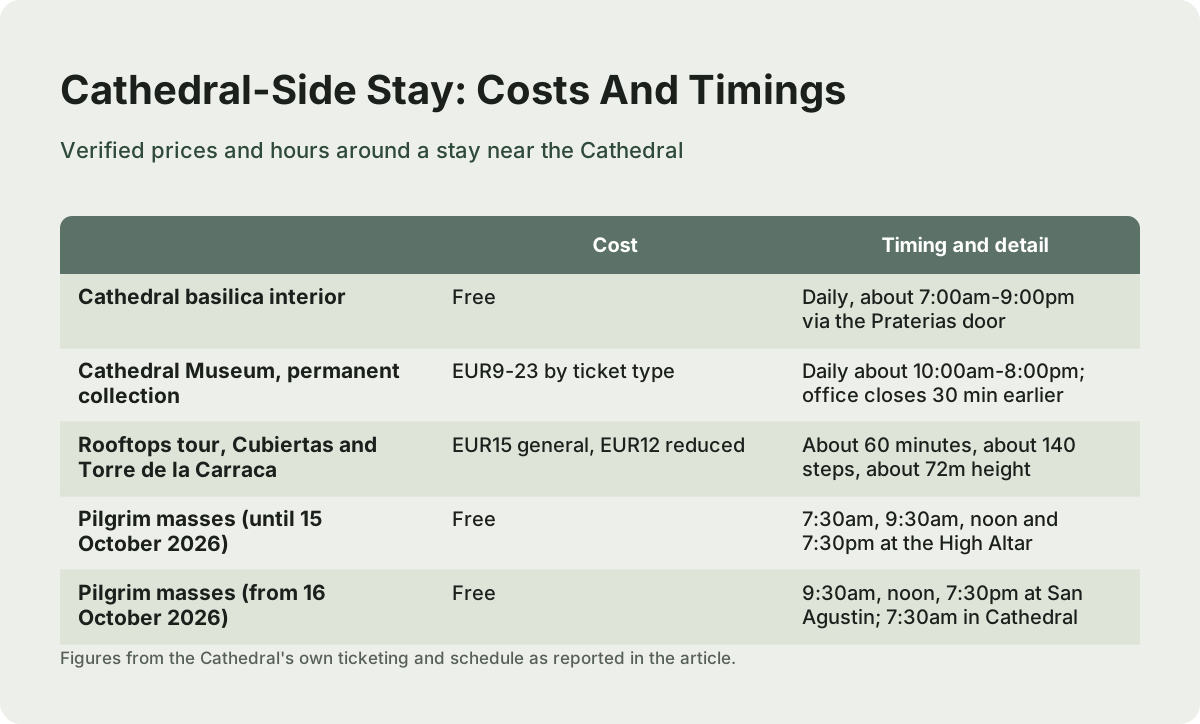
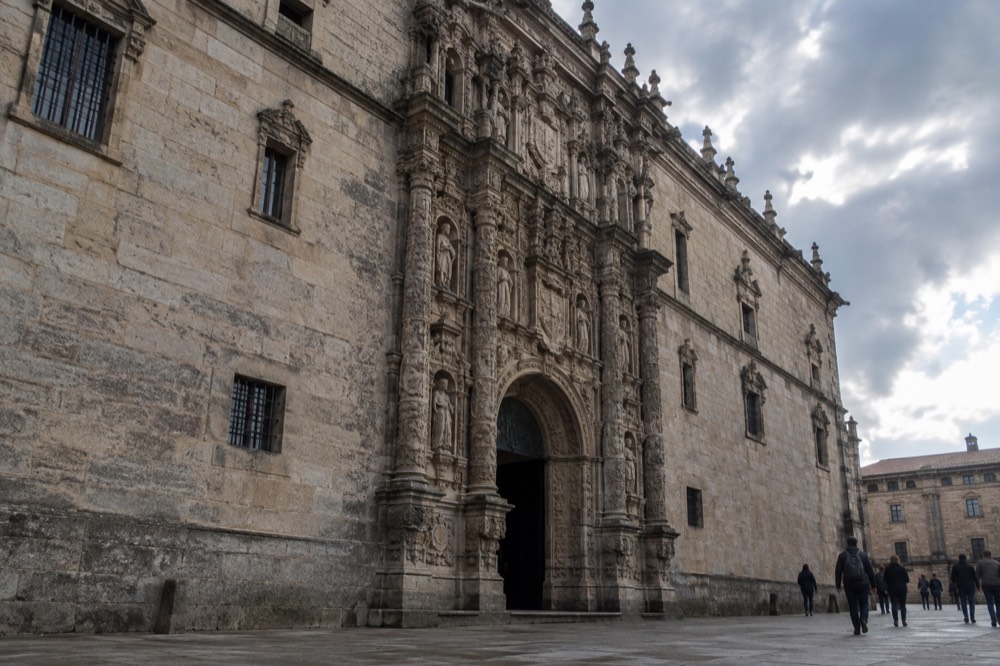
The most famous address in Santiago de Compostela is the Parador Hostal dos Reis Catolicos, which fronts Praza do Obradoiro directly opposite the Cathedral's baroque facade, and behind it a ring of small hotels and guesthouses fills the streets between the square and Rua do Franco. Cathedral-side beds put the 7:30am pilgrim mass and the rooftop tour entrance within a two-minute walk, at the cost of peak-season rates and the busiest square in Galicia.
The Cathedral's own schedule explains why proximity is worth money here. The basilica interior is free to enter and open daily from about 7:00am to 9:00pm through the Praterias door, closing about 8:30pm on summer Saturdays for the pilgrim vigil. The Cathedral Museum runs daily from about 10:00am to 8:00pm, with ticket prices between EUR9 and EUR23 depending on the ticket type. The rooftop tour, Cubiertas plus Torre de la Carraca, costs EUR15 general and EUR12 reduced, lasts about 60 minutes, climbs about 140 steps and reaches about 72 meters above the city. None of that needs a hotel on the square, but a bed ten streets away means walking it all twice a day.
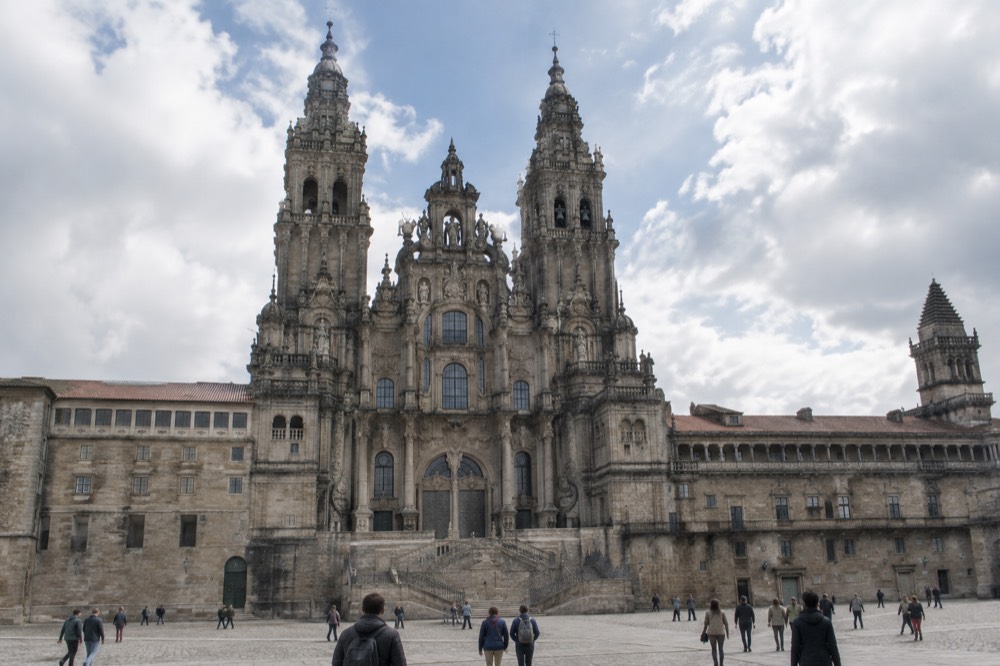
| What surrounds a Cathedral-side stay | Cost | Timing and detail |
|---|---|---|
| Cathedral basilica interior | Free | Daily, about 7:00am-9:00pm via the Praterias door |
| Cathedral Museum, permanent collection | EUR9-23 by ticket type | Daily about 10:00am-8:00pm, ticket office closes 30 min earlier |
| Rooftops tour, Cubiertas and Torre de la Carraca | EUR15 general, EUR12 reduced | About 60 minutes, about 140 steps, about 72m height |
| Pilgrim masses (until 15 October 2026) | Free | 7:30am, 9:30am, noon and 7:30pm at the High Altar |
| Pilgrim masses (from 16 October 2026) | Free | 9:30am, noon and 7:30pm move to San Agustin church, 7:30am stays in the Cathedral |
One honest caveat belongs on any 2026 plan: the Botafumeiro is currently out of action. Scaffolding for the cimborrio restoration covers its hanging mechanism, the Cathedral confirmed the suspension in writing on 5 September 2026, and no return date has been published. Normally it swings on 12 fixed liturgical solemnities a year. No hotel choice will change that, so book the square for the architecture, not the censer. If you want to see how the surrounding streets actually fit together before committing to a bed, the Hidden City Walking Tour, from $17 and rated 5 from 13 reviews on its listing, covers the quarters most visitors never notice.
Once you know the streets, two other verified options sit within the same walk-from-anywhere radius, and both pair naturally with a Cathedral-side stay:
Should You Book A Parador, A Hotel, Or An Albergue In Santiago de Compostela?
A parador suits travelers who want the historic building itself, the Hostal dos Reis Catolicos on Praza do Obradoiro, and are prepared to pay for the oldest continuously relevant hospital-turned-hotel in the city. A conventional hotel suits couples and families who want private bathrooms and predictable comfort at mid-range rates, while an albergue suits pilgrims who have slept in dormitories for a week, want a bed near the Pilgrim's Office, and are counting euros more than square meters.
The parador question comes down to what the building is. It stands directly on Praza do Obradoiro, and its nightly rate moves with demand like any other premium property, so this guide deliberately does not print a number. The parador pricing question has its own dedicated answer, and the honest figure to check is on the live listing, which our one night in a parador answer walks through in detail.
Hotels spread across every price band outside the oldest core, and the practical filter is less about stars and more about parking. The old town is largely pedestrianized, so a car and a Cathedral-side hotel rarely mix well. Albergues are a different category entirely: they exist for walkers, they are cheapest, and their culture is communal. Our albergue accommodation guide covers how they work along the routes and in the city at the end.
| Bed type | Who it fits | What the verified record says |
|---|---|---|
| Parador (Hostal dos Reis Catolicos) | History-first stays, splurge nights | Fronts Praza do Obradoiro; rate varies, check the live listing |
| Old town hotel or guesthouse | First-time visitors, 1-2 night stays | Inside the 1985 UNESCO core, walkable to all main sights |
| Alameda-side hotel | Drivers, families, longer stays | Quieter streets, easier car access, longer walk to the Cathedral |
| Albergue | Pilgrims, budget travelers | Dormitory culture, closest beds to the Pilgrim's Office |
Where Do Pilgrims Stay After Finishing The Camino de Santiago?
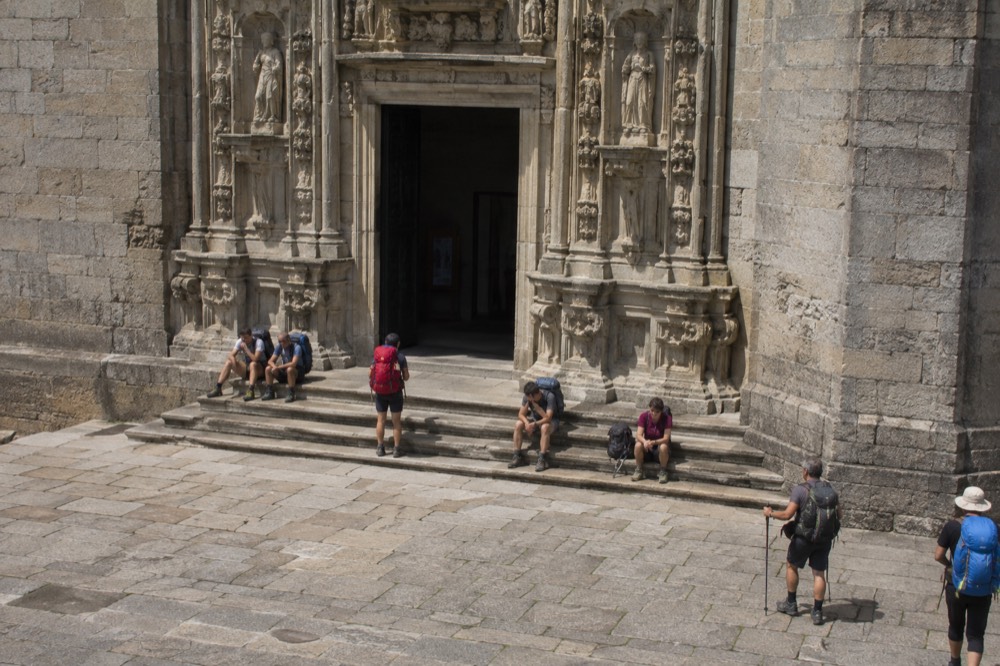
Most pilgrims arriving in Santiago de Compostela sleep either in a municipal or private albergue near the pilgrim quarter, close to the Pilgrim's Office at Rua das Carretas 33, or in a cheap pension a street or two back from the Cathedral, because the priority is the Compostela certificate queue in the morning and then a real bed with a real mattress. Many walkers book one recovery night near the center and a second, quieter night elsewhere before traveling home.
The numbers behind that morning routine are worth knowing. The Oficina del Peregrino's own figures show 530,987 Compostelas issued in 2025, a record year, which is why queues in high season stretch along the street well before the office opens. The office sits at Rua das Carretas 33, opens seasonally in a window roughly between 8 or 10am and 7 or 8pm, and closes on 25 December and 1 January. The certificate itself requires the last 100km walked, or the last 200km cycled, with at least two credencial stamps per day, issued in person only. Our arriving in Santiago on the Camino guide covers the full arrival day.
| Pilgrim arrival fact | Verified detail |
|---|---|
| Compostela requirement, on foot or horseback | Last 100km of a recognized route |
| Compostela requirement, by bicycle | Last 200km of a recognized route |
| Stamps needed | Minimum two per day on the credencial |
| Certificate issue | In person only, Rua das Carretas 33 |
| 2025 record | 530,987 Compostelas issued |
| Office closures | 25 December and 1 January |
If your legs still work after arrival, the Historic Town Walking Tour with an official guide, from $14 per person and rated 4.8 from 144 reviews on the operator's listing, is a gentle orientation to the city you just walked into, and it starts from the center rather than asking you to travel to it.
For the mass itself, the arrangement changes in autumn 2026: until 15 October the pilgrim masses run at 7:30am, 9:30am, noon and 7:30pm at the Cathedral's High Altar, and from 16 October the 9:30am, noon and 7:30pm services relocate to the nearby Church of San Agustin while the 7:30am mass stays in the Cathedral's own Communion chapel. The pilgrim mass guide tracks what that means for an arrival-day plan.
What Does It Cost To Stay In Santiago de Compostela?
Santiago de Compostela has charged a municipal tourist tax since 1 October 2025 (a surcharge on Galicia's tourist-stay tax, upheld by Galicia's high court in September 2026): per person per night for a maximum of 5 nights, from 1 EUR in private albergues, campsites and tourist apartments up to 2.50 EUR in five-star hotels, with under-18s and stays in Xunta-run public albergues exempt. Nightly rates swing hard with the calendar: late July around the Feast of St. James, and the 2027 Holy Year from 31 December 2026 onward, push demand up, so check the live rate on the listing for your exact dates rather than trust a printed figure.
Price bands in the city follow the geography described above almost mechanically. The old town core commands the top of the market, the pilgrim quarter and side streets hold the budget beds, and the Alameda side spans the mid-range. What this guide will not do is invent a "from X euros" figure, because accommodation pricing here behaves like anywhere with a hard seasonal peak. The best time to visit guide separates the cheapest months from the busiest ones.
Two costs that do have verified figures are worth budgeting alongside the bed. First, the sight costs listed in the table above, which for a full Cathedral experience add up to between roughly EUR9 and EUR23 per adult depending on ticket type, plus EUR15 for the rooftop tour if you want the view. Second, food: Santiago de Compostela's tapas culture keeps eating costs manageable if you follow the bar streets, which the where to eat guide maps neighborhood by neighborhood.
When Should You Book Your Santiago de Compostela Accommodation?
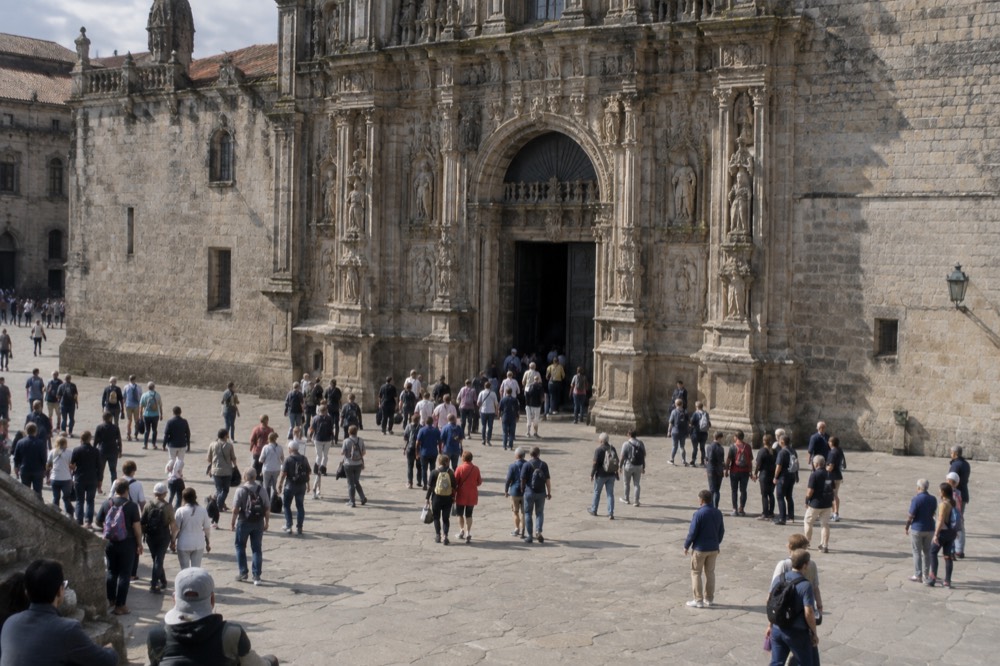
Book as early as you can if your dates touch late July around the Feast of St. James on 25 July, or any part of the 2027 Holy Year, which opens with the Holy Door ceremony on 31 December 2026 and runs through 31 December 2027. For shoulder months, autumn and spring, booking a few weeks ahead is usually enough, and mid-winter stays outside the Christmas solemnities can often be arranged on short notice.
The 2027 Holy Year is the single biggest factor in this city's booking calendar. A Holy Year falls whenever 25 July lands on a Sunday, which happens in 2027 and not before. Demand will build through 2026 and peak across 2027, and the Holy Year 2027 guide collects the confirmed dates. The Feast of St. James brings its own spike every single year, with the national offering to the Apostle, fireworks and concerts.
| Booking window | Dates that drive demand | How far ahead to book |
|---|---|---|
| Late July | Feast of St. James, 25 July, every year | Months ahead, the earlier the better |
| Holy Year 2027 | 31 December 2026 through 31 December 2027 | As far ahead as rates allow |
| Summer holidays | July and August, the driest months | Six to eight weeks minimum |
| Spring and autumn shoulder | April-June, September-October | A few weeks usually suffice |
| Mid-winter | November-March outside Christmas solemnities | Short notice often works |
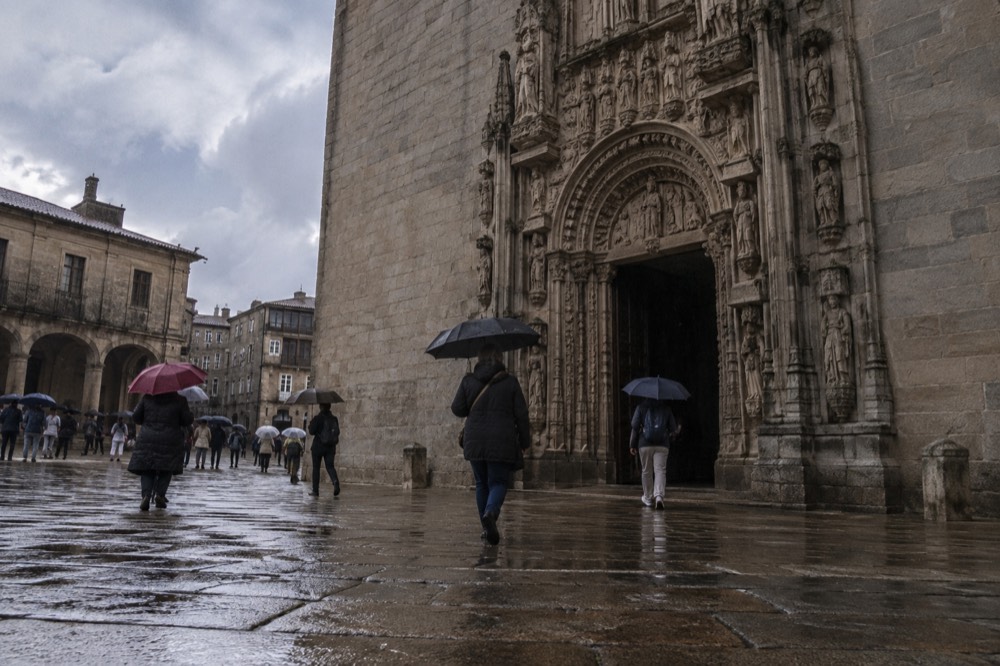
The seasonal logic comes from verified climate data rather than folklore. AEMET's records for the Santiago de Compostela station, number 1475X at Labacolla, show a temperate oceanic climate, wet year-round, wetter from October to March and driest in July and August, with annual precipitation on the order of 1,690 to 1,890mm. Dry July and August plus the feast day is exactly why that window is both the most popular and the most expensive time to book a bed.
| Climate fact for Santiago de Compostela | Verified figure |
|---|---|
| Climate type | Temperate oceanic, wet year-round |
| Wettest season | October to March |
| Driest months | July and August |
| Annual precipitation | On the order of 1,690-1,890mm |
| Source | AEMET station 1475X, Labacolla |
How Do You Get From The Airport To Your Hotel In Santiago de Compostela?
Santiago de Compostela Airport sits about 12km from the old town, and the city's own transport page lists line 6A, operated by Tussa, as the current bus into the center, costing EUR1 paid to the driver or EUR0.36 per trip on a card, running roughly every 30 minutes with a journey of about 25 to 45 minutes. A new Monbus contract with a proposed fare near EUR6 is expected in autumn or early winter 2026, so treat the fare as subject to change.
That fare detail matters because it is in transition at exactly the moment many readers will be traveling. The city's transport page as updated on 23 September 2026 still lists the Tussa arrangement, and advises checking line numbers after December. The bus connects the airport with the Estacion Intermodal on Rua do Horedo and stops in the center, from which any old town hotel is a manageable walk with light luggage or a short taxi hop with heavy bags. Our airport guide covers the full picture.
| Airport transfer fact | Verified detail |
|---|---|
| Distance airport to old town | About 12km |
| Bus line and operator (as of late September 2026) | Line 6A, Tussa |
| Cash fare to the driver | EUR1 |
| Rechargeable card fare | EUR0.36 per trip |
| Frequency | Roughly every 30 minutes |
| Journey time | About 25-45 minutes |
| Expected change | Monbus contract, proposed fare near EUR6, autumn or winter 2026 |
If your flight lands with the day still ahead of you, one food-focused option starts right in the center: the Private Tapas Tour of Santiago de Compostela, from $52 per person and rated 4.7 from 243 reviews on its listing, turns the first evening into an orientation by way of the bar streets near Rua do Franco.
And for the day after you have settled in, three verified experiences cover the three most common reasons people base themselves here at all, the city itself, the Cathedral interior, and the Atlantic coast beyond:
Common Questions About Staying In Santiago de Compostela
Is it better to stay inside the old town or outside it?
Inside the old town, inside the zone UNESCO listed in 1985, puts the Cathedral, the tapas streets and the Pilgrim's Office within a short walk of your bed. Outside it, around the Alameda and the newer streets, hotels are quieter and easier to reach by car. First-time visitors with one or two nights should almost always choose inside.
Can pilgrims stay in albergues after arriving in Santiago de Compostela?
Yes. Pilgrim albergues operate in and around the city, and the beds closest to the Pilgrim's Office at Rua das Carretas 33 fill fastest in high season. With a record 530,987 Compostelas issued in 2025, arriving walkers should expect morning queues at the office and plan the first night accordingly.
Does Santiago de Compostela charge a tourist tax?
Yes, a municipal tourist tax has applied since 1 October 2025, a surcharge on Galicia's tourist-stay tax: per person per night for a maximum of 5 nights, from 1 EUR in private albergues, campsites and tourist apartments up to 2.50 EUR in five-star hotels, with under-18s and stays in Xunta-run public albergues exempt.
Where should I stay during the Holy Year 2027?
The Holy Year runs from the Holy Door opening on 31 December 2026 through 31 December 2027. Demand will be at record levels across that period, so book as far in advance as your plans allow, and expect the steepest rates around late July, when the Feast of St. James on 25 July falls inside the Holy Year itself.
Is the Parador worth it compared with a hotel?
The Parador Hostal dos Reis Catolicos fronts Praza do Obradoiro directly opposite the Cathedral, and it is the historic address in the city. Its nightly rate moves with demand like any premium property, so the honest comparison is between the building and the view on one side and a mid-range hotel's space and price on the other. Check the live rate for your dates before deciding.
How do I reach my hotel from Santiago de Compostela Airport cheaply?
The city's transport page lists line 6A, run by Tussa, at EUR1 to the driver or EUR0.36 with a card, running roughly every 30 minutes and taking about 25 to 45 minutes to the center. A new Monbus contract with a proposed fare near EUR6 is expected in autumn or early winter 2026, so treat the current fare as subject to change.