Arriving In Santiago de Compostela Camino
The last day of the Camino is unlike any of the days before it. This guide covers where the walk into Santiago de Compostela actually ends, how the Compostela certificate works, where pilgrim masses are held right now, and how to spend your first hours in the city.
Short answer
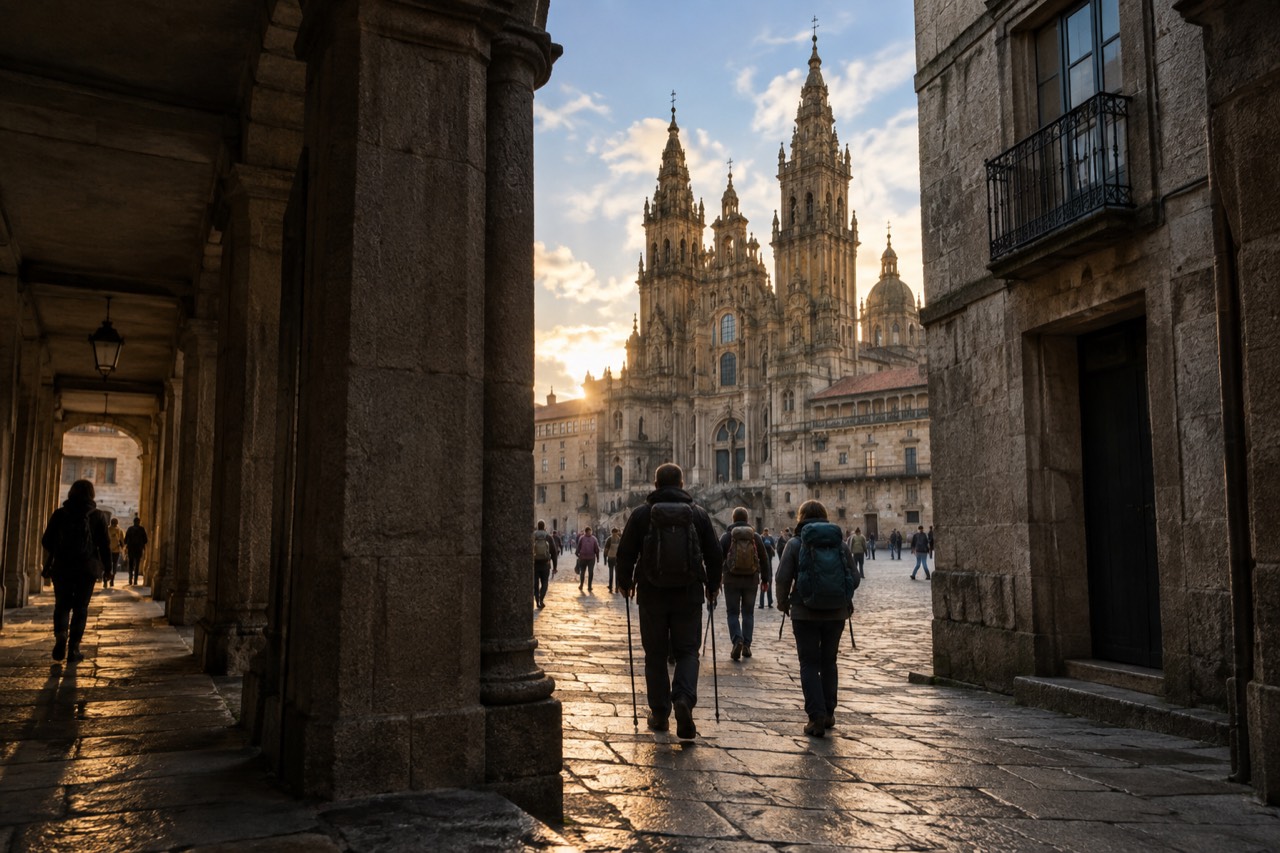
The Camino de Santiago officially ends at the Cathedral of Santiago de Compostela, and most walkers arrive via Monte do Gozo. Collect your Compostela at the Pilgrim's Office at Rua das Carretas 33 with two stamps per day on your credential. Pilgrim masses are held at 7:30am, 9:30am, noon and 7:30pm, though from 16 October 2026 three of the four move to the Church of San Agustin while the Cathedral's main chapel is remodelled.
The final approach into Santiago de Compostela is one of the strangest hours of the whole Camino. For days the route has been granite villages, eucalyptus shade and quiet tracks, and then suddenly there are industrial estates, roundabouts and traffic noise, followed by a city of arcades, pilgrims hugging in doorways and a cathedral facade rising over Praza do Obradoiro. The Oficina del Peregrino's own figures show how crowded that arrival moment has become: a record 530,987 Compostelas were issued in 2025, and every one of those pilgrims walked through this same transition. This guide, from the Santiago de Compostela Travel Guide editorial desk, covers what actually happens at the end, from the last kilometres into the city to the certificate queue, the mass schedule, and the practical business of eating, sleeping and stopping being a pilgrim for a while.
Where Does The Camino Actually End In Santiago de Compostela?
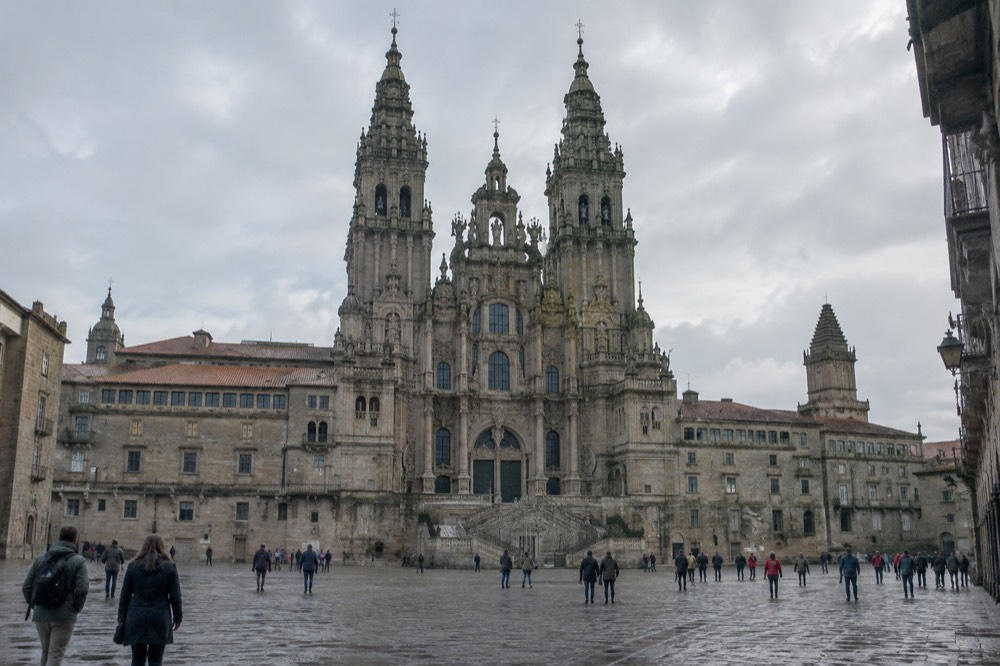
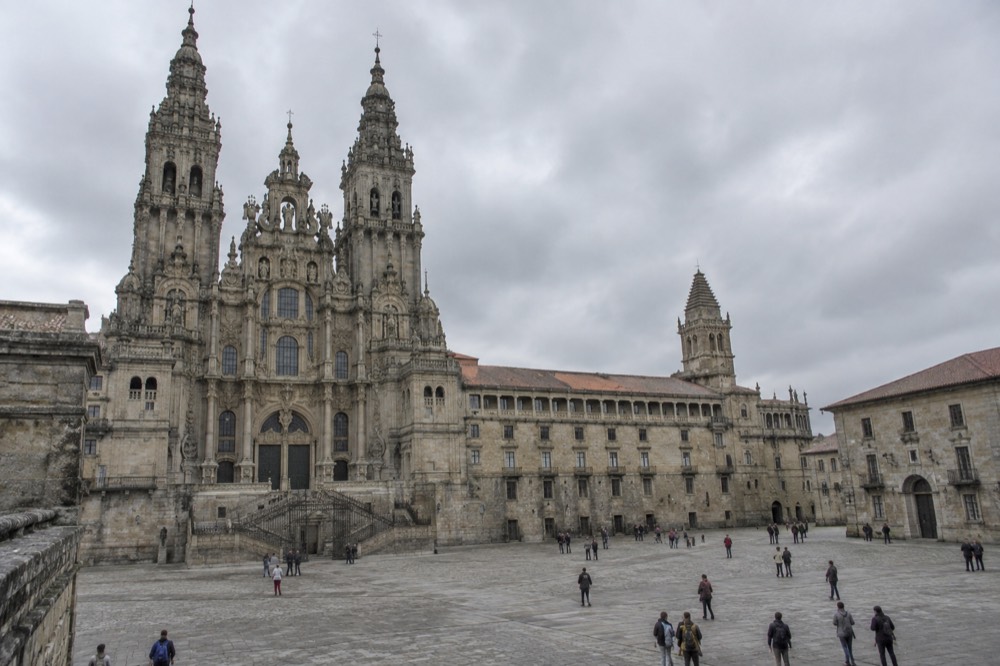
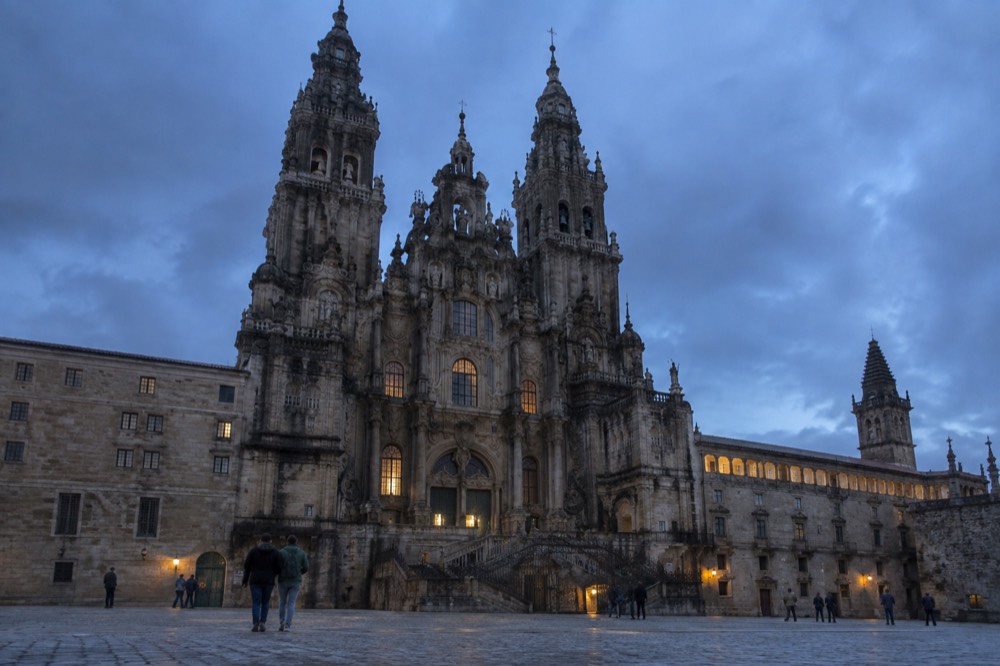
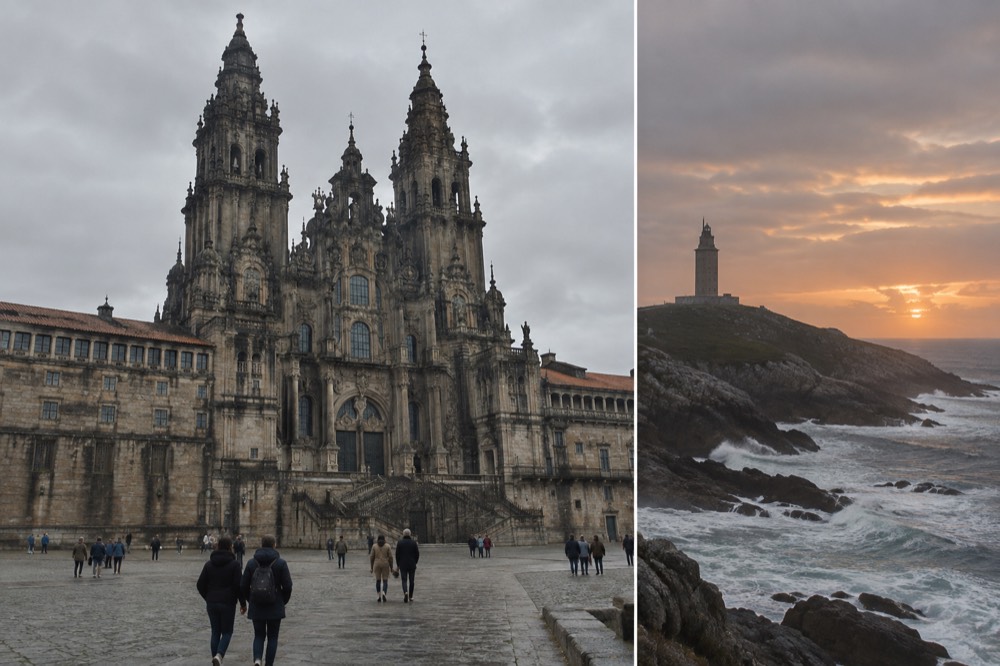
The Camino de Santiago officially ends at the Cathedral of Santiago de Compostela, where the tomb of St. James sits beneath the main altar, and the ritual arrival sequence is Monte do Gozo, then the outskirts, then Praza do Obradoiro. Most walkers reach the old town from the east and finish by walking up into the square in front of the Cathedral's baroque facade. There is no gate, no official finishing arch and no one checking you in: the endpoint is the Cathedral itself.
The arrival is deliberately understated. One moment the route runs through modern streets on the city's edge, and the next it drops into the UNESCO-inscribed old town, a zone listed since 1985 and separate from the 1993 inscription that covers the Camino routes themselves. Walkers coming in on the Camino Frances pass Monte do Gozo, the hill with the monument marking the point where pilgrims historically first caught sight of the city, before descending into the suburbs. The Camino Frances guide covers the route in full, and the overview of the Camino de Santiago puts all the recognised routes in context.
What surprises many first-time walkers is how quickly the emotion of arrival is followed by ordinary city logistics. The square in front of the Cathedral fills and empties continuously, pilgrims take their boots off for photos, and then the practical questions start: where the Pilgrim's Office is, whether the credential has enough stamps, and what time the mass is. The rest of this guide works through those in the order you will meet them.
The Last Stretch Before The City
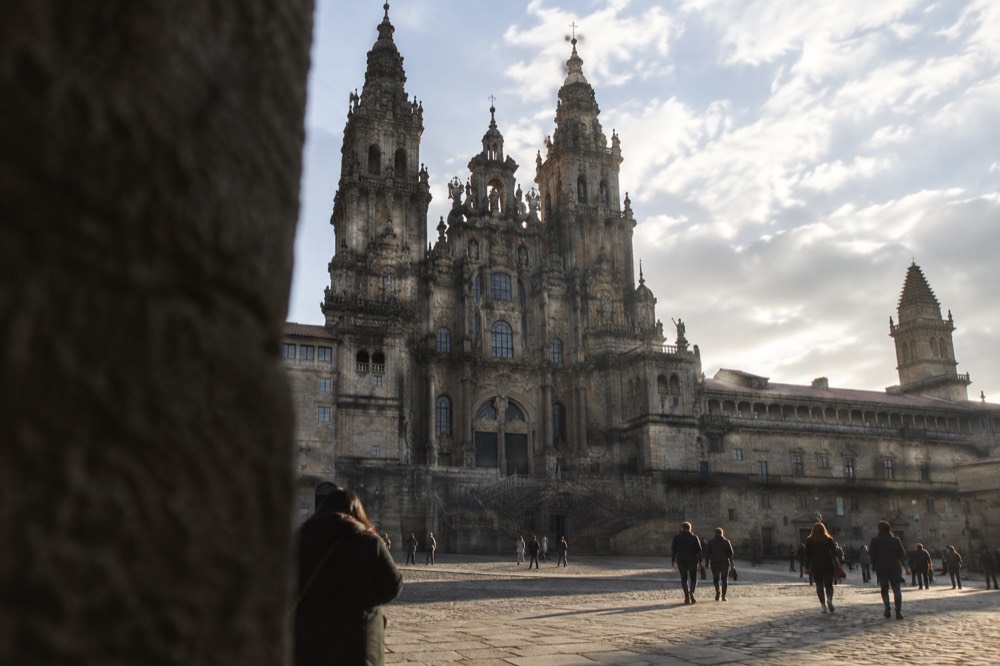
The final approach on the Camino Frances crosses Monte do Gozo, the hill with its monument and albergue complex on the city's eastern edge. From there the route enters the city through residential districts, passing everyday Galician life that looks nothing like the postcard, before the stones of the old town close in around you. This contrast is not a disappointment; it is how the Camino has always worked. Medieval pilgrims also passed through fields and hamlets before the city revealed itself.
The table below summarises what the end of each major route shares, based on the route structure described below:
| Route | Final Approach Into The City | Where It Ends |
|---|---|---|
| Camino Frances | Monte do Gozo, then eastern suburbs | Cathedral, Praza do Obradoiro |
| Camino Portugues | Southern entry through the Sar district | Cathedral, Praza do Obradoiro |
| Camino del Norte | Northern entry, joining near the old town | Cathedral, Praza do Obradoiro |
| Camino Primitivo | Joins the Frances route near Santiago | Cathedral, Praza do Obradoiro |
| Camino Ingles | Short eastern approach from the coast | Cathedral, Praza do Obradoiro |
Every recognised route converges on the same square. That convergence is the point: whichever way pilgrims started, they finish facing the same facade.
What Should You Do In Your First Two Hours After Arriving In Santiago de Compostela?
In your first two hours in Santiago de Compostela, the reliable order is: walk into Praza do Obradoiro, put your backpack somewhere secure, get to the Pilgrim's Office at Rua das Carretas 33 to collect the Compostela, and only then think about the Cathedral, food and sleep. Reversing that order is the classic mistake, because the certificate queue grows through the day and the office keeps seasonal hours that shift with the year.
The arrival moment in the square is worth slowing down for. Pilgrims traditionally embrace at the facade, photograph boots and poles against the stones, and look up at the Obradoiro facade for the first time without a horizon behind it. Then reality resumes. The single most useful thing to do early is the Compostela, and the single most common mistake is leaving it to late afternoon, when queues are at their longest.
Here is a realistic first-two-hours sequence that most arriving pilgrims follow:
| Step | What You Do | Why It Comes First |
|---|---|---|
| 1 | Arrive in Praza do Obradoiro and take the arrival moment | The square clears through the day; late light differs |
| 2 | Stow the backpack at accommodation or a left-luggage point | The Pilgrim's Office queue is no place for a 10kg pack |
| 3 | Walk to Rua das Carretas 33, the Pilgrim's Office | Compostela queue grows steadily from mid-morning |
| 4 | Present the credential and collect the Compostela | Certificate issued in person only, never by post |
| 5 | Return to the Cathedral and old town at leisure | With paperwork done, the rest of the day opens up |
The Cathedral deserves more than a tired glance, and a guided visit solves the problem of arriving knowing little about what you are looking at. The Cathedral Sightseeing Tour from the roster costs from $28 per person and is rated 4.6 from 542 reviews, covering the interior with a guide who can explain the tomb, the botafumeiro and the buildings around it. Check availability.
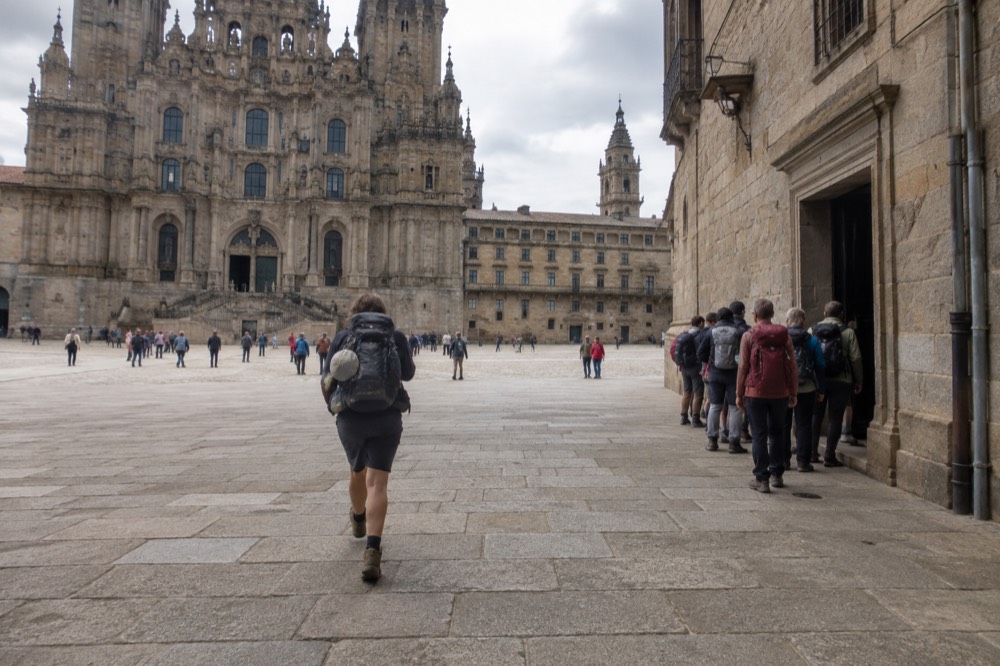
Once the certificate is done, the old town is compact enough to cover on foot, and a walking tour with an official guide is a good way to convert arrival-day energy into understanding. Two strong options from the roster: the Historic Town Walk with an Official Guide from $14 per person, rated 4.8 from 144 reviews, and the Private Historic Walk in a Small Group from $29 per person, rated 4.9 from 16 reviews. Both appear in the tour picks below with full details and live availability.
How Do You Collect The Compostela Certificate After Arriving?
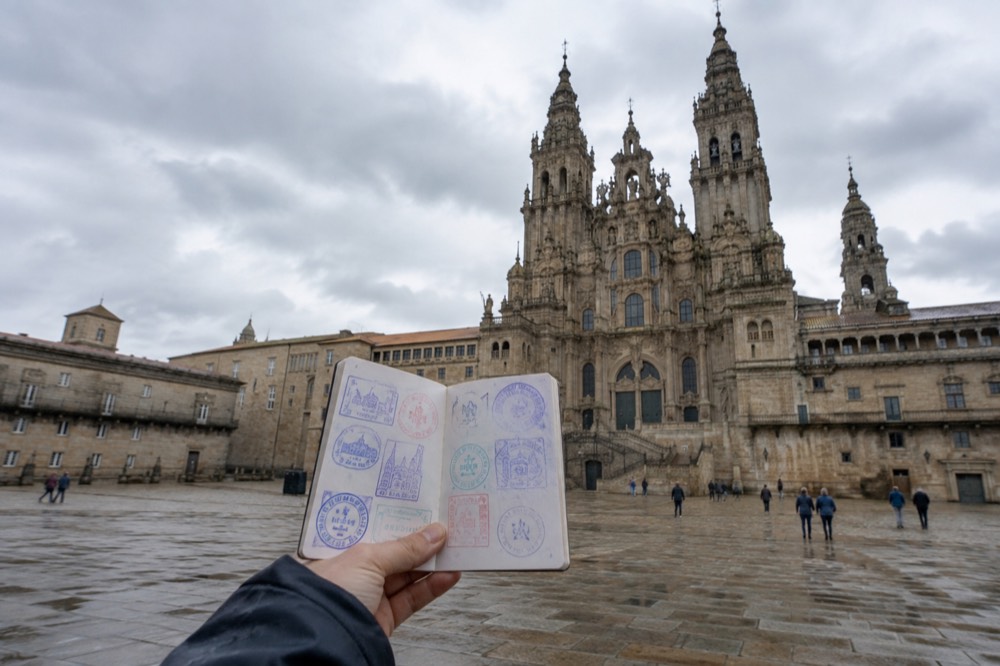
You collect the Compostela in person only, at the Pilgrim's Office at Rua das Carretas 33 in Santiago de Compostela, by presenting a pilgrim credential showing you walked at least the last 100km continuous on foot or by horseback, or the last 200km by bicycle, with at least two stamps per day from official stamping points. There is no postal option, no digital shortcut and no substitute document. The office closes on 25 December and 1 January, and hours otherwise vary by season.
The Oficina del Peregrino's FAQs set out the rules plainly, and the two-stamps-per-day requirement is the one that catches walkers out. A credential with one stamp per day for the final week does not qualify, however long the total distance. The stamps must come from official stamping points, which in practice means albergues, churches, bars and town halls along the route, and the route must be continuous from at least 100km out on foot. The pilgrim passport credential guide explains how to fill it correctly before you set out, and the Compostela certificate guide covers the full requirements.
The qualifying distances by mode, per the Pilgrim's Office:
| Mode | Minimum Qualifying Distance | Credential Requirement |
|---|---|---|
| On foot | Last 100km, continuous | Two stamps per day minimum |
| On horseback | Last 100km, continuous | Two stamps per day minimum |
| By bicycle | Last 200km, continuous | Two stamps per day minimum |
One point worth knowing before you join the queue: the certificate is written in Latin, and pilgrims whose names have no straightforward Latin form may find them rendered differently than expected. The office staff handle this constantly. The certificate is free in itself, though many pilgrims choose to donate; what you are really queuing for is the official verification of your credential, which cannot be done anywhere else or retroactively.
The Pilgrim's Office sits a short walk from the old town's edge, and the pilgrim office guide covers its location, seasonal hours and the queue patterns in detail. Arrive in Santiago mid-morning and go straight there. Arrive in the evening, and go first thing the next day before the crowds build, which also gives you a full afternoon for the Cathedral and the mass.
Where Do Pilgrim Masses Take Place After You Arrive?
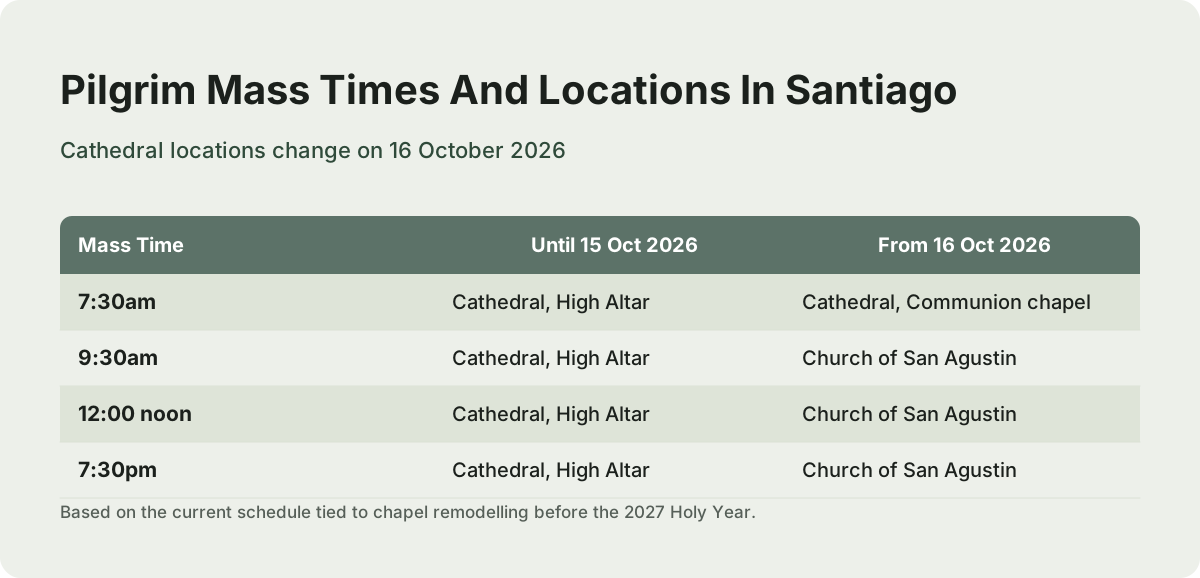
Pilgrim masses in Santiago de Compostela are currently held four times daily, at 7:30am, 9:30am, noon and 7:30pm, but from 16 October 2026 the 9:30am, noon and 7:30pm masses relocate from the Cathedral's High Altar to the nearby Church of San Agustin, while only the 7:30am mass stays in the Cathedral itself, in its Communion chapel. The relocation is tied to main chapel remodelling ahead of the 2027 Holy Year, and no end date has been published.
This is the single most time-sensitive fact on this page. Any guide telling you simply to attend the noon pilgrim mass at the Cathedral's High Altar is describing the arrangement that ends on 15 October 2026. Both arrangements, dated, in one table:
| Mass Time | Until 15 October 2026 | From 16 October 2026 |
|---|---|---|
| 7:30am | Cathedral, High Altar | Cathedral, Communion chapel |
| 9:30am | Cathedral, High Altar | Church of San Agustin |
| 12:00 noon | Cathedral, High Altar | Church of San Agustin |
| 7:30pm | Cathedral, High Altar | Church of San Agustin |
The pilgrim mass is the traditional closing ritual of the Camino. Pilgrims' names and starting points are read out where the practice is followed, and the congregation is a cross-section of everyone who arrived that day. The pilgrim mass guide covers what to expect, how the credential relates to it, and the etiquette for a service that is a working parish mass as well as a pilgrim event.
What About The Botafumeiro?
The Botafumeiro, the Cathedral's famous swinging censer, is currently out of action. Scaffolding for the restoration of the cimborrio, the dome over the crossing, covers its hanging mechanism, and the Cathedral confirmed this in writing on 5 September 2026 with no return date published. No page should promise you will see it swing, and its normal private-request arrangement is also suspended. The botafumeiro guide explains how it normally works: the Cathedral's own liturgy page lists the twelve fixed solemnities each year on which it traditionally swings, including the Feast of St. James on 25 July, Easter Sunday, Christmas and the Transfer of the Apostle on 30 December. That schedule describes how the mechanism is designed to operate, not what is currently running.
Where Do You Sleep On Your First Night In Santiago de Compostela?
Most arriving pilgrims sleep either in an albergue near the old town, the classic pilgrim option where the Camino essentially ends in a dormitory, or in a hotel in the centre, and the practical difference is timing: albergues fill from early afternoon as walkers arrive, while hotels hold rooms at any hour if you have a booking. The city spans every budget from municipal bunks to the Parador occupying the former pilgrim hospital on Praza do Obradoiro itself.
The choice shapes your arrival day more than you expect. Stay in an albergue and you are back in the rhythm you have had for weeks: bunks, lights-out, early start. Move straight to a hotel and the Camino ends abruptly with a door you can lock and a bathroom you do not queue for. Neither is wrong, and many pilgrims book one albergue night for the mass and certificate, then move to a hotel for the days after. The Camino accommodation and albergues guide covers the culture and etiquette of albergues across the whole route, and the where-to-stay guide for the city covers neighbourhoods and price bands.
A rough arrival-night decision table:
| Arrival Situation | What Most Pilgrims Do | The Trade-Off |
|---|---|---|
| Arrived by mid-afternoon, want the pilgrim atmosphere | Albergue in or near the old town | Bunks and early lights-out, one last night |
| Arrived late, credential already stamped | Central hotel or pension | Privacy, but the Camino rhythm ends here |
| Staying several days in the city | One albergue night, then a hotel | Best of both, needs two bookings |
| Walked on to Fisterra afterwards | Nothing in the city, sleep onward | Saves backtracking, adds a stage |
That last row matters. A significant share of pilgrims do not stop in Santiago de Compostela at all on arrival day, or stay only one night, because they continue walking the Camino extension to Fisterra and Muxia, the traditional "end of the world" finish. The Fisterra guide covers that extension, and the pack's question about whether the walk from Santiago to Fisterra is worth it goes into it directly.
What Does The Day After Arrival Look Like?
The day after arrival in Santiago de Compostela is usually the day pilgrims finally see the city properly: the Cathedral interior and museum, the rooftop tour, the Alameda park view across to the towers, the market and the tapas streets, and, for many, the first genuinely aimless afternoon in weeks. Legs are stiff, boots are off, and the most common pattern is one slow cathedral-focused morning followed by food and wandering.
The Cathedral deserves the morning. General entry to the interior is free, and the Cathedral's own ticketing offers the rooftop tour, the Cubiertas with the Torre de la Carraca, at EUR15 general and EUR12 reduced, bookable online with timed slots on the Cathedral's own ticket site, as the details below are confirmed. The tour takes about an hour, involves roughly 140 steps and reaches around 72 metres above the square. Reduced rates apply to accredited pilgrims among others, so bring the credential even after it has been stamped for the Compostela. The cathedral tickets and opening hours guide and the rooftops tour guide cover both in detail.
A workable day-after plan, keeping in mind that museum hours beyond the Cathedral's own should be checked on each venue's own site rather than assumed:
| Time | What To Do | Notes |
|---|---|---|
| Early morning | Pilgrim mass, 7:30am in the Cathedral | The one mass still in the Cathedral after 16 October 2026 |
| Mid-morning | Cathedral interior and tomb embrace | Free general entry, moving queue |
| Late morning | Rooftop tour or museum, timed ticket | EUR15 general, EUR12 reduced, book ahead |
| Lunch | Mercado de Abastos area or Rua do Franco | Market hours should be checked on its own site |
| Afternoon | Alameda park viewpoint and old town wandering | The classic postcard view of the towers |
| Evening | Tapas, and possibly a night tour of the old town | The Secrets of Compostela night tour runs from $17 |
The day after is also when most pilgrims start thinking about logistics home or onward: trains to Madrid run roughly 3-4 hours on direct high-speed services, Santiago to Vigo is about an hour, and there is no direct rail line to Porto, so travellers change via Vigo. The Porto to Santiago guide covers the Portuguese direction for anyone planning the route in reverse.
What If You Have Extra Days After The Camino Ends?
Pilgrims with extra days after arriving in Santiago de Compostela most commonly split them between the city itself, the Fisterra and Muxia extension on the coast, and a day trip into Galicia, with the coast of the Costa da Morte and the Rias Baixas wine country being the two most popular directions. The city rewards two to three unhurried days; the coast needs at least one full day of its own.
The strongest full-day option from the roster for a coast finish is the Finisterre, Muxia and Costa da Morte excursion with seven stops, from $60 per person and rated 4.8 from 1,714 reviews, which covers the lighthouse, the coast and the villages in one loop out of the city. For something in the opposite direction, the tour to Catedrais beach, Lugo and Asturias runs a full day from $68 per person, rated 4.9 from 181 reviews, and pairs a spectacular rock-arch beach with a Roman-walled city. Full details and live availability for both are in the tour picks band below.
The practical alternative is simply to stop walking and rest. The rest day after the Camino itinerary is built for exactly this, and the question of how many days to spend in the city is answered in detail in the dedicated page on the subject. A quiet day in the Alameda park, a slow lunch of pulpo a la gallega and padron peppers, and an evening glass of albarino from the Rias Baixas is a finish many pilgrims prefer to any further kilometres.
Arriving During A Holy Year Or The Build-Up To One
2026 is not a Holy Year. The next Xacobeo is 2027: the Holy Door opens on 31 December 2026 and the Holy Year runs through 31 December 2027, because St. James's feast day, 25 July, falls on a Sunday that year. Arrivals in the build-up will meet the main chapel remodelling that is already displacing masses, and the Holy Year 2027 guide covers what changes. The annual 25 July festival remains the busiest single arrival day of any normal year.
Common Questions About Arriving In Santiago de Compostela On The Camino
Where does the Camino de Santiago officially end?
The Camino ends at the Cathedral of Santiago de Compostela, at the tomb of St. James beneath the main altar. Every recognised route converges on the same endpoint, the Cathedral on Praza do Obradoiro. There is no separate finishing gate or checkpoint; the Cathedral is the finish.
How do I get the Compostela certificate when I arrive?
Present your pilgrim credential in person at the Pilgrim's Office, Rua das Carretas 33. The Oficina del Peregrino requires the last 100km walked or ridden on horseback, or the last 200km cycled, continuous, with at least two stamps per day from official stamping points. The certificate is issued in person only.
Can I attend a pilgrim mass on arrival day?
Yes. Masses are held at 7:30am, 9:30am, noon and 7:30pm. Until 15 October 2026 they are at the Cathedral's High Altar; from 16 October 2026 the 9:30am, noon and 7:30pm masses move to the Church of San Agustin, and only the 7:30am mass stays in the Cathedral, in its Communion chapel.
Will I see the Botafumeiro swing when I arrive?
Not currently. The Botafumeiro is out of action because scaffolding for dome restoration covers its hanging mechanism, confirmed in writing by the Cathedral on 5 September 2026, with no return date published. It normally swings on twelve fixed solemnities a year, but no visitor should plan around seeing it until the Cathedral announces otherwise.
Should I stay in Santiago or walk on to Fisterra?
Many pilgrims do both: one night in the city for the certificate and the mass, then the extension walk or a bus tour to Fisterra and Muxia. The extension adds stages and needs its own days; the coastal day trips from the city cover the same coast for those whose legs have finished.
Is arriving in Santiago de Compostela different in a Holy Year?
Yes, and the next one is 2027, not 2026. The Holy Door opens on 31 December 2026 and the Holy Year runs through 31 December 2027. Arrivals will be busier, and Cathedral works now under way for the Holy Year are already moving masses, so check the current arrangement before travelling.
The arrival is the whole point, and it passes faster than the weeks behind it. Walk up into Praza do Obradoiro with the credential in a pocket, take the square in before the logistics start, and treat the certificate, the mass and the first plate of pulpo as three separate rewards rather than one rushed checklist. The editors of this site have laid out the routes, the paperwork and the days after in the guides linked above, so the last hour of your Camino can be spent looking at the facade instead of scrolling for answers.