Finisterre Day Trip From Santiago de Compostela: The End Of The World
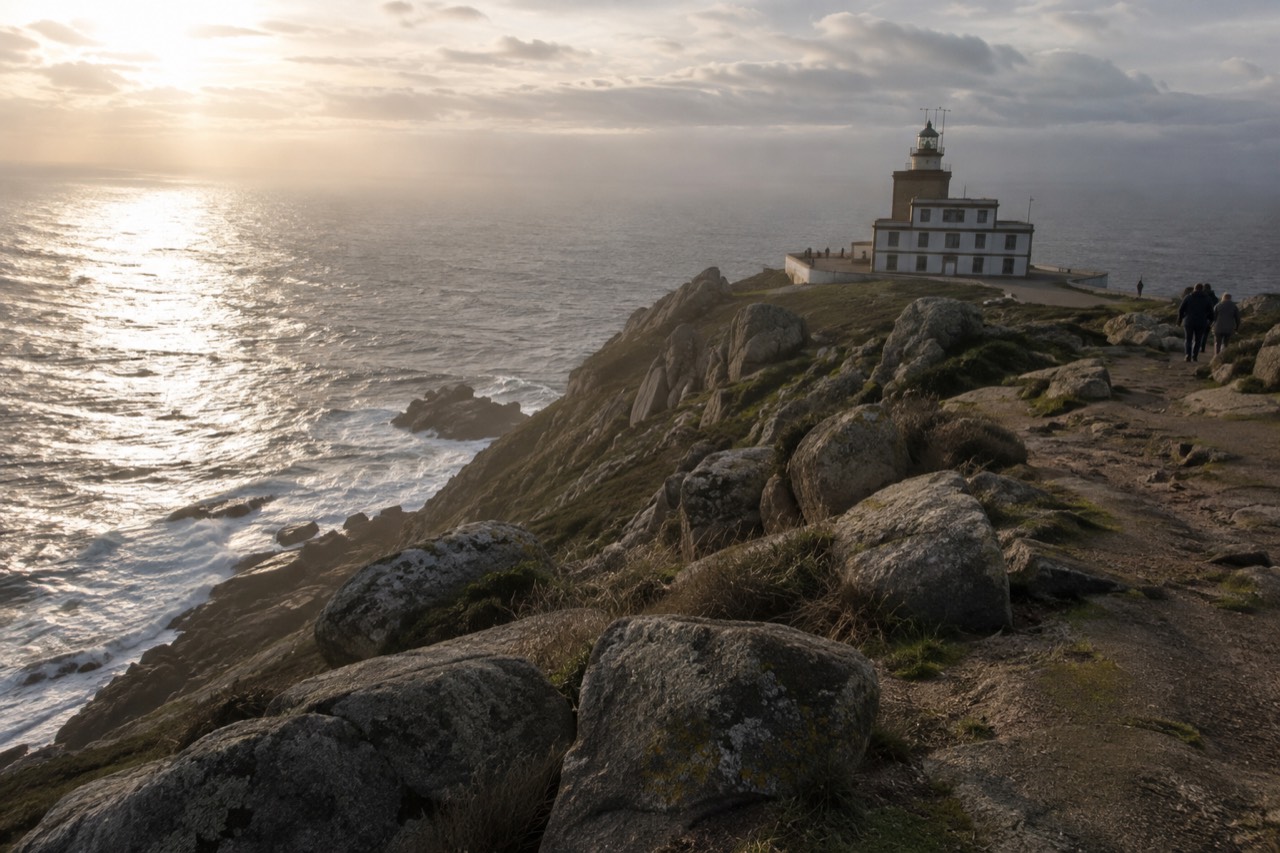
Fisterra, the Spanish name for the cape Galicians call Fisterra, is the point where pilgrims arriving in Santiago de Compostela traditionally keep walking west until the land runs out.
Short answer
Fisterra, also spelled Finisterre, is the cape and small fishing town on Galicia's Costa da Morte, reached from Santiago de Compostela on full-day and express tours that typically pair it with Muxia and coastal stops along the way.
The road west out of Santiago de Compostela ends at a cape that the Romans treated as the final edge of the known world, and pilgrims have been following it ever since. Fisterra is the Galician name, Finisterre the Spanish one, and both point to the same place: a lighthouse above the Atlantic on the Costa da Morte, the Coast of Death, where arriving pilgrims traditionally burn a boot or watch the sun sink into open ocean. For visitors based in the city, it is also the most popular full-day excursion on the books, with tour operators running there in numbers that no other Galician destination outside the Rias Baixas matches. This guide compares the options, explains the walking route, and covers the practical questions that come up before booking.
Where Is Fisterra And Why Do Pilgrims Keep Walking To It?
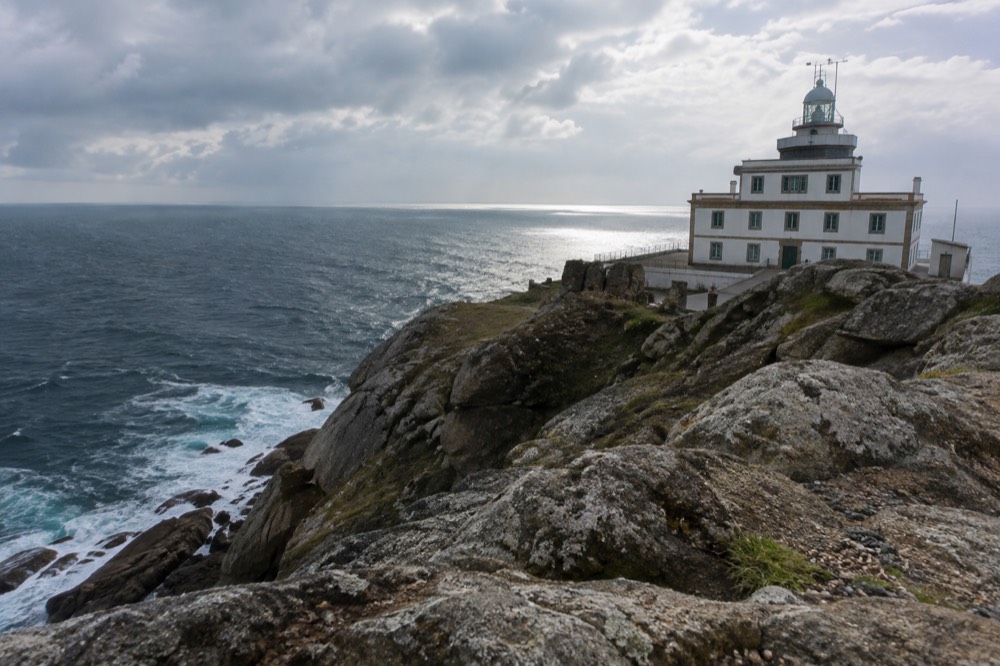
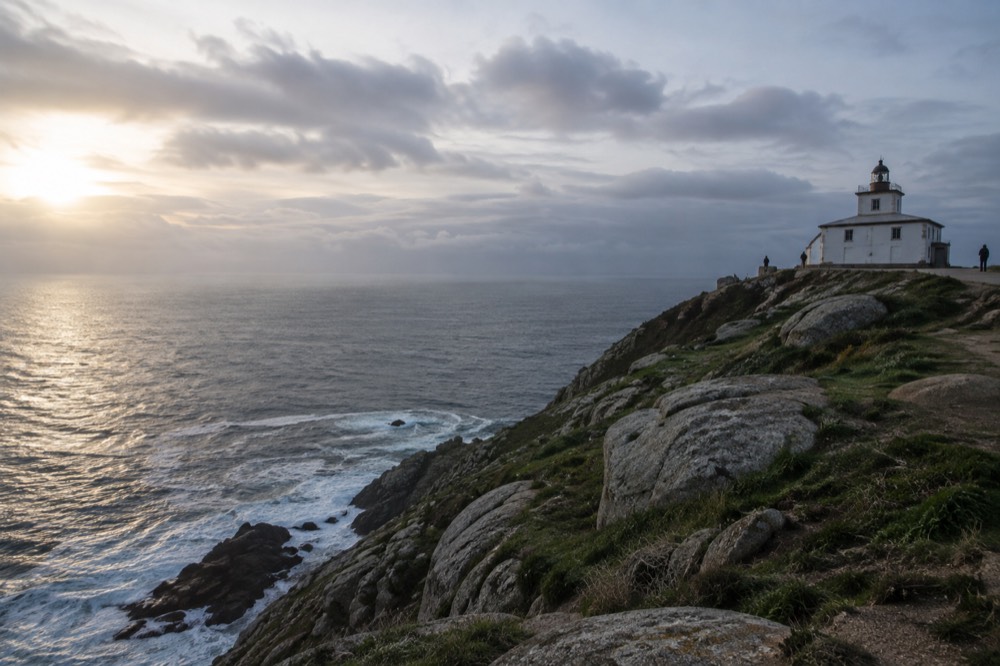
Fisterra, or Finisterre in Spanish, sits on the Costa da Morte, the Atlantic coast west of Santiago de Compostela in Galicia, and it is the traditional finishing point for pilgrims who keep walking past the Cathedral rather than stopping at the Apostle's tomb. Full-day tours run there from the city throughout the year, and the cape's lighthouse above the ocean is the image most visitors take home. The name means, in effect, the end of the earth.
The habit of continuing to the sea after reaching Santiago de Compostela is old enough that it has its own route, the Camino Finisterre, covered in detail on the Camino Finisterre walking guide. Pilgrims who finish at the Cathedral and feel the pull of one more stage walk west through Galician hills and eucalyptus until the ground gives way to granite and Atlantic water. The Camino de Santiago's network is UNESCO-listed in its own right, inscribed in 1993 as the Routes of Santiago de Compostela, separate from the Old Town's 1985 inscription, which gives the extension a pedigree most day-trip destinations cannot claim.
The cape itself carries a double name, and both are correct. Fisterra is the Galician form and the one used on local signage; Finisterre is the Spanish form that most international tour listings use. There is no third hybrid spelling, and switching between the two mid-article, as this guide does deliberately, simply reflects how the two names coexist on the ground. Tour titles themselves split between the two, which is worth knowing when comparing listings, because "Finisterre + Muxia" and "Fisterra, Muxia" describe the same geography.
Which Finisterre, Muxia And Costa da Morte Tours Run From Santiago de Compostela?
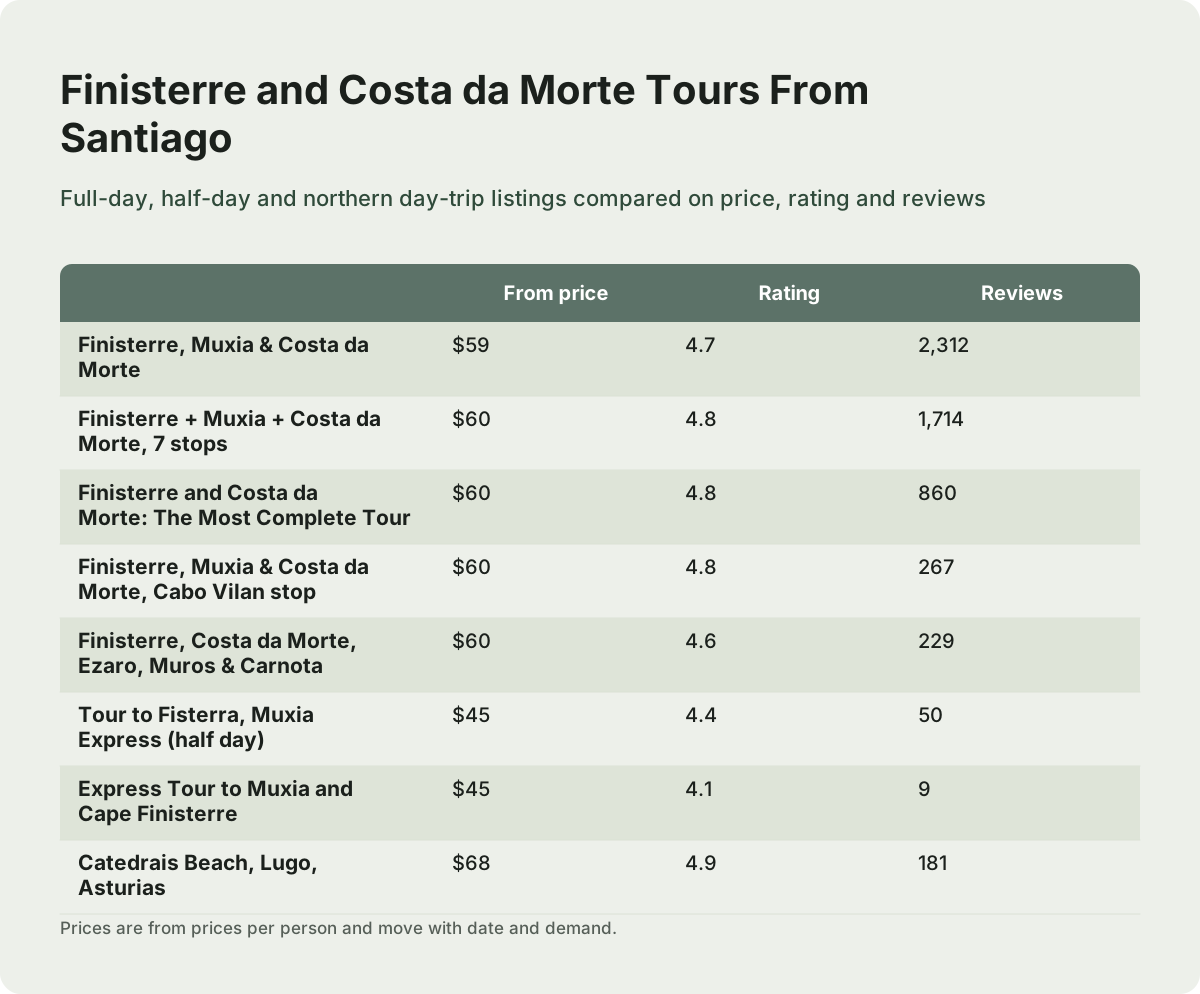
The city's tour roster lists at least five full-day Finisterre, Muxia and Costa da Morte excursions, with published prices from $59 to $60 per person and ratings from 4.6 to 4.8 across review counts ranging from 229 to 2,312. All of them leave from Santiago de Compostela and return the same day, and the most-reviewed option carries 2,312 reviews at a 4.7 rating. That concentration of inventory means the choice is less about whether to go and more about which stop list suits.
The table below compares the full-day options using the figures on each operator's live listing:
| Tour | Duration | From price | Rating | Reviews |
|---|---|---|---|---|
| Finisterre, Muxia & Costa da Morte (GuruWalk-independent listing) | Full day | $59 | 4.7 | 2,312 |
| Excursion to Finisterre + Muxia + Costa da Morte, 7 stops | Full day | $60 | 4.8 | 1,714 |
| Finisterre and Costa da Morte: The Most Complete Tour | Full day | $60 | 4.8 | 860 |
| Finisterre, Muxia & Costa da Morte with Cabo Vilan stop | Full day | $60 | 4.8 | 267 |
| Finisterre, Costa da Morte, Ezaro, Muros & Carnota | Full day | $60 | 4.6 | 229 |
Two patterns stand out. The first is price compression: four of the five sit at $60 or below, so the decision rarely comes down to cost. The second is that review volume varies enormously, from 229 to 2,312, and the highest review counts belong to the itineraries that include both Fisterra and Muxia in the title. Muxia, the fishing village north of the cape with its own sanctuary and sea-worn stones, appears to be the stop travellers most want alongside the lighthouse. The Muxia day-trip guide covers that stop on its own.
The three picks above are the site's recommended band for readers planning days out from the city, and the Catedrais Beach option in particular pairs well with a Fisterra day if you have two days available, which the section below returns to. Prices and ratings shown are the figures on the operators' live listings and can move with season, so the number to trust at booking time is the one on the listing you actually click.
Can You See Fisterra And Muxia In Half A Day From Santiago de Compostela?
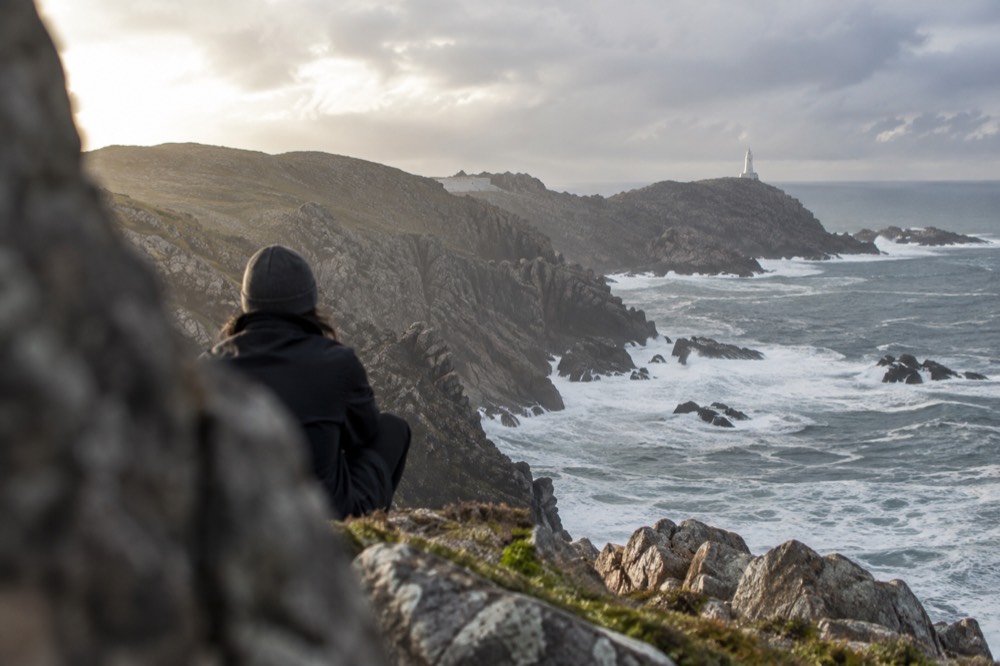
Yes, express and half-day tours to Fisterra and Muxia run from Santiago de Compostela, with two listings in the roster: a half-day express option from $45 per person rated 4.4 from 50 reviews, and a second express option from $45 rated 4.1 from 9 reviews. Both compress the cape and the village into a shorter outing, which suits travellers with an afternoon commitment in the city but trades away most of the Costa da Morte's intermediate stops.
The trade-off is real and worth stating plainly. The express listings name exactly two destinations, Fisterra and Muxia, while the full-day options add coastal stops such as Ezaro, Muros and Carnota. What you gain is time back in Santiago de Compostela for the Cathedral, the museum, or a tapas evening on Rua do Franco; what you lose is the stretch of coast that gives the Costa da Morte its name. The review bases are also much smaller, 50 and 9 against the thousands attached to the full-day tours, so there is less crowd testimony to lean on.
| Express option | Duration | From price | Rating | Reviews | Stops named |
|---|---|---|---|---|---|
| Tour to Fisterra, Muxia Express | Half day / express | $45 | 4.4 | 50 | Fisterra, Muxia |
| Express Tour to Muxia and Cape Finisterre | Express | $45 | 4.1 | 9 | Muxia, Cape Finisterre |
For readers weighing a half-day booking against the full-day band above, the honest summary is this: the express format works if the lighthouse itself is the single goal, and the full-day format works if the coast between the city and the cape is part of the point. The same choice from a pilgrim's angle is framed in the site's answer on whether the walk from Santiago to Finisterre is worth it.
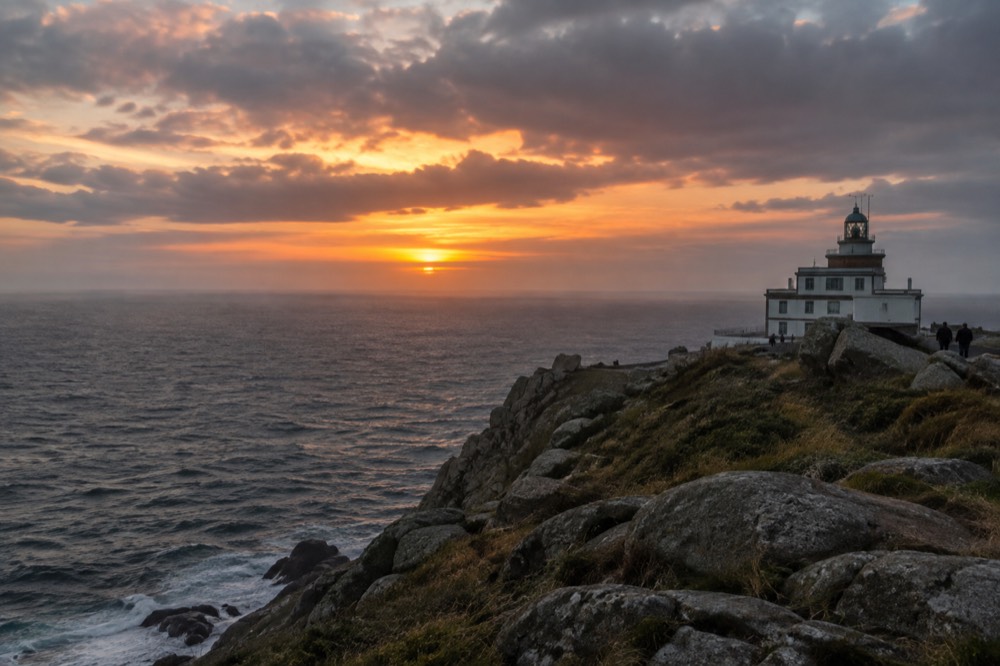
What Do The Stops On A Costa da Morte Tour Actually Include?
The stops named across the Costa da Morte tour listings are Fisterra and its lighthouse, Muxia, Ezaro, Muros, Carnota and Cabo Vilan, with the seven-stop itinerary advertising the most stops in a single day at $60 per person and a 4.8 rating from 1,714 reviews. Every listing names its own stop set in its title, so the composition of the day can be compared line by line before booking rather than discovered on the bus.
That title-level transparency is unusual in the day-tour world and genuinely useful here. The table below lays out the named stops for each full-day listing so the overlap is visible at a glance:
| Tour | Fisterra | Muxia | Cabo Vilan | Ezaro | Muros | Carnota |
|---|---|---|---|---|---|---|
| Finisterre + Muxia + Costa da Morte, 7 stops | Yes | Yes | In stop count | Not named | Not named | Not named |
| Finisterre and Costa da Morte, Most Complete | Yes | Not named | Not named | Not named | Not named | Not named |
| Finisterre, Muxia & Costa da Morte, Cabo Vilan stop | Yes | Yes | Yes | Not named | Not named | Not named |
| Finisterre, Costa da Morte, Ezaro, Muros & Carnota | Yes | Not named | Not named | Yes | Yes | Yes |
Cabo Vilan is the lighthouse cape north of Muxia; Ezaro sits where a river reaches the Atlantic below mountains; Muros and Carnota are a harbour town and the home of one of Galicia's long white-sand beaches. None of that requires a guidebook to appreciate, but knowing which listing includes which name is the difference between a day built around two headlands and a day that strings together a whole coastline. The Costa da Morte guide expands on the coast as a destination in its own right for travellers with a rental car.
The box above routes to the most-reviewed Finisterre, Muxia and Costa da Morte listing in the roster, the one carrying 2,312 reviews at 4.7, and bookings through it can generally be cancelled or rearranged under the operator's own terms, which the live listing states at checkout. Readers comparing stop lists should note that the listing price shown is a from-price and moves with date and demand. Other pages covering the same trip are gathered on Santiago de Compostela Travel Guide.
Should You Pair Fisterra With Catedrais Beach And Lugo On A Second Day Trip?
Pairing works well: the Catedrais Beach, Lugo and Asturias tour runs a full day from Santiago de Compostela at from $68 per person, rated 4.9 from 181 reviews, and it is one of only two listings in the roster to pair a northern beach with a walled Roman town in a single outing. A companion Lugo and Cathedrals Beach excursion runs at from $75 rated 4.6 from 189 reviews, so the combination has real competition.
Catedrais Beach, the cathedral-like rock arches east of the city, and Lugo, the town with a complete Roman wall, sit on the northern side of Galicia, the opposite direction from Fisterra. That geography is what makes the pairing work: day one west to the Atlantic end of the world, day two north to arches and archaeology, with Santiago de Compostela as the base in between. Two days is the realistic minimum for both, and the answer on how many days to spend in Santiago de Compostela addresses the trade-off directly.
| Northern full-day tour | From price | Rating | Reviews | Named stops |
|---|---|---|---|---|
| Catedrais Beach, Lugo, Asturias | $68 | 4.9 | 181 | Catedrais Beach, Lugo, Asturias |
| Lugo & Cathedrals Beach Guided Excursion | $75 | 4.6 | 189 | Lugo, Catedrais Beach |
The two listings are close enough on paper that the rating gap, 4.9 against 4.6, and the Asturias leg, which only the first includes, are the deciding factors. Check availability for the higher-rated option, and read the Lugo day-trip guide if the Roman wall rather than the beach is the draw.
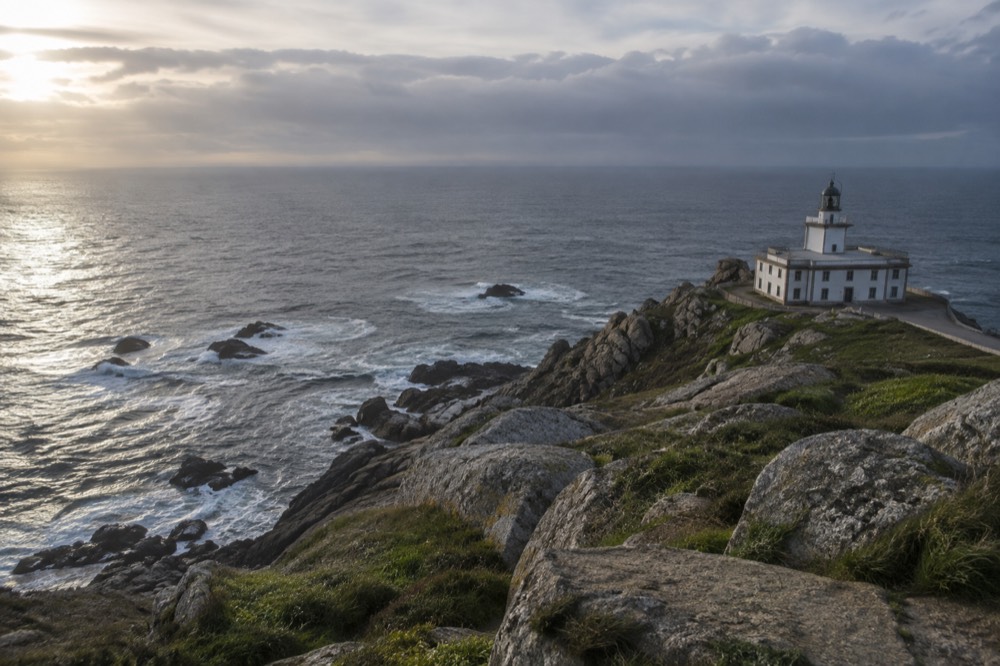
What Does Walking The Camino Finisterre From Santiago de Compostela Involve?
Walking instead of taking a bus means joining the Camino Finisterre, the pilgrim route that continues west from Santiago de Compostela to the cape at Fisterra, with a branch to Muxia, and it is the only Camino route that starts at the Cathedral rather than ending there. The route has its own dedicated guide on this site, and the question of whether the extension is worth the extra days has its own dedicated answer. No stage distances are officially published, so none are invented here.
The honest framing for a day-trip reader is that walking and busing are different products. The bus tours deliver the lighthouse, the coast and Muxia in one day; the walk delivers the hills, the villages and the arrival on foot, over multiple days, with the credencial stamping culture that the Camino network runs on. Pilgrims who earn the Compostela certificate in Santiago de Compostela arrive through an office at Rua das Carretas 33, where the record 2025 figure of 530,987 Compostelas was issued, and a meaningful share of them keep going west afterwards on this very extension.
Pilgrim masses also move from 16 October 2026: the 9:30am, noon and 7:30pm masses relocate from the Cathedral's High Altar to the nearby Church of San Agustin, with only the 7:30am mass staying in the Cathedral's own Communion chapel. Walkers planning a Cathedral finish before the Fisterra stages should plan around both the pre- and post-October arrangements. For the questions most asked about the walk itself, the site's answer on whether the Santiago to Finisterre walk is worth it carries the detail, and the best month to walk the Camino answer overlaps with the seasonal question below.
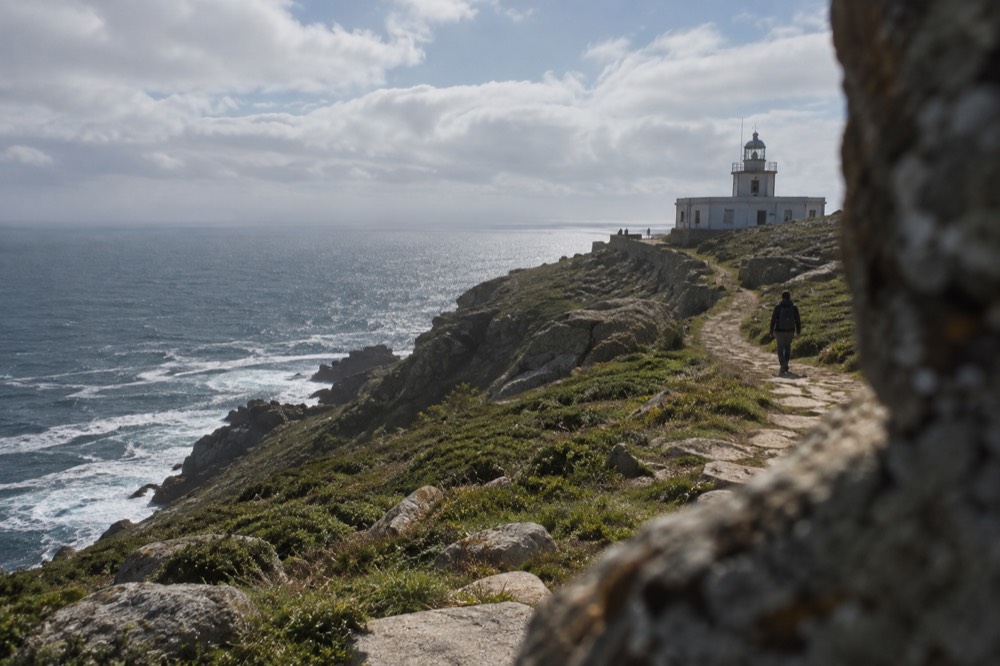
When Is The Best Time Of Year For A Fisterra Day Trip?
AEMET's climate data for Santiago de Compostela, from station 1475X at Labacolla, shows a temperate oceanic pattern that is wet year-round, wetter from October to March, and driest in July and August, with annual precipitation on the order of 1,690 to 1,890mm depending on the station year measured. For a coastal day trip that lives or dies on Atlantic visibility, that makes the dry window of July and August the statistically safest months, at the cost of peak crowds.
No month-by-month normals table is officially published, so this section deliberately stays in ranges rather than monthly figures. The planning table below reflects only what the AEMET data supports:
| Season | What AEMET's data shows | What it means for a Fisterra day |
|---|---|---|
| October to March | The wetter half of the year in a climate that is wet year-round | The coast can be dramatic in cloud and rain, and visibility at the lighthouse is less reliable; pack for weather, not sunshine |
| April to June | Transition months between the wet and dry halves | A reasonable compromise, with fewer visitors than midsummer on the same roads |
| July and August | The driest period AEMET's station data shows | The best odds for clear Atlantic views and the sunset the cape is known for, balanced against peak tour volume |
| September | Late dry season, moving back toward the wetter half | Widely used by Camino pilgrims, so tour demand from arriving walkers stays high |
Two practical notes belong here regardless of season. Fisterra's famous view is a sunset over open ocean, something the Galician coast offers from few points, and an overcast evening flattens it completely, so a dry-forecast day is worth more than a cheap day. And the tours listed above run year-round, with prices on the live listings fluctuating by date, so the from-prices in this guide are floors rather than quotes. The site's best time to visit Santiago de Compostela guide handles the full seasonal picture for the city end of the trip.
Which Other Day Trips From Santiago de Compostela Are Worth Booking?
Beyond the coast, the roster's strongest full-day alternatives from Santiago de Compostela are the Rias Baixas boat-and-winery tours, from $53 to $54 per person with ratings of 4.7 and 4.8 from 482 and 322 reviews, and the Ribeira Sacra river cruise to Ourense at from $68 rated 4.6 from 166 reviews. The Cies Islands visit rounds out the list at from $101 as the roster's most expensive day trip, with no rating published on its listing.
The Rias Baixas, Galicia's southern fjord-like inlets, are the wine-and-shellfish counterweight to the Costa da Morte's granite and surf, and the pairing of a mussel-boat trip with an Albarino winery visit is the region's other signature day out. The Rias Baixas and Cambados guide covers the wine country in depth. The Ribeira Sacra, where a river cruise runs through the Sil canyons to Ourense, is the inland option and suits a second or third day, with the Ourense hot springs guide a natural companion.
| Alternative full-day tour | From price | Rating | Reviews | Focus |
|---|---|---|---|---|
| Rias Baixas with Boat Trip and Winery | $53 | 4.7 | 482 | Boat trip, winery |
| Excursion to Rias Baixas with Winery, optional mussel boat | $54 | 4.8 | 322 | Winery, optional mussel boat |
| Arousa Island, Combarro and Mussel Boat | $45 | 4.7 | 30 | Arousa Island, Combarro |
| Ribeira Sacra Cruise, Monasteries and Ourense | $68 | 4.6 | 166 | Sil cruise, Ourense |
| Visit to the Cies Islands | $101 | No rating published | n/a | Cies Islands |
The same three-tour band closes the guide because it is the site's standing recommendation for multi-day visitors: one coast day to Fisterra and Muxia, one northern day to Catedrais and Lugo, one inland or inlet day among the Rias Baixas and Ribeira Sacra options. City-based alternatives for the first or last day are covered in the A Coruna and Vigo guides, and the Cies Islands guide expands the archipelago option. For the single-question version of this whole decision, the site's best day trip from Santiago de Compostela answer gives a one-paragraph verdict.
Common Questions About Fisterra Day Trips
Is Fisterra the same place as Finisterre?
Yes. Fisterra is the Galician name and Finisterre the Spanish name for the same cape and town on the Costa da Morte west of Santiago de Compostela. Both are correct, local signage uses the Galician form, and international tour listings commonly use the Spanish one.
Can you visit Fisterra from Santiago de Compostela without a car?
Yes. Multiple full-day and express tours run from the city, with the full-day listings starting at from $59 to $60 per person and the express options at from $45, per the operators' live listings. Booking in advance is advisable in the July and August peak.
Do pilgrims finish the Camino at Fisterra?
Some do. The Camino de Santiago traditionally ends at the Cathedral in Santiago de Compostela, where the Compostela certificate is issued, but a share of arriving pilgrims continue on the Camino Finisterre extension to the cape, sometimes with the Muxia branch. The Oficina del Peregrino issued a record 530,987 Compostelas in 2025.
What is the best month for a Fisterra day trip?
July and August are the driest months in AEMET's station data for Santiago de Compostela, which matters for Atlantic visibility and the cape's famous sunset, though they also bring peak crowds. The site's best month to walk the Camino answer covers the same question for walkers.
Is Fisterra worth visiting without walking the Camino?
Yes. The full-day tours that pair Fisterra with Muxia and the Costa da Morte stops carry the roster's largest review bases, including 2,312 reviews at 4.7 for the most-reviewed listing, and the coast stands on its own for non-pilgrim visitors.
How long do tours to Fisterra last?
The full-day Finisterre, Muxia and Costa da Morte tours run a full day, while the express options run a half day or express format, per the tour listings. Exact departure and return times are stated on each live listing at the time of booking.
The cape is a two-name place at the end of a two-thousand-year story, and from Santiago de Compostela it is the day trip that most reliably delivers something the city itself cannot: open ocean, a horizon with no land on it, and the feeling of standing where the ancient world believed the world stopped.