A Coruna Day Trip From Santiago de Compostela
A Coruna is the big Atlantic city on Galicia's north coast, a short direct train hop from Santiago de Compostela, and the one day trip here that gives you a second city instead of a village.
Short answer
A Coruna is the easiest big-city day trip from Santiago de Compostela: direct regional and high-speed trains make the run a short hop with no change, the oceanfront promenade, old town and Tower of Hercules are walkable from the centre, and one unhurried day covers the landmarks, the beaches and the tapas bars.
A Coruna sits on the Atlantic coast north of Santiago de Compostela, a short direct train hop away, and it is the one day trip from the pilgrim city that delivers a second full-sized city rather than a fishing village or a beach. Santiago de Compostela is a small, dense, stone place built around one cathedral; A Coruna is wide, salt-washed and metropolitan, wrapped around a bay, with a working port, ocean beaches inside the city and a promenade that runs for kilometres along the open Atlantic. The contrast is the whole point of the trip. Pilgrims who have spent a week walking rural tracks tend to arrive in Santiago de Compostela wanting two things afterwards: seafood and the sea. A Coruna supplies both in a single afternoon.
Why Is A Coruna The Easiest Big-City Day Trip From Santiago de Compostela?
A Coruna is the largest city on Galicia's Atlantic coast and the simplest big day trip from Santiago de Compostela: direct trains connect the two with no change of line, the station area sits within reach of the centre on foot, and the city's main sights, the promenade, the Tower of Hercules, the old town and the beaches, line up along a compact waterfront that one unhurried day covers. It is the only destination on this site's day-trip list that feels like visiting a second city.
The practical case is simple. The rail corridor between the two cities is the busiest short link on this build's verified train list: Santiago de Compostela to A Coruna is a direct short hop, Santiago de Compostela to Vigo is roughly an hour, and Santiago de Compostela to Madrid is a roughly 3-4 hour high-speed run. For a day trip, the shorter and simpler the link, the better, and nothing on the list is shorter.
There is a cultural case too. Galicia's two great cities face different ways: Santiago de Compostela looks inland, toward its pilgrimage routes and its mountainous hinterland, while A Coruna faces the open ocean. That split shapes everything from the food to the light. A day tripper gets both versions of Galicia in a single visit, and the Is A Coruna worth visiting? answer page on this site runs through the verdict in detail for anyone still deciding.
This Santiago de Compostela Travel Guide keeps the two lanes separate on purpose. The day-trip pages that follow, Finisterre, the Costa da Morte, the Rias Baixas, Lugo, Vigo, are small-town and coast days. A Coruna is the city day.
How Do You Get From Santiago de Compostela To A Coruna?
Direct regional and high-speed trains link Santiago de Compostela and A Coruna, and the connection is a short hop on the verified route list, with no change of train; intercity coaches run the same corridor as an alternative, and driving follows it. This site publishes no fare or timetable figure for the run because none is verified, so check the operator's own booking page for the exact departure and price on the day.
That honesty matters more here than on most pages. Train fares in Spain move with demand and booking window, and a number copied from a forum thread is usually stale by the time a reader acts on it. The verified facts are structural: the line exists, it is direct, and it is the shortest of the rail connections this site's research confirmed. The rest belongs to the timetable.
A few planning notes for the rail day. Book the return leg when you book the outbound, because the last evening services fill on summer weekends when Galicians themselves travel. Sit on the coast side if the seating allows a choice. And build the day around one long block in the city rather than a half-day sprint; the value of A Coruna is unhurried time on the water, not a checklist.
For travellers who would rather not self-drive or self-book a rail day at all, the guided alternatives below run from Santiago de Compostela with a guide and transport handled. They do not go to A Coruna, they fan out west and east along the coast instead, but they solve the same problem, what to do with a spare day, for people who prefer a tour structure.
If the choice is between an independent A Coruna rail day and one of those guided days, the decision usually comes down to transport appetite. A Coruna rewards the traveller who is happy to read a timetable and walk. The guided coast days reward the traveller who wants a driver to handle the Costa da Morte's cliff roads, and that is a different kind of day entirely.
What Should You See In A Coruna On A One-Day Visit?
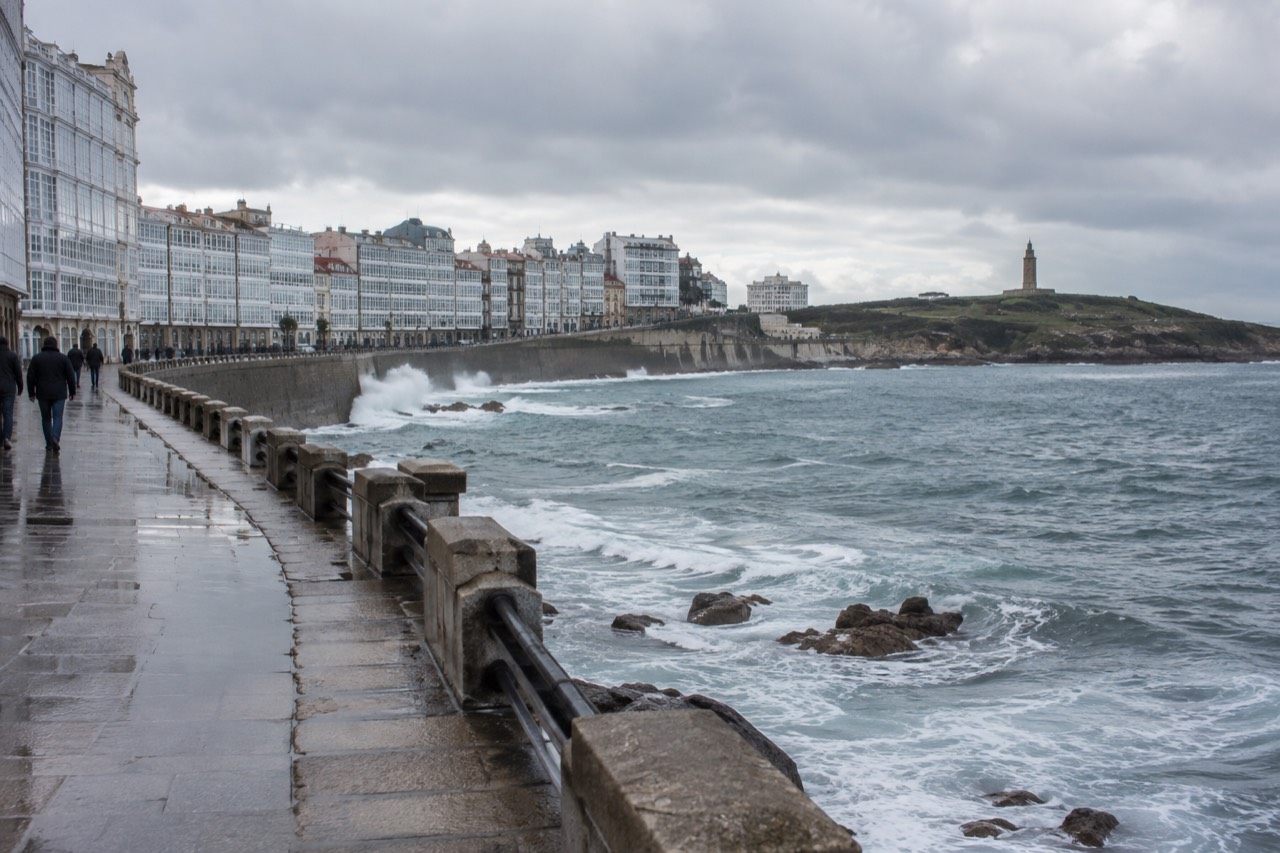
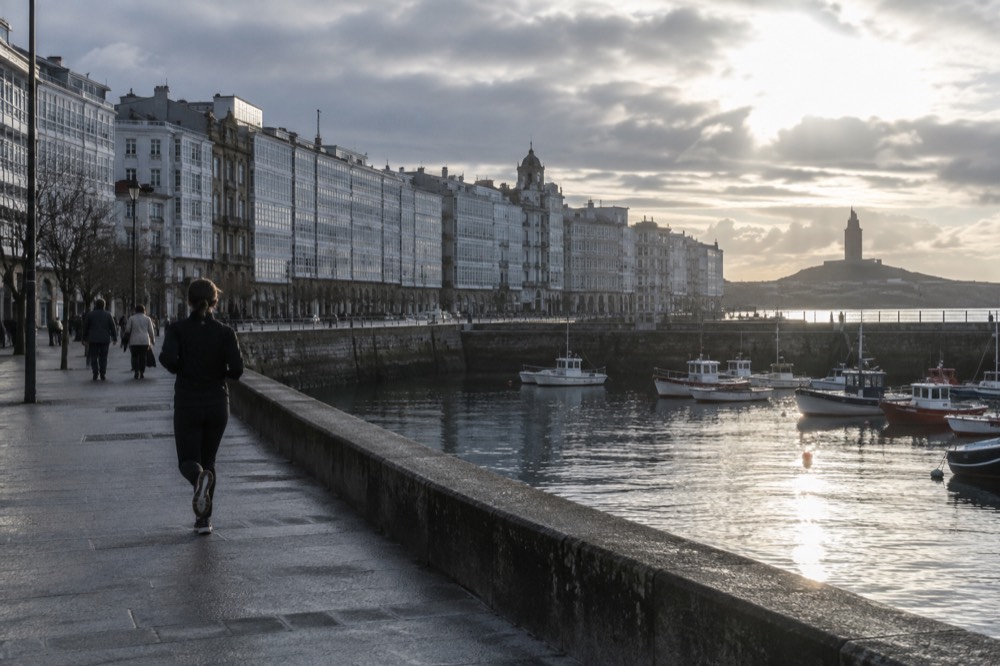
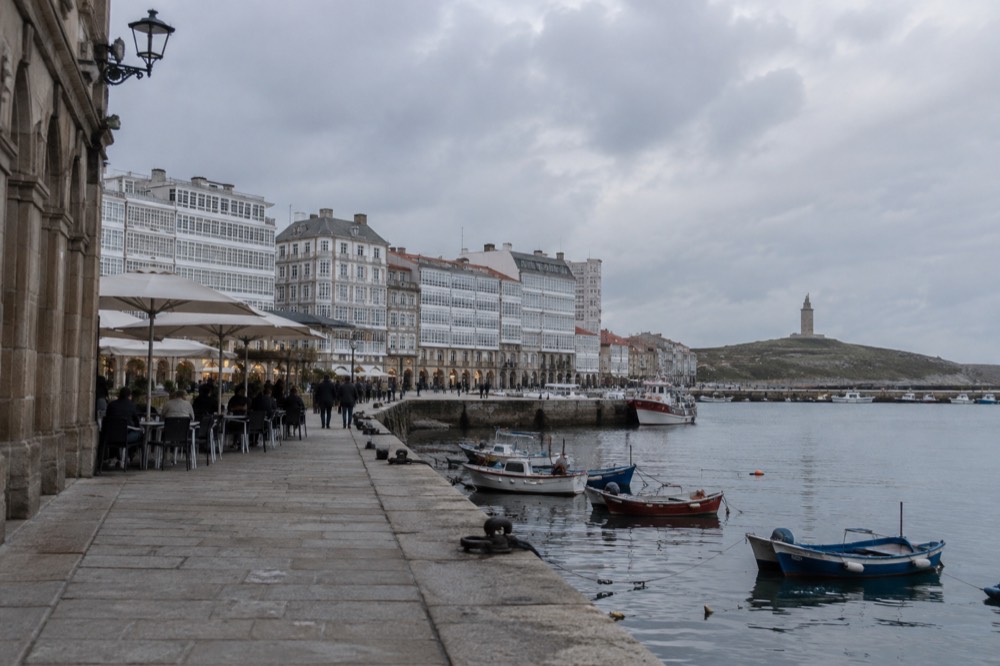
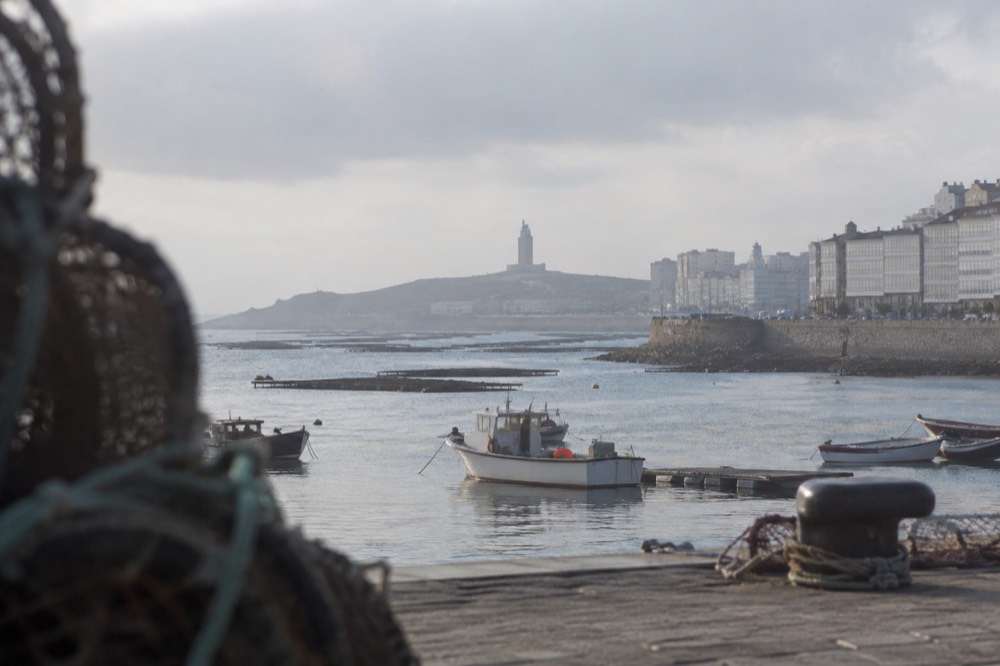
One day in A Coruna divides naturally into three parts: the oceanfront promenade and its sea wall, which is the city's spine; the Tower of Hercules, the working lighthouse on the headland that is the city's best-known landmark; and the old town around Praza de Maria Pita, where the tapas bars and the glass-fronted galleries called galerias cluster. The beaches of Orzan and Riazor sit inside the city, so a swim needs no extra journey.
The promenade comes first because everything else hangs off it. Waves hit the sea wall hard here, and on stormy days the spray goes over the road, which locals treat as entertainment rather than a hazard. The walk from the city centre out to the Tower of Hercules along the front is the single best hour of the day, and it needs no ticket, no guide and no planning beyond a jacket.
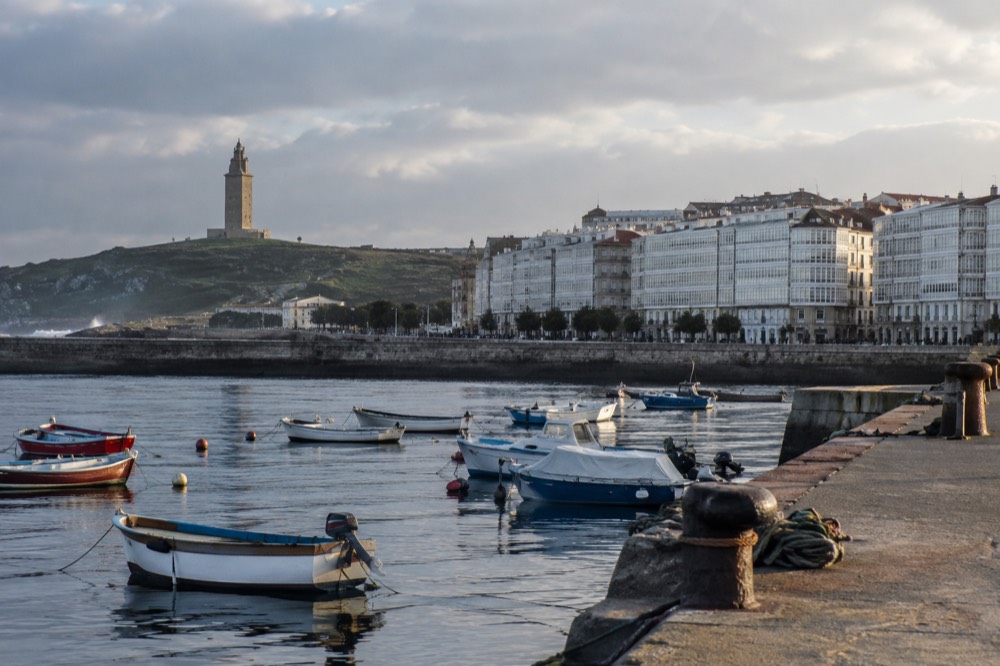
No height figure, entry price or opening hour is published here because none is officially published, so check the monument's own site before you go; the surrounding park is free in any case and, for many visitors, the better half of the visit.
The old town is the third act. Praza de Maria Pita is the main square, named for the local heroine of the city's defence against an attacking English fleet, and the streets running off it hold the tapas bars, the galerias, the white glazed galleries that make A Coruna's waterfront architecture unlike anything else in Spain, and the small shops that keep the quarter alive after the day-trippers have thinned out.
If one day in the city leaves you wanting the wild coast west of it rather than a second city day, the guided option below runs that direction from Santiago de Compostela: Check availability for the Finisterre, Costa da Morte, Ézaro, Muros and Carnota tour on the operator's live listing.
How Does A Coruna Compare With The Other Day Trips From Santiago de Compostela?
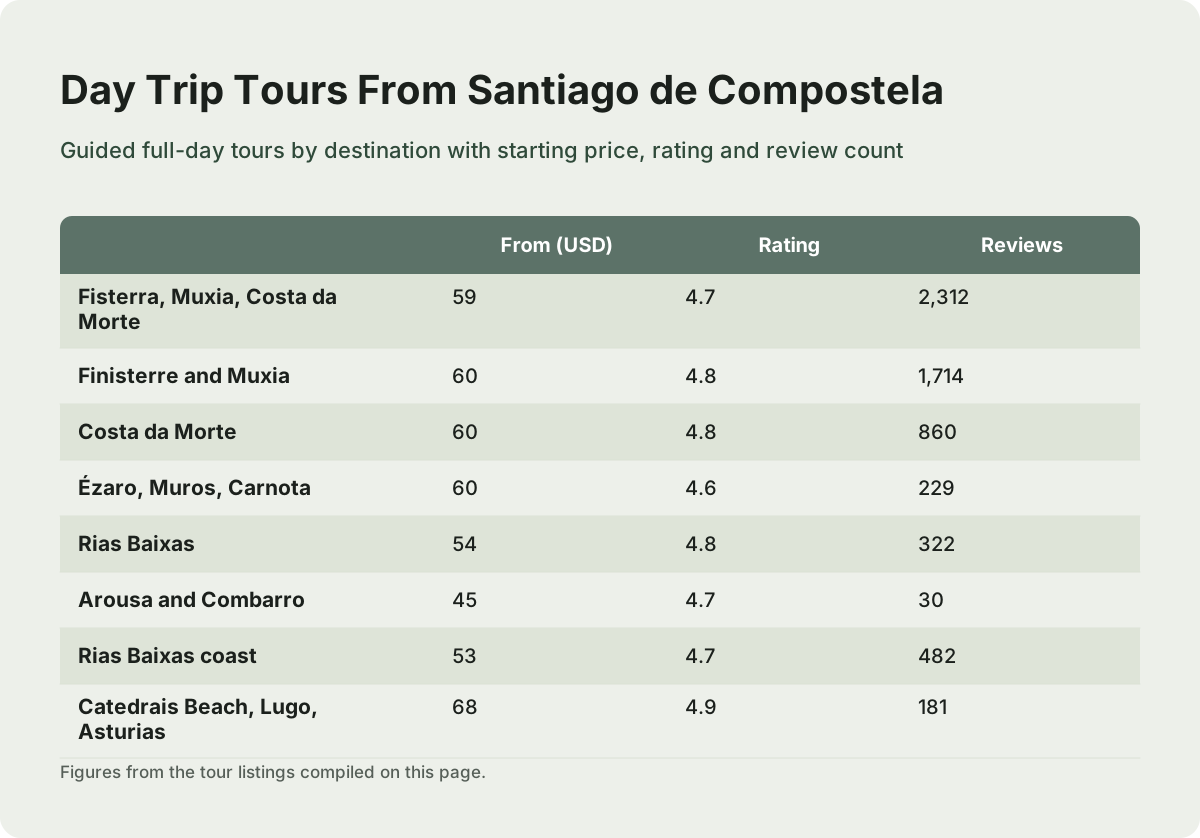
A Coruna is the only one of this site's verified day-trip destinations that is a full city, and it is the easiest to reach independently by rail; the alternatives split into two groups, the wild west-coast day trips around Finisterre, Muxia and the Costa da Morte, and the softer east-coast and inland trips around the Rias Baixas, Lugo and the Ribeira Sacra, and most of those are best done as guided full-day tours because public transport is thin.
The table below sets the guided roster against the destinations, using the figures from this site's verified tour list. The prices and ratings are the listings' own published numbers.
| Destination | Guided tour | From (USD) | Rating | Reviews | Duration |
|---|---|---|---|---|---|
| Fisterra, Muxia, Costa da Morte | Finisterre, Muxia & Costa da Morte | 59 | 4.7 | 2,312 | Full day |
| Finisterre and Muxia | Finisterre & Muxia, 7 Stops | 60 | 4.8 | 1,714 | Full day |
| Costa da Morte | Finisterre & Coast of Death, complete | 60 | 4.8 | 860 | Full day |
| Ézaro, Muros, Carnota | Finisterre, Costa da Morte, Ézaro, Muros & Carnota | 60 | 4.6 | 229 | Full day |
| Rias Baixas | Winery, optional mussel boat | 54 | 4.8 | 322 | Full day |
| Arousa and Combarro | Arousa Island, Combarro, mussel boat | 45 | 4.7 | 30 | Full day |
| Rias Baixas coast | Boat trip and winery | 53 | 4.7 | 482 | Full day |
| Catedrais Beach, Lugo, Asturias | Catedrais Beach, Lugo, Asturias | 68 | 4.9 | 181 | Full day |
| Lugo and Catedrais Beach | Lugo & Cathedrals Beach | 75 | 4.6 | 189 | Full day |
| Ribeira Sacra and Ourense | Sil cruise, monasteries, Ourense | 68 | 4.6 | 166 | Full day |
Read the comparison as a fork in the road. The west-coast rows are cliff, lighthouse and end-of-the-world days, covered in depth on the Costa da Morte and Finisterre pages. The Rias Baixas rows are estuary, mussel raft and Albarino wine days, covered on the Rias Baixas and Cambados page. The Lugo rows are Roman wall and inland days, covered at Lugo. A Coruna does not compete with any of them; it competes with a second and third day in Santiago de Compostela itself, which is exactly how the What is the best day trip from Santiago de Compostela? answer frames the choice.
Which Guided Tours Cover The Coast West Of A Coruna?
The coast immediately west of A Coruna is the Costa da Morte, and four full-day tours from Santiago de Compostela cover it: the most-reviewed option at 4.7 from 2,312 reviews is the Finisterre, Muxia and Costa da Morte tour at from $59, followed by the 7-stops Finisterre and Muxia tour at 4.8 from 1,714 reviews at from $60, plus two more complete-variant tours at from $60, and two express half-day versions at from $45.
The short list is genuinely short because the coast is genuinely narrow. One road threads the cliffs, and every tour runs some version of the same spine: the fishing town of Muxia with its sanctuary on the rocks, the lighthouse cape at Fisterra or Finisterre, the old name for what Romans treated as the end of the known world, and the stone villages between. What separates the products is the number of stops and the pace. The rest of the planning pages sit on Santiago de Compostela Travel Guide.
| Tour | From (USD) | Rating | Reviews | Duration |
|---|---|---|---|---|
| Finisterre & Muxia, 7 Stops | 60 | 4.8 | 1,714 | Full day |
| Fisterra, Muxia Express | 45 | 4.4 | 50 | Half day |
| Express Muxia & Cape Finisterre | 45 | 4.1 | 9 | Express |
| Costa da Morte, Cabo Vilan stop | 60 | 4.8 | 267 | Full day |
| Ézaro, Muros & Carnota stops | 60 | 4.6 | 229 | Full day |
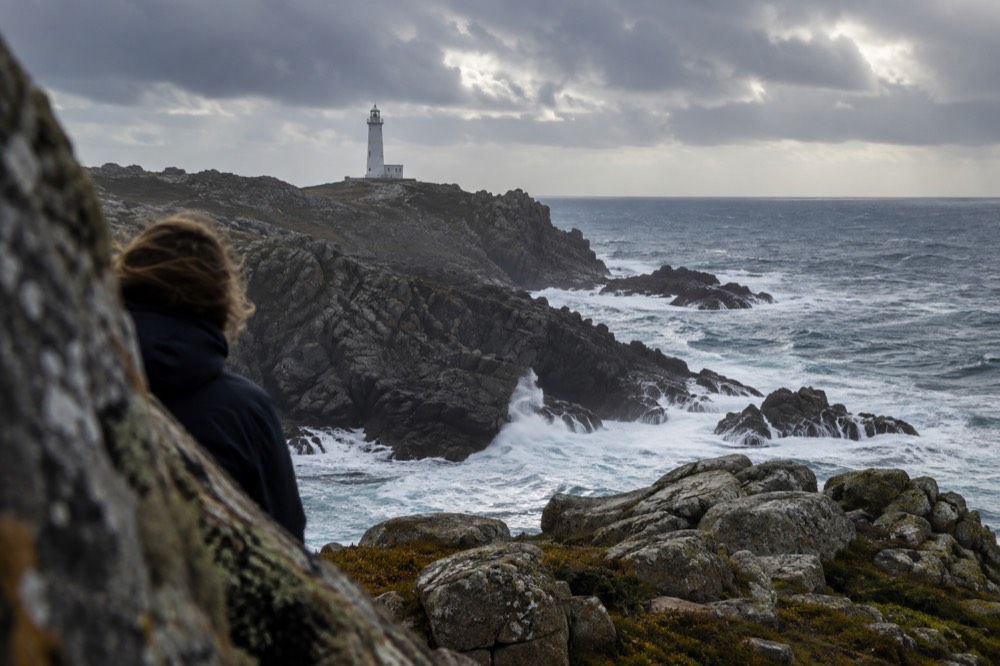
The Ézaro, Muros and Carnota variant is the one this page recommends most often to A Coruna day-trippers, because it covers the northern stretch of that coast, including the Muros estuary and Carnota's long beach, that the plainer Finisterre runs skip. Pair it with a rail day in A Coruna on consecutive days and you see the entire Atlantic face of Galicia from two angles: the city one, and the wild one.
What Do The Rias Baixas And Inland Tours Offer Instead?
East and south of Santiago de Compostela the day trips soften: the Rias Baixas tours pair a winery visit, in Albarino country, with an optional mussel-boat trip on the estuaries, from $53 to $54 per person with ratings of 4.7 to 4.8, while the inland options run to Lugo's Roman walls and Catedrais Beach at from $68 to $75, or up the Sil river canyons of the Ribeira Sacra at from $64 to $68, all of them full days with transport and guiding included.
The estuary days are the food-and-wine days. The mussel boats work the Rias Baixas, the flooded river valleys of Galicia's west coast, where rope rafts grow the mussels that end up in every tapas bar in the region, and the winery stops pour Albarino, the white wine those mussels were invented to accompany. The Rias Baixas and Cambados page carries the detail.
| Tour | Region | From (USD) | Rating | Reviews |
|---|---|---|---|---|
| Winery, optional mussel boat | Rias Baixas | 54 | 4.8 | 322 |
| Boat trip and winery | Rias Baixas | 53 | 4.7 | 482 |
| Arousa Island, Combarro, mussel boat | Rias Baixas | 45 | 4.7 | 30 |
| Catedrais Beach, Lugo, Asturias | Inland and east coast | 68 | 4.9 | 181 |
| Lugo & Cathedrals Beach | Inland and east coast | 75 | 4.6 | 189 |
| Sil cruise, monasteries, Ourense | Ribeira Sacra | 68 | 4.6 | 166 |
| Sil River cruise, canyons, Ourense | Ribeira Sacra | 64 | 4.3 | 11 |
The inland rows deserve a word because they are the least obvious. Catedrais Beach, the beach of cathedrals, takes its name from the stone arches the Atlantic has carved into its cliffs, and access to it is managed, which is one reason a guided tour with a scheduled slot is the low-friction way to see it. Lugo is the only city on the peninsula whose complete Roman wall still rings the old centre. The Ribeira Sacra runs upriver into canyons where monasteries cling to slopes above the Sil. None of these is reachable in a relaxed way by public transport from Santiago de Compostela inside one day, which is precisely why the guided versions hold their value.
Where Should You Eat In A Coruna?
Eating in A Coruna means Galician Atlantic cooking served steps from the water it came out of: octopus a la gallega, pulpo, and empanada are the anchors, along with the shellfish the Rias Baixas rafts grow, and the tapas bars of the old town around Praza de Maria Pita are the practical place to eat them, priced for a Spanish city rather than for a tourist village, so a day trip here eats cheaper than the coast.
The honest note is that this site's verified research carries no specific restaurant names, hours or prices for A Coruna, and a page that invented them would be worse than one that admits the gap. What the site can verify is the food culture itself: the Galician food guide covers the region's dishes, and the site's pulpo a la gallega and Padron peppers pages cover the two plates most likely to appear in front of you in an A Coruna bar.
Wait, one correction before the paragraph count confuses anyone: the links just given point to this site's own guide pages, and the rest of this paragraph is the only food advice a day-tripper actually needs. Order what the bar is busy with. In A Coruna that means the seafood counters, and the lunchtime menu del dia, the fixed weekday menu, is usually the best-value meal in any Galician city.
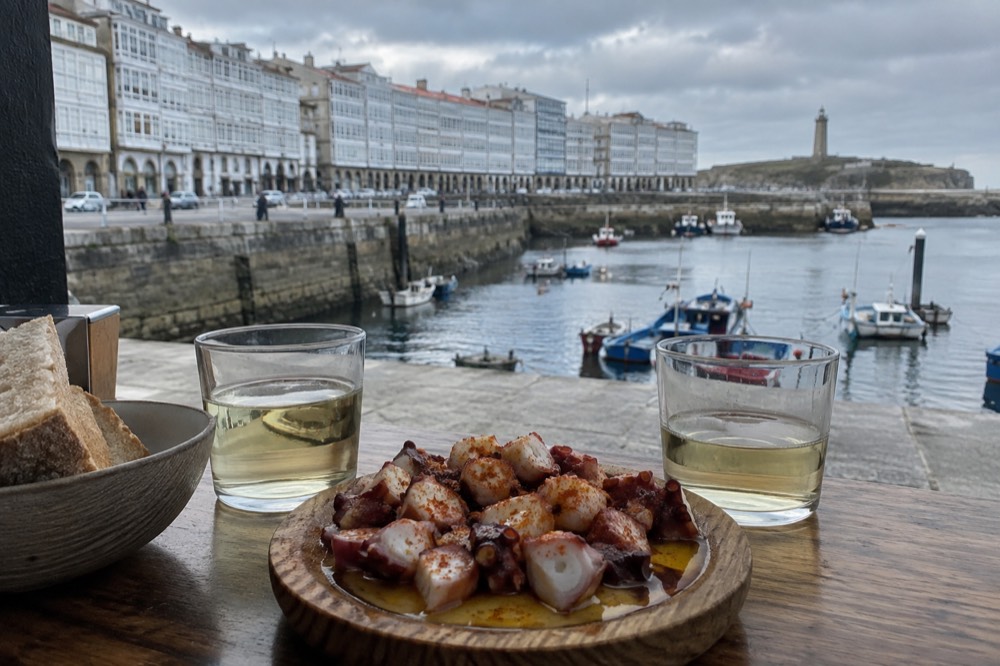
One structural tip. Santiago de Compostela's eating streets, like Rua do Franco, sit in the old town's tourist heart. A Coruna's tapas quarter is where its own residents eat, because the city is not primarily a visitor city, and that difference shows in the bill. Travellers on a budget should compare the two in the Santiago de Compostela on a budget guide before committing every evening to the old town.
When Should You Go, And How Does A Coruna Fit A Longer Santiago de Compostela Stay?
The best months for an A Coruna day trip are the dry ones: AEMET's Santiago de Compostela station shows the region wet and cool from October to March and driest in July and August, and the coast city is best when the promenade walk is not a soak, though July and August are also peak season; two or three days in Santiago de Compostela with one of them given to A Coruna is the pattern most visitors settle on, and the city pages on this site support exactly that split.
The climate figure behind that comes from AEMET, Spain's national weather agency, at its Santiago de Compostela station: annual precipitation on the order of 1,690 to 1,890mm, wet year-round, wetter October to March, driest July and August. No month-by-month table is verified on this build, so this page deliberately avoids monthly numbers. What the range tells a day-tripper is enough anyway: Galicia is a wet part of Europe, the shoulder months trade thinner crowds for a real chance of rain, and the promenade in A Coruna is a different walk depending on which side of that split you land.
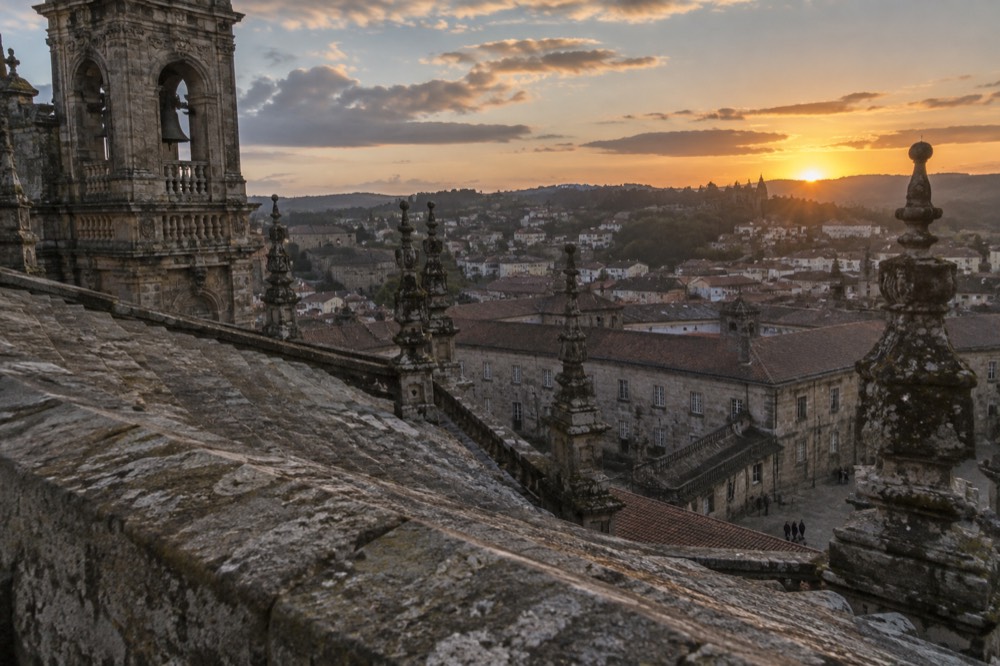
If A Coruna is the day trip, the remaining days belong to Santiago de Compostela, and the in-city options below are the ones this site's own roster rates highest for a first visit. The walking tours cost from $12 to $29 per person on the current listings, and the free GuruWalk options, which must be named here along with their guides because they are tip-based walks, rate at 4.67 to 4.96 across the board.
| In-city tour | Kind | From (USD) | Rating | Reviews |
|---|---|---|---|---|
| Old Town Walk, Official Guide | Walking tour | 12 | 4.8 | 338 |
| Historic Town Walk, Official Guide | Walking tour | 14 | 4.8 | 144 |
| Hidden City Walking Tour | Walking tour | 17 | 5 | 13 |
| Historic Walk, City Highlights | Walking tour | 17 | 4.9 | 29 |
| Secrets of Compostela Night Tour | Night tour | 17 | 4.9 | 74 |
| Private Historic Walk, Small Group | Walking tour | 29 | 4.9 | 16 |
| GuruWalk free tour | Guide basis | Rating | Reviews | Length |
|---|---|---|---|---|
| Santiago Fundamental, the most complete | Tip-based | 4.95 | 6,342 | 2h |
| Essential Free Tour, radio guide included | Tip-based | 4.96 | 1,099 | Not stated |
| Essential Free Tour Santiago | Tip-based | 4.91 | 4,797 | Not stated |
| Magical Compostela legends tour | Tip-based | 4.85 | 1,106 | Not stated |
| Historic Center tour | Tip-based | 4.67 | 217 | Not stated |
For the Cathedral itself, the verified entry figures are the Cathedral's own: the basilica interior is free, the Cathedral Museum runs EUR9-23 depending on ticket type, and the rooftop tour of the Cubiertas and the Torre de la Carraca, guided, about 60 minutes with about 140 steps to about 72m, costs EUR15 general and EUR12 reduced. The Cathedral tickets and opening hours page keeps the detail current.
The full in-city cathedral options, including the museum and rooftops tours from this site's roster, are compared on the Cathedral of Santiago de Compostela page, and the Vigo page handles the south-coast alternative for anyone weighing A Coruna against Galicia's other big port.
Common Questions About A Coruna Day Trips From Santiago de Compostela
Is A Coruna worth visiting?
Yes, for most travellers it is: it is the largest city on Galicia's Atlantic coast, reachable from Santiago de Compostela as a short direct train hop, and it offers something the other day-trip destinations do not, a real working city with an oceanfront promenade, a functioning lighthouse landmark, city beaches and a resident tapas culture.
What is the best day trip from Santiago de Compostela?
There is no single answer: A Coruna is the best city day trip for independent travellers, the Finisterre, Muxia and Costa da Morte tour at 4.7 from 2,312 reviews is the most-booked guided day on this site's roster, and the Rias Baixas winery and mussel-boat days are the best food-and-wine option. The comparison table above lays them side by side.
Can you do A Coruna and the Costa da Morte in one day?
Not comfortably by public transport. A Coruna sits north of Santiago de Compostela and the Costa da Morte runs west, and the guided Costa da Morte tours are full-day commitments from Santiago de Compostela in the other direction. Give each its own day, or choose the half-day Fisterra and Muxia express tour at from $45 if a coast taste is all that is needed.
Do you need a car for a day trip to A Coruna?
No. Direct regional and high-speed trains link Santiago de Compostela and A Coruna as a short hop, and the centre, promenade and lighthouse headland work as a walking day once you arrive. A car only earns its keep if the plan chains A Coruna to coastal villages west of it in a single loop, which is a harder drive than the rail day trip it replaces.
Is A Coruna part of the Camino de Santiago?
The Camino de Santiago finishes in Santiago de Compostela, not A Coruna, but the north coast of Galicia where A Coruna sits is the terrain of the shorter northern routes, the Camino Ingles and the Camino del Norte, both covered in this site's guides. Some pilgrims add an A Coruna day before or after their walk for exactly that reason.
How many days should I spend in Santiago de Compostela?
Most visitors land on two or three days in Santiago de Compostela, with one of them given to a day trip such as A Coruna or the coast. The city itself is compact; the cathedral, museum and rooftop visits plus the old town fill roughly two unhurried days.