Santiago de Compostela Budget
Santiago de Compostela is one of Europe's most affordable cathedral cities: the basilica itself is free, a free tip-based walking tour covers the whole old town, and the airport bus still costs a euro. Here is where a budget stretches, and where it quietly leaks.
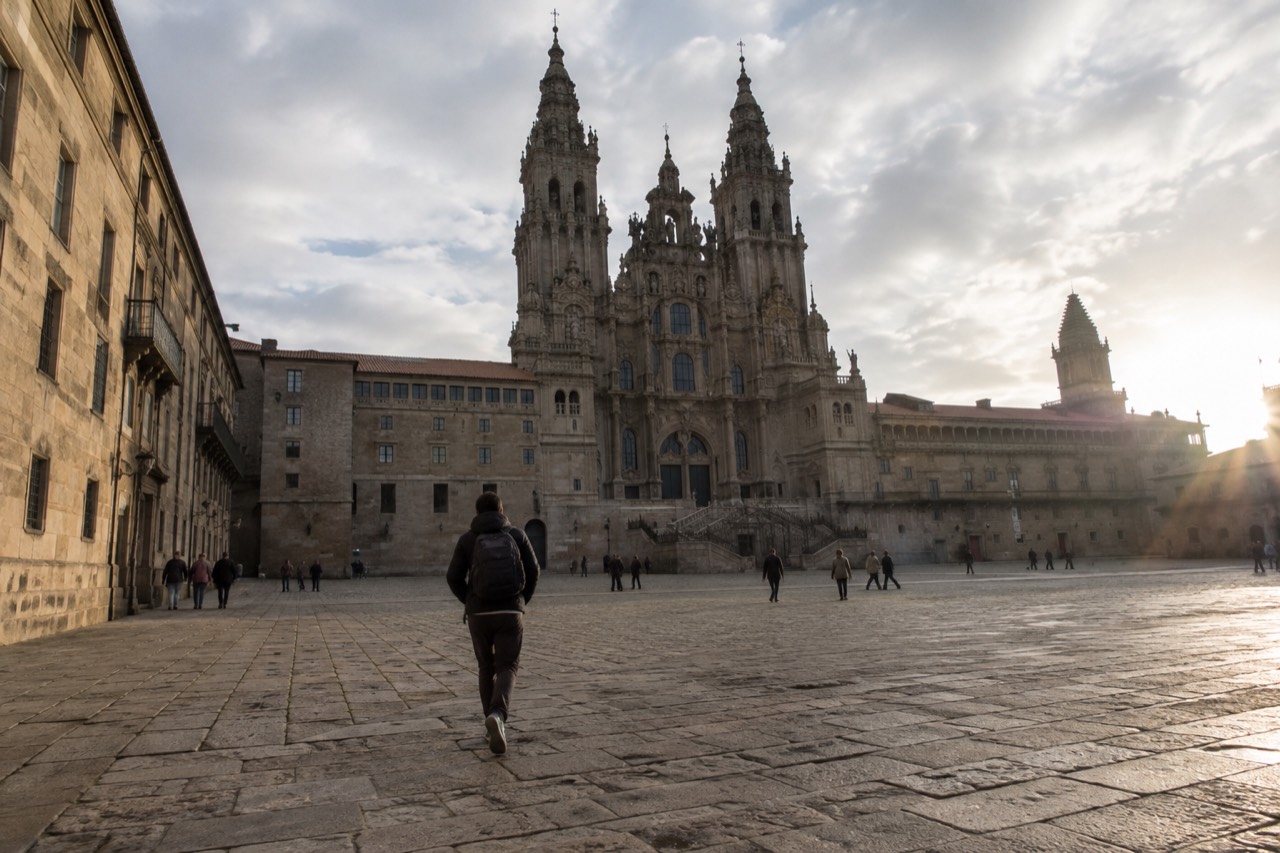
Short answer
The Cathedral of Santiago de Compostela is free to enter daily, the free GuruWalk tip-based tour covers the old town, the airport bus costs EUR1 paid to the driver, and a municipal tourist tax has applied since 1 October 2025 (from EUR1 to EUR2.50 per person per night, up to 5 nights, with under-18s exempt). The main paid costs are the Cathedral Museum (EUR9-23), the rooftop tour (EUR15, or EUR12 reduced), food, and any day trips you add.
Santiago de Compostela, the pilgrim cathedral city at the end of the Camino de Santiago in Galicia, northwest Spain, is cheaper to visit than almost any other major cathedral city in western Europe. The basilica that draws more than half a million certified pilgrims a year costs nothing to enter, the city's own transport page lists an airport bus at a single euro, and the single biggest line in most visitors' budgets, accommodation, has an entire tier of pilgrim albergues that exists nowhere else in this price class. A budget here is not a matter of skipping the good stuff. It is a matter of knowing which doors are free, which tickets are worth their price, and which costs are quietly avoidable.
This guide walks through the whole cost stack of a Santiago de Compostela trip in order: what the sights cost, what is free, how to eat and sleep cheaply, what the cathedral's paid options actually include, how to handle the airport, and which day trips give the most coast for the money. Every figure below comes from the operators, the Cathedral's own ticketing, or the city's own transport page, and where a price is on a live listing rather than published, this guide says so instead of guessing.
How Much Does A Trip To Santiago de Compostela Actually Cost?
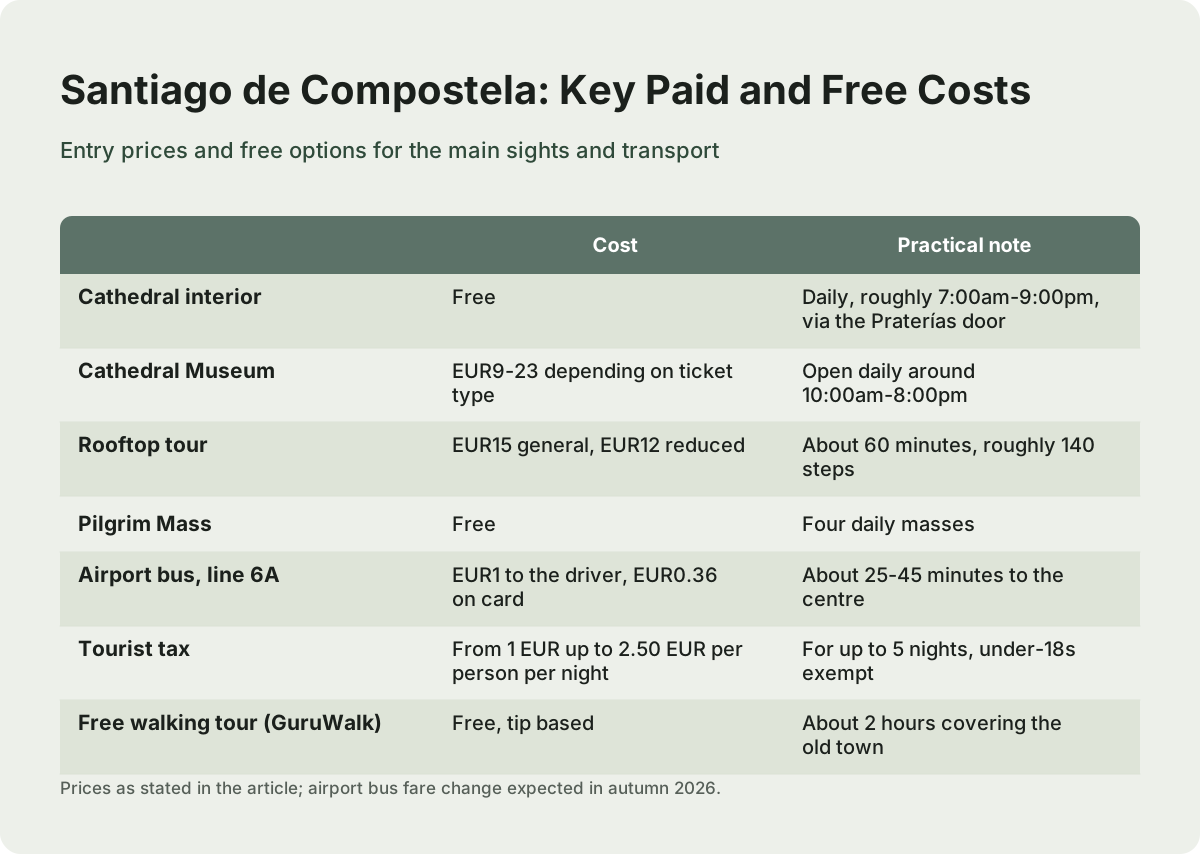
A day in Santiago de Compostela can run from close to zero for the core sights, since cathedral entry is free and a tip-based walking tour costs nothing upfront, to roughly EUR25-40 per person once you add the Cathedral Museum at EUR9-23, the rooftop tour at EUR15 general or EUR12 reduced, three cheap meals, and local transport. The airport bus adds only EUR1 paid to the driver, or EUR0.36 on a rechargeable card, and a municipal tourist tax has applied since 1 October 2025, from EUR1 per person per night in private albergues, campsites and tourist apartments up to EUR2.50 in five-star hotels, for a maximum of 5 nights, with under-18s and stays in Xunta-run public albergues exempt.
That spread is unusually wide for a European destination, and it exists because the city's headline attraction is genuinely free. The Cathedral of Santiago de Compostela opens its interior daily with general entry at no charge, roughly 7:00am to 9:00pm. The paid layer, the museum, the rooftops, guided visits, sits on top of that free base and is entirely optional. The other reason the spread is wide is the pilgrim infrastructure: albergues, the pilgrim's credential, free masses, all exist to serve people walking the Camino de Santiago on thin budgets, and day visitors benefit from the same ecosystem.
Here is the core cost stack, with every figure from the Cathedral's own ticketing or the city's transport page:
| Item | Cost | What you get |
|---|---|---|
| Cathedral interior (naves, tomb area) | Free | Daily entry, roughly 7:00am-9:00pm via the Praterías door |
| Cathedral Museum (permanent collection, Gelmírez Palace) | EUR9-23 depending on ticket type | Open daily around 10:00am-8:00pm, ticket office closes 30 minutes earlier |
| Rooftop tour, Cubiertas + Torre de la Carraca | EUR15 general, EUR12 reduced | Guided, about 60 minutes, roughly 140 steps, from about 72m, includes museum access valid 7 days |
| Pilgrim Mass | Free | Four daily masses, 7:30am, 9:30am, noon, 7:30pm |
| Airport bus, line 6A (Tussa) | EUR1 to the driver, EUR0.36 on card | About 25-45 minutes to the centre, a fare change is expected in autumn 2026 |
| Tourist tax | Santiago de Compostela has charged a municipal tourist tax since 1 October 2025 (a surcharge on Galicia's tourist-stay tax): per person per night for up to 5 nights, from 1 EUR in private albergues, campsites and tourist apartments up to 2.50 EUR in five-star hotels; under-18s and stays in Xunta-run public albergues are exempt | |
| Free walking tour (GuruWalk) | Free, tip based | About 2 hours covering the old town's fundamentals |
Two notes on that table. First, the rooftop price is the Cathedral's own official rate, not a reseller markup; the reduced EUR12 rate covers accredited pilgrims, students, over-65s and several other groups with proof at entry. Second, the airport bus figure is the current one, and the city's transport page itself advises verifying it, because a new Monbus contract with a fare near EUR6 is expected to replace the EUR1 service in autumn 2026.
What Is Free In Santiago de Compostela?
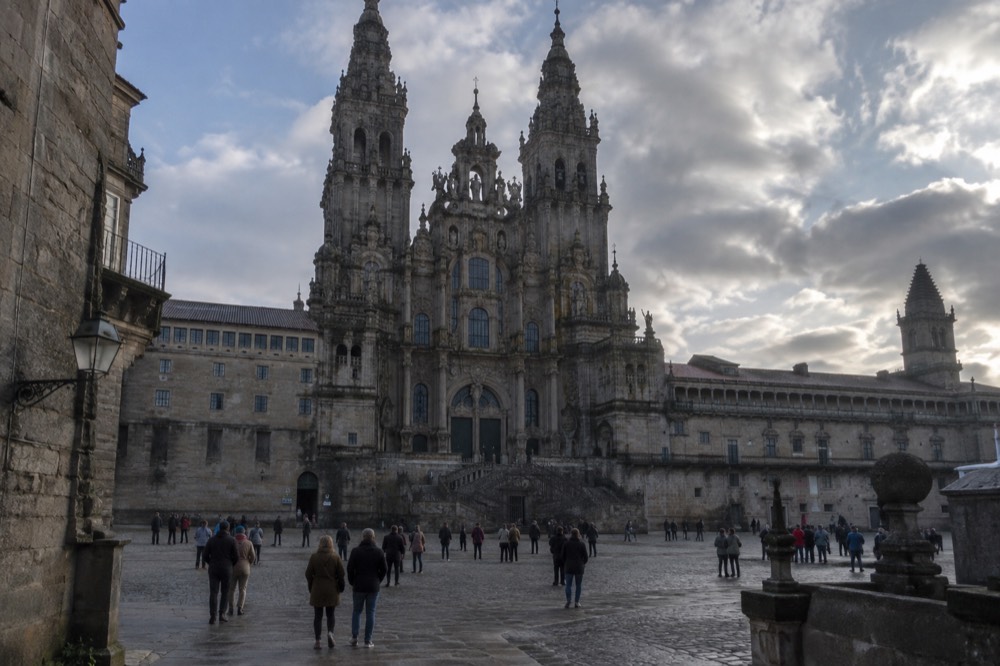
The genuinely free list in Santiago de Compostela is long: cathedral entry, all four daily pilgrim masses, the entire UNESCO-listed old town including Praza do Obradoiro and Praza da Quintana, the Alameda park viewpoint, and the GuruWalk free tip-based walking tour, which is rated 4.95 from 6,342 reviews. Even the Botafumeiro's normal schedule, 12 solemnities a year, has always been free to watch, though it is currently suspended because dome restoration scaffolding covers its mechanism.
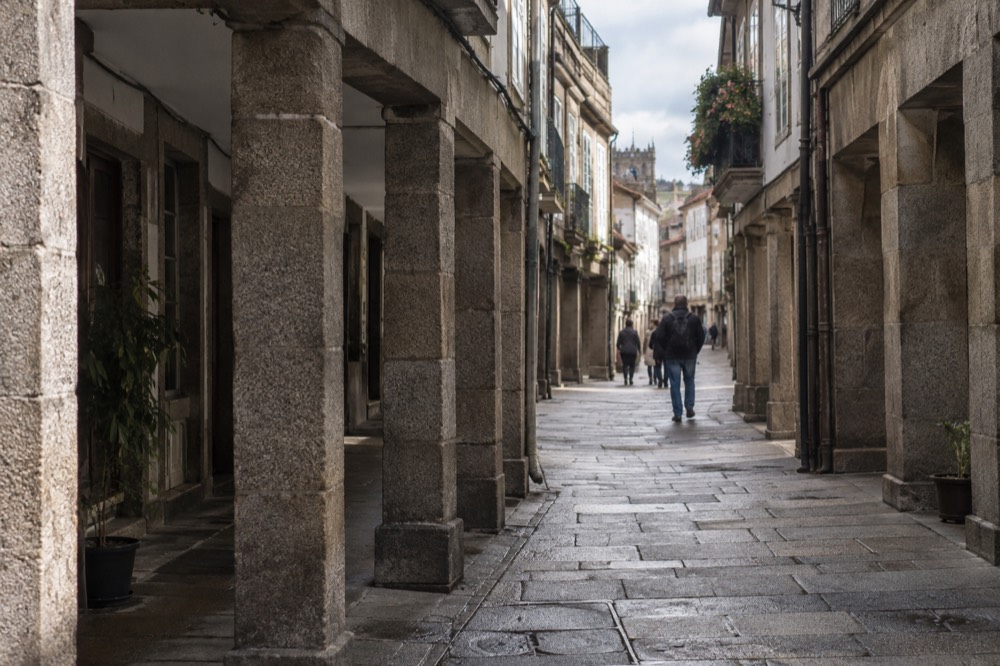
The old town is the biggest free item of all, and unlike many heritage centres it carries two separate UNESCO inscriptions, which is a detail most first-page guides miss. Santiago de Compostela's Old Town was inscribed in 1985, and the Routes of Santiago de Compostela, the Camino Francés and the northern Spanish routes, were inscribed separately in 1993. Two listings, two dates, never one combined inscription. Waking from one to the other, from Praza do Obradoiro past the Hostal dos Reis Católicos to the Holy Door on Praza da Quintana, costs nothing and is the best free walking circuit in Galicia.
| Free thing | What you actually get | Practical note |
|---|---|---|
| Cathedral interior | Naves, the Apostle's tomb and embrace area | Free daily, roughly 7:00am-9:00pm, via the Praterías door |
| Pilgrim Mass | Four daily: 7:30am, 9:30am, noon, 7:30pm | From 16 October 2026 the 9:30am, noon and 7:30pm masses move to the Church of San Agustín; the 7:30am mass stays in the Cathedral |
| Old Town UNESCO circuit | Praza do Obradoiro, Praza da Quintana, Rua do Franco surroundings | Old Town inscribed 1985, a separate listing from the 1993 Routes inscription |
| Alameda park viewpoint | The classic postcard view of the Cathedral's towers | Open parkland, free at all hours |
| GuruWalk free tour | About 2 hours, the most complete free walk | Free, tip based, rated 4.95 from 6,342 reviews, booked through GuruWalk |
On the free tour: it is booked through GuruWalk, which is the platform to name here because these walks are free and tip based rather than this site's products. The walk itself covers the fundamentals of the old town in about two hours, and because payment is a tip at the end, it is the single best-value first activity in the city for anyone arriving on a tight budget.
The Botafumeiro deserves one honest paragraph, because budget guides love to list it as a free spectacle and that would currently be misleading. The great censer normally swings at the end of the main solemn Mass on 12 fixed liturgical dates a year, from Epiphany on 6 January to the Transfer of the Apostle on 30 December. As of 5 September 2026, the Cathedral confirmed in writing that it is temporarily out of action: scaffolding for the cimborrio, the dome over the crossing, covers the swinging mechanism, and no return date has been published. Do not plan a budget trip around seeing it, and do not pay anyone promising you will.
For structure under that free base, these three tours cover the spread of budgets, from the free tip-based walk to a half-day express trip to the coast:
How Do You Eat Well In Santiago de Compostela Without Overspending?
The cheap-eating engine of Santiago de Compostela is the menú del día, the fixed weekday lunch menu that Galician restaurants run for a fraction of their evening prices, plus the tapas bars along Rua do Franco and the market stalls of Mercado de Abastos, where the city's own cooks have shopped for generations. Budget on one proper menú at lunch and lighter tapas or market food in the evening, and a food day can cost less than a single rooftop ticket pair.
The structural trick is that Galicia eats its big meal at midday, and restaurants price accordingly. A menú del día, first course, second course, bread, and often a drink and dessert, is the locals' lunch, and it exists precisely because office workers and market traders will not pay evening prices every day. Prices move with the room, so treat any figure you read anywhere online, including here, as a planning range and check the board at the door. The gap between a menú lunch and the same kitchen's evening à la carte is often the largest single saving available in this city.
The market is the other lever. Mercado de Abastos de Santiago is the city's working food market, second only to the Cathedral as a place where locals actually go, and its stalls and surrounding counters sell the raw material of Galician eating: padrón peppers, octopus, tetilla cheese, the day's fish. Opening hours vary and should be checked on the market's own site rather than assumed, but eating at market counters or assembling a picnic from stalls is the cheapest way to eat well here. For the classic sweets and savours, the dedicated guides go deeper: where to eat in Santiago de Compostela, plus the individual pages on padrón peppers, pulpo á feira as it is served locally, and the almond tarta de Santiago.
One wine-and-fire experience belongs on a budget list, because it is one of the cheapest paid experiences in the city. The queimada show and tasting, the Galician fire ritual with spoken spell, runs from $17 per person on the operator's live listing, rated 4.4 from 69 reviews. It is cheaper than most dinners and closer to theatre than to a bar tab.
Where Do Budget Travellers Sleep In Santiago de Compostela?
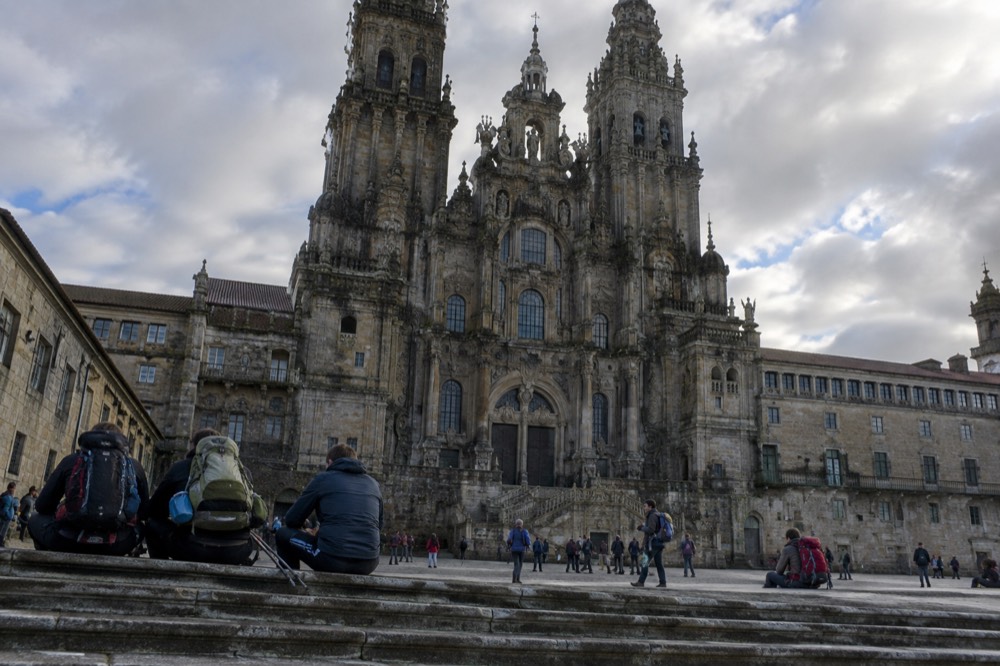
Budget sleeping in Santiago de Compostela runs on the albergue system built for Camino pilgrims: municipal and parish albergues are the cheapest beds in the city and priority goes to credencial-carrying walkers, private albergues and hostels take everyone else, and small old-town hotels sit above them. Rates are set by demand and season rather than a published city rate card, so check live prices on the linked page rather than trusting any figure quoted in advance, and note that a municipal tourist tax has applied since 1 October 2025, from 1 EUR per person per night in private albergues up to 2.50 EUR in five-star hotels, for a maximum of 5 nights.
The honest framing is that this city's accommodation pricing moves hard with the pilgrim calendar. July, and especially the days around the Feast of St. James on 25 July, compresses the market; the shoulder months of spring and autumn are cheaper and, in this climate, arguably better. The full tiers are laid out in where to stay in Santiago de Compostela and in the dedicated albergue and Camino accommodation guide, and the deeper city comparisons are in the best hotels guide and the hostels guide.
| Sleeping tier | Who it suits | Budget behaviour |
|---|---|---|
| Municipal/parish albergues | Camino walkers with a credencial | Cheapest beds in the city, priority to pilgrims, walk-in availability varies by season |
| Private albergues and hostels | Any budget traveller, pilgrim or not | Prices move with demand; check the live price on the booking page |
| Small old-town guesthouses | Couples, short stays | Best value in shoulder season, outside July and late-December Holy Year windows |
| Parador level | Not a budget option | Covered separately for comparison in the hotels guide |
Two structural notes matter for a budget. First, the Compostela and albergue system runs on the pilgrim's credential, the stamped passport that also serves as the key to the cheapest beds; the certificate itself requires the last 100km walked or the last 200km cycled, with at least two stamps per day, and is issued in person at the Pilgrim's Office on Rua das Carretas 33. Second, for walkers finishing here, the rest day after the Camino guide shows how to spend a recovery day almost entirely on free sights.
On a first evening in the city, the best free orientation is the GuruWalk free tour booked through GuruWalk, the most complete of the free walks at about two hours and rated 4.95 from 6,342 reviews; because it is tip based, the only fixed cost is what you decide the guide earned.
Is The Cathedral Of Santiago de Compostela Free To Enter?
Yes, the Cathedral of Santiago de Compostela's interior is free to enter daily, roughly 7:00am to 9:00pm through the Praterías door, covering the naves, the high altar area and the Apostle's tomb. What costs money are the museum layers on top: the Cathedral Museum at EUR9-23 depending on ticket type, and the rooftop and Torre de la Carraca guided visit at EUR15 general or EUR12 reduced, which takes about 60 minutes up roughly 140 steps to views from about 72 metres.
The free door and the paid doors serve different purposes, and mixing them up is the most common budget mistake here. Walking in free gets you the naves, the tomb and the embrace of the apostle statue, which is the actual endpoint of the pilgrimage. The paid museum ticket gets you the Gelmírez Palace, the cloister and the collections; the rooftop ticket gets you the roofscape and the whole city from above. The official ticketing runs through the Cathedral's own visit site, and full detail is in the cathedral tickets and opening hours guide, with the museum and rooftops each having their own pages.
One time-sensitive note on masses, because a free mass is a budget attraction in its own right. Until 15 October 2026, pilgrim masses are held at the Cathedral's high altar at 7:30am, 9:30am, noon and 7:30pm. From 16 October 2026, while main-chapel works prepare for the 2027 Holy Year, the 9:30am, noon and 7:30pm masses relocate to the nearby Church of San Agustín, and only the 7:30am mass stays in the Cathedral's own Communion chapel. Both arrangements are dated here because a visitor turning up at noon in November expecting a Cathedral mass will otherwise be surprised. The pilgrim mass guide carries the detail.
How Do You Get Around Santiago de Compostela And Its Airport Cheaply?
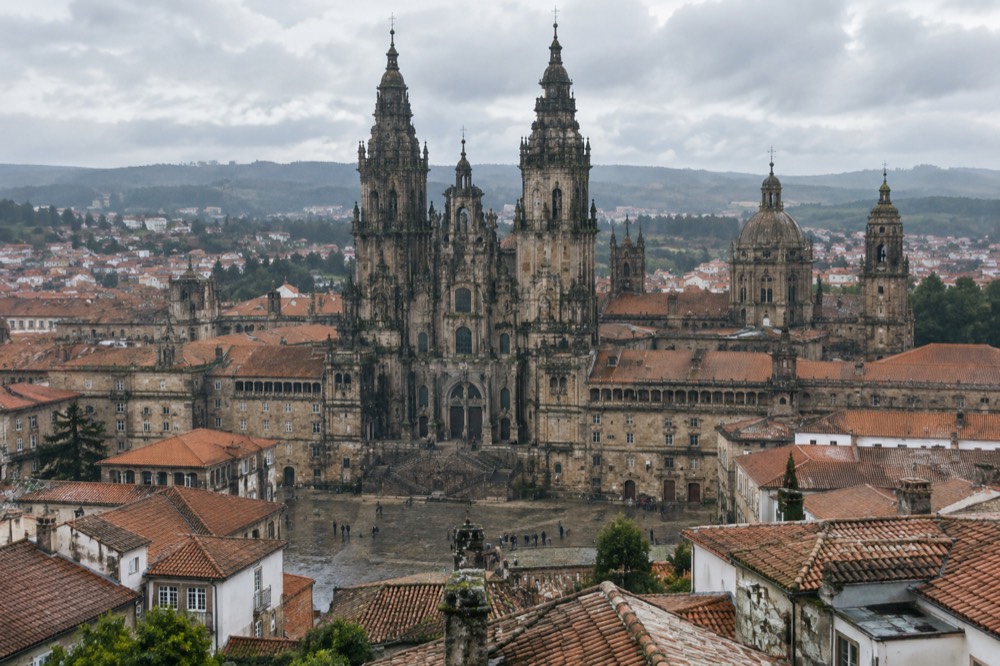
The cheapest airport transfer in Galicia is line 6A, the Tussa urban bus from Santiago de Compostela airport, at EUR1 paid to the driver or EUR0.36 per trip on a rechargeable card, running roughly every 30 minutes from around 06:30 to 00:30 and taking about 25-45 minutes to the centre. The airport sits about 12km from the old town, and once you are in it, the old town is small enough that almost everything is walkable.
That EUR1 fare is real and current, listed on the city's own transport page, but it comes with a dated warning that any honest budget guide must carry: a new Monbus contract was awarded in mid-2026, and the reorganised service with a proposed fare near EUR6 one-way is expected to start in autumn 2026, possibly by December. The city's page itself advises verifying the line number and fare after December. So budget EUR1 today, and re-check before you fly. The full arrival picture, including flights, is in the airport guide and the Santiago airport page.
| Route or service | Cost | Journey notes |
|---|---|---|
| Airport to centre, line 6A (Tussa) | EUR1 to the driver, EUR0.36 on card | About 25-45 minutes, roughly every 30 minutes, 06:30-00:30 |
| Airport to centre after the Monbus change | Expected near EUR6 | Expected autumn 2026, possibly by December, verify before travel |
| Old town on foot | Free | The historic core is compact and pedestrian in character |
| Train to A Coruña | Direct service, short hop | Regional/high-speed, no verified fare published here |
| Train to Vigo | Direct, roughly 1 hour | Media Distancia/regional services |
| Train to Madrid | Direct, roughly 3-4 hours | AVE/Avlo high-speed, train guide has detail |
| Train to Porto | No direct line | Change at Vigo for the onward regional connection; see the Porto route guide |
The 2027 Holy Year matters for transport budgeting more than most visitors realise. The Holy Door opens on the evening of 31 December 2026, and the Holy Year, Xacobeo, runs through 31 December 2027; 2026 is not a Holy Year, because 25 July 2027 falls on a Sunday, which is the trigger. In Holy Years the city's buses, trains and beds all tighten. Anyone budgeting a 2027 trip should build slack into every transport figure, and the Holy Year 2027 guide lays out the dates.
What Are The Best Cheap Day Trips From Santiago de Compostela?
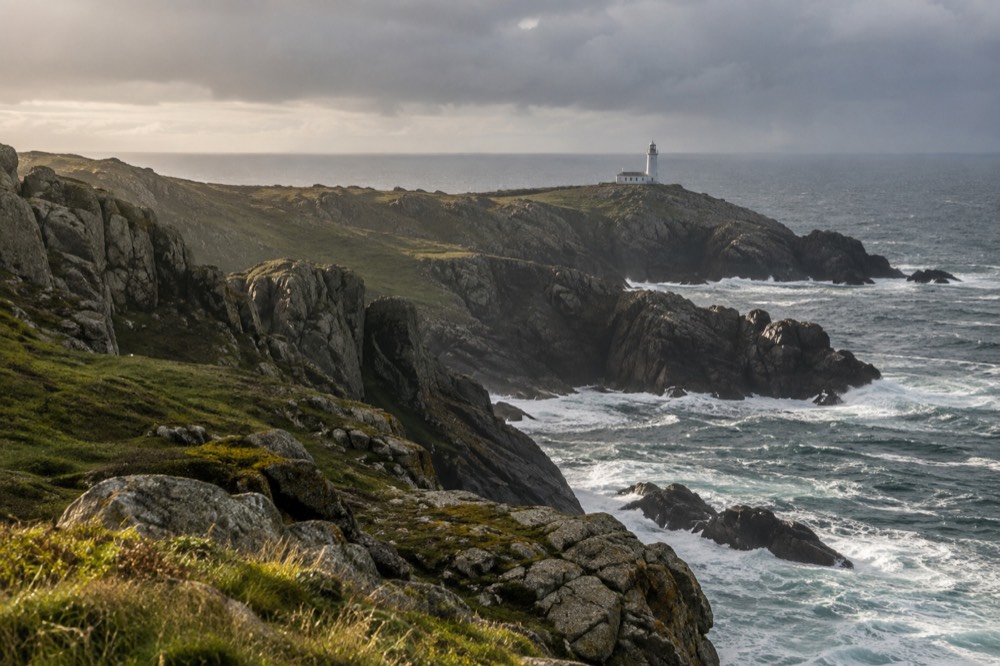
The best value day trip on a strict budget is the half-day Fisterra and Muxía express at from $45 per person, rated 4.4 from 50 reviews, which reaches the Atlantic's end-of-world lighthouse and coast without committing a full day or a full-day price. Full-day options cluster at $53-60: the Rías Baixas winery and mussel-boat trips and the Finisterre, Muxía and Costa da Morte circuits, the strongest of which is rated 4.8 from 1,714 reviews at from $60.
The express logic is simple: the two headline coastal sights, Fisterra's lighthouse and Muxía's sanctuary, are what most day-trippers actually remember, and the express tour gets you both in a half day for less than a full-day ticket. The trade is time at each stop, so if the Costa da Morte's fishing villages and Cabo Vilán matter, the full-day versions justify their price. All of these are day trips, not city activities: the coast is a real distance away and these are road tours, which is why none of them is a substitute for an afternoon in the old town.
| Day trip | From (per person) | Rating | Shape |
|---|---|---|---|
| Fisterra & Muxía Express | $45 | 4.4 from 50 reviews | Half day/express |
| Finisterre, Muxía & Costa da Morte | $59 | 4.7 from 2,312 reviews | Full day |
| Finisterre + Muxía + Costa da Morte, 7 stops | $60 | 4.8 from 1,714 reviews | Full day |
| Rías Baixas with winery, optional mussel boat | $54 | 4.8 from 322 reviews | Full day |
| Rías Baixas, Arousa Island, Combarro, mussel boat | $45 | 4.7 from 30 reviews | Full day |
| Queimada Experience show and tasting | $17 | 4.4 from 69 reviews | Evening, in the city |
That last row is deliberate: the queimada show is the cheapest paid experience on the whole roster and doubles as an evening out. The Rías Baixas row is the wine-lover's answer, pairing the albariño wine country with a mussel-boat run through the Rías Baixas, and the coastal circuits are covered in depth on the Costa da Morte, Fisterra and Muxía pages.
For the coast on the tightest possible budget, the express option is the one to compare first:
When Is The Cheapest Time To Visit Santiago de Compostela?
The cheapest time to visit Santiago de Compostela is the wet shoulder season, October to March excluding the Christmas solemnities, when beds are cheapest and the pilgrim flow thins; the most expensive windows are July, especially the Feast of St. James on 25 July, and the entire 2027 Holy Year from 31 December 2026 to 31 December 2027. The driest and sunniest months, July and August, are therefore the priciest, which is the classic Galician trade-off: you pay for weather you may not even need.
The climate is the reason the shoulder season is underpriced rather than genuinely bad. This is a temperate oceanic climate, wet year-round with annual precipitation on the order of 1,690-1,890mm at the AEMET station, wetter from October to March and driest in July and August. What that means practically is that a cheap November visit trades a chance of rain for empty squares, free sightlines at the Cathedral's doors and off-peak beds, and the city's granite arcades are built for exactly that weather. The weather guide and the best time to visit guide lay out the seasons, and the rainy day guide proves the cheap season's case.
| Period | Budget effect | Why |
|---|---|---|
| October to March (excl. 25 Dec, 30 Dec, 8 Dec area) | Cheapest beds and tours | Wet season, thinner pilgrim flow, fewer festivals |
| July, especially around 25 July | Peak pricing | Feast of St. James; see the feast guide |
| 31 Dec 2026 to 31 Dec 2027 | Holy Year compression | Holy Door opens 31 Dec 2026; 2027 is the next Xacobeo |
| Holy Year windows beyond | 2032, 2038, 2049 | The Sunday cycle after 2027 |
The one cost that does not fall in the cheap season is the Cathedral's own ticketing, which is fixed-rate rather than dynamic: the museum stays at EUR9-23 and the rooftops at EUR15/12 all year. What does fall is everything around it, which is why off-peak planning multiplies a budget rather than trimming it.
Can You Do The Camino de Santiago On A Budget?
Yes, the Camino de Santiago is a budget trip by design: the cheapest tiers of albergue accommodation, the credencial system with its two-stamps-per-day rule, and the free Compostela certificate at the end, issued in person at Rua das Carretas 33, were all built so that walking the last 100km, or cycling the last 200km, costs less than a conventional holiday. The record 530,987 Compostelas issued in 2025 shows how many people now do exactly that.
The certificate rules are the budget's backbone, so they are worth stating exactly, because the Pilgrim's Office enforces them literally. The Compostela requires the last 100km walked or on horseback, or the last 200km cycled, on a recognized route, continuous, with at least two stamps per day in the credencial from official stamping points, and it is issued in person only at the Pilgrim's Office, Rua das Carretas 33, closed 25 December and 1 January. The office's own FAQs are the source here, and the pilgrim office guide and Compostela certificate guide carry the full detail.
The cheapest full Camino entry point for a short budget trip is Sarria, positioned inside the 100km line so that the certificate still applies; the Sarria to Santiago guide covers that final stage, and the wider planning lives in the routes guide, the map guide and the packing list. For cost specifically, the honest structure is that walking is cheap, sleeping is tiered, and eating is wherever the last village's bar happens to be.
Common Questions About A Santiago de Compostela Budget
Is Santiago de Compostela expensive to visit?
Compared with most western European cathedral cities, no. Cathedral entry is free, the airport bus is EUR1 paid to the driver, a tip-based walking tour covers the old town, and a municipal tourist tax has applied since 1 October 2025 (per person per night for up to 5 nights, from EUR1 in private albergues, campsites and tourist apartments to EUR2.50 in five-star hotels). The main paid costs are the Cathedral Museum at EUR9-23, the rooftop tour at EUR15 or EUR12 reduced, food, and beds, which are cheapest in the October-to-March shoulder season.
Is the Cathedral of Santiago de Compostela free?
Yes, general entry to the Cathedral interior is free, daily roughly 7:00am to 9:00pm via the Praterías door. The Cathedral Museum (EUR9-23 depending on ticket type) and the rooftop and Torre de la Carraca guided visit (EUR15 general, EUR12 reduced) are the paid layers on top.
What is the cheapest way from Santiago de Compostela airport to the city?
Line 6A, the Tussa urban bus, at EUR1 paid to the driver or EUR0.36 per trip on a rechargeable card, taking about 25-45 minutes to the centre. A new Monbus contract with a fare near EUR6 is expected to replace it in autumn 2026, possibly by December, so re-check the city's transport page before you fly.
Are the walking tours in Santiago de Compostela really free?
Some are. The GuruWalk free tours, including the most complete one rated 4.95 from 6,342 reviews, are free and tip based: you pay nothing to book and tip the guide at the end. Licensed paid walks start at from $12 per person and run up to about $29 for small-group formats, so the spread covers every budget.
How much should I budget per day in Santiago de Compostela?
For the sights alone, close to zero: the Cathedral, the old town and a mass are all free. A comfortable budget day adds the museum or rooftops (EUR9-23 or EUR15), a menú del día lunch priced off the board at the door, a bed in a hostel or albergue tier checked live rather than quoted, and one small tour or tapas round. The city's fixed prices are low; the variables are your bed and your appetite.
Is there a tourist tax in Santiago de Compostela?
Yes, Santiago de Compostela has charged a municipal tourist tax since 1 October 2025, a surcharge on Galicia's tourist-stay tax: per person per night for a maximum of 5 nights, from 1 EUR in private albergues, campsites and tourist apartments up to 2.50 EUR in five-star hotels; under-18s and stays in Xunta-run public albergues are exempt.
The pattern across everything above is the same one this Santiago de Compostela Travel Guide editorial desk keeps finding in the city's own sources: the spiritual and historic core of Santiago de Compostela is deliberately free, the paid layers are modest and fixed-rate, and the real budget levers are the season you choose, the bed you book, and the one or two paid visits, rooftops over museums if you must choose, that you decide are worth it.
What Can You Still Do In Santiago de Compostela On A Budget Of Almost Nothing?
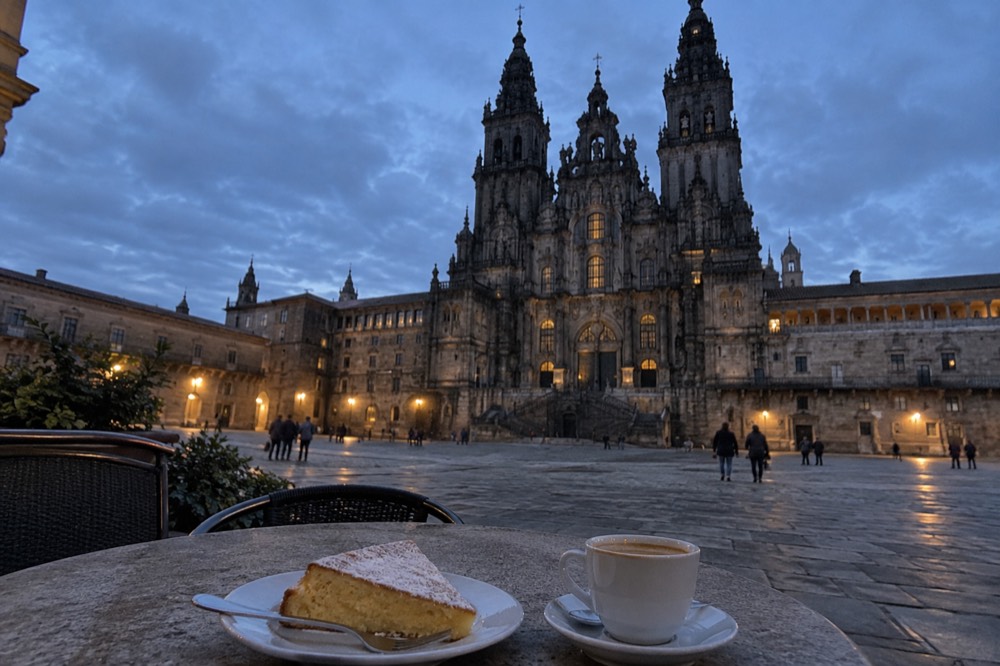
On a near-zero budget Santiago de Compostela still delivers its core: free Cathedral entry daily, a free pilgrim mass, the double-UNESCO old town circuit from Praza do Obradoiro to the Holy Door, the Alameda viewpoint, and a free tip-based GuruWalk covering the old town's fundamentals, with the city's fixed ticket prices, EUR9-23 museum and EUR15 rooftops, held in reserve for the day you can spend.
Start at the free door. The Praterías entrance costs nothing, the naves and the Apostle's tomb cost nothing, and the mass schedule, whichever church it sits in after 16 October 2026, costs nothing. Walk the two squares, the Alameda, the Rua do Franco street even if you only window the tapas bars, and finish with the view rather than the tab. If the budget stretches to exactly one paid thing, make it the rooftop tour: EUR15 for the Cathedral's own guided visit, about 60 minutes, roughly 140 steps up, and the whole granite city laid out below, which is the single most memorable EUR15 in Galicia.
Then, if the legs and the wallet recover together, the coast is a $45 half-day away, and the pilgrim infrastructure means even the way home, by train to Madrid in roughly 3-4 hours or to Vigo in about an hour for the Porto connection, is built for people who arrived with almost nothing and are proud of it.