Padrón Peppers In Santiago de Compostela
Padrón peppers are Galicia's most famous bar snack, a plate of small green peppers fried in olive oil and salted, where one in every handful bites back with heat. Here is what they are, where they come from, and how to eat them well in Santiago de Compostela.
Short answer
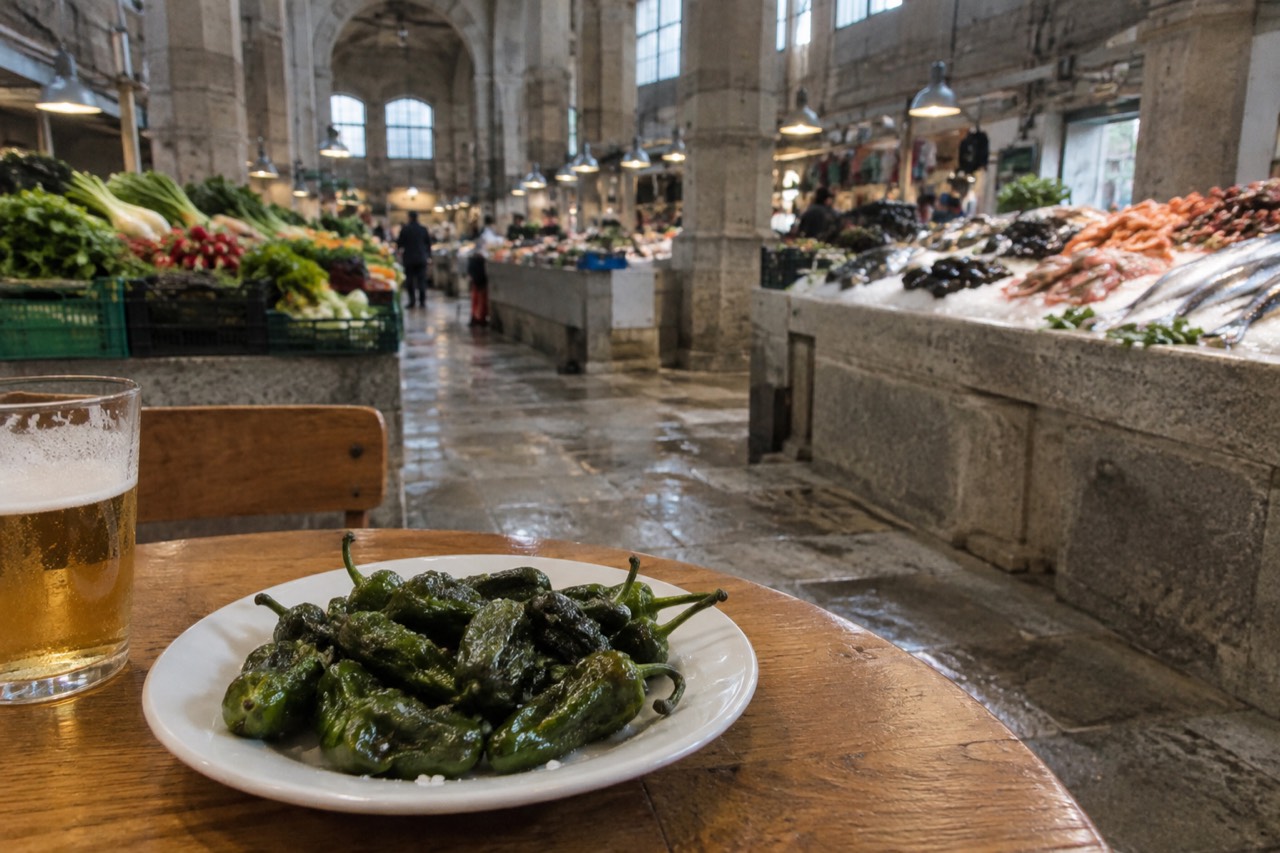
Padrón peppers are small green peppers from the town of Padrón in Galicia, about a short drive from Santiago de Compostela, fried whole in olive oil and served with coarse salt. Most are mild, a few are hot, and nobody can tell which until the first bite. They are a standard tapa across Santiago de Compostela's old town bars.
Padrón peppers reach the bars of Santiago de Compostela as a heap of small, blistered green peppers glossed with olive oil and scattered with coarse salt, and the forkful that bites back is part of the point. Galicians sum the whole experience up in a rhyme: os pementos de Padrón, uns pican e outros non, peppers from Padrón, some are hot and some are not. The dish is one of the defining tastes of Galician cooking, served everywhere from market-side counters to the tapas streets around the cathedral, and it belongs on any eating list for the pilgrim city alongside Galician food classics like pulpo a la gallega and tarta de Santiago.
This guide from the Santiago de Compostela Travel Guide editors covers what the peppers actually are, why the heat is unpredictable, how the dish is cooked, where to find it in the old town, when it is in season, and how to build a full eating day around it.
What Are Padrón Peppers?
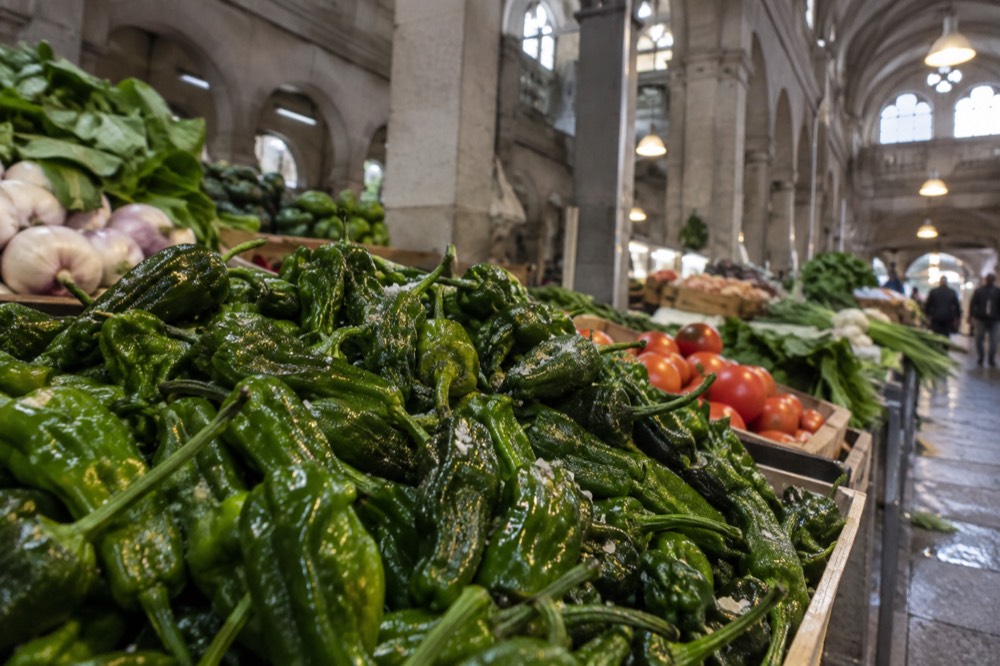
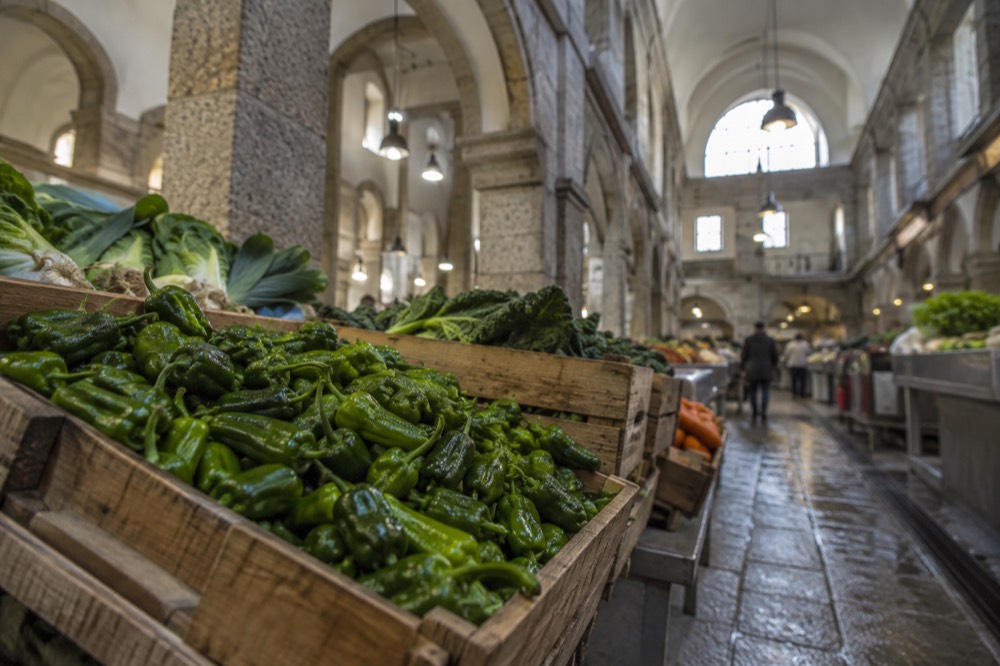
Padrón peppers are small, ridged green peppers, usually two to five centimetres long, grown around the town of Padrón in Galicia and eaten whole, stem and all, after being fried in olive oil and salted. They are served as a tapa rather than as a main course, they arrive piled on a small plate, and the gamble over which ones are hot is the reason they are famous. They are a registered product of their home region and a staple of Galician cooking.
They are not a variety you slice or stuff. The pepper is eaten by holding the stem, biting the body off, and discarding the stalk, which keeps hands clean and oily at the same time. The skin wrinkles and blisters in the pan, the flesh stays slightly sweet and grassy under the salt, and the oil they are fried in is as much part of the dish as the peppers themselves.
Visitors arriving off the Camino de Santiago will meet them early, because they appear on nearly every menu in the old town, often listed simply as pementos de Padrón on Galician-language menus and pimientos de Padrón on Spanish ones. A plate is built to be shared, ordered alongside a drink, and finished in minutes, which is exactly how Galicians eat them.
Where Do Padrón Peppers Come From?
The peppers take their name from Padrón, a small town in the A Coruna province of Galicia, reached from Santiago de Compostela by a short regional drive through the Sar and Ulla river valleys. The variety has been grown in that mild, damp corner of Galicia for generations, and the town's growers still supply the plates that reach Santiago de Compostela's bars every season. The pepper and its home town are inseparable in name and in reputation.
Padrón sits in the same river landscape that pilgrims on the Portuguese routes cross on the final stages toward Santiago de Compostela, and the town is a recognized stop on the Camino Portugues. Food-motivated visitors often pair a pepper pilgrimage to the source with a coast and wine day in the Rias Baixas, since the pepper's home region and Galicia's Albariño wine country sit in the same general corner of Galicia.
| Fact About The Pepper | What To Know |
|---|---|
| Name | Padrón pepper, pemento de Padrón in Galician, pimiento de Padrón in Spanish |
| Home | The town of Padrón and its river-valley farmland in Galicia, northwest Spain |
| Size | Small, typically a few centimetres long, ridged and green |
| How it is eaten | Fried whole in olive oil, salted, eaten by hand with the stem as a handle |
| Heat | Mostly mild, with an unpredictable minority of hot ones |
| Role on the menu | A shared tapa, ordered with drinks |
The single most useful thing a visitor can know is that the pepper is a seasonal product with a home, not a factory item. When the harvest is at its peak the peppers are small, tender and everywhere; out of season the plates still appear, because the trade ships them year round, but the story of eating them at their best is a story of timing.
How Are Padrón Peppers Cooked And Served?
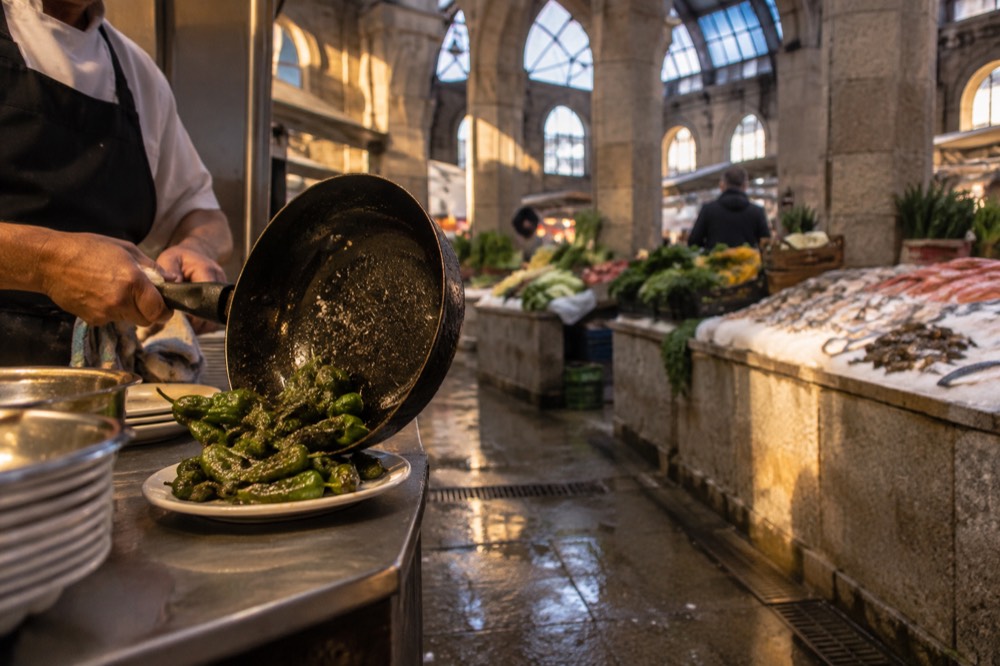
The classic preparation is deliberately short: whole peppers go into a pan or fryer with a generous amount of olive oil, are tossed until the skin blisters and wrinkles, are drained briefly, and are finished with coarse Atlantic salt. Nothing else is added. No batter, no sauce, no marinade, and the stems stay on so the pepper can be lifted and bitten without a fork.
The restraint is the recipe. Galician bar kitchens treat the pepper the same way they treat octopus or empanada: the ingredient is the event, and technique is limited to heat, oil and salt. The peppers should arrive hot enough to steam, oily enough to shine, and soft enough to collapse at the bite rather than snap.
There are only a few practical rules for the eater. Take them by the stem. Expect the first plate to vanish quickly, because a standard ración of peppers is fewer peppers than it looks. And order them with something cold to drink, because a hot pepper with no relief is a lonely experience.
| Stage Of The Dish | What Happens |
|---|---|
| Harvesting | Picked small and green, sorted, and shipped quickly to market |
| Frying | Cooked whole in abundant olive oil until the skin blisters |
| Salting | Coarse salt scattered over the drained peppers |
| Serving | Brought to the table hot, piled high, stems on |
| Eating | Held by the stem, bitten off, stalk left on the plate |
| Sharing | Ordered as a tapa or ración for the table with drinks |
A plate of these peppers is also the easiest order in the city for a visitor with any dietary puzzle to solve, since the traditional version contains exactly three things: pepper, olive oil, salt. Worth confirming with the bar on any specific dish, but the traditional recipe carries no batter, no dairy and no meat.
Why Are Some Padrón Peppers Hot And Others Mild?
Most Padrón peppers are mild and slightly sweet, and a minority, commonly described as roughly one in ten, carry real heat. The heat depends on growing conditions: stress from sun, drought and heat in the field pushes individual peppers toward capsaicin, the compound that makes chilies hot. Nobody can predict which pepper in a plate is the hot one, which is why the dish is compared to a small gamble.
The rhyme the dish is famous for exists because of exactly this. A plate looks uniform, and the differences hide inside. A mild pepper tastes grassy, faintly sweet and buttery from the oil. A hot one announces itself fast, peaks, and fades, and regulars say the next mild pepper resets the mouth.
The ratio is not fixed. Growers and cooks agree that the hottest peppers tend to come from the driest, sunniest stretches of the season, and that the small, earliest peppers of the season are the gentlest. What that means for the eater is simple: order them early in the season if the gamble is unwelcome, and enjoy the theater if it is not.
Where To Eat Padrón Peppers In Santiago de Compostela?

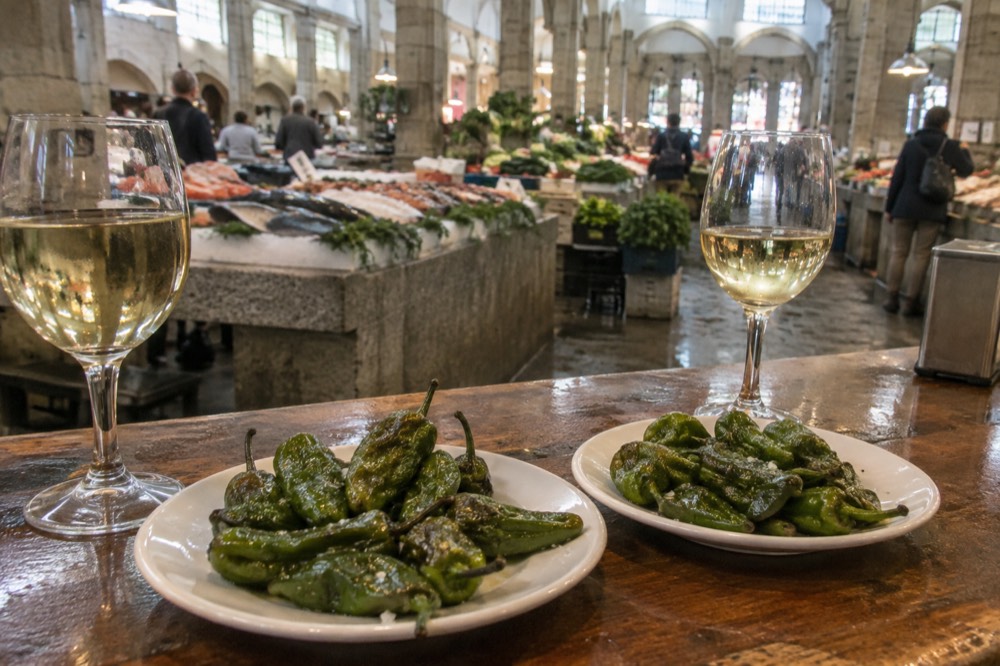
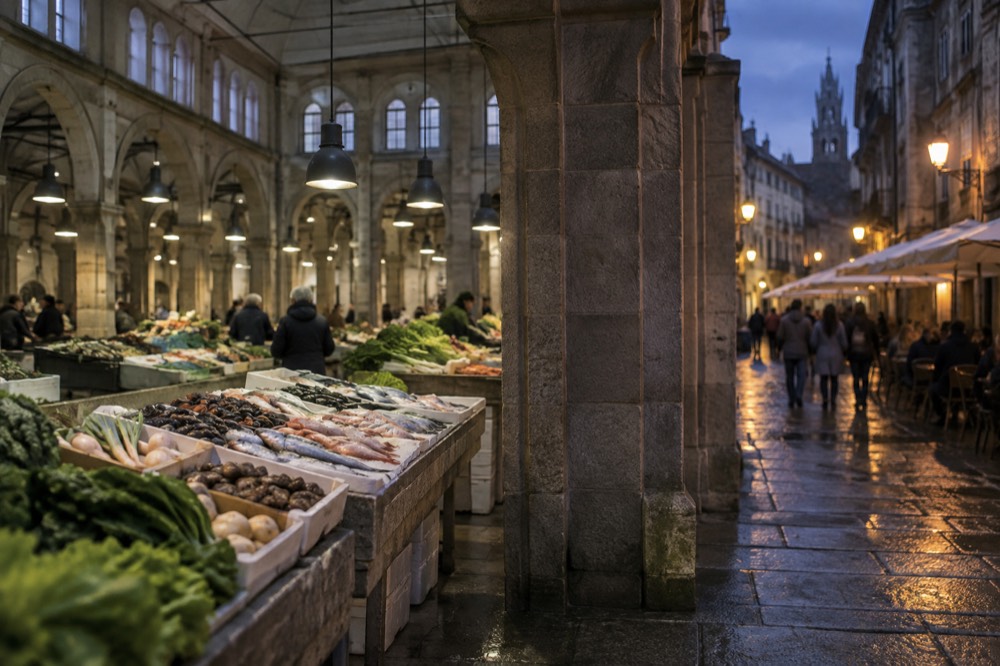
Padrón peppers appear on menus across the entire old town of Santiago de Compostela, from the tapas bars of Rua do Franco and the streets around Praza do Obradoiro to the counters near the Mercado de Abastos. The best strategy is not one famous address but a pattern: order them wherever the kitchen fries to order and the plates leave the pass hot. A street-by-street breakdown of the city's eating lanes makes the choice easier.
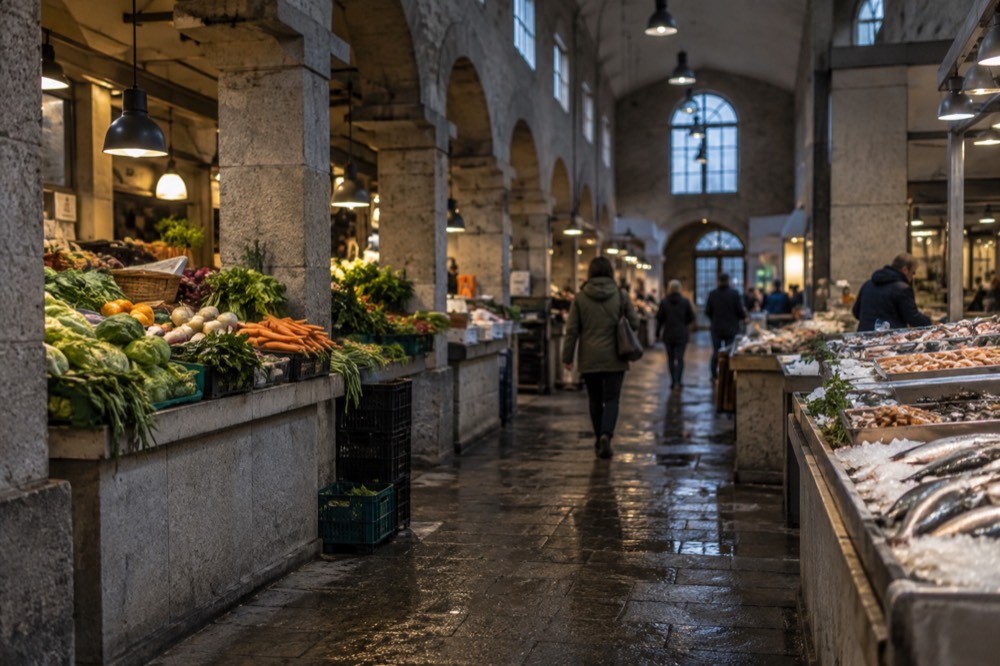
The old town's eating geography makes this easy. Rua do Franco and its side streets form the classic tapas run a short walk from the cathedral, and peppers, pulpo and empanada appear on neighbouring menus all down the street. Around the market, produce-driven counters cook what the stalls sell that morning, which is the closest thing to eating in the pepper's season that a short city visit allows. The where to eat in Santiago de Compostela round-up covers those streets one by one.
For visitors who want the dish explained rather than just served, a guided walk is an efficient opener. The Old Town Walking Tour With An Official Guide, from $12 per person and rated 4.8 from 338 reviews on its live listing, routes through the streets where the tapas bars cluster, and an official guide can point out which lanes hold the traditional market-side kitchens.
| Area Of The Old Town | What To Expect From A Pepper Order |
|---|---|
| Rua do Franco and side streets | The classic tapas run, pepper plates on most menus, busy evenings |
| Streets around Praza do Obradoiro | Bars a step from the cathedral, full tapas menus, tourist-heavy at midday |
| Around the Mercado de Abastos | Market-adjacent counters cooking from that morning's stalls |
| Praza da Quintana side | Quieter traditional bars, older kitchens, more local custom |
One honest planning note: bar kitchens in the old town are busiest when the pilgrim day ends, and the evening tapas hours fill first. Eating peppers as a late lunch or an early-evening first round is the calm way to do it.
When Is Padrón Pepper Season?
The harvest is a summer one: the peppers are picked small and green through the warm months, with the peak arriving in the Galician summer, and plates in Santiago de Compostela are at their best when the season's first small peppers reach the market. The dish is served year round, because growers ship through the off season too, but the small, tender, early peppers are what cooks and growers talk about.
Galicia's climate frames the season. The region is wet year round and wetter from October to March, with the driest stretch in July and August, and the pepper harvest runs against that calendar, flourishing in warmth but not in the cold, grey months. Anyone planning a wider trip can line this up with the best time to visit Santiago de Compostela guide, which works through the same seasonal trade-offs.
| Season | Pepper Situation In Santiago de Compostela |
|---|---|
| Spring | Early small peppers start reaching bars as the weather warms |
| Summer | Peak harvest, the classic season, smallest and most tender peppers |
| Autumn | Harvest winds down as the wet months return, plates continue from stored supply |
| Winter | Still on menus from shipped stock, at their least seasonal |
The seasonal logic also explains a market habit worth watching. Cooks who buy at the Mercado de Abastos take the peppers that look smallest and tightest, because size is the visible proxy for tenderness. A visitor shopping or ordering can use the same cue.
What To Drink With Padrón Peppers?
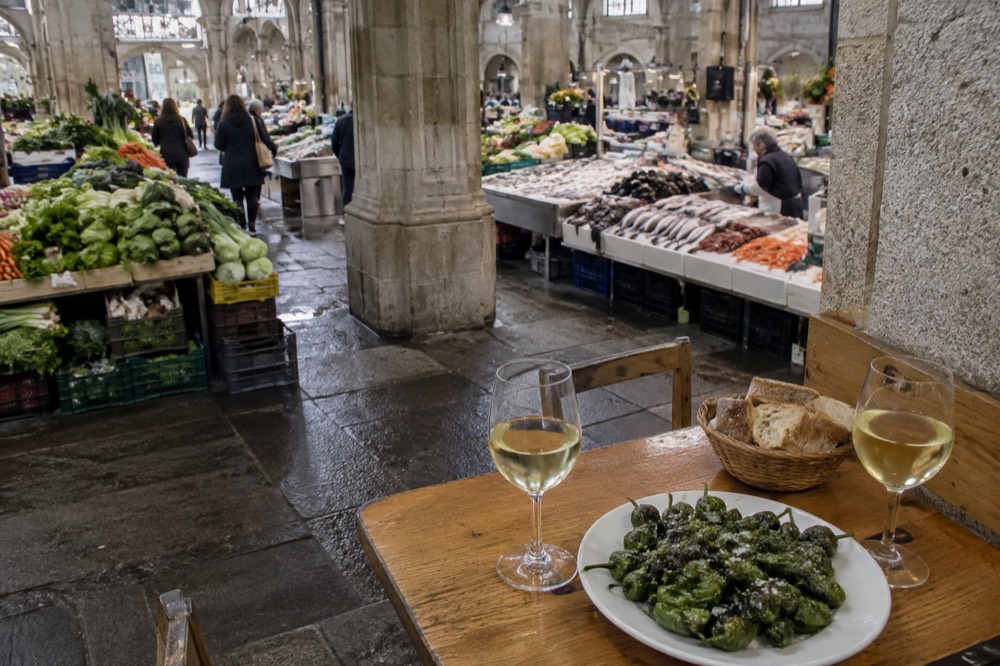
The default pour is a young Albariño white wine from the Rias Baixas wine country of coastal Galicia, whose sharp citrus and saline edge cuts straight through the olive oil and the salt. A cold Galician lager does the same job more casually, and the pairing logic is the same in both cases: something cold, dry and clean against a warm, oily, salty plate.
The pepper and the Albariño grape are neighbours, since both come out of the same coastal corner of Galicia, and the pairing is close to compulsory in the old town's bars. The Albariño wine guide covers the grape, its home region around Cambados and the Rias Baixas, and what distinguishes the young bottles from the barrel-aged ones. For the pepper plate, the young style is the traditional match.
For a fuller food-and-wine outing, the Rias Baixas day trips that combine a winery visit with the coast are the natural extension of the pairing. Excursion to Rias Baixas With Winery, with an optional mussel boat, runs a full day from Santiago de Compostela, from $54 per person and rated 4.8 from 322 reviews on the operator's live listing, and it puts the pepper's home region and the Albariño's on the same day.
| Drink | Why It Works With The Dish |
|---|---|
| Young Albariño | Citrus and saline acidity against oil and salt, the classic regional match |
| Galician lager | Cold, dry and casual, the everyday bar pour |
| Barrel-aged Albariño | Rounder, for drinkers who prefer weight over snap |
| Local cider-style pours | A sharper regional alternative where bars stock it |
How Do Padrón Peppers Fit Into A Day In Santiago de Compostela?
The plate slots naturally into the rhythm of a sightseeing day: it works as the first tapa of an evening run through the old town, as the shared opener before a sit-down dinner, or as the reward course after a long walking morning. It is a fifteen-minute dish, not a destination meal, and the city's layout, with the tapas streets, the market and the cathedral all inside one compact walkable core, makes it easy to fit in.
A practical shape for a food-led day: morning at the market counters while the stalls trade, a cathedral visit, then an evening tapas run that starts with peppers and a cold Albariño before moving on to octopus and empanada. Pilgrims finishing their walk, a moment the arriving in Santiago de Compostela itinerary sequences in detail, tend to arrive at the same conclusion independently, because the first plates of anything fried and salty after a week of walking taste engineered for the moment.
Visitors stretching the day beyond the city have options that carry the same food logic to the coast. Express Tour to Muxia and Cape Finisterre from Santiago compresses the coast into a half-day express trip, from $45 per person and rated 4.1 from 9 reviews on its live listing, and full-day Costa da Morte trips cover more stops.
Planning Around Cathedral Works And The 2027 Holy Year
Visitors building an eating trip around Santiago de Compostela should know three current facts. The Botafumeiro, the cathedral's swinging censer, is temporarily out of action, with written confirmation from the cathedral on 5 September 2026 and no return date published. Pilgrim masses at 9:30am, noon and 7:30pm move to the Church of San Agustin from 16 October 2026, with only the 7:30am mass staying in the cathedral. The next Holy Year is 2027, not 2026, and the Holy Door opens on 31 December 2026.
None of this touches a plate of peppers, but all of it shapes the city those plates are eaten in. The Holy Year of 2027, running from the Holy Door's opening on the evening of 31 December 2026 through 31 December 2027, will swell the crowds in the tapas streets and the market, and anyone who wants calm tables and easy bar stools should weigh that. The holy year 2027 guide works through what changes.
For mass-going visitors, the practical point is to check the current arrangement rather than trusting an older guidebook: through 15 October 2026 the three main masses sit at the cathedral's high altar, and from 16 October 2026 the 9:30am, noon and 7:30pm masses relocate to San Agustin, with the 7:30am mass alone remaining inside the cathedral, as the pilgrim mass guide sets out with the dates.
Common Questions About Padrón Peppers
Are Padrón peppers very hot?
Mostly no. The majority of Padrón peppers are mild and slightly sweet, and only a minority, often described as roughly one in ten, carry noticeable heat. Heat depends on growing stress in the field, so nobody can tell which pepper in a plate is the hot one until the first bite.
How do you eat Padrón peppers?
Hold the pepper by its stem, bite the body off, and leave the stalk on the plate. They are eaten by hand, hot from the pan, with the olive oil and coarse salt they were cooked in as the dressing.
Do you eat the seeds and the stem?
The body of the pepper, seeds included, is eaten whole. The stem is the handle: it is held, not eaten, and left on the plate after the flesh is bitten off.
Can I find Padrón peppers outside Galicia?
The variety is grown commercially beyond Galicia and ships widely, but the plates in Santiago de Compostela sit closest to the source and, in summer, to the peak of the harvest. For the seasonal dish at its best, eating it in Galicia in the warm months is the reliable version.
What wine goes with Padrón peppers?
A young Albariño from the Rias Baixas region is the traditional match: cold, citric and saline, it cuts the oil and the salt. A cold Galician lager does the same job more casually.
When is the best month for Padrón peppers?
The harvest peaks through the Galician summer, when the smallest and most tender peppers reach the bars. The dish is served year round in Santiago de Compostela, but summer plates are the ones growers and cooks themselves wait for.
A plate of Padrón peppers costs a few minutes and delivers the whole character of Galician cooking in one bite: a single ingredient, hot oil, coarse salt, and an honest element of chance. Order them on the first evening in Santiago de Compostela, and the city's tapas rhythm will make sense from the second plate onward.