Camino de Santiago: The Complete Pilgrim Guide To Santiago de Compostela
The Camino de Santiago is a network of medieval pilgrim routes crossing Spain, Portugal and France, all converging on the tomb of St. James beneath the Cathedral of Santiago de Compostela, and more than half a million people earned the official Compostela certificate for walking it in 2025 alone.
Short answer
The Camino de Santiago is a network of pilgrim routes to Santiago de Compostela in Galicia, Spain. To earn the official Compostela certificate you must walk at least the last 100km (or cycle the last 200km) with two stamps per day, then collect it in person at the Pilgrim's Office on Rua das Carretas 33.
The Camino de Santiago ends at a specific set of coordinates: the silver casket held to contain the remains of St. James the Apostle, sitting in the crypt beneath the Cathedral of Santiago de Compostela in Galicia, northwestern Spain. Everything else about the Way of St. James spreads outward from that point. The routes run across northern Spain, down from the Pyrenees, up from Portugal and even out to the Atlantic at Fisterra, and UNESCO has recognized the network twice over, once for the Old Town of Santiago de Compostela in 1985 and separately for the Routes of Santiago de Compostela in 1993. Those are two distinct inscriptions, not one, and the city treats them as such. The Pilgrim's Office recorded 530,987 Compostelas issued in 2025, its record year to date, so the practical question facing most readers is no longer whether to walk, but which route, when, and what to do about the certificate, the beds and the weather.
This guide covers the whole journey as far as this site's home city is concerned: what the Camino is, which route to pick, how far a day should stretch, what the certificate actually requires, where pilgrims sleep, when to walk, and what awaits in Santiago de Compostela on the final morning. The history, the route-by-route breakdowns and the packing detail each have their own pages: the Camino's history, the full routes comparison and the packing list.
What Is The Camino de Santiago?
The Camino de Santiago is a network of historically Christian pilgrim routes, walked today by several hundred thousand people a year, all converging on the Cathedral of Santiago de Compostela in Galicia, Spain, where the Apostle St. James is held to be buried. The modern Way is served by an official credential system, a network of pilgrim hostels called albergues, and a Pilgrim's Office that issued 530,987 Compostela certificates in 2025, its highest recorded year.
The route that most people picture when they hear the word Camino is the Camino Francés, but it is only one branch of a system that includes the Portuguese Way from the south, the Northern Way along the Atlantic coast, the Primitivo and the Ingles among others. Each is described in the dedicated routes guide. Pilgrims have been moving along these paths since the Middle Ages, drawn by a medieval discovery the Cathedral itself still commemorates every 30 December with the solemnity of the Transfer of the Apostle. That liturgical calendar is not decorative trivia: several of its dates are the same ones on which the Cathedral's giant incense burner, the Botafumeiro, would normally swing.
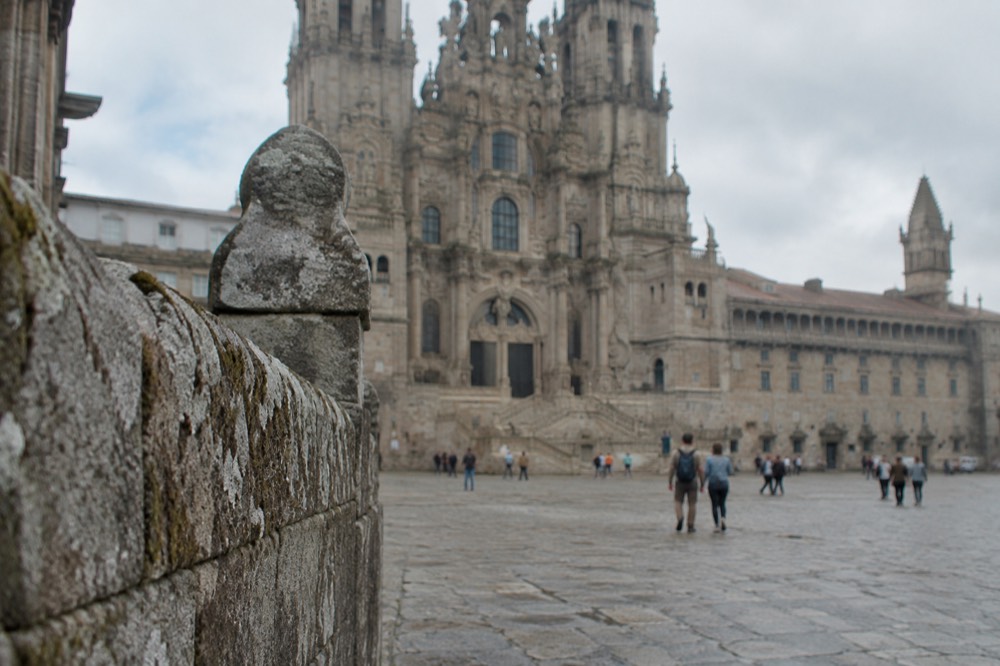
One distinction matters before any other planning. The Camino is not a single trail with a start and a finish, and the phrase "doing the Camino" can mean anything from a full Pyrenees-to-Santiago crossing of the Camino Francés to the last 100km from Sarria, which is the minimum distance that still qualifies for the official Compostela certificate. The rules for that certificate are fixed, published by the Pilgrim's Office, and detailed further down this page. Nobody walking fewer than the required final kilometres receives the document, however long their journey felt.
Which Camino Route Should You Walk To Santiago de Compostela?
The Camino Francés is the busiest and best-served route, the Camino Portugues the second busiest and the flattest option from the south, the Camino del Norte the quiet coastal alternative, and the Camino Primitivo and Camino Ingles the shorter and harder or shorter and easier picks respectively, with the choice turning almost entirely on how many days you have, whether you want company on the trail, and whether the last 100km requirement shapes your start point.
The table below is a character comparison rather than a distance ranking, because the distances attach to each route's own geography and are covered in the routes guide and the Camino Francés page.
| Route | Direction and character | Who it suits |
|---|---|---|
| Camino Francés | From the French border across northern Spain; busiest, densest services, most social | First-time pilgrims who want beds guaranteed and company nightly |
| Camino Portugues | From Lisbon or Porto northward; the second-busiest, flattest walking | Pilgrims who prefer gentler gradients and coastal or inland choice |
| Camino del Norte | Along the Atlantic coast through Basque country and Cantabria; quieter, hillier, greener | Walkers who want scenery over infrastructure |
| Camino Primitivo | From Oviedo through the Asturian mountains; the oldest route, shortest and toughest terrain | Experienced walkers short on time |
| Camino Ingles | From Ferrol or A Coruna into Galicia; compact and quiet | Pilgrims with one week or less |
| Camino Finisterre | Outbound from Santiago de Compostela to the sea; the only route starting at the tomb | Pilgrims extending their walk after arrival |
Two facts about the two busiest routes are worth fixing early. The Portugues has its own dedicated guide on this site, and its northern final stretch crosses into Galicia, which means its last days share the same wet, green terrain as every other route's final approach. There is no direct rail line from Porto to Santiago de Compostela: the pack's verified rail picture has travellers changing at Vigo, with Santiago to Vigo itself a roughly one-hour regional train ride. Anyone comparing the Portugues against the Francés on practical grounds should weigh gradients, services and crowd levels before booking anything, and this site's answers section carries the two routes compared head to head.
The best month question has its own answer page on this site, and the honest short version is that it interacts with Galicia's climate. AEMET's station data for Santiago de Compostela describes a temperate oceanic climate, wet year-round, wetter from October to March and driest in July and August, with annual precipitation on the order of 1,690 to 1,890mm depending on the station and year measured. July and August are therefore the driest walking months and also the most crowded, and anyone planning a Holy Year walk should note that the next one is 2027, covered below.
How Long Does It Take To Walk The Camino de Santiago?
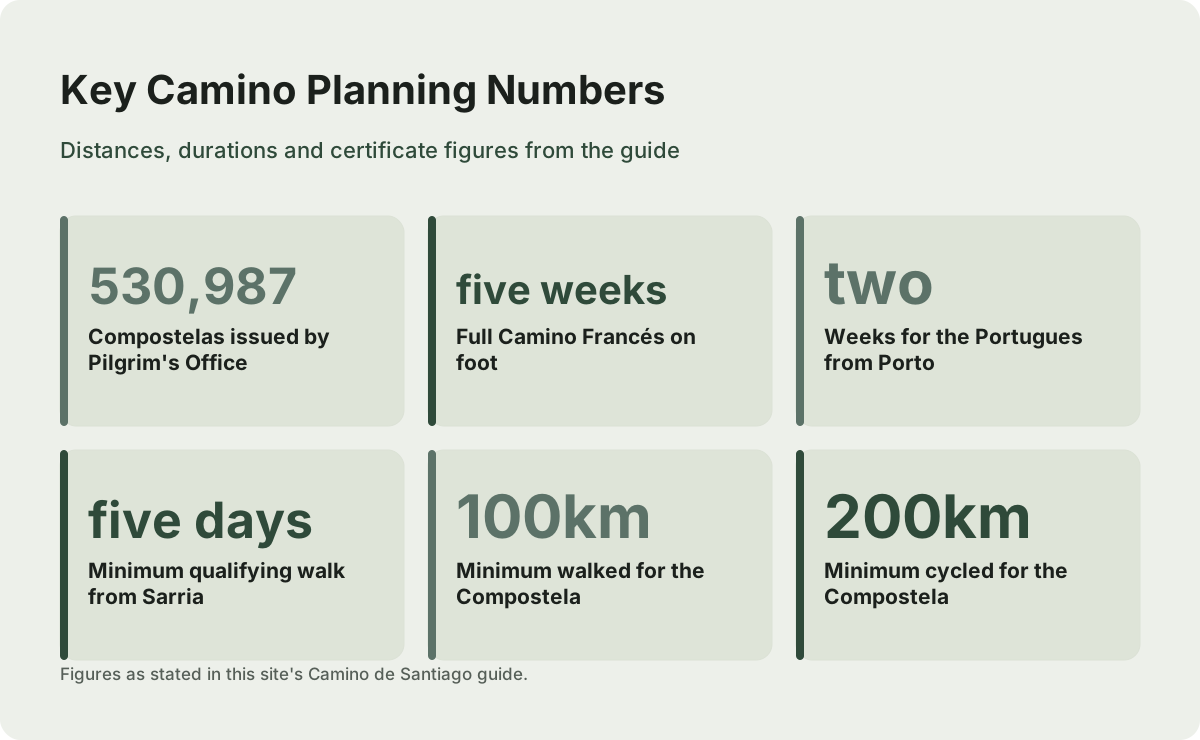
The full Camino Francés takes roughly five weeks on foot, the Portugues from Porto roughly two, the minimum Compostela-qualifying distance from Sarria about five days, and the same route by bicycle takes about half the walking time, with the official floor for a certificate being the last 100km walked or the last 200km cycled.
The 100km floor is the single most important number in Camino planning, because it converts the Way from a month-long undertaking into a long weekend for anyone starting at Sarria. The details behind the timing question, including how the days break down stage by stage, sit in this site's dedicated answer on how long it takes to walk the Camino de Santiago, and the cycling variant has its own page on the Camino by bike. Age is not the barrier many readers assume: a 70-year-old can walk the Camino, and families do it too, as the Camino with kids page explains.
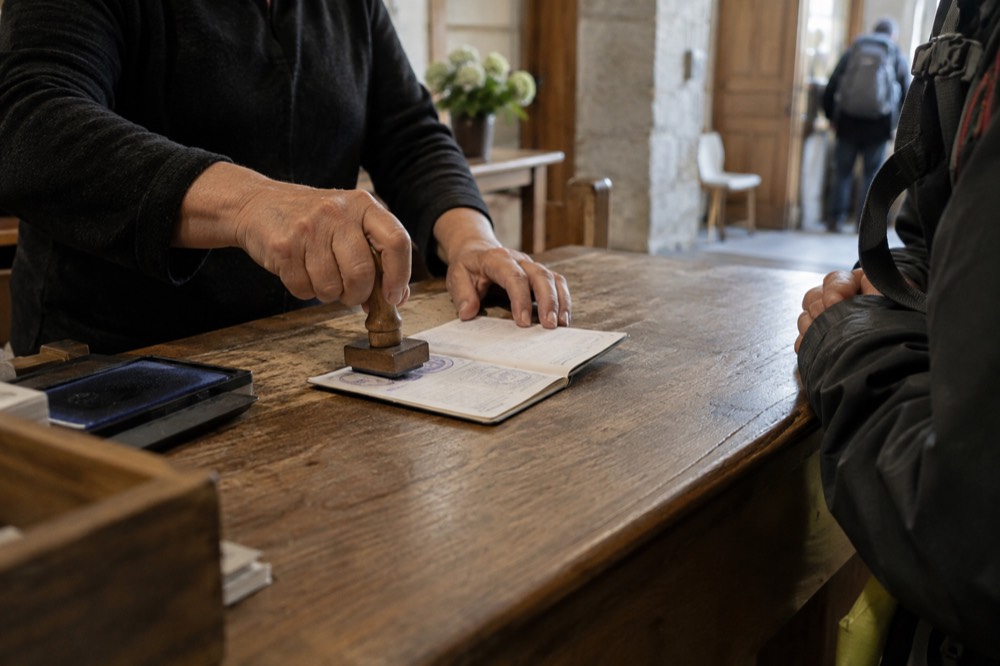
A daily rhythm matters more than a daily distance target. Most walkers settle into mornings on the trail by 7 or 8am, a midday stop in whatever village the route passes, and arrival at the next town's albergue by mid-afternoon, which is when the better beds fill. The credential, the pilgrim passport that gets stamped twice a day, is the document that holds this rhythm together; the rules are on this site's pilgrim passport and credential page.
How Do You Earn The Compostela Certificate?
The Compostela certificate requires walking at least the last 100km of a recognized Camino route on foot or on horseback, or the last 200km by bicycle, collecting at least two stamps per day in the pilgrim credential from official stamping points, and presenting the completed credential in person at the Pilgrim's Office at Rua das Carretas 33 in Santiago de Compostela, which is the only place it is issued.
Those requirements come from the Oficina del Peregrino's own published rules and FAQs, and they are enforced at the counter, not self-declared. The office closes on 25 December and 1 January, and its opening hours vary seasonally. The full breakdown is on this site's Compostela certificate page and Pilgrim's Office guide.
| Requirement | On foot or on horseback | By bike |
|---|---|---|
| Minimum qualifying distance | Last 100km | Last 200km |
| Stamps in the credential | Minimum two per day, from official stamping points | Minimum two per day |
| Route | Must be a recognized Camino route, walked continuously | Same |
| Where it is issued | In person only, Rua das Carretas 33, Santiago de Compostela | Same |
| Office closures | 25 December and 1 January | Same |
The credential itself is the document that makes the walk legible to the office. It is not the same as the certificate: the credential is stamped along the way, the Compostela is the Latin document issued at the end. Walkers under the distance floor, or those who skip the stamp discipline, can still finish the walk and still attend the pilgrim mass, they simply do not receive the certificate. The current rules, and the questions around recent changes to them, are covered in this site's answer on the new rules for the Camino de Santiago.
What Does It Cost To Walk The Camino de Santiago?
A Camino budget is dominated by bed and food: the albergue system keeps nightly sleeping costs low, a hospitalero-run municipal bed costs a few euros while private albergues and small hotels step upward from there, and the certificate itself is free, so the honest answer is that the walk can be done cheaply but the price question has its own verified breakdown on this site's dedicated cost page.
This page deliberately does not print a nightly price table, because the pack's cost figures attach to specific subjects rather than to a generic Camino budget, and planning ranges for a route this long mislead more than they help. The figures that are verified for the endpoint city are worth tabulating, because pilgrims routinely underestimate the arrival-day spend on the Cathedral's paid visits.
| Item at the Santiago de Compostela end | Verified figure | Source basis |
|---|---|---|
| Cathedral basilica entry (naves, high altar, crypt) | Free, generally 7:00am to 9:00pm via the Praterias door | Cathedral's published visitor information |
| Cathedral Museum permanent collection and Gelmirez Palace | EUR 9-23 depending on ticket type, general or reduced | Cathedral ticketing |
| Rooftop and Torre de la Carraca guided tour | EUR 15 general, EUR 12 reduced, roughly 60 minutes, about 140 steps | Cathedral ticketing, September 2026 |
| Compostela certificate | Free, issued in person | Oficina del Peregrino |
| Pilgrim credential | Collected before or during the walk, stamped along the route | Oficina del Peregrino |
For the route itself, this site's dedicated answer on the average cost to walk the Camino de Santiago carries the budget breakdown, and the budget guide to Santiago de Compostela covers the arrival city. One policy note for the arrival end: Santiago de Compostela has charged a municipal tourist tax since 1 October 2025, a surcharge on Galicia's tourist-stay tax, from 1 EUR per person per night (maximum 5 nights) in private albergues, campsites and tourist apartments up to 2.50 EUR in five-star hotels, with under-18s and stays in Xunta-run public albergues exempt.
Where Do You Sleep On The Camino?
Pilgrims sleep mainly in albergues, hostel-type accommodations split between municipal ones run for walkers, religious ones staffed by volunteers, and private ones run as businesses, with beds allocated mostly in first-come dormitories and the whole system documented on this site's albergue accommodation guide, which also covers the alternative of small hotels and casas rurales for walkers who want a door that locks.
The albergue system is the Camino's real infrastructure. Beds in municipal and religious albergues are cheap and intended for pilgrims with credentials; private albergues charge more and often allow booking ahead, which matters in the peak July and August window and on the Sarria start line. The albergues guide covers the etiquette, the booking question and the mixed-dorm conventions, and the luggage transfer services that let walkers skip carrying a full pack have their own page at Camino luggage transfer.
Solo walkers ask one question more than any other, and it deserves a direct answer rather than reassurance: this site's page on solo women walking the Camino safely is the dedicated treatment. The albergue network is the structural reason most solo pilgrims report feeling looked after, because the daily rhythm puts walkers in shared, credentialed accommodation rather than isolated lodging. Where to stay in the city at the end is a separate decision, covered in this site's where-to-stay guide for Santiago de Compostela.
What Happens When You Arrive In Santiago de Compostela?
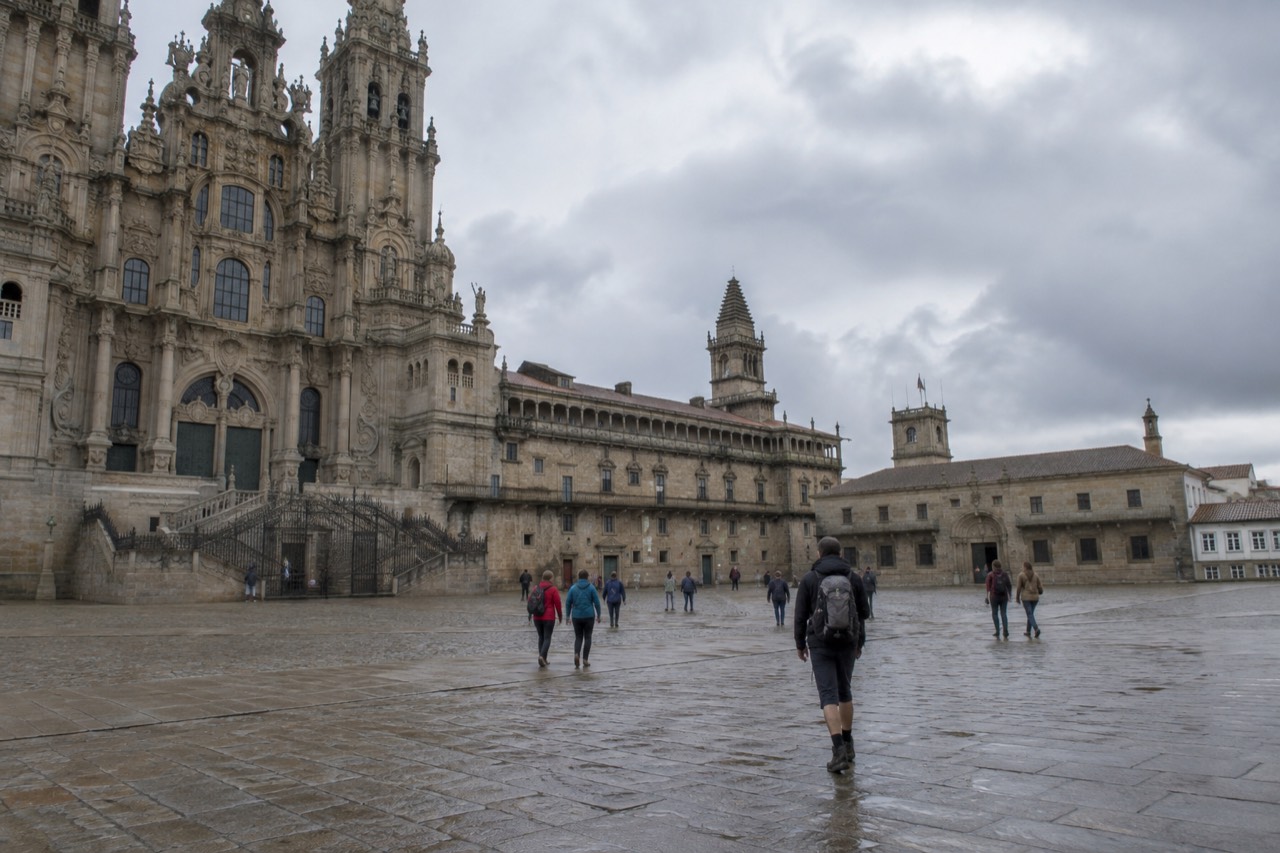
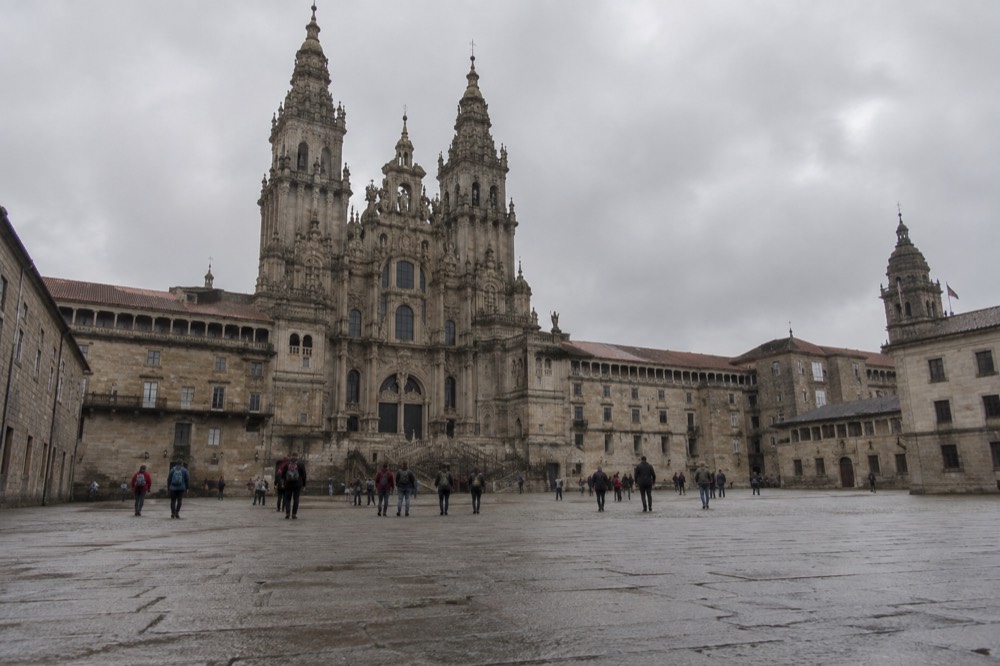
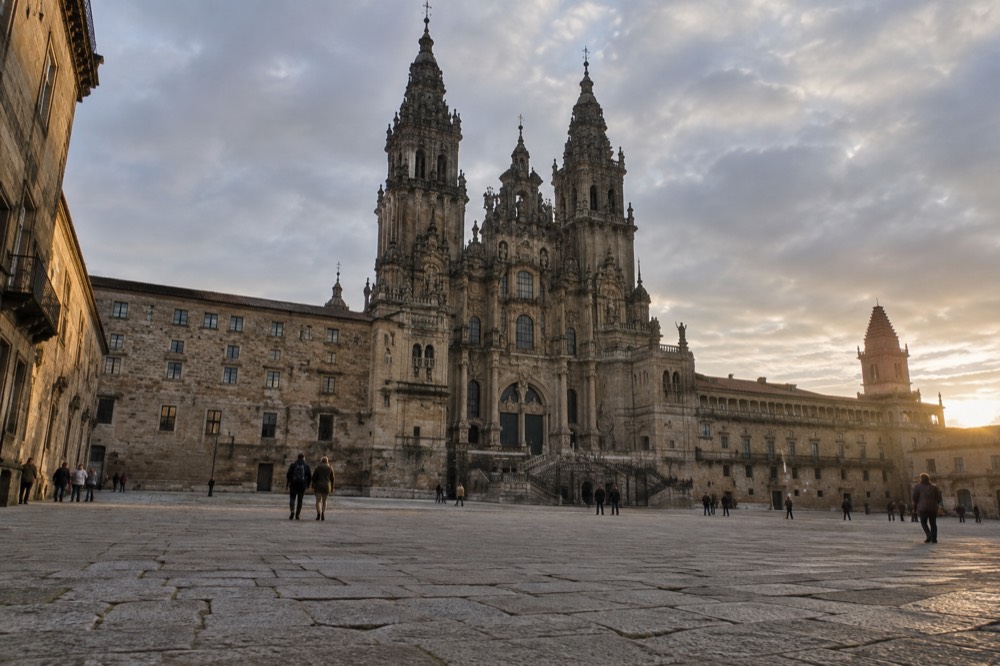
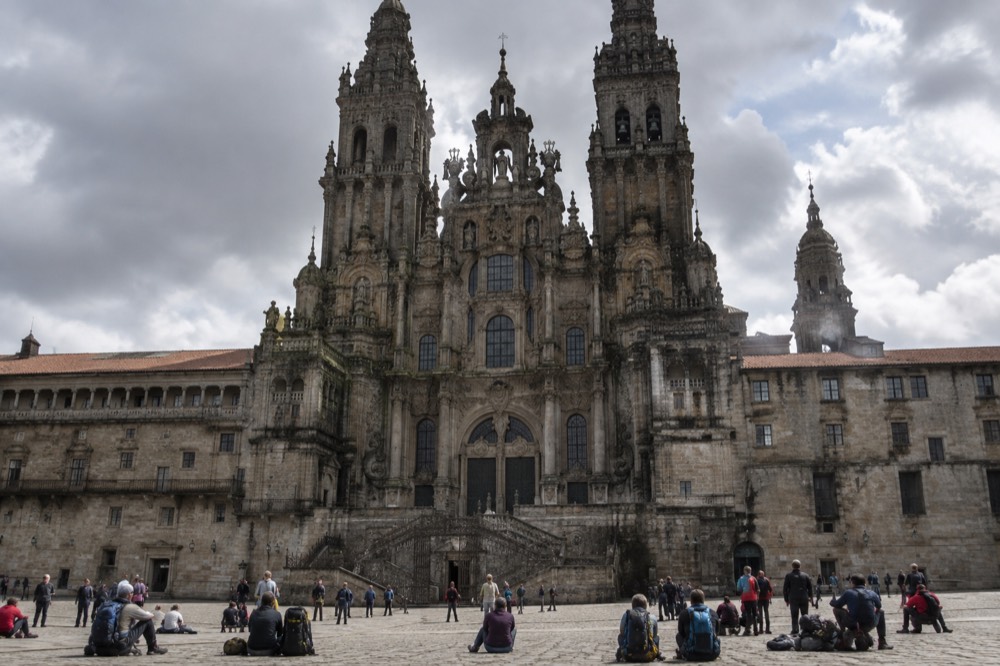
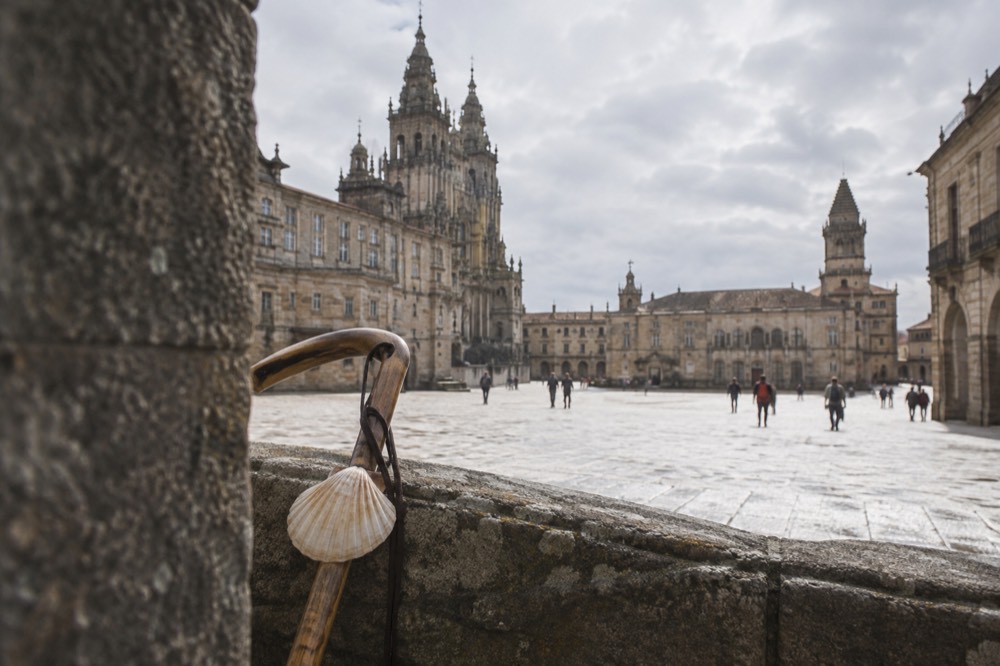
Arrival in Santiago de Compostela centers on the Praza do Obradoiro, the square the Cathedral faces, followed by the Pilgrim's Office queue at Rua das Carretas 33 for the Compostela, and then a decision about the pilgrim mass, which is currently said at 7:30am, 9:30am, noon and 7:30pm at the Cathedral's High Altar, though from 16 October 2026 the 9:30am, noon and 7:30pm masses move to the Church of San Agustin while only the 7:30am mass stays in the Cathedral.
That two-phase mass arrangement is the single most important current fact about arrival, and it is dated for a reason. The Cathedral's main chapel is being remodelled in preparation for the 2027 Holy Year, and the relocation of three of the four daily masses to San Agustin runs from 16 October 2026 until further notice. Pilgrims arriving before that date will find the traditional arrangement; pilgrims arriving after it will not. The full detail is on this site's pilgrim mass page.
| Pilgrim mass | Until 15 October 2026 | From 16 October 2026 |
|---|---|---|
| 7:30am | Cathedral, Communion chapel | Cathedral, Communion chapel (unchanged) |
| 9:30am | Cathedral, High Altar | Church of San Agustin |
| 12:00 noon | Cathedral, High Altar | Church of San Agustin |
| 7:30pm | Cathedral, High Altar | Church of San Agustin |
The first day in the city rewards a slower plan than most pilgrims give it, which is why this site maintains a dedicated rest day after the Camino itinerary. The classic sequence is the Pilgrim's Office in the morning, the mass, and then the paid visits: the Cathedral Museum, the Portico da Gloria and, for those who book ahead, the rooftops. The rooftop and Carraca tower tour is guided, roughly 60 minutes, involves about 140 steps at around 72m of height, and costs EUR 15 general or EUR 12 reduced, with the reduced rate covering accredited pilgrims, students, over-65s and several other categories. English-language visits are a flat EUR 15.
The Botafumeiro question comes next, and it has a blunt current answer. The giant censer is temporarily out of action: scaffolding for the restoration of the Cathedral's cimborrio, the lantern above the crossing, covers its hanging mechanism, and the Cathedral confirmed this in writing on 5 September 2026 with no return date published. It does not swing at the pilgrim mass on ordinary days in any case, and it has not done so for years; the Oficina's own materials and the Cathedral's liturgy page describe its normal schedule as twelve fixed solemnities a year, plus private requests that are themselves currently unavailable. The full story is on this site's Botafumeiro page, and the dedicated answer to whether the Botafumeiro swings every day handles the misconception directly.
| Date | Solemnity on which the Botafumeiro normally flies |
|---|---|
| 6 January | Epiphany |
| Easter Sunday | Resurrection |
| Ascension (movable) | Ascension of the Lord |
| 23 May (or transferred) | Apparition of the Apostle in Clavijo |
| Pentecost (movable) | Pentecost |
| 25 July | Feast of St. James the Apostle |
| 15 August | Assumption of the Virgin |
| 1 November | All Saints |
| Last Sunday before Advent | Christ the King |
| 8 December | Immaculate Conception |
| 25 December | Christmas |
| 30 December | Transfer of the Apostle |
That table describes how the mechanism normally works, clearly flagged: none of these dates can be promised as a swinging in the current state, because the suspension has no published end. Pilgrims walking over the Feast of St. James on 25 July, the city's great festival with its pontifical mass, national offering and fireworks, should plan for crowds rather than a censer.
Is 2027 The Right Year To Walk The Camino?
2027 is the next Holy Year, or Xacobeo, and it runs from 31 December 2026, when the Holy Door opens in the evening ceremony at the Praza da Quintana, through 31 December 2027, because the Holy Year is declared whenever 25 July, the feast of St. James, falls on a Sunday, which it does in 2027 and not in 2026.
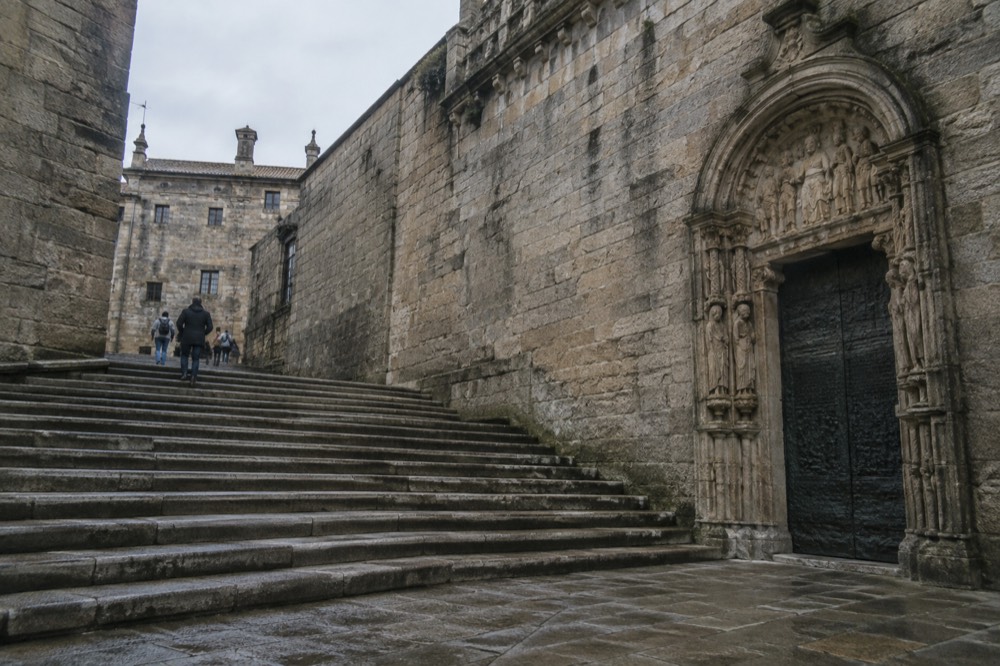
That single fact reshapes every planning decision for the next two walking seasons. A Holy Year raises pilgrim numbers materially, tightens albergue availability, and adds the plenary indulgence tradition attached to passing through the Holy Door. This site's Holy Year 2027 guide carries the full picture, including the Holy Door's location on the Praza da Quintana side of the Cathedral.
How Do You Get To The Start, And Home From The Finish?
Pilgrims reach the Camino's start points by air or rail, and leave Santiago de Compostela through its airport about 12km from the old town, with rail links running roughly 3-4 hours to Madrid, about an hour to Vigo and a short hop to A Coruna, and no direct line to Porto so that journey changes at Vigo.
The airport bus is currently line 6A at 1 EUR to the driver or 0.36 EUR by card, though a new Monbus contract with a higher fare is expected during autumn 2026.
The fare caveat on that airport bus is not decoration. The city's own transport page still listed Tussa's line 6A at the 1 EUR cash fare as of late September 2026, but the Monbus reorganization was already awarded, and a dedicated airport line at a proposed higher unsubsidized fare of roughly 6 EUR was expected to start within months. Anyone flying out should treat the fare as subject to change rather than as a fixed number. The detail sits on this site's airport guide.
| Connection from Santiago de Compostela | Verified picture |
|---|---|
| Airport bus to city | Line 6A, Tussa, 1 EUR to the driver or 0.36 EUR by card; Monbus takeover with a higher fare expected in autumn 2026 |
| Airport distance | About 12km, a 20-30 minute drive, sources vary by measured point |
| Train to Madrid | Direct high-speed services, roughly 3-4 hours |
| Train to Vigo | Roughly 1 hour, regional |
| Train to Porto | No direct line; change at Vigo |
| Train to A Coruna | Short hop, direct |
Reaching the start is the mirror problem, and Madrid is the common hub: this site's answer on getting to the Camino from Madrid covers the rail-first approach, and the Madrid to Santiago train guide the endpoint leg. For the Sarria walkers, the 100km start line, the Sarria to Santiago guide is the detailed stage-by-stage page. Choosing between operators for guided support, rather than walking independently, is a separate question answered in this site's piece on which tour company is best for walking the Camino.
What Should Pilgrims Do After Reaching Santiago de Compostela?
Most pilgrims spend one to three more days in Santiago de Compostela after arriving, visiting the Cathedral's paid spaces, the rooftops, the old town's granite squares and the food streets, or extending outward on the Camino Finisterre to the Atlantic, on a Costa da Morte day trip, or toward the Rias Baixas, and the city rewards that extension because the arrival day itself is consumed by the Pilgrim's Office queue, the mass and little else.
The city end of the walk has its own pages on this site: what Santiago de Compostela is famous for, whether it is worth visiting, and how many days to spend there. Walkers who still have legs often continue to Fisterra, the Atlantic end of the world in the medieval imagination, and that extension is covered both as a dedicated answer on whether the walk from Santiago to Finisterre is worth it and as a destination guide to Finisterre itself.
For those who stop in the city, the most reliable first paid visit is the guided old town walk, which orients the granite lanes around Praza do Obradoiro, the Alameda park viewpoint and the Rua do Franco food street faster than a map does.
The second reliable booking is a day trip west, because the Costa da Morte coastline with its lighthouse cliffs at Cabo Vilan is the region's most dramatic landscape and it is a full-day outing from the city.
Common Questions About The Camino de Santiago
What is the Camino de Santiago?
The Camino de Santiago is a network of pilgrim routes converging on the Cathedral of Santiago de Compostela in Galicia, Spain, where the Apostle St. James is held to be buried. UNESCO lists the Old Town from 1985 and the Routes of Santiago de Compostela from 1993 as two separate inscriptions.
How long does it take to walk the Camino de Santiago?
The full Camino Frances takes roughly five weeks on foot, the Portugues from Porto roughly two weeks, and the minimum certificate-qualifying distance from Sarria about five days. The dedicated breakdown is in this site's answer on how long it takes to walk the Camino de Santiago.
What is the minimum distance for the Compostela?
The last 100km walked on foot or ridden on horseback, or the last 200km cycled, on a recognized Camino route, with at least two credential stamps per day. The certificate is issued in person only, at the Pilgrim's Office, Rua das Carretas 33.
Does the Botafumeiro swing every day?
No. It normally flies at twelve fixed liturgical solemnities a year, not at the daily pilgrim mass, and it is currently out of action entirely: the Cathedral confirmed in writing on 5 September 2026 that dome restoration scaffolding covers its mechanism, with no return date published.
Is 2026 a Holy Year?
No. 2026 is not a Holy Year. The next Xacobeo begins when the Holy Door opens on 31 December 2026 and runs through 31 December 2027, because 25 July 2027 falls on a Sunday.
Where do pilgrims stay on the Camino?
Mostly in albergues, dormitory-style pilgrim hostels that divide into municipal, religious and private types, with beds for credentialed walkers. The full system, including booking and etiquette, is on this site's albergue accommodation guide.
The Camino de Santiago rewards preparation proportional to its length, and the shortest version of that preparation is three decisions: the route, the month, and whether the walk ends at the Cathedral's silver casket or continues to the sea. Everything on this page feeds those three decisions, and every route, stage and arrival question raised here has a deeper page one click away on this site, starting with the routes comparison and the Camino map from Santiago de Compostela Travel Guide.