Camino de Santiago History: The Pilgrim Roads To Santiago de Compostela
The Camino de Santiago is the network of medieval pilgrim roads that converge on the Cathedral of Santiago de Compostela in Galicia, Spain, where the tradition of the tomb of St. James the Apostle has drawn travellers for more than a thousand years and still draws over half a million a year.
Short answer
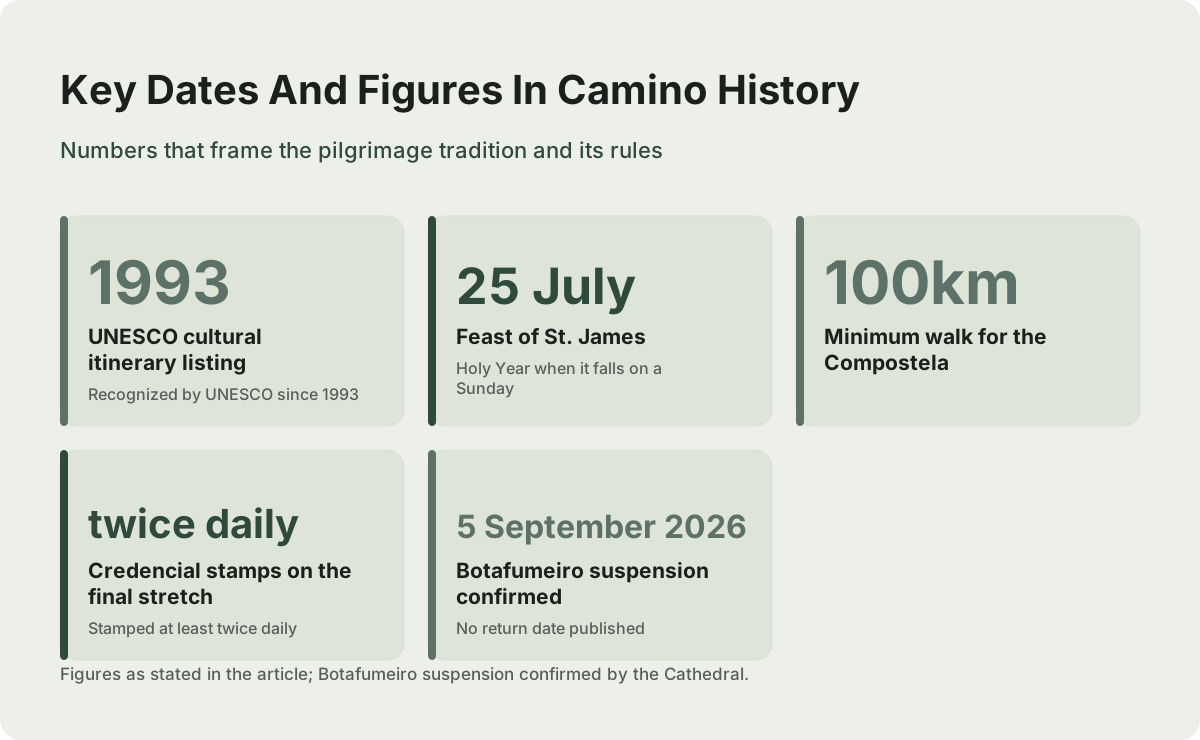
The Camino de Santiago is a network of historic pilgrim routes across Spain, Portugal and France, all ending at the Cathedral of Santiago de Compostela in Galicia. Its story runs from a medieval tomb tradition through UNESCO recognition in 1993 to a record 530,987 Compostela certificates issued in 2025.
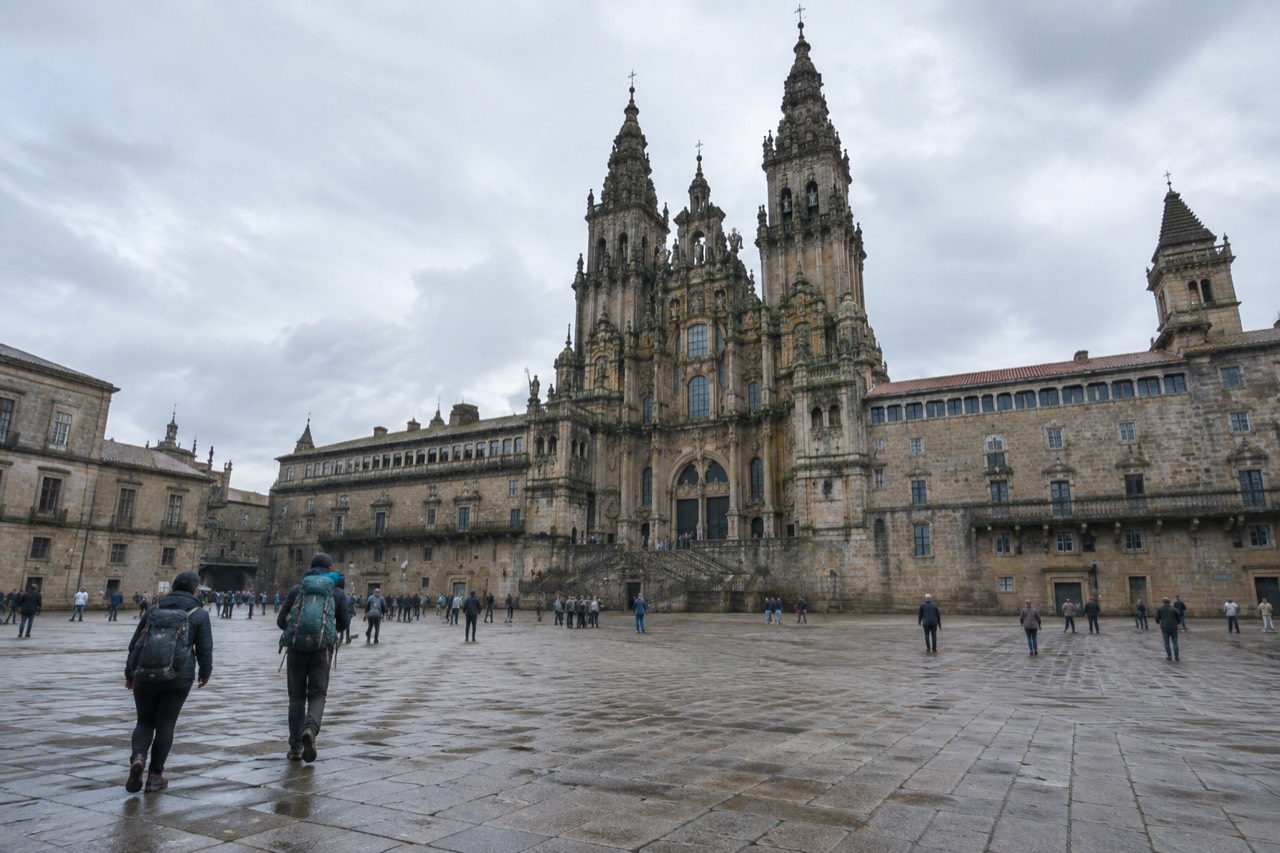
The Camino de Santiago is the network of medieval pilgrim roads that converges on the Cathedral of Santiago de Compostela, the granite cathedral city in Galicia in the far northwest of Spain, and its history explains almost everything a visitor sees there: the scallop shells on the cobblestones, the queue at the Pilgrim's Office on Rua das Carretas, and the pilgrims leaning on their packs in Praza do Obradoiro. The route is not a single path but a web of ways, walked, ridden and cycled for centuries, and it is now one of the most recognized cultural itineraries in the world. The Oficina del Peregrino's own figures record 530,987 Compostela certificates issued in 2025, a record year, which means the history of this road is not a closed chapter. It is still being written, at a pace of roughly half a million arrivals a year. The Santiago de Compostela Travel Guide covers the whole city; this page tells the story of the roads that built it.
This guide traces that history in order: what the Camino actually is, where the tradition began, how the routes took shape, why UNESCO listed them, how the Holy Year works, how pilgrims have proved their journey across the centuries, and what the modern pilgrimage looks like in the city itself. Along the way it flags the things that have changed very recently, including the suspension of the Botafumeiro and the relocation of pilgrim masses from October 2026, because a history page that ignores the present is only half a history.
What Is The Camino de Santiago?
The Camino de Santiago is the collective name for the network of pilgrim routes, from Spain, Portugal and points further afield, that all end at the Cathedral of Santiago de Compostela in Galicia, where the medieval tradition places the tomb of the Apostle St. James. It is a walk, a set of marked ways, a cultural itinerary recognized by UNESCO since 1993, and, for those who complete the required distance, a certificate called the Compostela, issued in person at Rua das Carretas 33 in Santiago de Compostela.
The word itself is simple. "Camino" means road or way, and "Santiago" is St. James, so the Camino de Santiago is literally the Way of St. James. What makes it unusual among long-distance trails is that it predates the modern idea of a hiking route by a very long margin. People were walking to Santiago de Compostela when the roads were dirt and the inns were monasteries, and the modern route markers, yellow arrows and scallop shells simply paint over a much older habit.
The vocabulary around it can confuse first-time readers, and much of it is medieval in origin. The credencial, the pilgrim passport stamped along the way, is the successor of the letters pilgrims once carried as proof of their journey. The Compostela, the certificate issued at the end, takes its name from the city itself. And the Xacobeo, or Holy Year, is a cycle that depends entirely on the calendar of a feast day fixed on 25 July. The table below untangles the core terms.
| Term | What It Means | Origin Of The Idea |
|---|---|---|
| Camino de Santiago | The network of pilgrim routes ending at Santiago de Compostela | Medieval pilgrimage tradition |
| Compostela | Certificate of completion, issued only in person by the Pilgrim's Office | Medieval proof-of-pilgrimage letters |
| Credencial | The pilgrim passport, stamped at least twice daily on the final stretch | Medieval safe-conduct documents |
| Xacobeo / Holy Year | A year in which 25 July, the feast of St. James, falls on a Sunday | Liturgical calendar |
| Fisterra / Finisterre | The Atlantic cape some pilgrims continue to after Santiago de Compostela | Pre-Christian and medieval extension of the walk |
The main Camino guide on this site covers the practical side of walking it. This page stays with the story of how the whole thing came to exist, because that story is the reason the practical side works the way it does. The rules for the Compostela, for example, with their two-stamps-per-day requirement and their 100km walked minimum, are not bureaucratic inventions. They are the modern form of a very old question: how do you prove you actually made the pilgrimage?
Where Did The Pilgrimage To Santiago de Compostela Begin?
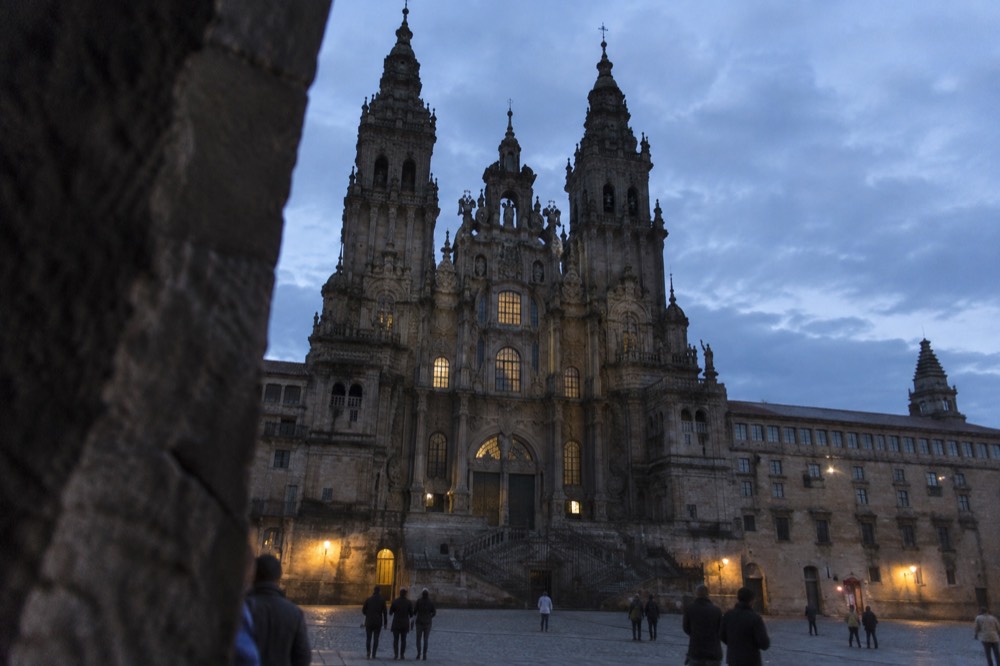
The pilgrimage rests on the tradition, held since the early Middle Ages, that the remains of the Apostle St. James the Great were discovered at the site that became Santiago de Compostela, and that a church, and then a city, grew around the tomb. The feast of St. James is fixed on 25 July every year, the Cathedral stands over the tomb tradition, and the Old Town that grew around it was inscribed by UNESCO as early as 1985, before the routes themselves were listed in 1993.
A word on honesty here, because this site reports rather than preaches. What is verifiable is the tradition and its consequences: a city named after the Apostle, a cathedral built over the spot the tradition identifies, a feast day fixed on 25 July, and a millennium of travel that followed. Whether St. James is literally buried there is a separate question, one this site treats in its own dedicated article, and the honest answer is that the tradition is a matter of faith and history rather than of archaeology. The medieval world, though, did not share that hesitation. For a medieval pilgrim the question was settled, and the roads prove it: people came from across Europe, on foot, on horseback and by sea, to a remote corner of Galicia that would otherwise have had no reason to become one of the great cities of medieval Christianity.
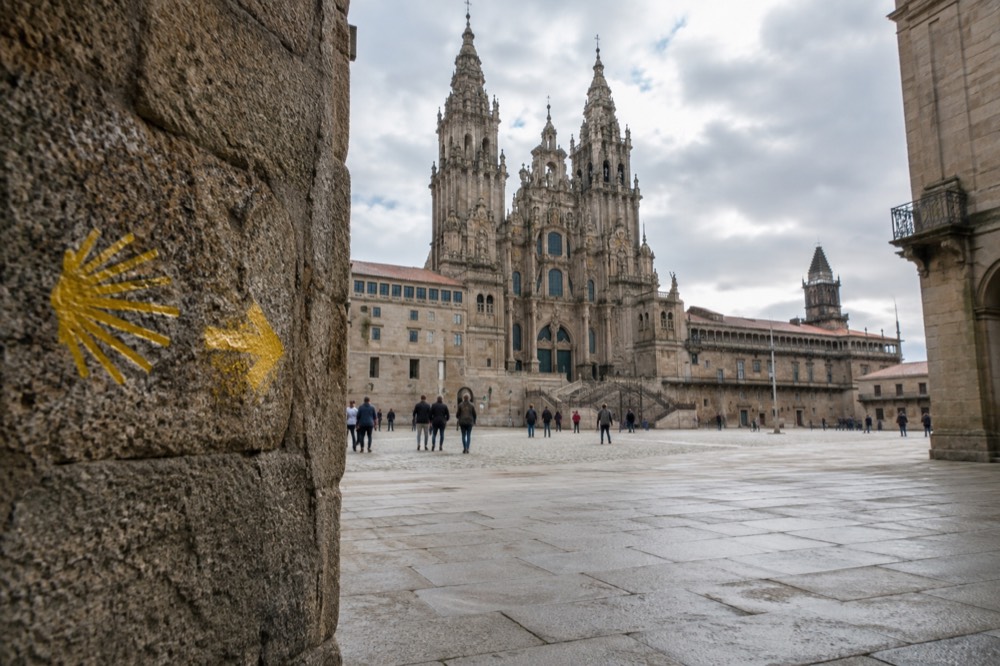
The scallop shell, the pilgrim's badge and the modern route marker, belongs to this coastal story. Santiago de Compostela lies inland, but the medieval pilgrims arriving by sea landed on the Atlantic coast of Galicia, and the shell of that coast became the sign that a traveller was bound for the tomb. It still marks the way today, set into walls and pavements along the entire network, and it is the most visible everyday link between the medieval journey and the modern one.
The medieval ritual machinery of the pilgrimage survives in the Cathedral's own liturgy, and one piece of it, the Botafumeiro, the giant censer that swings across the transept, still follows its historic annual calendar of twelve solemnities. The Cathedral's own liturgy page sets the schedule: Epiphany on 6 January, Easter Sunday, the Apparition of the Apostle in Clavijo on 23 May, Pentecost, the feast of St. James on 25 July, the Assumption on 15 August, All Saints on 1 November, Christ the King, the Immaculate Conception on 8 December, Christmas, and the Transfer of the Apostle on 30 December, among them.
| Solemnity In The Annual Cycle | Date (Fixed Or Movable) | Botafumeiro Normally Swings |
|---|---|---|
| Epiphany | 6 January | At the end of the solemn Mass |
| Easter Sunday | Movable, spring | At the end of the solemn Mass |
| Apparition Of The Apostle In Clavijo | 23 May (or transferred) | At the end of the solemn Mass |
| Pentecost | Movable, spring | At the end of the solemn Mass |
| Feast Of St. James The Apostle | 25 July | Feast day, with the national offering |
| Assumption Of The Virgin | 15 August | At the end of the solemn Mass |
| All Saints | 1 November | At the end of the solemn Mass |
| Christ The King | Last Sunday before Advent | At the end of the solemn Mass |
| Immaculate Conception | 8 December | At the end of the solemn Mass |
| Christmas | 25 December | At the end of the solemn Mass |
| Transfer Of The Apostle | 30 December | At the end of the solemn Mass |
One thing must be stated plainly, because it is the single most misunderstood item in Santiago de Compostela right now. The Botafumeiro is currently out of action: scaffolding for the restoration of the cimborrio, the dome over the crossing, covers its hanging mechanism, the Cathedral confirmed the suspension in writing on 5 September 2026, and no return date has been published. The schedule above describes how the calendar normally works, not what a visitor will see this season, and no page on this site will promise otherwise. The Cathedral itself remains open to visitors throughout the works.
Which Routes Make Up The Camino de Santiago Today?
The modern network includes the Camino Frances, the Camino Portugues, the Camino del Norte, the Camino Primitivo and the Camino Ingles, among others, and the UNESCO inscription of 1993 covers the Camino Frances together with the Routes of Northern Spain as one cultural itinerary. All of them end at the same point, the Cathedral of Santiago de Compostela, and each has a distinct historical character shaped by who originally walked it and from where.
The Camino Frances, the French Way, is the trunk of the system and the most walked route by a wide margin. Its historic logic is simple: pilgrims from the rest of Europe crossed the Pyrenees into Spain and followed a chain of established roads, bridges, hospitals and monasteries westward to Galicia. The infrastructure that served those travellers, the hostel network and the marked path, is the direct ancestor of today's albergues and yellow arrows, and the route guide on this site breaks each of them down in detail.
The northern routes have their own story. The Camino del Norte follows the Atlantic coast, reflecting the sea-borne pilgrims of the Middle Ages, and the Camino Primitivo is the oldest of the inland ways through the Galician and Asturian mountains. The Camino Ingles takes its name from the pilgrims who arrived by ship to the northern Galician ports and walked south, a reminder that for centuries "walking the Camino" often began with a sea crossing. The Camino Portugues brought the faithful north from Lisbon and Porto, a tradition of its own with a distinct history along the Portuguese coast and interior.
| Route | Historical Character | Who It Originally Served |
|---|---|---|
| Camino Frances | The main trunk road, the most developed infrastructure | Pilgrims crossing from the rest of Europe |
| Camino del Norte | Coastal way along the Atlantic | Sea-borne pilgrims landing on the north coast |
| Camino Primitivo | The old mountain way through the interior | The earliest inland pilgrims from Asturias |
| Camino Ingles | Short way from the northern Galician ports | Pilgrims arriving by ship, historically from Britain and northern Europe |
| Camino Portugues | The way north from Portugal | Pilgrims from Lisbon, Porto and points south |
For a visitor standing in Santiago de Compostela rather than planning a multi-week walk, the history is easiest to absorb with a guide, and a small-group historic walk of the old town covers the layers the city wears, keeping the group small and the route compact through the historic quarter.
The full pilgrimage experience, though, is multi-day by design, and the history explains why: the certificate rules exist because the journey itself was the point. For those weighing how long the whole tradition takes to walk in practice, the how long to walk the Camino answer page sets out the realistic timeframes, and the questions worth asking before committing are covered in the new rules for the Camino de Santiago.
Not every historic road ends at the cathedral doors. Some pilgrims, following an older coastal instinct, continued west to the Atlantic at Fisterra, the cape the tradition treated as the edge of the known world, and that extension is part of the history too, which is why the Fisterra and Muxia excursions from the city follow the final leg of the oldest story of all.
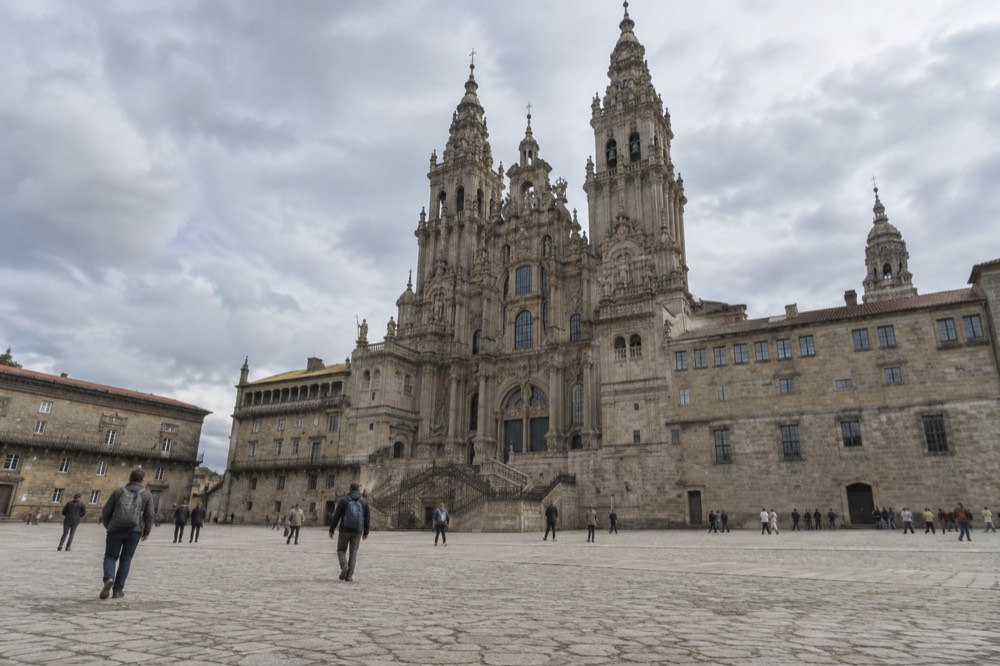
Why Did UNESCO List The Camino de Santiago?
Santiago de Compostela holds two separate UNESCO World Heritage inscriptions: the Old Town was inscribed in 1985 for the city itself, and the Routes of Santiago de Compostela, the Camino Frances and the Routes of Northern Spain, were inscribed in 1993 as a cultural itinerary in their own right. They are distinct listings with different dates and different scopes, and conflating them into one inscription is the most common error in Camino literature.
The 1985 inscription covers the city: the squares, the monasteries, the cathedral ensemble and the urban fabric that grew around the pilgrimage. The 1993 inscription is different in kind. It recognizes the routes themselves as heritage, buildings, bridges, churches and hospitals strung along the pilgrim ways, and it was a landmark decision because it treated a route, not a place, as the object of protection. The Camino was among the early cases where UNESCO's definition of heritage expanded from monuments to journeys.
For the traveller, the practical meaning is that both the destination and the journey are protected landscapes. The preserved towns along the Camino Frances, and the sensitive handling of the trail corridor, exist partly because of that 1993 decision. The French route guide on this site walks through those sections in detail.
Seeing the endpoint of the whole story well requires a bit of planning, and the cathedral's own ticketing rewards it. The basilica interior itself is free to enter, while the Cathedral Museum and the rooftop tour carry charges, and the busiest weeks around the feast of St. James fill the timed slots first. Booking the half-day complete visit in advance, with cathedral tickets included, is the simplest way to see the tomb, the rooftops and the old city in one coherent sweep.
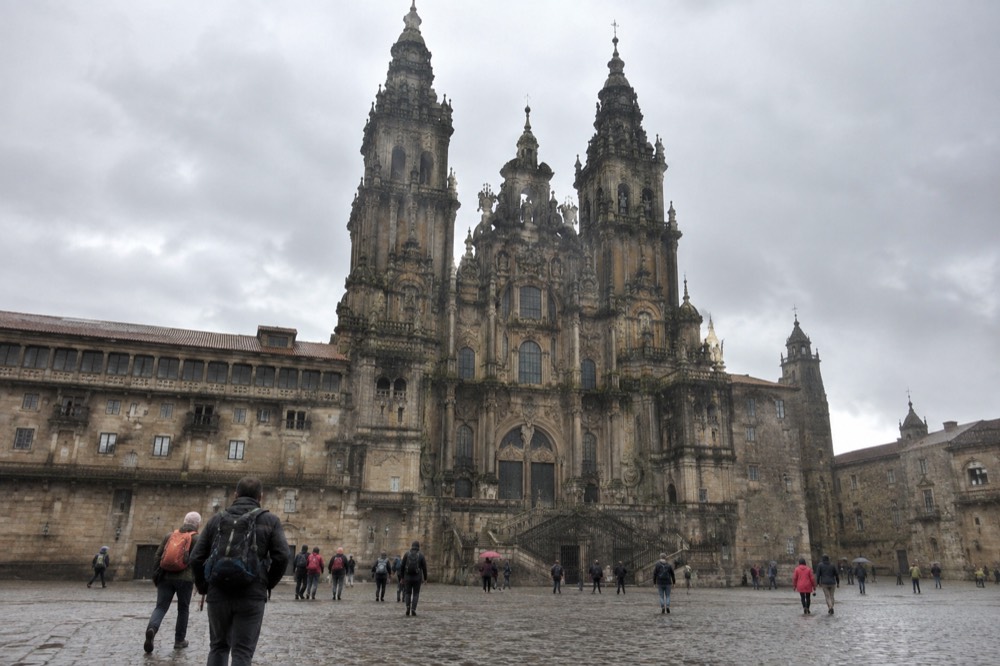
What Is A Holy Year (Xacobeo) In Santiago de Compostela?
A Holy Year, called Xacobeo or Ano Santo, is declared whenever the feast of St. James, fixed on 25 July, falls on a Sunday, and the next one after 2026 is 2027, because 25 July 2027 is a Sunday. The Holy Door of the Cathedral of Santiago de Compostela opens solemnly on the evening of 31 December 2026, in a ceremony in Praza da Quintana, and remains open through 31 December 2027. The official Xacobeo listings name 2032, 2038 and 2049 as the subsequent Holy Years.
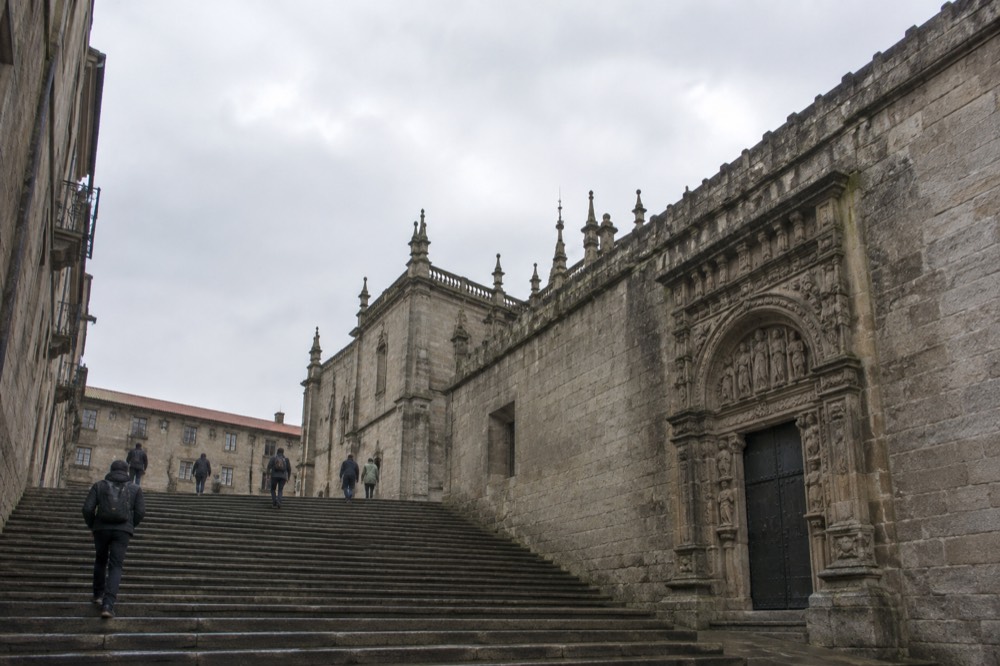
This is the piece of Camino history that most often gets garbled, so it is worth stating exactly. The Holy Year is a calendar event, not a decision: it arrives when the fixed feast day and the weekly Sunday coincide, which happens on an irregular cycle because of how the 25 July date moves against the days of the week. 2026 is not a Holy Year. 2027 is, and the Holy Door, sealed in the facade facing Praza da Quintana outside Holy Years, is opened for it.
| Holy Year (Xacobeo) | Holy Door Opens | Holy Door Closes | Why It Is A Holy Year |
|---|---|---|---|
| 2027 | Evening of 31 December, the year before | 31 December 2027 | 25 July 2027 falls on a Sunday |
| 2032 | Evening of 31 December, the year before | 31 December 2032 | 25 July 2032 falls on a Sunday |
| 2038 | Evening of 31 December, the year before | 31 December 2038 | 25 July 2038 falls on a Sunday |
| 2049 | Evening of 31 December, the year before | 31 December 2049 | 25 July 2049 falls on a Sunday |
Historically, Holy Years were the years of the great surges. The plenary indulgence attached to visiting the tomb in a Holy Year, entering through the Holy Door, was the medieval mechanism that turned a steady stream of pilgrims into a flood, and the modern statistics show the same rhythm: Holy Years break records. The city of Santiago de Compostela is already preparing for the 2027 Xacobeo, and one visible sign is the remodelling of the cathedral's main chapel, the works that are also behind the mass relocation covered later on this page.
The feast day itself, 25 July in ordinary years, is the city's biggest annual celebration, marked by a pontifical Mass with the national offering to the Apostle, plus concerts, fireworks and folk events across the Old Town. The Holy Year 2027 guide on this site covers the practical planning for the next one. For anyone deciding when to walk, the trade-offs between Holy Year crowds and ordinary years are laid out in the best month to walk the Camino.
How Do Pilgrims Prove They Walked The Camino?
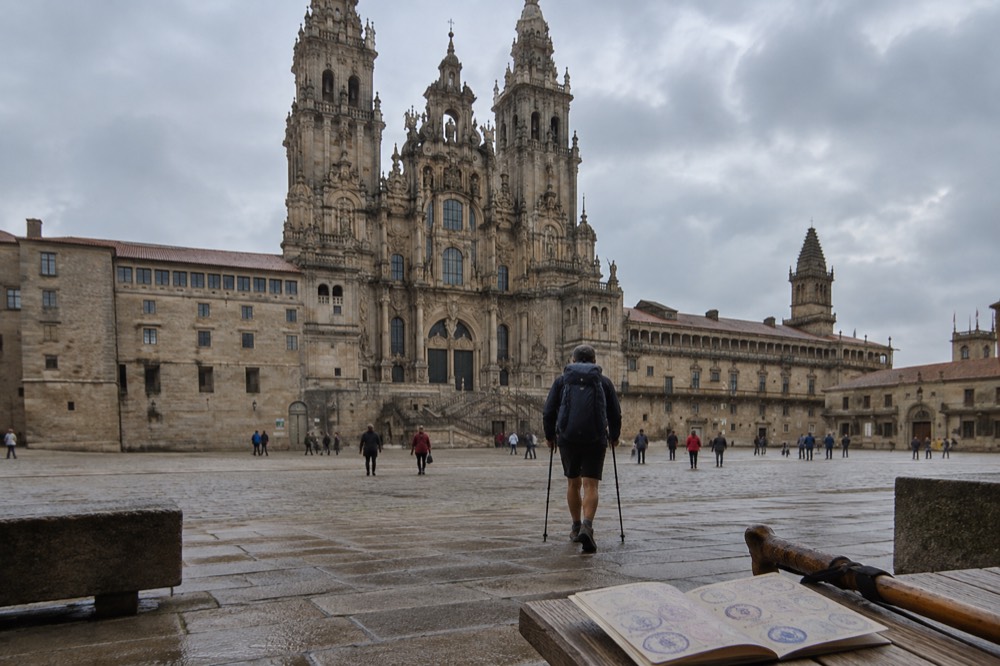
The Compostela certificate is issued only in person, at the Pilgrim's Office at Rua das Carretas 33 in Santiago de Compostela, to pilgrims who have walked at least the final 100km of a recognized route, or covered the final 200km by bicycle, collecting at least two stamps per day in the credencial from official stamping points. The rules are the modern form of the medieval proof-of-pilgrimage tradition, and they are administered by the Oficina del Peregrino, not by any tour company or the Cathedral.
The credencial is the heart of it. The little folded document, stamped at albergues, churches and town halls along the way, descends directly from the letters and badges medieval pilgrims carried home as evidence of a completed journey. The two-stamps-per-day requirement on the final stretch exists to prevent the certificate being claimed by those who only appeared at the end, and it is the reason the last 100km of every route is dotted with more stamping points than anywhere else. The credential itself and the certificate it earns each have a full practical guide on this site, covering the stamping rules and the collection process in detail.
| Requirement | Walkers And Horseback Riders | Cyclists |
|---|---|---|
| Minimum distance on a recognized route | Final 100km | Final 200km |
| Stamps in the credencial | At least two per day on the final stretch | At least two per day on the final stretch |
| Where the certificate is issued | In person only, Pilgrim's Office, Rua das Carretas 33, Santiago de Compostela | In person only, Pilgrim's Office, Rua das Carretas 33, Santiago de Compostela |
| Who administers the rules | Oficina del Peregrino | Oficina del Peregrino |
The history of the certificate is a history of fraud prevention. Medieval pilgrims brought home scallop shells as badges; the shrine authorities needed ways to distinguish genuine travellers from souvenir sellers and impostors, and the letters of completion were the answer. The modern system, with its stamped credencial and its distance thresholds, is stricter and better documented, but it answers the same question the medieval clergy faced at the same doors.
The final walk into the city, and the rituals that follow it, have their own rhythms, and the arriving in Santiago on the Camino guide covers them. The Pilgrim's Office closes on 25 December and 1 January, and its hours shift with the seasons, so walkers finishing in midwinter should plan the certificate collection around them.
Not every pilgrim stops at the city. The Atlantic extension to Fisterra and Muxia, following the pre-Christian instinct to walk to the sea's end, is the historical footnote that has become a busy route in its own right, and a half-day express excursion reaches both capes from Santiago de Compostela.
How Popular Is The Camino de Santiago Now?
The Camino de Santiago is more popular now than at any point in its recorded history: the Oficina del Peregrino's figures show 530,987 Compostela certificates issued in 2025, a record year, capping a long modern revival that turned a near-forgotten medieval tradition into the busiest long-distance walking route in Europe. The revival gathered pace in the years after the 1993 UNESCO inscription and accelerated sharply in recent years.
The record deserves context, because the number is not just a peak, it is the end of a curve. For much of the modern era the Camino was a minority pursuit, kept alive by a small number of devoted walkers and by the religious institutions along the way. The modern revival, supported by regional governments, the marking of the routes and the 1993 UNESCO inscription, changed the trajectory. The internet era then did the rest, and today the pilgrim statistics are watched the way football league tables are watched, with monthly numbers published and debated.
The pilgrim mass schedule matters to anyone planning the arrival, because the traditional noon mass is where arriving pilgrims gather. The relocation table below gives both arrangements, dated, exactly as the Cathedral's own liturgy page states them.
| Pilgrim Mass | Until 15 October 2026 | From 16 October 2026 |
|---|---|---|
| 7:30am | Cathedral, High Altar | Cathedral, Communion chapel (unchanged) |
| 9:30am | Cathedral, High Altar | Church of San Agustin |
| 12:00 noon | Cathedral, High Altar | Church of San Agustin |
| 7:30pm | Cathedral, High Altar | Church of San Agustin |
Who walks it has changed too. The modern pilgrim population includes the traditionally devout, but also secular long-distance hikers, cyclists, retirees, families walking with children, and solo travellers, and the profile question is covered in depth on this site, from walking with children to can a 70-year-old walk the Camino and solo walking for women. The accommodation system has scaled with them, and the albergue tradition, the dormitory hostels inherited from the medieval hospitals, is covered in the albergues guide.
Planning a walk of any length rewards preparation, and the practical side of this site carries it: what the journey costs is answered in the average cost to walk the Camino, and a full packing breakdown sits alongside it.
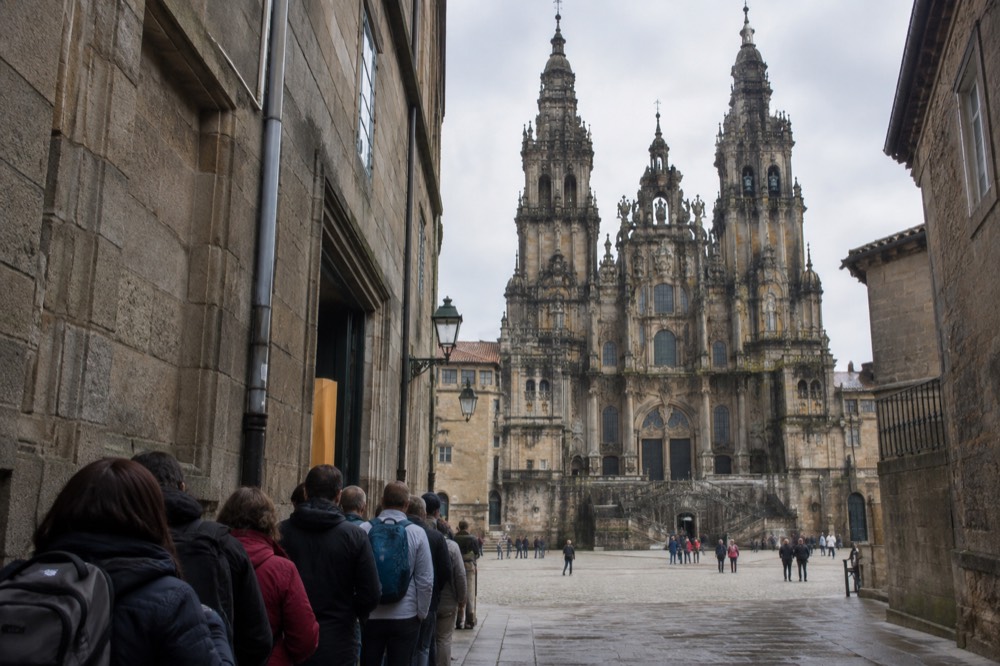
How Does The Camino Shape Santiago de Compostela Today?
The Camino is the reason Santiago de Compostela exists as a major city at all, and it still shapes daily life there: the Old Town's layout follows the medieval arrival routes, the Pilgrim's Office processes arrivals year-round, the Cathedral's liturgy is organized around pilgrims, and the 2027 Holy Year preparations are already visibly altering the cathedral's main chapel and mass schedule. The city is a living endpoint, not a museum piece.
Walk the Old Town with the history in mind and the geography becomes obvious. The historic quarters fan out from the cathedral because the roads came first and the city grew along them, and the grand facades on Praza do Obradoiro face the arriving pilgrim, not the resident. The tourist economy, the albergues, the pilgrim menus, the luggage-transfer services, all of it descends from the medieval infrastructure of hospitals and hostelries that served the same traffic.
The cathedral sits at the centre of all of it, and its current ticket structure reflects the two publics it serves: the faithful arriving on foot and the visitors arriving by bus.
| Cathedral Visit Option | Current Price | What It Includes |
|---|---|---|
| Basilica interior (naves, High Altar area, crypt) | Free entry | The cathedral church itself, generally about 7:00am to 9:00pm via the Praterias door |
| Cathedral Museum (permanent collection, Gelmirez Palace) | EUR9-23 depending on ticket type and rate | Museum collection and associated palace spaces |
| Rooftop tour (Cubiertas and Torre de la Carraca) | EUR15 general, EUR12 reduced | Guided rooftops and tower visit, about 60 minutes and 140 steps, plus museum access |
Those figures come from the cathedral's own ticketing pages, and they are worth checking for your dates before visiting, because timed slots sell out in peak season. A guided half-day option with tickets included spares the queueing, and the complete city visit pairs the cathedral with the old town's story.
The history, in the end, closes a loop. A tradition that began with travellers arriving on foot at a remote shrine now ends with them queueing at Rua das Carretas 33 for a certificate, attending a relocated mass, and looking up at a dome wrapped in restoration scaffolding for the Holy Year to come. The city has managed that transformation without breaking the thread, and the thread is the reason it works. Walk in from Sarria or land at the airport and step off a bus: either way, you are the newest arrival in a story that has been running since the roads were first marked for people who believed the Apostle waited at the end of them.
Common Questions About Camino de Santiago History
What Is The Camino de Santiago?
The Camino de Santiago is the network of pilgrim routes across Spain, Portugal and the wider continent that converge on the Cathedral of Santiago de Compostela in Galicia, Spain. Its two UNESCO listings, the Old Town of Santiago de Compostela from 1985 and the Routes of Santiago de Compostela from 1993, recognize the destination and the journey separately.
Why Is Santiago de Compostela The End Of The Camino?
The pilgrimage ends at Santiago de Compostela because the medieval tradition places the tomb of the Apostle St. James beneath the site where the Cathedral now stands. The city, the feast day fixed on 25 July, and the entire route network exist because of that tradition, which the faithful have honoured for over a thousand years.
When Is The Next Holy Year On The Camino de Santiago?
The next Holy Year, or Xacobeo, is 2027, because 25 July 2027 falls on a Sunday. The Holy Door of the Cathedral opens on the evening of 31 December 2026 in a ceremony in Praza da Quintana and stays open through 31 December 2027. The official Xacobeo listings name 2032, 2038 and 2049 as the subsequent Holy Years.
Is The Botafumeiro Still Swinging In Santiago de Compostela Cathedral?
No. The Botafumeiro is temporarily out of action because scaffolding for the cimborrio restoration covers its hanging mechanism, and the Cathedral confirmed this in writing on 5 September 2026 with no return date published. Its normal calendar of twelve annual solemnities, from Epiphany on 6 January to the Transfer of the Apostle on 30 December, describes how it works when operating, not what visitors can see today.
How Many Pilgrims Receive The Compostela Each Year?
The most recent annual figure is 530,987 Compostela certificates issued in 2025, a record year, according to the Oficina del Peregrino's figures as reported in the press. The certificate requires walking at least the final 100km of a recognized route, or cycling the final 200km, with two stamps per day in the credencial, and it is issued in person only at Rua das Carretas 33 in Santiago de Compostela.
Do Pilgrim Masses Still Happen In Santiago de Compostela Cathedral?
Yes, but the locations change on 16 October 2026. Until 15 October 2026 the 7:30am, 9:30am, noon and 7:30pm masses are held at the Cathedral's High Altar. From 16 October 2026, while the main chapel is remodelled for the 2027 Holy Year, the 9:30am, noon and 7:30pm masses move to the nearby Church of San Agustin, and only the 7:30am mass stays in the Cathedral's own Communion chapel.