Can A 70 Year Old Walk The Camino?
Yes, a 70 year old can walk the Camino de Santiago to Santiago de Compostela. This guide covers fitness, routes, daily stages and support options for older walkers.
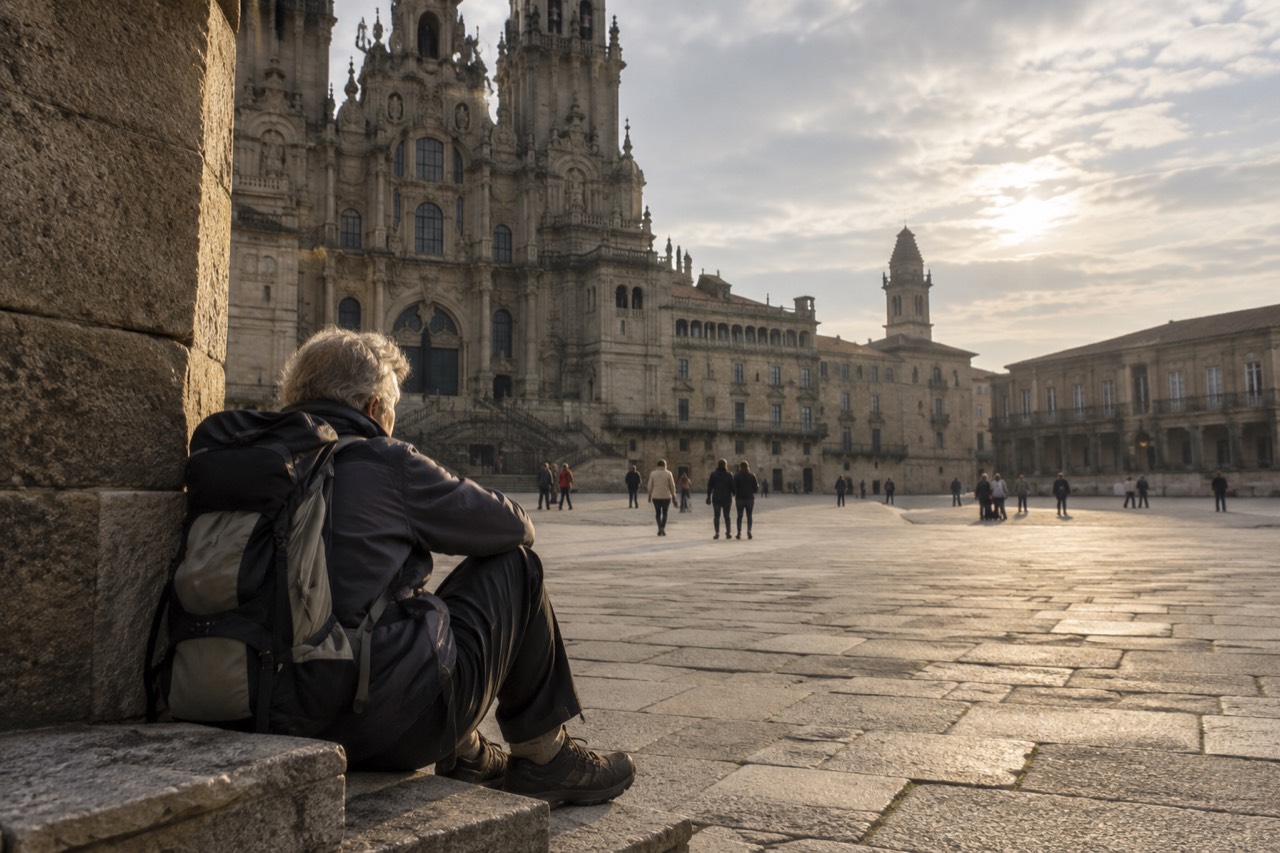
The Pilgrim's Office in Santiago de Compostela issued 530,987 Compostela certificates in 2025, its record year, and among every one of those walkers were people in their seventies and older. Age is not a barrier the Camino's own rules recognise: the Oficina del Peregrino's FAQs set no upper age limit, they only require the last 100km walked, or the last 200km cycled, with at least two stamps per day in the credencial. What actually decides whether a 70 year old finishes is route choice, daily distance, pack weight and preparation. This page works through each of those, with the verified numbers behind them.
Can A 70 Year Old Walk The Camino?
Yes, a 70 year old can walk the Camino, and many do every year. The route has no upper age limit, the Pilgrim's Office in Santiago de Compostela asks only for the last 100km on foot with two stamps per day, and the majority of walkers start from Sarria precisely because those final 100km are short, well-served and gentle. Fitness and pacing decide the outcome far more than the number on a birth certificate.
The Oficina del Peregrino's published rules say nothing about age at all. What they care about is distance and documentation: the last 100km walked, continuous, with at least two stamps per day from official stamping points. A walker who starts in Sarria satisfies both conditions in five or six stages. That is why the Sarria start has become the default for older walkers, first-timers and anyone short on time, and the Sarria to Santiago walk has its own breakdown on this site.
What the record year shows is scale, not age distribution: 530,987 Compostelas in 2025. Nobody should read that as half a million athletes. The Camino carries office workers, grandparents, and people recovering their fitness as much as seasoned hikers. The walk rewards patience more than power.
Which Camino Route Suits An Older Walker Best?
The Camino Frances from Sarria is the best choice for most 70 year old walkers, because it delivers the full 100km qualifying distance on paths that are well marked, never remote, and divided into towns with beds, food and transport at every stop. The Camino Portugues from Tui is the compact alternative. The Camino Primitivo, the original route over the Galician hills, is the one to avoid at this age without serious training.
Route selection matters more than any other single decision. The full routes overview covers every option in detail, but the short version for older walkers is a table:
| Route | Qualifying distance | Terrain character | Why it suits, or not, a 70 year old |
|---|---|---|---|
| Camino Frances from Sarria | 100km | Farm tracks, lanes, gentle hills | Beds and cafes every few km, easy bail-out points |
| Camino Portugues from Tui | 100km or more | Quiet roads, riverside paths | Compact, similar services, flatter on average |
| Camino Ingles from Ferrol | Meets the minimum and a little more | Forest paths, some road walking | Quieter, fewer services, needs more planning |
| Camino Primitivo from Oviedo | Far beyond the minimum | Mountain passes, steep descents | Demanding multi-day hills, wrong choice untrained |
| Camino del Norte along the coast | Weeks of walking | Coastal hills, long total | Long and hilly, only for experienced walkers |
The rule of thumb the community repeats, and the terrain bears out: the older the walker, the shorter the first stage list and the closer the bail-out options should be. Sarria to Santiago passes through Portomarin, Palas de Rei, Arzua and other towns with taxi services if a day goes badly.
How Far Should A 70 Year Old Walk Each Day?
Plan on 15 to 20km per day, with rest days built in, rather than the 25km-plus stages younger walkers often attempt. On the Sarria route that means five or six walking days instead of four, an extra night or two, and a body that still works on arrival in Santiago de Compostela. Luggage transfer services exist so the pack on your back can weigh almost nothing.
Distance per day is where older walkers most often overreach. The stages printed in guidebooks assume a steady adult walker; nothing obliges you to follow them. Splitting a long stage in two is normal and the infrastructure allows it, especially on the Frances.
| Daily planning target | What it looks like | Trade-off |
|---|---|---|
| 15km | 4-5 hours of easy walking | Most comfortable, more nights to book |
| 20km | 6-7 hours with breaks | Standard guidebook stage, tiring by week's end |
| 25km+ | Full light, few stops | Race pace, highest injury risk at 70 |
| Zero, a rest day | One night twice in one town | Adds a day, saves the knees |
Two services change the arithmetic completely. Luggage transfer moves your main bag between accommodations for a fee, so you walk with a small daypack. Private rooms, booked instead of first-come dorm beds, mean you are not racing for a bunk. A light daypack with poles, blister kit and water is the whole load a 70 year old should carry, and the infrastructure along the final 100km supports exactly that.
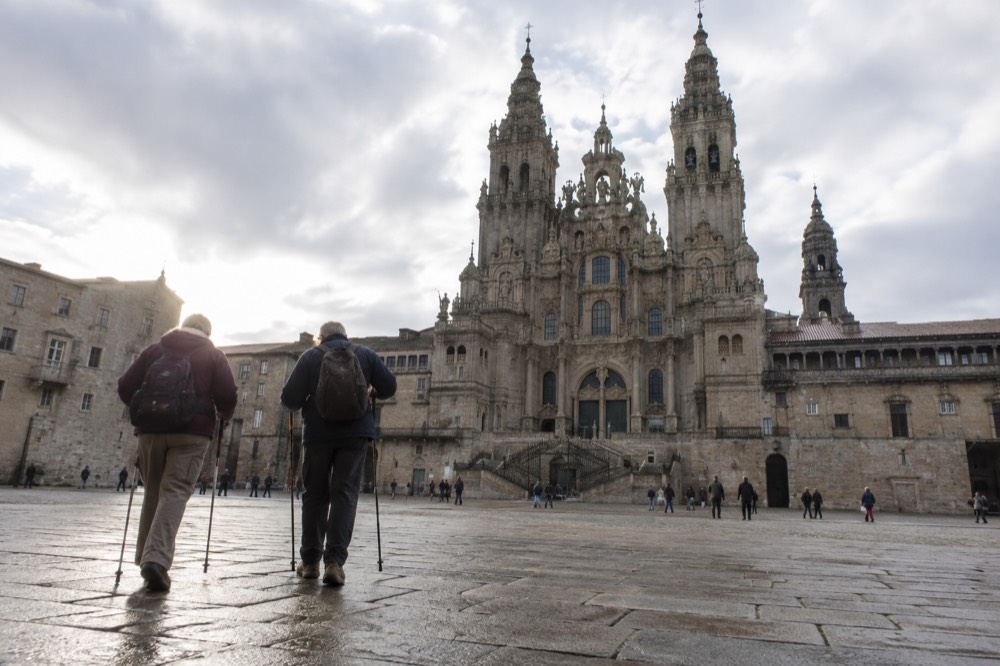
What Should A 70 Year Old Do Before Starting?
Get a medical check that specifically clears you for multi-day walking, train with daily walks of increasing length for at least two months beforehand, and take trekking poles, broken-in boots and blister supplies from day one. The Camino's medical points and pharmacies treat far more overuse injuries than emergencies, and nearly all of them come from unprepared feet and undertrained legs.
Preparation is the honest answer to the fitness question. A family doctor visit should cover heart, joints and any medication schedule adjusted for six hours of daily exertion. Training walks should build from an hour a day to a full six-hour day with the packed boots you will actually wear.
Poles are not optional at 70. They take load off knees on descents, which is where the damage accumulates. Boots should have hundreds of kilometres on them before Spain. A blister kit, used at the first hot spot rather than after the skin breaks, prevents most forced stops.
What Happens When You Arrive In Santiago de Compostela?
Arriving walkers collect the Compostela in person at the Pilgrim's Office, Rua das Carretas 33, which issues certificates only at the counter and closes on 25 December and 1 January. The Cathedral itself is open daily roughly 7:00am to 9:00pm with free general entry, but from 16 October 2026 the 9:30am, noon and 7:30pm pilgrim masses move from the High Altar to the nearby Church of San Agustin, with only the 7:30am mass staying in the Cathedral.
That mass relocation, dated 16 October 2026 and lasting until further notice, is the single most missed detail among arriving pilgrims in late 2026 and 2027. Anyone planning the traditional pilgrim mass at the tomb should check where it is being held that week. The pilgrim mass guide and the arriving in Santiago guide both keep the current arrangement.
The Botafumeiro, the cathedral's famous swinging censer, is another one to check rather than assume. The Cathedral confirmed in writing on 5 September 2026 that it is temporarily out of action: scaffolding for dome restoration covers its hanging mechanism and no return date has been published. Normally it swings on 12 fixed solemnities a year, including 25 July, the Feast of St James, but nobody should currently plan a visit around seeing it.
A rest day is worth planning, not just stumbling into. The rest day guide suggests how to spend it, and a gentle walk is often better than total stillness for stiff legs.
Is There Anything A 70 Year Old Should Not Attempt?
The Camino Primitivo's mountain stages, the full Camino Frances from the French border in one continuous trip, and any stage over about 25km in a day are the things to rule out without heavy prior training. There is no route that is closed to older walkers on paper, but every one of those three demands a fitness base most 70 year olds will not have, and the Camino offers better ways to spend the same two weeks.
The honest framing is capacity, not prohibition. A walker who already does long hill days at home can attempt the Primitivo. A walker who does not, cannot, and the alternatives are better anyway: the Sarria start, the Portugues from Tui, or splitting a longer route across more days than guidebooks suggest.
Money and time questions have their own pages, since they are asked separately and often: the average cost of walking the Camino and the best month to walk both feed into planning at any age, alongside the timing question of how long the whole walk takes, which this Santiago de Compostela Travel Guide site covers in its own Camino pages.
Common Questions About Walking The Camino At 70
Can a 70 year old walk the Camino?
Yes. The Pilgrim's Office sets no age limit, only the last 100km on foot with two stamps per day. Many walkers in their seventies complete the Sarria route each year with modest daily distances and luggage transfer.
How many days does the Sarria route take for an older walker?
Most 70 year old walkers should plan five or six days for the last 100km, at 15 to 20km per day, rather than the four faster stages guidebooks print.
Do I have to carry my backpack the whole way?
No. Luggage transfer services move bags between accommodations for a fee, and walking with a light daypack is a common and sensible choice for older pilgrims.
Is there an age limit for the Compostela certificate?
No. The rules are distance and stamps only: last 100km walked or last 200km cycled, at least two stamps per day, collected in person at Rua das Carretas 33 in Santiago de Compostela.
Which month is best for a 70 year old to walk?
The driest months are July and August, though they are the busiest. May, June and September balance reasonable weather with thinner crowds; October to March is the wet, cool season.
Where do the pilgrim masses take place now?
Until 15 October 2026 they are at the Cathedral's High Altar at 7:30am, 9:30am, noon and 7:30pm. From 16 October 2026 the 9:30am, noon and 7:30pm masses move to the Church of San Agustin; only the 7:30am mass stays in the Cathedral's Communion chapel.
The Camino to Santiago de Compostela has been walked for over a thousand years by people of every age, and the modern route's dense infrastructure, transfer services and short qualifying distance make it more achievable at 70 now than at any point in its history. Choose the Sarria or Tui start, keep the days short, train before you fly, and the question stops being whether and becomes only when.