What Is The Average Cost To Walk The Camino de Santiago?
No official average exists for the cost of walking the Camino de Santiago, so this guide breaks the real spending into accommodation, food, gear and transport, using only verified Santiago de Compostela figures.
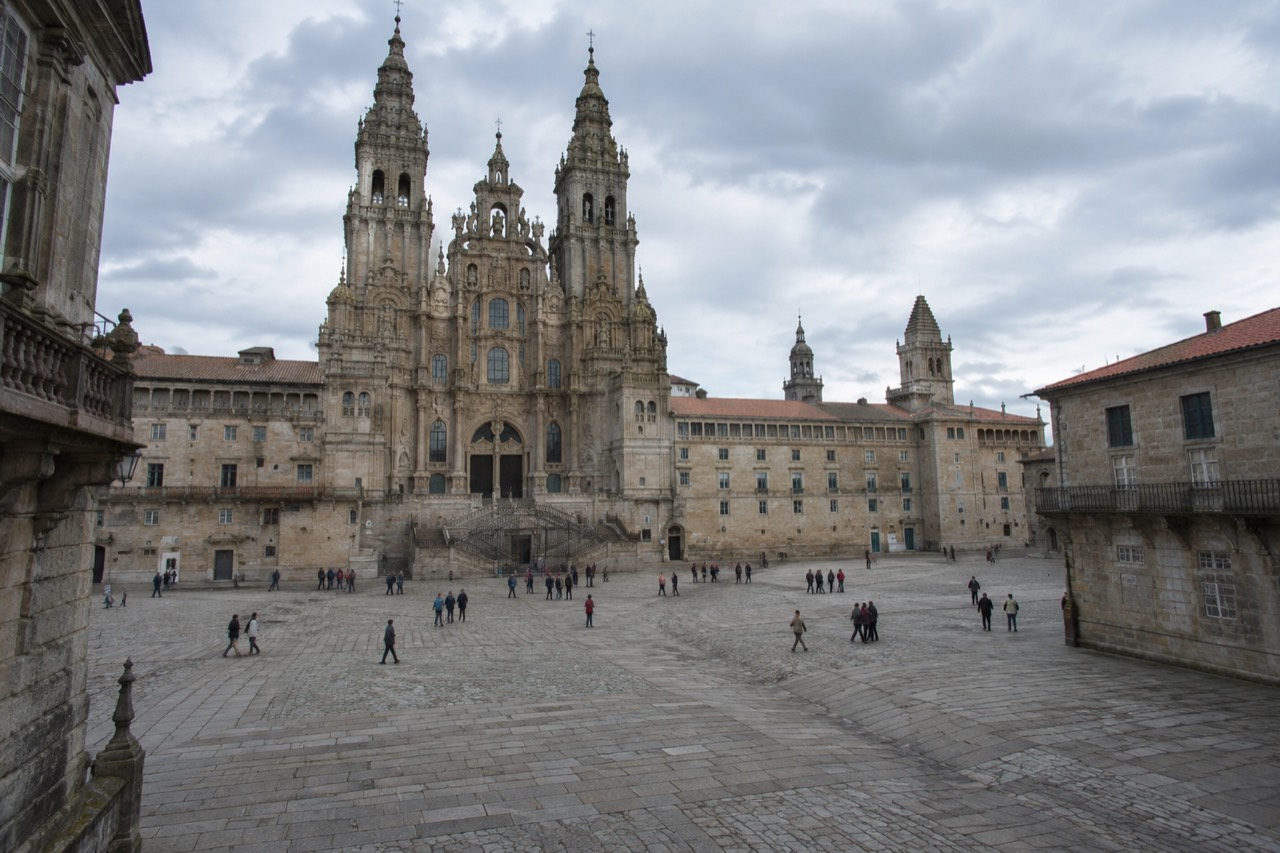
Santiago de Compostela issued a record 530,987 Compostela certificates in 2025, according to figures from the Oficina del Peregrino reported in the Spanish press, and not one of those certificates records what the walker spent to earn it. That gap is the honest starting point for this question. The Camino de Santiago costs whatever a walker decides to spend on a bed each night, and everything else flows from that single choice. This page, from the Santiago de Compostela Travel Guide editorial desk, separates the verified fixed prices from the variables, and refuses to invent a daily average that no Spanish authority publishes.
What Is The Average Cost To Walk The Camino de Santiago?
No official average exists, because the Oficina del Peregrino counts arriving pilgrims, not their spending, and no Spanish or Galician authority publishes a per-day budget for the walk. What is verifiable is the shape of the spend: starting the Camino costs nothing in itself, entry to Santiago de Compostela Cathedral is free, and the total is decided almost entirely by where a walker sleeps each night, from the cheapest municipal albergues up through private albergues and small hotels to the historic paradores.
The reason no honest number exists is structural. The Camino de Santiago is not a single product with a ticket price. It is a network of routes, several hundred kilometres long at minimum for the full French route, walked in wildly different styles. A pilgrim who sleeps in donativo and municipal albergues, cooks evening meals in their kitchens and drinks tap water spends a fraction of what a pilgrim who books private rooms and eats restaurant dinners every night pays for the identical kilometres.
What the verified sources do offer is a set of fixed anchors around the variable middle. The Cathedral's own basilica is free to enter, daily from roughly 7:00am to 9:00pm through the Praterias door according to the city's cathedral page. The Cathedral's own ticketing site lists its rooftop and Carraca Tower tour at EUR15 general and EUR12 reduced. The Cathedral Museum runs EUR9-23 depending on ticket type. Those are the prices a walker actually faces at the finish line, and they are the only ones a public source will confirm.
| Item | Verified price | Source basis |
|---|---|---|
| Cathedral basilica entry, Santiago de Compostela | Free | City cathedral page, general entry |
| Cathedral rooftop tour, Cubiertas and Torre de la Carraca | EUR15 general, EUR12 reduced | Cathedral's own ticketing site |
| Cathedral Museum, permanent collection | EUR9-23 depending on ticket type | Cathedral ticketing and city page |
| Airport bus, line 6A to city centre | EUR1 to the driver, EUR0.36 on a rechargeable card | santiago.es transport page, subject to change |
| Botafumeiro by private request | Around EUR450-500, currently suspended | Cathedral liturgy listing |
| Compostela certificate | Issued in person only, Rua das Carretas 33 | Oficina del Peregrino FAQs |
Two warnings sit under that table. The airport bus fare is in transition: as of late September 2026 santiago.es still lists Tussa's line 6A at EUR1 to the driver, but a new Monbus contract with a higher fare, around EUR6, is expected during autumn 2026. And the Botafumeiro private request is not currently bookable at all, because scaffolding for the cimborrio restoration covers its hanging mechanism, with the Cathedral confirming the suspension in writing on 5 September 2026 and no return date published.
What Actually Drives The Cost Of Walking The Camino de Santiago?
Accommodation is the single biggest driver, and everything else is secondary. A walker's nightly bed choice swings the total more than food, gear or transport combined, because it is multiplied across every night of the walk. Food comes second and is bought daily along the way, varying with appetite and town rather than with any fixed tariff. Gear comes third and is mostly a one-off outlay before the walk starts, since boots, a pack and rain layers are bought once and carried to Santiago de Compostela.
The nightly multiplication is what catches first-time walkers out. A difference of a few euros per bed sounds trivial in a shop, and stops sounding trivial when it repeats for five weeks on the Camino Frances. Walkers planning the sleep strategy in detail should read the site's Camino accommodation and albergues guide, which covers the municipal, private and donativo tiers and how they differ in practice.
Food spending has no official tariff to cite, and honesty requires saying so. Galician towns along the route sell food in ordinary shops and bars at ordinary Galician prices, and pilgrim-oriented kitchens in albergues let walkers cook instead of eating out. The regional staples, from pulpo a la gallega to padron peppers and tarta de Santiago, are covered in the site's Galician food guide, and tasting them is a choice a walker controls line by line.
Gear is the most controllable category because it is spent before the walk and spent once. The site's Camino packing list guide covers what is genuinely needed, and the honest advice is that most first-time pilgrims bring too much rather than too little. Cutting pack weight cuts nothing from the budget directly, but it cuts the temptation to quit early and rebook transport home, which is the most expensive failure mode of all.
For context on how the days add up, the how long the Camino takes answer explains typical stage counts per route, since the number of nights, not the number of kilometres, is what the wallet feels.
How Does The Route You Choose Change The Cost?
The route sets the number of nights, and the number of nights sets the cost. Longer routes mean more beds and more meals before the same finish at Santiago de Compostela. The shortest qualifying stretch is the last 100km walked, or the last 200km cycled, which the Oficina del Peregrino's FAQs define as the minimum for the Compostela certificate, so a walker aiming only for the certificate can plan a week-long walk instead of a month-long one.
That 100km rule is arithmetic, not opinion. A pilgrgrim starting in Sarria walks roughly the qualifying minimum on foot, while a pilgrgrim starting in Saint-Jean-Pied-de-Port commits to the full Camino Frances and the weeks of beds and meals that come with it. Both arrive at the same tomb, and both can collect the same certificate, because the qualifying distance is what matters to the Oficina del Peregrino, not the starting point. The walk from Sarria to Santiago de Compostela answer covers that route in detail.
The route choice also decides how crowded the beds are. The Camino Frances carries the heaviest pilgrim traffic, and crowded routes push late arrivals toward private rooms when municipal albergues fill. Quieter routes spread the same walkers across more villages with more beds per walker. The site's Camino routes overview compares the main options, and the site's Camino de Santiago map guide shows how they converge on Galicia.
Timing works the same lever. July and August are the driest months in Santiago de Compostela's temperate oceanic climate, per AEMET's data for the city, and they are also peak season for beds. Spring and autumn walk in cooler, wetter weather with thinner crowds. The best month to walk the Camino answer weighs the tradeoff, and the 2027 Holy Year adds a hard deadline: the Holy Door opens on the evening of 31 December 2026 and stays open through 31 December 2027, per santiago.es's Xacobeo announcement, and Holy Year traffic will be heavier than anything in the record 2025 figures.
| Route decision | Effect on total nights | Effect on total cost |
|---|---|---|
| Full Camino Frances from the French border | Several weeks of walking | Highest bed and meal count of the common routes |
| Camino Portugues from Porto, changing at Vigo by rail | Roughly two weeks on foot | Mid-range, fewer stages than the Frances |
| Last 100km from Sarria | About a week on foot | Fewest nights that still qualifies for the Compostela |
| Last 200km by bicycle | Halves the nights of the walking equivalent | Fewer beds, bike hire instead |
For walkers who want company and structure on the first day in the city rather than on the trail, the small-group historic walk below is the site's related pick for this page, from $29 per person and rated 4.9 from 16 reviews on the operator's live listing.
How Much Does It Cost To Get To Santiago de Compostela?
Getting to the trailhead usually costs more than any single day on the trail, and verified rail travel is the honest anchor point. Direct high-speed trains connect Madrid with Santiago de Compostela in roughly three to four hours, the hop from A Coruna is a short direct run, and the service from Vigo takes roughly one hour. There is no direct rail line to Porto, so walkers arriving from Portugal change at Vigo. Airfares change by day and demand, so no single figure is honest for every reader.
Those rail ranges come from established route references cross-checked against Renfe's network structure, and they are ranges, not timetabled minutes; exact times should be checked on Renfe's own search before booking. The practical cost logic still holds: a high-speed seat from Madrid is a fixed, comparable purchase, while the walk itself is a slow accumulation of small nightly payments.
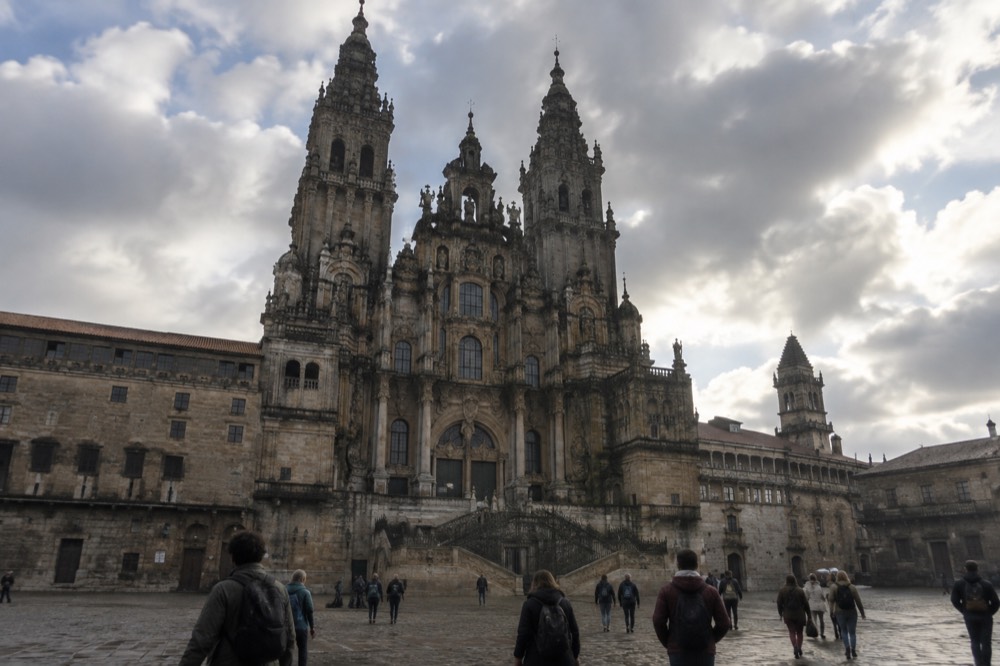
Fly-and-walk pilgrims land at Santiago-Rosalia de Castro airport, about 12km from the old town, where the city's transport page lists line 6A at EUR1 paid to the driver or EUR0.36 on a rechargeable card as of late September 2026. That fare is genuinely in transition, with the Monbus contract expected to raise it to around EUR6 during autumn 2026, so the honest instruction is to check santiago.es before assuming either number still applies. The site's Santiago de Compostela airport and flights guides cover the arrival end of the budget in detail.
For walkers starting from the Spanish capital, the site's getting-to-the-Camino-from-Madrid answer covers the rail options in detail, and the table below shows which legs are direct and which are not.
| Leg | Typical service | Verified note |
|---|---|---|
| Madrid to Santiago de Compostela | Direct high-speed, roughly 3-4 hours | Range, not a timetabled minute count |
| A Coruna to Santiago de Compostela | Direct regional or high-speed, a short hop | Shortest of the Galician legs |
| Vigo to Santiago de Compostela | Direct regional, roughly 1 hour | Also the rail change point for Porto arrivals |
| Porto to Santiago de Compostela | No direct line, change at Vigo | Rail arrives via Vigo onward |
How To Walk The Camino de Santiago Without Overspending?
The reliable savings are structural, not tactical: walk in shoulder season when beds are thinner, sleep in the cheapest tier of albergue, cook in pilgrim kitchens instead of eating every meal out, and start within the last 100km if the goal is the certificate rather than the full route. The finish itself can be nearly free, since cathedral entry costs nothing and the Compostela is issued in person at Rua das Carretas 33 on presentation of a duly stamped credencial.
The certificate rules are worth restating because they define the cheapest qualifying walk. The Oficina del Peregrino's FAQs require the last 100km walked, or the last 200km cycled, on a recognized route, continuous, with at least two stamps per day in the credencial from official stamping points. The pilgrim passport and credencial guide explains the stamping routine, and the office itself, covered in the site's pilgrim office guide, is the only place of issue.
At the finish, the fixed prices in the first table apply. Cathedral entry is free. The rooftop tour at EUR15 and the museum at EUR9-23 are optional extras, real prices on the Cathedral's own ticketing site, and the only spend that is genuinely unavailable right now is the Botafumeiro, whose private-request option is suspended while the dome scaffolding stands.
Where a small spend does add value is on a guided orientation. The historic town walk with an official guide starts from $14 per person, rated 4.8 from 144 reviews, and the small-group private historic walk starts from $29 per person, rated 4.9 from 16 reviews, both on the operators' live listings.
Some walkers finish the Camino and keep walking west, since the trail historically continued to Fisterra on the coast, and the rest day after the Camino itinerary covers how to spend that bonus time cheaply. Others treat the coast as the celebration, and the two day-trip options below are the popular versions of that.
The final structural saving is honesty about what a walker actually wants. Pilgrims who need the full month-long Camino Frances for its own sake should budget for it rather than short-change it. Pilgrims who mainly want to arrive at the tomb in Santiago de Compostela with a valid certificate can qualify in a week from Sarria. Both are real Caminos by the Oficina del Peregrino's own rules, and the second costs a fraction of the first.
Common Questions About Walking The Camino de Santiago
What is the average cost to walk the Camino de Santiago?
No official average exists, because no authority publishes a pilgrim budget and the Oficina del Peregrino records arrivals, not spending. The total is driven mainly by nightly accommodation, with food, gear and transport after it, and the fixed prices at the finish, such as free cathedral entry and the EUR15 rooftop tour, are the only figures official sources confirm.
Do I have to pay to receive the Compostela certificate?
The Oficina del Peregrino's FAQs set the qualifying rules, the last 100km walked or 200km cycled with at least two credencial stamps per day, and the certificate is issued in person only at Rua das Carretas 33 in Santiago de Compostela. Check the office's own site for current issuance details.
Is entry to Santiago de Compostela Cathedral free?
Yes, general entry to the basilica is free, daily roughly 7:00am to 9:00pm via the Praterias door per the city's cathedral page. Note that from 16 October 2026 the 9:30am, noon and 7:30pm pilgrim masses move to the Church of San Agustin while main-chapel works run, with only the 7:30am mass staying in the Cathedral's Communion chapel.
Does the Botafumeiro swing every day?
No. It normally swings on 12 fixed liturgical solemnities a year, but it is currently out of action because cimborrio restoration scaffolding covers its hanging mechanism, confirmed by the Cathedral in writing on 5 September 2026, with no return date published and private requests unavailable.
Is there a tourist tax in Santiago de Compostela?
Yes, a municipal tourist tax (a surcharge on Galicia's tourist-stay tax) has applied since 1 October 2025, charged per person per night for up to 5 nights, from 1 EUR in private albergues, campsites and tourist apartments to 2.50 EUR in five-star hotels, with under-18s and stays in Xunta-run public albergues exempt.
When is the next Holy Year, and will it cost more?
The next Holy Year is 2027, with the Holy Door opening on 31 December 2026 and remaining open through 31 December 2027. Holy Year crowds will tighten bed availability along the routes, which tends to push late arrivals toward more expensive private rooms.
The honest summary: the Camino de Santiago costs what a walker's nightly bed choice costs, multiplied by the number of nights the route requires, plus food along the way and a one-off gear outlay. Everything with a published price, from free cathedral entry to the EUR15 rooftop tour, is listed in the tables above, and everything without one should be planned as a range rather than believed as a number.