What Is The Best Month To Walk The Camino de Santiago?
Month-by-month guidance on weather, crowds and costs for walking the Camino de Santiago to Santiago de Compostela, based on AEMET climate data and official pilgrimage office figures.
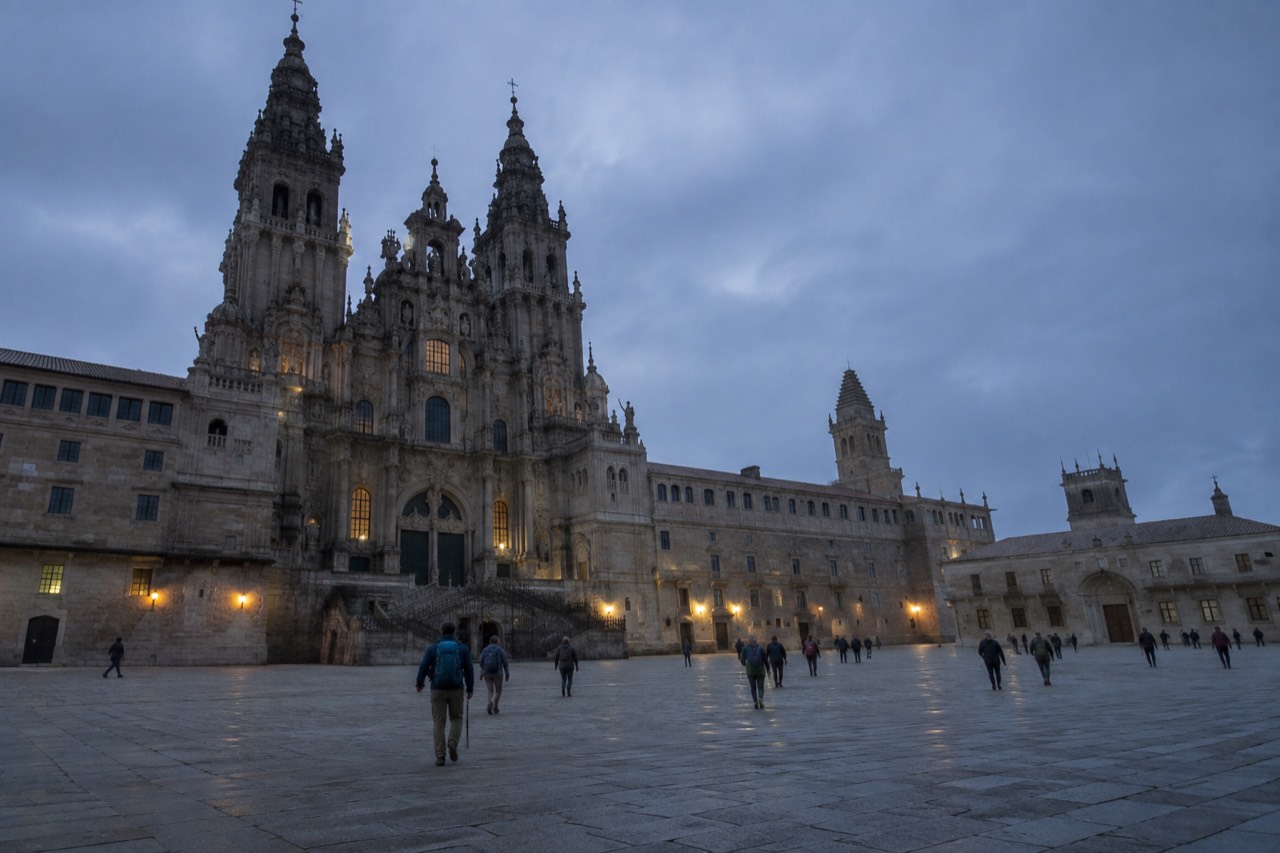
The Camino de Santiago ends at one specific place, the Cathedral of Santiago de Compostela in Galicia, northwest Spain, and the month a walker chooses to arrive there shapes the whole trip: how wet the meseta paths are, how full the albergues feel, and whether the trails are shared with a handful of pilgrims or the summer peak. Spain's national weather agency AEMET records Santiago de Compostela as a temperate oceanic climate, wet year-round and wetter still from October to March, with July and August the driest window of all. The pilgrim world adds its own rhythm on top of the weather, because the Oficina del Peregrino's figures show 530,987 Compostelas issued in 2025, and that traffic is not spread evenly across the calendar. This page works through each month's trade-offs so the choice can be made on evidence rather than on a friend's single anecdote.
What Is The Best Month To Walk The Camino de Santiago?
September is the single best month to walk the Camino de Santiago, followed closely by May and June. September sits inside AEMET's drier late-summer window in Galicia while the August holiday crowds have gone back to work, albergue beds are easier to find, and daytime heat on exposed stages has eased. For walkers who want the driest possible trail at any cost, late July is the peak of the dry season, but it carries the largest crowds of the year.
The reasoning behind that ranking is worth unpacking, because three separate calendars overlap on the Camino and they do not peak at the same time.
The first calendar is the weather. AEMET's station data for Santiago de Compostela, station 1475X at Labacolla, shows annual precipitation on the order of 1,690 to 1,890mm depending on the station and year measured, which is a lot of rain by any European standard. That rain is not distributed evenly: October through March is the wetter half of the year, and July and August are the driest. A walker choosing a month is really choosing where on that wet-dry curve to stand.
The second calendar is human. The Oficina del Peregrino's most recent annual figure, 530,987 Compostelas issued in 2025, is a record, and the busiest walking weeks of the year cluster around summer holidays and the Feast of St James on 25 July. More walkers means full albergues by early afternoon, queues at the pilgrim office on Rua das Carretas 33, and crowded final stages into the city.
The third calendar is liturgical, and it matters more than many guidebooks admit. Holy Years, when 25 July falls on a Sunday, multiply pilgrim numbers, and the next one is 2027: the Holy Door opens on the evening of 31 December 2026 and the Holy Year runs through 31 December 2027. Walkers deciding on a month for 2027 should read that as a crowd multiplier on top of everything else.
AEMET's own climate data shows that the trade-off is unavoidable: the driest months are also the most crowded, and the quietest months are the wettest. September, May and June sit at the corner of that curve where both variables are tolerable.
Which Months Have The Best Weather On The Camino?
July and August are the driest months in Galicia, but September is the best overall weather window because it keeps most of that dryness while shedding the summer heat and the holiday crowds. AEMET's data for Santiago de Compostela shows the wet season runs October to March, so April, May, June, September and early October are the shoulder months where rain is possible but not dominant, and every month outside them carries a real risk of sustained wet stages.
The Galician section of most routes is the wettest part of any Camino, so a walker finishing in Santiago de Compostela experiences the Atlantic end of the trail whatever month they pick. In the wet half of the year, October to March, rain gear stops being an optional packing item and becomes the thing the trip is organized around. The Camino packing list guide on this site reflects that reality for shoulder-season walkers.
Spring has its own character. April and May can produce long stretches of green, flowering, mid-strength walking days, but AEMET's figures give no guarantee: the wet season officially extends into March and the shoulder months on either side of it are transition months, not dry ones. Walkers with rigid dates should plan for rain in April, and treat dry Aprils as luck rather than as a base rate.
Summer inverts the problem. July and August are the driest months on AEMET's record, but clear skies over the meseta mean sustained heat on exposed stages, and heat, not rain, becomes the thing that slows walkers down and empties water bottles by eleven in the morning. Early-morning starts are the standard answer.
For a month-by-month view that stays inside what the verified climate data supports:
| Month | Weather Character On The Route | What It Means For Planning |
|---|---|---|
| January to March | Wettest stretch of the year, cool | Full rain gear essential, quietest trails, some albergues shut for the season |
| April to June | Transition into the drier season | May and June balance rain risk against comfortable temperatures |
| July to August | Driest months on AEMET's record | Heat on exposed stages, largest crowds, book beds ahead |
| September | Late dry-season window, easing heat | The strongest single month, summer crowds thinning |
| October to December | Return of the wet season | Rain gear back in the bag, 25 December and 30 December are solemnity dates |
The solemnity dates in that table matter to finish-line planning. The Cathedral's own liturgy schedule normally has the Botafumeiro swing on twelve fixed dates a year, including 6 January, Easter Sunday, 23 May, Pentecost, 25 July, 15 August, 1 November, 8 December, 25 December and 30 December. The current status, confirmed in writing by the Cathedral on 5 September 2026, is that it is suspended because cimborrio restoration scaffolding covers its hanging mechanism, and no return date has been published. No month chosen in late 2026 or early 2027 can be picked on the promise of seeing it fly, and the private-request option is unavailable for the same reason.
Once the walking is done, most arriving pilgrims want to understand the city they have landed in, and a small-group guided walk is an efficient first move. The Historic Town Walking Tour with an Official Guide runs from $14 per person, and the Santiago de Compostela Historic Walking Tour In Small Group, from $29 per person and rated 4.9 from 16 reviews, keeps the group small enough for questions, with Check availability on the operator's live listing. Deeper background on the trail itself is in the main Camino de Santiago guide.
How Crowded Is Each Month On The Camino?
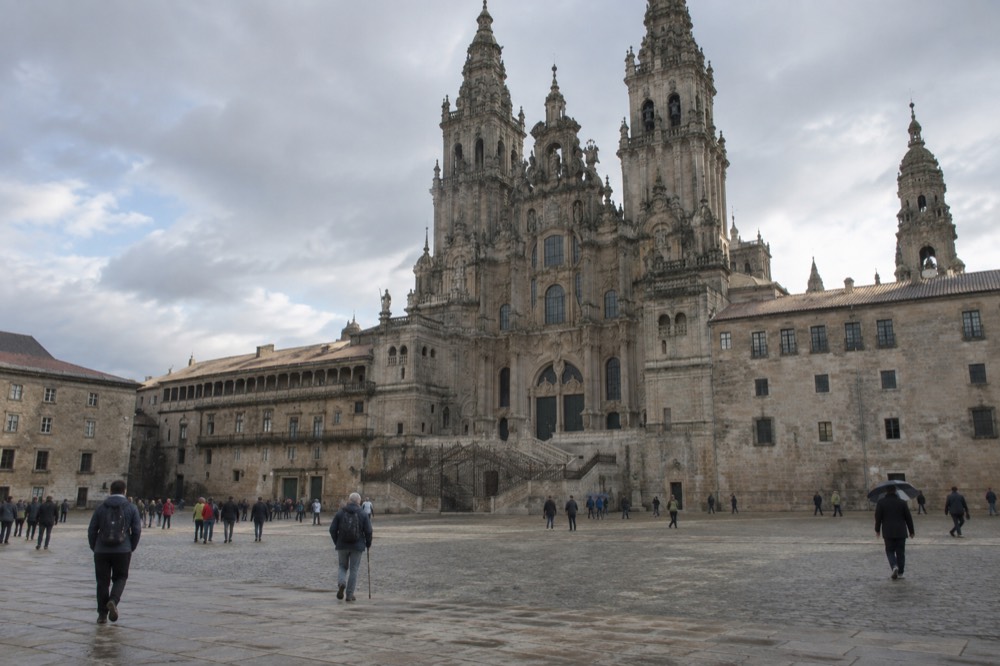
July and August are the most crowded months on the Camino de Santiago, with the weeks either side of the Feast of St James on 25 July the busiest of the entire year. September, May and June carry moderate traffic, and the October to March wet season is the quietest period, with the trade-off that fewer albergues are open and the ones that stay open are easier to book at short notice.
Crowd pressure is not an abstract complaint: it decides what time a walker has to finish each stage. In the peak summer weeks, beds in popular albergues fill in the early afternoon, the queue at the pilgrim office on Rua das Carretas 33 can absorb a whole morning of a rest day, and the final stage into Santiago de Compostela can feel like a walking festival rather than a solitary pilgrimage. Walkers who want solitude should treat that as the price of the dry season. The full index of guides sits on Santiago de Compostela Travel Guide.
The liturgical calendar spikes specific dates even inside quieter months. Easter week pulls Spanish domestic walkers onto the trail. 25 July, the Feast of St James, is the fixed annual peak of pilgrim identity in the city, marked by a Pontifical Mass and civic events, and any year in which it falls on a Sunday becomes a Holy Year with amplified numbers.
That is exactly what 2027 is. The next Holy Year after 2026 runs from the Holy Door opening on the evening of 31 December 2026 through 31 December 2027, because 25 July 2027 falls on a Sunday. Walkers planning that year should assume peak-season conditions across a wider band of months than usual, and this site's Holy Year 2027 guide covers the implications in detail.
For walkers who cannot face the peak, the counter-season has real appeal. Winter Camino walkers report near-empty paths and albergues, but the October to March wet season on AEMET's record, plus shorter daylight and seasonal closures of some accommodation and services, makes it a specialist choice. The Camino accommodation guide explains what stays open when.
When Does The Camino Cost More Or Less?
Peak summer months, July and August, are the most expensive months to walk the Camino de Santiago, because demand lifts private-room prices in the busiest towns and the highest-volume weeks fall then. The October to March wet season is the cheapest period, with shoulder months, May, June and September, sitting between the two and offering the best value overall since their weather is close to peak season while their prices are not.
The cost structure of the Camino is unusual and it softens the month-to-month differences. Public albergues are priced for pilgrims rather than tourists, private albergues track demand, and hotels in Santiago de Compostela itself move with the city's calendar rather than the trail's. The average cost guide on this site breaks down the daily budget in detail.
Two date-driven price effects are worth naming. Feast-of-St-James week in July compresses demand into a few days in Santiago de Compostela and the towns before it, and Holy Years do the same across months rather than weeks: 2027 walkers should expect peak pricing to stretch well beyond the summer. Conversely, the wet season lowers prices exactly when the weather is least inviting, which is the trade in its purest form.
There is also a small structural point many first-time walkers miss. The Compostela certificate is free, but it is issued in person only, at the pilgrim office at Rua das Carretas 33, and the office's hours are seasonal, roughly 8am to 7pm or 8pm depending on the time of year, and closed on 25 December and 1 January. A late-December finisher who arrives on the wrong day can walk a hundred qualifying kilometres and still leave without the document, which the Compostela certificate guide explains along with the stamping rules: two stamps per day minimum, the last 100km on foot or horseback, the last 200km by bike.
What Else Should The Chosen Month Decide?
The month chosen should decide the packing list, the daily start time and the rest-day plan, not just the start date. Wet-season months demand full rain gear and shorter daylight planning, dry-season months demand early starts and more water capacity, and any month in 2027 carries Holy Year planning on top, including higher demand for beds around the July feast week and the ceremony dates around the Holy Door.
Packing follows the month. The Camino packing list guide makes the split concrete, but the principle is simple: October to March walkers carry for rain and cold, July and August walkers carry for heat, and shoulder-month walkers carry for both in smaller amounts. Weight is the currency of the Camino, and carrying July's kit in January is as costly as the reverse.
Start times follow the month too. Heat pushes starts earlier and earlier through the summer, to the point where many peak-season walkers are on the trail before seven. Wet-season walkers face the opposite constraint, because daylight is shorter and the last kilometres in the dark are no one's idea of a finish.
Rest days follow the calendar. The rest day after the Camino is a tradition worth planning, and what it can include changes by month: the Cathedral's own liturgy page states that pilgrim masses are held at 7:30am, 9:30am, noon and 7:30pm at the main altar, and the oficio details a change from 16 October 2026, when the 9:30am, noon and 7:30pm masses relocate to the nearby Church of San Agustin while the 7:30am mass stays in the Cathedral's Communion chapel. A walker arriving in November 2026 needs to know that, because the default assumption, mass at the High Altar, will be wrong.
Finally, the month interacts with how long the whole project takes. The how-long question has different answers for different months, because shorter winter days mean fewer comfortable kilometres per stage. Walkers with a fixed total window should pick the month first and the route second.
Common Questions About Walking The Camino
What is the best month to walk the Camino de Santiago?
September is the best single month, followed by May and June. It combines the late edge of AEMET's dry season with thinner post-holiday crowds and easier bed availability. Walkers prioritizing the driest possible conditions should accept July's crowds; walkers prioritizing solitude should accept the October-to-March wet season.
Is 2027 a Holy Year for the Camino de Santiago?
Yes. The Holy Door opens on the evening of 31 December 2026 and the Holy Year runs through 31 December 2027, because 25 July 2027 falls on a Sunday. 2026 is not a Holy Year. Walkers choosing a month in 2027 should plan for elevated pilgrim numbers and book accommodation further ahead than usual.
Can the Botafumeiro be seen swinging at the end of a Camino?
Not currently. The Cathedral confirmed in writing on 5 September 2026 that the Botafumeiro is out of action because scaffolding for dome restoration covers its hanging mechanism, with no return date published. Normally it swings on twelve fixed solemnities a year, but no month can currently be chosen on the promise of a swing.
Does the weather differ much between May and September on the Camino?
Both are shoulder months on AEMET's record for Santiago de Compostela, but September sits closer to the dry season's core while May sits closer to the wet season's end. September days are usually warmer and more settled; May brings greener landscapes and a higher chance of rain. Both are sound choices.
Do I need to book accommodation ahead for the Camino?
In July, August and the 2027 Holy Year, yes, and the busier the route the more it matters. In May, June and September it is prudent but not always essential. In the wet season, October to March, beds are generally available at short notice, though some albergues close for the season and daylight limits the last stage.
How many days does walking in a given month add or remove?
Month does not change the distance, but it changes the comfortable stage length: shorter, wetter, darker winter days cut the daily average, while long summer days allow longer stages, at the cost of heat. Walkers with fixed dates should read the how-long guide on this site alongside this page before committing.