What To Do In Santiago de Compostela After The Camino
Arriving is only half the Camino. The day after matters just as much, and Santiago de Compostela repays it.
Short answer
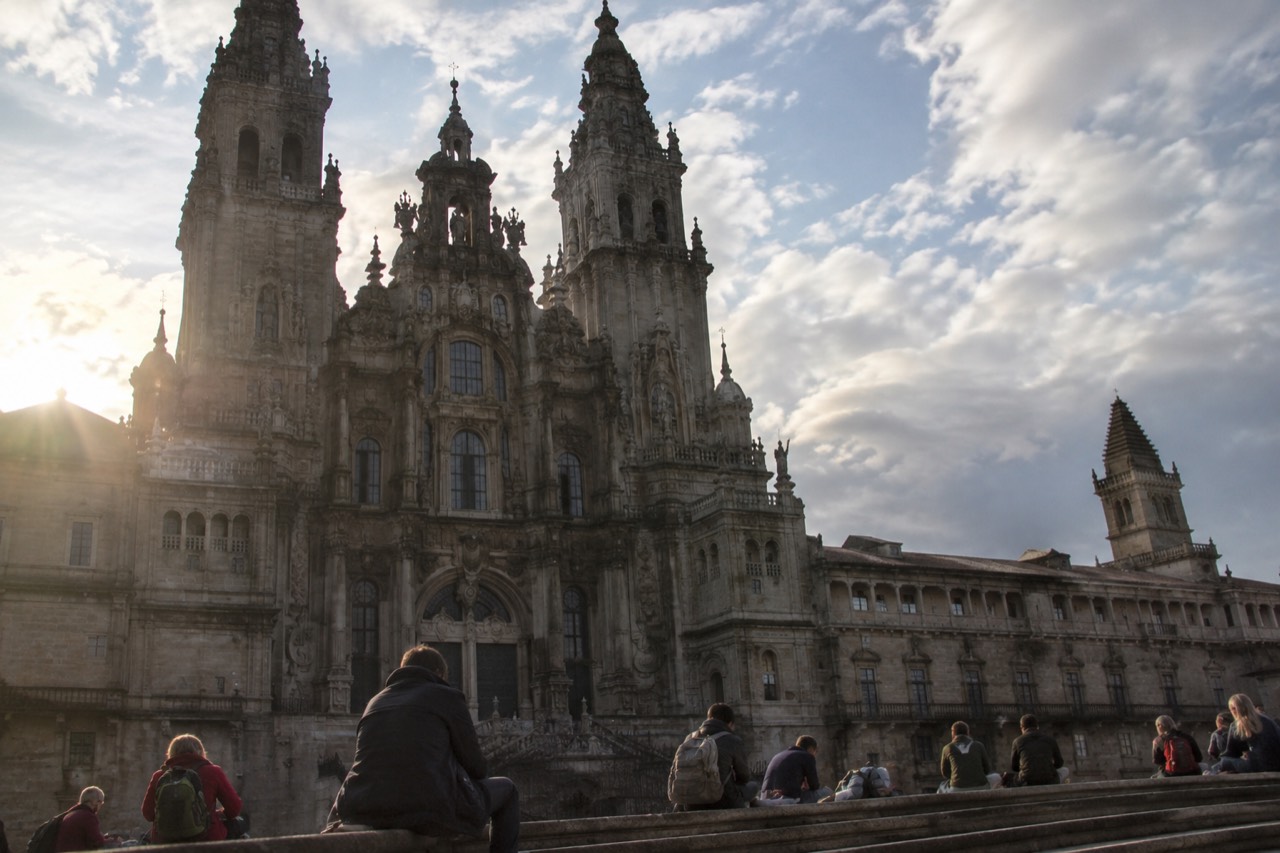
Collect your Compostela at the Pilgrim's Office, attend a Pilgrim Mass, visit the Cathedral's museum and rooftops, eat a proper Galician meal, sleep long, then decide between a day trip to Fisterra or a slow day in the old town.
The last steps into Santiago de Compostela are famously anticlimactic. Praza da Quintana arrives, then the Cathedral, then a queue at the Pilgrim's Office, and then a strange emptiness where the walking used to be. The Oficina del Peregrino's own figures show why the city feels full of people in exactly this state: it issued a record 530,987 Compostelas in 2025, and every one of those pilgrims had a first morning in the city with nothing to walk toward. That morning is what this itinerary plans. Think of it as a slow day and a half, built around the certificate, the Cathedral, two long meals and a decision about the coast.
What Should Your First Morning In Santiago de Compostela Look Like?
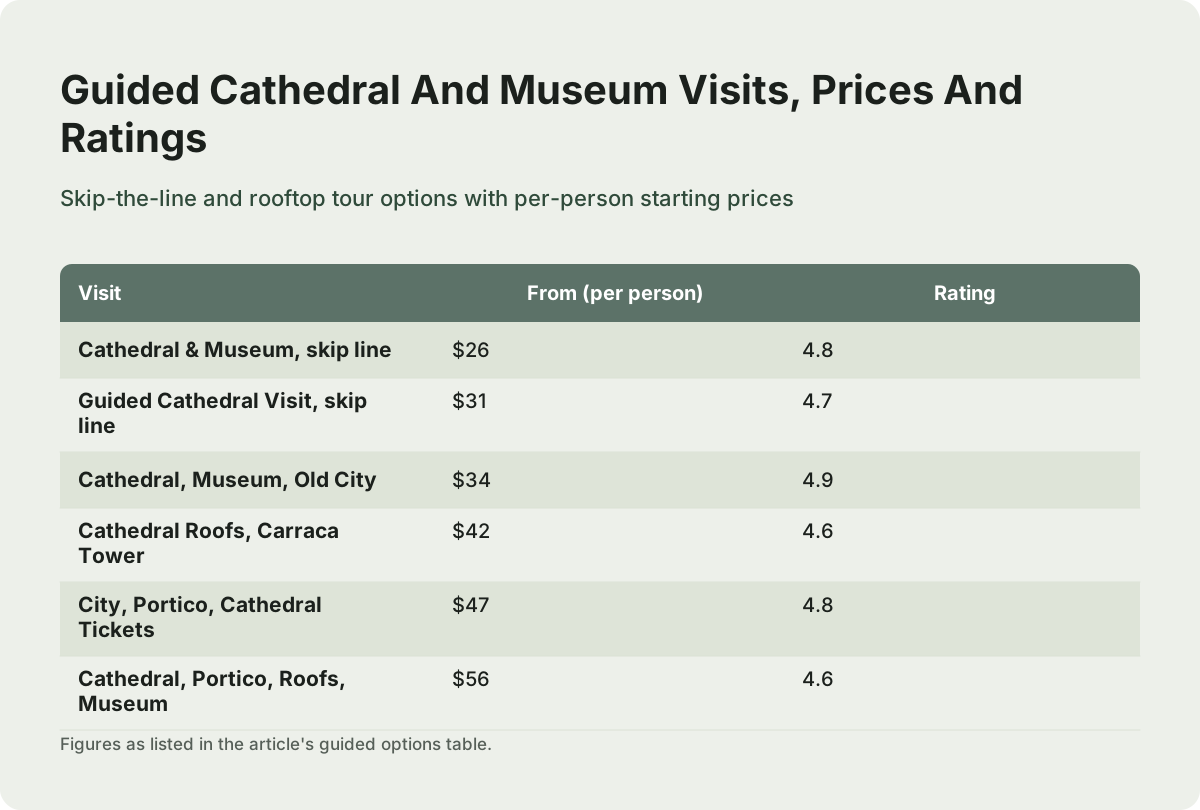
Collect the Compostela first, before anything else, because the Pilgrim's Office at Rua das Carretas 33 issues the certificate in person only, and the queue builds through the day. The office's FAQs require the last 100km walked, or the last 200km cycled, with at least two credencial stamps per day from official stamping points. After that, the morning belongs to the old town: Praza do Obradoiro, the Hostal dos Reis Catolicos facade, and a slow coffee while the legs stop humming.
The queue is a real planning item, not a rumor. It is the single busiest 20 square metres in Galicia on a summer afternoon, and arriving pilgrims line up alongside people who have just done the same thing. There is no way around it, only through it, and early is better. The office closes on 25 December and 1 January, and its hours shift seasonally, so the office's own page is the one to check on the day.
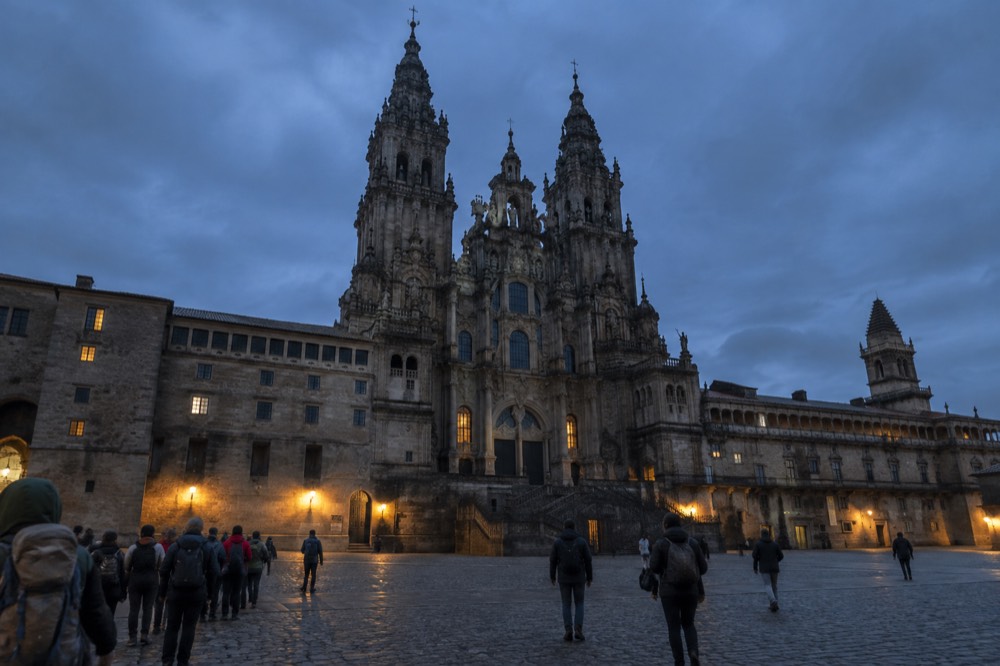
What you do while your legs recover is the real content of the first morning. The old town is compact enough that a bad knee is not a disqualifier: Praza do Obradoiro, the Cathedral facade, the slope down Rua do Franco, and Alameda Park with its view back across to the towers, are all within a gentle loop. The one day in Santiago de Compostela itinerary covers the full circuit if you have the energy for it.
How Do You Collect The Compostela And What Does It Actually Require?
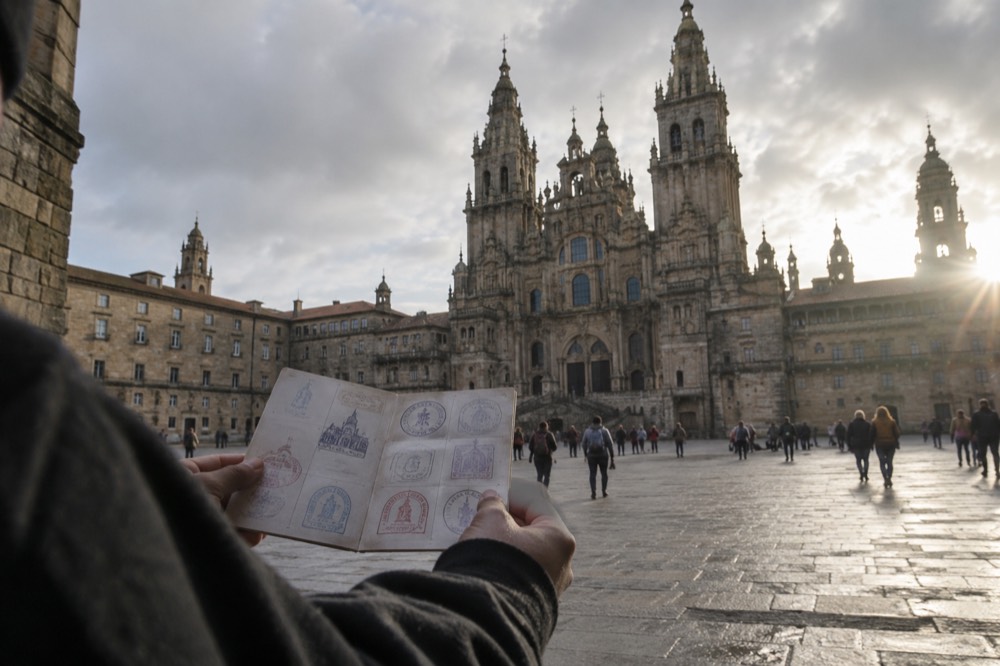
The Compostela requires the last 100km walked or the last 200km cycled on a recognized Camino route, continuous, with at least two stamps per day on the credencial from official stamping points, and it is issued in person only at the Pilgrim's Office, Rua das Carretas 33. There is no online version, no postal shortcut and no exception for a well-documented gap. The office's own FAQ page is blunt about all of this, which saves everyone a difficult conversation at the counter.
The two-stamps rule is where most disappointment happens. Pilgrims who collected one stamp a day, or who let a stage go unstamped, find that the final stretch of the route, not the whole route, is what the office audits. The pilgrim passport and credencial guide explains the stamping discipline in detail, including which places count as official stamping points and which are courtesy stamps.
Cyclists fall under a different distance rule: the last 200km cycled, while horseback is the last 100km, with the same two-stamp minimum. If the credencial is in order, the certificate itself takes minutes. The office's statistics record who arrived and how, and the scale is the striking part, 530,987 Compostelas in 2025, a record year, and the city's planning has adapted to it.
Which Cathedral Visits Are Worth Booking On A Rest Day?
Book the Cathedral Museum with the skip-the-line guided visit from $26, the rooftop and Carraca Tower tour at EUR15 general or EUR12 reduced, and the museum-only option, with the interior naves themselves free and open roughly 7am to 9pm. The rooftop tour is guided, about 60 minutes, climbs about 140 steps to roughly 72 metres, and includes access to the museum's permanent collection, Gelmirez Palace, the Crypt of the Portico de la Gloria, MuSar and the Diocesan Museum, valid seven days.
That ticket bundle is the single best-value item in the city for a pilgrim with a spare day, because the seven-day validity means you can split the museum across two mornings without re-paying. Reduced rates apply to accredited pilgrims, students, unemployed visitors, large families, disabled visitors, over-65s and under-12s, with proof required at entry. The Cathedral's own ticket site sells timed slots, and advance booking matters in peak season when slots sell out.
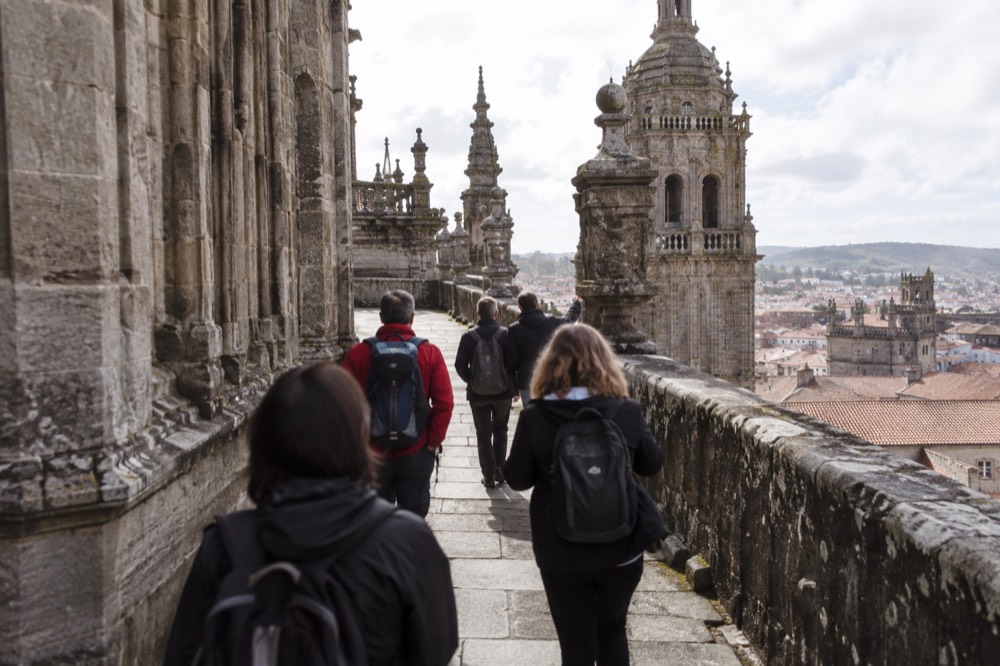
Guided Options For The Cathedral, Museum And Rooftops
| Visit | What it covers | From (per person) | Rating | Reviews |
|---|---|---|---|---|
| Cathedral & Museum, skip line | Cathedral and museum with a guide | $26 | 4.8 | 2,425 |
| Guided Cathedral Visit, skip line | Cathedral interior with priority entry | $31 | 4.7 | 582 |
| Cathedral, Museum, Old City | Cathedral, museum and old town walk | $34 | 4.9 | 115 |
| Cathedral Roofs, Carraca Tower | Rooftops and tower with a guide | $42 | 4.6 | 132 |
| City, Portico, Cathedral Tickets | City walk plus timed tickets | $47 | 4.8 | 194 |
| Cathedral, Portico, Roofs, Museum | The fullest ticketed visit | $56 | 4.6 | 79 |
One thing to know before you promise yourself the Botafumeiro: it is currently out of action. Scaffolding for the cimborrio restoration covers its swinging mechanism, the Cathedral confirmed this in writing on 5 September 2026, and no return date has been published. It normally swings on 12 fixed solemnities a year, but that schedule is suspended, and no tour can currently deliver it. The Portico da Gloria guide covers what to look for in Master Mateo's stonework, and the cathedral tickets and opening hours page has the full booking picture.
Where Should A Tired Pilgrim Eat On The First Evening?
Eat where the city eats rather than where the guidebooks send you: Mercado de Abastos for the market experience, Rua do Franco for the classic pilgrim strip, and a proper sit-down Galician dinner for the meal the Camino diet denied you. The canonical order is padron peppers, pulpo a la gallega, then tarta de Santiago, and guided tapas tours that walk you through them start from $52 with food and drinks included.
The market is the honest answer for a rest day. Mercado de Abastos is the city's working market, and its stalls are where restaurants shop, so the produce and the seafood are the same goods at market prices. Its opening hours are not officially published, so check the venue's own listing before planning a morning around it. The Galician food guide covers the full canon of dishes, and the where to eat page sorts the city by neighbourhood and budget.
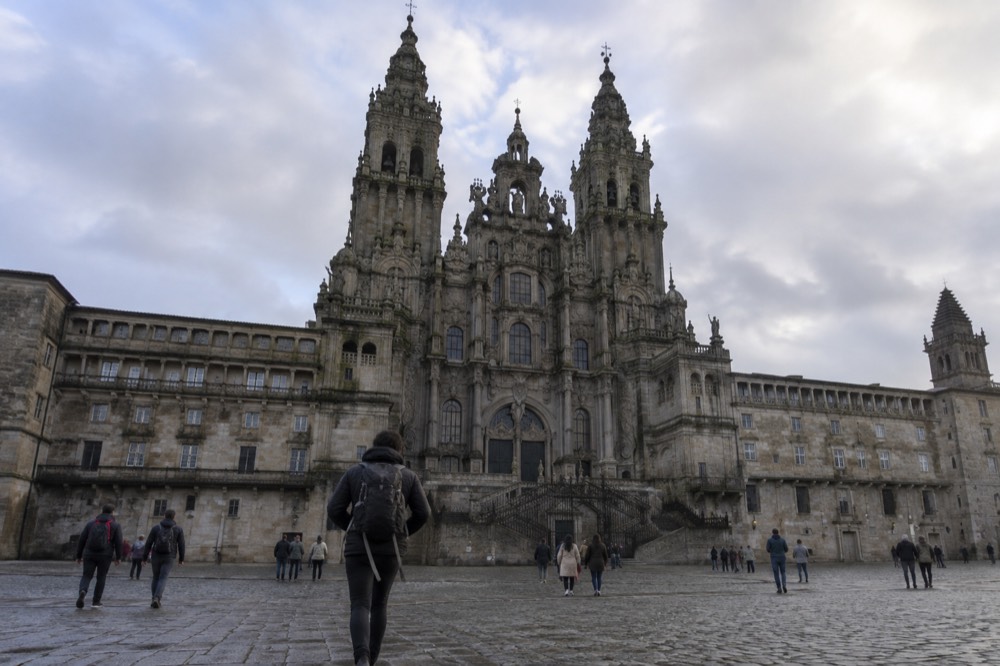
The Galician dishes worth the calories each earn their place. Padron peppers are the gambling tapa, most mild, some fierce, and nobody warns you which. Pulpo a la gallega is octopus with paprika and olive oil on a wooden plate, and tarta de Santiago is the almond-cake finish line that every pasteleria in the city bakes.
Classic Galician Dishes To Eat On A Rest Day
| Dish | What it is | Why it matters after the Camino |
|---|---|---|
| Padron peppers | Fried green peppers, coarse salt | Fast, salty, shareable, no menu courage needed |
| Pulpo a la gallega | Octopus, paprika, olive oil, wooden plate | The signature Galician plate, protein for tired legs |
| Empanada gallega | Savory pie, usually tuna or cod | The classic walker's portable food |
| Tarta de Santiago | Almond cake, often with the cross stencil | The finish-line dessert, made in every pasteleria |
| Queimada | Flamed orujo spirit, ritual incantation | The end-of-walk ceremony, best with a show |
The queimada deserves its own note because it is a performance, not just a drink. The orujo spirit is set alight in an earthenware bowl while the conxo incantation is recited, and the Queimada Experience show runs it as a guided tasting event from $17. It is the most Camino-adjacent thing you can do while sitting down.
How Do You Handle Pilgrim Mass On A Rest Day In 2026?
Pilgrim Mass times are 7:30am, 9:30am, noon and 7:30pm daily, but from 16 October 2026 the 9:30am, noon and 7:30pm masses relocate from the Cathedral's High Altar to the nearby Church of San Agustin, while only the 7:30am mass stays in the Cathedral's own Communion chapel. Before that date all four are at the main altar. Any discussion of mass times near or after mid-October must state both arrangements, dated, because the main-chapel remodelling is the reason.
The relocation is temporary, tied to the main chapel works preparing for the 2027 Holy Year, and it does not close the Cathedral to visitors. The practical effect for a rest-day pilgrim is simple: if you want mass inside the Cathedral itself after 16 October 2026, the 7:30am one is the only option. The pilgrim mass guide covers the ritual, the music and what the mass actually means in the pilgrim cycle.
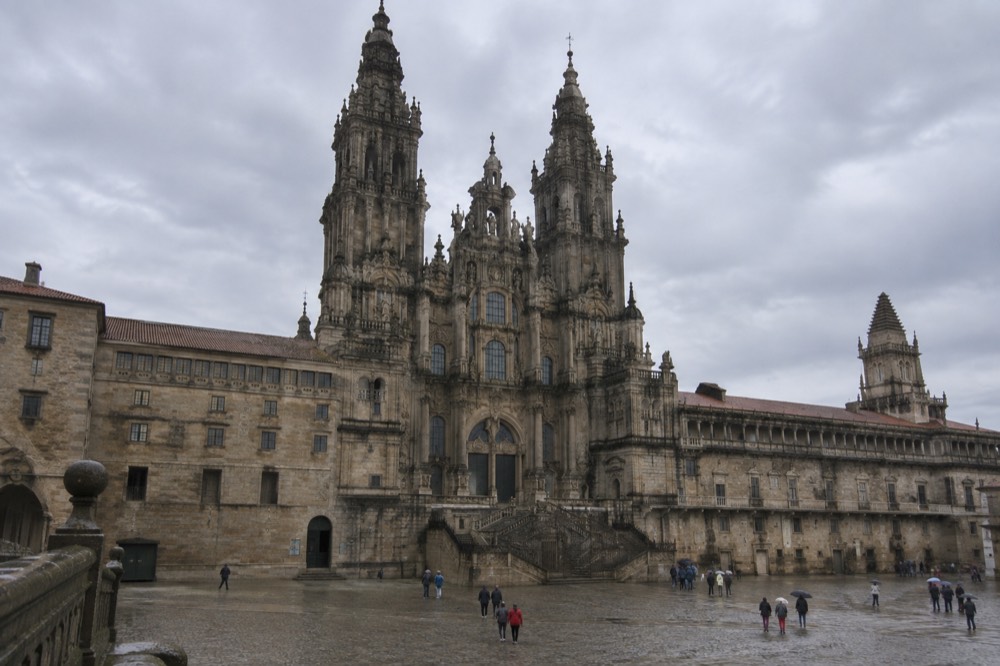
Pilgrim Mass Times And Locations, 2026
| Time | Until 15 October 2026 | From 16 October 2026 |
|---|---|---|
| 7:30am | Cathedral, High Altar | Cathedral, Communion chapel |
| 9:30am | Cathedral, High Altar | Church of San Agustin |
| 12:00 noon | Cathedral, High Altar | Church of San Agustin |
| 7:30pm | Cathedral, High Altar | Church of San Agustin |
The reason behind all the works is the one date every pilgrim should hold onto. 2027 is the next Holy Year, not 2026: the Holy Door opens on the evening of 31 December 2026 in Praza da Quintana and the Holy Year runs through 31 December 2027. The Holy Year 2027 guide covers what changes in the city when it arrives.
Where Should You Sleep The Night After Finishing?
Sleep where the walk allows you to stop moving: the old town if you want the Cathedral out your window and Rua do Franco at your feet, or the newer city around the station if you want quiet, space and a bathroom you do not share. Pilgrim-friendly stays cluster tightest around Praza do Obradoiro, and the luxury option, the Hostal dos Reis Catolicos parador, sits directly on the square, with rates that vary by season and demand, so check current rates before you book.
The parador is the famous finish-line splurge, a former royal hospital founded to receive pilgrims, and its position is unmatched: the front door opens onto Praza do Obradoiro with the Cathedral across the square. The Hostal dos Reis Catolicos guide covers its history and what staying there actually costs in different seasons, and the where to stay guide sorts the rest of the city by budget and neighbourhood.
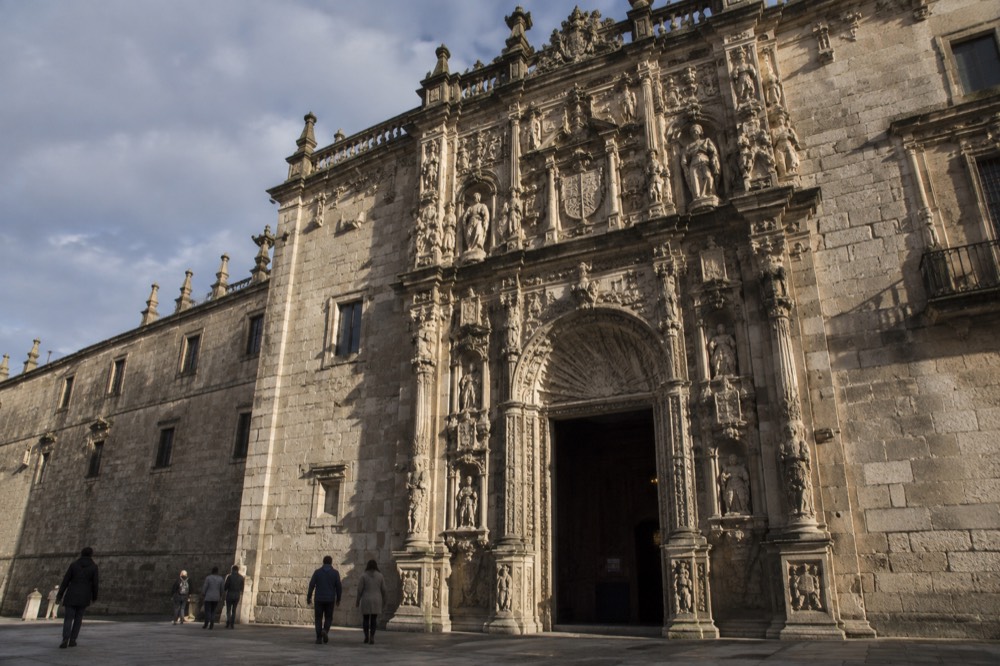
The mid-range answer is less photogenic and more useful. A room with a bath, walking distance from the Pilgrim's Office, matters more on a rest day than any square metre of granite. The municipal and private albergue system is explained in the albergues guide, for anyone already planning the next one.
Where To Sleep On The Night After Arriving
| Stay type | Best for | Trade-off |
|---|---|---|
| Hostal dos Reis Catolicos parador | The finish-line splurge on the main square | Highest rates, book far ahead |
| Old town hotels | Cathedral views, short walks, atmosphere | Noise, tight rooms, premium prices |
| Station-area hotels | Space, quiet, bathrooms, easy onward travel | A longer walk to the old town core |
| Private albergues | Meeting other finishers, lowest cost | Shared rooms, early turnover |
Should You Walk On To Fisterra, Or Day-Trip From The City?
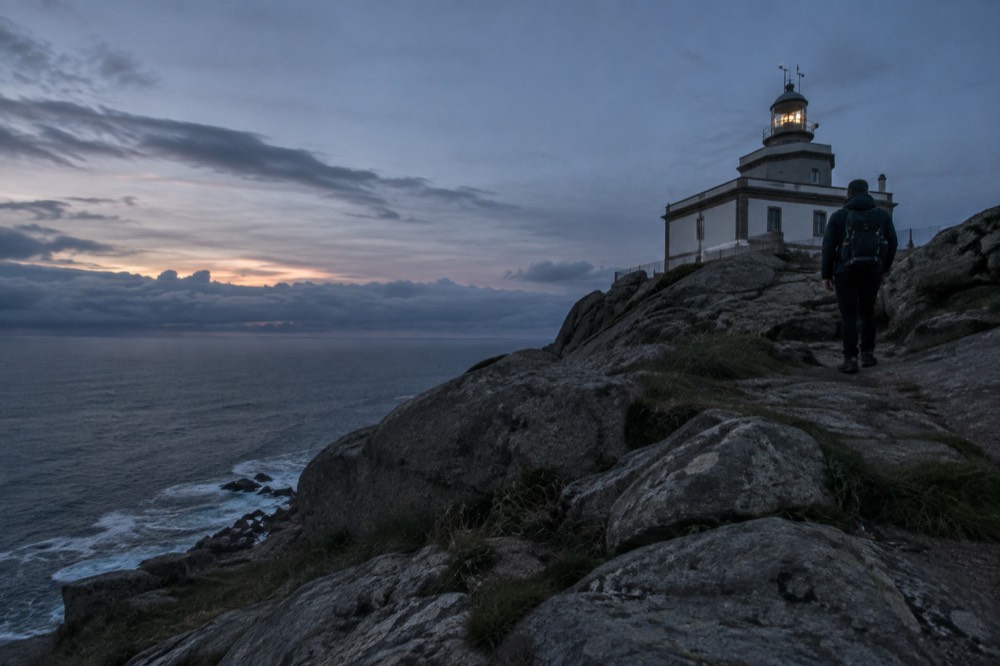
Walk on to Fisterra only if your legs still want distance and you have two or more spare days, because the Camino Finisterre is a real route with its own credential and its own finish at the coast, roughly 90km from Santiago de Compostela. If you have one spare day, take a guided day trip instead, and the seven-stop Finisterre, Muxia and Costa da Morte tour runs the full coast from $60 with a guide and transport included.
The distinction matters because the two options are not interchangeable. Walking it is the ancient continuation, the pilgrim's original extension to what was believed to be the end of the world, and the Camino Finisterre guide covers the route stages. Day-tripping it is a coach itinerary that reaches Fisterra, Muxia and the Costa da Morte cliffs in a single long day, and the walk from Santiago to Finisterre question weighs the honest case for each.
The third option, doing neither and simply walking the old town slowly with a guide, suits the majority of arriving pilgrims better than either coast plan. The small-group historic walking tour runs from $29 with an official guide, and the free GuruWalk tours, including Free Tour Santiago Fundamental The most complete! and Essential Free Tour Santiago with radio guide included, are tip-based with GuruWalk named here because that is how those walks work: free to join, tip what you judge, guide included.
Coast Options From Santiago de Compostela After The Camino
| Option | Duration | From (per person) | Rating | Reviews |
|---|---|---|---|---|
| Fisterra & Muxia, 7 stops, full day | Full day | $60 | 4.8 | 1,714 |
| Finisterre & Coast of Death, full day | Full day | $60 | 4.8 | 860 |
| Costa da Morte, Cabo Vilan stop, full day | Full day | $60 | 4.8 | 267 |
| Ézaro, Muros & Carnota stops, full day | Full day | $60 | 4.6 | 229 |
| Half-day express, Fisterra & Muxia | Half day | $45 | 4.4 | 50 |
What Should You Do On Your Second Day In Santiago de Compostela?
Spend the second day on the city's own sights rather than the pilgrim circuit: the rooftop tour in the morning, the Portico de la Gloria with its timed ticket, Alameda Park and the Cidade da Cultura for the views, then an unhurried evening on Rua do Franco. If you have a third day, a second full day in the city is genuinely richer than rushing it, and the two days in Santiago de Compostela itinerary splits the city into a sane pair of days.
The second day is when the legs come back and the city stops being a finish line. The cathedral rooftops guide covers the climb and the views from about 72 metres, and the Cidade da Cultura hilltop complex is what most pilgrims never reach because they leave the morning after they arrive. The two days in Santiago de Compostela itinerary is the natural extension of this rest-day plan.
How Do You Get Home From Santiago de Compostela?
Fly from Santiago-Rosalía de Castro airport (SCQ) about 12km from the old town, take the train to Madrid in roughly three to four hours on direct high-speed services, or head south via Vigo toward Porto with a change, because there is no direct rail line to Porto. The airport bus, line 6A, currently costs 1 EUR to the driver but a new Monbus contract with a fare around 6 EUR is expected in autumn 2026, so the fare is subject to change rather than permanent.
The train to Madrid is the comfortable long-haul exit, and Vigo is roughly an hour by regional service, with A Coruna a short hop north. The airport's flight options are covered in the Santiago de Compostela Travel Guide airport pages, and the best airport to fly into to walk the Camino question is the one to read if the next trip is already forming.
Getting Out Of Santiago de Compostela
| Route | Typical journey | Notes |
|---|---|---|
| Airport (SCQ) to centre | About 12km, bus line 6A | 1 EUR to the driver now, Monbus fare around 6 EUR expected autumn 2026 |
| Santiago to Madrid | Roughly 3-4 hours | Direct high-speed services |
| Santiago to Vigo | Roughly 1 hour | Regional and Media Distancia services |
| Santiago to Porto | No direct line | Change via Vigo |
Common Questions About A Rest Day In Santiago de Compostela
What should I do first after arriving in Santiago de Compostela?
Queue at the Pilgrim's Office at Rua das Carretas 33 early to collect the Compostela, because it is issued in person only and the queue builds through the day. After that, the old town loop, Praza do Obradoiro, the Cathedral facade and a slow coffee, is enough for the first morning.
What does the Compostela certificate require?
The last 100km walked or the last 200km cycled on a recognized Camino route, continuous, with at least two stamps per day on the credencial from official stamping points. It is issued in person only at the Pilgrim's Office, Rua das Carretas 33.
Is the Botafumeiro swinging in 2026?
No. It is temporarily out of action because scaffolding for the cimborrio restoration covers its hanging mechanism, the Cathedral confirmed this in writing on 5 September 2026, and no return date has been published. It normally swings on 12 fixed solemnities a year, but that schedule is currently suspended.
Can you see the Cathedral rooftops without a tour?
No, the Cubiertas and Torre de la Carraca visit is guided only, about 60 minutes with about 140 steps to roughly 72 metres, EUR15 general or EUR12 reduced, booked as a timed slot on the Cathedral's own ticket site. The ticket also includes the museum's permanent collection and several other sites, valid for seven days.
Where do pilgrim masses happen after 16 October 2026?
The 9:30am, noon and 7:30pm masses relocate from the Cathedral's High Altar to the nearby Church of San Agustin, while the 7:30am mass stays in the Cathedral's Communion chapel. Before 16 October 2026 all four masses are at the Cathedral's main altar.
Should you walk on to Fisterra after reaching Santiago de Compostela?
Only if you have two or more spare days and legs that still want distance, because the Camino Finisterre is a real multi-day route with its own credential. With one spare day, a guided full-day tour to Fisterra, Muxia and the Costa da Morte from $60 reaches the coast and returns in a single day.
Is 2026 a Holy Year in Santiago de Compostela?
No. The next Holy Year is 2027: the Holy Door opens on the evening of 31 December 2026 and the Holy Year runs through 31 December 2027. Holy Years occur whenever 25 July falls on a Sunday.