Camino Finisterre: The Walk From Santiago de Compostela To The Sea
Most journeys end at the Cathedral of Santiago de Compostela. The Camino Finisterre begins there, carrying pilgrims west across Galicia to the lighthouse headland at Fisterra, the place medieval travelers called the end of the known world.
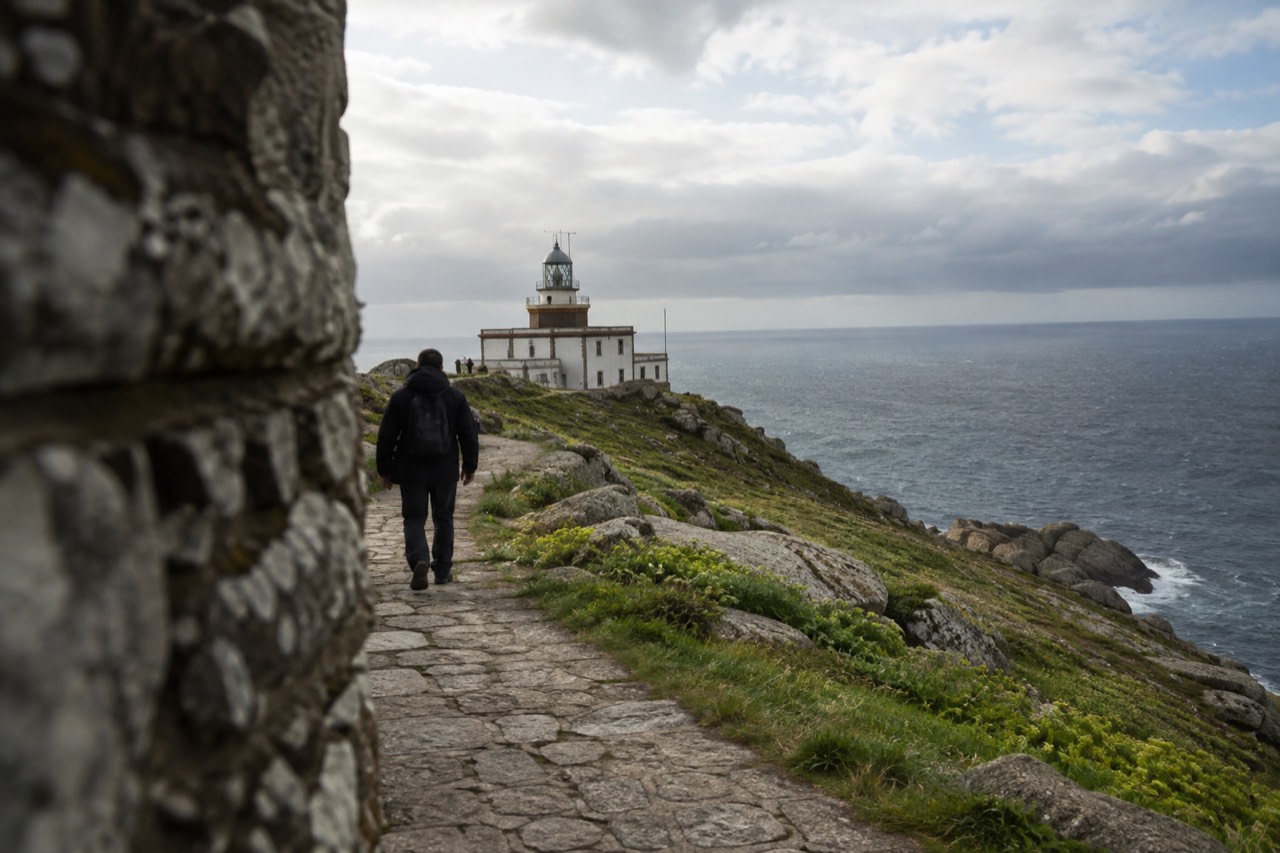
Short answer
The Camino Finisterre is the extension route that runs west from Santiago de Compostela to Fisterra on the Costa da Morte, and it is the only Camino that starts where the others finish. Walkers who still have legs left after arriving at the Cathedral follow yellow arrows through Galician farmland and pine forest to the Atlantic, and some continue north to Muxia. This guide covers what the route is, how it relates to the Compostela, when to walk it, and what to book in Santiago de Compostela before you set off.
The Camino Finisterre is the extension route that leads west out of Santiago de Compostela toward the Atlantic, and it is the only Camino that begins at the place where every other Camino ends. Pilgrims who have just embraced the statue of St. James behind the high altar sometimes discover they are not finished walking. Instead of turning east toward home, they turn west, following yellow arrows through Galician farmland, eucalyptus and pine toward the lighthouse headland at Fisterra, a place medieval Europe treated as the literal edge of the world. Fisterra is the Galician spelling, Finisterre is the Spanish form, and both are correct; the name descends from the Latin for end of the earth.
This guide walks through the route the way a walker would experience it: what it is, why anyone keeps going after reaching the tomb of the Apostle, how it interacts with the Compostela certificate, and what to arrange in Santiago de Compostela before setting out. It also covers the practical reality of 2026 and 2027, from the Cathedral restoration works that have grounded the Botafumeiro to the mass relocations of October 2026 and the Holy Year that opens on 31 December 2026. Where a figure in this article appears, it comes from the Cathedral, the Pilgrim's Office, the city of Santiago de Compostela or the national climate record. Where no verified figure exists, you will read that plainly rather than a guessed number.
What Is The Camino Finisterre?
The Camino Finisterre is a pilgrim route that starts in Santiago de Compostela and runs roughly westward to the coast at Fisterra, on Galicia's Costa da Morte, with a branch to the sanctuary at Muxia. It is the reverse of every other Camino: pilgrims collect their Compostela at the Cathedral first, then keep walking to the sea. Many treat it as a cooling-down walk after a long arrival route, spreading it over several days rather than racing it in one.
The idea is old. Long before the tomb of St. James drew pilgrims from across Europe, this western corner of Galicia already had a reputation as a sacred edge, a place where the sun appeared to sink into the ocean and where pre-Christian ritual clung to the cliffs. Medieval pilgrims who had crossed half a continent to reach Santiago de Compostela sometimes continued those final kilometers to the coast, and the modern waymarked route revived that habit. The arrow network is maintained like any other Camino, and the pilgrim infrastructure of albergues, stamps and waymarkers follows the same logic walkers know from the French route. For a fuller picture of the wider network, see the companion guide to the Camino de Santiago, and for route comparisons, the Camino de Santiago routes overview on this site covers them side by side.
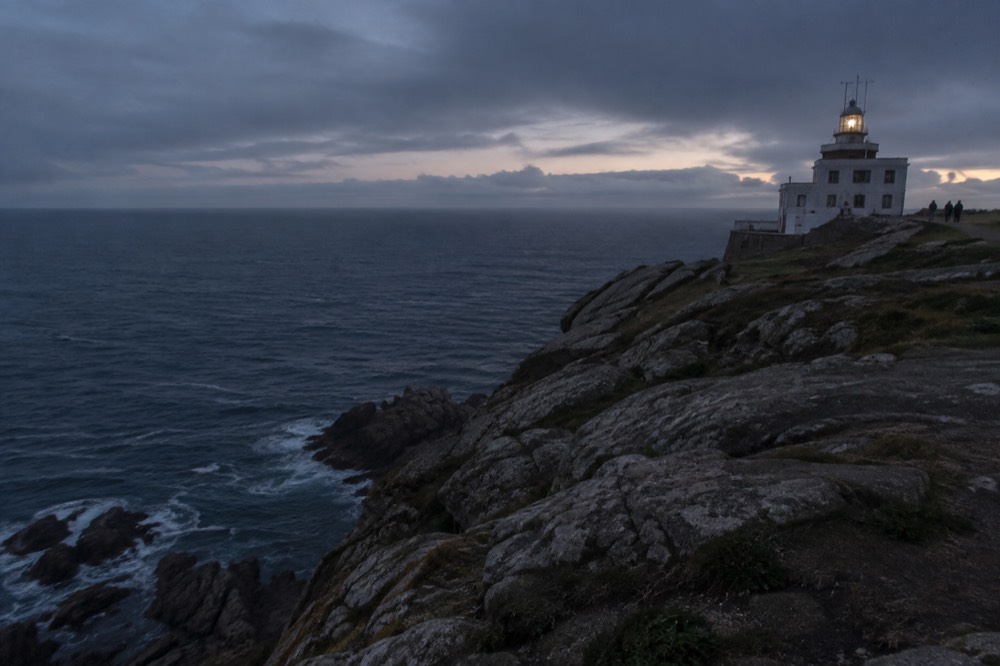
One point of honesty up front: no verified stage-by-stage distance table for the Camino Finisterre is available here, so no kilometer figure is printed. Route maps and stage planners published by the official Camino bodies list the breakdowns, and the Camino de Santiago map guide on this site covers how to read them. What can be said with confidence is the character of the thing: quiet rural tracks, small hamlets, forest paths and a final stretch of coast that earns the Costa da Morte its somber name. It is a walk for decompression as much as devotion, and many walkers describe it as the moment the Camino finally slows down.
Why Do Pilgrims Keep Walking To Fisterra After Santiago de Compostela?
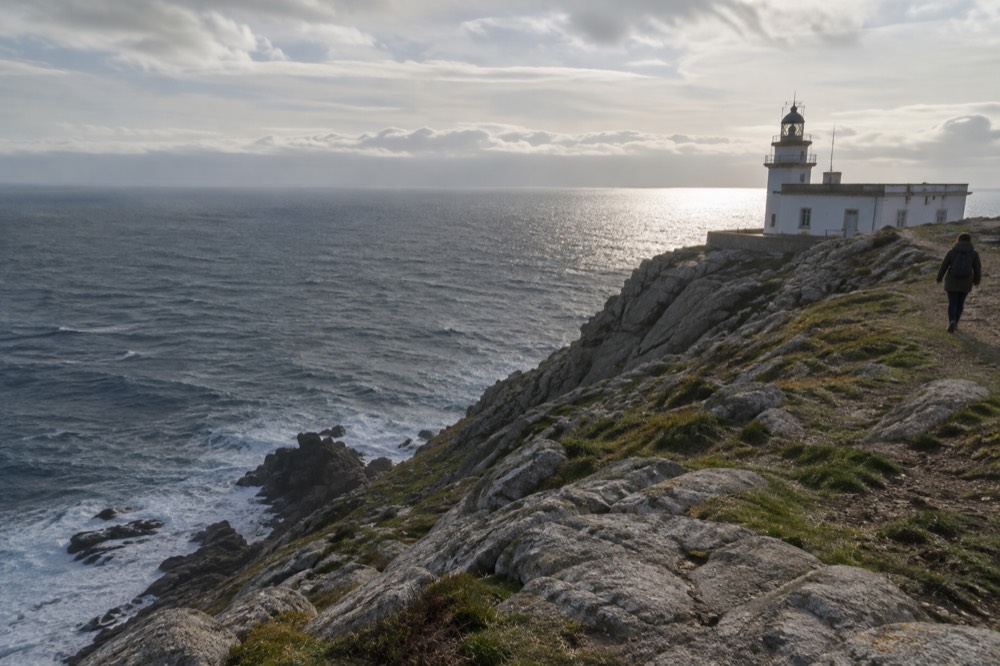
Pilgrims keep walking because arriving at the Cathedral in Santiago de Compostela can feel abrupt: weeks of rhythm end in a queue, a Mass and a stamp, and the body still wants to walk. Fisterra supplies a different finish, a lighthouse above open ocean where the tradition is to watch the sun set into the Atlantic after burning or discarding something from the road. The route also gives walkers a quiet decompression that a city arrival cannot, and the branch to Muxia adds a second, sea-facing sanctuary.
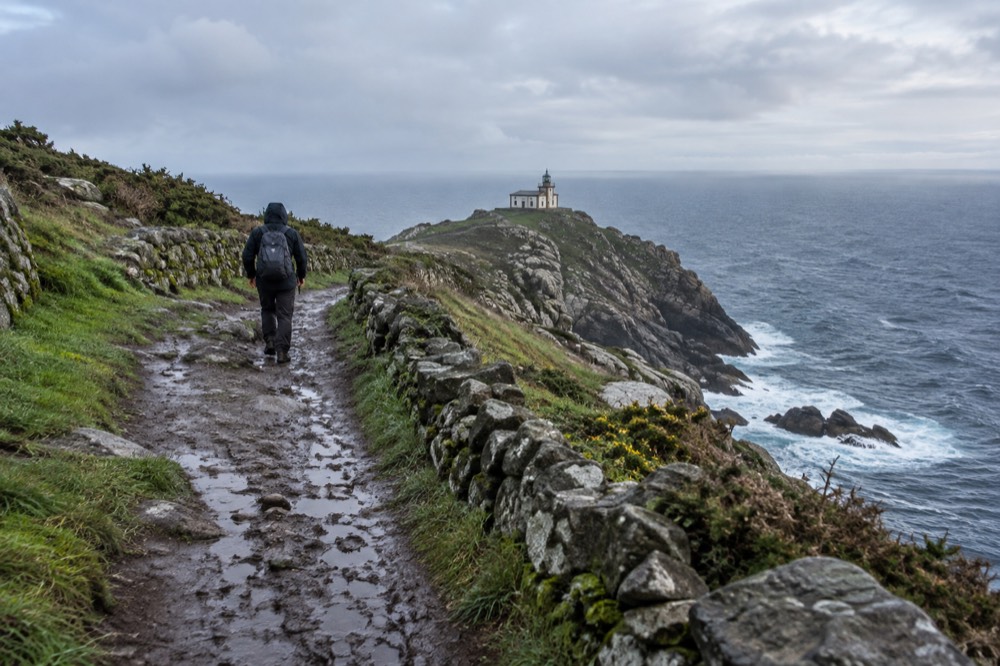
The sunset ritual at Fisterra is the best known of the arrival customs, and the coast itself, the Costa da Morte, is a stretch of Atlantic shoreline named for the shipwrecks it has taken over the centuries. Walkers arrive, look west, and see no land between themselves and America. That image is the whole point for many people: after weeks of walking toward a tomb in a city, the Camino Finisterre turns the journey toward emptiness, water and horizon instead. Others come for the Muxia branch, where the sanctuary on the cliffs above the sea carries its own stone boat legend tied to the Apostle. Either way, the walk reframes arrival as departure.
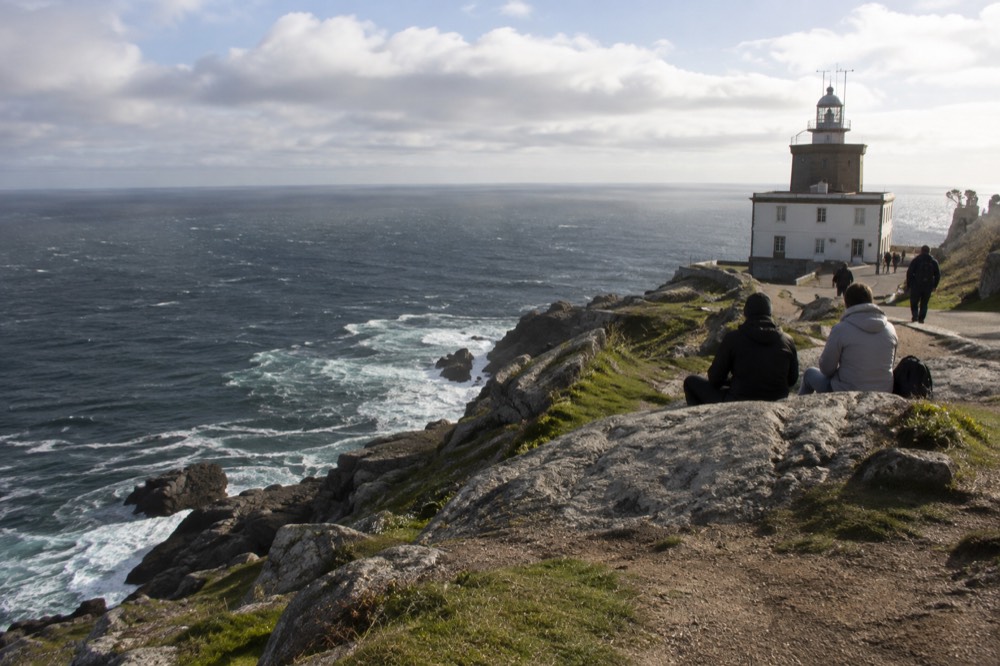
There is also a purely practical reason the extension suits many pilgrims. The final days into Santiago de Compostela are crowded on the popular routes, and the city itself in high summer is full. The road west thins out quickly. The albergue culture persists on a smaller scale, and the stages are gentle by the standards of, say, the crossings into Galicia on the French route. Pilgrims who have walked beginner-friendly territory all the way to the tomb often find the Finisterre extension is the first stretch of their whole journey where nobody is in a hurry.
If you want company and interpretation along the way, or if you are planning the walk for a future trip and want a preview of the coast first, a guided option can anchor your expectations.
Does The Camino Finisterre Count Toward The Compostela?
No, walking on from Santiago de Compostela to Fisterra does not add anything to the Compostela certificate, because the Compostela is earned by the journey that ends at the Cathedral, not by anything afterward. The verified rules are strict: the last 100 km on foot or horseback, or the last 200 km by bicycle, on a recognized route, with at least two credencial stamps per day, and the certificate itself is issued in person only at the Pilgrim's Office at Rua das Carretas 33.
That is the Oficina del Peregrino's own stated rule, and it matters here because the Camino Finisterre runs in the wrong direction for it. The walk west is a private continuation, meaningful to the walker rather than to the certificate. What many walkers do instead is collect the Compostela in Santiago de Compostela on arrival, then start the extension the following morning with a fresh purpose: the sea, not the stamp. Some also carry the credencial onward and collect stamps along the Finisterre route as souvenirs of the extension, which the stamping points along the way will happily provide, but those stamps feed memory, not paperwork.
| Requirement | Figure | Detail |
|---|---|---|
| Minimum distance on foot or horseback | 100 km | The last 100 km of a recognized Camino route |
| Minimum distance by bicycle | 200 km | The last 200 km of a recognized route |
| Stamps in the credencial | 2 per day | Minimum, collected from official stamping points |
| Where the Compostela is issued | Rua das Carretas 33 | In person only, at the Pilgrim's Office |
| Compostelas issued in 2025 | 530,987 | Record year, per figures attributed to the Oficina del Peregrino |
The credential itself is worth understanding before you set out on any of this, and the pilgrim passport and credencial guide explains how the stamping system works and where to get one. For the culture around arrival day, including the Mass and the queue at the office, the arriving in Santiago on the Camino guide covers the sequence most walkers follow on their first day in the city.
What Should You Book In Santiago de Compostela Before You Set Off?
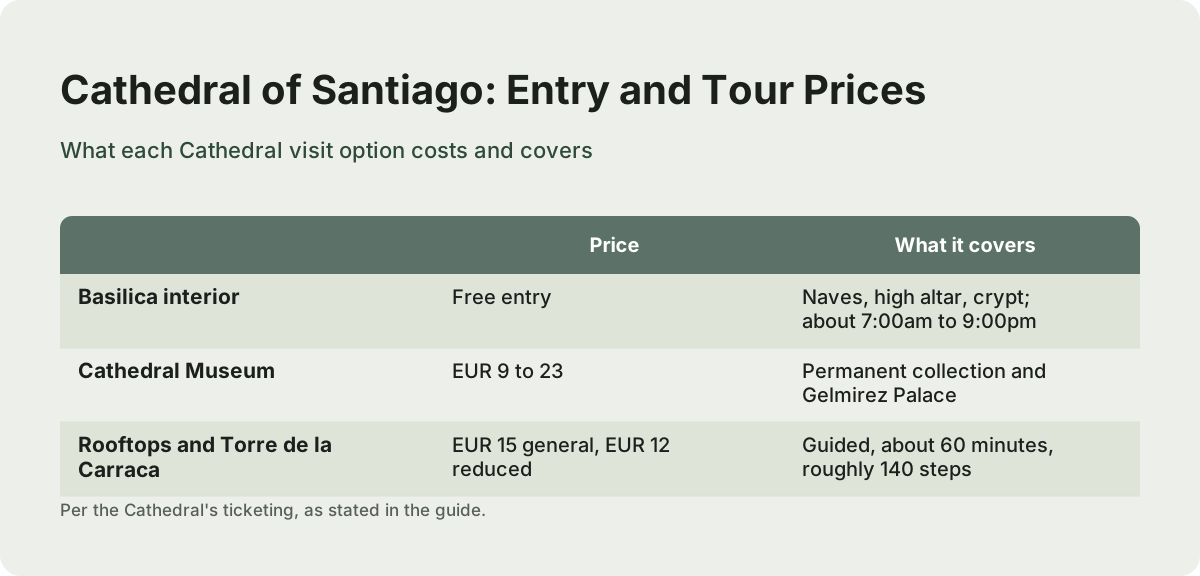
Three things are worth arranging in Santiago de Compostela before walking on: your Compostela collection at the Pilgrim's Office, a timed visit to the Cathedral and its rooftops, and your first night's bed on the western route, since albergue capacity on the extension is smaller than in the city. The Cathedral's own ticketing runs on timed slots, and the rooftop tour, at EUR 15 general or EUR 12 reduced, sells out in peak season according to the Cathedral's own ticket page.
The Cathedral deserves more than a rushed pass through. The museum visit runs roughly 10:00am to 8:00pm with the ticket office closing 30 minutes earlier, and the museum ticket range sits between EUR 9 and EUR 23 depending on the ticket type, per the Cathedral's ticketing. The rooftop visit, the Cubiertas and Torre de la Carraca tour, is guided, lasts about 60 minutes, climbs roughly 140 steps and reaches a height of about 72 meters, and it also grants access to the permanent museum collection and other sites for seven days. Those figures come from the Cathedral's own ticketing page, and the booking is done there, online, with timed slots.
| Cathedral visit | Price | What it covers |
|---|---|---|
| Basilica interior | Free entry | Naves, high altar, crypt; generally open from about 7:00am to 9:00pm |
| Cathedral Museum | EUR 9 to 23 | Permanent collection and Gelmirez Palace, depending on ticket type |
| Rooftops and Torre de la Carraca | EUR 15 general, EUR 12 reduced | Guided, about 60 minutes, roughly 140 steps, about 72 m high, plus museum access valid 7 days |
A guided visit saves the queueing and the guesswork: the Cathedral and Museum skip-the-line experience, from $26 per person and rated 4.8 from 2,425 reviews on the operator's live listing, pairs the interior with the museum in one timed block. Check availability if the Cathedral is your first stop after arriving.
Beyond the Cathedral, book the bed. The albergue network on the extension is thinner than the city's accommodation, and the Camino accommodation and albergues guide explains how the system works, what a donativo bed means and when to reserve rather than roll up. Walkers carrying heavy packs on the arrival route sometimes also ship luggage ahead; the Camino luggage transfer guide on this site covers how that service operates on the main routes and what to expect of it.
When Is The Best Time Of Year To Walk The Camino Finisterre?
The most reliable weather for the Camino Finisterre sits in the drier window of July and August, but those are also the busiest months in Santiago de Compostela itself, so late spring and early autumn are the compromises most walkers pick. AEMET's climate record for the Santiago de Compostela station describes a temperate oceanic pattern: wet year-round, wetter from October to March, driest in July and August, with annual precipitation on the order of 1,690 to 1,890 mm.
That is a lot of rain, and the coast west of the city catches the Atlantic fronts first. The Costa da Morte earns its name honestly in winter, when the same cliffs that make the sunset ritual memorable in summer take the full force of the ocean. None of this makes a winter walk impossible, only a wet one, and the seasons shape the experience more than the calendar does.
| Period | Conditions | Planning note |
|---|---|---|
| October to March | Wet and cool | The wetter half of the Galician year per AEMET's data |
| July and August | Driest months | Also the busiest in Santiago de Compostela |
| 31 December 2026 | Holy Door opens | Ceremony from 5pm in the Praza da Quintana |
| All of 2027 | Holy Year, Xacobeo | The Holy Door remains open through 31 December 2027 |
The 2027 Holy Year changes the calculus for anyone walking in either direction. The Holy Year, or Xacobeo, is declared whenever 25 July, the feast of St. James, falls on a Sunday, and the next one after 2026 is 2027: the Holy Door opens on the evening of 31 December 2026 and stays open through 31 December 2027. Crowds in Santiago de Compostela will build through that year, and the extension route will share the pressure. The Holy Year 2027 guide covers what that means for pilgrims, and the best month to walk the Camino de Santiago answer on this site goes deeper on timing trade-offs.
What Do You Pass Between Santiago de Compostela And The Coast?
The route leaves Santiago de Compostela through its western suburbs and rural outskirts, crossing the kind of small-scale Galician farmland the city sits in the middle of, with wooded tracks, hamlets and parish churches between the two ends. Notable points along the corridor include Monte do Gozo on the city's edge, though it belongs to the arrival routes rather than the extension, and the walk then settles into quiet countryside punctuated by the villages that keep the route's stamps.
Monte do Gozo is the hill where pilgrims on the inbound routes catch their first view of Santiago de Compostela, and the Monte do Gozo guide on this site explains its role on the French route's final approach. Walkers heading the other way, west, pass the city's margins and are quickly out among the fields. The character of the extension is low-key by design: it is the part of the pilgrimage where the crowds have thinned, the purpose has shifted and the walking itself becomes the point. Pilgrims describe the stretch as reflective rather than spectacular, a long exhale after the arrival.
That is not to say there is nothing to see. The parish churches along the way hold their share of Camino history, the small towns serve honest Galician food rather than tourist menus, and the pine and eucalyptus forest sections have the damp, green stillness that defines inland Galicia. The Galician food guide on this site is worth reading before you go, because the extension runs through the part of the country where pulpo a la gallega and empanada are everyday food. As the route approaches the coast the landscape opens, the air changes, and the final headland at Fisterra delivers the Atlantic in full.
If Santiago de Compostela itself is still unexplored when you set off, a walking tour of the old town is an efficient way to cover the city's layout before you leave it behind. The Hidden City Walking Tour, from $17 per person and rated 5 from 13 reviews on the operator's live listing, does exactly that.
Fisterra Or Muxia: Which Finish Should You Choose?
Most walkers finish at Fisterra first, because the lighthouse headland there is the route's symbolic end and the sunset ritual happens on its cliffs, then a branch path continues north along the coast to Muxia and its cliffside sanctuary. Neither is more correct. Fisterra is the dramatic finish, Muxia the quieter one, and the two sit close enough together on the Costa da Morte that day-trip tours from Santiago de Compostela visit both in a single outing.
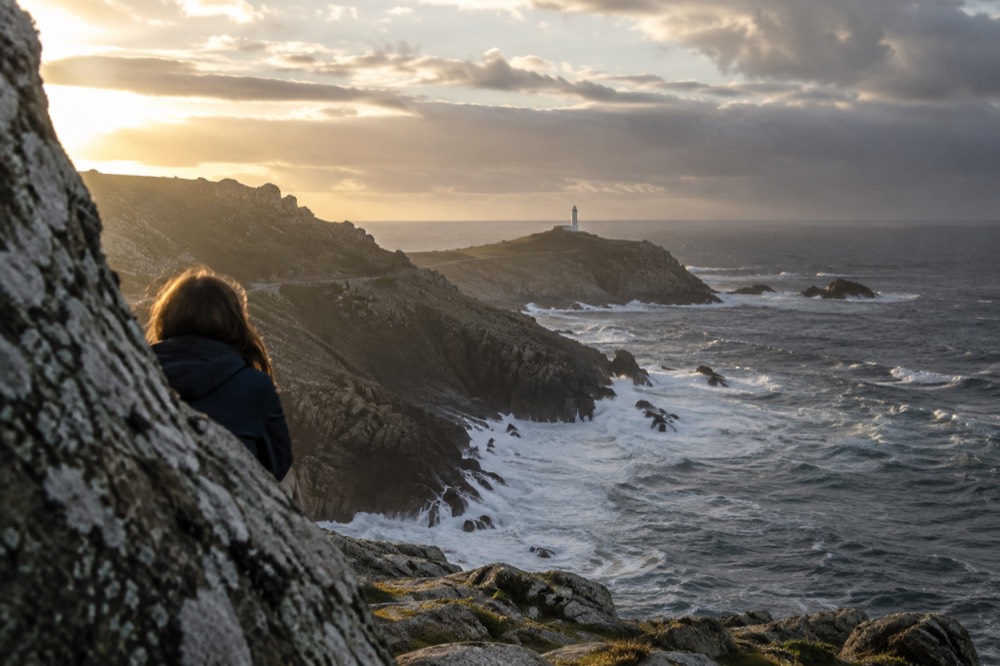
The choice comes down to temperament. Fisterra is the big gesture: the lighthouse, the horizon, the sun going down into nothing. Muxia is the smaller one, a stone sanctuary above a wild beach and a coastline the ocean has sculpted for effect. Pilgrims with days to spare walk one and then the other, using the connecting paths along the coast, and that loop has become its own mini-tradition. Pilgrims on a tight schedule pick the one whose story they want to bring home.
For a sense of what each place holds before committing, the Fisterra and Finisterre guide covers the town and headland in detail, and the Muxia guide does the same for the northern finish. The Costa da Morte guide covers the whole wreck-named coast that the extension traverses at its end, including the villages between the two sanctuaries. If the express version appeals, either as a scouting trip for a future walk or because walking the whole route is not on the table this year, the half-day Fisterra and Muxía express option covers both headlands in one outing, from $45 per person and rated 4.4 from 50 reviews.
Can You See The Camino Finisterre Without Walking It?
Yes, the coast the route finishes on is served by several full-day and half-day tours from Santiago de Compostela, which visit Fisterra, Muxia and the Costa da Morte villages in a single day, and a dedicated day-trip planning page collects them. The tours run from about $45 to $101 per person depending on length and itinerary, with ratings from 4.1 to 4.8 across the roster, and the full-day versions typically include stops at both headlands and the coast between them.
Walking the extension and seeing it are different experiences, and only one of them requires boots and a week. The tour roster on this site lists a range of coast day trips, and their verified figures are below. The Cíes Islands visit appears in the same family of Atlantic day trips, though it runs to a different destination, the islands off Vigo, rather than the Costa da Morte.
| Tour from Santiago de Compostela | From | Rating | Reviews |
|---|---|---|---|
| Finisterre, Muxía & Costa da Morte, full day | $59 | 4.7 | 2,312 |
| Finisterre & Muxía, 7 stops, full day | $60 | 4.8 | 1,714 |
| Finisterre & Coast of Death, full day | $60 | 4.8 | 860 |
| Costa da Morte with Cabo Vilán stop, full day | $60 | 4.8 | 267 |
| Half-Day Express, Fisterra & Muxía | $45 | 4.4 | 50 |
| Cíes Islands full-day visit | $101 | No rating published | Different destination: islands off Vigo |
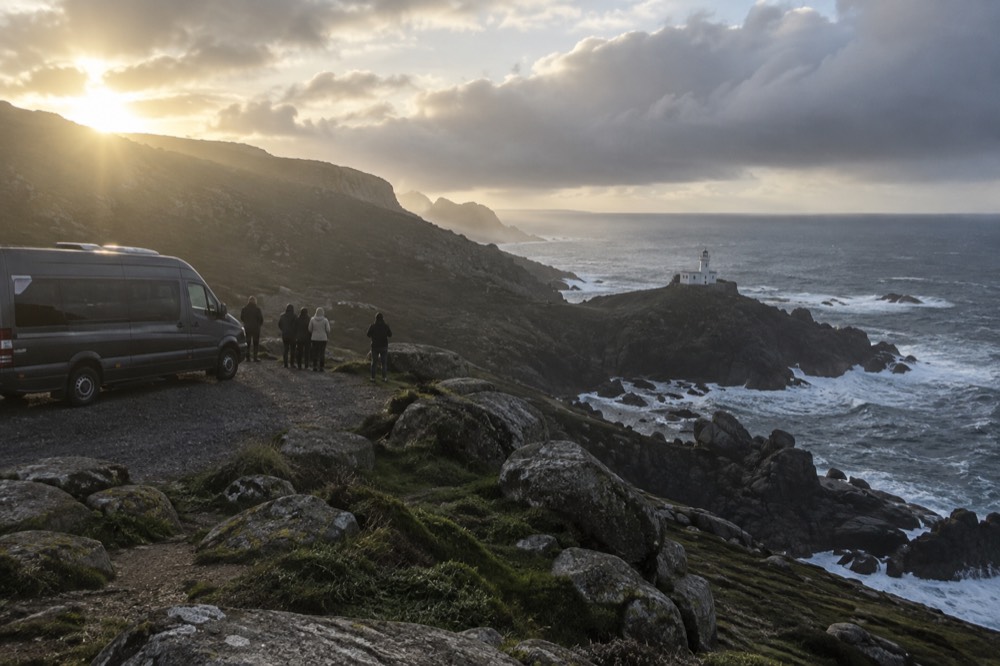
The planning page for the destination is the Finisterre day trip hub, which collects the coast options in one place. For walkers who have already done the walking, these tours serve a different purpose: they let a partner, a family or a tired pair of knees see the coast the pilgrim spent days reaching. Several of the full-day options rank among the site's most-reviewed products, which tells you the coast carries its weight even without the walking to earn it.
What Changes At The Cathedral In Santiago de Compostela Right Now?
Two things change the arrival experience in Santiago de Compostela between now and the 2027 Holy Year: the Botafumeiro is suspended because cimborrio restoration scaffolding covers its hanging mechanism, with no return date published as of the Cathedral's 5 September 2026 written confirmation, and the 9:30am, noon and 7:30pm pilgrim masses move from the High Altar to the Church of San Agustin from 16 October 2026, leaving only the 7:30am mass in the Cathedral's Communion chapel.
The mass relocation is the one that catches pilgrims out. The daily pilgrim Mass schedule has long run at 7:30am, 9:30am, noon and 7:30pm, per the Cathedral's own liturgy page. From 16 October 2026, while main chapel works prepare the Cathedral for the Holy Year, three of those four move a short walk away to San Agustin, and the arrangement holds until further notice. Arriving pilgrims who plan their Compostela collection around a midday Mass should check where that Mass is being held on their date. The pilgrim Mass guide tracks the detail.
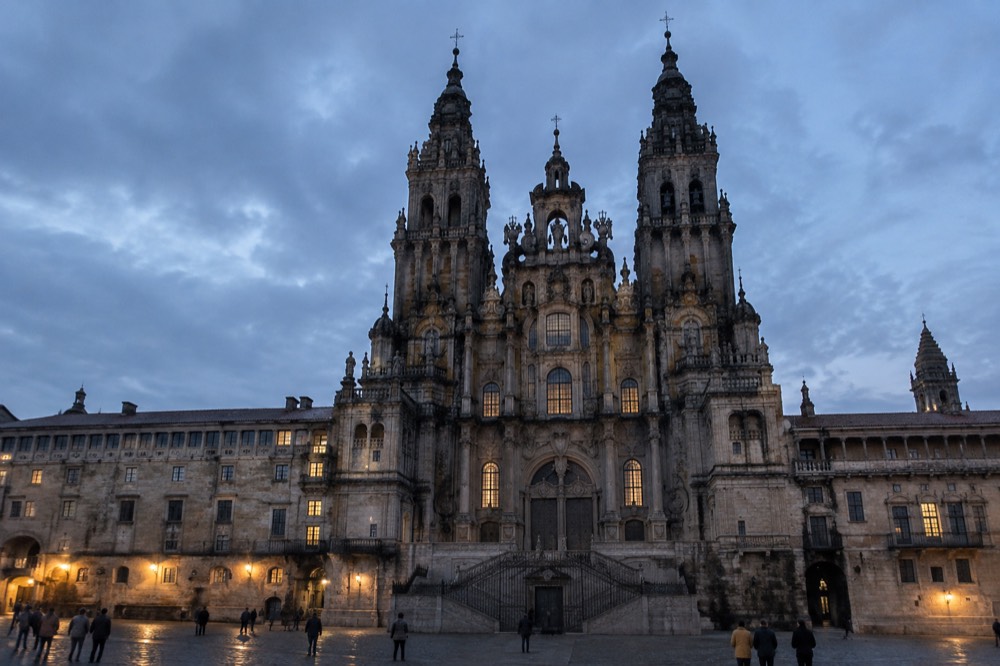
The Botafumeiro suspension deserves equal honesty. The great censer normally swings at the end of the Eucharist on twelve fixed solemnities each year, a list the Cathedral Chapter guarantees, from Epiphany on 6 January through the Feast of St. James on 25 July to the Transfer of the Apostle on 30 December, and outside those dates it has been bookable by private request at an indicative cost of about EUR 450 to 500. As of September 2026 none of that is operative: the suspension applies to the scheduled dates and the private requests alike, and no page should promise a visitor they will see it swing. The works do not close the Cathedral itself. The naves, the tomb and the embrace area remain open on their normal schedule, and the museum, rooftops and Portico continue on timed ticketing, so an arrival itinerary loses the smoke, not the church.
How Do You Get To And Around Santiago de Compostela For The Start?
Santiago de Compostela airport sits about 12 km from the old town, with line 6A of the Tussa city bus connecting the terminal to the center for EUR 1 paid to the driver, or EUR 0.36 per trip on a card, though that fare is subject to change: a new Monbus contract with a fare of roughly EUR 6 one-way is expected in autumn 2026.
Trains reach Madrid in roughly 3 to 4 hours and Vigo in about 1 hour, and there is no direct rail line to Porto.
That fare change is the detail worth flagging rather than glossing. The city's own transport page still listed the Tussa line 6A at the EUR 1 cash fare as of late September 2026, with the Monbus reorganization expected within months, possibly by December. Anyone flying in to walk the extension, or flying out after finishing it, should check the live fare on the operator's page rather than trusting either number as permanent. The Santiago de Compostela airport guide covers the terminal, the airlines and the transfer options in full.
| Transport option | Figure | Planning note |
|---|---|---|
| Airport bus, line 6A (Tussa) | EUR 1 to the driver, EUR 0.36 by card | Fare subject to change as the contract reorganizes |
| New Monbus airport contract | Roughly EUR 6 one-way proposed | Expected to start in autumn 2026, possibly by December |
| Airport to old town | About 12 km | Roughly a 20 to 30 minute drive |
| Train to Madrid | Roughly 3 to 4 hours | Direct high-speed services |
| Train to Vigo | Roughly 1 hour | Regional services; onward connections toward Porto require a change |
For walkers arriving by rail, the Madrid leg is the spine of the network, and the Madrid to Santiago de Compostela train guide on this site covers it in detail, including how the arrival day sequence tends to run. Those flying in specifically to walk often weigh terminals first, and the best airport to fly into to walk the Camino answer on this site covers that comparison. Santiago de Compostela has charged a municipal tourist tax since 1 October 2025, a surcharge on Galicia's tourist-stay tax, levied per person per night for a maximum of 5 nights, from 1 EUR in private albergues, campsites and tourist apartments up to 2.50 EUR in five-star hotels, with under-18s and stays in Xunta-run public albergues exempt.
Common Questions About The Camino Finisterre
Does the Camino Finisterre count toward the Compostela?
No. The Compostela is earned by the route that ends at the Cathedral: the last 100 km on foot or horseback, or the last 200 km by bicycle, with at least two credencial stamps per day, issued in person only at the Pilgrim's Office at Rua das Carretas 33. The walk west to Fisterra happens after the certificate's conditions are already complete, so it adds nothing to the paperwork.
Does the Botafumeiro swing every day?
No. The Cathedral's own liturgy lists twelve fixed solemnities a year when the Botafumeiro normally swings, from Epiphany through the Feast of St. James to the Transfer of the Apostle. It is also currently out of action entirely: the Cathedral confirmed in writing on 5 September 2026 that cimborrio restoration scaffolding covers the mechanism, with no return date published, so no visit should be planned around seeing it swing.
Can you do the Camino Finisterre without walking it?
The coast the route finishes on, Fisterra, Muxia and the Costa da Morte, is served by full-day and half-day tours from Santiago de Compostela, running from about $45 to $60 per person for the coast itineraries. The walking route itself is a multi-day undertaking and has no equivalent short tour, so walkers see it on foot and everyone else sees its endpoints.
Do pilgrim masses still happen in the Cathedral?
Yes, with a change dated 16 October 2026: the 9:30am, noon and 7:30pm masses relocate from the Cathedral's High Altar to the nearby Church of San Agustin while main chapel works prepare for the 2027 Holy Year, and only the 7:30am mass remains in the Cathedral, in its Communion chapel. The Cathedral itself stays open to visitors throughout.
Do I need a pilgrim passport for the Camino Finisterre?
Not for the certificate, since the extension does not feed the Compostela, but carrying the credencial is worthwhile anyway: the stamping points along the route continue the ritual, many albergues ask to see one, and the stamps become the record of the extension. The pilgrim passport guide explains how to obtain and use one.
When is the next Holy Year, and does it affect the walk?
The next Holy Year is 2027, because 25 July 2027 falls on a Sunday. The Holy Door opens on the evening of 31 December 2026 and remains open through 31 December 2027. Crowds in Santiago de Compostela and on the routes feeding it will build through 2027, so anyone wanting the extension at its quietest should walk before the Xacobeo peaks.
The Camino Finisterre is the part of the pilgrimage that nobody has to do, which is exactly why so many people do it. The tomb in Santiago de Compostela ends the obligation; the coast ends the story. Walk west with the stamps in your pocket and no certificate at stake, watch the Atlantic swallow the sun at Fisterra, and the Camino finishes the way it started, before the paperwork existed: on foot, at the edge of the water, with nothing ahead but horizon. That is the whole ritual, and it is enough.
For everything else on walking in this region, from route comparisons to credencial mechanics, the Santiago de Compostela Travel Guide covers the city, the coast and every recognized way into both.