Muxia Spain: A Costa da Morte Day Trip From Santiago de Compostela
Muxia is the seafront end of the pilgrim road: a small Costa da Morte village of sanctuary stones, fishing boats and Atlantic sunsets, visited on a loop day trip from Santiago de Compostela.
Short answer
Muxia is a fishing village on Galicia's Costa da Morte, reached as a full-day tour from Santiago de Compostela that usually pairs it with Fisterra. Its landmark is the Santuario da Virxe da Barca on the water's edge. Best all-round tour: the full-day Finisterre, Muxia & Costa da Morte excursion, from $59, rated 4.7 from 2,312 reviews.
Muxia Spain is the small Atlantic fishing village on Galicia's Costa da Morte that most travellers reach as a day trip from Santiago de Compostela, the cathedral city where the Camino de Santiago ends. It sits at the western edge of Europe's Atlantic coastline, and its seafront sanctuary makes it one of the two traditional coastal finishing points for pilgrims who keep walking after they have collected their Compostela. This page lays out what Muxia is, why the pilgrimage road continues to it, which tours cover it, and how to fit the village into a stay built around Santiago de Compostela.
Where Is Muxia On The Costa da Morte?
Muxia is a small fishing village on the Atlantic coast of Galicia, in northwest Spain, sitting on the Costa da Morte, the stretch of shoreline west of Santiago de Compostela that the day-tour companies reach by road as a full-day circular excursion. It is not a suburb or a district of the city, it is a separate coastal destination, and the tours that serve it combine it with Fisterra and the headlands along the way.
The name of the coastline translates plainly enough as the Coast of Death, and the wreck-strewn maritime history behind that name is part of why the villages along it, Muxia among them, carry such weight in Galician culture. Lighthouses, granite points and open ocean horizons define the drive. The city's tourism economy treats this coast as its natural hinterland: every one of the long-distance excursions in the local tour roster runs west or southwest out of Santiago de Compostela, and the Muxia routes are the ones that follow the Atlantic shoreline itself.
For orientation, think of the Costa da Morte as the coast directly between the mouths of two Galician rias. Santiago de Compostela sits inland, about a short drive from the water, and the day tours fan out from there each morning. Neighbouring Costa da Morte day trips from the city share the same road corridor, and the touring pattern is a loop: out along one section of shore, a stop at Fisterra's lighthouse point, a stop at Muxia, and back to the city by evening.
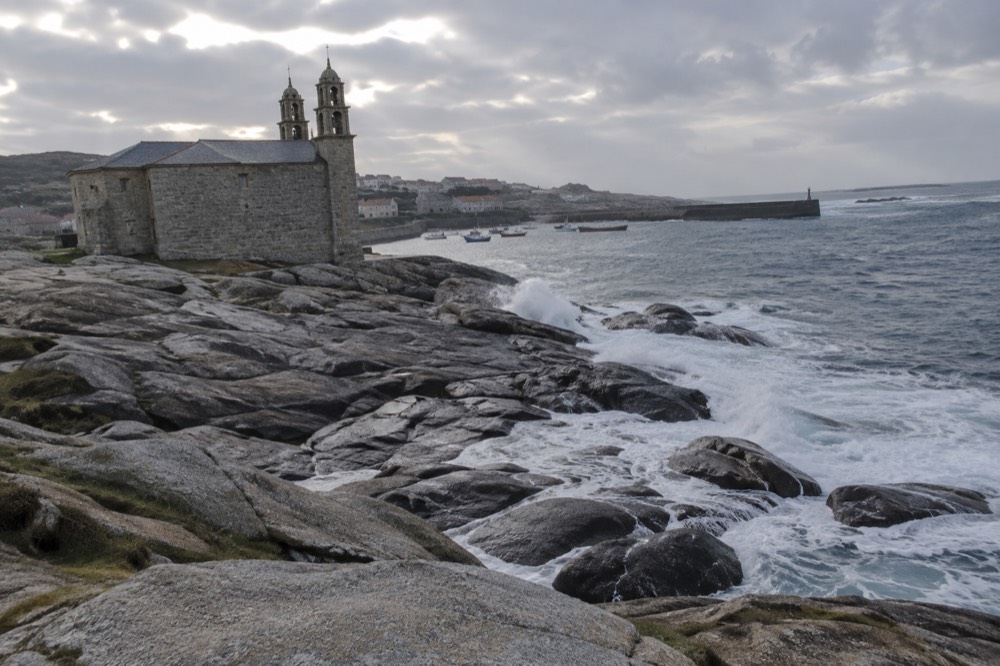
The village itself is compact. A harbour, a seafront promenade, the sanctuary on the rocks, and a handful of streets climbing away from the water: that is the whole of it, and that compactness is exactly what makes it work as a stop rather than a destination requiring an overnight. Visitors who try to see Muxia and Fisterra independently by public transport within one day usually find the connections awkward, which is a large part of the reason the guided loops are so popular.
Why Do Pilgrims Keep Walking To Muxia After Santiago de Compostela?
The Camino de Santiago does not have to end at the Cathedral: a coastal branch of the pilgrimage continues west past Santiago de Compostela toward Fisterra and Muxia, and Muxia's seafront sanctuary of the Virxe da Barca is one of its two traditional finishing points. The Oficina del Peregrino recorded 530,987 Compostelas issued in 2025, a record year, and a meaningful share of those walkers then keep walking toward the coast.
The logic is old and simple. The medieval pilgrimage ended at the tomb of St. James in the Cathedral, but the tradition grew that the true end of the road is the sea: the westernmost point where the land runs out. Pilgrims who arrive in Santiago de Compostela, collect their certificate, and still have days in hand frequently add a coastal extension, and Muxia's sanctuary is the spiritual anchor at one end of that extension. The sanctuary of the Virxe da Barca, the Virgin of the Boat, ties the village to a sea legend about a stone boat carrying the Virgin to shore to encourage the Apostle, and the rocks beside the chapel carry the legend's physical trace.
The numbers explain why this matters for planning. A record 530,987 Compostelas were issued in 2025, and the pressure of those crowds continues past the city: walkers finishing their Camino and day-trippers making the coastal loop share the same buses, the same sanctuary forecourt and the same seafood restaurants. Midsummer in Muxia is therefore busy in a way the village's size would not suggest, and the quieter months trade crowds for Atlantic weather.
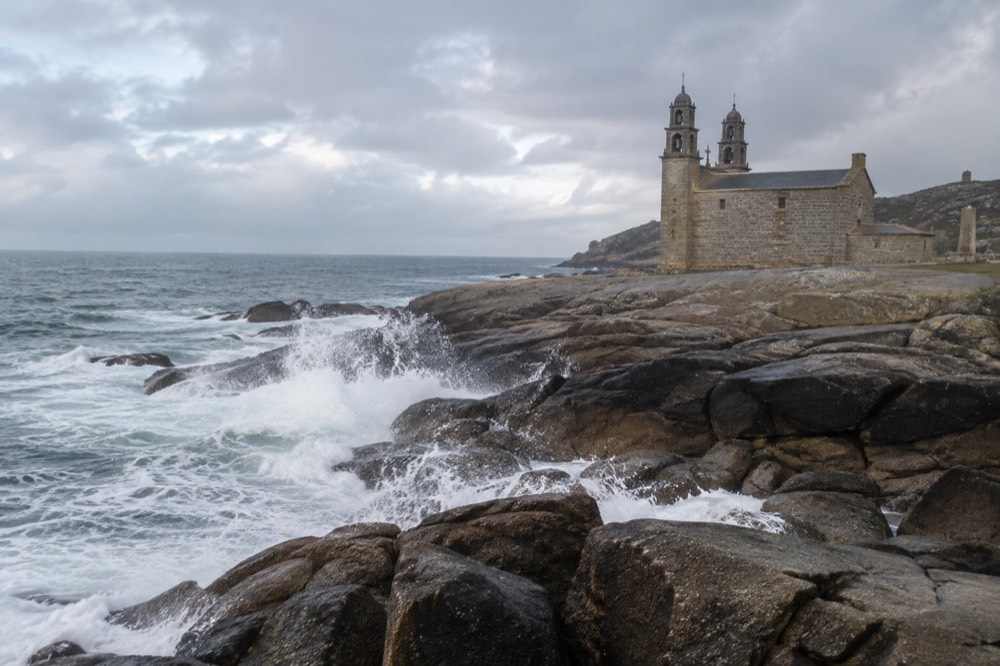
For a visitor who is not walking the Camino, the practical takeaway is that Muxia is a pilgrimage site with a working harbour attached, not a beach resort. That character is the appeal. It also means the village reads best with a guide or a good briefing, because the stories attached to the sanctuary, the rocking stone and the coast itself are most of what you are looking at.
This is also where the guided day tours earn their keep. The three most-booked options below all leave from Santiago de Compostela and cover the coastal pilgrimage endpoints in one loop.
Which Muxia Day Tour From Santiago de Compostela Gives The Best Value?
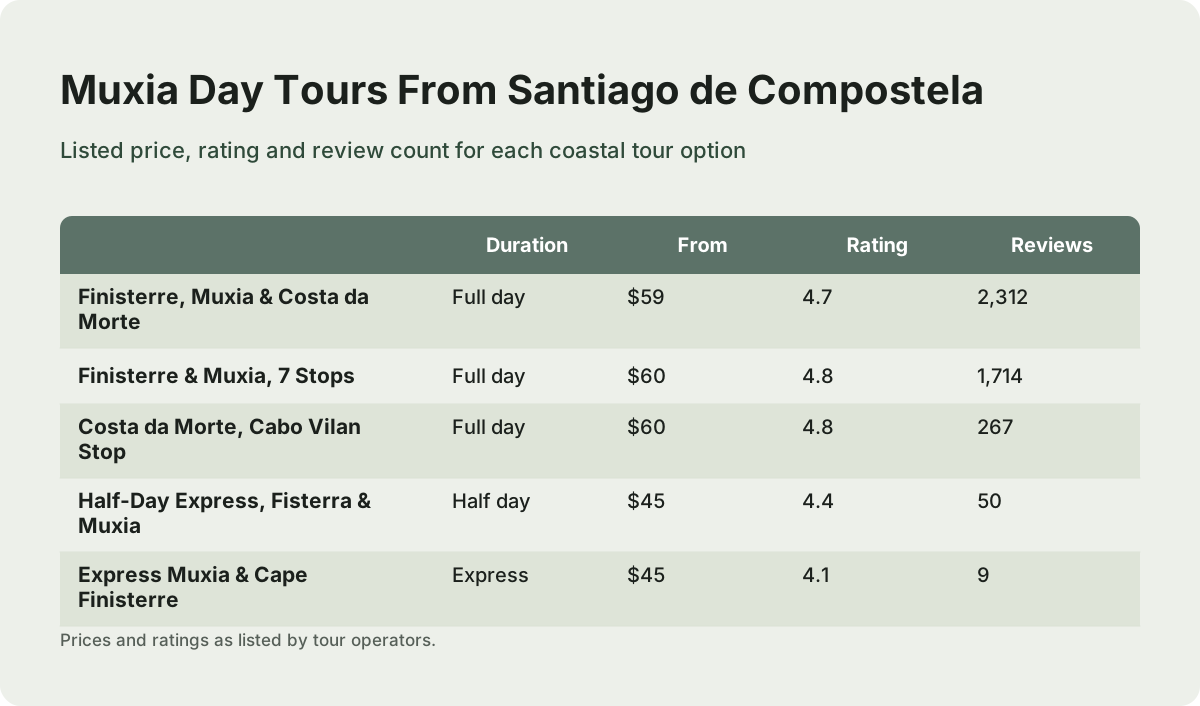
The full-day Finisterre, Muxia & Costa da Morte tour is the strongest all-round pick: the listing shows it from $59 per person, rated 4.7 from 2,312 reviews, which makes it the most-reviewed coastal excursion in the entire roster. A seven-stop alternative runs from $60, rated 4.8 from 1,714 reviews, while the express half-day versions start at $45 if the schedule is tight.
The comparison worth making is depth versus time. The full-day circuits give Muxia the leisurely afternoon stop it deserves, and they add the intermediate Costa da Morte headlands that a rushed itinerary would skip. The half-day express options trade those stops for an earlier return to Santiago de Compostela, which suits travellers who want the coast and an evening in the old town on the same day.
| Muxia Day Tour (As Listed) | Duration | From | Rating | Reviews |
|---|---|---|---|---|
| Finisterre, Muxia & Costa da Morte | Full day | $59 | 4.7 | 2,312 |
| Finisterre & Muxia, 7 Stops | Full day | $60 | 4.8 | 1,714 |
| Costa da Morte, Cabo Vilan Stop | Full day | $60 | 4.8 | 267 |
| Half-Day Express, Fisterra & Muxia | Half day | $45 | 4.4 | 50 |
| Express Muxia & Cape Finisterre | Express | $45 | 4.1 | 9 |
Two things stand out in that table. First, the review counts tell a clear story: the two full-day circuits have four-figure and near-four-figure review volumes, while the express options are lightly reviewed. Second, the price spread is narrow, from $45 to $60, so the decision is really about hours rather than money. For most visitors the full-day loop is the one to book, and the free cancellation terms on the operator's live listing mean the weather forecast can be checked before committing.
A note on how these tours differ from the city walks: the Muxia excursions spend most of the day on the road between stops, so they reward travellers who enjoy the transit as scenery rather than dead time. The coast road itself, with its lighthouses and cliff-top cemeteries and sudden ocean views, is a genuine part of the product.
What Do You Actually See And Do In Muxia Itself?
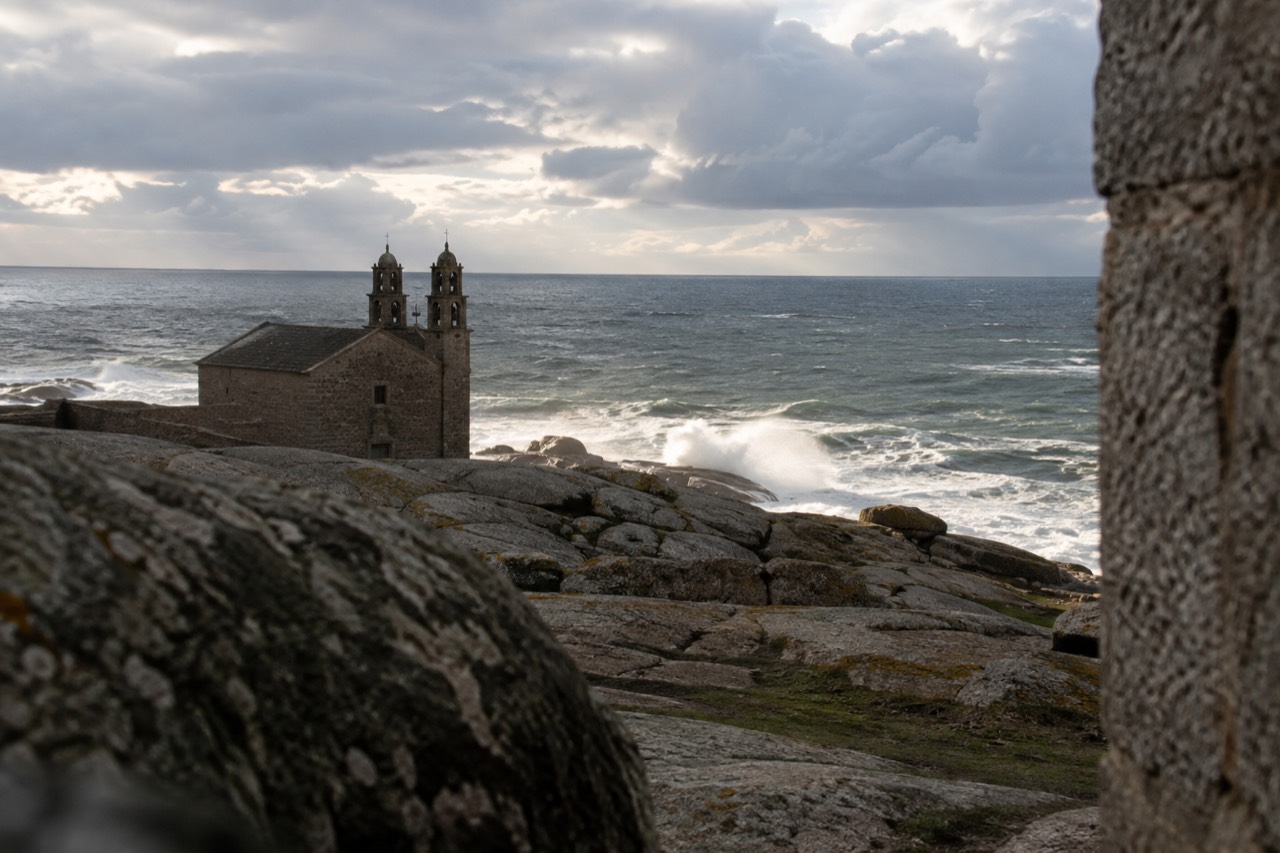
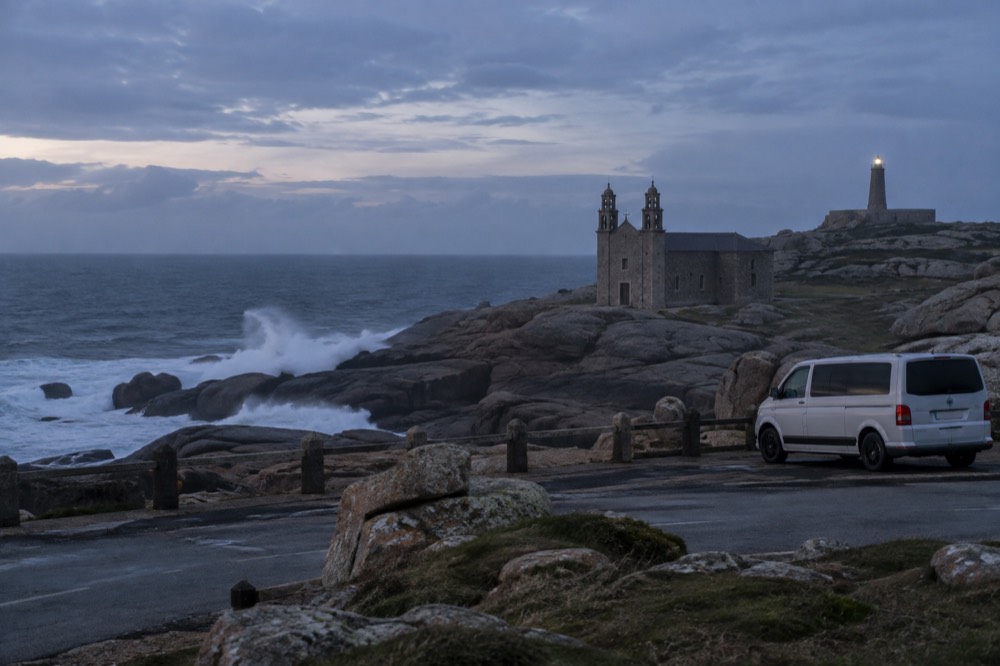
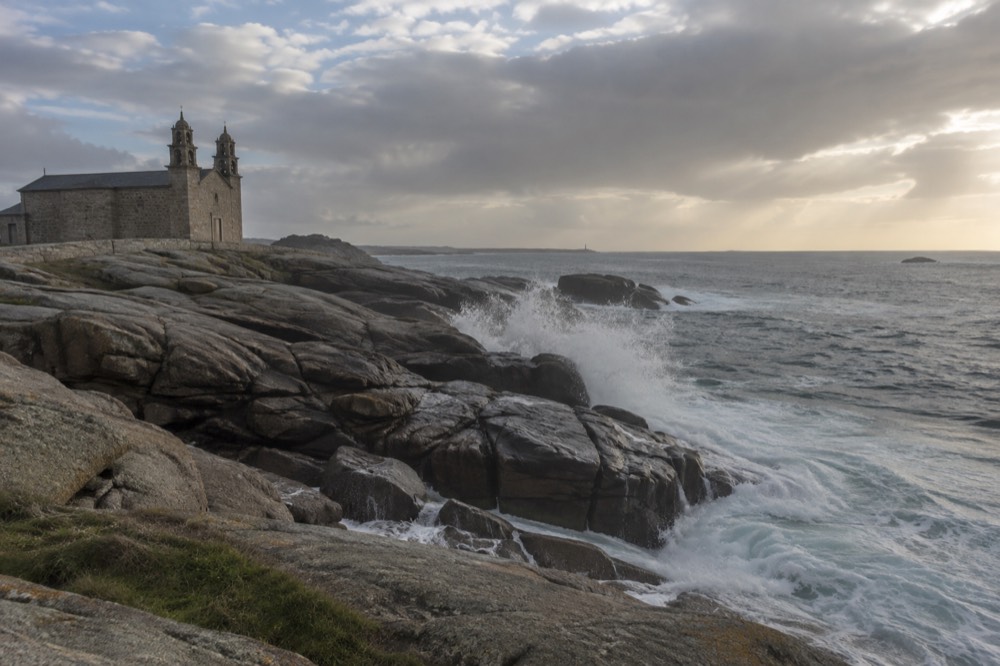
Muxia's centre of gravity is the Santuario da Virxe da Barca, a stone chapel standing almost at the water's edge, with the Pedra de Abalar, the legendary rocking stone, on the rocks beside it. Add a working fishing harbour, a modern lighthouse above the point, Atlantic sunsets over open water, and Galician seafood, and the village fills a slow, unhurried day-trip afternoon.
The sanctuary is the stop every tour makes and the reason the village is on the pilgrim map. It is a modest granite building, but its position is the point: it stands where the land gives out, with waves breaking on the rocks a few metres from the walls. The adjacent stones carry the local legend, and the largest of them, the Pedra de Abalar, is said to rock when the tide and the story align. Visitors are welcome on the rocks in calm conditions, and the seafront around the chapel is the best photography window in the village.
The harbour is the second act. Muxia remains a real fishing port, and the seafood served in the village restaurants reflects what the boats bring in. Octopus, barnacles, and whatever the day's catch allows, cooked plainly, is the local style, the same Galician kitchen described in detail in the city's food guides. The lunch stop on the full-day tours is usually built around this.
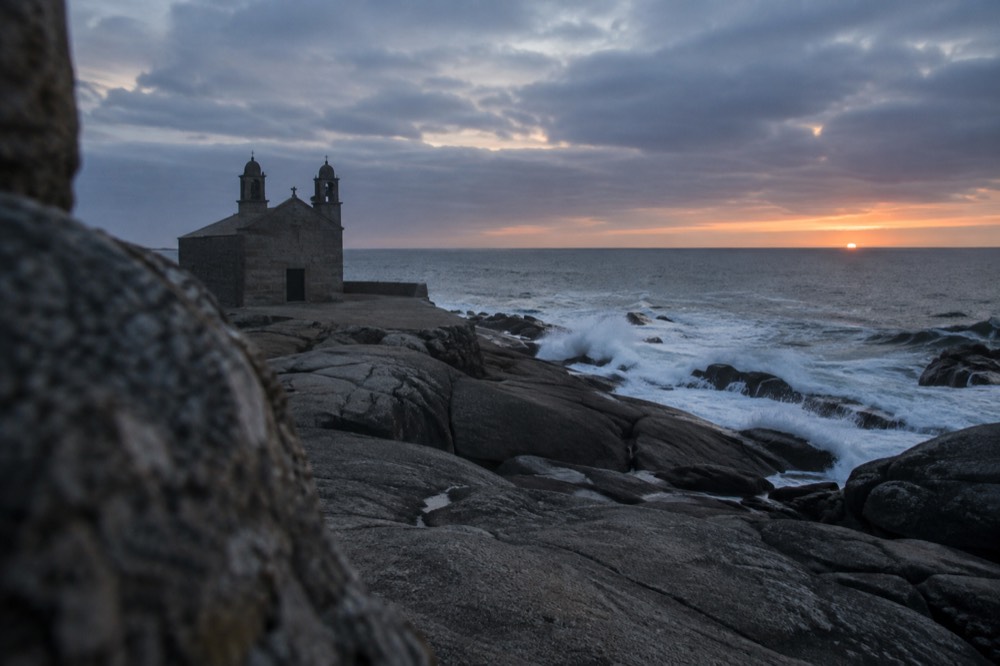
The lighthouse walk is the third act, and it is short. The modern tower above the point frames the western horizon, and in the evening the sunset over the open Atlantic is the reason the full-day tours time their Muxia stop late in the itinerary whenever the season allows. There is no entry fee for any of this: the sanctuary, the rocks, the harbour and the coastal path are all open ground, and the entire village is walkable in an afternoon.
Muxia Or Fisterra: Which End Of The Coast Should You Choose?
The two villages sit on the same coastline and the main tours combine them, so the honest answer is both in one day: the full-day circuits pair Muxia's sanctuary with Fisterra's lighthouse point and the Costa da Morte headlands in between. If the schedule only allows half a day, the express Fisterra and Muxia option, from $45 and rated 4.4 from 50 reviews, covers both endpoints without the intermediate stops.
The distinction is one of character rather than quality. Fisterra, covered in its own Finisterre day trip guide, is the lighthouse town at the classic "end of the world" point, and its identity is the view west from the headland. Muxia is the sanctuary village, quieter, more religiously charged, and set lower against the water. Pilgrims extending their Camino traditionally touch both. Day-trippers with a single day to spend should not choose between them, because the touring pattern already does both.
For travellers who genuinely can only take one half-day out of the city, the express products exist precisely for that case, and the lighter review counts on them simply reflect a narrower market, not a weaker experience.
| Coastal Choice From Santiago de Compostela | What It Leads With | From | Rating | Reviews |
|---|---|---|---|---|
| Finisterre, Muxia & Costa da Morte, full day | Both endpoints, full loop | $59 | 4.7 | 2,312 |
| Finisterre & Muxia, 7 Stops | Both endpoints, most stops | $60 | 4.8 | 1,714 |
| Half-Day Express, Fisterra & Muxia | Both endpoints, fast | $45 | 4.4 | 50 |
| Rias Baixas boat and winery | Estuaries, not open coast | $53 | 4.7 | 482 |
| Cies Islands visit | Islands and beaches, fair weather | $101 | No rating published | - |
That table also makes the real decision visible: Muxia versus the Rias Baixas, which is the coast's calm southern cousin. The Rias Baixas wine and Cambados day trip trades Atlantic drama for sheltered estuary water, mussel boats and Albarino wineries, and the Cies Islands option is the beach day. Muxia is the pick when the draw is legend, lighthouse and open ocean.
When Is The Best Time Of Year To Visit Muxia Spain?
AEMET's climate data for the Santiago de Compostela station shows a temperate oceanic climate: wet year-round, wetter from October to March, and driest in July and August, with annual precipitation on the order of 1,690 to 1,890mm. July and August are the most reliable months for a coastal day trip, while any October-to-March plan needs a rain contingency.
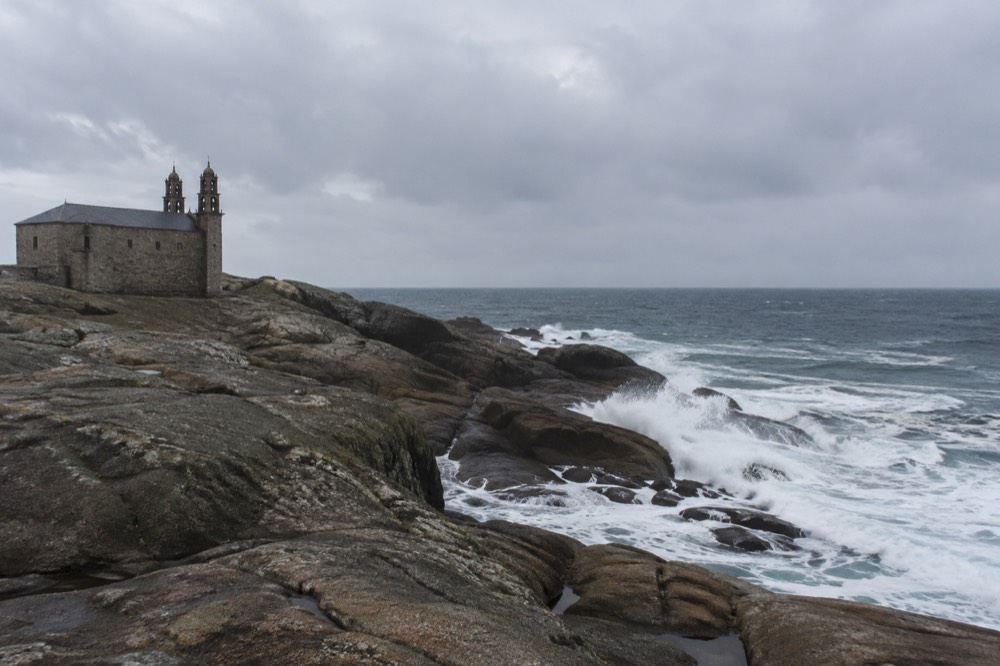
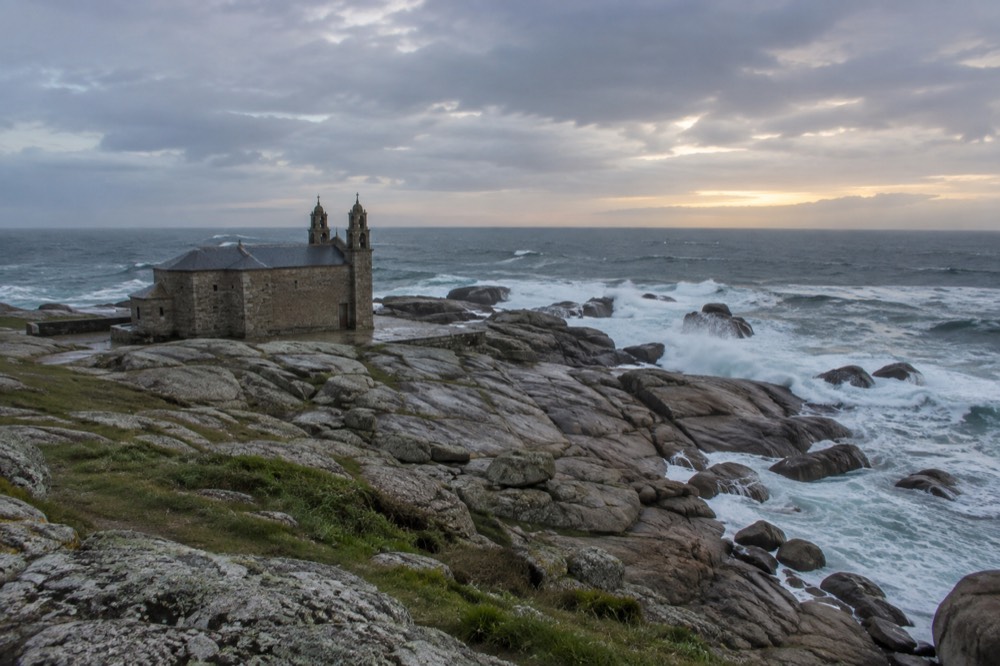
The coast amplifies the city's weather. The same oceanic pattern that keeps Santiago de Compostela green makes the Costa da Morte dramatic: the wetter months deliver the crashing waves that make the sanctuary rocks worth seeing, and the driest months deliver the sunsets. Neither is wrong, but they are different products, and the tour experience changes accordingly. The full-day loops run year-round, so the forecast, not the calendar, should drive the booking decision, and the free-cancellation terms on the live listings make a late call possible.
| Season | What AEMET's Data Shows | What It Means For Muxia |
|---|---|---|
| July and August | Driest months of the year | Most reliable sunsets, busiest sanctuary forecourt |
| April to June | Transitional, showers easing | Green coast, lighter crowds, good value window |
| September and October | Rain increasing toward the wet season | Warm sea air, dramatic surf, book with a weather eye |
| November to March | Wettest stretch, October to March | Quietest village, storm watching, warm layers essential |
Midsummer deserves one caveat from the previous section: record Camino numbers, 530,987 Compostelas in 2025, feed the coastal extension, and July around the Feast of St. James on 25 July is the peak of the peak. Anyone planning that week should expect shared ground at the sanctuary and book the tour well ahead.
How Does A Muxia Day Trip Fit Into A Santiago de Compostela Stay?
Muxia works as the coast day of a three- or four-night stay in Santiago de Compostela: one full day on the Costa da Morte, the remaining days in the old town, which carries one of the destination's two separate UNESCO inscriptions (the Old Town, 1985, and the Camino routes, 1993). The tours depart from and return to the city, so no second hotel and no onward luggage move are needed.
The rhythm that works is simple. Keep the arrival day and one further full day for the city itself, the Cathedral, the old town's granite squares and the tapas streets, and slot the coastal loop into the middle of the stay. That leaves a buffer day either side, so a blown forecast on the coast day can be swapped with a city day. How many days to spend overall is its own question, covered in how many days to spend in Santiago de Compostela, and the coast is a recurring element in the answer.
Two current conditions matter for the city half of that plan, and both are dated. The Botafumeiro, the Cathedral's famous swinging censer, is currently out of action: scaffolding for the dome restoration covers its hanging mechanism, the Cathedral confirmed this in writing on 5 September 2026, and no return date has been published. Nobody should book a trip around seeing it swing. And if an evening pilgrim mass is part of the plan, the arrangement is changing: the masses currently run at 7:30am, 9:30am, noon and 7:30pm at the Cathedral's High Altar, but from 16 October 2026 the 9:30am, noon and 7:30pm masses relocate to the nearby Church of San Agustin, with only the 7:30am mass remaining in the Cathedral.
The city's paid anchors are inexpensive and pair well with a day on the coast, and every figure below is verified on the Cathedral's own channels.
| City Anchor | Entry | Verified Price Point |
|---|---|---|
| Cathedral basilica interior, naves and tomb | Free, no ticket | Open daily, roughly 7:00am to 9:00pm |
| Cathedral Museum, permanent collection | Ticketed | EUR 9-23 depending on ticket type, daily roughly 10:00am to 8:00pm |
| Rooftops and Ratchet Tower guided tour | Timed ticket, guided | EUR 15 general, EUR 12 reduced, about 60 minutes, about 140 steps, about 72m height |
The evening after a Muxia loop belongs to the old town, and a night walk is the natural bookend. The Secrets of Compostela night tour below is the highest-rated of those evening options and costs less than any meal in Rua do Franco.
What If The Weather Turns: Alternatives To A Muxia Day?
The two best swaps are the Rias Baixas boat and winery excursion, from $53 and rated 4.7 from 482 reviews, a full day heading south into sheltered estuary water instead of open Atlantic, and the Secrets of Compostela night tour, from $17 and rated 4.9 from 74 reviews, back in the city. The Cies Islands visit, from $101 for a full day, is the fair-weather upgrade if the forecast swings the other way.
The logic is geography. Muxia sits on exposed open coast; the Rias Baixas are flooded river valleys with calm water on all but the worst days, and the winery stop is indoors. A rained-off Costa da Morte morning converts cleanly into an estuary afternoon, and the mussel-boat option on the Rias Baixas tours keeps a maritime theme without asking anyone to stand on a wave-lashed point. The trade works in reverse too: a calm, clear forecast argues for grabbing the Atlantic coast while it lasts.
The table below is the swap sheet, using the same verified listing figures throughout.
| Rain-Day Swap | Kind Of Day | From | Rating | Reviews |
|---|---|---|---|---|
| Rias Baixas boat trip and winery | Sheltered estuary, boat, winery, full day | $53 | 4.7 | 482 |
| Arousa Island, Combarro, mussel boat | Estuary villages and boat, full day | $45 | 4.7 | 30 |
| Secrets of Compostela night tour | City evening walk | $17 | 4.9 | 74 |
| Queimada Experience show and tasting | Indoor Galician tradition and tasting | $17 | 4.4 | 69 |
Common Questions About A Muxia Day Trip
Where is Muxia Spain?
Muxia is a small fishing village on the Costa da Morte, the Atlantic coastline of Galicia in northwest Spain, west of Santiago de Compostela. It is visited as a day trip from the city, usually on a loop that also stops at Fisterra.
Can you visit Muxia from Santiago de Compostela in one day?
Yes. The full-day Finisterre, Muxia and Costa da Morte tours from $59, rated 4.7 from 2,312 reviews, cover the village plus the coast in one loop, and half-day express versions from $45 exist for tighter schedules.
What is Muxia famous for?
The Santuario da Virxe da Barca, a stone sanctuary standing at the water's edge, and the Pedra de Abalar, the legendary rocking stone beside it. Muxia is also one of the two coastal finishing points for pilgrims who continue walking beyond Santiago de Compostela.
Is Muxia or Fisterra better?
They are different characters rather than rivals, and the main tours do both in one day. Fisterra is the lighthouse town at the headland point; Muxia is the quieter sanctuary village. If time allows only one half-day, the express tours cover both endpoints anyway.
When is the best time to visit Muxia Spain?
AEMET's climate data for the Santiago de Compostela station shows the driest months are July and August, with the wettest stretch running October to March. Summer gives the most reliable sunsets; winter gives the drama and the quiet, and the full-day tours run year-round.
Those three options cover the coast day, the estuary swap and the city evening, which is the full set of decisions a Muxia plan actually requires. The one tour this page keeps returning to is the full-day coastal loop, and it is worth a final look on its own terms before the itinerary is locked.
The loop closes where it opened. Santiago de Compostela holds the tomb, the two UNESCO inscriptions and the pilgrim office; Muxia holds the sea. A day spent moving between the two, on the most-reviewed coastal excursion in the roster, is the single most natural extension of any visit to the cathedral city, and Santiago de Compostela Travel Guide covers every other day-trip option from the city for the days that remain.