How Many Days Should I Spend In Santiago de Compostela?
A day-count guide to Santiago de Compostela: what one, two, three or four days actually cover in the pilgrim capital of Galicia, plus how Camino arrival and the 2027 Holy Year change the answer.
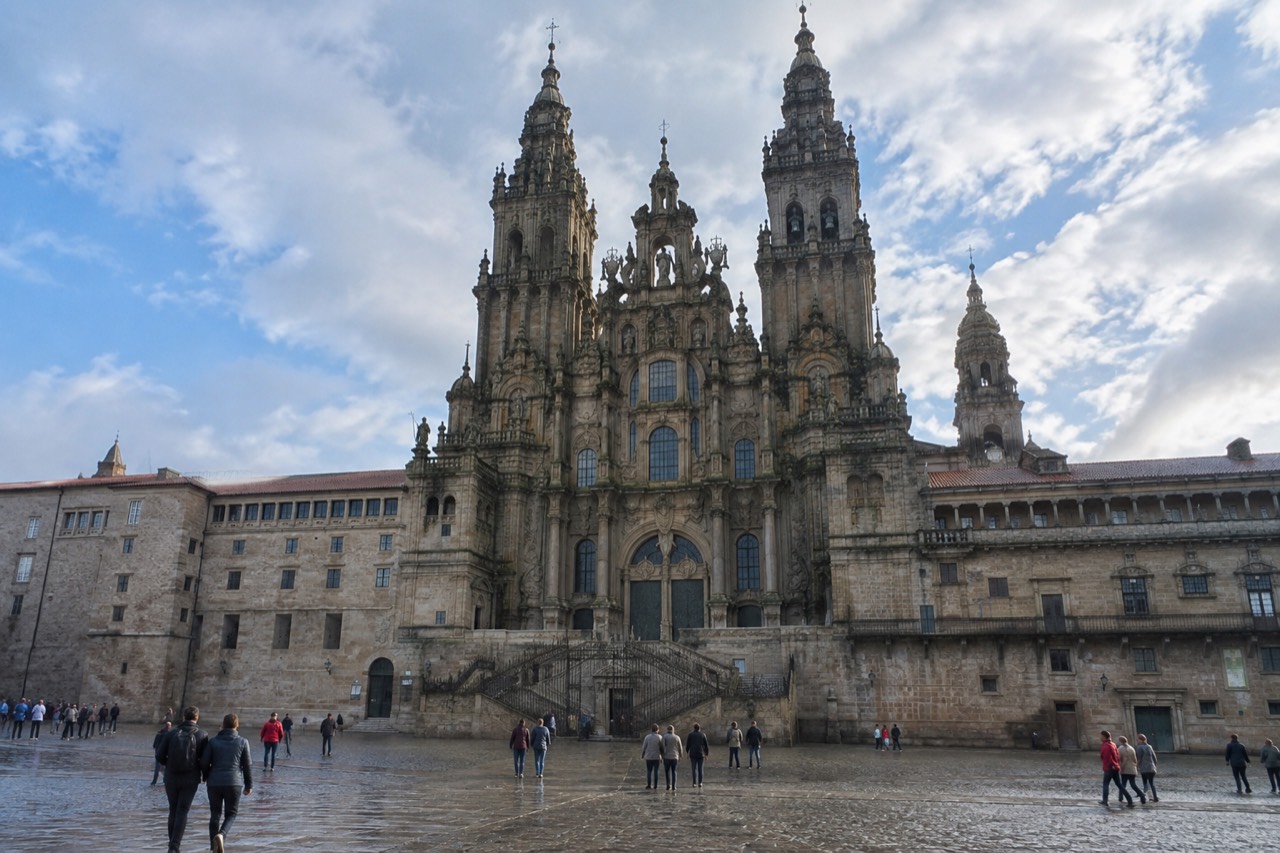
Most travellers arrive in Santiago de Compostela with a fixed idea of the city as a finish line, spend half a day around the Cathedral and leave convinced they have seen it. The Oficina del Peregrino's own figures say otherwise: 530,987 Compostelas were issued in 2025, a record year, and the city that absorbs those arrivals plus ordinary tourists runs on far more than one square and one church. UNESCO lists the Old Town separately from the Routes of Santiago de Compostela, two inscriptions from 1985 and 1993, and the second one only makes sense once you spend a second day walking the streets the first-day crowds never reach. The honest answer for most itineraries is two days, with three paying off for anyone adding a Finisterre or Rias Baixas day trip.
How Many Days Should I Spend In Santiago de Compostela?
Two days is the right number for most visitors to Santiago de Compostela, Spain: one full day for the Cathedral, its museum or rooftops and the core Old Town squares, and a second for the markets, parks and the food streets the first day misses. Three days is better if you want a Finisterre, Costa da Morte or Rias Baixas day trip. Fewer than two days works only as a brief stopover.
The reason two days is the floor rather than a suggestion is timing. The Cathedral interior itself is free and generally open from about 7:00am to 9:00pm, but the Cathedral Museum and its rooftop options run on timed tickets that sell out in peak season, and the Portico da Gloria visits are time-limited for conservation reasons. A single day that tries to bundle the Cathedral, the museum, the rooftops and the whole Old Town usually ends with rushed interiors and a queue at the one ticket window that mattered.
A first-timer who has never walked the Camino can happily stretch to three. The city's own character rewards it: the Alameda park view of the Cathedral, the Mercado de Abastos, and an evening on Rua do Franco or in the tapas bars each take hours rather than minutes. For pilgrims finishing a Camino route, the calculation is different again, and the section below deals with that case separately.
What Can You See In One Day In Santiago de Compostela?
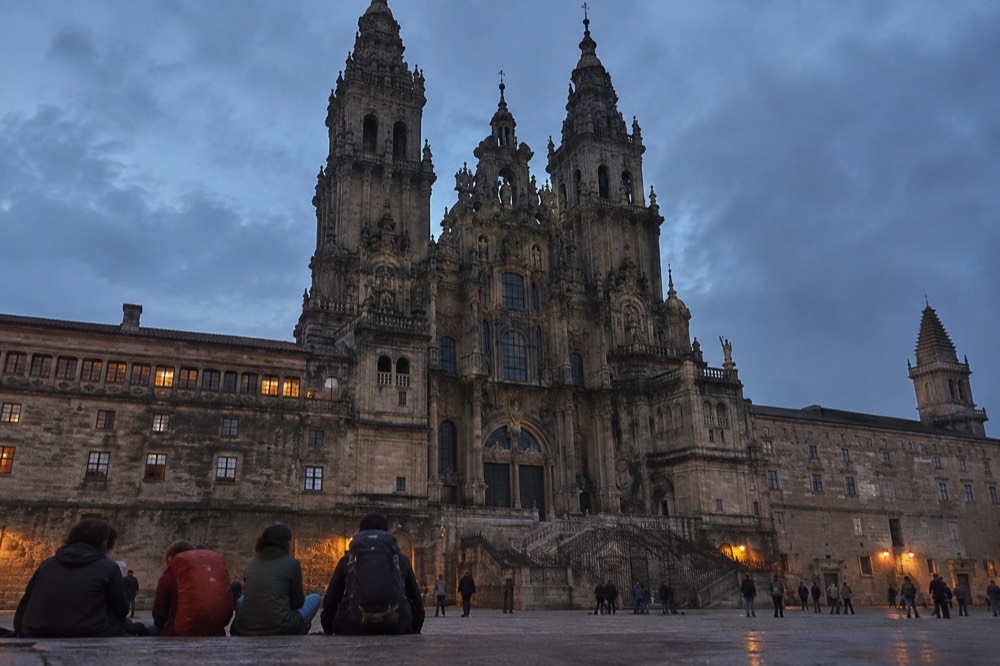
One day in Santiago de Compostela covers the Cathedral interior, the tomb of St. James, one paid Cathedral experience such as the museum or the Cubiertas rooftop tour, the four great squares, Rua do Franco and a market or park if you start early. It does not cover a day trip, and it barely covers the museums. Pilgrims' masses, currently at 7:30am, 9:30am, noon and 7:30pm, can anchor the day at either end.
Start on Praza do Obradoiro, the main square, because everything radiates from it: the Cathedral facade, the Hostal dos Reis Catolicos parador, the Colexio de San Xerome and the Pazo de Raxoi. From there the loop is short, Praza da Inmaculada, Praza da Quintana with the Holy Door, and Praza das Praterias, each face of the Cathedral a different century of building.
The paid layer is where one day starts to strain. The rooftop tour, Cubiertas plus Torre de la Carraca, is guided, about 60 minutes, roughly 140 steps and a height of about 72 metres, at EUR15 general or EUR12 reduced, booked on the Cathedral's own ticket site. Museum ticketing spans a range of roughly EUR9-23 depending on ticket type. Do one, not both, on a one-day visit, and book ahead.
The mass schedule deserves a dated note. Until 15 October 2026 the 9:30am, noon and 7:30pm pilgrim masses are held at the Cathedral's High Altar. From 16 October 2026 those three relocate to the nearby Church of San Agustin because of main chapel remodelling ahead of the 2027 Holy Year, and only the 7:30am mass stays inside the Cathedral, in its Communion chapel. Plan a one-day visit around that split if attending mass is part of the plan.
What Does A Second Or Third Day Add?
A second day in Santiago de Compostela buys the things one day cannot: the Mercado de Abastos, the Museo do Pobo Galego, the Museo das Peregrinacions, the Alameda park viewpoint and the Cidade da Cultura, plus an unhurried evening of tapas rather than a rushed one. A third day converts the city into a base for a full-day coast excursion such as Finisterre and Muxia, the Costa da Morte, or the Rias Baixas winery country, all of which run as organised full-day tours from the city.
Opening hours and free-admission days for these venues should be checked on each venue's own site, because they are not officially published.
The day-trip layer is the real argument for three days. From the verified tour roster, the full-day options leaving Santiago de Compostela include the Finisterre, Muxia and Costa da Morte excursion at seven stops, from $60, rated 4.8 from 1,714 reviews; the Rias Baixas winery excursion with optional mussel boat, from $54, rated 4.8 from 322 reviews; and the Catedrais Beach, Lugo and Asturias tour, from $68, rated 4.9 from 181 reviews. A half-day express to Fisterra and Muxia also exists, from $45, rated 4.4 from 50 reviews, for anyone who cannot spare a full third day.
| Stay length | What it realistically covers | What it misses |
|---|---|---|
| 1 day | Cathedral interior, tomb, one paid Cathedral experience, Old Town squares, Rua do Franco | Museums, Mercado de Abastos at leisure, any day trip |
| 2 days | Everything above plus market, two to three museums, Alameda, an unhurried tapas evening | Coast and Rias Baixas excursions, Cidade da Cultura at pace |
| 3 days | All of the above plus one full-day excursion such as Finisterre and Costa da Morte | A second, different day trip, long museum mornings |
| 4+ days | Two day trips, all major museums, Cidade da Cultura, rest-day pace after a Camino | Only worthwhile with a coast or Rias Baixas focus, or a Holy Year crowd buffer |
For a two-day or three-day structure already written out hour by hour, the site's two-day itinerary for Santiago de Compostela and three-day itinerary for Santiago de Compostela cover the sequencing in detail.
When Do Extra Days Pay Off In Santiago de Compostela?
Extra days pay off in three specific situations: when a Finisterre, Costa da Morte or Rias Baixas day trip is on the wish list, when the 2027 Holy Year crowds are in town, and when the city follows a multi-week Camino walk and the body needs a recovery day before sightseeing starts. Outside those cases, a fourth day in the city itself mostly buys rest rather than new sights, and the money is better spent on a coast excursion.
The 2027 Holy Year point is worth dating precisely, because getting it wrong shapes itineraries. 2026 is not a Holy Year. The Holy Door opens solemnly on the evening of 31 December 2026, in a ceremony on Praza da Quintana, and the Holy Year, the Xacobeo, runs through 31 December 2027. Anyone planning around the Holy Door being open should check their dates against that window, and anyone visiting in 2027 should expect queues that make timed Cathedral bookings and a slower pace not optional but necessary.
The Botafumeiro is the other fact that changes how many days help. The great censer normally swings on 12 fixed liturgical solemnities a year, but it is currently out of action: scaffolding for the cimborrio dome restoration covers its hanging mechanism, the Cathedral confirmed this in writing on 5 September 2026, and no return date has been published. No number of extra days in the city will change that, and no visitor should build an itinerary around seeing it swing until the Cathedral says otherwise.
How Do Camino Arrivals Change The Answer?
Arriving pilgrims should plan on two days in Santiago de Compostela after the walk, not counting the arrival day itself: one for the Cathedral, collecting the Compostela at Rua das Carretas 33 and attending a pilgrim mass, and one for recovery, the museums and the food the city is known for. Pilgrims adding the Fisterra continuation should budget a third day or make the coast walk itself the third day.
The Compostela certificate is issued in person only at the Pilgrim's Office, Rua das Carretas 33, and it requires the last 100km walked, or on horseback, or the last 200km cycled, with at least two stamps per day from official stamping points. The office closes on 25 December and 1 January, and its hours shift seasonally, roughly between 8am and 10am opens and 7pm to 8pm closes. On peak days in 2025, a year that ended with 530,987 Compostelas issued, arriving pilgrims reported long afternoon queues at that office, which is why the collection belongs on day one, early.
A rest day is not a wasted day after a multi-week walk. The site's dedicated page on the rest day after the Camino breaks down what a recovery schedule looks like, and the question of how long the Camino itself takes belongs to the walk, not to the city stay. Pilgrims short on total holiday time should cut the Camino route's middle stages rather than the city days, because the arrival rituals, the mass and the certificate cannot be compressed.
For anyone weighing whether the city deserves the days at all, the site's answer page on whether Santiago de Compostela is worth visiting and its companion on what Santiago de Compostela is famous for cover the case from the other direction, and this guide's own overview collects the planning pages in one place.
Common Questions About Days In Santiago de Compostela
Is one day enough for Santiago de Compostela?
One day covers the Cathedral interior, the tomb of St. James, one paid Cathedral experience and the main Old Town squares. It is not enough for the museums, the market or any day trip. Treat one day as a stopover, not a visit.
How many days should I spend in Santiago de Compostela?
Two days for most visitors, three if a Finisterre, Costa da Morte or Rias Baixas day trip is planned, and two full days after the walk for arriving pilgrims, not counting arrival day itself.
Can you do a day trip from Santiago de Compostela?
Yes. Full-day organised tours run to Finisterre and Muxia with Costa da Morte stops, to the Rias Baixas winery region with an optional mussel boat, and to Catedrais Beach with Lugo. A half-day express to Fisterra and Muxia also runs. Each consumes a full day of a stay.
Do you need to book Cathedral tickets in advance?
Yes, in peak season. The Cubiertas rooftop tour costs EUR15 general, EUR12 reduced, on timed slots on the Cathedral's own ticket site, and Portico da Gloria visits are time-limited for conservation. Museum tickets span roughly EUR9-23 depending on type.
Does the Botafumeiro swing every day?
No. It normally swings on 12 fixed liturgical solemnities a year, and it is currently out of action because scaffolding for the dome restoration covers its mechanism, confirmed in writing by the Cathedral on 5 September 2026, with no return date published.
Is 2027 a Holy Year in Santiago de Compostela?
Yes. The Holy Door opens on 31 December 2026 and the Xacobeo Holy Year runs through 31 December 2027. 2026 is not a Holy Year, so the door stays closed for that year's visitors.