3 Days In Santiago de Compostela
Three days is the sweet spot for Santiago de Compostela: one for the Cathedral and the UNESCO old town, one for the museums, market and parks, and one for the Atlantic coast that begins an hour away.
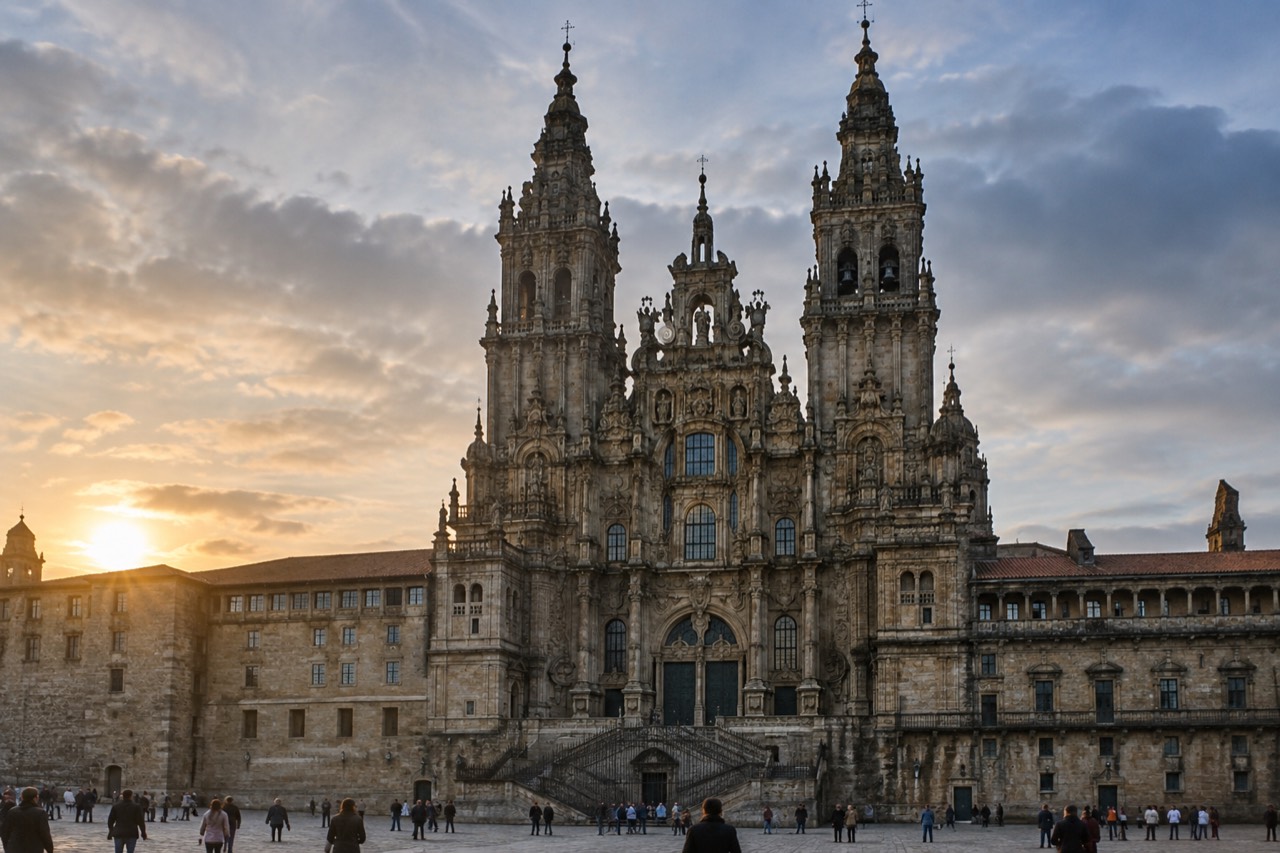
Short answer
Day 1 covers the Cathedral, its rooftops and the old town's granite plazas; Day 2 pairs the pilgrim museums with a market lunch and the Alameda viewpoint; Day 3 goes to Fisterra and the Costa da Morte, or the Rias Baixas wineries if the weather turns.
Santiago de Compostela rewards exactly this much time. The city that ends the Camino de Santiago packs a UNESCO-listed old town, a cathedral complex that needs half a day on its own, two major museums and a working food market into a walkable core of granite lanes, and then sits an hour from the Atlantic coast of Galicia, where a third day can end at what the Romans believed was the edge of the world. The Oficina del Peregrino counted 530,987 Compostelas issued in 2025, a record year, and the city that absorbs those arrivals is small enough that three days leaves nothing essential unseen.
The plan below assumes arrival the evening before Day 1, or a first morning start by 9:00. Every stop sits inside the old town except Day 3, which is a coach or tour day by design. Distances between Day 1 and Day 2 stops are short, a few minutes on foot between plazas, so nothing here depends on a car.
Is 3 Days In Santiago de Compostela Enough?
Three days is enough to see everything inside the city plus one full-day trip to the coast, which is the honest minimum for Santiago de Compostela. One day covers the Cathedral and the main plazas but skips the museums entirely, two days adds the market and the Alameda viewpoint, and only a third day buys the Fisterra or Rias Baixas excursion that most visitors later say was their favorite part. The answer to how many days to spend in Santiago de Compostela depends on whether the coast matters to you, and for most people it should.
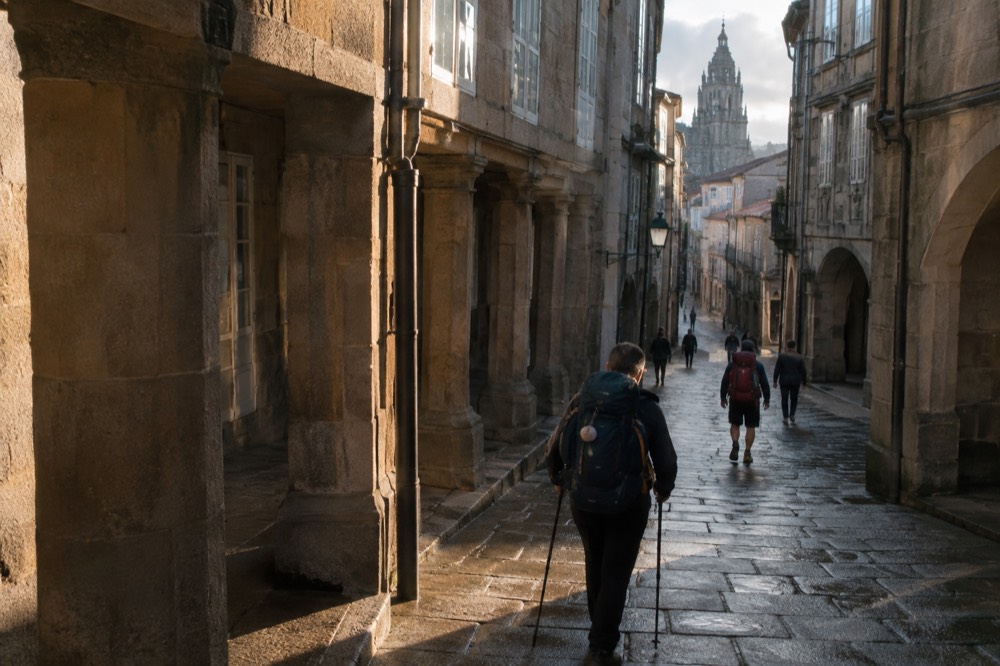
The city itself is compact. The old town fits inside a rough triangle between Praza do Obradoiro, Praza da Quintana and the Alameda park, and walking its full extent takes under half an hour without stops. What stretches the stay is depth: the Cathedral complex alone holds the basilica, the museum, the rooftops and the crypt, and each is ticketed and timed separately.
The baseline plan, compressed into one view:
| Day | Focus | Key stops | Time on foot |
|---|---|---|---|
| Day 1 | Cathedral and old town | Rooftops tour, Portico da Gloria, Praza do Obradoiro, Rua do Franco | Morning tour, afternoon stroll |
| Day 2 | Museums, market, parks | Mercado de Abastos, Museo das Peregrinacions, Alameda, San Martino Pinario | All day, short hops |
| Day 3 | Atlantic coast day trip | Fisterra, Muxia and Costa da Morte, or Rias Baixas wineries | Full day, coach or tour |
Travelers coming straight off a Camino walk may want to invert this: the rest day after the Camino is best spent slowly, and the coast trip works well as a decompression day rather than a sightseeing sprint.
Day 1: The Cathedral, The Rooftops And The Old Town
Spend Day 1 on the Cathedral of Santiago de Compostela and the old town around it: book the rooftop tour for the first timed slot of the morning, see the basilica and the Apostle's tomb while the queues are short, give the museum the late morning, then walk the four granite plazas, Praza do Obradoiro, Praza da Quintana, Praza das Platerias and Praza da Inmaculada, before dinner on Rua do Franco. The Cathedral's own pages list the basilica interior as free to enter, generally 7:00am to 9:00pm, so the ticketed parts are the museum, the rooftops and the Portico da Gloria visit.
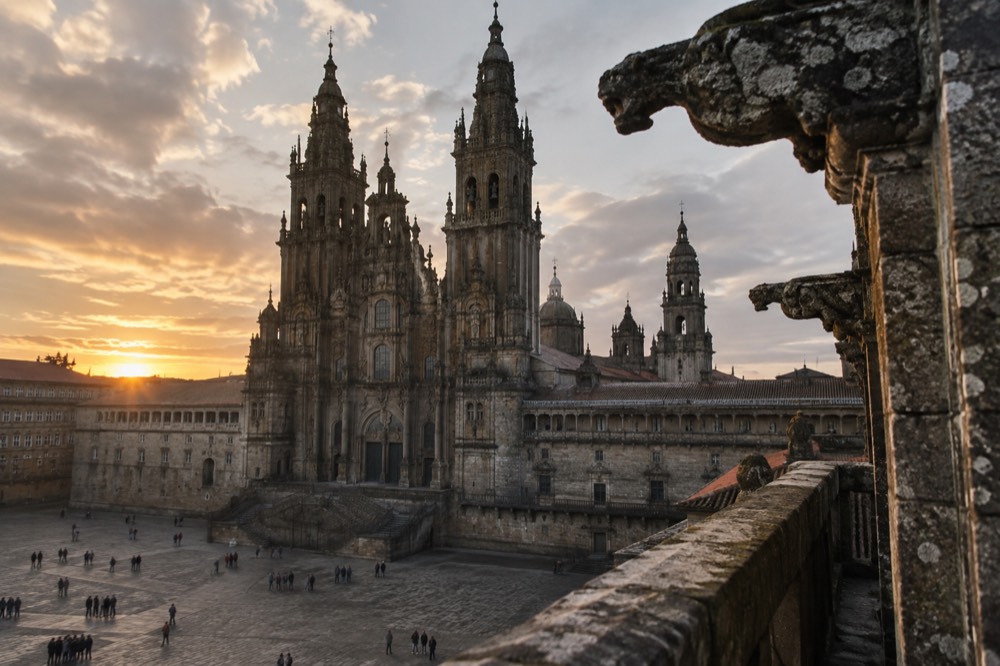
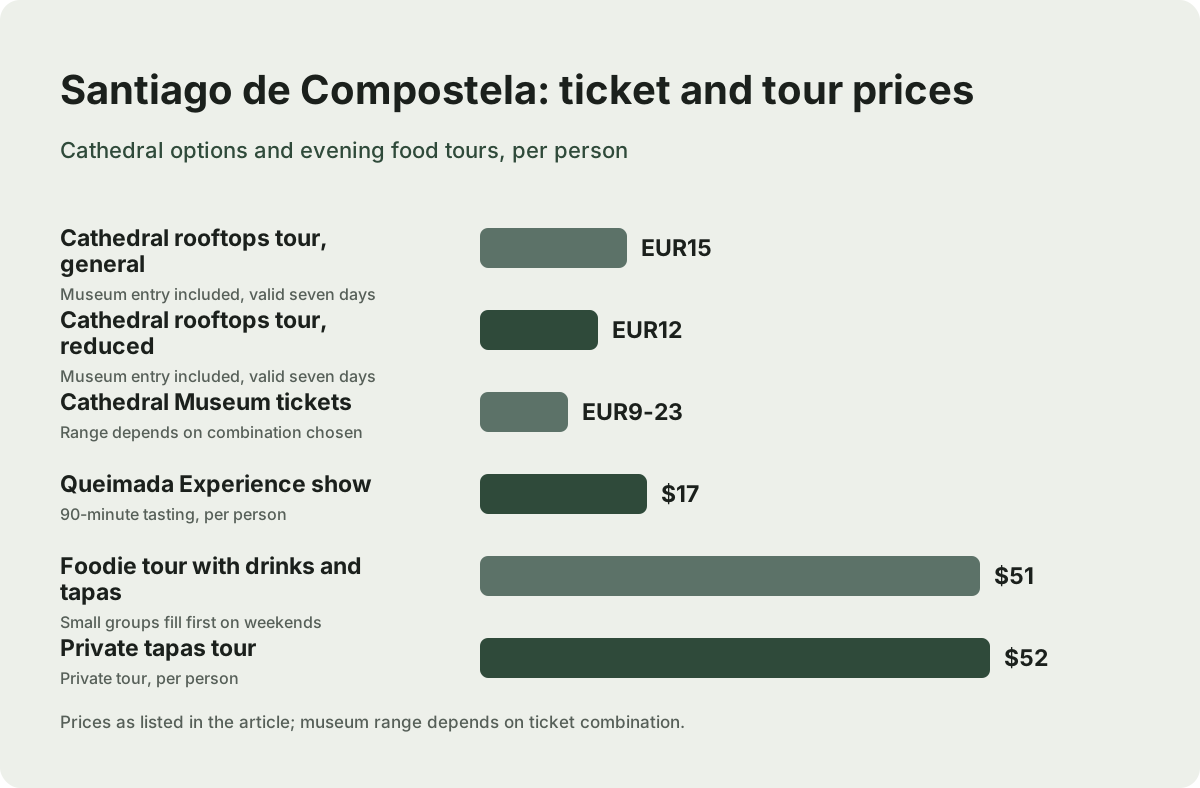
The rooftop tour is the day's fixed point. The Cathedral rooftops tour is run by the Cathedral itself: a guided hour at roughly 72 meters of height, up about 140 steps, priced EUR15 general and EUR12 reduced, with free access to the museum's permanent collection bundled in and valid for seven days. The Cathedral's ticketing site sells timed slots, and advance booking matters in July, August and the weeks around 25 July, the Feast of St. James. English-language visits are a flat EUR15.
The Portico da Gloria, the carved western portal of the basilica, is visited on a timed, audio-guided basis for conservation reasons; its major restoration finished in 2018. The Cathedral Museum runs roughly 10:00am to 8:00pm with the ticket office closing 30 minutes earlier, and its ticket range spans EUR9-23 depending on which combination is chosen.
What Day 1 looks like hour by hour:
| Time | Stop | Notes |
|---|---|---|
| 9:00-10:00 | Rooftop tour, Torre de la Carraca | First timed slot, 140 steps, museum entry included |
| 10:00-11:30 | Basilica interior and Apostle's tomb | Free entry, queues build after 11:00 |
| 11:30-13:00 | Portico da Gloria and Cathedral Museum | Timed Portico visit, EUR9-23 ticket range |
| 13:00-14:30 | Lunch near Praza das Platerias | Old town lanes, quietest before 14:00 |
| 14:30-17:00 | The four plazas and Rua do Franco | Quintana's Holy Door, Obradoiro's Hostal dos Reis Catolicos facade |
| 20:00 | Dinner on Rua do Franco | The classic tapas street, busy late into the evening |
Two dated caveats shape any Cathedral day in late 2026. The Botafumeiro, the great swinging censer, is currently suspended: the cimborrio restoration scaffolding covers its mechanism, the Cathedral confirmed this in writing on 5 September 2026, and no return date has been published, so no itinerary should promise it. Normally it swings on 12 fixed solemnities a year, from Epiphany on 6 January to the Transfer of the Apostle on 30 December, but that schedule is paused, not running. Pilgrim mass times are also in transition: through 15 October 2026 the 7:30am, 9:30am, noon and 7:30pm masses are held at the main altar, while from 16 October 2026 the 9:30am, noon and 7:30pm masses relocate to the Church of San Agustin, and only the 7:30am mass stays inside the Cathedral.
A guided visit is the efficient way to absorb all of this in one block, and the pairing of a licensed guide with skip-the-line Cathedral access is what the best-reviewed options sell. The Cathedral itself deserves the largest single block of any three-day plan; a guide who explains the Pardon Balcony, the Obradoiro facade's figures and the crypt in context is worth an hour you would otherwise spend reading signs. An old-town walking tour with an official guide covers the plazas and the legends in a second block, and an artisan gastrotour turns the afternoon stroll into a tasting route through the old town's food shops. For a first evening, the free GuruWalk walks are an alternative some travelers prefer, tip-based rather than ticketed, with the individual guide named on each listing.
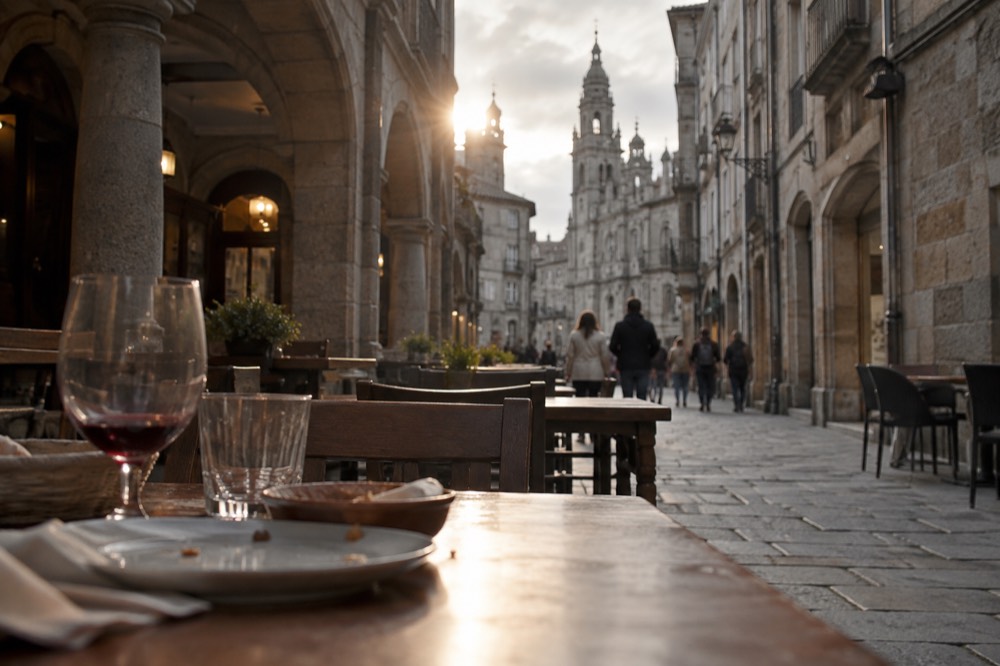
Close Day 1 from the Alameda park's viewpoint if energy allows, looking back across to the Cathedral's towers, then eat on Rua do Franco, the street of the tapas crawls. The evening pilgrim mass, currently 7:30pm at the High Altar until 15 October 2026 and at San Agustin from the following day, is the emotional center of the city for walkers arriving off the Camino, and visitors are welcome to attend without a ticket.
Day 2: The Pilgrim Museums, The Market And The West Side
Day 2 belongs to the stories around the Cathedral: start at the Mercado de Abastos, Santiago's working food market, for the closest thing the city has to a local morning, spend the late morning between the Museo das Peregrinacions and the Museo do Pobo Galego, then take the short walk to San Martino Pinario, the huge former monastery facing the Cathedral, and end with the sunset view from the Alameda park. The market's own hours are best checked on its official site before you go, since no verified schedule is officially published, and the same caution applies to the museums' opening hours and any free-admission day.
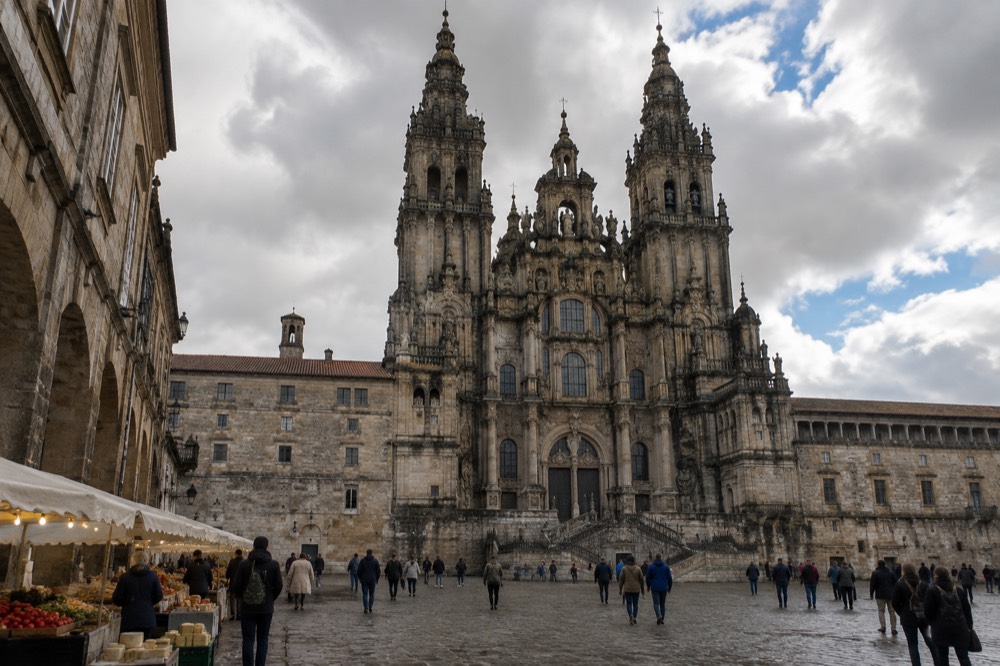
The Mercado de Abastos is the second-most-visited spot in the city after the Cathedral, and it earns that by being genuinely functional: fish from the Rias Baixas, tetilla cheese, padron peppers, the small green peppers of which some are hot and most are not, and the almond-icing tarta de Santiago. Buy lunch components there or eat at a bar on its edge, then carry the morning into the museums.
The Museo das Peregrinacions, the pilgrim museum, tells the story the Cathedral cannot: the routes, the medieval pilgrims and the mechanics of the Compostela certificate, which the Oficina del Peregrino at Rua das Carretas 33 issues in person only, to those who walked at least the last 100km or cycled the last 200km with two credencial stamps per day. The Museo do Pobo Galego, the Galician people's museum, covers the region's fishing, farming and craft life. Both sit on the west side of the center, a short walk apart, and each deserves a slow hour.
A reasonable Day 2 shape:
| Time | Stop | Why it matters |
|---|---|---|
| 9:30-11:00 | Mercado de Abastos | Working market, food halls, lunch shopping |
| 11:30-13:00 | Museo das Peregrinacions | The pilgrim story, credencial and Compostela rules |
| 13:00-14:30 | Lunch from the market or nearby | Cheapest good meal of the three days |
| 15:00-16:30 | San Martino Pinario | Monastery church and cloister facing the Cathedral |
| 17:00-18:30 | Alameda park and viewpoint | The postcard view of the Cathedral skyline |
| 20:30 | Dinner in the old town | Queimada show or tapas crawl to close |
San Martino Pinario, the Mosteiro de San Martino Pinario, is the city's largest baroque building after the Cathedral itself and now a museum and seminary. Its church nave and cloister give the clearest sense of the monastic scale that built the pilgrimage city. If rain arrives instead, and in this oceanic climate it often does, wetter from October to March and driest in July and August, the rainy day plan for Santiago de Compostela routes around the museums, the market halls and the Cathedral interior without losing the day.
For the evening, the Queimada Experience show, a tasting of the flamed Galician spirit with its recited spell, is a 90-minute way to end the middle day, from $17 per person. A foodie tour with drinks, tapas and live music runs from $51, and a private tapas tour from $52, both well-reviewed; check live availability on the listing for the date you want, since small-group food tours fill first on weekends.
Day 3: The Coast, Fisterra And The Costa da Morte
Day 3 leaves the city: the strongest single choice is a full-day trip west to Fisterra, Muxia and the Costa da Morte, the Atlantic coast where the Camino continues past Santiago to a lighthouse the Romans called the end of the world, with the alternative being the Rias Baixas winery and mussel-boat trip south when coastal weather turns, and both run from Santiago de Compostela as full-day coach tours with pickup in the center. Either way, book before you arrive, because the best-reviewed departures sell out through summer.
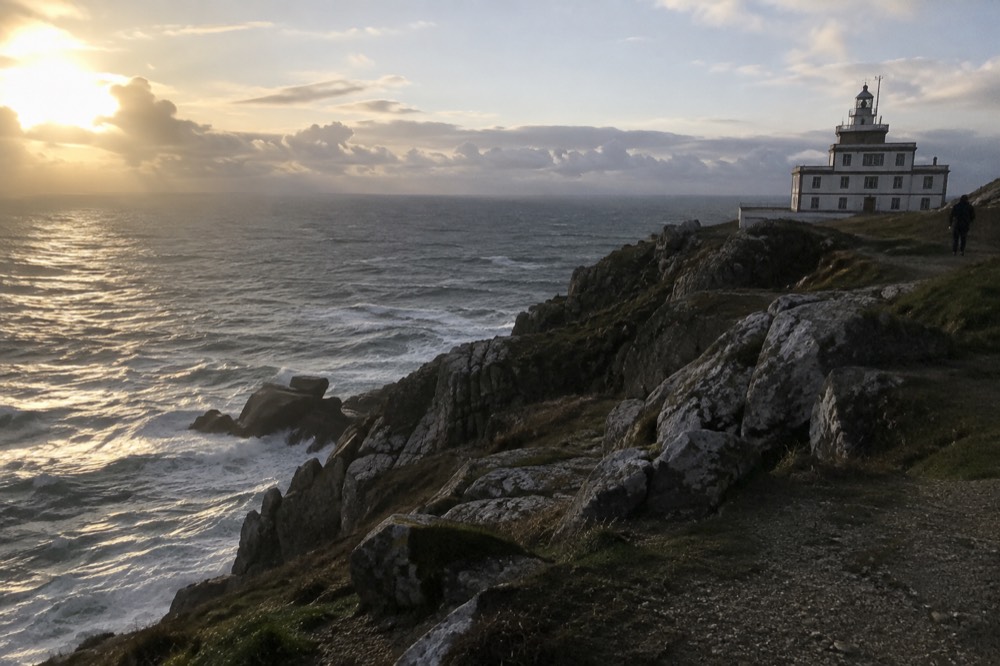
The Fisterra option is the emotional sequel to the Cathedral. Pilgrims who finish in Santiago historically walked on, roughly four further stages, to the coast, and the day trip compresses the essence of that: the Fisterra lighthouse headland, the fishing port of Muxia with its sanctuary above the waves, and the cliffs, beaches and stone villages of the Costa da Morte along the way. Operators differ mainly in stop count and pace. Everything else covered here is indexed on Santiago de Compostela Travel Guide.
| Day 3 option | Length | From (per person) | Rating | Best for |
|---|---|---|---|---|
| Finisterre, Muxia, Costa da Morte, 7 stops | Full day | $60 | 4.8, 1,714 reviews | The complete coast loop |
| Finisterre and Costa da Morte, most complete tour | Full day | $60 | 4.8, 860 reviews | Longer stops, fewer villages |
| Finisterre, Muxia, Costa da Morte, Cabo Vilan stop | Full day | $60 | 4.8, 267 reviews | Adding the Cabo Vilan lighthouse |
| Fisterra, Muxia Express | Half day | $45 | 4.4, 50 reviews | Tight schedules, late starts |
| Rias Baixas, winery, optional mussel boat | Full day | $54 | 4.8, 322 reviews | Wine and seafood over cliffs |
| Rias Baixas, Arousa Island, Combarro, mussel boat | Full day | $45 | 4.7, 30 reviews | Village charm plus the boat |
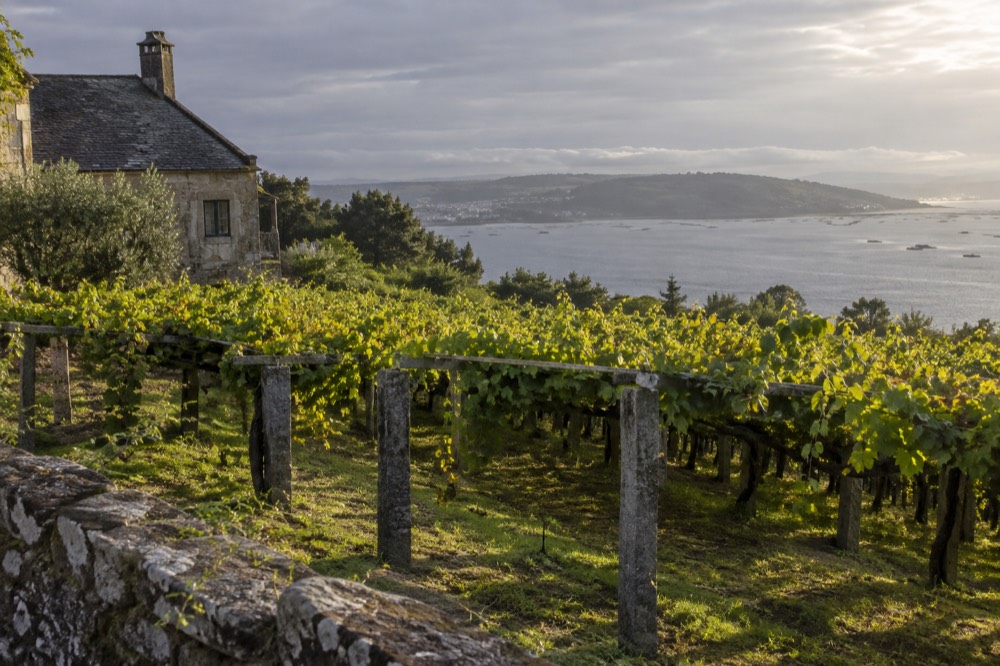
The best day trip from Santiago de Compostela is genuinely a coin toss between the coast and the Rias Baixas. The coastal trips are wilder and more dramatic, the western-facing Atlantic at its most exposed, while the Rias Baixas run south through the Albarino wine country around Cambados and out onto the mussel rafts of the flooded river valleys, an altogether softer day built around the region's white wine and shellfish.
Families should read the Santiago de Compostela with kids plan before committing to Day 3: the full-day coach trips are long for small children, and a half-day express to Fisterra and Muxia, from $45, plus an afternoon in the Alameda park is often the better trade.
The seven-stop excursion is the pick of the coast days for a once-only visit, and the operator's live listing carries current departure times and availability. Those wanting the winery day instead should check the Rias Baixas boat-and-winery excursion's listing the same way; both fill through the July and August peak and around the Feast of St. James on 25 July, when the whole city is at its busiest and liveliest.
How Much Do 3 Days In Santiago de Compostela Cost?
A mid-range three days in Santiago de Compostela breaks down into a few cost blocks: central lodging, which moves most with date and demand and should always be checked live rather than assumed; meals, cheapest when built around the Mercado de Abastos; the paid Cathedral entries, EUR15 for the rooftops and a EUR9-23 range for the museum; and a one-off day trip at $45-60 per person for the coast or Rias Baixas coach tours. Hotel choice moves the total more than anything else in the plan.
| Cost item | What the pack verifies | Where the number comes from |
|---|---|---|
| Cathedral rooftop tour | EUR15 general, EUR12 reduced, about 60 minutes | The Cathedral's own ticketing site |
| Cathedral museum tickets | EUR9-23 depending on combination | The Cathedral's ticketing site |
| Basilica interior | Free entry | The Cathedral's own pages |
| Guided city walk | From $12-14 per person | Operator listings, prices on the listing |
| Queimada show and tasting | From $17 per person | Operator listing |
| Day 3 coast or Rias Baixas trip | $45-60 per person across options | Operator listings |
| Lodging | Check the live rate, moves with date and demand | Booking page at time of booking |
A municipal tourist tax has applied in Santiago de Compostela since 1 October 2025 (a surcharge on Galicia's tourist-stay tax), charged per person per night for up to 5 nights, from 1 EUR in private albergues, campsites and tourist apartments up to 2.50 EUR in five-star hotels, with under-18s and stays in Xunta-run public albergues exempt. Tasting fees and menu prices shift with the season; treat every figure here as a planning range and confirm the room or listing price at the moment of booking. Travelers who arrive by train from Madrid should expect a high-speed journey of roughly 3-4 hours, and the Madrid to Santiago train guide covers it in full.
Where Should You Stay For A 3-Day Visit?
Stay inside or on the edge of the old town for a three-day visit, ideally within a ten-minute walk of Praza do Obradoiro, because everything in Days 1 and 2 is walkable from there and the airport bus, line 6A, terminates at the Estacion Intermodal a short walk from the same center, so a car is unnecessary for the whole plan and a central base saves the most time. The trade-off is price: old-town doubles carry a premium over the newer streets beyond the Alameda.
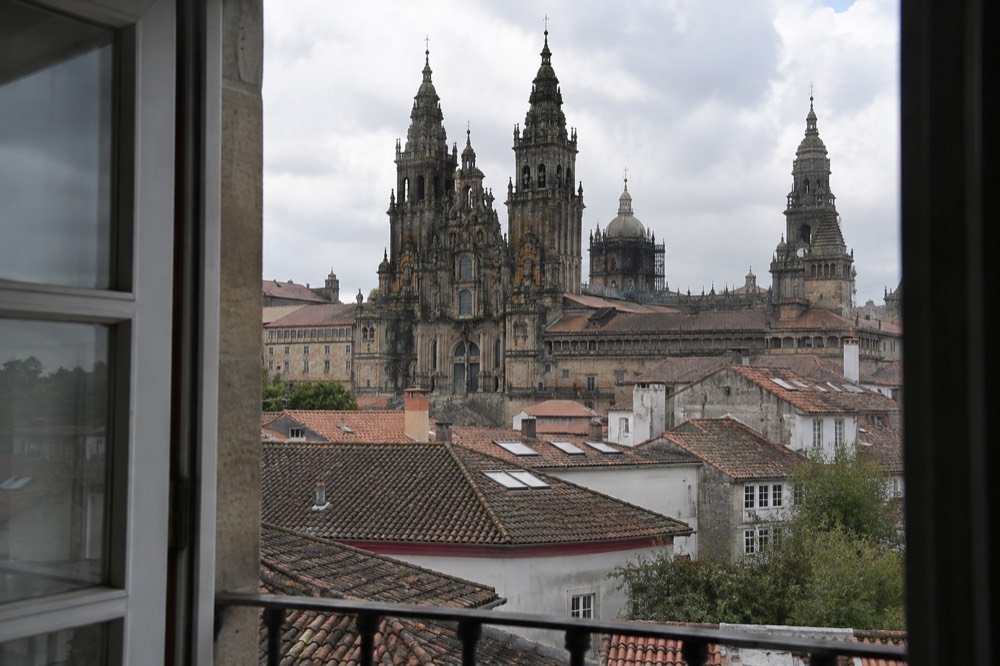
The best hotels in Santiago de Compostela and the hostels guide break the options down in detail. Two neighborhood rules of thumb hold for a three-day trip: the old town core around Rua do Franco and Praza da Quintana is atmospheric but noisier on pilgrim arrival evenings, and the streets just west of the Alameda park are quieter, equally central, and usually cheaper for the same walk time.
For pilgrims ending a walk here, the practical ending sequence is fixed: the Pilgrim's Office at Rua das Carretas 33 for the Compostela, in person only, then the mass, then the rooftop tour on a separate morning. The two-stamps-per-day credencial rule is what the office enforces on every credential it checks.
What If You Only Have One Or Two Days?
If three days is not available, cut Day 2 in half rather than cutting Day 3: the one-day plan keeps the Cathedral, the rooftops, the four plazas and one market or museum stop, the two-day plan adds both pilgrim museums and the Alameda sunset, and the coast day trip is the single most valuable thing to protect, because it is the one part of the region that cannot be seen on foot from the city center. Compressing further starts to hurt.
The one day in Santiago de Compostela and two days in Santiago de Compostela plans make those cuts explicit. The honest hierarchy of what to drop first: the second museum before the first, the nightlife before the market, and the coast trip last of all.
Common Questions About 3 Days In Santiago de Compostela
Is 3 days in Santiago de Compostela enough?
Yes. Three days covers the Cathedral and its rooftops, the old town plazas, the pilgrim museums, the food market and one full-day trip to Fisterra and the Costa da Morte or the Rias Baixas. Only travelers who want several coast day trips, or who arrive off a long Camino walk wanting slow recovery days, need more.
What is the best order for 3 days in Santiago de Compostela?
Book the Cathedral rooftop tour for the first morning of Day 1, keep the museums and market for Day 2 when the Cathedral queues are heaviest, and hold Day 3 for the coast day trip, since its departure times are fixed and it is the only part of the plan that cannot be reshuffled on the day.
Can you see the Botafumeiro on a 3-day visit?
Not currently. The Botafumeiro is suspended while cimborrio restoration scaffolding covers its hanging mechanism, confirmed by the Cathedral in writing on 5 September 2026, with no return date published. It normally swings on 12 fixed solemnities a year, but that schedule is paused, so no 3-day plan should promise it.
Do you need to book Cathedral tickets in advance?
Yes for the rooftop tour, which is timed and guided and sells out in peak weeks, and yes for the Portico da Gloria visit. The basilica interior itself is free and does not require a ticket. The Cathedral's own ticketing site sells all of these with timed slots.
Which day trip is best for Day 3?
The Fisterra, Muxia and Costa da Morte loop is the most popular and highest-rated full-day option, from $60 per person. If coastal weather is bad, the Rias Baixas winery and mussel-boat trip, from $54, is the wet-weather alternative, and both depart from central Santiago de Compostela.
Is Santiago de Compostela walkable in 3 days?
Entirely. The whole old town fits inside a triangle of a few minutes' walking between its main plazas, and Days 1 and 2 need no transport at all. The only journey in the plan that is not on foot is Day 3's coach trip and, at either end of the stay, the airport bus, which covers the roughly 12km from the airport to the center.
The full plan, then: Day 1 for the Cathedral and the granite plazas around it, Day 2 for the market, the museums and the west-side views, Day 3 for the Atlantic. Book the rooftop slot and the coast tour before arrival, carry an umbrella in any month outside July and August, and the three days will cover Santiago de Compostela more completely than most visitors ever manage.