Santiago de Compostela With Kids
Santiago de Compostela is a compact, walkable pilgrim city that works surprisingly well with children, provided a family knows which parts reward slow wandering and which ones need a schedule.
Short answer
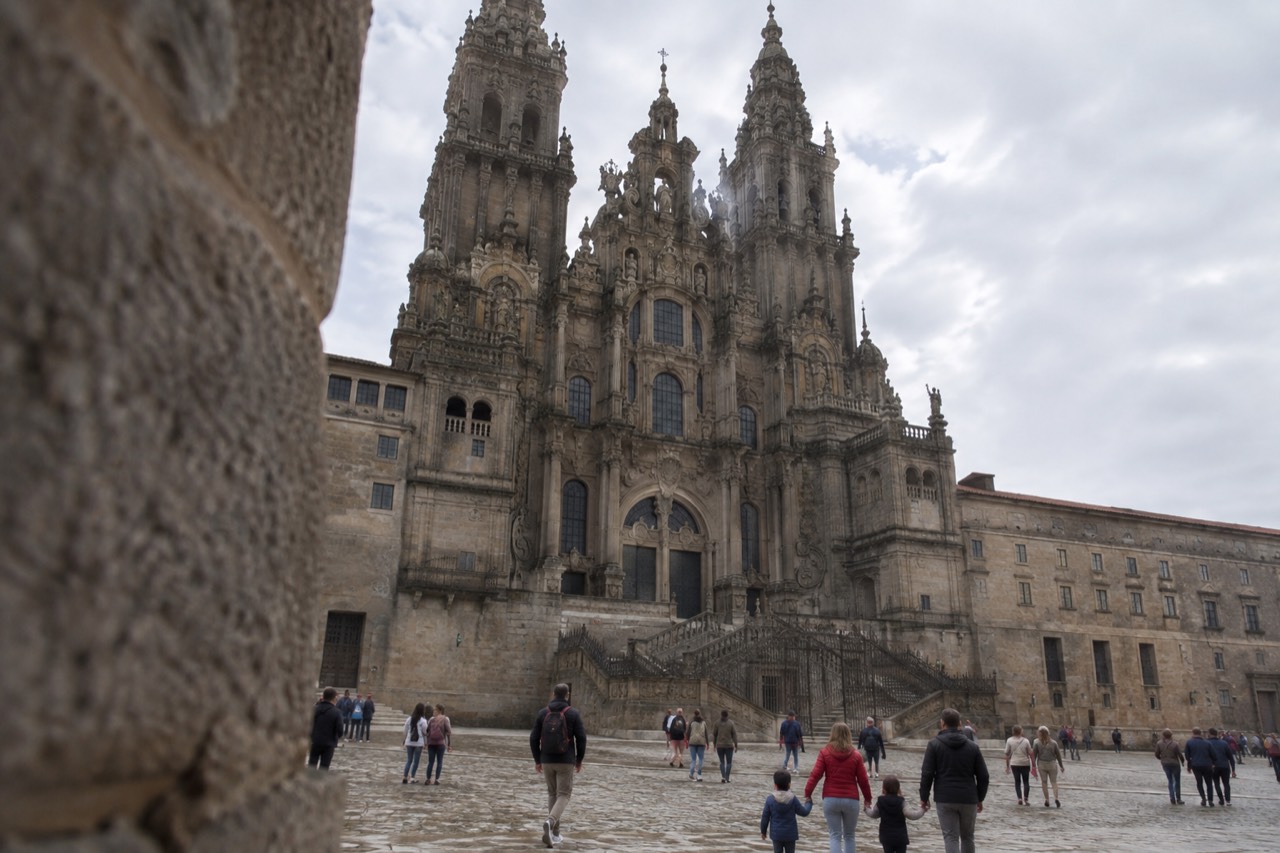
Yes. Santiago de Compostela is a small, safe, largely pedestrian city where the main sights sit within a fifteen-minute walk of each other. Children can enter the Cathedral free, meet pilgrims finishing the Camino, eat well from market stalls and tapas counters, and reach beaches and lighthouse headlands on half-day and full-day trips. The main family challenge is rain, not distance.
Santiago de Compostela handed out 530,987 Compostela certificates to arriving pilgrims in 2025, a record year for the Pilgrim's Office at Rua das Carretas 33, and a large share of the people collecting them had children in tow. The city that receives those walkers is small, granite, UNESCO-listed since 1985 for its Old Town, and built almost entirely at a scale a six-year-old can manage. This guide, prepared by the editors at the Santiago de Compostela Travel Guide desk, covers what a family can realistically do here: which sights hold a child's attention, how the Cathedral and its ticketed parts work with kids in tow, where to eat without a fight, and which day trips are worth the drive with the whole crew.
Is Santiago de Compostela Good For Kids?
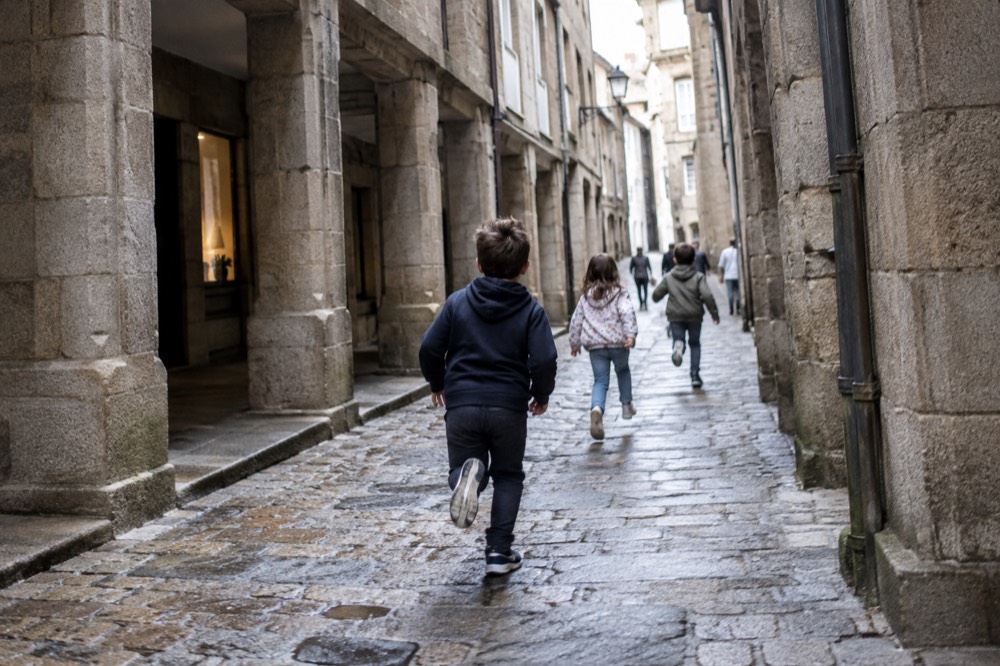
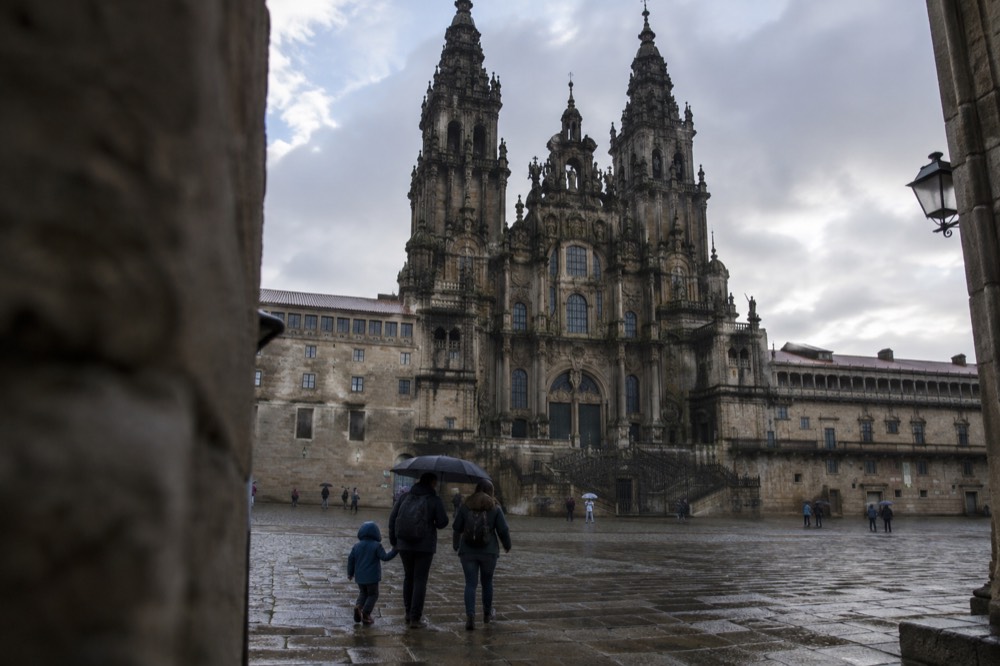
Yes, comfortably so. Santiago de Compostela is a compact and largely pedestrian city where the Cathedral, the old town lanes, the market and the main parks all sit within a short walk of one another, street crime is low, and cars are scarce in the historic core. The honest caveats are rain at almost any time of year, steep cobbles that punish strollers with small wheels, and late Spanish dinner hours.
None of those caveats is a reason to stay away, but each one changes how a day should be planned. AEMET's climate data for station 1475X at Labacolla shows a temperate oceanic pattern: wet year-round, wetter from October to March, driest in July and August, with annual precipitation on the order of 1,690 to 1,890mm. That means packing rain layers is not pessimism here, it is the basic equipment list, and it is exactly why this guide carries a full section on rainy day plans.
The compactness is the thing families underestimate in the good direction. A child who tires after an hour of walking is not excluded from anything here. The Old Town, a separate UNESCO inscription from the Routes of Santiago de Compostela listed in 1993, is a stack of small squares and lanes where a tired walker is never more than a few minutes from a cafe, a bench in Alameda Park, or the hotel.
What Are The Best Things To Do In Santiago de Compostela With Kids?
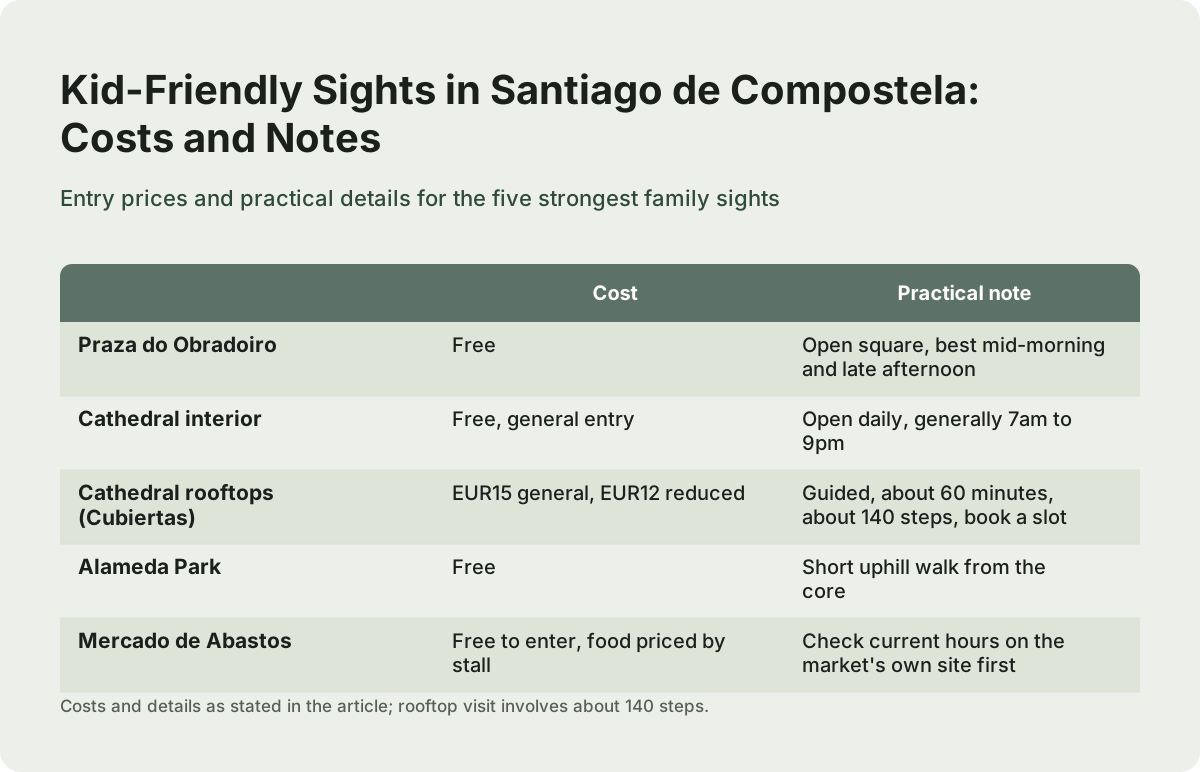
The strongest kid-friendly sights are Praza do Obradoiro with its constant arrival of muddy, emotional pilgrims, the free-entry Cathedral interior with its botafumeiro roped off at the crossing, the rooftop tour for children old enough for 140 steps, the Alameda Park with its views over the towers, and the Mercado de Abastos stalls where food becomes entertainment. Only the rooftop tour needs a booked time slot.
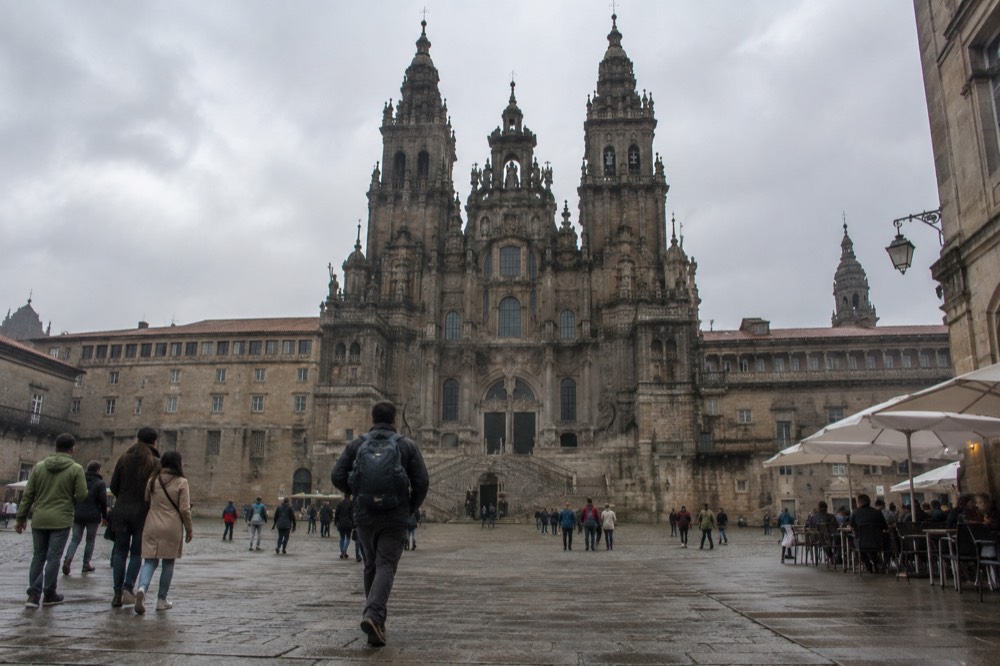
Praza do Obradoiro is the emotional engine of the city and costs nothing. Pilgrims arrive all day, every day, often collapsing or crying at the foot of the Cathedral steps. For a child raised on the idea of a finish line, this is a live sports event with a thousand-year storyline, and the Cathedral behind it deserves its own write-up. Arrive mid-morning or late afternoon for the biggest clusters of arrivals.
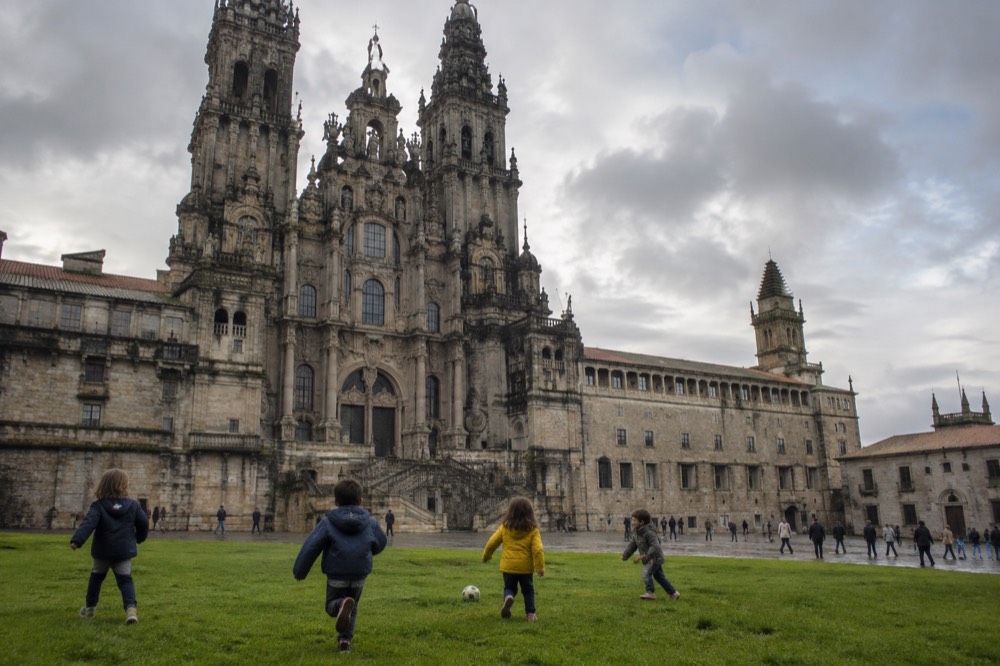
The Alameda Park side gives the postcard view of the Cathedral's twin towers and has the space for children to burn energy that the Old Town lanes deny them. It sits a few minutes' walk uphill from the tourist core and is the standard local move for letting a restless group reset.
| Sight | Why kids engage | Cost | Practical note |
|---|---|---|---|
| Praza do Obradoiro | Watching pilgrims finish the Camino | Free | Open square, best mid-morning and late afternoon |
| Cathedral interior | Vast scale, golden botafumeiro at the crossing | Free, general entry | Open daily, generally 7am to 9pm |
| Cathedral rooftops (Cubiertas) | Views from about 72m up | EUR15 general, EUR12 reduced | Guided, about 60 minutes, about 140 steps, book a timed slot |
| Alameda Park | Tower views, open space to run | Free | Short uphill walk from the core |
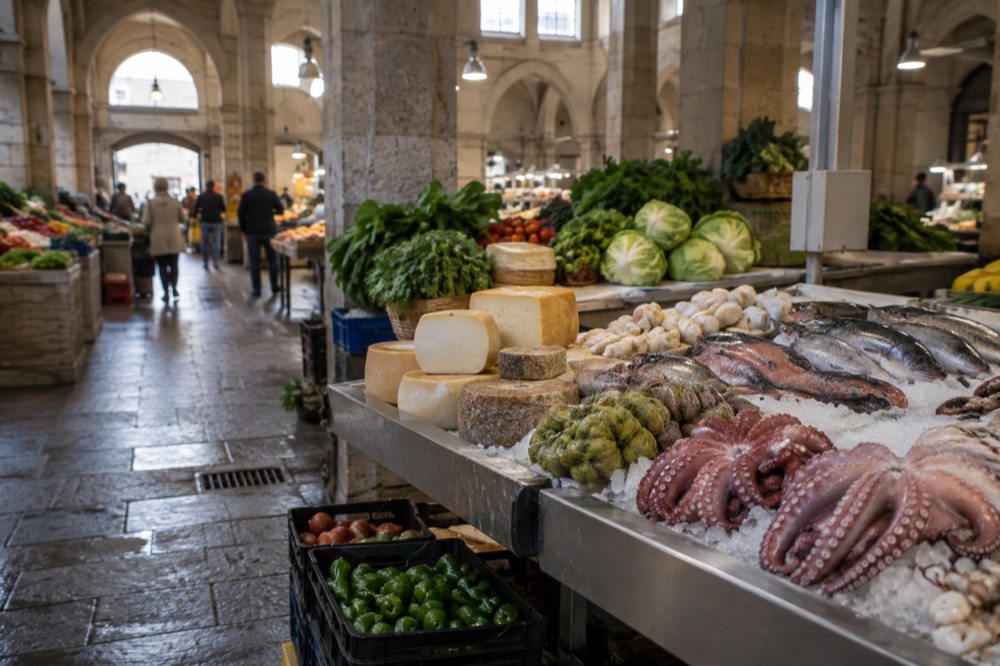
| Mercado de Abastos | Stalls, octopus, cheese, crowds | Free to enter, food priced by stall | Check current hours on the market's own site before going |
The rooftop tour deserves a specific word of caution about age. The Cathedral's own ticketing describes the Cubiertas and Torre de la Carraca visit as guided, about 60 minutes, involving about 140 steps and heights around 72 meters. That is a superb outing for a confident eight-year-old and a poor one for a toddler in arms. There is more on the whole ticketing picture, including the museum and reduced rates, in the Cathedral section below.
Guided walks earn their place early in a family trip because they hand the storytelling to someone whose job it is. A two-hour walk is roughly the attention budget of a school-age child in a new city, and the three options above cover the spread: a historic highlights walk from $17 per person rated 4.9 from 29 reviews, a foodie walk with drinks, tapas and live music from $51 rated 4.7 from 227 reviews, and a half-day city and cathedral combination with tickets included from $45 rated 4.9 from 47 reviews.
A note on the free walks, because families ask about them constantly. The city has several pay-what-you-want walks booked through GuruWalk, including Free Tour Santiago Essential, rated 4.91 from 4,797 reviews, and Essential Free Tour Santiago with an individual radio guide included, rated 4.96 from 1,099 reviews. The radio guide detail matters for kids: everyone in the group wears an earpiece and hears the guide clearly without the guide shouting, which keeps young walkers in the loop. No price applies to these walks, the guide is tipped at the end.
Which Guided Tours In Santiago de Compostela Suit Families Best?
For a single half-day that covers the city and the Cathedral with tickets included, the Santiago al Complete tour from $45 per person, rated 4.9 from 47 reviews, is the strongest family pick. For a shorter, cheaper orientation walk, the Historic Walking Tour and Highlights from $17, rated 4.9 from 29 reviews, fits a child's attention span. Both beat longer adult tours with children in tow.
The pattern across the roster is duration, not quality. A family's real constraint is how long a child will stay in a guided group before melting down, and the walks priced in the teens and twenties run roughly two hours while the half-day combinations stretch further. For cathedral depth without a long commitment, the Cathedral and Museum skip-line tour from $26, rated 4.8 from 2,425 reviews, is the volume-tested choice. Booking a morning slot is the standard advice across every one of these products: children are fresher, the granite is cooler underfoot, and the afternoon remains free for the park or the market.
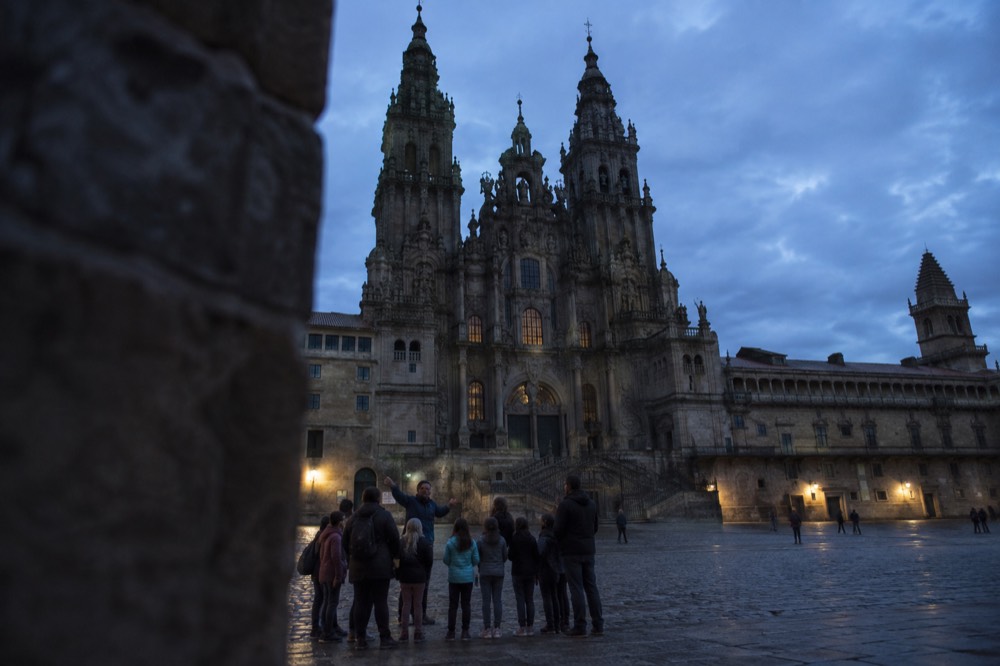
For families who prefer to go at their own pace rather than a guide's, the same ground can be walked independently using the one-day itinerary as a route skeleton, with the two-day and three-day versions if the trip stretches.
Can You Take Children Into The Cathedral Of Santiago de Compostela?
Yes, with no ticket and no age limit for general entry. The Cathedral's own pages state the interior, including the naves and the apostle's tomb and embrace area, is open daily roughly 7am to 9pm with free general entry, and children simply walk in with their parents. The paid parts are the museum, at EUR9 to EUR23 depending on ticket type, and the guided rooftops tour at EUR15 general or EUR12 reduced, where age judgment is needed.
Inside, the two things children fixate on are the same two things adults do. First, the statue of St. James on the high altar, which pilgrims hug from behind by climbing a short stair: children can do the embrace, and it is one of the few sacred sites anywhere that is literally designed to be touched. Second, the botafumeiro, the giant censer hanging at the crossing, which is currently roped off and out of action because scaffolding for the dome restoration covers its hanging mechanism. The Cathedral confirmed this suspension in writing on 5 September 2026 and has published no return date, so no family should promise a child the sight of it swinging. When it works again it will swing on twelve fixed solemnities a year, from Epiphany on 6 January to the Transfer of the Apostle on 30 December.
Families attending a pilgrim mass need the current schedule, and it changed recently. The Cathedral's liturgy page lists daily pilgrim masses at 7:30am, 9:30am, noon and 7:30pm at the High Altar, but from 16 October 2026 the 9:30am, noon and 7:30pm masses relocate to the nearby Church of San Agustin while main-chapel works continue, and only the 7:30am mass stays inside the Cathedral's own Communion chapel. The noon slot is the family-friendly one for attention spans, wherever it is held.
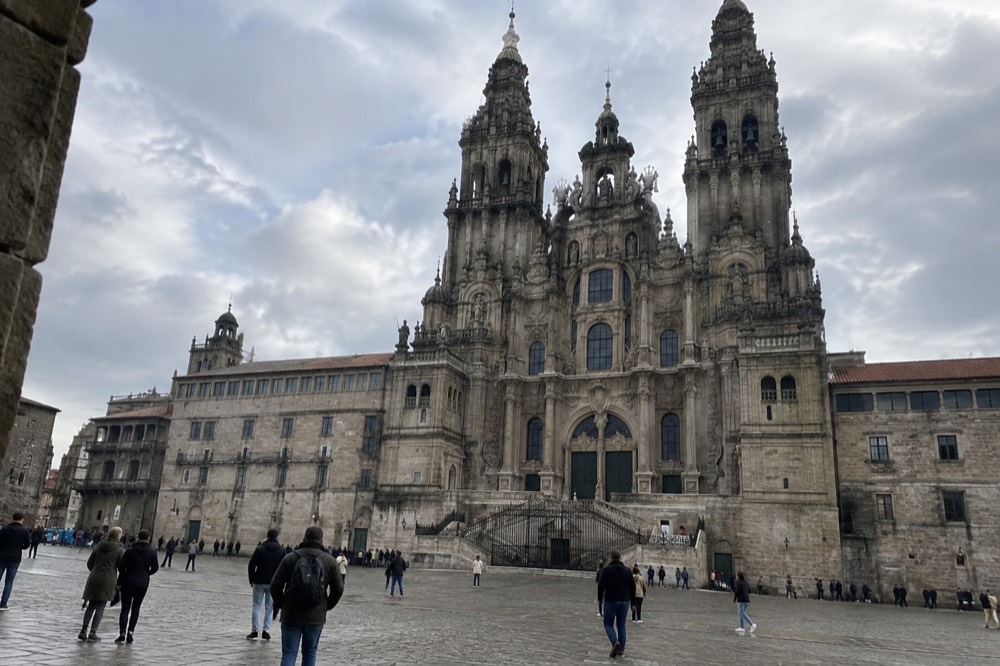
One more dated item families planning ahead should know: 2027 is the next Holy Year, not 2026. The Holy Door opens on 31 December 2026 and the Xacobeo year runs through 31 December 2027, which means a family visiting in 2027 will find bigger crowds and more atmosphere, and a family visiting before that date will find the Holy Door closed, which is normal.
| Cathedral part | Entry | Kids verdict |
|---|---|---|
| Naves and apostle's tomb | Free, no ticket | Works at any age, including toddlers in carriers |
| Rooftops and Carraca Tower | EUR15 general, EUR12 reduced, timed slot | Best for roughly 8 and up, about 140 steps |
| Cathedral Museum and Gelmirez Palace | EUR9 to EUR23 by ticket type | Better for teens than small children |
| Pilgrim mass (pre-16 Oct 2026) | Free, High Altar, 7:30am, 9:30am, noon, 7:30pm | Noon slot fits family routines |
| Pilgrim mass (from 16 Oct 2026) | Free, Church of San Agustin for 9:30am, noon, 7:30pm; 7:30am stays in the Cathedral | Same times, different building |
Where Should Families Eat In Santiago de Compostela?
The reliable family strategies are the Mercado de Abastos stalls for a cheap, grazing lunch made of bread, cheese, empanada and fruit, tapas counters for early-evening eating before proper restaurants open, and fixed-menu restaurants for dinner at Spanish hours. Galician food is child-compatible by default: pulpo a la gallega is mild sliced octopus, tarta de Santiago is an almond cake, and padron peppers are eaten with the hands.
The timing problem is real and worth stating plainly. Many local kitchens do not start dinner service until 8pm or later, which is past a lot of small children's limits. The tapas route solves it: counters open earlier, food arrives in minutes, and a family can eat three small things in three places, which is more entertaining for a child than one long sit-down meal anyway. Everything else covered here is indexed on Santiago de Compostela Travel Guide.
For families who want the food explained rather than just served, a guided foodie walk is the one splurge that consistently works with children old enough to walk a couple of hours, because the food arrives at intervals and keeps the walk itself buoyant.
| Food | What it is | Why kids usually accept it |
|---|---|---|
| Pulpo a la gallega | Sliced boiled octopus, olive oil, paprika | Soft texture, mild flavour, eaten on a toothpick |
| Tarta de Santiago | Almond cake, often with a powdered sugar cross | Sweet, flourless, dense |
| Padron peppers | Small green peppers, fried, salted | Eaten with fingers, mild with an occasional hot one |
| Empanada gallega | Savory pie, typically tuna or cod | Familiar pie format, portable for market lunches |
| Queixo de tetilla | Soft, cone-shaped Galician cheese | Mild and spreadable on bread |
Which Day Trips From Santiago de Compostela Work With Kids?
The two day-trip styles that work are the coastal lighthouse runs to Fisterra, Muxia and the Costa da Morte, from $45 to $60 per person for guided versions, and the estuary trips into the Rias Baixas with a winery and an optional mussel boat, from $45 to $54. Both are coach-based, both stop at places where children can get out and run, and the full-day versions are best saved for children who can handle a full day out.
The coast west of the city is a story children already know: the Romans called Fisterra the end of the world, and standing at the lighthouse above the Atlantic is the kind of thing a nine-year-old retells for a year. The full-day seven-stop version runs from $60 per person and carries a 4.8 rating from 1,714 reviews, which is as close to volume-tested as this roster gets for the coast. The Rias Baixas trips add a different texture, a boat among mussel rafts in the estuary, with a winery stop that adults care about more than children do, from $54 with a 4.8 rating from 322 reviews.
Long coach days are the honest risk here. A full-day tour returns in the evening, and a child who falls asleep on the outbound leg may still hit a wall by mid-afternoon. The half-day express option from Fisterra and Muxia exists precisely for that group, from $45 per person, rated 4.4 from 50 reviews. For deciding between all of them, the best day trip comparison goes deeper.
How Many Days Should A Family Spend In Santiago de Compostela?
Three days is the sweet spot for most families: day one for the old town, Praza do Obradoiro and the Cathedral interior, day two for a rooftop or museum morning plus the market and Alameda Park, and day three for one day trip to the coast or the estuaries. Two days works if the day trip is cut, and a week is only worth it if the family is combining the city with a wider Galicia road trip.
That mirrors the answer to the general how many days question, with one family-specific adjustment: children move slower than adults through the same itinerary, so a family three-day plan should hold fewer items per day than a couple's three-day plan. Building in the park and the market as pressure valves, rather than as sightseeing items, is the difference between a trip the children remember fondly and one nobody does.
| Day | Morning | Afternoon | Evening |
|---|---|---|---|
| 1 | Praza do Obradoiro, pilgrim arrivals, Cathedral interior and the apostle's embrace | Old town lanes at child pace, ice cream stop | Early tapas counters |
| 2 | Rooftops tour or Cathedral Museum by age, booked slot | Mercado de Abastos grazing lunch, Alameda Park | Queimada show for older kids, or an early night |
| 3 | Half-day express trip to Fisterra and Muxia, or a full-day coastal tour | Lighthouse and beach time | Late return, simple dinner |
A family that walks in on the Camino itself, rather than flying in, has a different calculus, and the rest day after the Camino page covers the low-effort version of the city for people whose legs have already done their share.
When Is The Best Time To Visit Santiago de Compostela With Kids?
The best family window is late spring to early autumn, May through September, when the days are longest and the city is driest, with July and August the driest months in AEMET's station data. October to March is wet and cool, and that matters more with children because a wet child ends a day faster than a wet adult. The July 25 feast of St. James brings the year's biggest celebrations and biggest crowds.
The feast of St. James on 25 July is the city's headline date every year, marked with a pontifical and civic mass, a national offering to the apostle, fireworks, concerts and folk events. For a family it is a genuinely spectacular time to be here, and also the most crowded and loudest. The dedicated feast day guide covers it fully. Families planning around the Camino's own seasons should also read the best month to walk, since the city's crowd rhythm follows the walkers'.
Rain is the one thing no family should treat as unlikely. The climate here is wet year-round, so the packing list is rain jackets for everyone and a plan B that does not depend on the sky.
What Practical Things Should Families Know Before Arriving?
Getting in is simple: the airport is about 12km from the old town, and bus line 6A runs into the centre for a EUR1 cash fare to the driver, about 0.36 EUR on a rechargeable card, though a new Monbus contract with a fare around EUR6 is expected in autumn 2026, so treat those numbers as subject to change. A municipal tourist tax has applied since 1 October 2025, from 1 EUR to 2.50 EUR per person per night for up to 5 nights, with under-18s and stays in Xunta-run public albergues exempt.
Those transport facts cover the three family arrival patterns: flying into Santiago-Rosalia de Castro directly, taking the train from Madrid as part of a wider Spain trip, or arriving from Portugal, which requires a change via Vigo. Trains connect Santiago de Compostela to Madrid in roughly 3 to 4 hours, to Vigo in about 1 hour, and to A Coruna as a short hop, with no direct line to Porto. The airport guide goes deeper on the first of those.
For families walking part of the Camino with children rather than just visiting the finish line, the Camino with kids answer covers age and distance realism. The certificate itself requires the last 100km walked, or 200km cycled, with at least two stamps a day in the credencial, issued in person only at Rua das Carretas 33.
| Practical item | Current status | Family note |
|---|---|---|
| Airport bus line 6A | EUR1 to driver, 0.36 EUR by card; Monbus change expected autumn 2026 | Cheap enough to be the default with kids and luggage |
| Tourist tax | Charged since 1 October 2025: 1-2.50 EUR per person per night (max 5 nights), exempting under-18s and Xunta-run public albergues | Budget around 2.50 EUR per night in a five-star hotel |
| Train from Madrid | Direct, roughly 3 to 4 hours | Long but doable with snacks and screens |
| Train to Porto | No direct line, change via Vigo | A full travel day, not a hop |
| Compostela for kids | 100km walked or 200km cycled, two stamps a day, in person at Rua das Carretas 33 | Achievable for a committed family on foot |
Common Questions About Santiago de Compostela With Kids
Is Santiago de Compostela good for kids?
Yes. It is a small, largely pedestrian, UNESCO-listed city where the main sights sit within minutes of one another, general entry to the Cathedral is free, and the parks, market and pilgrim-arrival theatre give children things to do without a single ticket. Rain is the main thing to plan around.
Can children go into the Cathedral?
Yes, with no ticket and no age limit for general entry to the naves, the apostle's tomb and the embrace. The paid parts, the museum and the guided rooftops tour, are where age judgment applies, with the rooftops involving about 140 steps and heights around 72 meters.
Will kids see the botafumeiro swing?
Not at present. The Cathedral confirmed in writing on 5 September 2026 that the botafumeiro is out of action because dome-restoration scaffolding covers its hanging mechanism, and no return date has been published. It normally swings on twelve fixed solemnities a year, so check the Cathedral's own liturgy page close to travel.
What is the best family day trip from Santiago de Compostela?
For most families, the half-day express tour to Fisterra and Muxia, from $45 per person, delivers the end-of-the-world lighthouse without the length of a full coach day. Full-day Costa da Morte tours from $60 and Rias Baixas winery and mussel-boat trips from $54 suit older children who can handle a full day out.
How many days does a family need?
Three days covers the city properly, one for the old town and Cathedral, one for the rooftops, market and park, and one for a day trip. Two days works with the day trip cut, and a week only makes sense combined with a wider Galicia itinerary.
Is Santiago de Compostela expensive for a family?
The city is moderate by Western European standards. Cathedral general entry is free, the airport bus costs about a euro today, tapas grazing keeps food bills down, and the paid items are the tours and the Cathedral's ticketed parts, EUR9 to EUR23 for the museum and EUR15 for the rooftops at the general rate.
Families comparing Santiago de Compostela against other northern Iberian stops can start from the is it worth visiting question. Whatever the length of the stay, the same rule holds: fewer sights per day, the park as a pressure valve, rain jackets in every bag, and a plan for eating before Spanish dinner hours, and Santiago de Compostela will do the rest.