Is Santiago de Compostela Worth Visiting?
Is Santiago de Compostela worth visiting? An honest answer built on verified facts: cathedral entry, rooftop tours, costs, day trips, and what the city gets right in 2026.
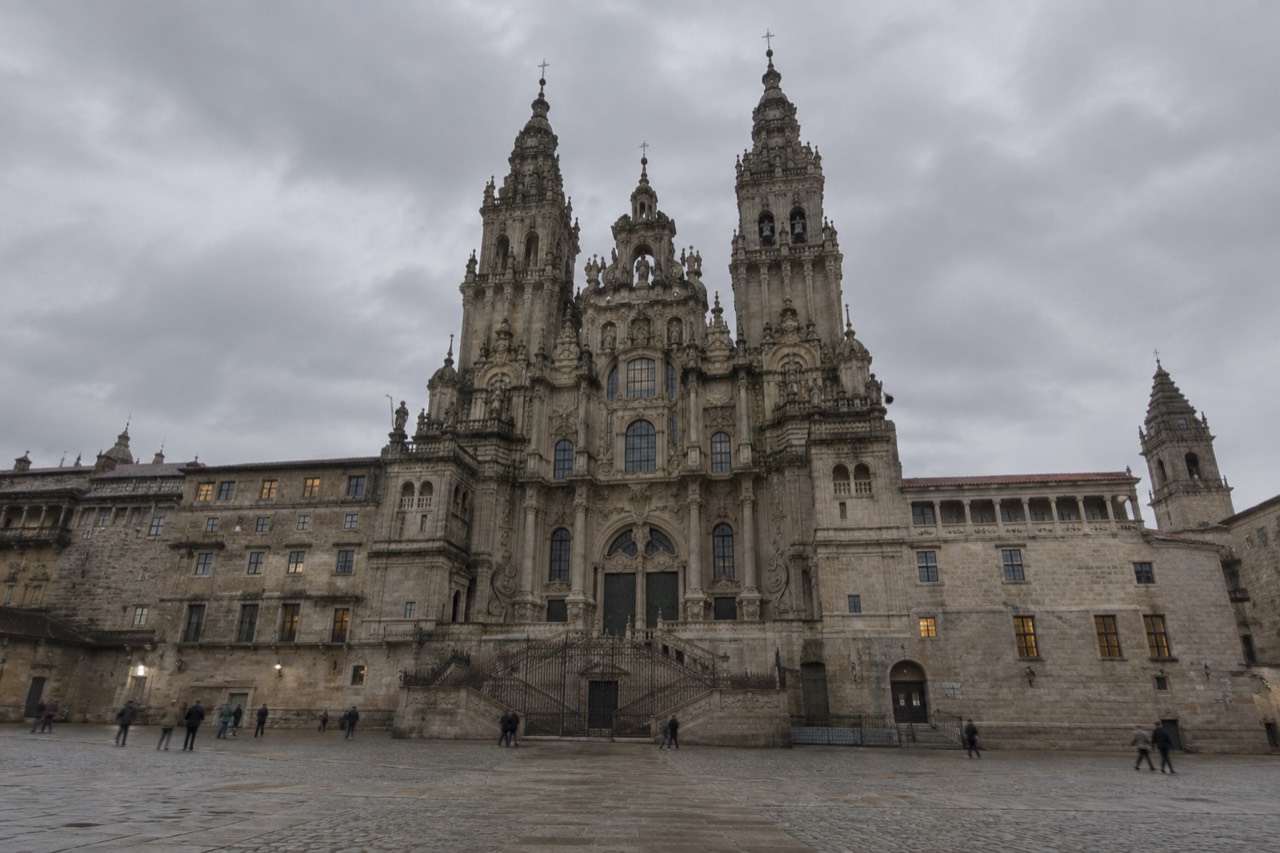
Santiago de Compostela is a small city in Galicia, in northwest Spain, built around a cathedral that has drawn pilgrims for over a thousand years, and the honest answer to whether it is worth visiting is yes, with one asterisk worth knowing before booking. The Old Town has been UNESCO-listed since 1985, the Cathedral itself is free to enter, and the Pilgrim's Office recorded 530,987 Compostela certificates issued in 2025, a record year. The asterisk: some visitors arrive expecting every famous element to be running at full capacity, and in late 2026 a few things are not, which this page covers honestly.
Is Santiago de Compostela Worth Visiting?
Yes, for most travellers it is genuinely worth visiting: the Old Town is a UNESCO World Heritage Site, the Cathedral is free to enter and open roughly 7:00am to 9:00pm daily, a guided old-town walk starts at around $12 per person, and a full day on the Atlantic coast costs from about $53. It is compact, walkable and dense with real history, and it delivers more per hour than almost any city of its size in Spain.
The case for the city rests on concentration, not scale. Everything that matters sits within a fifteen-minute walk of Praza do Obradoiro: the Cathedral, the Hostal dos Reis Catolicos Parador, San Martino Pinario, the Alameda park viewpoints and the Rua do Franco tapas strip. A visitor can see the Apostle's tomb, a Romanesque portico, a rooftop view from about 72 metres up and a working market hall in a single day without transport of any kind.
That concentration is also why the answer is not an unconditional yes. Santiago rewards people who like stone, history, food and walking, and it underdelivers for people whose ideal trip is beaches, nightlife or warm weather. AEMET's climate data for the Santiago de Compostela station shows a temperate oceanic climate, wet year-round and wetter from October to March, with July and August the driest months. Anyone visiting between autumn and spring should pack for rain, a point covered in detail on does it rain a lot in Santiago de Compostela.
One more thing the crowds do not mention: the Old Town inscription of 1985 is not the city's only UNESCO listing. The Routes of Santiago de Compostela, the Camino Frances and the Northern Routes, were inscribed separately in 1993. Santiago is one of the rare cities that appears twice on the UNESCO list, once for itself and once for the network of paths that leads to it.
What Makes The Old Town Worth The Trip?
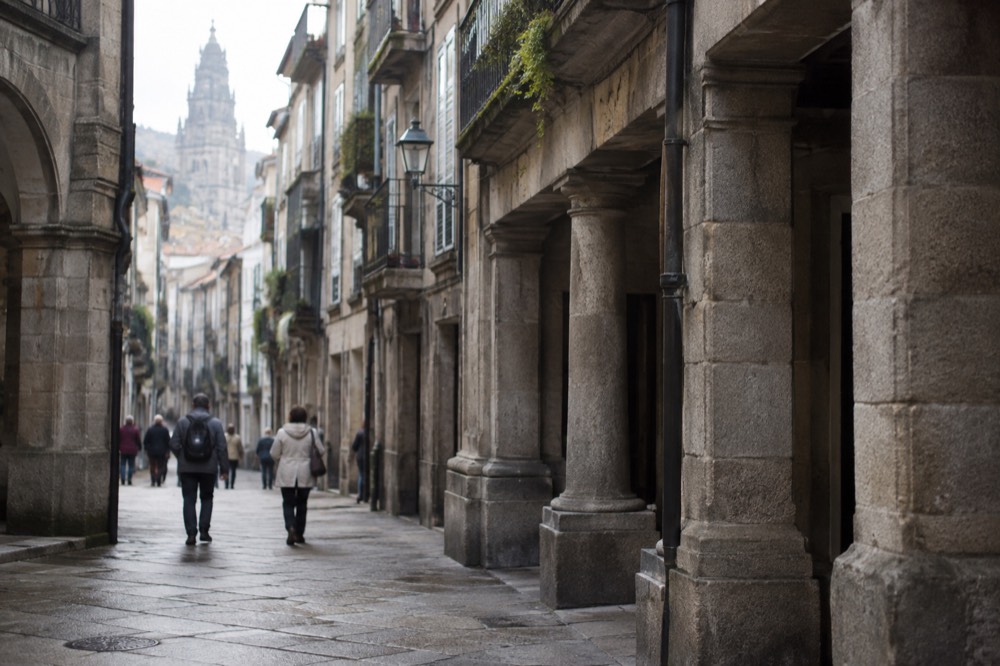
The Old Town earns its reputation through density and preservation: granite arcades, four squares around the Cathedral, the Portico da Gloria inside, and the Museo das Peregrinacions telling the pilgrimage story, all inside a UNESCO-listed core that closes to traffic and keeps its medieval street plan. No other city in Galicia gives you a thousand years of architecture in a walkable loop.
Start at Praza do Obradoiro, the main square, where the Cathedral's baroque facade faces the Parador and the town hall. Behind the Cathedral, Praza da Quintana holds the Holy Door, which stays closed until 31 December 2026, when it opens for the 2027 Holy Year. That date matters: 2027 is the next Xacobeo because 25 July 2027 falls on a Sunday, and the city expects a surge of visitors through the whole of 2027. Anyone who wants the city at its calmest should go before that door opens; anyone who wants the spectacle should go during it.
The interior is the part photographs undersell. General entry to the Cathedral is free, with the interior open roughly 7:00am to 9:00pm. The Portico da Gloria, the carved portal by Master Mateo, survived its major restoration completed in 2018 and is viewed on a time-limited, ticketed basis for conservation reasons. The Cathedral's own ticketing sells the rooftop and tower visit, a guided hour with about 140 steps up to roughly 72 metres, at EUR15 general and EUR12 reduced, and that ticket also includes access to the museum's permanent collection for seven days.
The city's granular sight-by-sight detail is covered in the Cathedral guide and in what Santiago de Compostela is famous for, but the short version is this: the Old Town is not a theme-park reconstruction. It is a working Galician city where a university, a market and a live pilgrimage tradition operate inside medieval granite.
For travellers on a strict budget, GuruWalk runs a free, tip-based Essential tour with an individual radio guide, rated 4.96 from 1,099 reviews; it is free to book and the guide is paid by tip.
What Does A Visit To Santiago de Compostela Actually Cost?
A mid-range day in Santiago de Compostela costs far less than most visitors assume: cathedral entry is free, the rooftop and tower tour is EUR15 general or EUR12 reduced, the Cathedral Museum runs EUR9-23 depending on ticket type, and the airport bus into the centre currently costs about 1 EUR paid to the driver, with a higher fare under a new contract expected in late 2026. Santiago de Compostela has charged a municipal tourist tax since 1 October 2025, from 1 EUR per person per night (max 5 nights) in private albergues, campsites and tourist apartments up to 2.50 EUR in five-star hotels, with under-18s and stays in Xunta-run public albergues exempt.
The verified figures for the core items stack up like this:
| Item | Verified figure | Notes |
|---|---|---|
| Cathedral interior | Free entry | Open roughly 7:00am-9:00pm, free via the Praterias door |
| Rooftop + Torre de la Carraca tour | EUR15 general, EUR12 reduced | Guided, about 60 minutes, includes museum access for 7 days |
| Cathedral Museum | EUR9-23 depending on ticket type | Includes Portico options on some tickets |
| Airport bus (line 6A) | 1 EUR to the driver, 0.36 EUR on card | Monbus contract with a fare near 6 EUR expected autumn 2026, subject to change |
| Old town guided walk | From $12 per person | Official guide, rated 4.8 from 338 reviews |
| Tourist tax | Yes, since 1 October 2025: per person per night, max 5 nights, from 1 EUR (private albergues, campsites, tourist apartments) to 2.50 EUR (five-star hotels); under-18s and Xunta-run public albergue stays exempt | Live policy area across Spain, re-check before booking |
Accommodation and food swing the total. The city runs from hostels through to the Parador, and the honest price bands for beds and meals are laid out in is Santiago de Compostela expensive. Tapas bars along Rua do Franco and the market-side streets keep evening food costs low, and the Queimada show and tasting, a Galician flaming-liquor ritual with storytelling, runs from $17 per person if a group wants one organized evening.
For the cathedral itself, the skip-line Cathedral and Museum tour is the related pick on this page: from $26 per person and rated 4.8 from 2,425 reviews, it bundles the museum with a guided visit of the basilica, which matters because timed Portico slots and museum ticketing are the two things that most often sell out in peak weeks. The full index of guides sits on Santiago de Compostela Travel Guide.
Which Day Trips From Santiago de Compostela Are Worth Booking?
The day trips are arguably the strongest reason to base yourself in Santiago de Compostela rather than just visit it: full-day Finisterre and Costa da Morte tours run from $59-60 per person, Rias Baixas winery and mussel-boat trips from $53-54, Ribeira Sacra canyon cruises from $64-68, and the As Catedrais beach and Lugo excursions from $68-75, all departing the city and covering Atlantic Galicia in one day.
The verified options, with prices and review counts from the operators' live listings:
| Day trip | From (per person) | Rating | Format |
|---|---|---|---|
| Finisterre, Muxia & Costa da Morte | $59 | 4.7 from 2,312 reviews | Full day |
| Finisterre + Muxia, 7 stops | $60 | 4.8 from 1,714 reviews | Full day |
| Rias Baixas with winery and boat | $53 | 4.7 from 482 reviews | Full day |
| Ribeira Sacra cruise and Ourense | $68 | 4.6 from 166 reviews | Full day |
| As Catedrais beach, Lugo, Asturias | $68 | 4.9 from 181 reviews | Full day |
| Fisterra-Muxia express | $45 | 4.4 from 50 reviews | Half day |
These routes cover the Atlantic coast Galicia is famous for: Fisterra's lighthouse at what the Romans treated as the end of the known world, the Costa da Morte shipwreck coast, the mussel rafts of the Rias Baixas and the Albarino wine country around Cambados. The trade-offs between them are compared properly in the best day trip from Santiago de Compostela.
Travellers with their own car can do the coast independently, but parking on the Costa da Morte and the Rias Baixas is limited in summer and the winery and mussel-boat components need advance booking either way. The organized tours solve both problems and, at $45-75, sit at a level where a party of two often pays less than a hire car day plus fuel plus separate tastings.
When Is The Best Time To Visit Santiago de Compostela?
The best time to visit Santiago de Compostela is between late spring and early autumn if dry weather matters most, because AEMET's data shows July and August as the driest months in an otherwise wet oceanic climate, while October to March is wetter and cooler. The 2027 Holy Year changes the calculation: the Holy Door opens on 31 December 2026 and the city will be busiest through all of 2027, so visit in late 2026 for calm or in 2027 for the spectacle.
The summer trade-off is crowds and room rates. July, especially the days around the Feast of St James on 25 July, brings the national offering to the Apostle, concerts and fireworks, but also the year's highest demand for beds. The shoulder months give the same city with fewer people on the granite.
None of that closes the Cathedral to visitors. The naves, the Apostle's tomb and the museum remain open with normal hours, and the rooftop tour continues to run. It simply means a late-2026 visitor should not plan an itinerary around seeing the Botafumeiro swing, and anyone attending a specific mass time should check which building it is held in after 16 October.
Common Questions About Visiting Santiago de Compostela
Is Santiago de Compostela worth visiting?
Yes. The UNESCO-listed Old Town, free cathedral entry, sub-$20 guided walks and a strong day-trip menu into Atlantic Galicia make it one of the highest-value small cities in Spain, provided you pack for oceanic weather and accept that the Botafumeiro is currently suspended.
Is Santiago de Compostela expensive?
Core sightseeing is cheap: cathedral entry is free, the rooftop tour is EUR15 and a guided walk starts around $12. Beds and meals span a wide range, and a municipal tourist tax has applied since 1 October 2025 (from 1 EUR to 2.50 EUR per person per night, up to 5 nights).
How many days should I spend in Santiago de Compostela?
Two days covers the Old Town, Cathedral, museum and rooftop with time for tapas; add a third for one full-day trip to the coast or the Rias Baixas.
Is Santiago de Compostela safe?
It is a small, walkable university city whose main visitor risks are rain and pickpocket-level opportunistic theft, not violent crime; the standard city precautions apply.
Does the Botafumeiro swing every day?
No. It normally flies only on 12 fixed liturgical solemnities a year, or by private request, and as of September 2026 it is suspended entirely because dome-restoration scaffolding covers its hanging mechanism, with no return date published.
Can you see the Cathedral without paying?
Yes. General entry to the Cathedral interior is free and it is open roughly 7:00am to 9:00pm daily. Only the museum, rooftop tour and Portico visits are ticketed.
The verdict stands. For pilgrims finishing the Camino, the arrival is the point of the whole journey; for everyone else, Santiago de Compostela is a two- or three-day base with a free-entry cathedral, a twice-UNESCO-listed old town and an Atlantic coast within a day's return, at prices that undercut most of Spain's better-known destinations.