San Martiño Pinario In Santiago de Compostela: The Monastery Facing The Cathedral
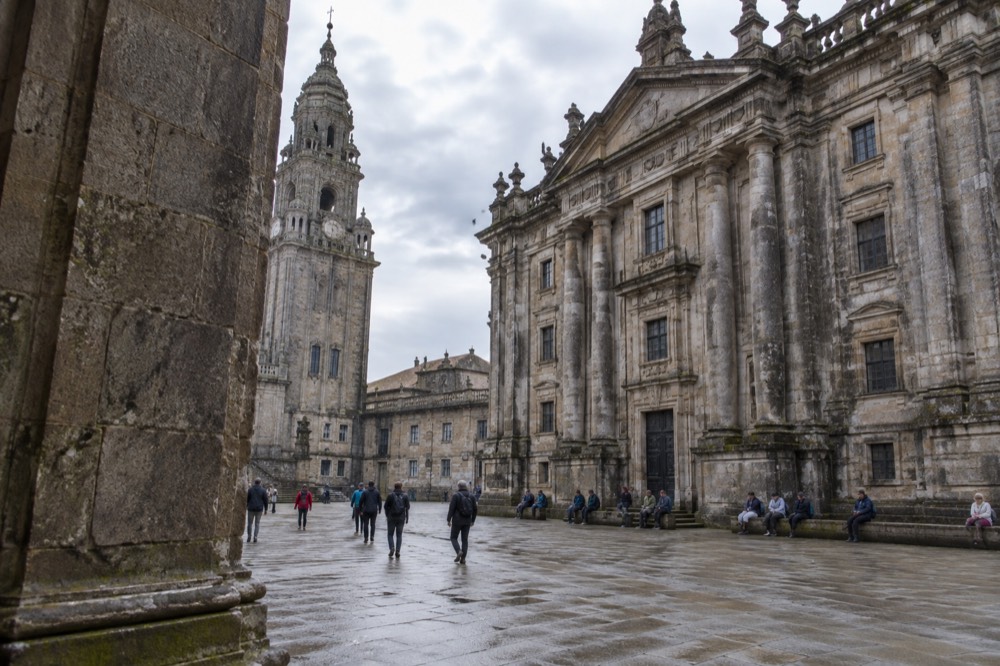
San Martiño Pinario in Santiago de Compostela is the vast former Benedictine monastery that closes the north side of Praza da Inmaculada, the square the Cathedral faces across, and it remains one of the largest religious complexes in Galicia.
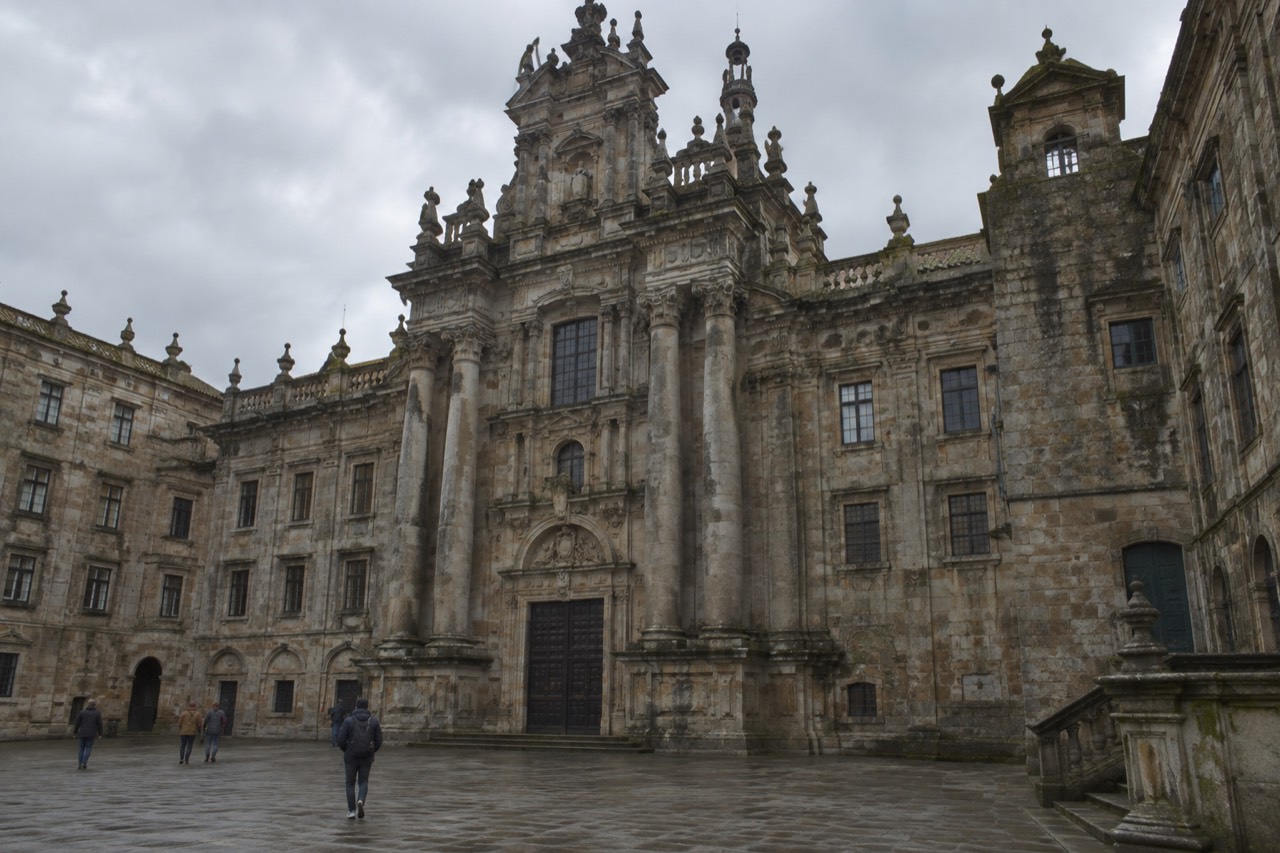
Short answer
San Martiño Pinario in Santiago de Compostela is the former Benedictine monastery standing directly opposite the Cathedral's north front. Built during the great Baroque rebuilding of the Counter-Reformation era, it now houses a seminary, a pilgrim hostel and museum spaces, and its church, sacristy and cloisters are the grandest monastic interiors in the old town after the Cathedral itself.
San Martiño Pinario in Santiago de Compostela is the immense former Benedictine monastery that stands directly opposite the Cathedral's north front, closing Praza da Inmaculada with a façade almost as wide as the square itself. Most walkers arriving in the city head straight for the Cathedral's Obradoiro front and never quite register that the second great building of the old town is staring back at them from across the way. That is a mistake worth correcting. The complex, known in Spanish as San Martín Pinario and in Galician as Mosteiro de San Martiño Pinario, holds one of the grandest church interiors in Galicia, a famous sacristy, and layer upon layer of the city's monastic and pilgrim history, all inside the UNESCO-inscribed old town. This guide from Santiago de Compostela Travel Guide covers what the monastery is, what you can see inside, how to plan a visit honestly, and how it fits with the Cathedral, the Camino and the rest of a stay in the city.
What Is San Martiño Pinario In Santiago de Compostela?
San Martiño Pinario is the great Benedictine monastery of Santiago de Compostela, the largest religious building in the city after the Cathedral itself, occupying the entire north side of Praza da Inmaculada opposite the Cathedral's north front. It was rebuilt in its present monumental form during the great Baroque reconstruction of the Counter-Reformation era, over the site of an older monastic community, and today it combines a working seminary, church, museum spaces and pilgrim accommodation under one roofline.
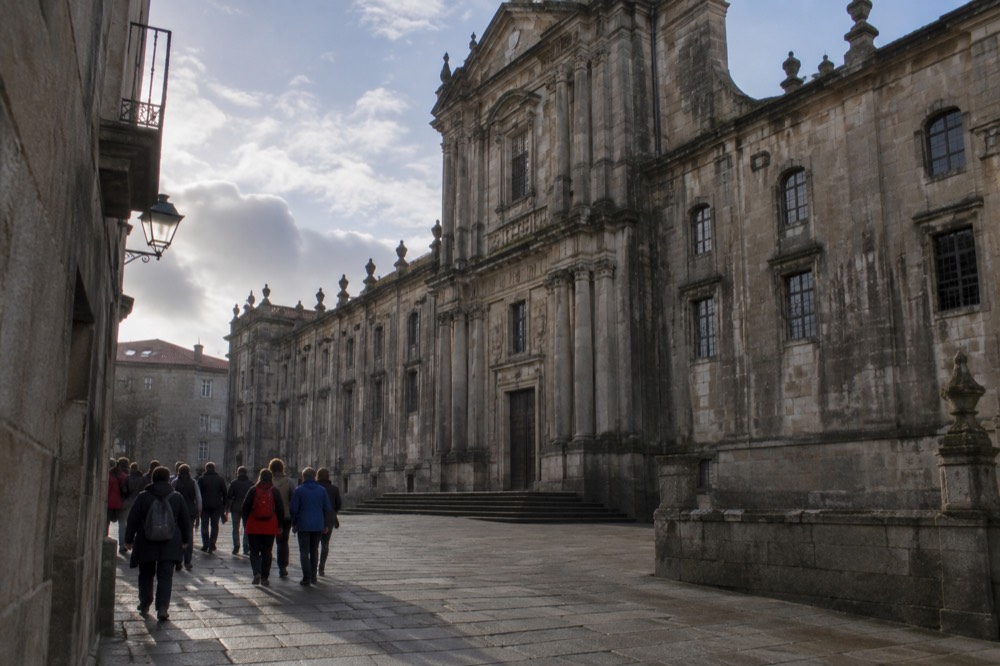
The first thing to understand is scale. The block the monastery occupies is so large that its church, while enormous, is only one component of a complex that stretches back from the square through cloisters, courtyards and dependencies. Travellers who assume they have "done" the building after stepping into the church have seen only its front room. The Benedictine community that built it was, for centuries, one of the wealthiest institutions in Galicia, and the architecture carries that confidence: heavy Baroque stonework, twin towers framing the façade, and an interior organised to impress rather than to soothe.
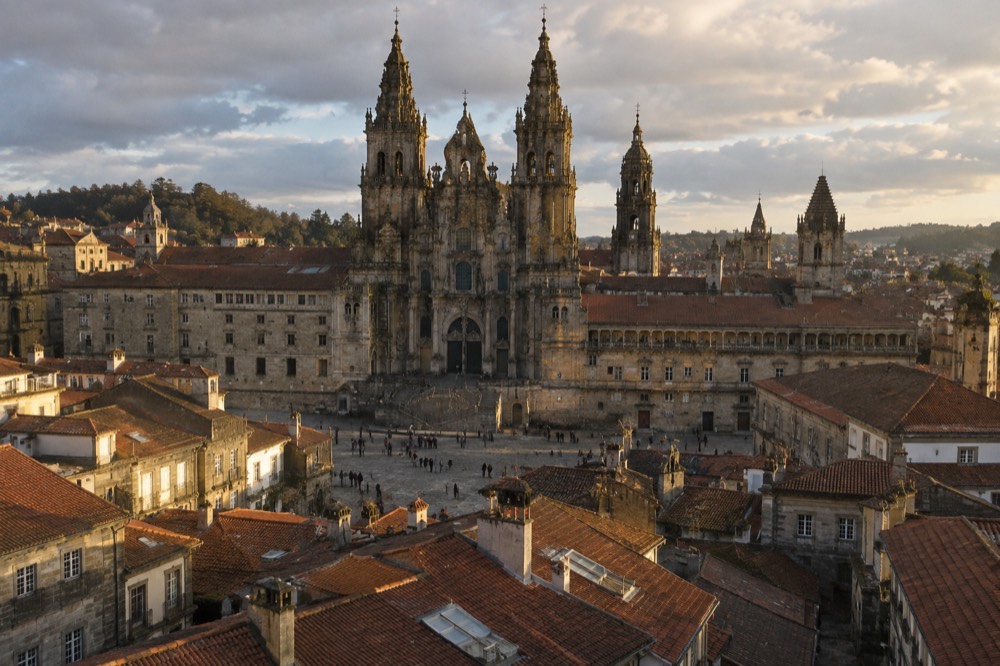
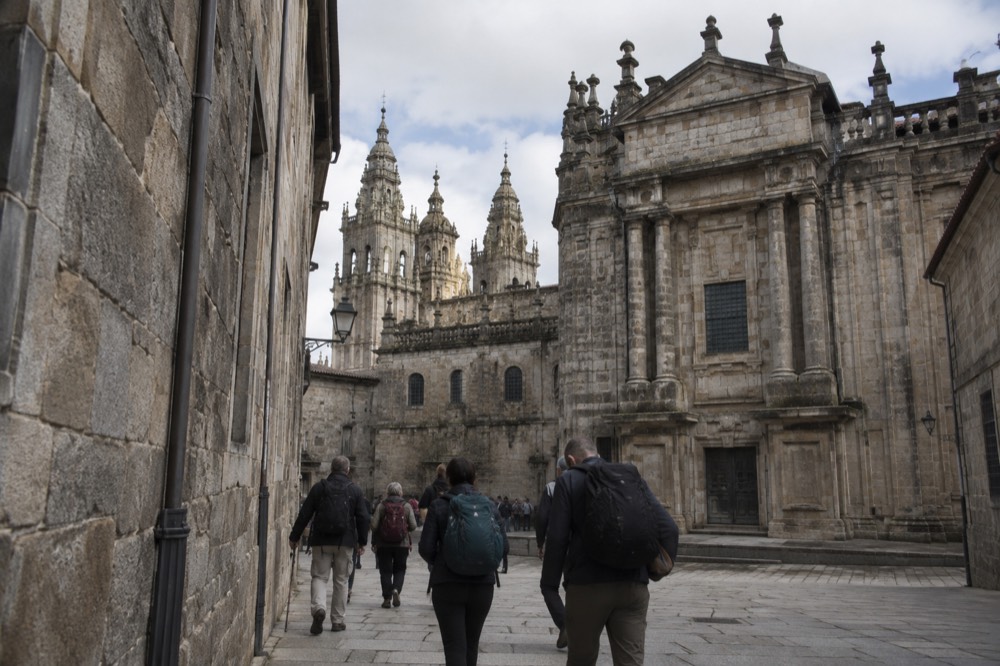
The second thing is position. Santiago de Compostela's old town was inscribed on the UNESCO World Heritage list in 1985, and the monastery sits inside that protected core, a short walk up from Praza do Obradoiro by way of the streets flanking the Cathedral. Stand in the middle of Praza da Inmaculada and you have, on one side, the Cathedral's austere granite north front and, on the other, the monastery's long classical-Baroque façade. The pairing is one of the most complete expressions of Counter-Reformation Santiago: the pilgrimage basilica and the monastic power that served it, literally facing each other.
Third, the building is not a museum piece. It has been a seminary, which remains its core institutional function, and it has also served pilgrims over the years with accommodation. That living use shapes what a visitor can and cannot see, which is why the planning sections below are deliberately cautious about hours and access rather than promising a fixed timetable.
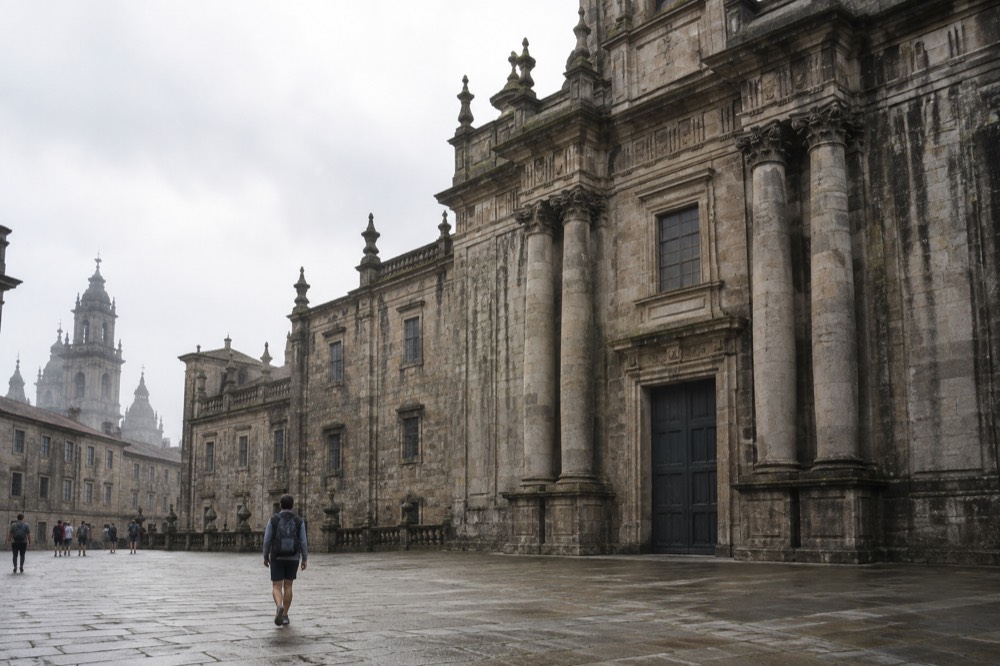
Here is the monastery at a glance, with the details a first visit actually turns on:
| Detail | What To Know |
|---|---|
| Name in Galician | Mosteiro de San Martiño Pinario |
| Name in Spanish | San Martín Pinario |
| Type | Former Benedictine monastic complex, church and seminary |
| Position | North side of Praza da Inmaculada, facing the Cathedral's north front |
| UNESCO context | Inside the Old Town of Santiago de Compostela, inscribed 1985 |
| Current use | Seminary, church, museum spaces and pilgrim accommodation |
| Hours and tickets | Check the venue's own site before visiting; the seminary itself is not open to tourists |
Why Does San Martiño Pinario Look The Way It Does?
The monastery's present form is overwhelmingly Baroque because the current church and its cloistered core were rebuilt during the Counter-Reformation era, when Benedictine Santiago de Compostela had the money and the motive to build on a monumental scale. The façade's twin-towered, altarpiece-like design, the severe granite and the theatrical interior are all products of that rebuilding, layered over the footprint of a much earlier medieval community.
The story of the building is a story of money meeting architecture. A monastic community existed on or near this site from the early medieval period, tied to the growth of the pilgrimage to the tomb of St. James, but what a visitor sees today belongs overwhelmingly to the great rebuilding of the Counter-Reformation centuries. The Benedictines, the oldest monastic order in western Europe and historically the most powerful in this city, rebuilt in the confident, heavy, ornament-forward Baroque that Galicia does so distinctively: granite rather than marble, and restraint punctuated by bursts of gilded relief.
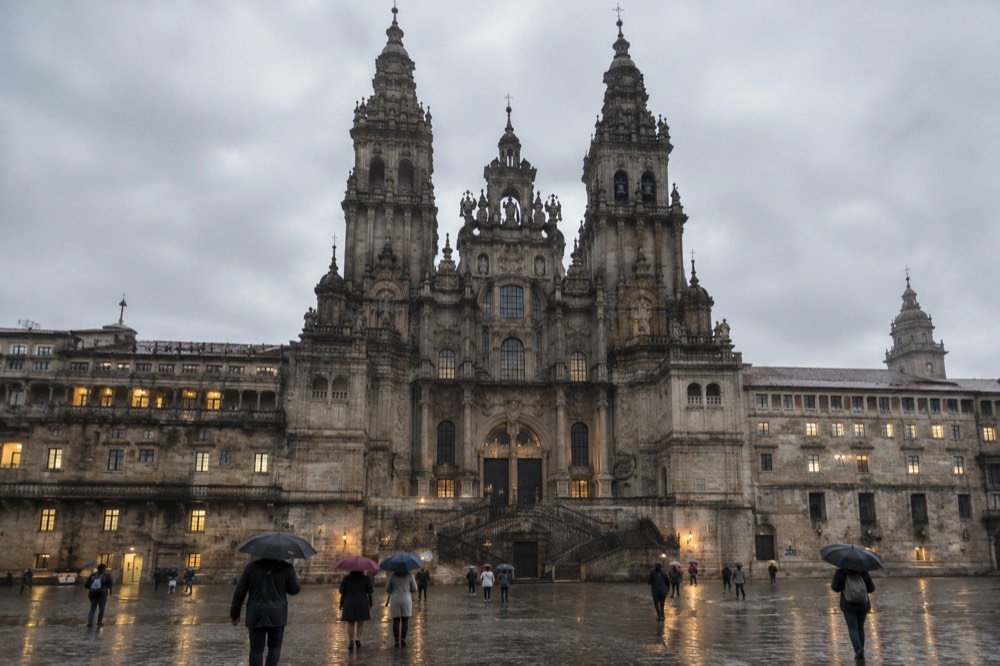
Walk up to the façade and read it the way its builders intended, as a stone altarpiece. The composition stacks tiers of sculpture and architectural framing around the entrance, framed between the two towers, so that the eye is funnelled upward before you ever step inside. This is the same visual language as the Cathedral's Obradoiro façade across the block, which was rebuilt in the same broad era, and the two façades are in conversation with each other: monastic Santiago announcing itself to pilgrims as they rounded the Cathedral's flank.
The interior answers the exterior's promise. The church is laid out with the soaring scale of a pilgrimage-era basilica rather than the intimacy of a neighbourhood parish, and its walls carry the gilded retablos, canvases and stone carving of the Baroque workshops that decorated half of Galicia's churches in these centuries. The most celebrated single space inside the complex is the sacristy, a room visitors frequently describe as one of the finest in Galicia, built as a barrel-vaulted hall with portrait canvases of Benedictine notables along its walls and an entrance stair designed to make an impression before the room even opens up. Whether it outranks other sacristies in the region is a matter of taste; that it was built to rank with them is not in question.
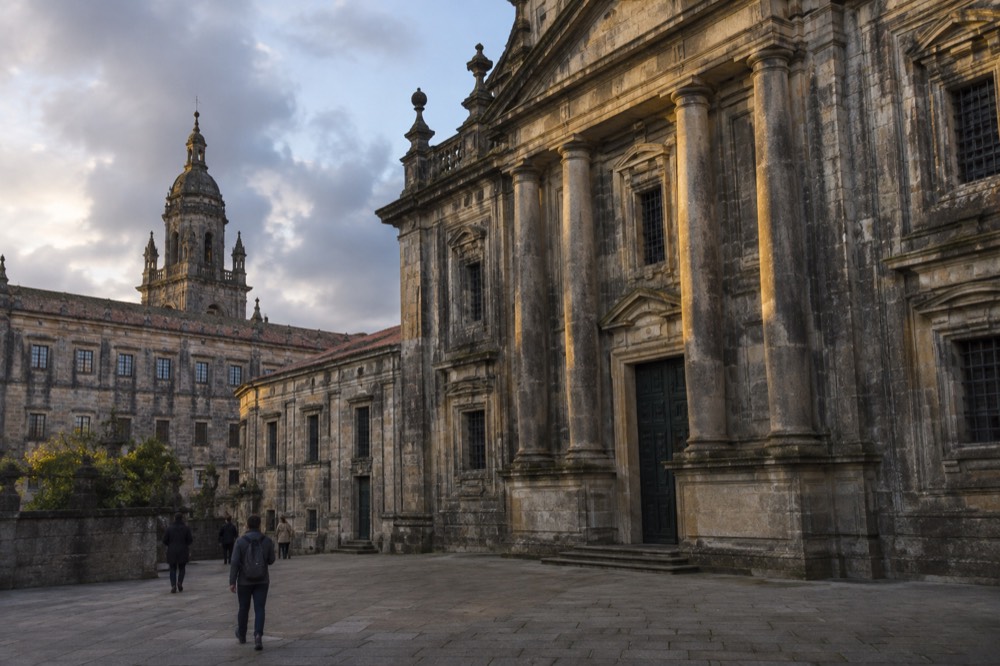
The monastery's footprint also explains its exterior face toward the rest of the city. Because the complex rambles far back from Praza da Inmaculada, fragments of it surface elsewhere in the streetscape, including stretches of wall and dependencies that belong to the same institutional story. Old Santiago de Compostela is small enough that the monastery is never really out of sight: it is one of the handful of great institutional blocks, alongside the Cathedral and its dependencies and the old hospital now known as Hostal dos Reis Católicos, that together define the monumental core. For more on that hospital-turned-parador, see our guide to Hostal dos Reis Católicos, the parador of Santiago de Compostela.
What Can You See Inside San Martiño Pinario Today?
The church with its gilded retables and vast nave, the famous sacristy with its portrait-lined walls, and the cloister spaces at the heart of the complex are the three things a visit to San Martiño Pinario turns on, together with museum displays that cover monastic and religious life in Galicia. The seminary remains a working institution, so parts of the building are simply not public, and the set of rooms open to visitors should be confirmed on the venue's own site before a visit.
Start with the church, because it is the space most reliably open and the one most visitors remember. The nave is organised around a monumental high altar complex whose retablo work is characteristic of Galician Baroque at full strength: layered, gilded, dense with figures, and built to be read by a congregation in movement. Painting and sculpture share the walls, and the whole interior is scaled for processions and ceremony rather than quiet contemplation. Photography is generally welcome in the church, but it is an active place of worship, and dress and behaviour expectations are the same as at the Cathedral: shoulders covered, voices low, and no flash during services.
The sacristy is the complex's showpiece room. Sacristies in great Spanish monasteries were never mere storage; they were audience halls where the community received dignitaries, and San Martiño Pinario's is a deliberately grand statement, with its vault, its furnishings and its row of portraits of Benedictine figures. Visitors who spend twenty minutes here often rank it above several of the city's museums as a single room. The third element is the cloister core. Monastic architecture is organised around the cloister, the enclosed courtyard that structured the community's day, and surviving elements of it give the best sense of how the building actually worked as a machine for monastic living, studying and praying.
Museum spaces within the complex add a thematic layer, covering religious art and the history of the church in Galicia. Their exact scope, current displays and opening arrangements are things to verify rather than assume: as with the Museo do Pobo Galego and the Museo das Peregrinacions elsewhere in the city, this research desk does not publish unverified hours or free-day policies, and neither should a planning article. For pilgrim-history displays elsewhere in the city, see the Museo das Peregrinacions guide, and for the Galician ethnographic collection, the Museo do Pobo Galego page.
| Space | What It Is | Why It Matters |
|---|---|---|
| Monastery church | Vast Baroque basilica with gilded retables | The grandest church interior in the old town after the Cathedral |
| Sacristy | Vaulted hall with portraits and period furnishings | Widely considered one of the finest sacristy interiors in Galicia |
| Cloister core | Enclosed courtyard and surrounding monastic ranges | Shows how the Benedictine community actually lived day to day |
| Museum displays | Religious art and church-history exhibits | Adds context on monastic and religious life in Galicia |
| Seminary | Working institution within the complex | Not open to visitors; explains why parts of the building are closed |
A practical note on pairing: the monastery and the Cathedral share one square, so the natural visit is both in one morning, and that is exactly the kind of morning a guided Cathedral tour is built for. If you want a guide to carry the Cathedral's story, the cathedral-and-museum options below are the strongest fits, with live prices and current reviews on each operator's own listing.
How Do You Plan A Visit To San Martiño Pinario: Access, Timing And Etiquette?
Plan San Martiño Pinario as a stop of roughly forty-five to sixty minutes inside a half-day circuit of the monumental core, reached on foot from anywhere in the old town, with hours and ticketing checked on the venue's own site beforehand because the seminary's working schedule shapes public access. The church is a place of worship rather than a ticketed attraction, and the surrounding complex, seminary and museum spaces follow their own arrangements, so there is no single fixed timetable this guide can honestly print.
Getting there is trivial. The monastery faces the Cathedral across Praza da Inmaculada, a few dozen metres from Praza do Obradoiro and the Pórtico da Gloria inside the Cathedral's west front. Every visitor to the old town walks past it whether they intend to or not. There is nothing to plan in the way of transport; the only planning decision is ordering. The most efficient sequence is to book a timed Cathedral entry first, because the Cathedral's ticketed options, the museum and the rooftop tour, run on timed slots, and then slot the monastery in before or after, since it does not require coordinating with a timed entry in the same way.
Timing within the day matters mostly for light and crowds. The square between the two buildings is busiest in late morning and again in the evening, when the day's pilgrims arrive and the tour groups cycle through. Early morning belongs to worshippers, seminarians and a handful of photographers. If the goal is the church interior photographed without a crowd, the first hours after it opens are the honest recommendation, with the caveat that the opening hour itself should be taken from the venue's own site rather than from a third-party summary, this desk's standing rule for every museum and religious site in the city.
Etiquette follows the city's norms. It is an active religious institution attached to a seminary, not a heritage stage set. Services, if encountered, take priority over sightseeing, and the visitor steps back, not forward. Dress codes in the city's churches are the practical ones: covered shoulders, no hats inside, low voices. Our page on Cathedral expectations covers the same ground for the basilica across the square.
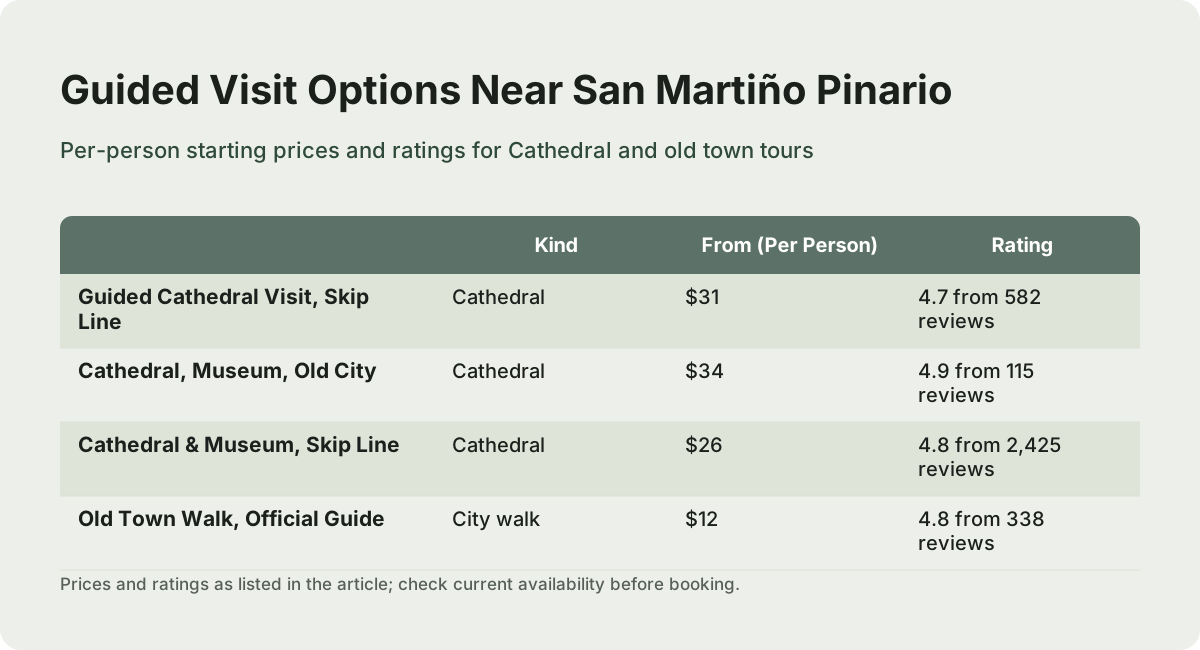
The pairing question is where a guided visit earns its place. The Cathedral's own ticketed offering covers the museum, permanent collection in the Gelmírez Palace, and the Cubiertas rooftop tour at 15 EUR general and 12 EUR reduced, 60 minutes and about 140 steps, bookable on the Cathedral's own ticketing site with timed slots. Third-party guided options add a guide and skip-the-line handling. Here is how the main options line up, with each price and rating taken from the operator's live listing:
| Guided Option | Kind | From (Per Person) | Rating |
|---|---|---|---|
| Guided Cathedral Visit, Skip Line | Cathedral | $31 | 4.7 from 582 reviews |
| Cathedral, Museum, Old City | Cathedral | $34 | 4.9 from 115 reviews |
| Cathedral & Museum, Skip Line | Cathedral | $26 | 4.8 from 2,425 reviews |
| Old Town Walk, Official Guide | City walk | $12 | 4.8 from 338 reviews |
If the monastery and Cathedral pair well on a single ticket budget, so does a photographic record of them. The square between the two façades is one of the city's great compositions, and a professional shoot there is a small but real category of service in Santiago de Compostela; the All Roads photo shoot option below is from $52 per person on the operator's live listing.
What Role Does San Martiño Pinario Play In The Camino Story?
The monastery belongs to the infrastructure that made Santiago de Compostela a working pilgrimage capital rather than a mere destination: the Benedictine community that occupied it for centuries was part of the network of religious institutions that served, housed and managed the medieval pilgrim flow, the same flow that earned the Camino routes their own separate UNESCO inscription in 1993. A pilgrim arriving today stands in a square shaped by that partnership, between the tomb's basilica and one of its great monastic neighbours.
It helps to separate the two UNESCO listings, because they are routinely confused. The Old Town of Santiago de Compostela was inscribed in 1985. The Routes of Santiago de Compostela: Camino Francés and the Routes of Northern Spain were inscribed in 1993 as a distinct listing, covering the paths, not the city. The monastery is part of the first listing's protected core; the roads that fed pilgrims to the city, and to institutions like this one, are the second. Both facts matter to how the building is understood, and neither date should be merged into the other.
In the pilgrim economy of the medieval and early modern city, the great monastic houses were not spectators. They owned property, ran hospitals and hostels, and channelled the money and labour that kept the pilgrimage machine turning. The Benedictines of San Martiño Pinario were among the most significant of those institutions, and the scale of their rebuilt complex in the Counter-Reformation era is itself evidence of how profitable that world was. The pilgrim hostel function that continues in the complex today is a modern expression of a very old habit: this block has been absorbing weary walkers for a very long time.
The Camino context also explains why the city keeps changing around the monastery. The Pilgrim's Office at Rua das Carretas 33 issued a record 530,987 Compostela certificates in 2025, each one certifying at least the last 100km walked or the last 200km cycled, with two stamps per day collected in a credencial. The certificate is issued in person only. Those walkers all end their journeys within a few streets of the monastery, and the scale of that flow is why the city's facilities, from masses to museums to hostel beds, are in constant adjustment. For the certificate rules in full, see our Compostela certificate guide, and for the walking time behind that final stretch, our answer on how long it takes to walk the Camino de Santiago.
What Should You Know About Masses And The Botafumeiro When You Visit?
Pilgrim masses in Santiago de Compostela are held at 7:30am, 9:30am, noon and 7:30pm, but from 16 October 2026 the 9:30am, noon and 7:30pm masses relocate from the Cathedral's High Altar to the nearby Church of San Agustín, with only the 7:30am mass remaining in the Cathedral's own Communion chapel, and the Botafumeiro is currently out of action because dome-restoration scaffolding covers its hanging mechanism.
These two facts reshape any visit plan built around the Cathedral, and by extension the monastery square, so they are worth having straight before arrival. The Cathedral's own liturgy page states the mass schedule plainly. Until 15 October 2026 the four daily masses are at the main altar; from 16 October 2026 the three later services move to San Agustín while the early mass stays put. The relocation stems from main chapel works preparing for the 2027 Holy Year. Any page that prints a single unqualified mass schedule for this period is wrong, and any page that promises a Botafumeiro flight on a given date is wronger still.
The Botafumeiro situation deserves its own sentence, because it is the single most over-promised experience in the city. The giant censer normally swings on twelve fixed solemnities a year, including the Feast of St. James on 25 July, and outside those dates only by private request at an indicative cost of around 450 to 500 EUR. As of 5 September 2026, confirmed in writing by the Cathedral, it is suspended: scaffolding for the cimborrio restoration covers the mechanism, and no return date has been published. The Botafumeiro's full story and normal annual schedule are in our Botafumeiro guide, and the mass schedule in detail is in our pilgrim mass guide. The honest framing for a visitor is simple: plan for the churches, the music and the buildings, and treat a Botafumeiro flight as a bonus that is currently unavailable.
The 2027 Holy Year is the other moving piece. The Holy Door opens on 31 December 2026 and the Xacobeo year runs through 31 December 2027, because 25 July 2027 falls on a Sunday. The main chapel works now reshaping the mass schedule are part of the preparation for that year, which will bring pilgrim numbers on a different scale to the streets around the monastery. Whether a visit lands in the quiet run-up or inside the Holy Year itself, the practical advice is identical: book anything with a timed slot early, and confirm everything on the official pages. Our Holy Year 2027 guide covers the calendar in full.
What Is Near San Martiño Pinario?
Everything worth seeing in the monumental core of Santiago de Compostela is within a few minutes' walk of San Martiño Pinario, because the monastery sits one square north of the Cathedral, with Praza do Obradoiro, the Hostal dos Reis Católicos, San Martiño's own dependencies and the old town's granite lanes all radiating from the same couple of blocks, so the monastery is best treated as a hub rather than a detour.
Walk south through the gap between the Cathedral's north front and the monastery's façade and you emerge onto Praza do Obradoiro, the great ceremonial square that most visitors think of as the city's front door. The full circuit of that square is covered in our Praza do Obradoiro guide. The Cathedral itself needs a page of its own, and has one, in our Cathedral of Santiago de Compostela guide; its ticketed museum offering is covered separately in the Cathedral Museum guide and the rooftop circuit in the Cathedral rooftops tour page.
For the other monumental neighbours, a short walk east from the monastery square leads toward the Convento de San Francisco quarter and the Alameda park, whose view over the old town from its tree-lined promenade is the classic postcard perspective on the Cathedral's towers. To the south lies the Cathedral's Holy Door on the Quintana side, covered in our Praza da Quintana and Holy Door guide. For eating after a morning in the monumental core, the traditional tapas spine of Rua do Franco is a few minutes downhill, mapped in our Rua do Franco guide, with the full city rundown in where to eat in Santiago de Compostela.
Here is how the immediate neighbourhood stacks up for a visitor plotting a route out from the monastery's front step:
| Nearby Site | Direction From The Monastery | What It Offers |
|---|---|---|
| Cathedral of Santiago de Compostela | Directly opposite, across Praza da Inmaculada | The tomb of St. James, Pórtico da Gloria, free interior entry |
| Cathedral Museum and Gelmírez Palace | Cathedral block, south side | Permanent collection, ticketed, EUR9-23 depending on ticket type |
| Cubiertas rooftop tour | Cathedral block | Guided 60-minute visit, EUR15 general, EUR12 reduced, about 140 steps |
| Praza do Obradoiro | Two minutes south | The great ceremonial square of the city |
| Hostal dos Reis Católicos | West side of Praza do Obradoiro | The former royal hospital, now a parador |
| Alameda park | Five to ten minutes southwest | The classic viewpoint over the old town |
Which Guided Tours Pair Well With San Martiño Pinario?
A Cathedral-focused guided tour, a general old-town walking tour, or a private option all pair naturally with a San Martiño Pinario visit, because the monastery sits inside the standard walking radius of every city tour in Santiago de Compostela; the choice comes down to depth on the basilica versus breadth across the old town, with the strongest-rated options spanning roughly $12 to $47 per person on the operators' live listings.
The cathedral-and-museum category is the obvious first pick for a monastery-first morning. The Guided Cathedral Visit, Skip Line option, from $31 per person and rated 4.7 from 582 reviews, moves through the basilica with a guide and handles the queue; the Cathedral, Museum, Old City option, from $34 and rated 4.9 from 115 reviews, adds the museum and the streets around; and the Cathedral & Museum, Skip Line tour, from $26 and rated 4.8 from 2,425 reviews, is the most-reviewed of the category. None of these enters the monastery itself, but all of them pass the square it faces, and a guide's commentary on the Counter-Reformation rebuilding of the city will place the monastery in its context even from the pavement.
For breadth, the walking-tour category covers the whole monumental core. The Old Town Walk with an official guide, from $12 per person and rated 4.8 from 338 reviews, is the value pick; the Historic Town Walk, Official Guide option, from $14 and rated 4.8 from 144 reviews, is its closest rival; and the Hidden City Walking Tour, from $17 and rated a perfect 5 from a small pool of 13 reviews, leans toward the lanes most tours skip. A walking tour plus an hour in the monastery church is a full and well-shaped morning in the old town.
For something less conventional, the "Secrets of Compostela" night tour, from $17 and rated 4.9 from 74 reviews, works the city's legends after dark, and the All Roads photo shoot, from $52 per person, turns the monastery-Cathedral square into a portrait backdrop. The comparison table below gathers the pairings:
| Tour | Kind | From (Per Person) | Rating | Fit With The Monastery |
|---|---|---|---|---|
| Guided Cathedral Visit, Skip Line | Cathedral | $31 | 4.7, 582 reviews | Same square, same morning |
| Cathedral & Museum, Skip Line | Cathedral | $26 | 4.8, 2,425 reviews | Most-reviewed Cathedral option |
| Cathedral, Museum, Old City | Cathedral | $34 | 4.9, 115 reviews | Adds the streets around the monastery |
| Old Town Walk, Official Guide | City walk | $12 | 4.8, 338 reviews | Best-value old-town context |
| Secrets of Compostela Night Tour | Specialty | $17 | 4.9, 74 reviews | Evening legends, monastery square included |
| All Roads Photo Shoot | Specialty | $52 | No rating published | Turns the square into a shoot location |
When Is The Best Time Of Year To Visit San Martiño Pinario?
The best time to visit San Martiño Pinario follows the same calendar as the rest of Santiago de Compostela: late spring through summer offers the driest and warmest conditions, with July and August the driest months of the year, while October to March is wet and cool, and the city's temperate oceanic climate means rain is possible in every season, so the monastery's advantage is that most of its best moments happen indoors.
AEMET's climate data for the Santiago de Compostela station shows a temperate oceanic pattern: wet year-round, wetter from October to March, driest in July and August, with annual precipitation on the order of 1,690 to 1,890mm depending on the station and year measured. In plain terms, this is one of the wetter corners of Spain, and a visitor who plans only for sunshine will be surprised. What that means for the monastery is good news: the church, the sacristy and the cloister are indoor experiences, and a wet afternoon in Santiago de Compostela is an afternoon that belongs to buildings like this one. Our full climate rundown is in the guide to Santiago de Compostela weather.
The crowd calendar is nearly as important as the rain calendar. The Feast of St. James on 25 July brings the city's biggest annual celebration, with a Pontifical Mass, the national offering to the Apostle, fireworks and concerts, and the weeks around it are the busiest of the year. The 2027 Holy Year, opening with the Holy Door ceremony on 31 December 2026, will raise the whole curve again through 2027. Quiet months, roughly late autumn through early spring outside the holiday peaks, trade thinner crowds for wetter weather and shorter days. Every season works for the monastery specifically; the trade-offs are about the squares around it, not the rooms inside it.
How Does San Martiño Pinario Fit Into A Longer Stay In Santiago de Compostela?
Treat San Martiño Pinario as a half-day anchor inside the monumental core, the same half-day that covers the Cathedral, its museum and the rooftop tour, leaving the rest of a stay for the city's other quarters, the market, the parks and the day trips into Galicia, with the monastery's own footprint best appreciated over two short visits at different hours rather than one long one.
For a one-day visit, the honest structure is the monumental morning and the atmospheric evening. The morning carries the Cathedral, the monastery church and sacristy, and one ticketed Cathedral option, either the museum at EUR9-23 by ticket type or the 60-minute rooftop circuit at EUR15 general and EUR12 reduced. The evening belongs to the squares, the tapas lanes and the city's food culture, from the queues at the Mercado de Abastos to the bars along Rua do Franco. Our full single-day plan is in one day in Santiago de Compostela, and the longer versions in the two and three day guides.
For a longer stay, the monastery becomes one room in a much bigger house. Galicia's day trips all leave from Santiago de Compostela, and the roster's strongest options are worth naming with their live-listing figures: the Finisterre, Muxía and Costa da Morte full-day tours from $59 (4.7 from 2,312 reviews) to $60 (up to 4.8 from 1,714 reviews), the Rías Baixas winery trips from $53 to $54, and the Cíes Islands full-day visit from $101. Whether the coast, the wine country or the islands call loudest is a matter of taste; the monastery's contribution to a long stay is the same as its contribution to a short one, a monumental counterweight to everything green and Atlantic that lies beyond the city.
| Stay Length | Monastery's Role | Natural Pairings |
|---|---|---|
| One day | Half of the monumental morning | Cathedral, Cathedral Museum, Praza do Obradoiro |
| Two days | Day one anchor, revisited at dusk | Alameda park, Rua do Franco, evening squares |
| Three days | One morning among several | Mercado de Abastos, museums, cidade da cultura |
| A week | Gateway to the region's day trips | Costa da Morte, Rías Baixas, Cíes Islands, Lugo |
What Are The Practical Facts A Visitor Should Check Before Going?
The practical spine of a San Martiño Pinario visit is three checks on official sources before travel: current opening hours and ticketing on the venue's own site, because the seminary's schedule shapes public access; the Cathedral's own ticketing page for any paired basilica visit, where the museum runs EUR9-23 and the rooftop tour EUR15 or EUR12; and the Cathedral's liturgy page for mass times, which change on 16 October 2026, with the city charging a municipal tourist tax since 1 October 2025, from 1 EUR to 2.50 EUR per person per night for up to five nights.
The hours rule deserves repeating because this guide applies it to every institution in the city: this desk does not print an opening hour, a price or a free-day policy that has not been verified against the venue's own site, and for the monastery's public spaces that verification has not been done, so the honest instruction is the venue's own page, checked close to the date of travel. The same discipline covers the city's other museums and the market.
Transport to the neighbourhood is simple. The airport, Santiago-Rosalía de Castro, is about 12km from the old town, and the city's transport page currently lists line 6A, operated by Tussa, at 1 EUR to the driver or 0.36 EUR on a rechargeable card, with a new Monbus contract and a higher fare of around 6 EUR expected in autumn 2026, so the fare should be treated as subject to change rather than fixed. Rail travellers reach the city from Madrid in roughly three to four hours on direct high-speed services, from Vigo in about an hour, and from A Coruna on a short hop, with no direct line to Porto, which requires a change via Vigo. Every one of those arrivals ends within a short walk of the monastery.
Common Questions About San Martiño Pinario
What Is San Martiño Pinario?
San Martiño Pinario is the great former Benedictine monastery of Santiago de Compostela, facing the Cathedral across Praza da Inmaculada. Built during the Counter-Reformation rebuilding of the city, it is the largest religious building in the city after the Cathedral and today houses a seminary, a church, museum spaces and pilgrim accommodation.
Is San Martiño Pinario Open To Visitors?
The church and designated public spaces are visitable, but the complex is a working seminary, so parts are closed to the public. Hours and ticketing arrangements should be checked on the venue's own site before travelling; this guide does not publish unverified opening hours.
How Long Does A Visit To San Martiño Pinario Take?
Roughly forty-five to sixty minutes covers the church, sacristy and accessible cloister spaces at a reasonable pace. Most visitors pair it with the Cathedral across the square into a half-day circuit of the monumental core.
What Is The Most Famous Room Inside San Martiño Pinario?
The sacristy, a grand vaulted hall lined with portrait canvases and period furnishings, is widely considered one of the finest sacristy interiors in Galicia and is the single space most often singled out by visitors.
Is San Martiño Pinario Part Of UNESCO Santiago De Compostela?
Yes. The monastery sits inside the Old Town of Santiago de Compostela, inscribed on the UNESCO World Heritage list in 1985. The Camino routes hold a separate inscription, from 1993, covering the paths themselves.
Can You See The Botafumeiro From San Martiño Pinario?
No, and the Botafumeiro is currently out of action in any case: scaffolding for dome restoration covers its mechanism, the Cathedral confirmed this in writing on 5 September 2026, and no return date has been published. Plan a visit around the buildings and the liturgy, not the censer.
The monastery will still be standing opposite the Cathedral long after any single visit, but the city around it changes constantly, from the mass schedule that shifts on 16 October 2026 to the Holy Year that begins on 31 December 2026, so the visitor who checks the official pages closest to their date is the one who sees San Martiño Pinario at its best.