Museo do Pobo Galego In Santiago de Compostela
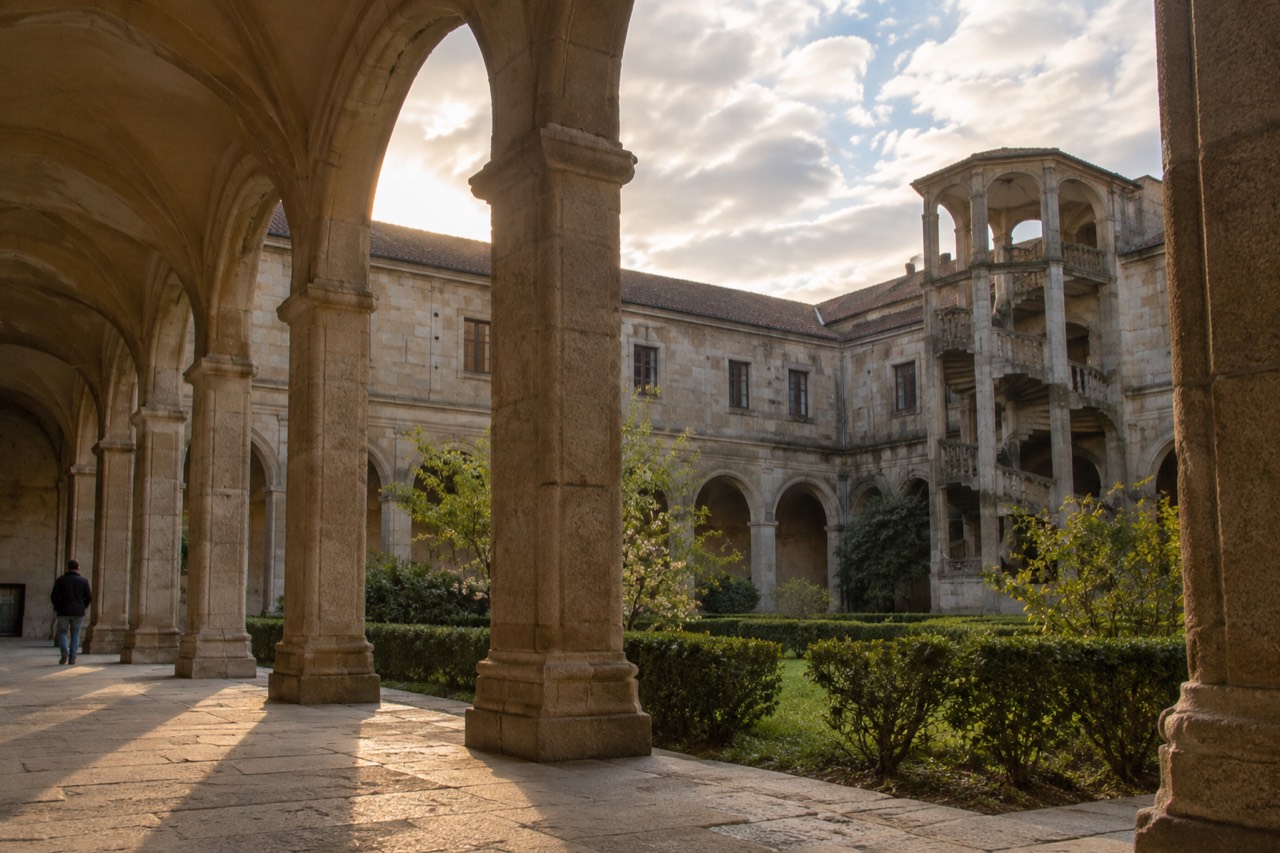
The Museo do Pobo Galego in Santiago de Compostela is the city's museum of Galician ethnography, housed in the former convent of San Domingos de Bonaval, a short walk uphill from the old town's granite squares.
Short answer
The Museo do Pobo Galego is Santiago de Compostela's museum of the Galician people, presenting folk costume, fishing and farming life, crafts and emigration history inside the former San Domingos de Bonaval convent. Opening hours and any free-entry days are unverified in this site's research, so check the venue's own site before visiting. Pair it with the Cathedral museum, the Museo das Peregrinacions and the Mercado de Abastos for a full culture day.
Santiago de Compostela is a city that explains itself through stone, and the Museo do Pobo Galego exists to explain the people who built, fished, farmed and emigrated their way through the Galician countryside that surrounds it. The museum sits in the former convent of San Domingos de Bonaval, uphill from the old town, where the pilgrim crowds thin and the streets turn residential. Where the Cathedral of Santiago de Compostela tells the story of the Apostle and the pilgrimage, this museum tells the story of Galicia itself: the fishermen of the Atlantic rias, the farmers of the interior, the weavers, the potters, and the generations who left for the Americas when the land could not feed them. The Old Town of Santiago de Compostela has been UNESCO-listed since 1985, and this museum is the natural counterpart to that designation, because a World Heritage site only means something once you understand the culture that produced it.
The Museo do Pobo Galego is not a pilgrimage museum. That job belongs to the Museo das Peregrinacions near the Cathedral, and the two are frequently confused by visitors planning a museum day in Santiago de Compostela. This one is an ethnographic museum: its subject is Galician life rather than the Camino, though the two histories braid together constantly, since the pilgrimage routes that end at the Holy Door run through exactly the villages whose tools, costumes and boats fill these galleries.
This guide from the Santiago de Compostela Travel Guide editorial desk sets out what the museum covers, how to plan a visit when the site's own research could not verify its opening hours, which nearby museums and tours pair well with it, and how to fold it into a wider stay in the city.
What Is The Museo do Pobo Galego In Santiago de Compostela?
The Museo do Pobo Galego is Galicia's museum of its own people, an ethnographic institution in Santiago de Compostela housed in the former convent of San Domingos de Bonaval. Its permanent displays cover Galician folk dress, fishing and farming traditions, popular architecture, crafts and the great emigration waves, giving context that the Cathedral and the pilgrimage museums do not. Opening hours and any free-entry days are not verified by this site's research, so confirm both on the venue's own page before setting out.
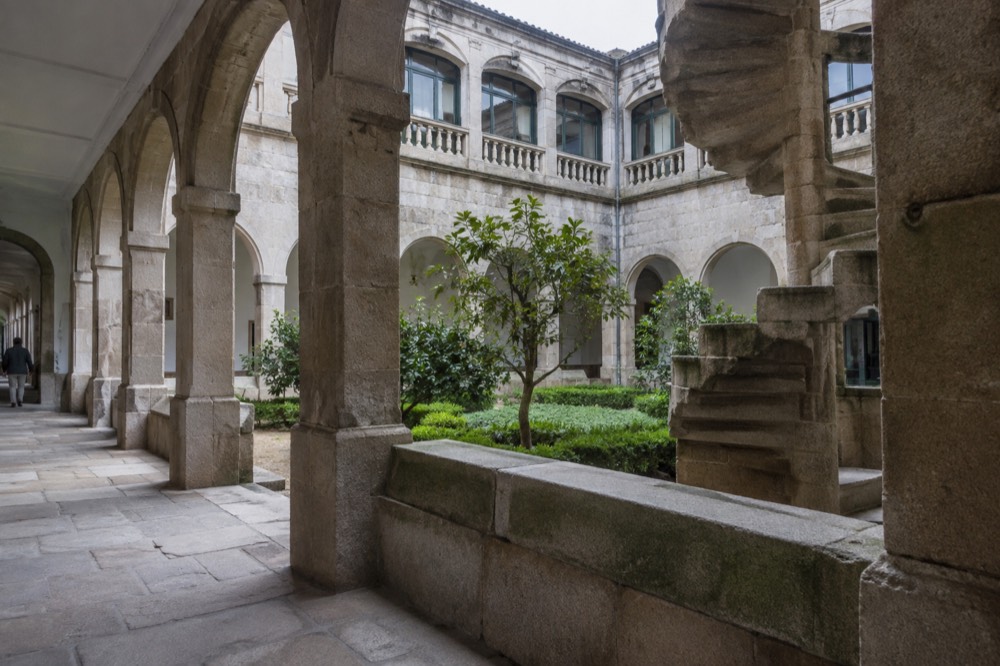
The name translates plainly enough: "museum of the Galician people." That framing is the point. Most visitors arrive in Santiago de Compostela knowing the Cathedral and the Camino de Santiago, and leave knowing little about Galicia as a region, its own language, its Atlantic economy and its long history of depopulation. The museum exists to close that gap. The building itself, a convent complex with cloisters and stone stairways in the Bonaval district, is one of the more atmospheric museum settings in northern Spain, and the walk up from Praza do Obradoiro takes you through parts of the old town that many pilgrim-focused visitors never see.
Treat this museum as the interpretive key to everything else you will look at in the city. The granite balconies, the horreo grain stores you will spot on any day trip into the countryside, the octopus and padron peppers on every menu: all of it makes more sense after an hour or two here.
A sensible pattern for a first visit to Santiago de Compostela is to spend the opening day on the pilgrim core, the Cathedral, the squares, the pilgrim office, and then give the museum quarter a second morning. The three key museums of the city, this one, the Museo das Peregrinacions and the Cathedral Museum (Gelmírez Palace), each answer a different question, and together they cover Galicia's religious and secular histories almost completely.
What Can You See Inside The Museo do Pobo Galego?
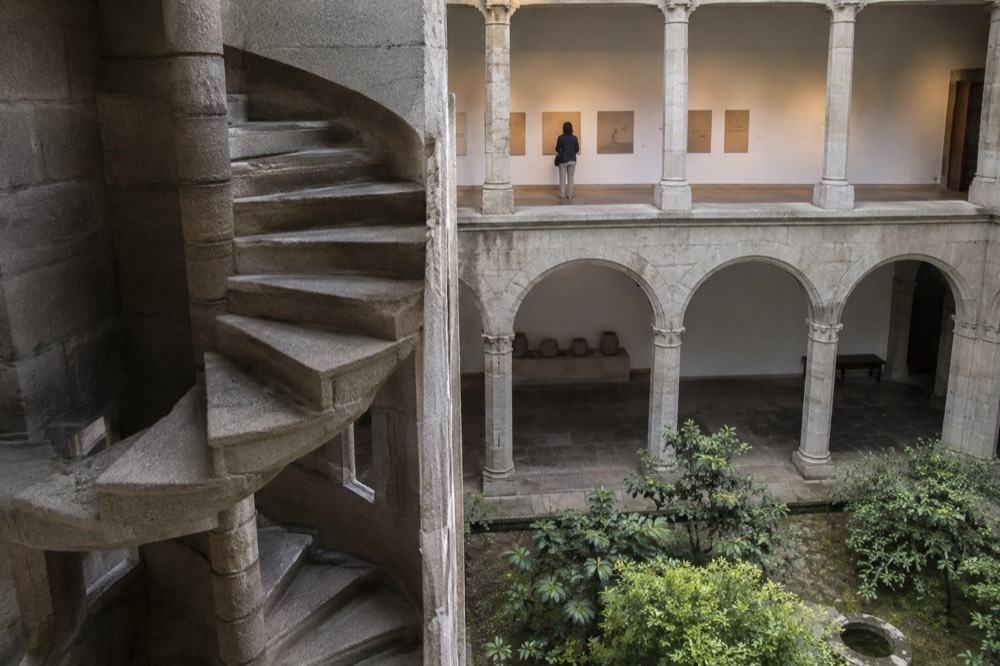
Inside the Museo do Pobo Galego you find permanent ethnographic collections on Galician traditional costume, including the region's distinctive folk dress, boatbuilding and fishing gear from the Atlantic coast, agricultural tools, looms and textiles, pottery, bagpipes and other folk instruments, plus sections on emigration and popular beliefs. The galleries occupy the convent's successive floors, and the museum also functions as a research center for Galician anthropology, so temporary exhibitions rotate alongside the permanent displays.
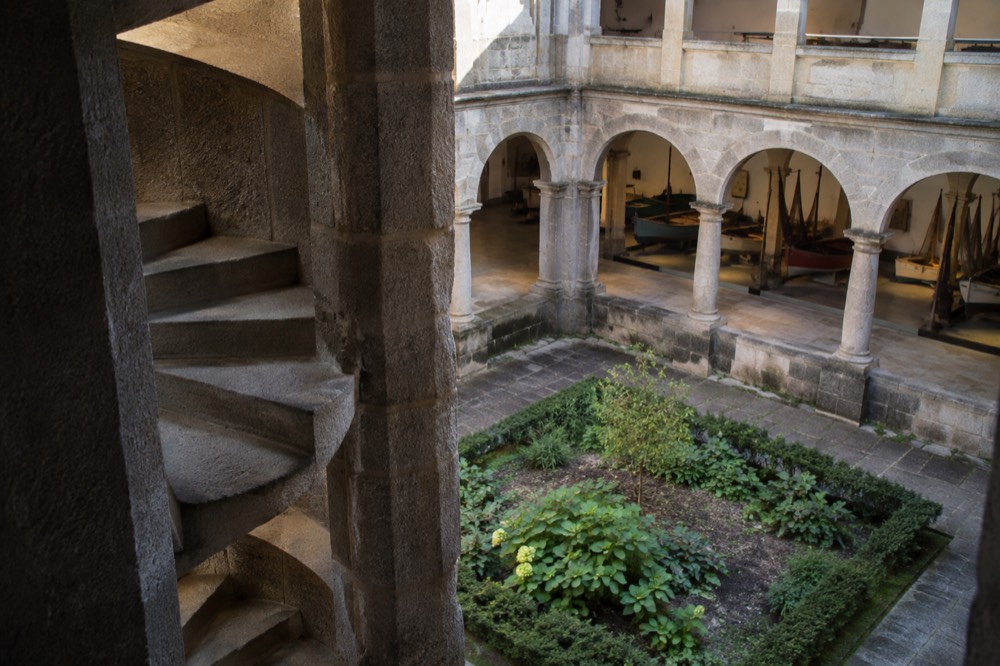
The fishing galleries are usually what stays with visitors. Galicia's economy has always run on the Atlantic, from the mussel rafts of the Rias Baixas to the deep-sea fleets, and the museum's boats, nets and tackle show that world at working scale. The emigration sections explain the other defining Galician story: waves of departures to Cuba, Argentina and other parts of the Americas, which left a mark on Galicia's villages, its cuisine and its music that is still visible everywhere in the region today.
The crafts displays, looms, lacework, ceramics and woodwork, connect directly to what you will see for sale at the Mercado de Abastos and in old-town shops. This is the museum's practical value: it teaches you to read the objects you encounter for the rest of the trip.
The museum's current opening hours, its admission prices and whether any free-entry days apply are not officially published, so plan around the venue's own published schedule rather than any third-party summary. What is verifiable elsewhere in the city's museum quarter is the scale of the neighborhood: the San Martino Pinario complex, once a monastic seminary, and the whole area rewards a slow half-day.
Since a museum visit pairs naturally with a guided orientation of the streets around it, these are the walks and tours our editorial desk compares most often for this part of Santiago de Compostela:
How Much Time Do You Need For The Museo do Pobo Galego?
Most visitors should budget about two hours for the Museo do Pobo Galego, long enough for the permanent ethnographic floors at a reading pace plus one temporary exhibition, and short enough to combine the same day with the Cathedral Museum or the Museo das Peregrinacions. A full museums day in Santiago de Compostela on foot is entirely realistic, since all of the city's museums sit within the walkable old town and the Bonaval slopes.
The museum's subject matter is dense but not exhausting. Unlike an art museum, where a visitor can feel pressured to study every canvas, an ethnographic collection rewards browsing: a case of farm tools, a reconstructed kitchen, a room of regional costumes. Two unhurried hours is the honest figure, and visitors with a specific interest in Galician emigration history or folk music commonly stay longer.
Weather should shape the plan. Santiago de Compostela has a temperate oceanic climate, wet year-round and wetter from October to March, with July and August the driest months, according to AEMET's data for the city's station. Annual precipitation runs on the order of 1,690 to 1,890mm depending on the station and year measured, which is why indoor plans matter here more than in most of Spain. A rainy October afternoon is exactly what this museum is for, and a dry July morning is better spent on the cathedral rooftops or the Alameda park viewpoints.
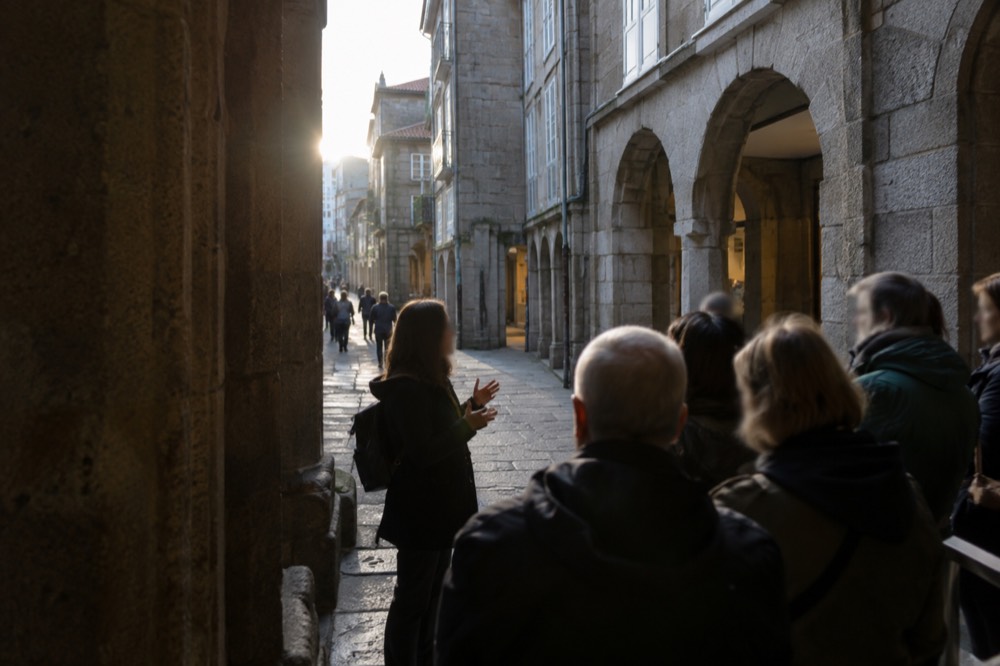
For travelers who prefer a guide to structure the museum quarter, a small-group historic walking tour with an official guide is the closest match, covering the old town's granite lanes and squares in a format that links the museum district to the pilgrim core:
If a guided morning sounds right, Check availability on the operator's live listing, since small-group formats have limited seats and the busiest weeks of the pilgrim season sell them out.
Which Other Museums Should You Pair With It In Santiago de Compostela?
Pair the Museo do Pobo Galego with the Cathedral Museum at San Martino Pinario for religious art and the Portico da Gloria context, and with the Museo das Peregrinacions for the pilgrimage history itself. That trio covers Galician secular life, church art and the Camino in one coherent culture day. The Cathedral's own ticketing shows a range of about EUR9-23 by ticket type, while the smaller municipal museums' hours and free-entry policies remain unverified in this site's research.
The pairing works because the three institutions ask different questions. This museum asks who Galicians were and are. The Cathedral Museum (Gelmírez Palace), reached via the San Martino Pinario complex, asks what the pilgrimage built. The Museo das Peregrinacions asks how the journey itself worked, route by route and century by century. A visitor who does all three in one day leaves Santiago de Compostela with the fullest version of the story.
The verified figures our editorial desk works with for planning this museum day, drawn from the Cathedral's own channels and this site's published details, look like this:
| Element of a museum day | Verified figure | Where it comes from |
|---|---|---|
| Cathedral interior entry | Free, generally 7:00am-9:00pm via the Praterias door | Cathedral's own visitor information |
| Cathedral Museum ticket range | EUR9-23 depending on ticket type | Cathedral's own ticketing site |
| Rooftop and Carraca Tower tour | EUR15 general, EUR12 reduced, about 60 minutes, roughly 140 steps | Cathedral's own ticketing site |
| Pilgrim Mass times | 7:30am, 9:30am, noon and 7:30pm daily | Cathedral's liturgy page |
| Museo do Pobo Galego hours and free days | Not verified in this research | Check the venue's own site |
One planning note that matters for late 2026: the Cathedral's main-chapel remodelling ahead of the 2027 Holy Year means the pilgrim masses at the High Altar continue only until 15 October 2026, after which the 9:30am, noon and 7:30pm masses relocate to the nearby Church of San Agustin, while the 7:30am mass stays in the Cathedral's Communion chapel. Any museum day built around attending a mass should be dated accordingly.
For visitors who want the Cathedral's art and architecture bundled into one ticketed experience rather than pieced together separately, the combined cathedral, Portico, roofs and museum tour is the roster's strongest option for this pairing:
What Do Guided Tours Of Santiago de Compostela Cost Compared To A Museum Visit?
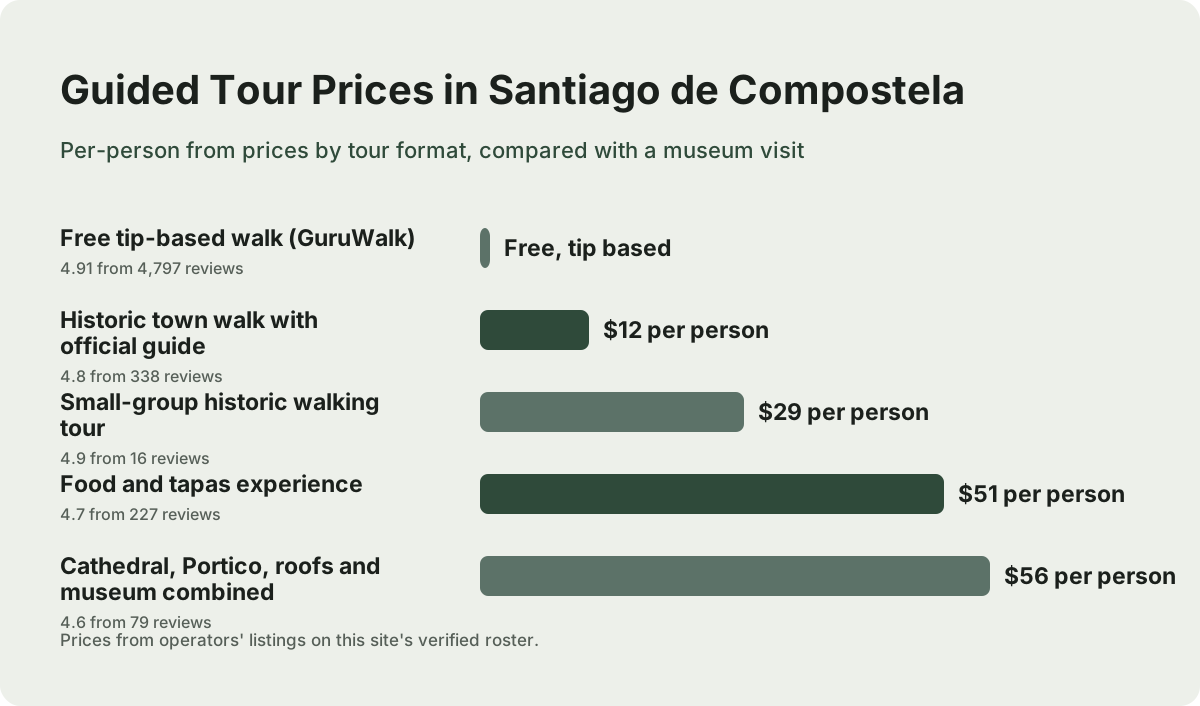
A guided tour of Santiago de Compostela costs from about $12 to $47 per person depending on format, with free GuruWalk tours tip-based at the bottom of the range, old-town walking tours from roughly $14 to $29, combined cathedral and museum tours from about $26 to $56, and food experiences from about $17 to $52. Those prices come from the operators' own listings on this site's verified roster, so a museum visit plus a two-hour guided walk is a realistic and affordable museum-day budget.
The comparison matters because a museum tells you about Galicia indoors, while a walk with an official guide shows you the same culture written across the city. The buildings around the museum quarter, the convent architecture, the horreo-like granaries, the stonemasons' marks, are legible once a guide has explained them, and many visitors find the museum far richer when they take the walk first.
The roster figures this desk works with, all from live operator listings:
| Tour format in Santiago de Compostela | Representative option | From price | Rating and reviews |
|---|---|---|---|
| Free tip-based walk (GuruWalk, guide must be named on booking) | Free Tour Santiago Essential | Free, tip based | 4.91 from 4,797 reviews |
| Historic town walk with official guide | Old town walking tour with an official guide | $12 per person | 4.8 from 338 reviews |
| Small-group historic walking tour | Private Historic Walk, Small Group | $29 per person | 4.9 from 16 reviews |
| Cathedral, Portico, roofs and museum combined | Cathedral, Portico, Roofs, Museum | $56 per person | 4.6 from 79 reviews |
| Food and tapas experience | Tapas, Drinks & Live Music | $51 per person | 4.7 from 227 reviews |
For the museum-quarter specifically, the small-group historic walking tour at from $29 per person, rated 4.9 from 16 reviews, is the format our editors compare most often, because its size suits the narrow lanes above the old town. The combined cathedral ticketing option at from $56 per person, rated 4.6 from 79 reviews, bundles the Cathedral's roofs, Portico and museum with the old city, which pairs naturally with a morning at this ethnographic museum. The tapas and live-music experience at from $51 per person, rated 4.7 from 227 reviews, makes a good evening counterpart, since Galician food culture is itself an ethnographic exhibit you can eat.
When Is The Best Time To Visit Museums In Santiago de Compostela?
The best time to visit museums in Santiago de Compostela is October to March, when the city's wet, cool season makes indoor hours the most valuable, and when the pilgrim crowds thin compared with the summer peak, while July and August, the driest months in AEMET's climate record for the city, are better spent outdoors on rooftops, parks and day trips. Avoid building a tight museum schedule around 25 July, the Feast of St James, when the city fills with festival crowds and event programming displaces normal routines.
The climate logic is straightforward. AEMET's station data for Santiago de Compostela shows a temperate oceanic pattern, wet year-round, wetter October to March, driest July and August. An ethnographic museum is a fair-weather-proof asset, and a city that can receive on the order of 1,690 to 1,890mm of annual precipitation needs several of them. Our desk's honest seasonal framing:
| Season in Santiago de Compostela | Character, per AEMET's climate record | Best museum strategy |
|---|---|---|
| July and August | Driest months of the year | Save daylight for rooftops, Alameda park and Rias Baixas day trips |
| October to March | Wet and cool, the wetter half of the year | Lead with this museum, the Cathedral Museum and the pilgrim museums |
| 25 July, any year | Feast of St James, city-wide festivities | Expect crowds; book timed tickets far ahead |
| Late 2026 into 2027 | Holy Door opens 31 December 2026 for the 2027 Xacobeo | Expect a building Holy-Year crowd curve through 2027 |
The Holy Year point deserves emphasis because it is often gotten wrong: 2026 is not a Holy Year. The next Xacobeo begins when the Holy Door opens on the evening of 31 December 2026 at the Praza da Quintana, and runs through 31 December 2027. Museum visitors in 2027 will be sharing the city with a much larger pilgrim flow than 2025's record 530,987 Compostelas already produced, so timed planning matters more in a Holy Year than in an ordinary one.
How Does The Museo do Pobo Galego Fit Into A Rainy Day In Santiago de Compostela?
On a rainy day in Santiago de Compostela, the Museo do Pobo Galego works as the anchor of an all-indoor itinerary: this museum in the morning, the Cathedral interior and its museum at midday, the Museo das Peregrinacions in the afternoon, and a covered-market and tapas circuit at the Mercado de Abastos and Rua do Franco in the evening. No transport is needed, since the old town is compact and the museum quarter sits within walking distance of the Cathedral.
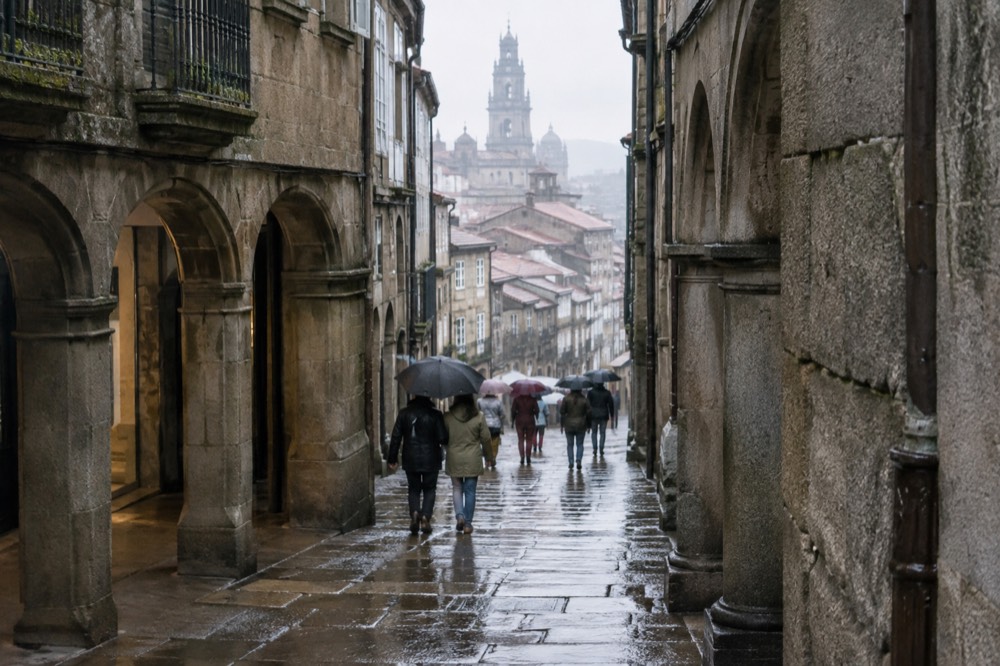
Rain is not an edge case here. The city's oceanic climate delivers wet weather in every season, and the wetter October-to-March half of the year coincides with lower crowds and lower accommodation prices, so a rain-ready plan is genuinely the better plan for many visitors. The one caveat this desk must repeat: the museum's own hours, prices and any free-entry days are unverified in this site's research, so check the venue's own site the evening before and build the rest of the day around whatever windows it publishes.
The pilgrim core of that rainy-day plan has its own verified anchors. The Cathedral interior is free to enter, generally from about 7:00am to 9:00pm via the Praterias door. The Cathedral Museum runs to about EUR9-23 by ticket type. The rooftop and Carraca Tower tour costs EUR15 general or EUR12 reduced, takes about 60 minutes and involves roughly 140 steps, all per the Cathedral's own ticketing site, which is the channel to use for timed slots, since peak dates sell out.
For the food leg of a rainy day, a guided option keeps the momentum: the tapas, drinks and live-music tour at from $51 per person, rated 4.7 from 227 reviews on its live listing, moves the evening indoors into bars and taverns, which is where Galician folk culture lives anyway.
A quieter rainy-day alternative is the guided foodie format's counterpart above, the historic walking tours, which run rain or shine and whose guides are well practiced in the city's covered arcades and church porches.
What Does The Museo do Pobo Galego Tell You About Galicia Beyond Santiago de Compostela?
The Museo do Pobo Galego tells you that Santiago de Compostela is only the symbolic capital of a region whose real life has always happened along its Atlantic coast, in its farming interior and in the ports of the Rias Baixas and the Costa da Morte, and it makes every day trip from the city more legible, because the fishing villages, horreo granaries and emigration-era architecture you will pass all appear first in these galleries as objects with names and functions.
This is the museum's least obvious and most valuable function: it is preparation for the countryside. Visitors who day-trip to Finisterre-style coastal villages without context see pretty ports. Visitors who have spent two hours with the museum's fishing and emigration collections recognize the boat types, the netting techniques and the warehouse architecture of the canning industry, and they understand why so many Galician towns have an "Indian" villa or two, built by returned emigrants, on their seafronts.
The pairing this desk recommends most for that purpose is a coastal day trip after the museum day, because the ethnographic galleries and the Atlantic coast are the same story told twice. The verified roster options for that second day:
| Day trip from Santiago de Compostela | Format | From price | Rating and reviews |
|---|---|---|---|
| Finisterre, Muxia and Costa da Morte | Full day, 7 stops | $60 per person | 4.8 from 1,714 reviews |
| Finisterre, Muxia and Costa da Morte (alternate listing) | Full day | $59 per person | 4.7 from 2,312 reviews |
| Rias Baixas with winery, optional mussel boat | Full day | $54 per person | 4.8 from 322 reviews |
| Catedrais Beach, Lugo and Asturias | Full day | $68 per person | 4.9 from 181 reviews |
| Fisterra and Muxia express | Half day | $45 per person | 4.4 from 50 reviews |
The Costa da Morte options read differently after the museum's fishing galleries, and the Rias Baixas winery options read differently after its agricultural sections. Even the region's Albarino wine culture, covered in the museum's rural-life material, makes more sense once the museum has shown the smallholder landscape that produces it.
Where Should You Eat Near The Museo do Pobo Galego?
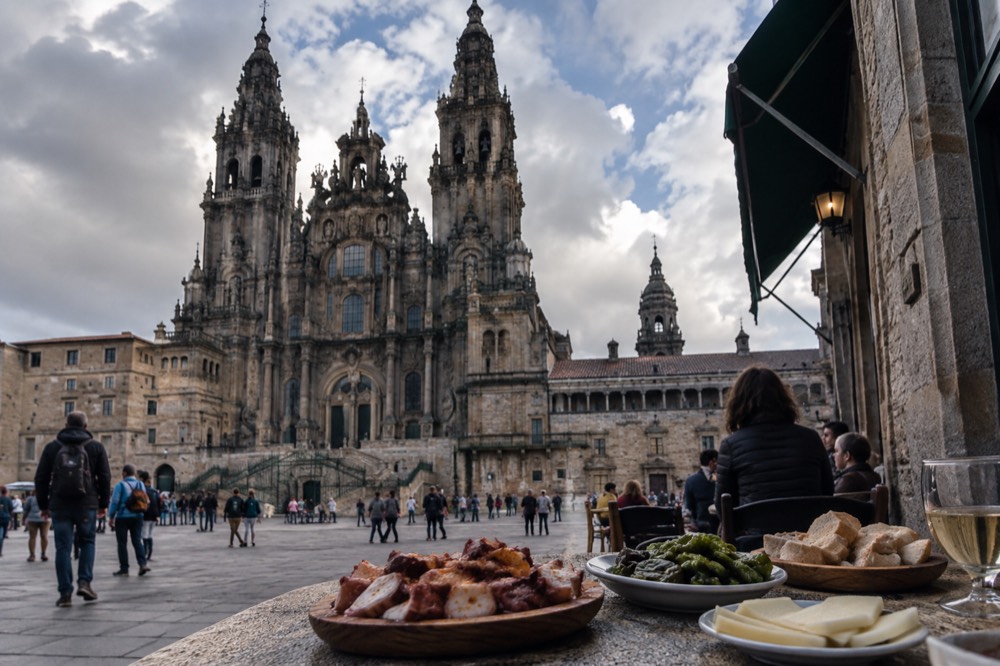
The closest eating ground to the Museo do Pobo Galego is the old town's classic bar and market circuit, above all the Mercado de Abastos, whose market-day food culture is itself an ethnographic experience, and Rua do Franco, the traditional dining street that runs down toward the Cathedral, with tapas and pulpo a la gallega, padron peppers and Tarta de Santiago as the standard Galician orders; market hours are unverified in this site's research, so check the market's own listing before planning a lunch around it.
Eating near the museum is a continuation of the museum. The Mercado de Abastos is the city's working food market and the place where the museum's agricultural and fishing displays are sold by weight, and the streets between the market and the museum carry the old-school taverns where octopus, empanada and Ribeiro wine by the glass have outlasted every tourism cycle. This desk's pairing advice is simple: visit the museum in the morning, eat in or beside the market at midday, and reserve a proper dinner, or a guided tapas evening, for after dark.
For a structured version of the food culture this museum documents, the guided tapas and live-music tour from $51 per person, rated 4.7 from 227 reviews, is the roster's strongest fit, and the private tapas tour at from $52 per person, rated 4.7 from 243 reviews, covers the same ground in a private format. Both prices come from the operators' live listings, where current availability is shown.
How Do You Get To The Museo do Pobo Galego From The Rest Of Santiago de Compostela?
The Museo do Pobo Galego is reached on foot from the old town of Santiago de Compostela in a short uphill walk from the Praza do Obradoiro side, since the Bonaval quarter sits just beyond the old town's northern edge, and no transport is needed for anyone staying in or near the historic center. The city's transport page lists the airport bus, line 6A, at 1 EUR to the driver or 0.36 EUR on a card as of late September 2026, with a higher fare expected in autumn 2026.
In practice the museum is a walking-museum. The old town is pedestrian-scaled, the climb from the pilgrim core to Bonaval is gentle by Galician standards, and the route passes enough interest, the San Martino Pinario facade, the Bonaval park slope, the back sides of convent buildings, to be worth the walk even before the museum. Anyone arriving from farther out, the intermodal station at Rua do Horeeo or the airport, should still plan to walk the last stretch, since the museum quarter is served by the same urban network as the rest of the compact city.
Two practical figures matter for out-of-town arrivals, both flagged as current-but-changing. The airport bus, line 6A, runs roughly every 30 minutes with a journey of about 25 to 45 minutes depending on stops, per the city's transport page, and the airport sits about 12km from the old town, this desk's honest figure given that sources disagree between roughly 11 and 15km depending on the measured point. A Monbus reorganization with a fare of roughly 6 EUR is expected in autumn 2026, possibly by December, so that fare is subject to change. Train travelers have direct high-speed services to Madrid in roughly 3 to 4 hours, a short hop to A Coruna, and roughly 1 hour to Vigo, with no direct rail line to Porto, which requires a change via Vigo.
Common Questions About The Museo do Pobo Galego
What is the Museo do Pobo Galego?
It is Galicia's ethnographic museum in Santiago de Compostela, housed in the former convent of San Domingos de Bonaval, presenting Galician folk life, fishing and farming traditions, crafts and emigration history, in contrast to the city's pilgrimage-focused museums.
Is the Museo do Pobo Galego the same as the Museo das Peregrinacions?
No. The Museo das Peregrinacions covers the history of the pilgrimage to Santiago de Compostela, while the Museo do Pobo Galego covers Galician people and culture more broadly. The two complement each other and can be visited the same day.
What are the Museo do Pobo Galego's opening hours and prices?
This site's research could not verify the museum's current hours, admission prices or any free-entry days, so the venue's own site is the only reliable source. Check it the day before your visit, since museum schedules in Spain change seasonally.
How long does a visit to the Museo do Pobo Galego take?
About two hours covers the permanent ethnographic floors at a reading pace plus a temporary exhibition, and visitors with a deeper interest in Galician emigration or folk traditions often stay longer. It combines well with another museum in the same day.
Is the Museo do Pobo Galego worth visiting on a rainy day?
Yes, it is one of the best rainy-day anchors in Santiago de Compostela, a city whose oceanic climate is wet year-round and wetter from October to March. Pair it with the Cathedral interior, the Cathedral Museum and the covered market circuit for a full indoor day.
Where is the Museo do Pobo Galego located?
In the Bonaval quarter, a short uphill walk north of the old town of Santiago de Compostela, near the San Martino Pinario complex and within easy walking distance of Praza do Obradoiro and the Cathedral.
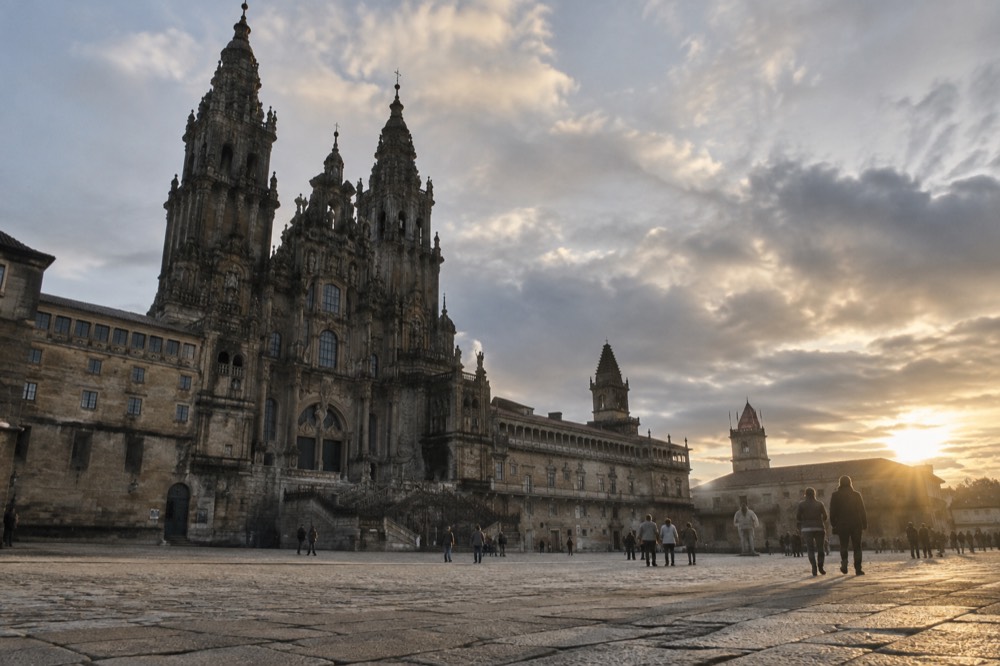
The Museo do Pobo Galego rewards the visitor who wants more from Santiago de Compostela than the pilgrim photo stops: it explains the region the Cathedral stands in, it turns the rest of a Galician itinerary into something readable, and it sits close enough to the old town to cost almost nothing in transit time. Verify its hours on the venue's own page, give it a calm two hours, and let the fishing boats, looms and emigration galleries reframe every port, village and plate you meet for the rest of the trip.