Holy Door Santiago de Compostela
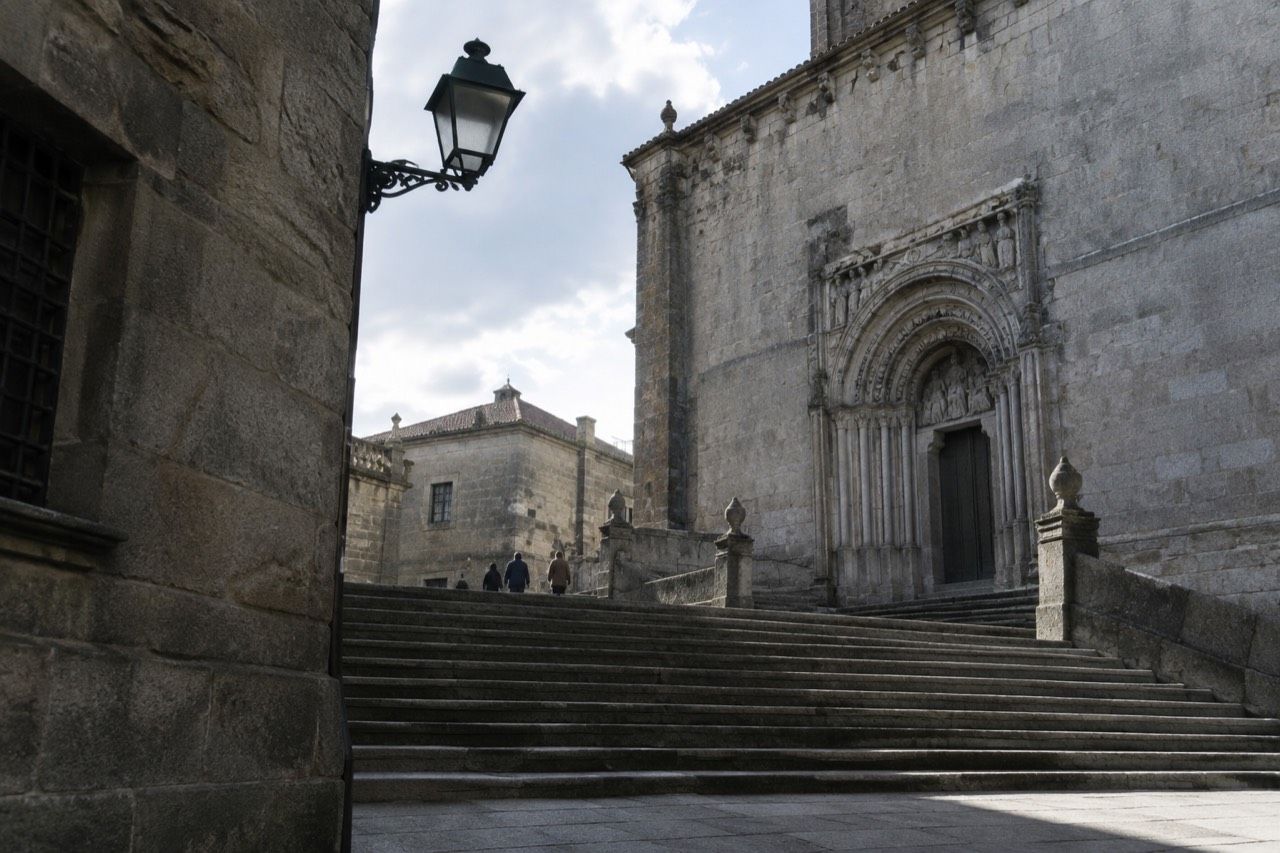
The Holy Door on Praza da Quintana is the one entrance to Santiago de Compostela Cathedral that stays bricked shut for years at a time, opened only for a Holy Year. The next opening falls on the evening of 31 December 2026, beginning the 2027 Xacobeo.
Short answer
The Holy Door is the sealed ceremonial entrance on the east side of Santiago de Compostela Cathedral, facing Praza da Quintana. It is opened only during a Holy Year, which happens when 25 July falls on a Sunday. The next Holy Year is 2027, and the door opens on the evening of 31 December 2026.
The Holy Door is the only entrance to Santiago de Compostela Cathedral that the Chapter deliberately keeps closed, and its opening marks the start of a Holy Year. It faces Praza da Quintana, the stone square behind the Cathedral's main facade, and for most of a decade visitors can only look at the sealed doorway and wonder. That changes on the evening of 31 December 2026, when the door is unbricked in a public ceremony and the 2027 Xacobeo begins. This page covers what the door is, where exactly to find it, how the opening ceremony works, what a Holy Year actually is, and what else the square offers in the months before the next opening.
What Is The Holy Door In Santiago de Compostela?
The Holy Door, the Porta Santa, is a ceremonial entrance on the east side of Santiago de Compostela Cathedral facing Praza da Quintana, kept walled up outside Holy Years and opened only when the Cathedral Chapter formally begins a Xacobeo. Passing through it in a Holy Year carries the same indulgence attached to visiting the Apostle's tomb, and the door itself is the clearest physical marker of the Holy Year cycle. Its opening is not routine maintenance but a ritual: the Archbishop knocks, the masonry is removed, and the door stays open for twelve months before being sealed again.
The door's symbolism is tied to the jubilee. A pilgrim who enters the Cathedral through the Holy Door during a Holy Year, having fulfilled the usual conditions of the pilgrimage, gains the plenary indulgence granted by the Church for the Jacobean Holy Year. That is the theological reason the door matters. The practical reason is simpler and more visible: for years at a time the doorway is filled in with masonry, so a visitor standing in Praza da Quintana is looking at a wall that will not become a door again until the Archbishop decides the Holy Year has arrived.
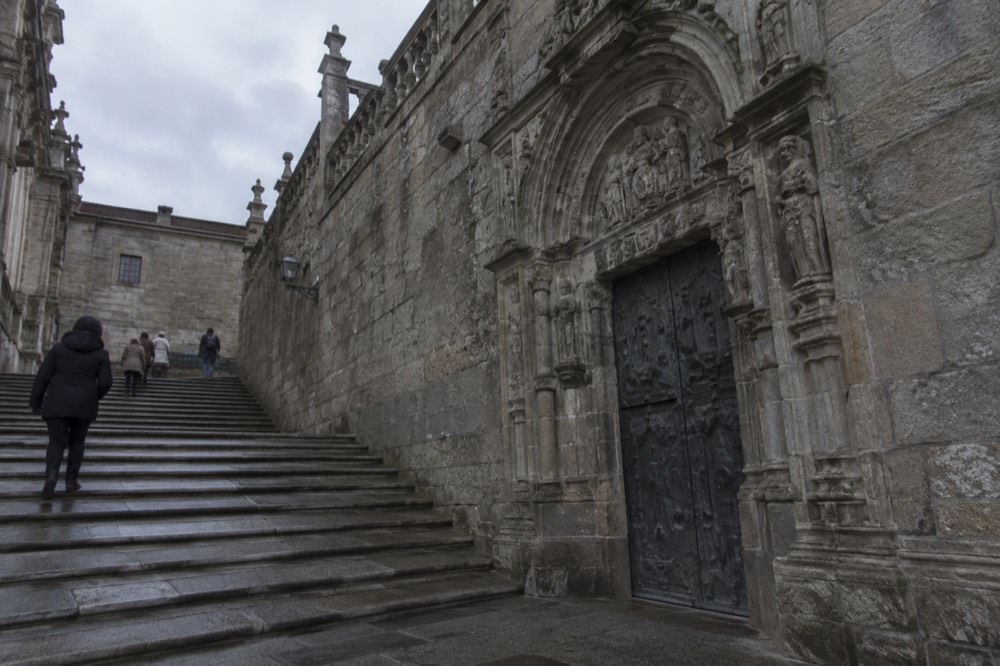
The decoration tells the story even when the door is shut. Around the opening stand carved figures of Saint James and his disciple Athanasius, and the frame carries the imagery of the evangelists. Pilgrims traditionally touch or embrace the statue of Saint James beside the doorway, a smaller echo of the embrace of the Apostle statue behind the main altar inside. Even sealed, it functions as a shrine on the square.
Where Is The Holy Door And How Do You Find It In Santiago de Compostela?
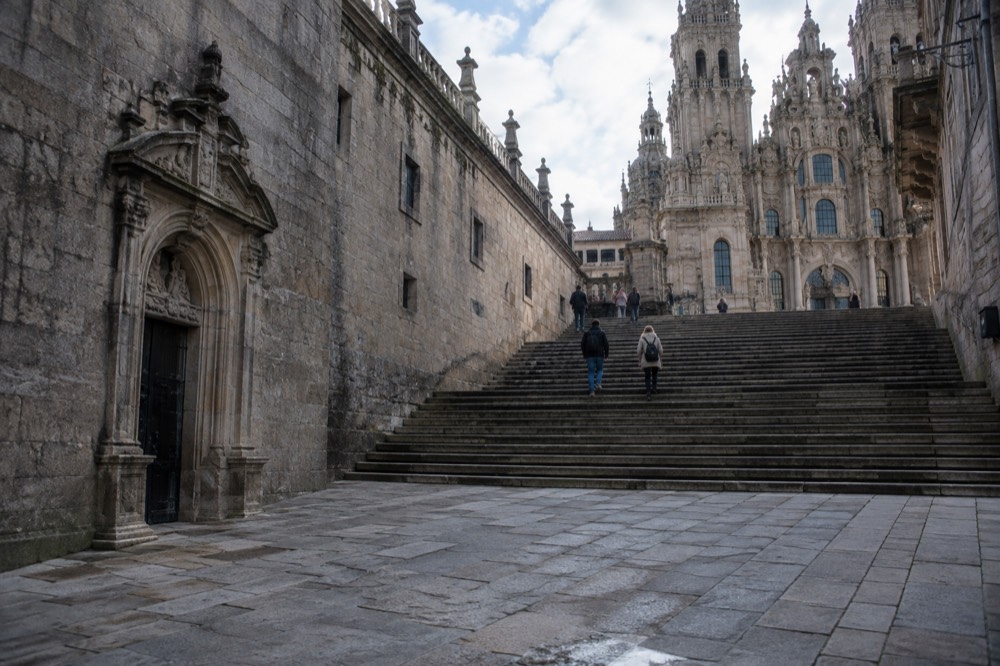
The Holy Door sits at the southeast corner of Santiago de Compostela Cathedral, opening onto Praza da Quintana, the square you reach by walking through the arches behind the Obradoiro facade or up from Rua das Carretas. It is roughly a one-minute walk from the main front of the Cathedral that most visitors see first. Most people arrive the wrong way round: they queue at the front, see the tomb, and never realise the door they came to read about is around the corner.
Praza da Quintana is really two levels in one square. The lower part, Quintana dos Mortos, the dead, takes its name from the old cemetery that once occupied the ground and still carries the funeral hatch marks on the Cathedral wall beside the Holy Door. The upper part, Quintana dos Vivos, the living, was the burial ground's opposite. That split is one of those details a first page of search results rarely explains, and it changes how you read the square: the sombre, worn stones near the door belong to the city's medieval relationship with death, while the livelier upper square held markets and processions.
The Cathedral wall with the Holy Door runs along one side, the long Baroque wall of San Martino Pinario faces it. The old town walking routes bring you here naturally, because Praza da Quintana is on the path between the Obradoiro and the gate that medieval pilgrims used when they entered the city. Pilgrims arriving today still descend into the square the same way, which is why so many of them stop at the sealed door: it is the traditional pilgrims' entrance, used heavily in Holy Years.
The square is free, open at all hours, and needs no ticket. The view of the door costs nothing, and the full guide to the Cathedral covers what does need a ticket once you go inside.
Guided visits that include the Cathedral and its museum give the square's history more depth than a walk alone can, and the three options below are the ones this site rates highest for that combination.
When Does The Holy Door Open In Santiago de Compostela?
The Holy Door in Santiago de Compostela opens on the evening of 31 December 2026, in a ceremony on Praza da Quintana, and stays open through 31 December 2027, the full length of the 2027 Holy Year. 2026 is not a Holy Year, so the door remains sealed through the end of December 2026, and after 2027 the subsequent regular Holy Years listed by the official sources are 2032, 2038 and 2049.
A Holy Year, the Xacobeo or Ano Santo, is declared whenever the Feast of Saint James, 25 July, falls on a Sunday. In 2027 it does, so 2027 is a Holy Year; in 2026 the feast falls midweek, so it is not. The irregular 6, 5, 6 and 11 year gaps between Holy Years come straight from that rule, which is why the pattern looks random at first glance and is anything but.
| Holy Year | Why It Is a Holy Year |
|---|---|
| 2027 | 25 July 2027 falls on a Sunday |
| 2032 | 25 July 2032 falls on a Sunday |
| 2038 | 25 July 2038 falls on a Sunday |
| 2049 | 25 July 2049 falls on a Sunday |
The ceremony on 31 December 2026 is expected to begin around 5 pm on the square, though the official note is that the exact hour could still be adjusted, so confirm close to the date. The Archbishop of Santiago de Compostela performs the rite: the stones are removed from the doorway, the door is struck, and it is declared open for the Holy Year. In the last Holy Years the square has filled hours in advance, and the ceremony has drawn crowds large enough that the surrounding streets are closed to traffic. Planning to attend means planning for cold evening weather and a very early arrival.
The 2027 Holy Year guide on this site collects the rest of the calendar detail in one place.
How Does The Holy Door Opening Ceremony Work?
The ceremony follows a fixed ritual: the Archbishop knocks on the sealed Holy Door from Praza da Quintana, the masonry filling the doorway is removed, the door is opened, and the Archbishop enters the Cathedral followed by the procession, formally declaring the Holy Year open. It happens on 31 December, the eve of the Holy Year, and the door then remains open to pilgrims every day until the following 31 December, when it is walled up again.
The knocking is the moment the crowd comes for. The image of a bishop striking a sealed door with a ceremonial hammer has carried the ritual for centuries, and in living memory the ceremony has been broadcast across Spain. After the door opens, the procession moves inside for the first liturgy of the Holy Year, and the square empties into the Cathedral. Attendance is free and unticketed, but it is a standing event in an open square in Galicia in late December, so the two practical constraints are warmth and position.
The interior work matters to anyone planning a 2026 visit. The main chapel remodelling is preparation for the 2027 Holy Year, and it is the reason the masses move to San Agustin from 16 October 2026. The Cathedral itself stays open to visitors, the naves and the Apostle's tomb included, so the works are not a reason to stay away; they are the reason the city's pilgrimage schedule looks different this autumn.
| Pilgrim Mass | Until 15 Oct 2026 | From 16 Oct 2026 |
|---|---|---|
| 7:30 am | Cathedral, High Altar | Cathedral, Communion chapel |
| 9:30 am | Cathedral, High Altar | Church of San Agustin |
| 12:00 noon | Cathedral, High Altar | Church of San Agustin |
| 7:30 pm | Cathedral, High Altar | Church of San Agustin |
For visitors who want the door and the Cathedral in one explained visit, the skip-the-line Cathedral and museum tour below is the related pick on this page.
Can You See The Holy Door When It Is Sealed?
Yes, the Holy Door's exterior is visible from Praza da Quintana at any time of year, Holy Year or not, because the square is a public space that never closes. What you see outside a Holy Year is the doorway filled with masonry and the carved figures of Saint James and his companions around it, so the door reads as a decorated sealed wall rather than an entrance, and there is no ticket, queue or restriction involved in looking at it.
What you cannot do outside a Holy Year is walk through it. The masonry is real, not a locked gate, and it stays in place until the next opening ceremony. Pilgrims still stop at the sealed door year round, partly out of curiosity and partly because the statue of Saint James beside the opening has long been touched by visitors, its foot worn smooth by centuries of hands. That worn stone is one of the small, human details of the square that no renovation replaces. The full index of guides sits on Santiago de Compostela Travel Guide.
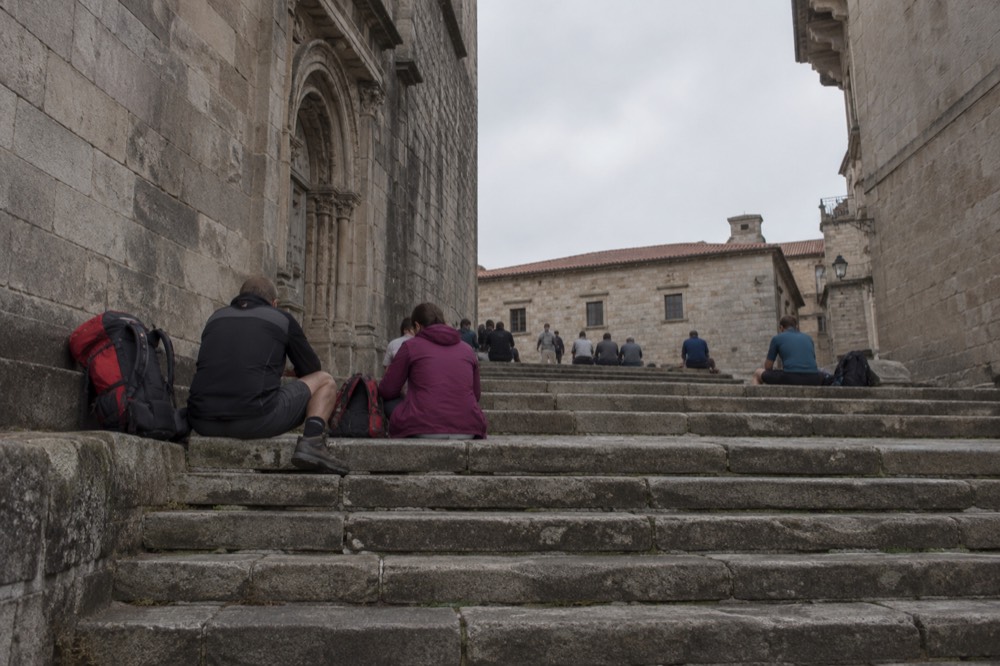
The square rewards a visit at almost any hour. Morning belongs to the tour groups passing between the Obradoiro and the Quintana. Late afternoon belongs to pilgrims who have arrived and come to sit on the Cathedral steps facing the door, boots off, often in silence. Evening changes the stone again, and the nightlife and evening walks around Santiago de Compostela start on these squares. There is no bad hour, only different crowds.
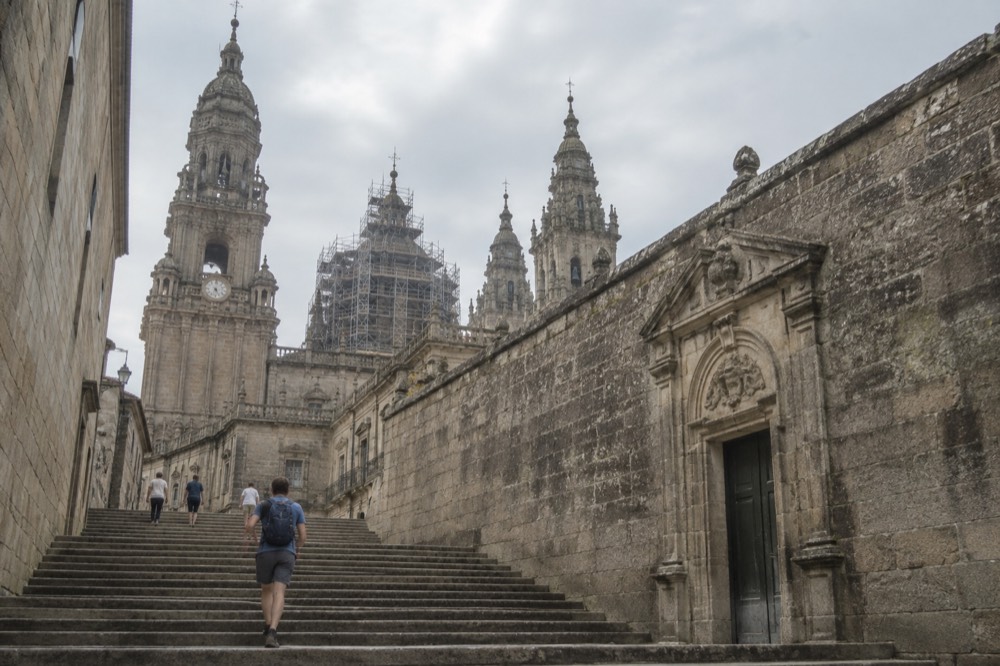
A guided old town walk with an official guide reaches the square with the history attached, and the free-walking option below is the site's standing pick for that.
What Else Sits On Praza da Quintana In Santiago de Compostela?
Praza da Quintana in Santiago de Compostela is enclosed by the Cathedral wall with the Holy Door, the monumental Baroque facade of the former monastery of San Martino Pinario, and the historic houses of the Casa da Parra and Casa do Dean, making it one of the most enclosed and architecturally dense squares in the old town. The monastery facade opposite the Cathedral is the visual counterweight most visitors underestimate.
San Martino Pinario, now a museum and cultural space, presents the square's grandest wall, and its facade is the reason Praza da Quintana photographs so well: two enormous religious facades face each other across a stone floor. The museum inside the monastery story belongs to another page on this site, but the facade belongs to this square. Between the two great buildings, the scale of the Counter-Reformation Church becomes physical, and it is easier to understand here than in any guidebook paragraph.
The square also works as a practical waypoint. It connects the Obradoiro side of the Cathedral to Rua das Carretas and the streets downhill toward the Pilgrim's Office, whose own page explains how the Compostela certificate is collected. Pilgrims finishing their walk often pass through the Quintana within minutes of arriving in the city, whether or not they know the door is there.
| What Faces the Square | What It Is Today |
|---|---|
| Cathedral wall, lower square | The Holy Door, the funeral hatch marks and the sealed pilgrims' entrance |
| San Martino Pinario facade | Former Benedictine monastery, now a museum and cultural venue |
| Casa da Parra | Historic house on the upper square |
| Casa do Dean | Historic dean's house, part of the square's residential fabric |
| Steps beside the door | Traditional resting spot for arriving pilgrims |
Which Tours Show You The Cathedral Best Before The Holy Year?
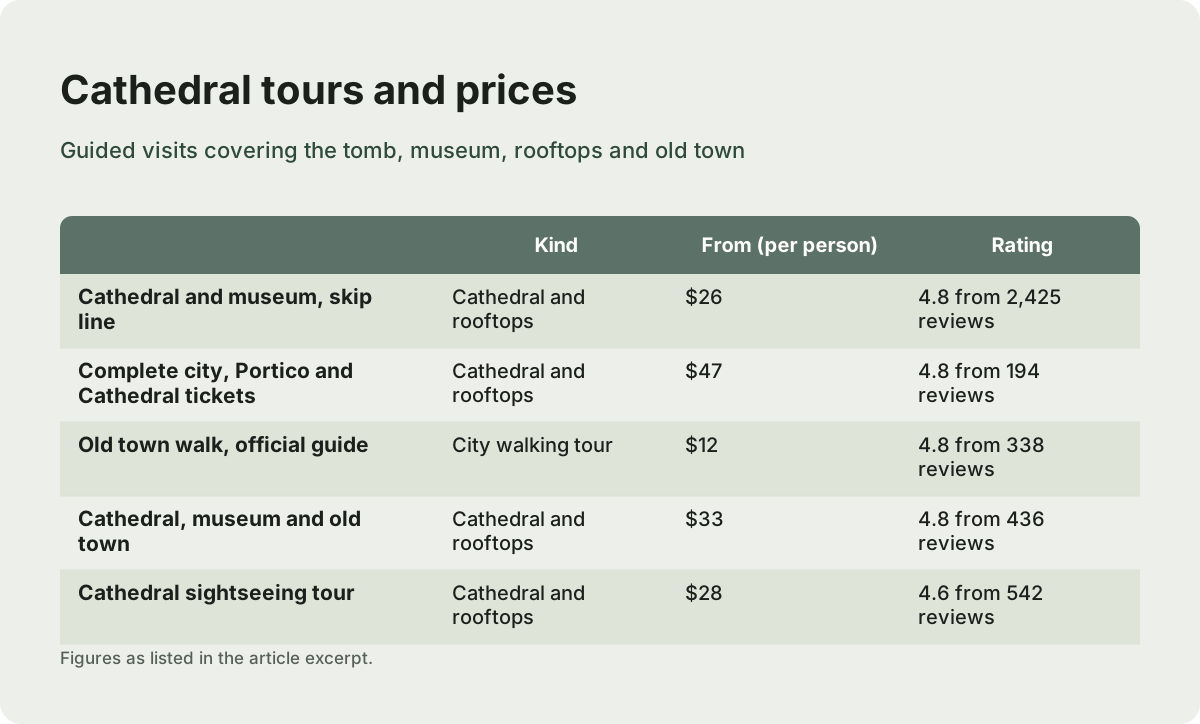
The best-value Cathedral visits in Santiago de Compostela are the skip-the-line Cathedral and museum tour from $26 per person, rated 4.8 from 2,425 reviews, the complete city, Portico and Cathedral tickets tour from $47, and the guided old town walk with an official guide from $12, because between them they cover the tomb, the museum, the Portico da Gloria and the squares around the Holy Door. All three run outside Holy Years, so the door being sealed changes nothing about availability.
The choice between them is about depth. The skip-the-line Cathedral and museum pairing suits a first visit with limited time, since it guarantees entry to the parts that need tickets. The complete tour adds the old city and the Portico, which is the Cathedral's single greatest artistic treasure. The official-guide old town walk is the budget option and spends its time on the squares and streets, including this one, rather than inside.
| Tour | Kind | From (per person) | Rating |
|---|---|---|---|
| Cathedral and museum, skip line | Cathedral and rooftops | $26 | 4.8 from 2,425 reviews |
| Complete city, Portico and Cathedral tickets | Cathedral and rooftops | $47 | 4.8 from 194 reviews |
| Old town walk, official guide | City walking tour | $12 | 4.8 from 338 reviews |
| Cathedral, museum and old town | Cathedral and rooftops | $33 | 4.8 from 436 reviews |
| Cathedral sightseeing tour | Cathedral and rooftops | $28 | 4.6 from 542 reviews |
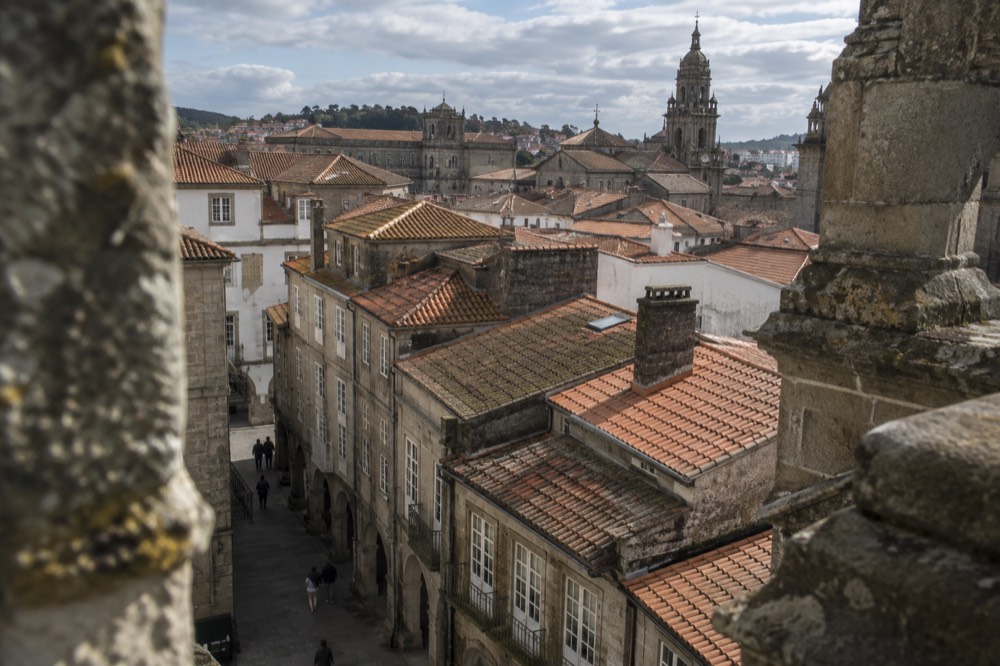
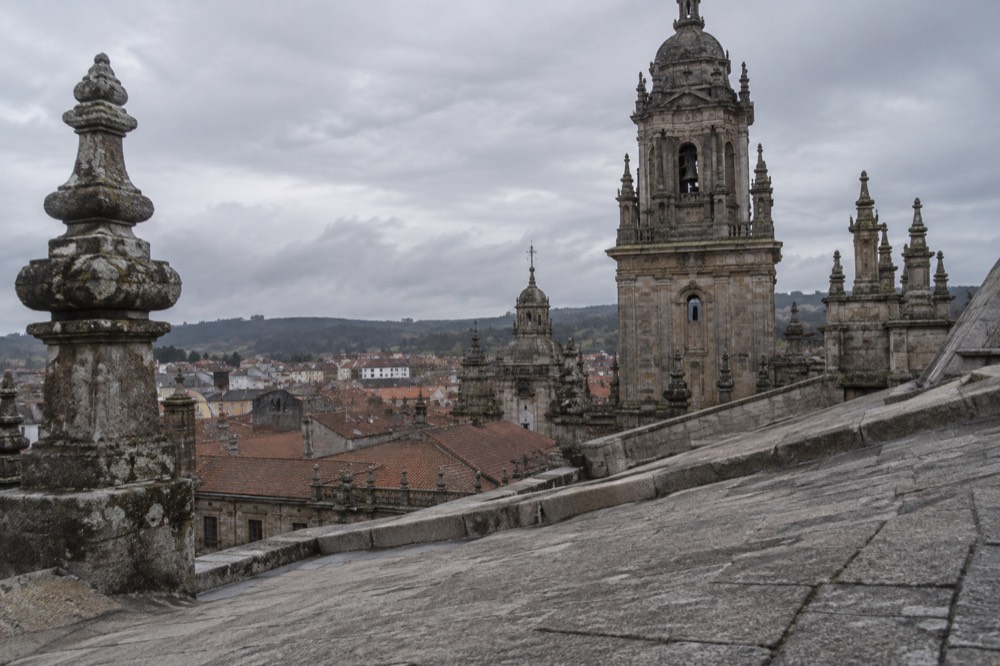
The Cathedral's own paid offerings sit alongside these. The basilica itself is free to enter, generally from about 7 am to 9 pm. The Cathedral museum runs a ticket range of roughly EUR 9 to 23 depending on the ticket type, and the rooftops and Carraca tower tour costs EUR 15 general or EUR 12 reduced for a guided hour that climbs about 140 steps to roughly 72 metres above the square. From that height, Praza da Quintana is one of the clearest views in the city, and the sealed door is easy to pick out.
How Should You Plan A Visit For The 2027 Holy Year?
Plan a 2027 Holy Year visit early: the Holy Door opens on the evening of 31 December 2026 and the Holy Year runs through 31 December 2027, so the peak crowds will concentrate around the opening days, Easter and the feast of Saint James on 25 July 2027, and accommodation in Santiago de Compostela during Holy Year peaks has historically filled months ahead. Booking Cathedral entry and any guided visit in advance matters more in 2027 than in an ordinary year.
The feast day itself, 25 July 2027, will be the single busiest day of the year, marked by the Pontifical Mass with the national offering to the Apostle, plus concerts, fireworks and folk events across the city, as the feast of Saint James page details. A Holy Year feast day is the full version of that programme. Pilgrim numbers will also be far above the ordinary run: the record set in 2025, with 530,987 Compostelas issued by the Pilgrim's Office, came in a non-Holy Year, and Holy Years run hotter.
For walkers timing a route, the Camino de Santiago planning guide covers the routes, and questions about duration, cost and timing have their own answer pages on this site. Walking into the city and entering through the Holy Door within days of the opening is the experience many pilgrims aim for, and Sarria, the classic last-100km starting point, is where the largest share of them begin.
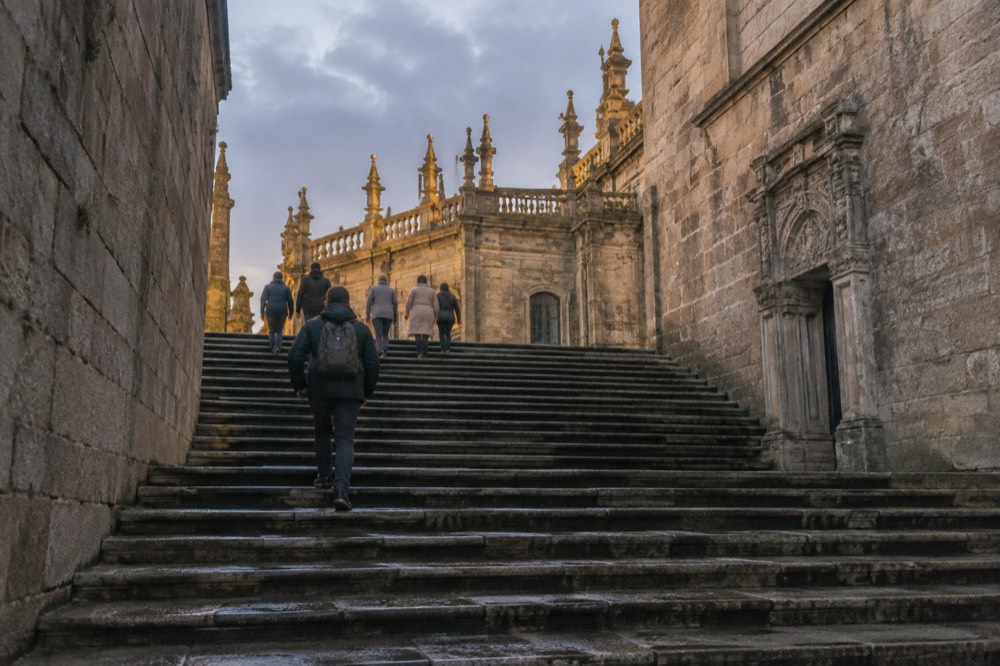
Between now and the opening, the square is worth seeing in its sealed-door state, and these are the three visits this site recommends for the Cathedral and the streets around it.
The complete tour below is the one that bundles the most Cathedral ground into a single half day, tickets included.
Common Questions About The Holy Door In Santiago de Compostela
Is the Holy Door in Santiago de Compostela open now?
No. The door is sealed outside Holy Years, and 2026 is not a Holy Year. It opens on the evening of 31 December 2026 and stays open through 31 December 2027, the full 2027 Holy Year.
How often does the Holy Door open?
Only in a Holy Year, which happens whenever 25 July falls on a Sunday. The next Holy Years are 2027, then 2032, 2038 and 2049.
Can you walk through the Holy Door in a normal year?
No, the doorway is filled with masonry outside a Holy Year. You can see the sealed door and its carvings from Praza da Quintana at any time, since the square is always open.
Where exactly is the Holy Door located?
On the east side of the Cathedral, facing Praza da Quintana, around the corner from the main Obradoiro facade, across the square from the monastery of San Martino Pinario.
What happens at the opening ceremony?
The Archbishop knocks on the sealed door on the evening of 31 December, the masonry is removed, and the door is declared open for the Holy Year, followed by a procession into the Cathedral. The 2026 ceremony is reported for around 5 pm on the square, subject to confirmation.
Do you need a ticket to see the Holy Door?
No. Praza da Quintana is a public square with no ticket or hours, and viewing the door from outside is free. Only the Cathedral's museum, rooftops and guided visits inside carry tickets.
The Holy Door in Santiago de Compostela is a doorway that measures time in years rather than hours, and whether you stand before it sealed in an ordinary October or open at the start of the 2027 Xacobeo, the square it faces tells the same story of a city built entirely around one threshold.