Museum Of Pilgrimage Santiago de Compostela
The Museo das Peregrinacions in Santiago de Compostela tells the story of the journey rather than the destination: a thousand years of pilgrims, routes, and traditions, a short walk from the Cathedral.
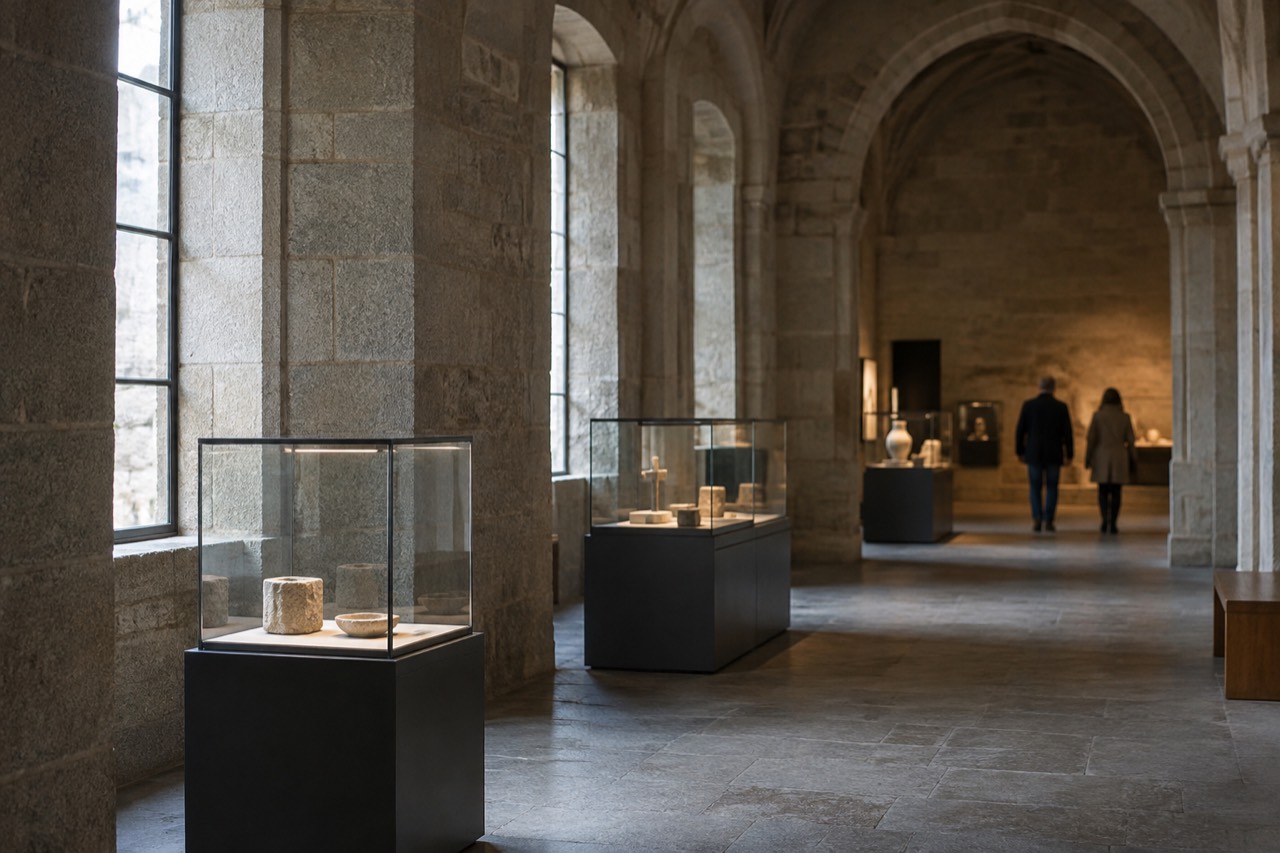
Short answer
The Museo das Peregrinacions is Santiago de Compostela's museum of pilgrimage, sitting in the UNESCO-listed old town close to the Cathedral. It covers how pilgrimage to the Apostle's tomb developed, who traveled, and what they left behind. Opening hours and admission are not independently verified in current research, so check the museum's own site before visiting. Allow a calm hour or so, and pair it with the Cathedral itself.
The Museo das Peregrinacions in Santiago de Compostela is the one museum in this Galician pilgrim city devoted entirely to the act of getting here. The Cathedral holds the tomb and draws the crowds; this museum holds the backstory. Pilgrimage shaped Santiago de Compostela so completely that UNESCO listed the old town as a World Heritage Site in 1985 and then listed the Camino routes themselves, separately, in 1993. Understanding that double inscription is exactly what a visit here is for, and this guide from Santiago de Compostela Travel Guide lays out what the museum covers, what is verified, and how to plan the visit.
What Is The Museo das Peregrinacions?
The Museo das Peregrinacions is Santiago de Compostela's museum dedicated to pilgrimage itself, tracing how and why travelers have made their way to the Apostle's tomb for more than a thousand years. It stands in the old town UNESCO inscribed in 1985, a short walk from the Cathedral. Where the Cathedral shows the destination, this museum shows the journey: the routes, the travelers, and the traditions that grew up around them.
The museum's subject is unusually focused. Most city museums spread across archaeology, fine arts, and local industry. This one keeps its lens on a single phenomenon, the pilgrimage to Santiago de Compostela, and follows it from medieval origins through the modern Camino revival. That revival is not a small footnote. The Pilgrim's Office recorded 530,987 Compostela certificates issued in 2025, a record year, and the museum exists to put numbers like that into a thousand years of context.
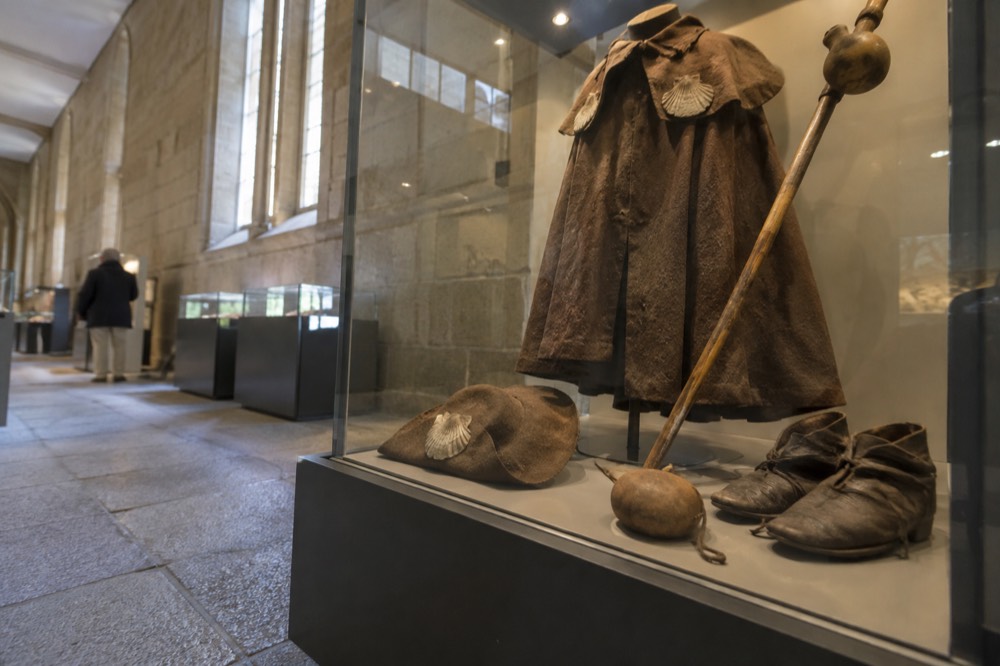
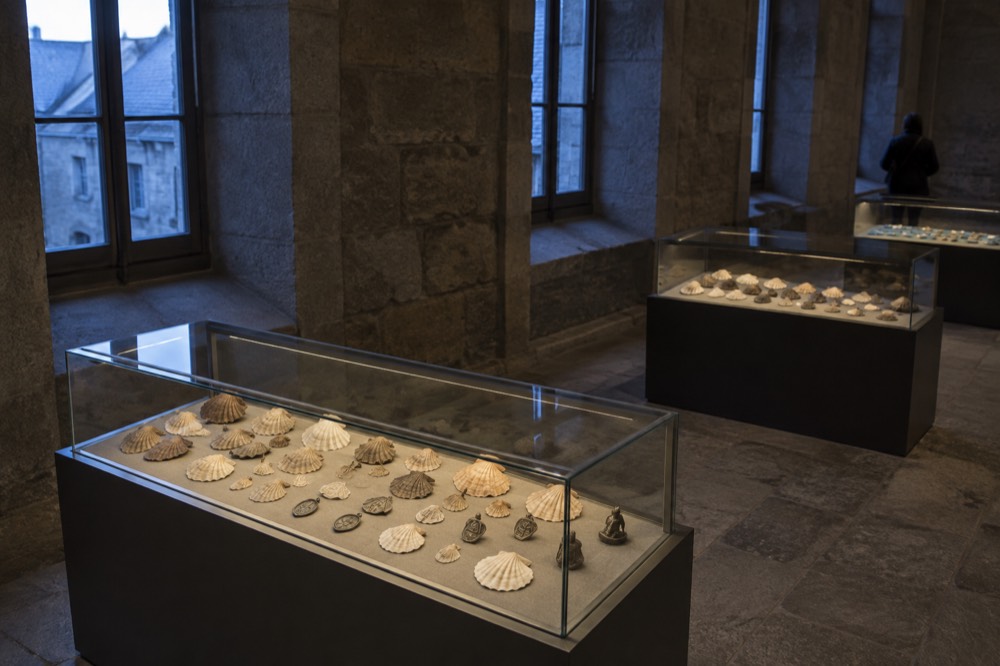
For many visitors the museum answers a question the streets raise but never resolve. You see scallop shells on doorways, walking sticks in shop windows, and exhausted hikers hugging in Praza do Obradoiro. Inside these galleries, the reasons behind all of it are laid out in sequence. The displays are described in Spanish and Galician first, with English information available for international visitors, so a guided visit or a good guidebook helps if you do not read either local language.
Where Is The Museum Of Pilgrimage In Santiago de Compostela?
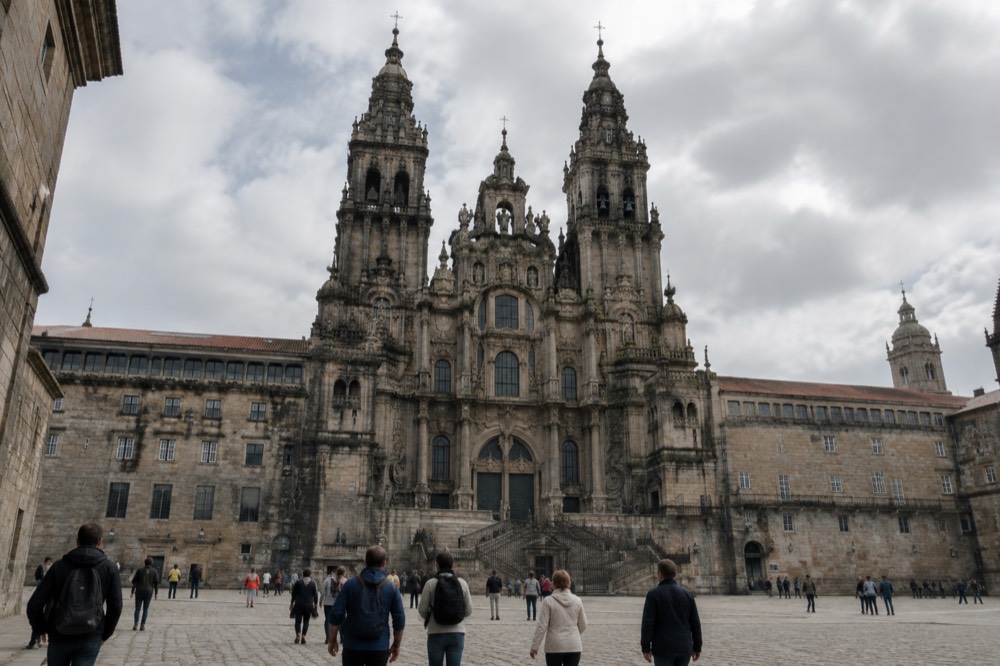
The Museo das Peregrinacions sits in the historic centre of Santiago de Compostela, within the UNESCO-listed old town and within easy walking distance of the Cathedral, the Praza do Obradoiro, and the Praza da Quintana. The airport is about 12km away, and the city is compact enough that the museum can be reached on foot from almost any old-town hotel without a car.
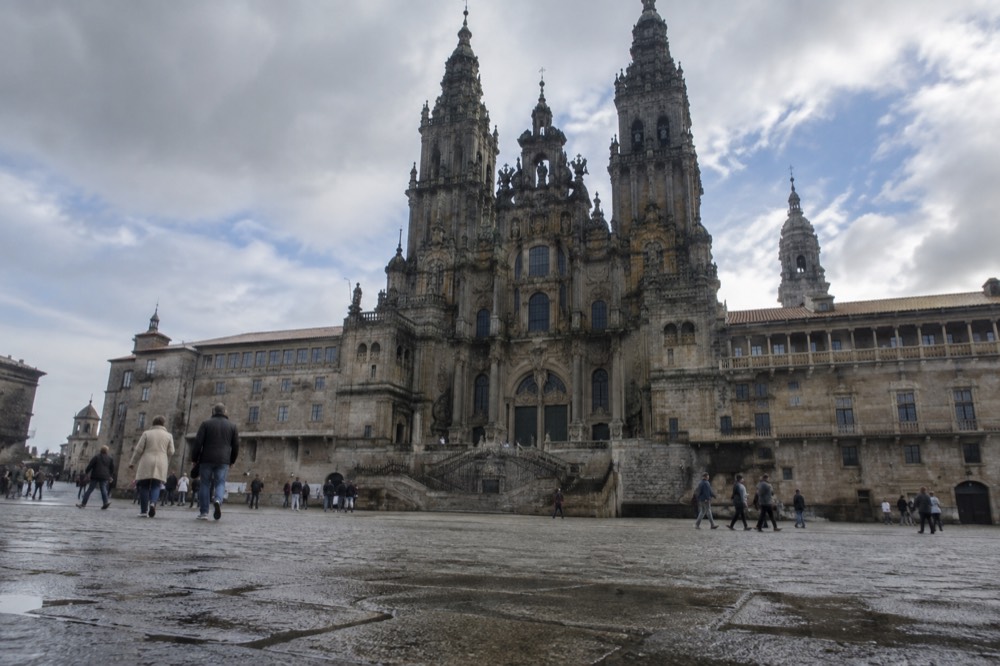
The location matters because the museum belongs to a cluster. A single afternoon can take in the pilgrimage museum, the Cathedral of Santiago de Compostela, the Cathedral Museum, and the Hostal dos Reis Catolicos parador, all of them inside a few minutes' walk of one another. The whole old town is pedestrian-scaled granite, so the practical advice is simple: pick a base near Praza do Obradoiro and everything on this page is a stroll. A walk through the old town streets ties the whole cluster together.
If you are using the pilgrimage museum as an anchor, the surrounding sites hold the verified visitor facts worth knowing in advance. The table below pulls together the numbers that current research confirms for the immediate area. Anything not confirmed here should be checked on the venue's own site rather than assumed.
| Site Near The Museum | Verified Visitor Fact |
|---|---|
| Cathedral of Santiago de Compostela | General entry free, interior generally open about 7:00am to 9:00pm |
| Cathedral Museum | Ticket range EUR9-23 depending on type, open about 10:00am to 8:00pm |
| Cathedral rooftops tour (Cubiertas and Torre de la Carraca) | EUR15 general, EUR12 reduced, about 60 minutes, about 140 steps |
| Hostal dos Reis Catolicos | Historic parador hotel beside Praza do Obradoiro |
| Mercado de Abastos | Opening hours unverified in current research, check the venue's own site |
The same central position makes the museum a natural stop on a wider walking day, and the three most bookable options for a Santiago de Compostela visit centered on this part of town are below.
What Will You See Inside The Museo das Peregrinacions?
Inside the Museo das Peregrinacions the exhibits follow pilgrimage as a lived experience: the routes people walked, the transport they used, the badges and symbols they carried, and the artistic traditions the journey produced in Santiago de Compostela. Current research does not verify an item-by-item collection list, so treat gallery specifics as directional and check the museum's own site for what is currently on display.
That honesty matters more here than at most attractions. Plenty of guides will happily list named artifacts and room numbers for this museum. None of those details are confirmed in the verified research behind this page, so this guide will not print them. What is confirmed is the museum's purpose and its unmatched subject: a city that received so many pilgrims that the Pilgrim's Office issued a record 530,987 Compostelas in 2025 alone.
The most useful way to read the museum is as an explanation of the certificate that ends so many journeys. The rules behind that document are precise and worth knowing before you look at the displays about them.
| Compostela Certificate Rule | Requirement |
|---|---|
| Walking or horseback | At least the last 100km of a recognized Camino route |
| Cycling | At least the last 200km of a recognized route |
| Pilgrim passport (credencial) | Minimum two stamps per day from official stamping points |
| Where it is issued | In person only, Rua das Carretas 33, Santiago de Compostela |
| Record year | 530,987 Compostelas issued in 2025 |
Standing in front of displays about centuries of walkers while holding those rules in your head changes the visit. The museum becomes less a collection of old objects and more a mirror of the streets outside, where today's pilgrims are meeting exactly the same requirements their predecessors shaped. Families with children tend to do well here for that reason: the credential-and-stamp system is a story a child can follow, and it connects directly to the hikers they see at breakfast.
Planning a full day around the museum? The Cathedral sightseeing tour below is the natural companion, since it covers the building the whole pilgrimage story points toward.
How Does The Museum Explain The Camino de Santiago?
The museum treats the Camino de Santiago as a network rather than a single path, the same framing that UNESCO used when it inscribed the Routes of Santiago de Compostela, the Camino Frances and the Northern Spain routes, as a World Heritage Site in 1993. That listing is separate from the 1985 old-town inscription, and the museum's job is essentially to explain why both exist.
Two UNESCO inscriptions for one destination is rare, and travelers constantly merge them into one date. They are distinct. The old town of Santiago de Compostela was inscribed in 1985 for its architecture and urban form. The routes, covering the Camino Frances and the Routes of Northern Spain, were inscribed separately in 1993 for the cultural landscape of the journey itself. A museum of pilgrimage is, in effect, the museum of that second inscription.
| UNESCO Inscription | Year | What It Covers |
|---|---|---|
| Santiago de Compostela (Old Town) | 1985 | The historic city and its monuments |
| Routes of Santiago de Compostela: Camino Frances and Routes of Northern Spain | 1993 | The pilgrimage routes as cultural heritage |
If the museum sparks a wider interest, the site's deeper Camino resources continue the story. Start with the Camino de Santiago guide for the overall picture, then the Camino de Santiago routes guide for how the different paths compare. For the practical questions that follow, how long it takes to walk the Camino de Santiago and whether Santiago de Compostela is worth visiting cover the two queries that come up most.
The museum's perspective also explains something the streets cannot: why Santiago de Compostela became the endpoint at all. The answer runs through the tradition that the Apostle St. James is buried here, a claim examined in detail elsewhere on this site. The museum holds that thread steady while the routes, the relics, and the buildings change around it, which is the difference between seeing the city and understanding it.
What Are The Opening Hours And Ticket Prices?
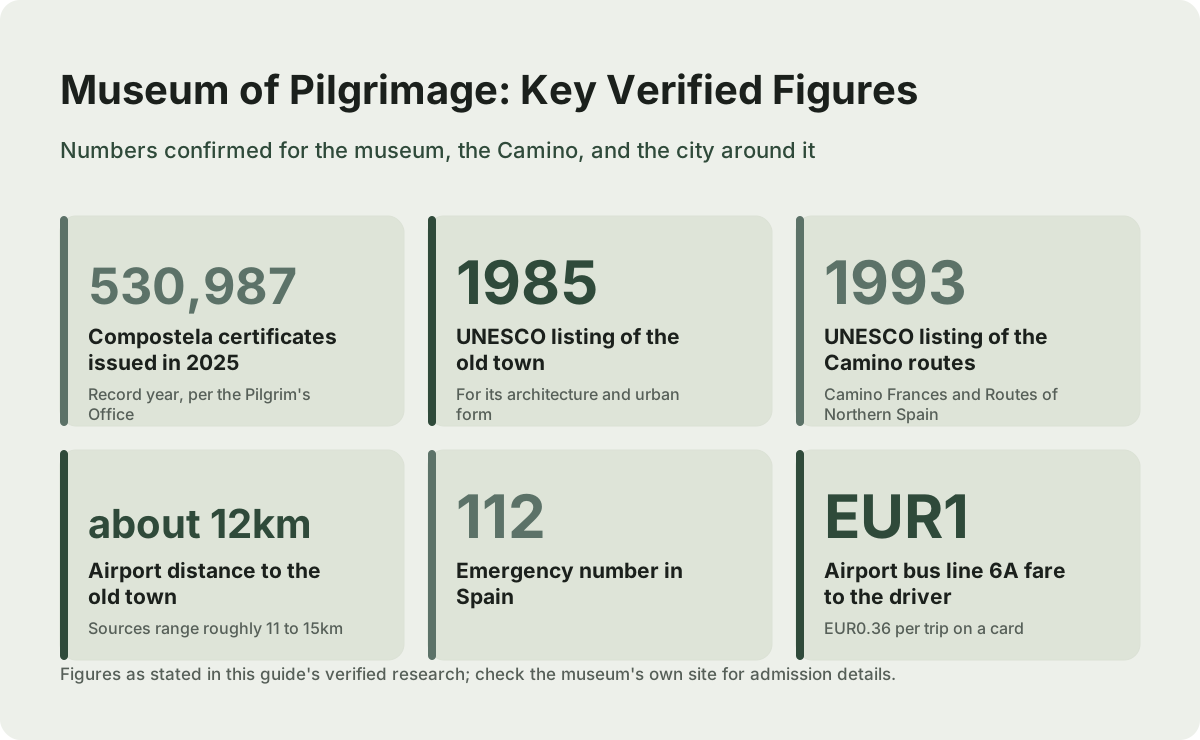
Current opening hours and admission prices for the Museo das Peregrinacions are not verified in this site's research, so no specific times or figures are published here. The correct move is to check the museum's own site before your visit. What is verified for the city around it: Santiago de Compostela uses the euro, the emergency number is 112, and the airport sits about 12km from the old town.
This is deliberately cautious. Several Spanish museums changed free-admission days and pricing policies in 2025 and 2026, and no officially published figure could be confirmed from the museum's own schedule page. Any page that prints exact hours or a "free on Sundays" claim for this museum is guessing, and a wasted walk across town is the cost of trusting it.
What can be planned with confidence are the city-level facts around your visit, all of them verified in this site's research.
| Practical Fact For Santiago de Compostela | Verified Detail |
|---|---|
| Currency | Euro (EUR) |
| Emergency number | 112 |
| Schengen status | Spain is a Schengen Area member |
| Airport distance to old town | About 12km, sources range roughly 11 to 15km |
| Airport bus, line 6A (Tussa) | EUR1 to the driver, EUR0.36 per trip on a card, fare subject to change with a new Monbus contract expected in autumn 2026 |
| Tourist tax | Municipal tourist tax charged since 1 October 2025: per person per night, max 5 nights, from 1 EUR to 2.50 EUR; under-18s and Xunta-run public albergues exempt |
One more caution on planning: the city's cultural venues adjust hours around the Feast of St. James on 25 July and the summer festival period, so a museum visit timed against July travel should carry a backup plan. The Alameda park and the old-town streets themselves cost nothing and never close, which makes them a reliable overflow when a museum line or a lunchtime closure interrupts the day.
Can You Combine The Museum With A Cathedral Visit?
Yes, and that is the best way to do it: the Museo das Peregrinacions pairs naturally with the Cathedral of Santiago de Compostela, with the museum explaining the journey and the Cathedral holding the destination. Cathedral entry is free, the interior generally opens about 7:00am to 9:00pm, and the Cathedral Museum alongside it runs a EUR9-23 ticket range with daily opening of roughly 10:00am to 8:00pm.
The practical order depends on your energy. Pilgrims arriving off the Camino usually go to the Cathedral first, hug the Apostle, and save the museum for the following day. Casual visitors often do better in reverse: an hour in the pilgrimage museum first gives the Cathedral visit a framework, and then the Baroque facade and the tomb land with more force. For timing, the rest day after the Camino guide covers how to structure exactly this kind of recovery day.
The Cathedral's own schedule is the one piece with a dated change to know about. Pilgrim masses currently run at 7:30am, 9:30am, noon, and 7:30pm at the High Altar. From 16 October 2026, the 9:30am, noon, and 7:30pm masses relocate to the nearby Church of San Agustin, and only the 7:30am mass stays in the Cathedral, in its Communion chapel. The Cathedral remains open to visitors throughout the works.
| Cathedral Of Santiago de Compostela Fact | Detail |
|---|---|
| General entry | Free, via the Praterias door |
| Interior hours | Generally about 7:00am to 9:00pm daily |
| Cathedral Museum ticket range | EUR9-23 depending on ticket type |
| Rooftops and Torre de la Carraca tour | EUR15 general, EUR12 reduced, bookable online with timed slots |
| Pilgrim masses until 15 October 2026 | 7:30am, 9:30am, noon, 7:30pm at the High Altar |
| From 16 October 2026 | 9:30am, noon, 7:30pm masses move to the Church of San Agustin; 7:30am stays in the Cathedral |
| Botafumeiro | Temporarily out of action, suspended under dome-restoration scaffolding, no return date published |
A guided visit saves the queueing and adds the detail a self-guided walk past. The Cathedral sightseeing tour below covers the building efficiently and pairs with the museum's story of how everyone got there.
How Does The Museum Frame The 2027 Holy Year?
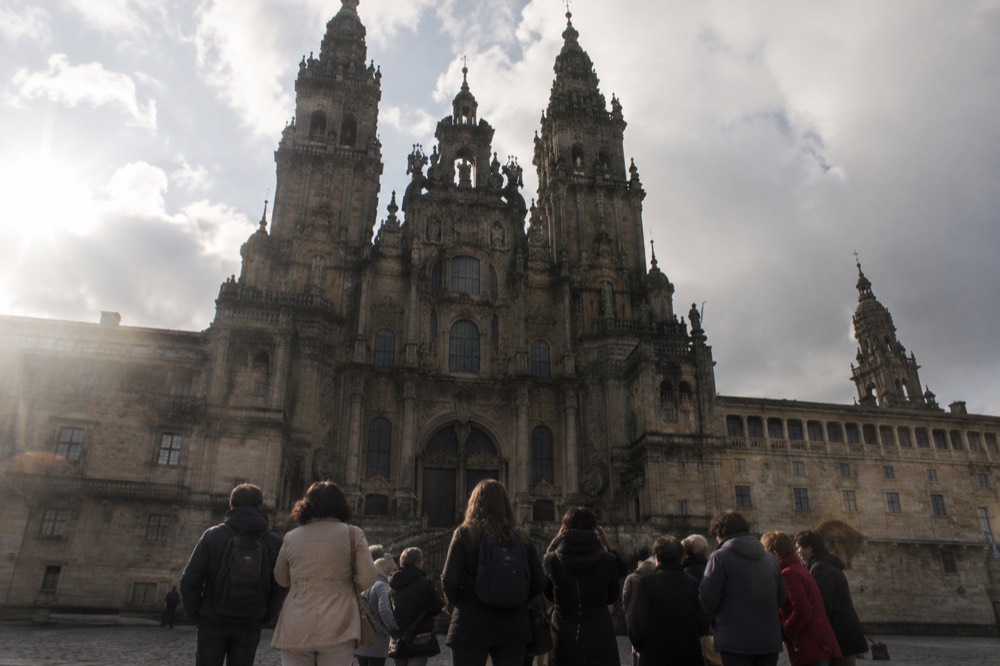
The Museo das Peregrinacions sits in the one city where the Holy Year cycle shapes everything, and the next one is 2027, not 2026. The Holy Door of the Cathedral of Santiago de Compostela opens solemnly on 31 December 2026 and the Xacobeo runs through 31 December 2027, because 25 July 2027 falls on a Sunday. A Holy Year is declared whenever that feast day lands on a Sunday.
Visitors in late 2026 and through 2027 will notice the museum's subject sharpening as the city prepares. Holy Years follow an irregular cycle of 6, 5, 6, and 11 years, which is why the gaps look uneven. The sequence after 2027 runs to 2032, 2038, and 2049. During a Holy Year, pilgrims who pass through the Holy Door, in the Praza da Quintana, can gain a plenary indulgence under the usual conditions, and the volume of visitors rises sharply.
| Holy Year (Xacobeo) | Holy Door Opens | Holy Year Runs Through |
|---|---|---|
| 2027 | 31 December 2026 | 31 December 2027 |
| 2032 | Listed by official sources as the next regular Holy Year after 2027 | Not specified in this site's research |
| 2038 | Listed by official sources as a later Holy Year | Not specified in this site's research |
| 2049 | Listed by official sources as a later Holy Year | Not specified in this site's research |
If the museum is your first proper encounter with the Holy Year idea, the site's Holy Year 2027 guide goes deeper on what changes in the city, and how many days to spend in Santiago de Compostela helps with the sizing of a trip timed to it. Book early for the 2027 window. The 2025 record of 530,987 Compostelas is the baseline, and Holy Years historically push well past it.
Is The Museum Of Pilgrimage Worth Your Time In Santiago de Compostela?
For most visitors, yes: the Museo das Peregrinacions is worth a focused hour, especially for anyone walking a Camino route, curious about why this city exists, or traveling with family. It is less essential for a short one-day stop where the Cathedral and the old town's streets take priority. Confirm hours and admission on the museum's own site first, since those details are unverified in current research.
The honest ranking for a tight itinerary puts the Cathedral first, the old-town streets second, and this museum third, ahead of every other indoor stop in the city for anyone with a live interest in the pilgrimage. That is because no other collection in Santiago de Compostela covers the subject, and the subject is the reason the city is on the map at all. For the shorter-trip question, the one day in Santiago de Compostela itinerary shows where the museum slots in.
If the museum visit ends with tired legs, as museum days do, a guided walk through the historic streets is the natural follow-on. The option below is the best-rated short city walk among the site's verified roster.
For travelers finishing a Camino route, there is a different kind of recovery on offer, and it is the single most-booked rest-day experience in the city's verified roster. The treatment below is the one arriving pilgrims reach for once the boots come off.
For a quick comparison of how the most relevant bookable experiences stack up against each other, the table below uses the operator-listed figures verified on this site's roster.
| Experience In Santiago de Compostela | From (Per Person) | Rating And Reviews |
|---|---|---|
| Cathedral Sightseeing Tour | $28 | 4.6 from 542 reviews |
| Historic Walking Tour and Highlights | $17 | 4.9 from 29 reviews |
| Massage Treatment | $68 | 4.8 from 193 reviews |
| Old Town Walking Tour with Official Guide | $12 | 4.8 from 338 reviews |
| Secrets of Compostela Night Tour | $17 | 4.9 from 74 reviews |
Whatever you choose, check availability on the operator's live listing rather than relying on a printed price, since dates and demand move both. A longer stay opens the door to the coast as well, from the best day trip from Santiago de Compostela to the Rias Baixas wine country.
Common Questions About The Museum Of Pilgrimage In Santiago de Compostela
What is the museum of pilgrimage in Santiago de Compostela?
The Museo das Peregrinacions is the city's museum dedicated to pilgrimage to the shrine of St. James. It covers the history of the Camino de Santiago, the people who walked it, and the traditions that grew up around the journey, complementing the Cathedral that holds the destination itself.
How long does a visit to the Museo das Peregrinacions take?
Most visitors spend about an hour to ninety minutes. Because opening hours are not verified in current research, check the museum's own site before you set out, and keep the Cathedral and the old town as flexible alternatives for the same block of time.
Is the Museo das Peregrinacions free?
Admission pricing for this museum is not verified in this site's research, so no figure is published here. Free-admission policies at several Galician museums have changed in 2025 and 2026, which is exactly why the museum's own site should be the deciding source.
Where is the Museo das Peregrinacions located?
It sits in the UNESCO-listed old town of Santiago de Compostela, within walking distance of the Cathedral, Praza do Obradoiro, and Praza da Quintana. The airport is about 12km from the old town, served by bus line 6A, with a new operator taking over the contract in autumn 2026. The practical facts table above has the current fare.
Should I visit the pilgrimage museum before or after the Cathedral?
Casual visitors usually do better with the museum first, since it frames the Cathedral's story. Pilgrims arriving off the Camino tend to head straight to the Cathedral and save the museum for a recovery day. Either order works, because the two buildings are a short walk apart.
Does the museum cover the 2027 Holy Year?
The Holy Year is central to the museum's subject. The next Xacobeo is 2027, with the Holy Door opening on 31 December 2026 and the Holy Year running through 31 December 2027, because 25 July 2027 falls on a Sunday. Later Holy Years listed by official sources are 2032, 2038, and 2049.
The Museo das Peregrinacions is the quiet half of Santiago de Compostela's story, the half that explains why a small Galician granite city became the endpoint of a thousand years of roads. Walk its galleries after the Cathedral, and the scallop shells on the doorways outside finally make sense.