Holy Year 2027 Camino de Santiago
2027 is the next Holy Year in Santiago de Compostela, Spain, and the Holy Door opens on the evening of 31 December 2026. Here is what changes for pilgrims and visitors, and how to plan for it.
Short answer
The next Holy Year (Xacobeo) in Santiago de Compostela runs from 31 December 2026, when the Holy Door opens on the Praza da Quintana side of the Cathedral, through 31 December 2027. It happens because 25 July 2027 falls on a Sunday, which is the sole condition for a Jacobean Holy Year. Pilgrim numbers will be far above the record 530,987 Compostelas issued in 2025, so booking beds, tickets and flights months ahead is the difference between a smooth walk and a scramble.
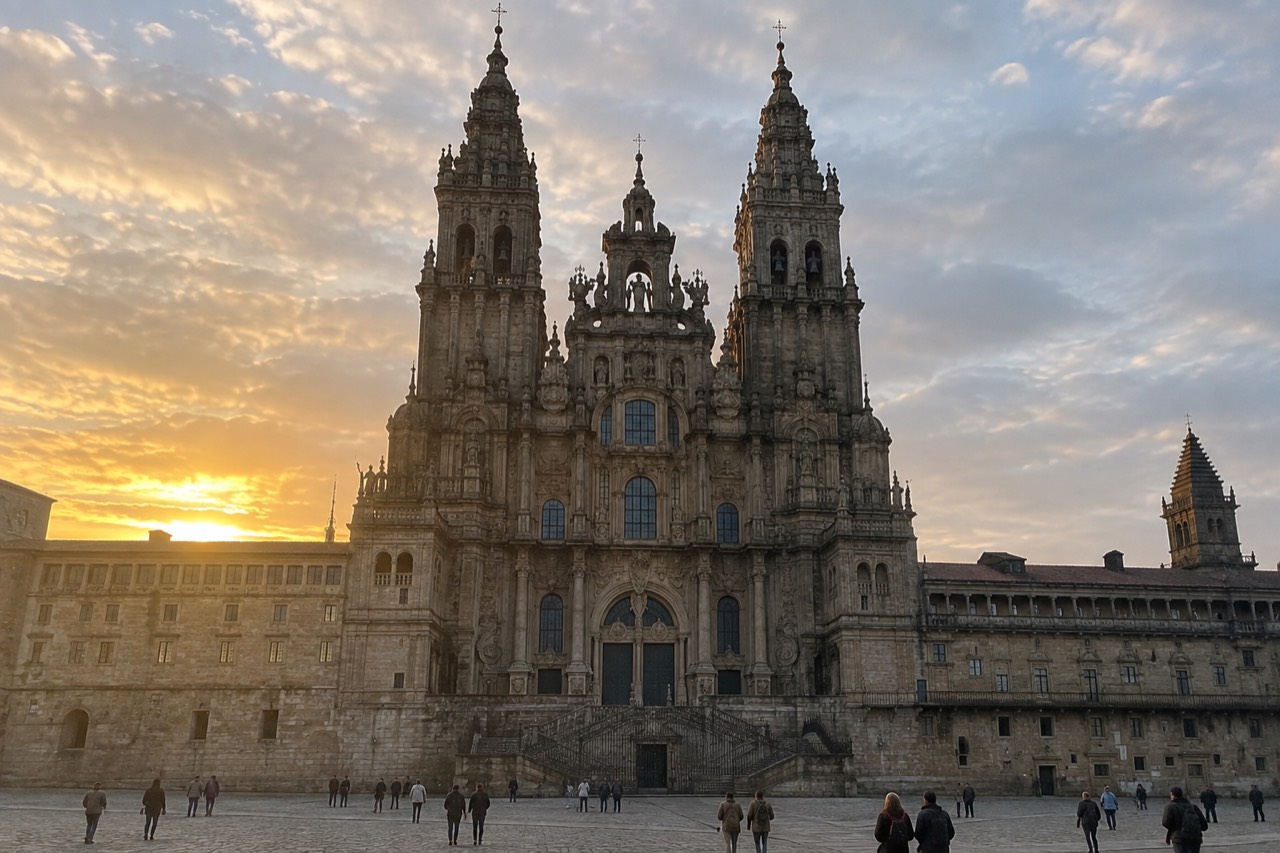
The Holy Door of Santiago de Compostela Cathedral opens on the evening of 31 December 2026 and stays open through 31 December 2027, and that fourteen-month window will reshape the entire pilgrimage calendar in Galicia. A Holy Year, or Xacobeo, is declared whenever the feast of St. James, 25 July, falls on a Sunday, which it does in 2027. The Cathedral's own Chapter holds the opening ceremony on the Praza da Quintana side of the building, where a wall normally seals the Puerta Santa; a stone is removed, the door swings, and anyone who passes through it in a Holy Year can receive the plenary indulgence attached to the Jacobean Jubilee. santiago.es's Cathedral page and its Xacobeo 2027 notice confirm the 31 December 2026 opening and the full-year run, and 2026 itself is not a Holy Year. This guide sets out what a Xacobeo actually changes, when to walk, what to book first, and what to expect in the city once the pilgrim tide rises.
What Is The Holy Year 2027 In Santiago de Compostela?
The 2027 Holy Year, called Xacobeo or Ano Santo Compostelano, is a Jubilee period in Santiago de Compostela that begins when the Holy Door opens on the evening of 31 December 2026 and runs until the door is sealed on 31 December 2027. It exists because 25 July 2027, the feast of St. James, falls on a Sunday, the single condition the Church applies. Pilgrims who visit the tomb, pass through the Holy Door and receive the sacraments in that window can obtain the plenary indulgence of the Jacobean Jubilee.
The rule is arithmetic, not decree by committee. St. James's feast day cycles through the weekdays, and only when it lands on a Sunday does the Archdiocese declare a Holy Year. The irregular 6-5-6-11 pattern of years between Jubilees follows from that calendar, which is why the gaps between Holy Years are never even. No announcement, vote or marketing campaign changes this. The calendar alone decides, and every Xacobeo plan starts by accepting that.
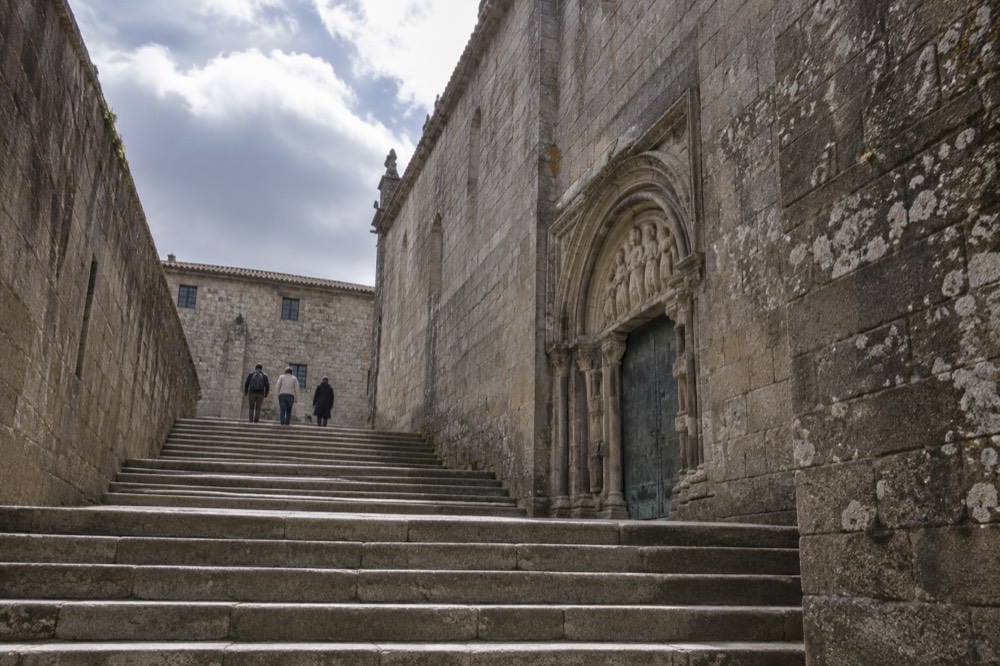
The mechanics on the ground are simple. The Puerta Santa, on the Praza da Quintana facade, is walled up between Holy Years. On 31 December the ceremony, historically held around 5pm on the Quintana, sees the wall opened from the inside and the door used as an entrance for the entire year. Recent reporting notes the ceremony time for the opening may shift to midday, so anyone planning to attend should confirm the hour closer to the date. During the year, pilgrims traditionally enter the Cathedral through the Holy Door rather than the main west entrance, and the door is closed and re-sealed with a masonry wall on the final day of the Jubilee.
Why Is 2027 A Holy Year And Not 2026?
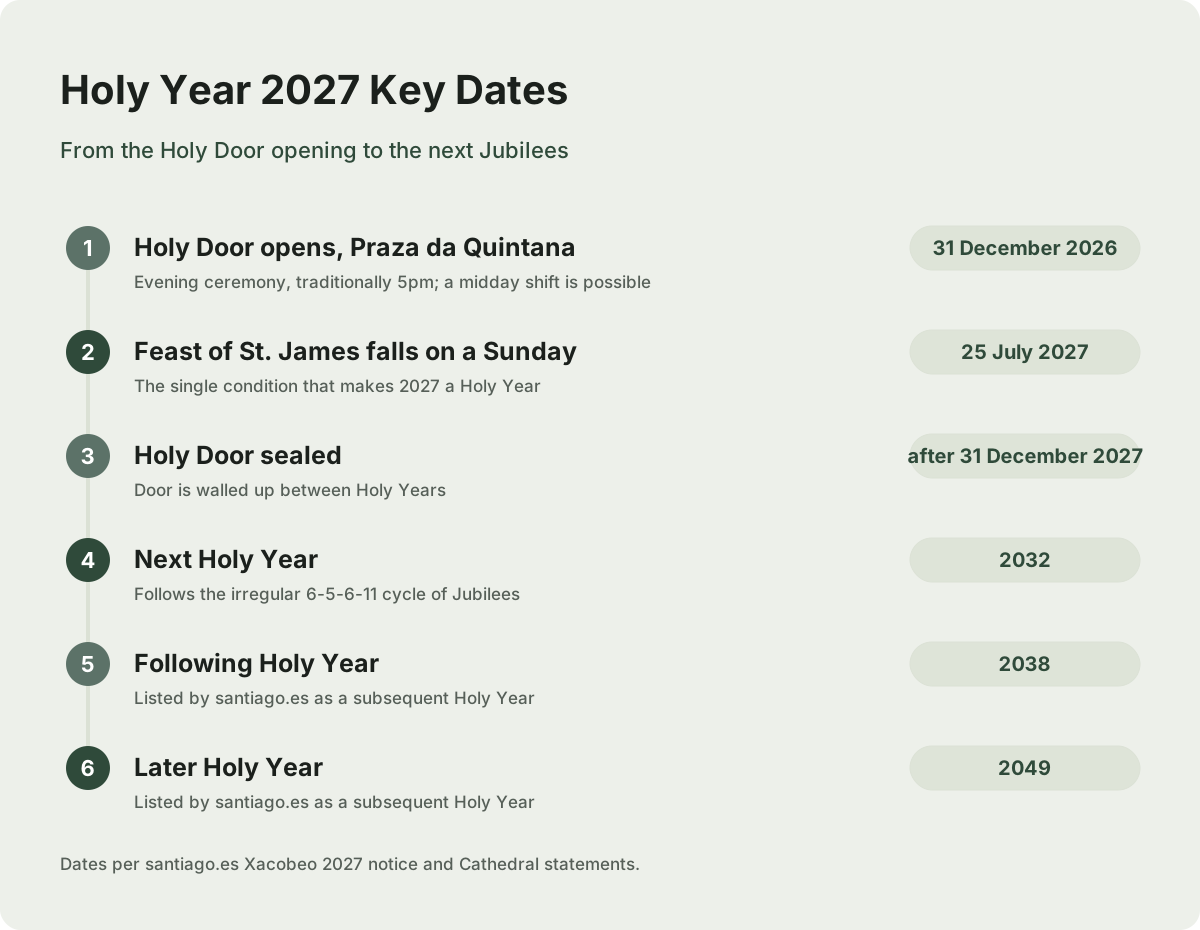
2027 is the Holy Year because 25 July 2027 falls on a Sunday, and 25 July 2026 does not. The Jacobean Holy Year has one condition: the feast of St. James the Apostle must land on a Sunday in the liturgical calendar. In 2026 the feast falls midweek, so the Holy Door stays sealed and no Jubilee is declared. The next Sunday feasts after 2027 come in 2032, then 2038, then 2049, which gives the Xacobeo its irregular 6-5-6-11 year rhythm.
This catches a lot of planners out. People hear "Santiago" and "big celebration" and assume the summer of 2026 is the moment to go, partly because airport and city news has been full of Galicia stories this year. The verified position from santiago.es's Xacobeo 2027 notice is the opposite: 2026 is an ordinary year by Jubilee standards, with ordinary, if already busy, pilgrim traffic, and the true surge arrives with the door opening on New Year's Eve 2026 and the feast of 25 July 2027.
The table sets out the pattern so the next few Jubilees are easy to see at a glance.
| Holy Year | Why It Qualifies | What The Sources State |
|---|---|---|
| 2027 | 25 July 2027 falls on a Sunday | Holy Door opens the evening of 31 December 2026; Jubilee runs through 31 December 2027 |
| 2032 | The next Sunday feast after 2027 | Listed by santiago.es as a subsequent regular Holy Year |
| 2038 | Following in the 6-5-6-11 cycle | Listed by santiago.es as a subsequent Holy Year |
| 2049 | Following in the 6-5-6-11 cycle | Listed by santiago.es as a subsequent Holy Year |
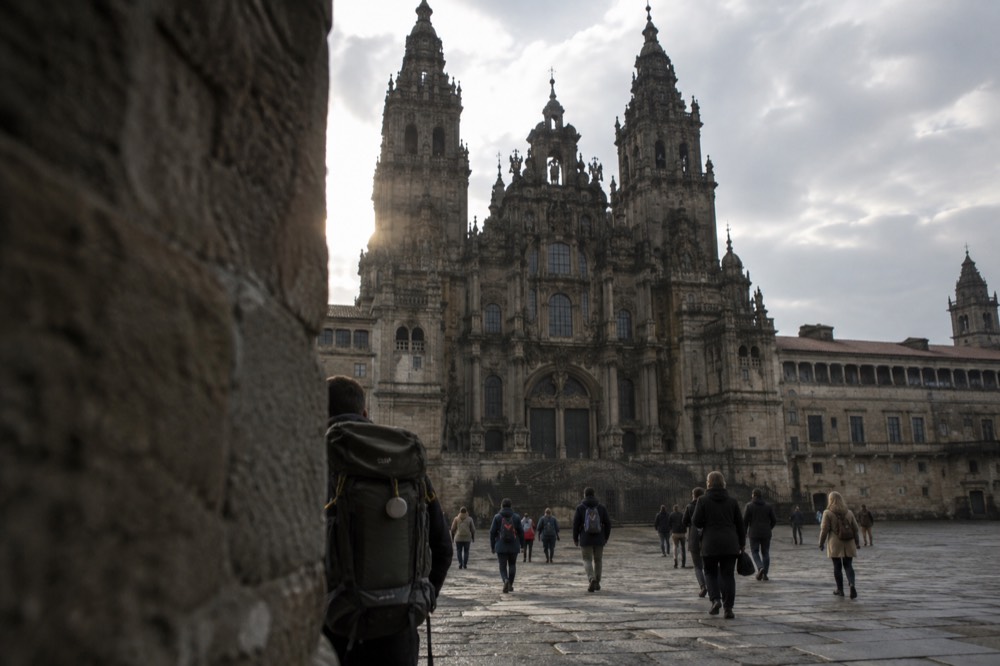
For context on how the city has been absorbing pilgrim growth, the Oficina del Peregrino's own record is the benchmark: 530,987 Compostelas were issued in 2025, a record year, and Holy Years historically multiply an ordinary year's figures well beyond that. The arriving in Santiago on the Camino guide explains what that final approach into the city looks like on foot, and the Camino de Santiago overview covers the walk that brings most of those pilgrims in.
When Does The Holy Door Open In Santiago de Compostela?
The Holy Door opens solemnly on the evening of 31 December 2026, in a ceremony on the Praza da Quintana that the Cathedral Chapter has traditionally held at 5pm, though santiago.es's news notice flags a possible midday adjustment, so the exact hour should be confirmed close to the date. The door then stays open every day of 2027 and is sealed after 31 December 2027. The ceremony is public, free, and draws large crowds to the Quintana and the adjoining square.
Attending the opening is a serious logistical commitment. The last days of December in Santiago de Compostela sit inside the wettest stretch of the Galician oceanic climate, AEMET's station data shows wet and cool conditions from October to March, and the ceremony is an outdoor standing event on a stone square. The crowd begins gathering hours early, and the squares closest to the door fill first. Nobody watching from outside a barrier sees the actual removal of the wall well; the moment is small, quiet and fast, and most of the crowd is there for the atmosphere rather than the view.
The Praza da Quintana has its own character, split between the Clock Gate side and the Holy Door side, and it is the one square in the city that becomes genuinely different during a Xacobeo. The Praza da Quintana and Holy Door guide covers the square, the door's architecture and how the wall is built and unsealed. If a December opening in the rain does not appeal, the alternative is to walk in during 2027 and pass through the door as part of a completed pilgrimage, which is the route most of the 2027 pilgrims will take.
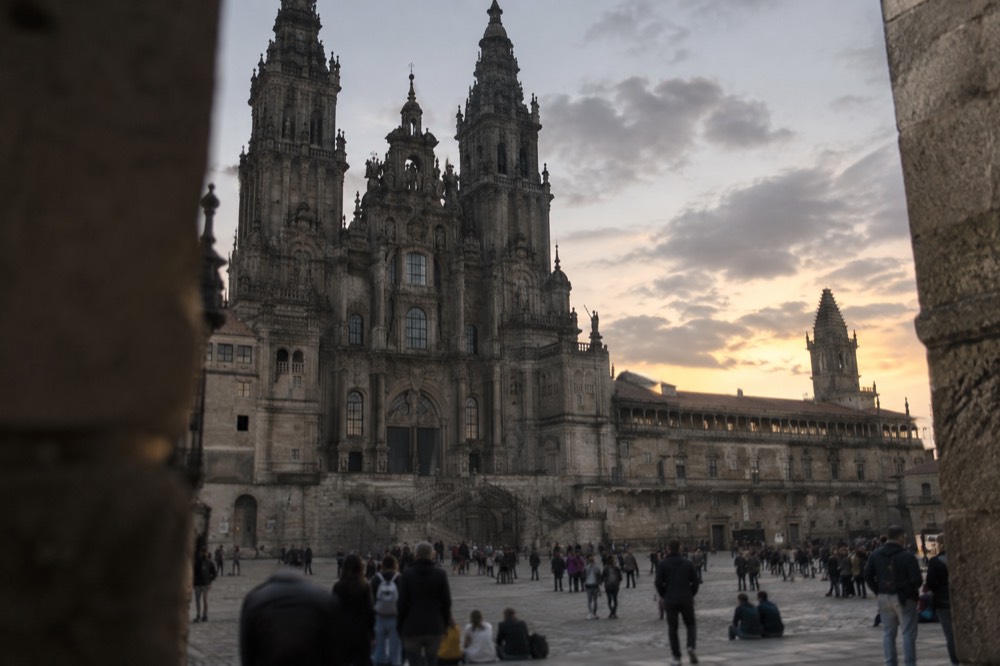
What Changes In The City During A Xacobeo?
During the 2027 Holy Year Santiago de Compostela sees materially higher pilgrim and visitor numbers, expanded cultural programming funded as part of the Xacobeo, and longer queues at the Cathedral, the Pilgrim's Office and every tier of accommodation in the city. The Cathedral also enters the year having relocated its pilgrim masses: from 16 October 2026 the 9:30am, noon and 7:30pm masses move from the High Altar to the Church of San Agustin, and only the 7:30am mass stays in the Cathedral's Communion chapel.
The mass relocation is the detail most 2027 planning pages are missing. The Cathedral's main chapel is being remodelled in preparation for the Holy Year itself, which is why the three busiest masses have moved a short walk away, and that arrangement stands into the Holy Year until further notice. The pilgrim mass, the one most walkers target after arriving, will not be at the High Altar in front of the tomb while the works run.
The Botafumeiro is the other live issue. The great censer normally swings at the end of the main solemn Mass on twelve fixed liturgical dates a year, Epiphany, Easter, the Feast of St. James, the Assumption, and the rest of the annual list. The Cathedral confirmed in writing on 5 September 2026 that it is out of action: scaffolding for the cimborrio, the dome over the crossing, covers its hanging mechanism, and no return date has been published. It would be reckless to promise any 2027 visitor the sight. What can be said is that the schedule exists, the Botafumeiro guide lists the twelve solemnities, and whether it flies again before the Holy Year closes will be announced by the Cathedral, not by any tour operator.
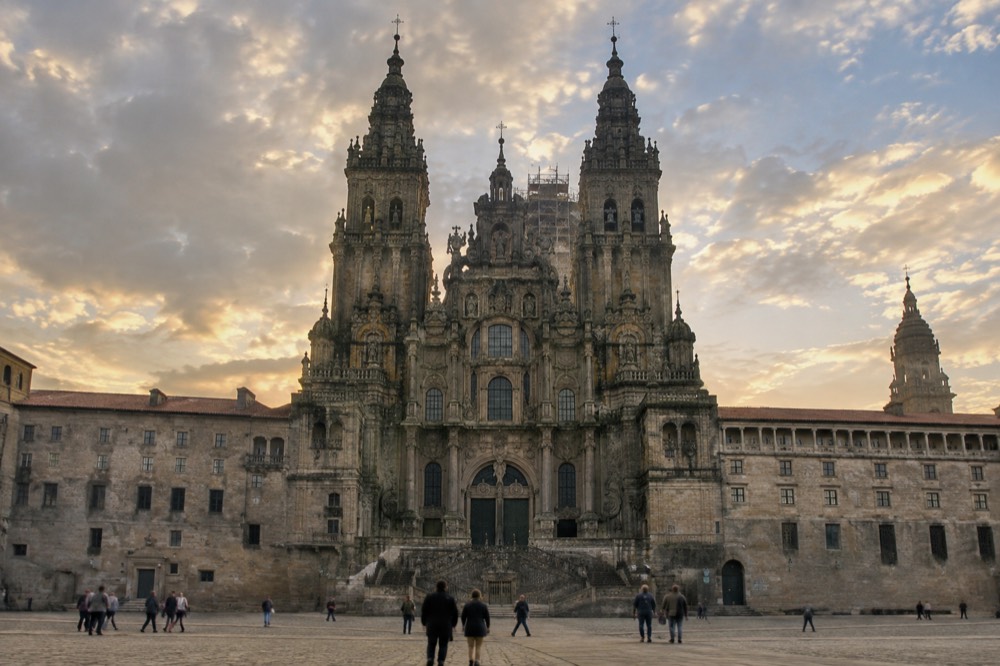
Beyond the Cathedral, the Xacobeo is a regional programme. Galicia extends concert series, exhibitions and events across the year, concentrated around the feast of 25 July and the summer months, and the city's accommodation fills well ahead. The feast of St. James guide on this site covers what the festival week itself involves, from the Pontifical Mass with the national offering to the fireworks over the old town, and the feast of St. James July 25 guide is the full version of it.
How Crowded Will The 2027 Holy Year Camino Be?
Expect the busiest walking season in years, with Holy Year traffic building on an already record baseline. The Oficina del Peregrino issued 530,987 Compostelas in 2025, an ordinary non-Holy year, and Holy Years historically multiply ordinary-year figures. The two weeks around the feast of 25 July 2027, the Easter window, and the whole of July and August will be the most congested stretches on every major route, with the last 100km from Sarria the densest section of all.
The practical reading is that the last 100km of the Camino Frances, from Sarria to Santiago de Compostela, will run at capacity through the 2027 summer. That is the section walkers choose precisely because it is the shortest qualifying distance for the Compostela: the last 100km walked, or the last 200km cycled, with at least two stamps per day in the credencial, issued in person at the Pilgrim's Office on Rua das Carretas 33. When the shortest qualifying stretch is also the most popular one, a Holy Year turns it into a moving crowd rather than a quiet trail.
The spread of pressure across the season is roughly predictable, and the table below is a planning aid, not a promise.
| Period In 2027 | Expected Pressure | What It Means For Planning |
|---|---|---|
| January to March | Low to moderate, rising | Quietest Holy Year months; wet weather per AEMET's October-to-March wet season |
| April, Easter window | High | Spring crowds plus the solemnity of Easter; book months ahead |
| May and June | Very high | The classic shoulder-season walk becomes peak season in a Xacobeo |
| Around 25 July | Extreme | Feast of St. James; book beds and rooms far ahead |
| July and August | Extreme | Driest months per AEMET data, and the most crowded everywhere on the routes |
| September and October | High | The post-summer wave stays heavy in a Holy Year; wet season returns in October |
| November and December | Moderate, falling | Door closes 31 December 2027; the final weeks are calm but dark and wet |
The honest advice for 2027 is to either walk in the quieter months of the Holy Year or accept that the summer will be shared. The best month to walk the Camino answer page weighs the trade-offs month by month, and the same logic applies inside a Jubilee, only amplified.
Which Camino Route Should You Walk In The Holy Year?
The Camino Frances remains the route most pilgrims walk into a Holy Year, with the deepest infrastructure of albergues and services, but its last 100km from Sarria will be the single most crowded section of the network in 2027. The Portuguese Camino from Porto or Tui is the strongest alternative: shorter, well served and quieter. The Camino del Norte and the Camino Primitivo offer coast and mountains with fewer walkers, and the Camino Ingles from Ferrol is the shortest full-certificate walk.
Route choice in a Xacobeo is a crowding calculation. Every route ends at the same tomb and the same Holy Door, so the question is how much company a walker wants on the way. The Camino routes guide breaks down the full network with distances and profiles, and the Camino map guide on this site shows how they converge on Galicia.
| Route | Typical Starting Point | Character In A Holy Year | Certificate Qualifying Distance |
|---|---|---|---|
| Camino Frances | Saint-Jean-Pied-de-Port or Sarria | The busiest by far; Sarria onwards at capacity in 2027 | Full route, or last 100km from Sarria |
| Camino Portugues | Lisbon, Porto or Tui | The strongest 2027 alternative; well-marked, good services | Last 100km from Tui |
| Camino del Norte | Irun along the northern coast | Coastal scenery, fewer walkers, hillier terrain | Full route into Santiago de Compostela |
| Camino Primitivo | Oviedo | The original route, mountainous, the quietest full walk | Full route |
| Camino Ingles | Ferrol or A Coruna | Shortest full-certificate walk from Ferrol | Qualifies in full from Ferrol |
Two rules govern the certificate on any of them, and they are worth restating because a Holy Year multiplies the number of first-time walkers who get them wrong. The credencial, the pilgrim passport, needs at least two stamps per day from official stamping points, and the Compostela itself is issued in person only at the Pilgrim's Office, Rua das Carretas 33. The pilgrim passport and credencial guide covers the stamping system, and the Compostela certificate guide explains the document and the conditions attached to it.
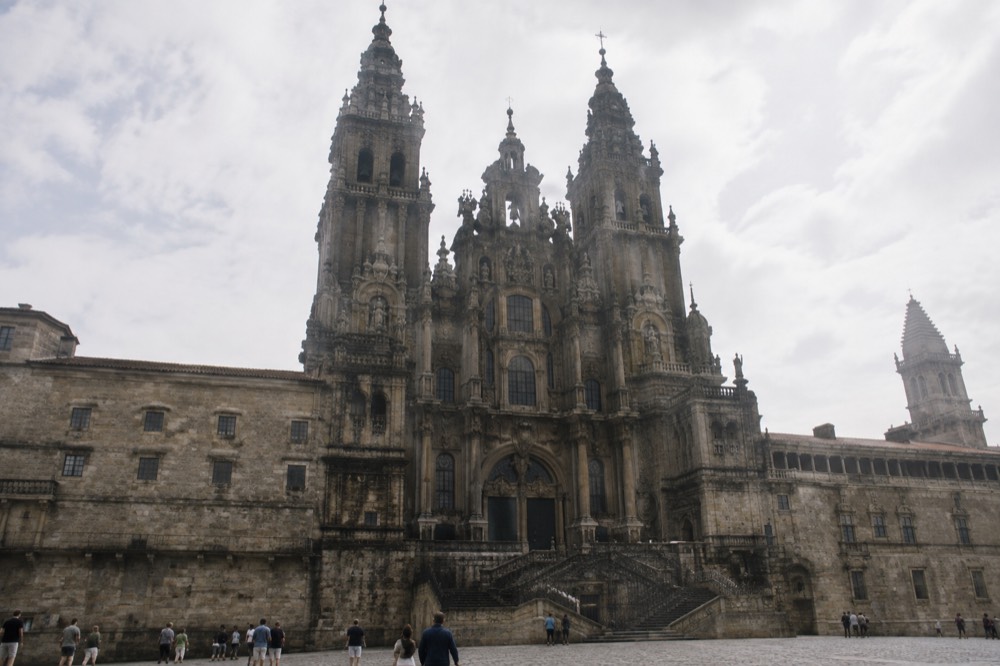
For walkers weighing age, fitness or safety, this site carries dedicated answers on whether a 70-year-old can walk the Camino and on solo walking for women, and the Camino Frances guide gives the stage-by-stage shape of the main route.
Where Do You Sleep During A Holy Year?
Book everything refundable and book it early: in the 2027 Xacobeo, public albergues fill by mid-afternoon on the popular stages, private albergues and pensions sell out weeks ahead in summer, and hotels along the Camino Frances from Sarria onward will be priced and occupied at city levels through July and August 2027. Municipal albergues work on first-come, first-served terms, so a Holy Year walker who starts late will regularly arrive at closed doors.
The albergues and Camino accommodation guide explains the tiers, from the few-euro municipal bunks to private rooms and hotels, and how each behaves when the network is full. In a normal July the system strains. In a Holy Year July it reorders the walking day, because arrival time becomes the deciding variable rather than preference.
The honest Holy Year strategy is one of three. Walk in spring or autumn within the Jubilee year and accept some rain; the door is open until 31 December 2027, so the indulgence does not expire in August. Walk a quieter route, the Primitivo or the Norte, where pressure stays lower even at peak. Or walk the Frances with every night pre-booked, treating the Camino as a fixed itinerary rather than an open walk, which changes the character of the trip but guarantees the bed.
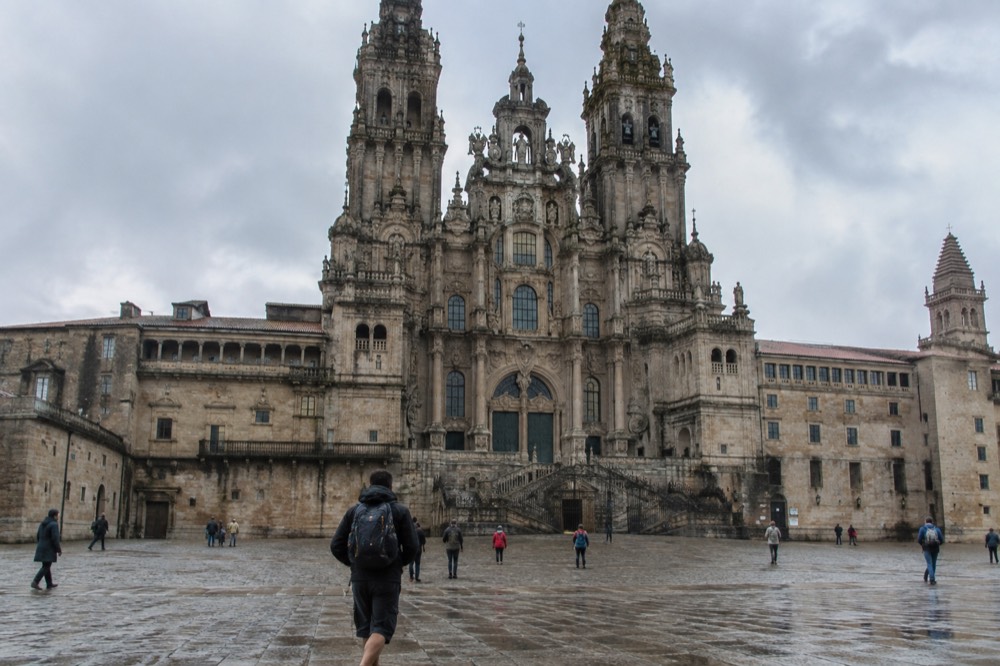
In the city itself, the last night before Santiago de Compostela and the nights after arrival are the pinch points. The where-to-stay guide on this site maps the neighbourhoods, and the rest day after the Camino itinerary plans the recovery day that most walkers need more than they expect. Costs in 2027 will run at the top of every published range for the walk.
How Do You Plan Flights, Trains And Timing For 2027?
Fly into Santiago de Compostela Airport (SCQ), about 12km from the old town, with line 6A running into the centre, or arrive via A Coruna, Porto or Madrid and travel onward by train or bus. Book 2027 summer flights as far ahead as the airline allows. The current line 6A fare is 1 EUR to the driver or 0.36 EUR on a card, but a new Monbus contract at around 6 EUR is expected to take over, so treat any fare as subject to change.
The airport detail matters here because so much Holy Year advice is being written from stale numbers. santiago.es's transport page, updated on 23 September 2026, still listed the Tussa-operated 6A service, with the Monbus reorganisation expected in autumn, possibly by December, and the city's own advice is to verify the line number after December. A 2027 walker should check the live fare and line on the city's transport page rather than trust anything printed in a 2026 guide, this one included.
The onward connections are stable. Santiago de Compostela to Madrid runs direct high-speed services in roughly three to four hours; A Coruna is a short hop; Vigo is roughly an hour; and there is no direct rail line to Porto, Portugal, walkers change at Vigo, usually onto the regional Celta service. The flights, Madrid-by-train and Porto-to-Santiago guides on this site each cover one arrival route in detail.
| Arrival Option | Route To Santiago de Compostela | Notes For Holy Year Planning |
|---|---|---|
| Fly into SCQ | Line 6A bus, about 12km to the old town | Fare in flux; Monbus contract pending |
| From Madrid | Direct high-speed train, roughly 3-4 hours | Book far ahead in the 2027 summer |
| From A Coruna | Direct regional service, a short hop | Often the cheapest flight-and-rail combination |
| From Vigo | Regional service, roughly 1 hour | The rail gateway from northern Portugal |
| From Porto, Portugal | No direct train; change at Vigo | The classic Camino Portugues arrival |
For the walk itself, the how-long-does-it-take answer and the Camino packing list cover the two questions every first-time Xacobeo pilgrim asks after booking travel.
What Should You Do In Santiago de Compostela After Arriving?
Collect the Compostela at the Pilgrim's Office on Rua das Carretas 33, in person, with the stamped credencial; attend a pilgrim mass, noting that from 16 October 2026 the 9:30am, noon and 7:30pm masses are held at the Church of San Agustin; enter through the Holy Door while the Jubilee lasts; visit the Apostle's tomb in the crypt; and consider the Cathedral's rooftop tour, a guided visit of about 60 minutes up roughly 140 steps to around 72 metres, at EUR15 general or EUR12 reduced.
That is the full arrival sequence in one paragraph, and each step has a longer guide of its own. The cathedral tickets and opening hours guide on this site covers entry, free to the basilica itself, generally from about 7am to 9pm, with the museum and timed options on top. The cathedral rooftops tour guide explains the Cubiertas and Torre de la Carraca visit, and the cathedral museum guide covers the permanent collection in the Gelmirez Palace and its EUR9-23 ticket range depending on type.
The rooftop tour deserves its mention in any Holy Year article for a specific reason: it is one of the few ways to see the scale of a Xacobeo from above. In an ordinary year the view from the Cathedral roofs takes in the old town's granite roofs and the Alameda park beyond. In 2027, from about 72 metres, it takes in the city operating at its absolute capacity, and the Cathedral's own ticket site recommends advance booking precisely because timed slots sell out in peak season.
A guided visit is worth considering on the first day, before legs and attention are spent. The Cathedral, museum and old town combination from the operator's live listing covers the interior, the museum and the streets around Praza do Obradoiro in one block, and the same operator runs a hidden city walking tour that reaches the streets most walkers rush past between the Alameda and the Quintana.
Is It Better To Avoid The Holy Year Crowds Entirely?
Walking into Santiago de Compostela before the door opens, or after it seals at the end of 2027, gives the quietest Camino of the coming years, and both still end at the same tomb and Cathedral, with ordinary-year crowds that are already at record levels. The trade is the Jubilee itself: the Holy Door, the indulgence and the Xacobeo atmosphere exist only between 31 December 2026 and 31 December 2027. A walker who wants quiet and the door together must take the Holy Year's shoulder months.
There is no bad year to walk, only different years. The 2026 season is already busy on the back of the 2025 record, and the city makes its case outside any Jubilee too. What a Holy Year adds is density: more languages on the trail, more full albergues, more queues at the Pilgrim's Office, and more of everything the Xacobeo programme puts on stages across Galicia.
The decision framework is straightforward.
| If You Want... | Walk In... | Accept... |
|---|---|---|
| The Holy Door and the Jubilee at its calmest | January to March 2027 | Wet, cool weather per AEMET's wet season, shorter days |
| The full Xacobeo atmosphere at peak | July to August 2027 | Extreme crowds, booked-out beds, highest prices |
| The feast of St. James itself | Late July 2027 | The busiest week of the decade on the routes |
| The quietest possible walk | Before the door opens or after it seals | No Jubilee; the door is sealed |
| A balance of both | May, June, September or October 2027 | High but manageable pressure; shoulder weather |
For the city rather than the walk, the one-day and two-day Santiago de Compostela itineraries on this site work in any year, though every timing assumption in them should be doubled during a Holy Year peak.
What Does The 2027 Holy Year Mean For The Botafumeiro And The Cathedral?
The Cathedral remains fully open to visitors through the works: the naves, the Apostle's tomb and the embrace of St. James stay accessible, entry to the basilica stays free, and the museum, rooftops and Portico da Gloria run on normal timed ticketing. The Botafumeiro, however, is out of action, suspended because cimborrio restoration scaffolding covers its hanging mechanism, with the Cathedral confirming in writing on 5 September 2026 that no return date exists, so no honest guide can promise it flying during the 2027 Holy Year.
The twelve solemnities on which it normally flies, Epiphany on 6 January, Easter Sunday, the Ascension, the Apparition at Clavijo on 23 May, Pentecost, the feast of St. James on 25 July, the Assumption on 15 August, All Saints, Christ the King, the Immaculate Conception, Christmas and the Transfer of the Apostle on 30 December, remain the liturgical calendar of the Cathedral regardless. It never flew daily, not even in a Holy Year, and the private-request route that existed at an indicative EUR450-500 is unavailable while the mechanism is covered. If it returns during 2027, the announcement will come from the Cathedral's own liturgy page, and the Botafumeiro guide is where Santiago de Compostela Travel Guide will carry it.
The works, oddly, are the Holy Year arriving early. The main chapel remodelling that moved the pilgrim masses to San Agustin from 16 October 2026 is preparation for the Xacobeo, and the Berenguela clock tower restoration spans 2026 and 2027 with scaffolding on the exterior. None of it closes the visitor experience. The Portico da Gloria at the west door, whose own major restoration finished in 2018, remains viewable on time-limited visits for conservation reasons.
What Is The Best Holy Year 2027 Plan From Start To Finish?
Pick the route now, book summer 2027 beds and transport the moment bookings open, and start with the credencial, the document that collects the two daily stamps that qualify the walk for the Compostela. Walk in the Holy Year's shoulder months if the Jubilee matters more than the weather, or in July and August if the peak experience is the point. Arrive, collect the certificate in person at Rua das Carretas 33, pass through the Holy Door before 31 December 2027, and plan a rest day in the city.
Working backwards from the feast, the timeline for a summer 2027 pilgrim on any route looks like this: route and dates fixed by late 2026, credencial ordered or collected before departure, flights and first-and-last-night accommodation booked by early 2027, the rest of the nights either pre-booked or left open with a deliberate strategy for the route chosen, and the walk itself aimed to land in the city either side of 25 July if the feast is the goal, or away from it if the crowds are not.
The resources for each stage of that plan are already on this site, gathered here in one place for a Xacobeo walker:
- The Camino de Santiago overview and the Camino routes guide, for choosing the walk
- The pilgrim passport and credencial guide and the Compostela certificate guide, for the paperwork
- The albergues guide and the packing list, for the practical side
- The arriving in Santiago on the Camino guide and the rest day itinerary, for the finish
- The feast of St. James guide and the Praza da Quintana and Holy Door page, for the Jubilee itself
Whichever route and month a walker chooses, the two facts worth pinning to the fridge are the ones the rumors get wrong most often: 2026 is not the Holy Year, and the door opens on the evening of 31 December 2026. Everything else, the beds, the masses, the Botafumeiro, the weather, is a planning problem with a verified answer.
Common Questions About The 2027 Holy Year In Santiago de Compostela
Is 2027 a Holy Year for the Camino de Santiago?
Yes. 2027 is the next Jacobean Holy Year in Santiago de Compostela because 25 July 2027, the feast of St. James, falls on a Sunday. The Holy Door opens on the evening of 31 December 2026 and the Jubilee runs through 31 December 2027.
Is 2026 a Holy Year in Santiago de Compostela?
No. 2026 is not a Holy Year: 25 July 2026 does not fall on a Sunday, so the Holy Door stays sealed. The Xacobeo begins with the door opening on 31 December 2026.
When does the Holy Door open for the 2027 Holy Year?
On the evening of 31 December 2026, in a ceremony on the Praza da Quintana traditionally held at 5pm, though the city's news notice flags a possible midday adjustment, so confirm the hour closer to the date.
Will the Botafumeiro swing during the 2027 Holy Year?
It is suspended because cimborrio restoration scaffolding covers its hanging mechanism, and the Cathedral has confirmed in writing that there is no return date. No guide can honestly promise it flying in 2027; check the Cathedral's own liturgy page for any announcement.
Do you have to walk the Camino during the Holy Year to get the Compostela?
No. The Compostela is issued in any year, and the rules are the same: the last 100km walked or the last 200km cycled, with at least two stamps per day in the credencial, collected in person at the Pilgrim's Office on Rua das Carretas 33. The Holy Year adds the Jubilee indulgence, not a different certificate.
When is the next Holy Year after 2027?
2032. The Sunday rule produces the irregular 6-5-6-11 year pattern, and after 2027 the next Jubilees are 2032, 2038 and 2049.
The 2027 Xacobeo will be the busiest fourteen months Santiago de Compostela has seen in a generation, and the pilgrims who enjoy it most will be the ones who treated the calendar, the beds and the Botafumeiro question as facts to check rather than assumptions to carry.