Camino de Santiago Pilgrim Passport: The Credencial For Santiago de Compostela
The credencial is the small stamped booklet that turns a long walk into a documented pilgrimage. Here is how it works, which stamps count, and how it becomes the Compostela at the Pilgrim's Office in Santiago de Compostela.
Short answer
The Camino de Santiago pilgrim passport, called the credencial, is a folded booklet you stamp twice a day along the route. It proves you walked the last 100km (or cycled the last 200km) continuously, which is what the Oficina del Peregrino in Santiago de Compostela checks before issuing the Compostela certificate in person.
The Camino de Santiago pilgrim passport, known in Spain as the credencial, is the single document that separates a documented pilgrim from a tourist on a very long walk in Galicia. It is a small folded booklet, cheap to obtain, carried in a pocket or pack, and stamped at churches, albergues and municipal offices along every recognized route toward Santiago de Compostela. Its one job is proof: proof of where you were, on which days, and how far you walked. The Oficina del Peregrino's FAQs say the credencial is the document that supports the Compostela application, and the rules attached to it, two stamps per day over at least the final 100km walked, are what the office physically checks when you arrive.
This guide covers the whole life of the document: what it is, where pilgrims pick one up, which stamps actually count, how the two-stamps-per-day rule works on the final 100km, what the booklet gets you besides the certificate, and what happens at the office on Rua das Carretas in Santiago de Compostela. The basics of the walk itself are covered in the site's Camino de Santiago overview, and route choice is a separate decision explained in the Camino routes comparison.
What Is The Camino de Santiago Pilgrim Passport?
The credencial is a small accordion-folded booklet, roughly passport sized, issued by pilgrim associations, the Cathedral's own network and friendly bodies along the route, that you present for stamping as you walk. Each stamp records the place and date you passed through, and together the stamps form a continuous diary of your pilgrimage. The Oficina del Peregrino treats this diary, not your word or your photographs, as the evidence behind the Compostela certificate issued in Santiago de Compostela.
The document has a long history. Pilgrims have carried letters of passage and proof-of-passage documents toward the tomb of St. James for centuries; the modern credencial is the standardized descendant of those medieval safe-conducts. The history of the Camino de Santiago explains how the route itself evolved from a medieval pilgrimage network into the modern set of waymarked paths, but the booklet's purpose never changed. A pilgrim who claims to have walked from Sarria or from Pamplona needs something that shows the claim is true, day by day.
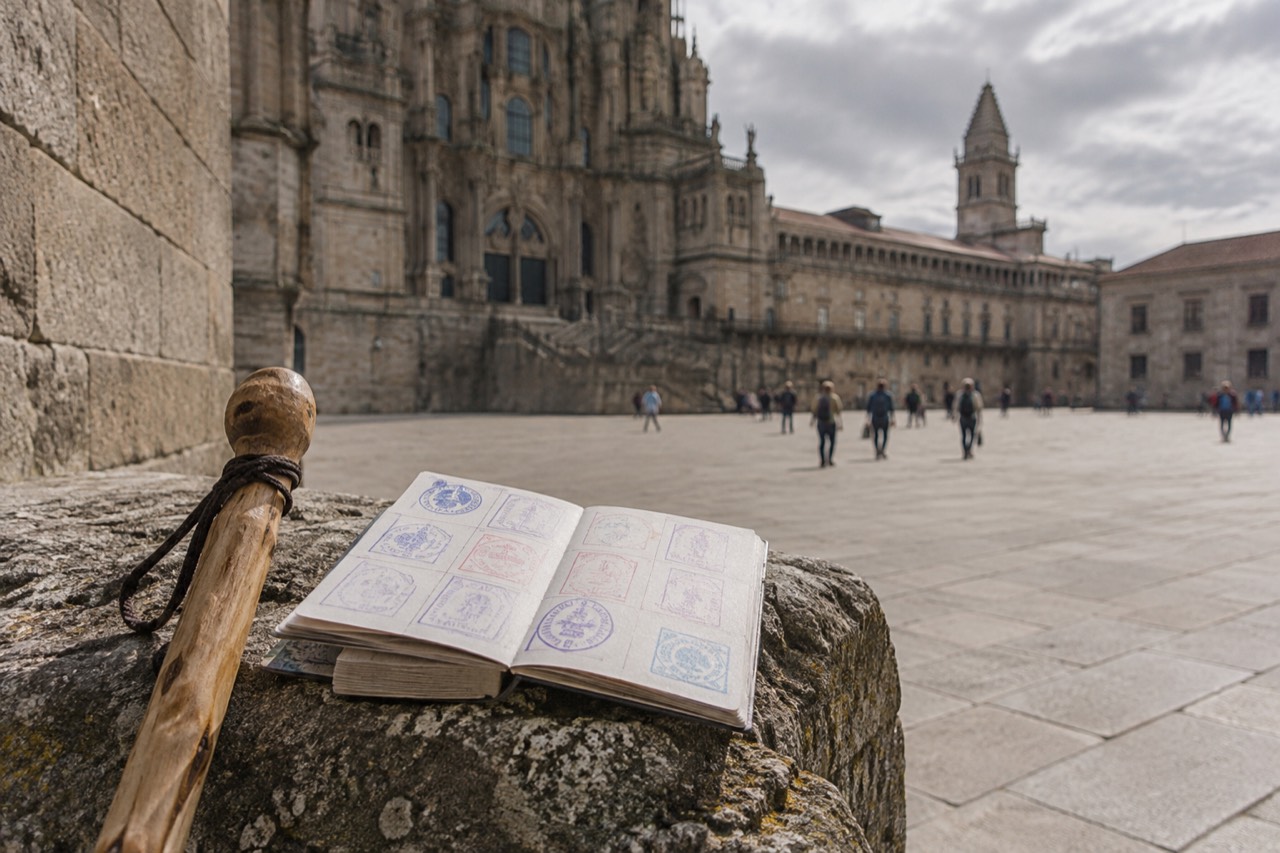
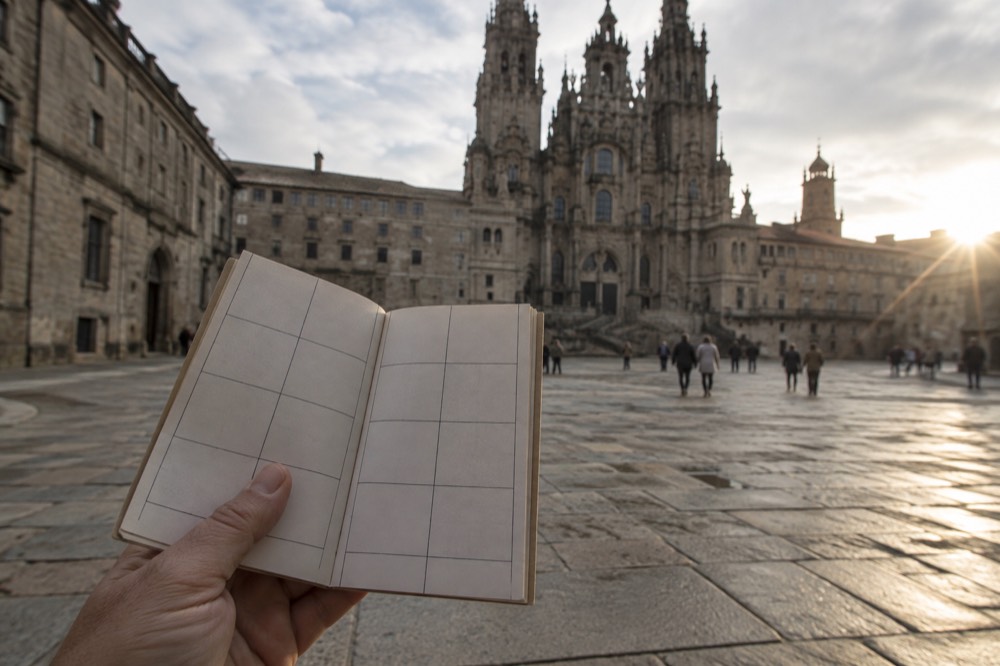
The physical object is unglamorous. It is a strip of card folded into panels, with spaces for sellos, the rubber stamps that churches, albergues, bars and town halls keep behind their counters. Some stamps are simple oval date stamps. Others are elaborate inked images of scallop shells, cathedrals or local saints. Collectors enjoy the variety; the office in Santiago de Compostela enjoys the dates.
It is worth being clear about what the credencial is not. It is not an identity document, not a ticket, and not a booking confirmation. It does not reserve you a bed. It does one thing, and it does it well: it proves continuity of a pilgrimage on a recognized route, which is exactly what the Compostela rules require.
Where Do You Get A Credencial Before Walking To Santiago de Compostela?
Pilgrims obtain the credencial before starting, most commonly from Camino pilgrim associations in their home country, from the issuing bodies connected to the Cathedral of Santiago de Compostela, and from offices at major starting points such as Sarria, Saint-Jean-Pied-de-Pont, Porto and Irun. Many albergues and parish churches along the route also issue or stamp them. The Oficina del Peregrino itself is the final stop, not the first: it is where the finished document is handed over and exchanged, not sold.
Where you get yours depends on where you live and where you start. Pilgrim associations across Europe and the Americas issue credenciales to their members, often by post, and this is the route many long-distance walkers take so the booklet is in hand on day one. Walkers starting in Spain without one can usually pick one up in the departure town: the Camino Francés starts are well supplied, and the popular final-100km start at Sarria is geared around last-minute pilgrims. The Camino Francés guide covers that start-to-finish route in detail.
The details behind this page do not verify a single fixed price for the credencial, and this site will not print a number it cannot source. Pricing genuinely varies by issuing body, country and year, so check the cost with the association or office handing it over. Treat any figure you see quoted online as that issuer's price, not a universal one.
| Where pilgrims typically get a credencial | Stage it suits | Notes |
|---|---|---|
| Home-country pilgrim association | Before booking anything | Often posted out; association membership may apply |
| Cathedral-linked issuing network | Before departure, in Spain | The network connected to Santiago de Compostela's Cathedral |
| Offices at major starting towns | Day one of the walk | Sarria, Saint-Jean-Pied-de-Pont, Porto and similar starts |
| Albergues and parish churches en route | Emergency mid-walk replacement | Coverage varies by town; do not rely on it |
| Oficina del Peregrino, Rua das Carretas 33 | End of the walk only | This is where the credencial is handed in, not issued |
Losing the document mid-walk is the nightmare scenario, and it is worth planning against. Some pilgrims photograph each day's stamps as a backup; the photographs do not replace the credencial for the Compostela, but they help an issuing office reconstruct what happened if you have to start a fresh booklet. The office's FAQs address continuity directly: what matters is an unbroken record covering the required final distance, so a lost-and-replaced booklet is a problem to solve quickly rather than a walk written off.
Which Stamps Count On A Pilgrim Passport For The Compostela?
For the Compostela, stamps must come from official stamping points: churches, albergues, monastery guesthouses, municipal offices, Guardia Civil posts and similar recognized bodies along recognized Camino routes, at least two per day, with dates and places legible. Stamps from restaurants, shops and hotels are a keepsake tradition, and the office accepts them as supporting evidence where official points are sparse, but two official stamps per day is the standard the Oficina del Peregrino applies on the final 100km.
The two-stamps-per-day rule exists because a single stamp per day cannot prove you did not skip forward by bus. Two dated stamps from points you could only have reached on foot, spaced along the day's walking, form a chain of evidence. The rule the office's FAQs state is minimum two stamps per day from official stamping points, applied over the qualifying distance.
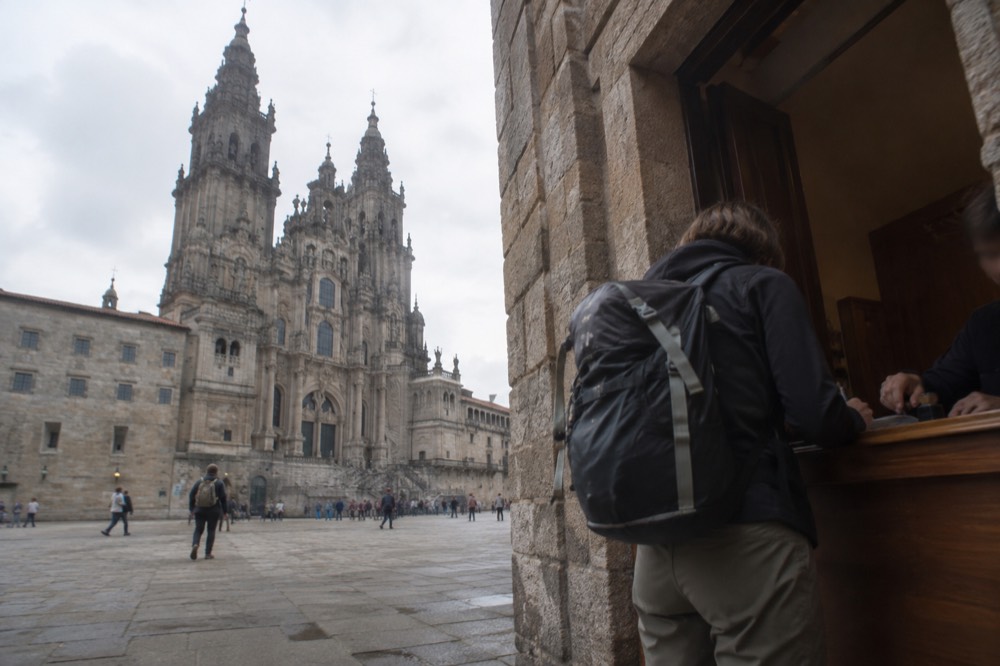
What counts as official matters more on some stretches than others. On the busy Camino Francés, official points are dense and the question barely arises. On quieter routes, and on the Portuguese Coastal or the English Camino outside the final 100km, gaps between churches and albergues are longer, and this is where bars and shops with their own Camino stamps fill the pages. The office knows this and treats commercial stamps reasonably where official ones are unavailable, but the safe habit is official first, ornamental second.
| Stamp source | Official for the Compostela | Practical habit |
|---|---|---|
| Church or parish office | Yes | Stamp whenever open, even briefly |
| Albergue, municipal or private | Yes | Stamp at check-in, every night |
| Town hall or tourist office | Yes | Reliable daytime option |
| Monastery guesthouse or religious house | Yes | Often the best stamps on the route |
| Bar, cafe, hotel, shop | Supporting only | Use when official points are sparse or closed |
| Your own thumbprint, drawing or signature | No | Never counts; the office needs dated ink |
A few habits keep the booklet healthy. Stamp in the order of the walk, keep to the boxes if the design has them, and never let enthusiasm for a pretty stamp crowd out a plain dated one from an official point. Spaces run out on long routes; ask any issuing body what to do when the panels fill, since a second booklet continuing the same walk is normal on the full Camino Francés and the office is used to seeing pairs.
Once you are standing in Santiago de Compostela with a stamped credencial and time to spare before the office queue, a guided walk is a good use of the wait, and the trio below covers the classic first-day options: the full city-and-Cathedral visit, a historic highlights walk, and a full-day trip out to the Costa da Morte.
How Do Two Stamps Per Day Work On The Last 100km To Santiago de Compostela?
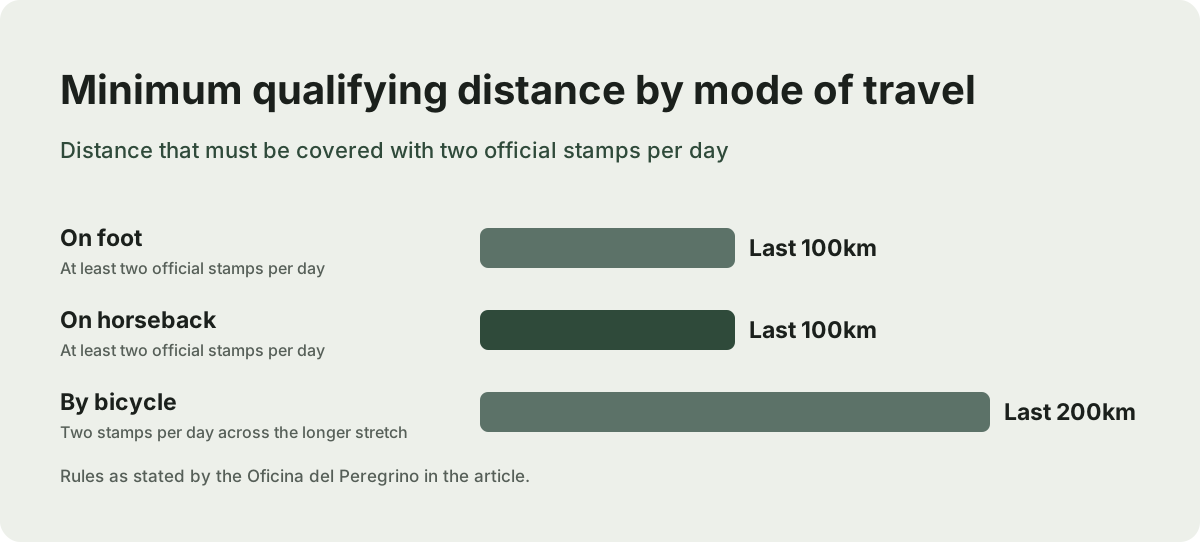
On the minimum qualifying distance, the last 100km on foot or horseback (or the last 200km by bicycle), the credencial must show at least two stamps per day from official points, dated across consecutive days, with no gaps in the chain. That means the final stretch cannot be compressed into a weekend of bus hops: the office reads the stamps as a continuous walking record, and missing days or single-stamp days on the qualifying stretch put the Compostela at risk.
This is the single rule that catches most disappointed pilgrims. The distance is not what you walked in total; it is the final 100km approaching Santiago de Compostela, which is why Sarria, almost exactly 100km out on the Camino Francés, has become the busiest starting point in Galicia. A walker who covered the full Camino Francés from Saint-Jean-Pied-de-Pont and one who did five days from Sarria are examined on the same evidence: the last 100km of stamps.
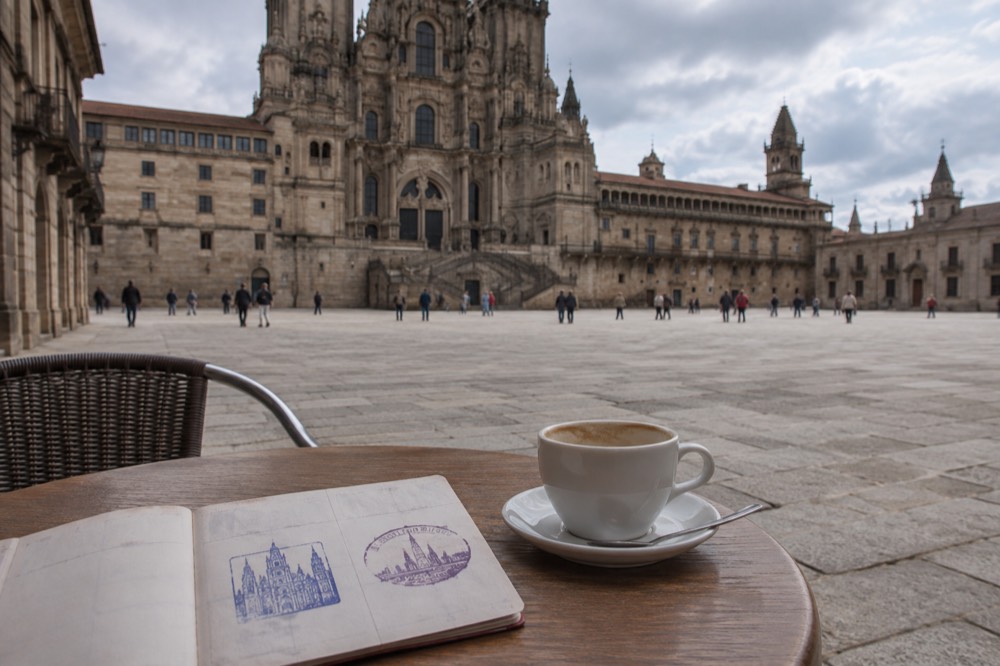
The distances by mode are fixed by the office's rules and are worth setting out side by side, because they drive the whole shape of the final week.
| Mode of travel | Minimum qualifying distance | Stamp rule on that stretch | Certificate |
|---|---|---|---|
| On foot | Last 100km | At least two official stamps per day | Compostela |
| On horseback | Last 100km | At least two official stamps per day | Compostela |
| By bicycle | Last 200km | Two stamps per day across the longer stretch | Compostela |
| Segmented or motor-assisted travel | Not qualifying | Continuity breaks the claim | No Compostela |
Cyclists take note: the qualifying distance doubles, and the office applies the same continuity reading to a longer stamped record. The site's page on doing the Camino de Santiago by bike covers how the cycling timetable differs, and how long it takes to walk the Camino sets out the walking-day arithmetic by route.
Continuity, not just stamp count, is the spirit of the rule. The office's FAQs frame the credencial as evidence of a continuous pilgrimage on a recognized route, so the practical advice is simple: never ride forward past a stretch you intend to stamp later, keep every day's stamps in order, and if illness or injury interrupts the walk, check with the office before assuming you can resume and still qualify. Pilgrims finishing the walk and staying on in the city will find the rest day after the Camino itinerary a useful template for the days between arriving and flying home.
Your credencial is finished the moment the office accepts it. Before handing it over, many pilgrims spend their first afternoon in the city on the tour that covers everything the walk was aimed at, with Cathedral tickets included so nothing depends on same-day box-office luck.
What Does The Pilgrim Passport Get You Besides The Compostela?
Besides the Compostela certificate, the credencial is the practical key to the pilgrim accommodation network: albergues along the Camino routes, municipal and private, ask to see and stamp the credencial at check-in, and many prioritize or exclusively admit walkers carrying one. It also functions as a souvenir of the walk, a record of every night and every stamping counter, and, in the city itself, a piece of identification for pilgrim-facing services that want proof you arrived on foot.
The accommodation angle is the one that affects daily life on the walk. The albergues and Camino accommodation guide explains the network in full, but the short version is that municipal albergues in particular are built for credencial-carrying pilgrims, and the stamp at check-in is part of the routine, not a courtesy. Walking without the booklet means sleeping in hotels and hostels at standard prices, which changes both the budget and the character of the trip.
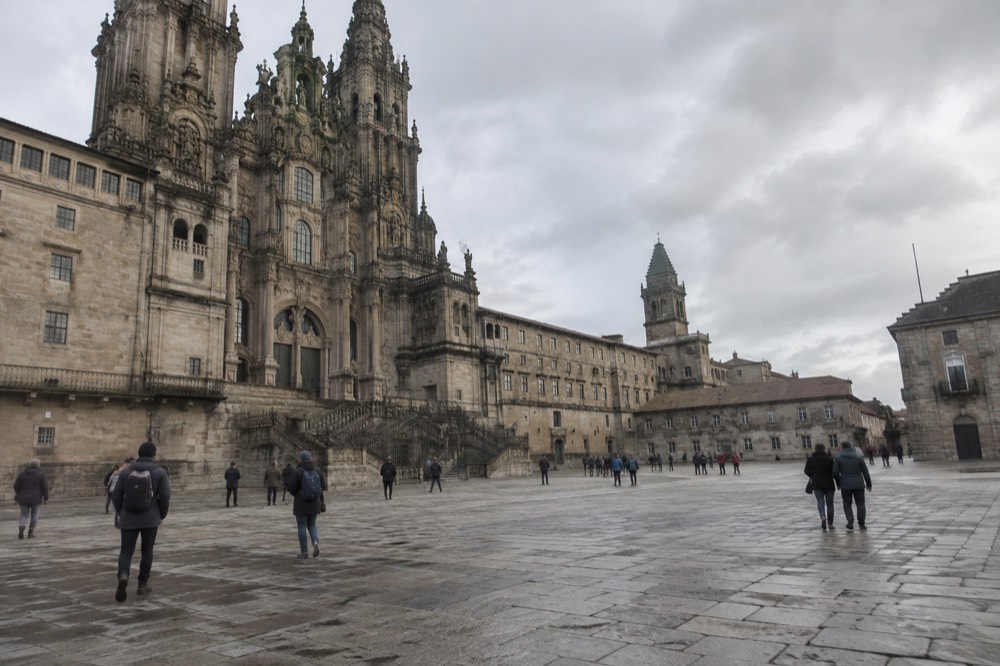
The cost question, for the walk as a whole, is separate from the passport itself, and the site's page on the average cost to walk the Camino breaks it down properly. The booklet is a trivially small line item; the nights and meals behind the stamps are the real budget.
| What the credencial does | Where it applies | What it replaces |
|---|---|---|
| Evidence for the Compostela | Oficina del Peregrino, Santiago de Compostela | No other proof is accepted |
| Access to the albergue network | All recognized Camino routes | Standard hotel booking and pricing |
| A stamped diary of the walk | Every counter you stop at | Nothing; it is its own souvenir |
| Proof of arrival on foot | Pilgrim-facing services in the city | Verbal claims |
The souvenir value is real and underrated. Years later the booklet is the only object that lists, in ink and in order, every church counter, mountain town and rain-faded date of the walk. Some pilgrims stamp obsessively, four or five a day; the office only needs two, and the rest of the panels are yours. Other pages covering the same trip are gathered on Santiago de Compostela Travel Guide.
How Do You Use The Credencial Once You Arrive In Santiago de Compostela?
You take the finished credencial, in person, to the Pilgrim's Office at Rua das Carretas 33 in Santiago de Compostela, during its seasonal opening hours (roughly 8, 9 or 10am to 7 or 8pm depending on the season, closed 25 December and 1 January), where staff examine the stamps and, if the record qualifies, issue the Compostela certificate on the spot. There is no postal option and no online application: the office's rules state the Compostela is issued in person only.
The office is the walk's last queue, and it behaves like a border crossing for pilgrims. Arrive with the credencial filled for the qualifying distance, expect the stamps to be read, and the certificate follows. Arrive with gaps, single-stamp days or a qualifying stretch that was driven, and staff will say no, politely and often.
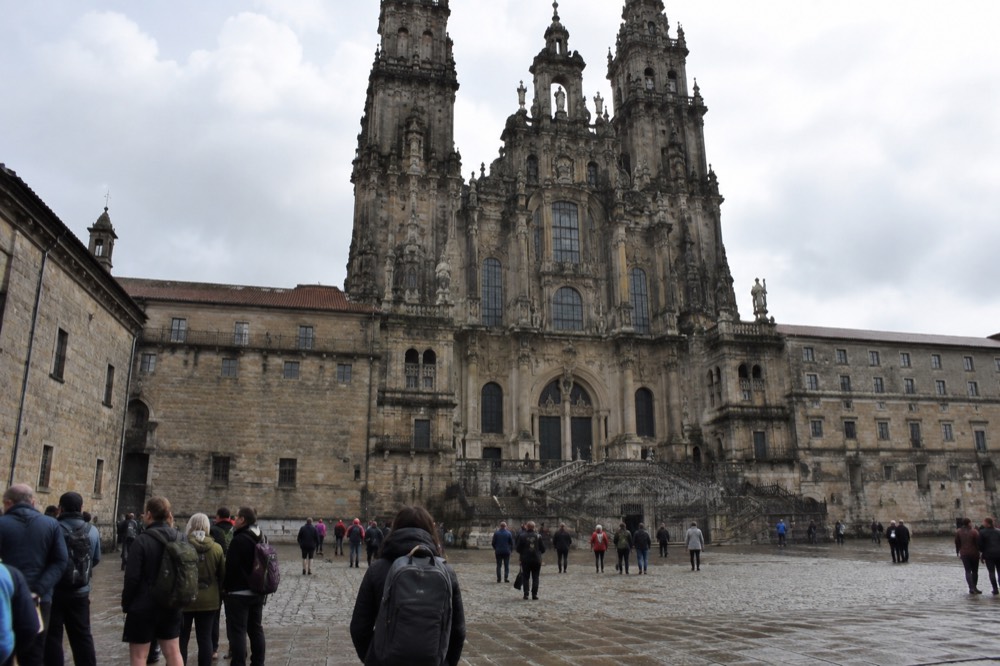
The most recent annual figure available is 530,987 Compostelas issued in 2025, a record year, though note this figure comes from press reporting citing the Oficina del Peregrino rather than the office's own statistics page. Whatever the exact count, the direction is obvious: the office is busier every year, and morning queues in July and August are the price of a record-setting Camino. The best month to walk the Camino page covers the seasonal trade-offs, and the site's full guide to the Pilgrim's Office covers the arrival process in detail.
Pilgrim masses are also affected by current works. Per the Cathedral's own announcements, the 9:30am, noon and 7:30pm masses move from the High Altar to the nearby Church of San Agustin from 16 October 2026, with only the 7:30am mass staying in the Cathedral's Communion chapel. Arriving pilgrims attending mass before the office visit should check where their mass is being held on their date.
After the office, the natural next stop is the Cathedral itself, and a guided visit with tickets included turns the arrival day into a proper ending. The arriving in Santiago on the Camino guide sequences those first 24 hours.
What Are The Common Mistakes With A Camino de Santiago Pilgrim Passport?
The recurring mistakes are: starting the credencial too late to cover the qualifying distance, collecting only one stamp on days inside the last 100km, stamping at non-official points exclusively, carrying an old booklet from a previous walk without a clear new record, and arriving at the office on a closing-day such as 25 December or 1 January expecting service. Each one is avoidable with a habit, and each one is a documented reason the Oficina del Peregrino declines a Compostela application.
The late start is the quiet one. A pilgrim who picks up the credencial in Ponferrado, inside the final 100km but with fewer days stamped than the distance requires, has a booklet that starts too late to prove the qualifying stretch. The fix is geometry: know where 100km out from Santiago de Compostela falls on your route, and have the booklet stamped from before that point.
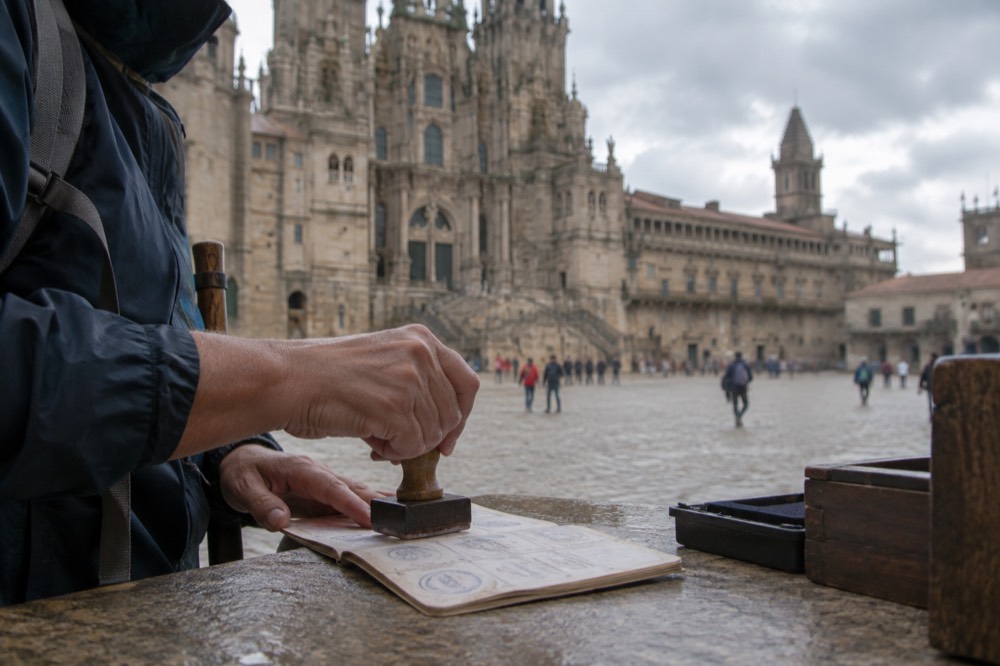
The single-stamp day is the careless one. It happens when a day's walking passes exactly one open official point, usually because the second stop was a bar and nobody thought the difference mattered. Inside the last 100km it does. Build the second stamp into the plan: a church in the morning, the albergue at night, and the day is safe.
| Mistake | What breaks | The habit that prevents it |
|---|---|---|
| Credencial started inside the last 100km | The qualifying stretch is under-stamped | Obtain and stamp from before the 100km point |
| One stamp on a final-100km day | The two-per-day rule fails | Morning church plus evening albergue, daily |
| Only bar and shop stamps | No official points on the record | Official stamps first, souvenirs after |
| Continuing an old booklet ambiguously | Continuity is unreadable | Fresh booklet, dated clearly, per walk |
| Arriving 25 Dec or 1 Jan | The office is closed | Check seasonal hours before the final stage |
The old-booklet mistake deserves a line of its own. A credencial with a completed earlier walk inside it, followed by fresh stamps from a new pilgrimage, is not automatically invalid, but the office has to be able to read which record is current. A fresh booklet, or crystal-clear dating in the panels, removes the ambiguity. And the calendar mistake is simply information: the office's published closures are 25 December and 1 January, with seasonal hours shifting across the year, so a pilgrim walking into the city on a December finish should plan the office visit around them.
Does A Pilgrim Passport Expire, And What About Holy Year 2027?
A credencial does not expire as an object, but its value as Compostela evidence belongs to the walk it documents: the office reads it as the record of one continuous pilgrimage, so a booklet finished years ago is a souvenir, and a new walk needs a new or clearly dated record. The certificate itself, once issued, is permanent. For Holy Year 2027, the Holy Door opens on 31 December 2026 and the Holy Year runs through 31 December 2027, with the same rules checked at a much higher volume.
The Holy Year mechanics matter to passport planning only through volume. Nothing in the office's rules changes in a Xacobeo; what changes is crowd size, since a year in which 25 July falls on a Sunday draws far more pilgrims than a normal one. The site's Holy Year 2027 page covers the whole cycle, and the Camino de Santiago map helps with the geometry of where the 100km and 200km lines fall on each route.
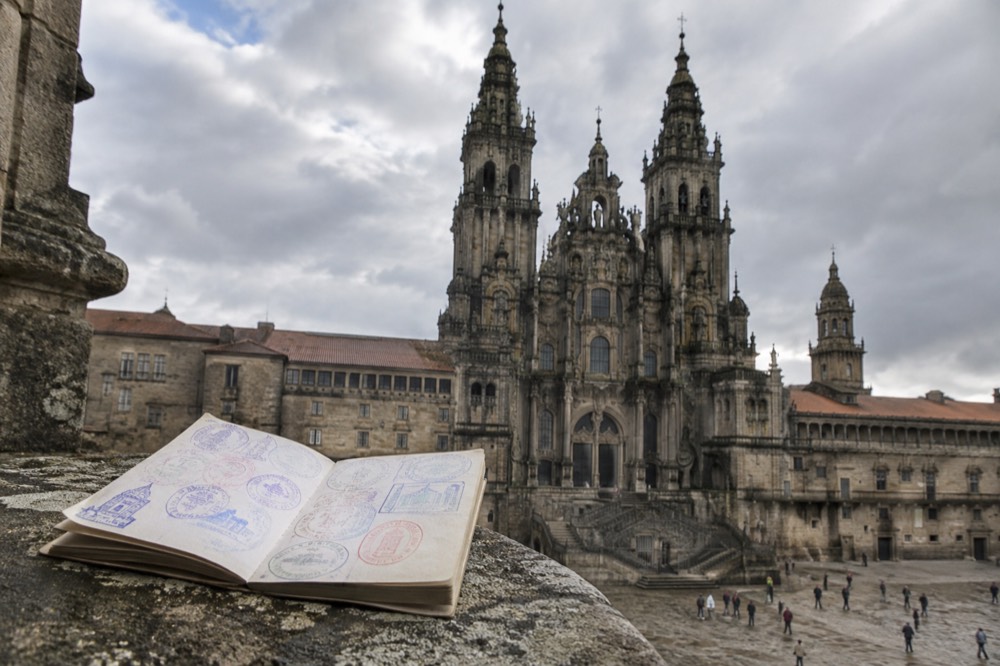
For a 2027 finish, the practical adjustments are about the office, not the booklet: expect longer queues in the peak weeks around July, and treat the seasonal-hours range as a reason to arrive early in the office's day. The record 530,987 Compostelas of 2025 happened in an ordinary year; the Holy Year figure will be higher, and every one of those certificates was backed by a credencial somebody stamped twice a day.
Walkers weighing whether the whole enterprise suits them can start with the site's answers on whether a 70-year-old can walk the Camino, on walking the Camino alone as a woman, and on doing the Camino with children. A packing plan built around keeping the booklet dry sits in the Camino packing list.
By the time the last stamp is in, most pilgrims have one more decision to make: how to spend the arrival day. A historic walking tour of the city, a complete visit with Cathedral tickets, or a full-day run out to the Costa da Morte all work as endings, and the trio below covers all three.
Between the office and the flight home, the city rewards a slower look, and a guided historic walk with a small group is the easiest way to see what five days of walking delivered.
Common Questions About The Camino de Santiago Pilgrim Passport
What Is The Camino de Santiago Pilgrim Passport?
The credencial is a small folded booklet, issued by pilgrim associations and route-side bodies, that you present for stamps along the walk toward Santiago de Compostela. The stamps, with their places and dates, form the continuous record the Oficina del Peregrino examines before issuing the Compostela certificate.
How Many Stamps Per Day Do I Need On A Pilgrim Passport?
At least two per day from official stamping points, applied over the qualifying distance: the last 100km walked or on horseback, or the last 200km cycled. The Oficina del Peregrino's rules state this minimum, and single-stamp days inside the qualifying stretch put the certificate at risk.
Where Do I Hand In My Credencial In Santiago de Compostela?
At the Pilgrim's Office, Rua das Carretas 33, in person only. Hours vary seasonally, roughly 8, 9 or 10am to 7 or 8pm, and the office is closed 25 December and 1 January. There is no postal or online route to the Compostela.
Do Bar And Hotel Stamps Count On The Credencial?
They are supporting evidence rather than the standard. The two-per-day rule points to official stamping points such as churches, albergues and municipal offices, and commercial stamps are used reasonably where official ones are sparse, but a record built only on bars and shops is not what the office's rules describe.
Does A Pilgrim Passport From A Previous Walk Still Work?
As a keepsake, yes. As evidence, the office reads the credencial as the record of one continuous pilgrimage, so a new walk needs a new or clearly dated record. The finished booklet stays with you; the office examines it and returns it.
Can I Cycle With The Same Pilgrim Passport Rules?
The booklet is the same but the qualifying distance doubles: cyclists need the last 200km stamped, with the same continuity and at least two stamps per day from official points, per the Oficina del Peregrino's rules.
The credencial is a modest object that decides a great deal. Stamped twice a day from before the 100km line, kept dry and legible, and handed over in person on Rua das Carretas, it converts a long walk in Galicia into the Compostela, and it leaves you with the only complete diary of the pilgrimage you will ever own.