How Long Does It Take To Do The Camino de Santiago By Bike?
How long the Camino de Santiago by bike really takes, the 200km Compostela rule for cyclists, and what awaits riders at the Cathedral in Santiago de Compostela.
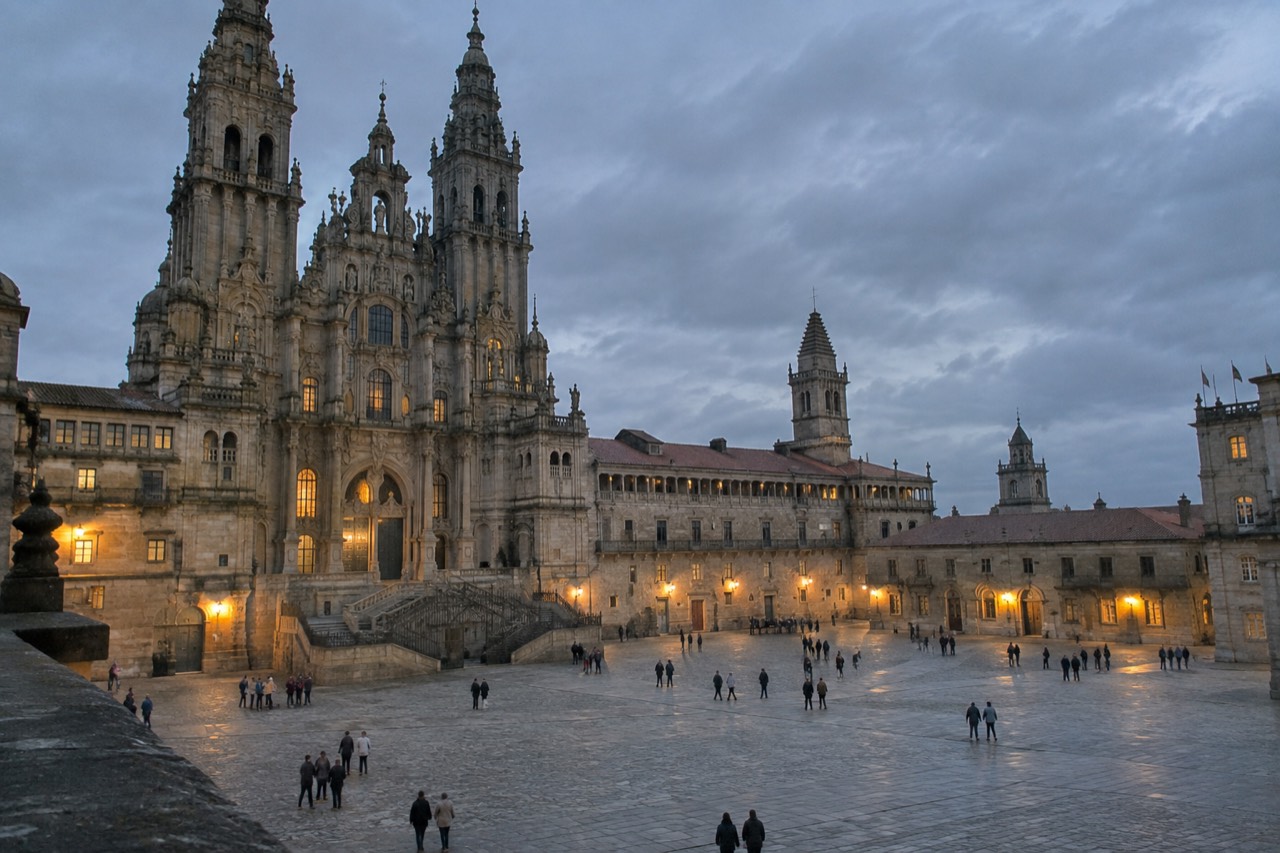
The Camino de Santiago ends at a specific place, the Cathedral of Santiago de Compostela in Galicia, Spain, and the question of how long the ride takes has one hard anchor: the Pilgrim's Office only issues its Compostela certificate to cyclists who cover at least the last 200km of a recognized route. Walking pilgrims need the last 100km. That single rule shapes every cycling plan more than any timetable, because it sets the shortest ride that still counts as a pilgrimage in the eyes of the office at Rua das Carretas 33.
This page lays out what the verified sources actually say about cycling the Camino, how the 200km rule works, what the stamp requirements are, and what awaits a rider rolling into Santiago de Compostela at the end. Where a number is not in this site's verified research, it says so rather than inventing a figure. The Camino de Santiago routes overview covers the route landscape in more depth.
How Long Does It Take To Do The Camino de Santiago By Bike?
There is no single verified answer, because the ride length depends entirely on which route you choose and how far you ride each day. The one hard figure in the verified sources is the certificate rule: the Pilgrim's Office requires cyclists to cover at least the last 200km of a recognized route, double the 100km required of walkers. The Oficina del Peregrino's own FAQs state this, along with a minimum of two stamps per day recorded in the pilgrim passport.
In practice, that means the question splits into two separate questions. The first is mechanical: how many days does it take you, personally, to ride your chosen distance at your own pace. The second is administrative: how much of that ride actually counts toward the Compostela. A cyclist who rides a full long route earns the certificate many times over in distance terms, while a rider covering only the certified minimum still qualifies, provided the stamps are in order.
What this site will not do is print route-by-route cycling day counts. Verified figures exist for the certificate rules, the office's address and its record 2025 tally of 530,987 Compostelas issued, but not for how many days each route takes on a bike. Any page offering an exact day count for every route is estimating from someone's ride, and riders differ enormously. A rider carrying full panniers over Galician hills moves at a different speed from an unladen cyclist on a road bike.
That record 2025 figure is worth pausing on. It comes from press reporting citing the Oficina del Peregrino's own numbers, and it counts every Compostela issued, walkers and cyclists together. It is the clearest single indicator of how busy the paths into Santiago de Compostela have become, and cyclists planning shoulder-season rides often weigh that crowd factor alongside the weather.
For planning purposes, think in terms of your comfortable daily distance, then divide your chosen route by it. Riders who know they can manage a long day in the saddle finish shorter routes faster; riders who want town stops and long lunches need more days for the same kilometres. The average cost question and the packing guidance apply to bikes much as they do to boots.
Why Does The 200km Rule Shape Every Cycling Plan For Santiago de Compostela?
The 200km rule is the Pilgrim's Office's minimum distance for cyclists seeking the Compostela certificate, and it exists because a bike covers ground roughly twice as fast as feet. The office's FAQs specify the last 200km cycled on a recognized route, continuous, with at least two stamps per day in the credencial, and the certificate is issued in person only, at Rua das Carretas 33 in Santiago de Compostela.
The certificate is the document that says, in the Church's own framing, that you went to the tomb of the Apostle as a pilgrim. It is free, it is personal, and it is only handed over the counter. Cyclists cannot collect it by post or by proxy. That in-person requirement is why the office itself, a short walk from the Cathedral, becomes the practical finish line for so many riders before they ever climb to Praza do Obradoiro.
The stamp discipline matters more for cyclists than walkers, because a rider's day is long and the temptation to skip a stamp point is real. Two per day minimum, from official stamping points, and the credencial needs to show a continuous progression of places along the route, not a scatter of distant towns. The pilgrim passport and credencial guide walks through how the document works in practice.
| Requirement | Walking Pilgrims | Cyclists |
|---|---|---|
| Minimum distance for the Compostela | Last 100km | Last 200km |
| Mode of travel on that minimum | On foot or on horseback | By bicycle |
| Stamps in the credencial | Minimum two per day | Minimum two per day |
| Where the certificate is issued | In person only, Rua das Carretas 33 | In person only, Rua das Carretas 33 |
| Issuing body | Oficina del Peregrino | Oficina del Peregrino |
The one nuance in the table is the horseback line. The office's FAQs name walking and horseback together at 100km, and cycling separately at 200km, which is why the two columns differ on distance but not on stamps or collection. Nothing else about the certificate differs by mode.
Riders who do not care about the certificate are free to ride any distance they like, of course. The paths into Santiago de Compostela carry tourists, commuters and touring cyclists alongside pilgrims, and nobody checks papers on a Galician lane. But anyone asking "how long" in the pilgrimage sense is usually asking how long until the ride counts, and the 200km rule is that answer.
What Should Cyclists Know About Stamps, The Pilgrim Office And The Finish In Santiago de Compostela?
Cyclists collect their Compostela from the Pilgrim's Office at Rua das Carretas 33, which the office's own site says closes only on 25 December and 1 January and otherwise keeps seasonal hours of roughly 8 or 9 or 10am until 7 or 8pm. Arriving riders should expect a queue in peak season, because 530,987 Compostelas were issued in 2025, a record year for the office.
The seasonal hours sound vague because they genuinely vary; the office adjusts its opening and closing times through the year, and the exact hours for your arrival week are on its own site. The two fixed closures are the only stable part of the calendar. Riders aiming at a specific afternoon should check before planning the last leg.
The walk from the office to the Cathedral itself is short, and the tradition is to collect the certificate first, then head to the tomb. Many riders then look for the pilgrim mass. Anyone doing that in or after mid-October 2026 needs the current arrangement, because the masses are moving: until 15 October 2026 the 7:30am, 9:30am, noon and 7:30pm pilgrim masses are held at the Cathedral's High Altar, but from 16 October 2026 the 9:30am, noon and 7:30pm masses relocate to the nearby Church of San Agustin, with only the 7:30am mass remaining in the Cathedral's Communion chapel while main chapel works prepare the 2027 Holy Year.
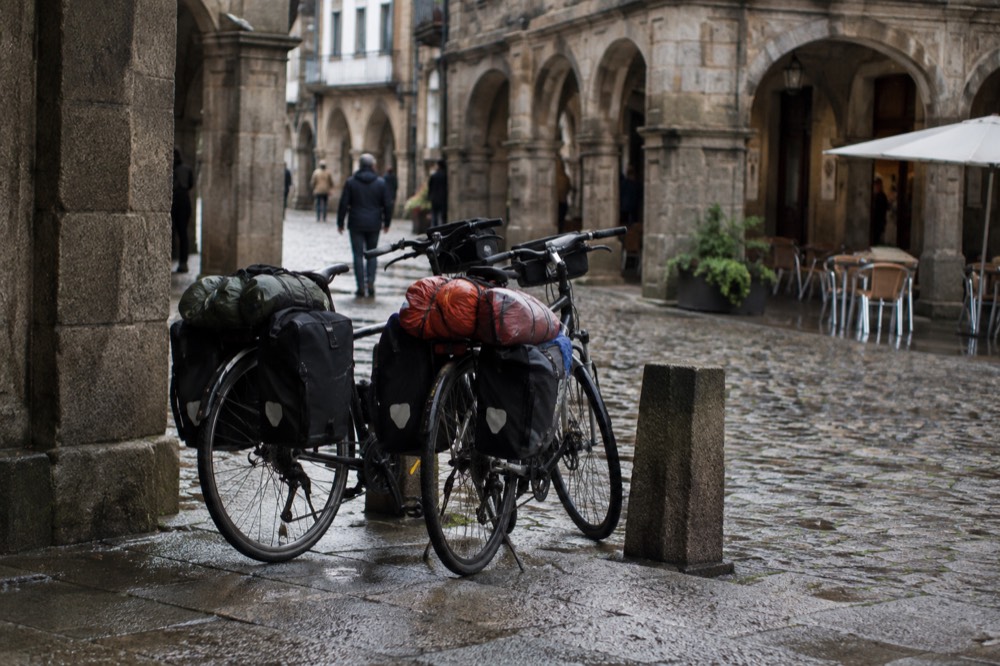
The Cathedral's interior, naves, high altar and crypt, remains open daily with free general entry, and the verified sources report no impact on visits from the current restoration works. What the works have grounded is the Botafumeiro: scaffolding for the dome restoration covers its hanging mechanism, the Cathedral confirmed the suspension in writing on 5 September 2026, and no return date has been published. A rider hoping to see the great censer fly at the finish should plan around that reality rather than around the old solemnity calendar.
After the certificate and the mass, most riders want to actually see what they rode toward. The Cathedral Museum complex opens daily from around 10:00am to 8:00pm, with tickets in the EUR9-23 range depending on type, and the cathedral's own rooftop and Carraca Tower guided visit costs EUR15 general or EUR12 reduced, bookable online with timed slots through the cathedral's own ticketing site.
When Is The Best Time Of Year To Ride The Camino de Santiago To Santiago de Compostela?
AEMET's climate data for station 1475X at Santiago de Compostela shows a temperate oceanic pattern: wet year-round, wetter and cooler from October to March, and driest in July and August. Annual precipitation runs on the order of 1,690 to 1,890mm depending on the station and year, so no month is reliably dry, and cyclists should plan for rain at any point of the year.
That rainfall figure is the single most useful number for a rider. It is roughly what many lowland European capitals receive multiplied several times over, spread across the year rather than concentrated in a storm season. Galicia is green for a reason, and the reason arrives from the Atlantic.
| Season | What AEMET's Data Shows | What It Means For Cyclists |
|---|---|---|
| July and August | Driest months of the year | Most reliable riding weather, busiest paths and busiest Pilgrim's Office |
| October to March | Wetter and cooler period | Quieter paths, higher chance of riding days in rain and short daylight |
| April to June | Transitional, wet year-round baseline | A common compromise, fewer crowds than summer, rain still likely |
| Whole year | Annual precipitation on the order of 1,690 to 1,890mm | Pack real rain gear whenever you ride |
The best month question is usually asked by walkers, but the trade-offs transfer directly to bikes: summer gives weather and crowds, spring and autumn give space and showers, and winter gives solitude, cold rain and the shortest days of the whole route network. A wet Galician descent on a loaded bike demands more respect than the same road on foot.
There is one date-driven reason to think beyond weather: the next Holy Year. 2027 is the next Xacobeo, not 2026, because a Holy Year is declared whenever 25 July falls on a Sunday, and 25 July 2027 does. The Holy Door opens on the evening of 31 December 2026 and the Holy Year runs through 31 December 2027. Riders planning a 2027 arrival should expect the paths and the office to be busier than anything in the record 2025 tally.
What Does Arriving In Santiago de Compostela By Bike Actually Look Like?
Riders finish at the same place walkers do, the Cathedral in Santiago de Compostela, whose Old Town has been UNESCO-listed since 1985, with the Camino routes themselves carrying a separate 1993 inscription. The certificate is collected in person at the Pilgrim's Office, the masses have the dated mid-October 2026 arrangement, and the Botafumeiro is suspended with no return date, so the finish is quieter than the old guides describe.
The last kilometres matter emotionally even when they are administratively irrelevant. A cyclist who has covered far more than 200km rides the final approach with the same crowd of walkers filtering onto the same stones, and the city handles both flows the same way: bikes are parked at the edge of the pedestrian old town rather than ridden through it, and the last stretch is done on foot like everyone else.
Once the bike is parked, the arrival becomes an ordinary visit to an extraordinary city. Many riders spend their first afternoon on a guided visit rather than working through the ticket system with tired legs: the Santiago al Complete tour runs half a day with Cathedral tickets included, and it exists precisely for this moment. Check availability on the operator's live listing. The arriving in Santiago on the Camino guide covers the rest of the first-day sequence, and the rest day after the Camino itinerary is written for exactly these legs.
For riders who finish early enough in the day, the cathedral's own rooftop visit is a fitting reward: a guided hour, about 140 steps, and views from roughly 72 metres above the city, at EUR15 general or EUR12 reduced. The Cathedral tickets and opening hours guide has the current options laid out.
Families weighing the question should know the same certificate rules apply to young riders as to adults, and the practical constraints are distance, traffic and the two-stamps-per-day discipline rather than anything specific to children. The Santiago de Compostela Travel Guide homepage is the full index if the finish has turned into a longer stay.
Common Questions About Cycling The Camino de Santiago
How long does it take to do the Camino de Santiago by bike?
It depends on the route and your daily distance, and this site's verified research does not publish route-by-route cycling day counts. The one hard figure is the certificate rule: cyclists need at least the last 200km of a recognized route, with two stamps per day, to earn the Compostela at the Pilgrim's Office in Santiago de Compostela.
Do cyclists need to ride 200km for the Compostela?
Yes. The Oficina del Peregrino's FAQs require the last 200km cycled on a recognized route, double the 100km required of walkers and horseback riders, with at least two stamps per day in the credencial. The certificate is issued in person only at Rua das Carretas 33.
Can you cycle the Camino de Santiago with kids?
The certificate rules are the same for young riders as for adults, and families do cycle routes together. The practical constraints are distance, traffic and the two-stamps-per-day discipline rather than anything specific to children.
What is the best month to cycle the Camino de Santiago?
AEMET's data for Santiago de Compostela shows the driest months are July and August, and the wetter, cooler period runs October to March, with rain possible in every month. Most riders weigh that against summer crowds on the paths and at the Pilgrim's Office.
Can cyclists attend the pilgrim mass at the Cathedral?
Yes, with a dated caveat. Until 15 October 2026 the 7:30am, 9:30am, noon and 7:30pm masses are at the Cathedral's High Altar. From 16 October 2026 the 9:30am, noon and 7:30pm masses move to the nearby Church of San Agustin, and only the 7:30am mass remains in the Cathedral itself.
Will the Botafumeiro swing when I arrive?
Not currently. The Botafumeiro is suspended because dome restoration scaffolding covers its hanging mechanism, confirmed in writing by the Cathedral on 5 September 2026, with no published return date. No visitor should plan an arrival around seeing it fly.
Riders who treat the 200km rule as the frame, the weather data as the packing list and the current Cathedral arrangements as the finish line will find the "how long" question answers itself once the route and the daily distance are chosen.