How Long Does It Take To Walk The Camino de Santiago?
How long it takes to walk the Camino de Santiago depends on the starting point, and the one distance fixed in the verified record is the 100km Compostela certificate minimum. Here is how to count walking days to Santiago de Compostela.
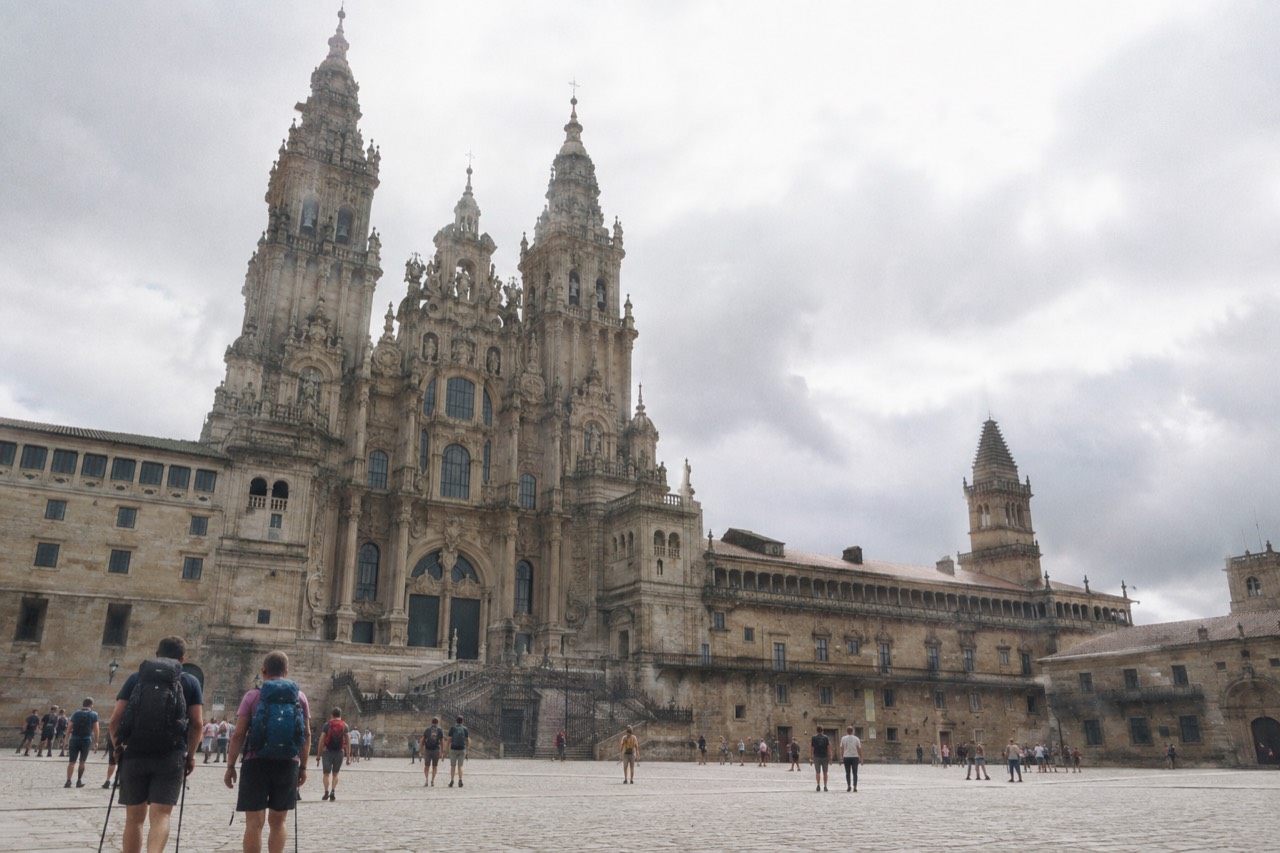
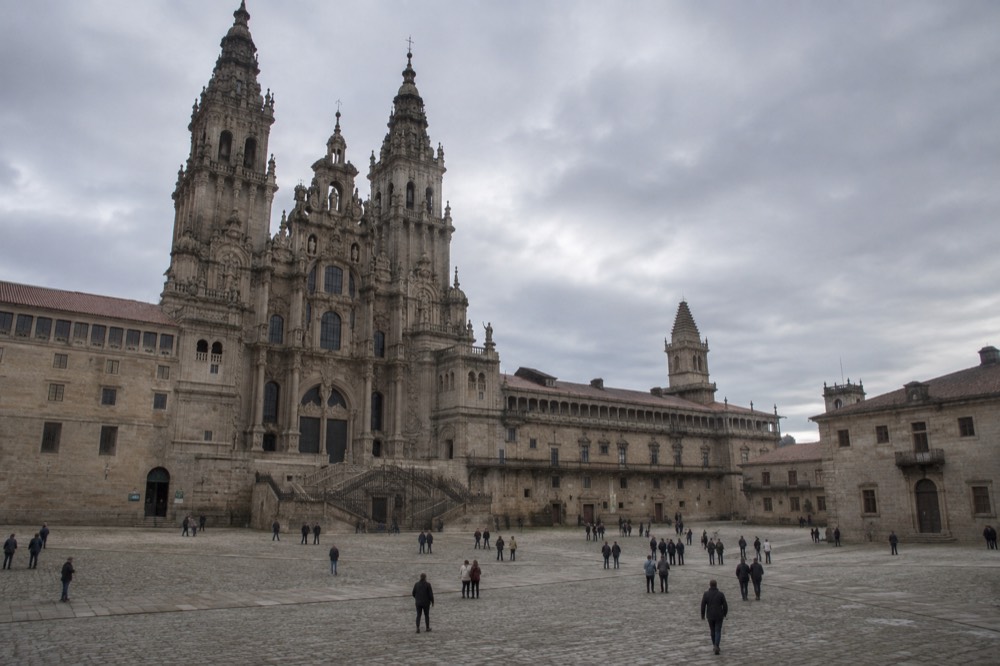
The Camino de Santiago is a network of medieval pilgrimage routes, all of them converging on one endpoint: the cathedral of Santiago de Compostela in Galicia, Spain, where tradition holds the remains of St. James lie beneath the high altar. The city's Old Town has been a UNESCO World Heritage Site since 1985, and the routes themselves, the Camino Frances and the Routes of Northern Spain, carry a separate UNESCO inscription from 1993. That network structure is exactly why the question of walking time has no single answer, and why honest guides start with the one distance that is actually fixed in the rules rather than in folklore.
How Long Does It Take To Walk The Camino de Santiago?
There is no single number, because the Camino de Santiago is a network of routes with different starting points, not one trail of fixed length. The only distance the verified record fixes is the Compostela certificate's own rule: the Oficina del Peregrino's FAQs require the last 100km walked or travelled on horseback, or the last 200km cycled, on a recognized route. Total walking time therefore depends on where a pilgrim starts, how long each day's stage is, and how many rest days are taken.
The honest way to count is backwards from the certificate. A walker who wants the Compostela must cover at least the final 100km of a recognized route, collecting two stamps per day in the pilgrim passport from official stamping points. That is the floor, the shortest walk that still qualifies, and it is the anchor point from which every longer itinerary extends. A cyclist faces a 200km minimum instead, which is why the cycling version of this question, covered in detail in how long the Camino takes by bike, is a genuinely different calculation.
Above that floor, everything scales with the starting point. The full routes described in the site's guide to the Camino de Santiago routes begin in France, Portugal, northern Spain and elsewhere, and each start point produces its own total. Walkers with two weeks, one week, or a long weekend choose their start accordingly, and the industry of guidebooks and planning tools exists precisely to help people match a start point to the holiday they have.
One practical note on counting: the Pilgrim's Office requires the qualifying distance to be walked continuously and stamps to be collected daily, so a walk broken into non-consecutive weekends does not qualify. Planning tools treat walking days, not calendar days, as the unit that matters, and rest days are counted separately. That distinction is the difference between "two weeks" as a trip and two weeks of actual walking.
What Distance Qualifies A Pilgrim For The Compostela In Santiago de Compostela?
The Oficina del Peregrino's FAQs state the requirement plainly: at least the last 100km on foot or on horseback, or the last 200km by bicycle, on a recognized Camino route, walked continuously, with a minimum of two stamps per day in the credencial from official stamping points. The certificate is issued in person only, at the Pilgrim's Office at Rua das Carretas 33 in Santiago de Compostela. In 2025 the office issued a record 530,987 Compostelas.
Those rules shape walking time in a direct way, because they define the minimum qualifying walk and they reward unbroken progress. The table below sets out the requirement exactly as the office publishes it.
| Mode of travel | Minimum qualifying distance | Stamp rule | Where the Compostela is issued |
|---|---|---|---|
| On foot | Last 100km of a recognized route | At least 2 stamps per day | In person only, Rua das Carretas 33 |
| On horseback | Last 100km of a recognized route | At least 2 stamps per day | In person only, Rua das Carretas 33 |
| By bicycle | Last 200km of a recognized route | At least 2 stamps per day | In person only, Rua das Carretas 33 |
The 2025 figure of 530,987 Compostelas, a record year reported by press citing the office's own statistics, is worth holding in mind when planning. Half a million people earned the certificate in one year, and the overwhelming majority of them chose start points that satisfy the 100km rule rather than the full historical routes from the French border or beyond. Crowding on the final stretch is a direct function of that rule.
The record also explains why the question of how difficult the walk from Sarria to Santiago de Compostela is gets asked so often. Sarria is the start point most commonly chosen by walkers building an itinerary around the certificate's minimum, and a separate article on this site, how difficult the walk from Sarria to Santiago de Compostela is, examines that final stretch on its own terms, including how its demands compare with longer itineraries. The pilgrim passport itself, and how the two-stamps-per-day rule works in practice, is covered in the site's guide to the pilgrim passport and credencial.
For anyone whose interest in the Camino is more cultural than logistical, the city at the end of the walk rewards exploration with a guide, and three of the most reliable options for that are below.
How Do Route Choice And Daily Stages Change Camino Walking Time?
Route choice and stage length, not walking speed, are what set the total time. The starting point fixes the total distance; the daily stage length fixes how many walking days that distance needs; rest days are added on top. A route's terrain, the availability of beds along it, and the season all push daily stages up or down, so two walkers on the same route can finish with comfortably different day counts.
The planning method the Camino world converges on is simple. First pick a route, using the site's Camino routes guide to compare the options, and the Camino map guide to see how they converge on Galicia. Then pick a start point that fits the holiday available, keeping the 100km certificate rule in mind if the Compostela matters. Then divide the distance by a daily stage the walker is confident of, and add rest days. The result is the honest answer to this page's question for any given walker, and it will differ from a friend's answer on the same route for entirely legitimate reasons.
Accommodation shapes stage length as much as ambition does. Beds are not distributed evenly along the routes, and the network of pilgrim hostels and small hotels constrains where a day can realistically end. A stage plan that ignores where the beds are is a plan that gets rewritten on the first evening, usually in the rain.
Age, fitness and group composition matter too, and this site treats those questions honestly rather than with a shrug. Whether a 70-year-old can walk the Camino, whether the Camino works with kids, and whether it is safe for a woman to walk alone each have their own pages, and each answer loops back into stage length: slower or shorter days mean more total days for the same distance. Pack weight is the other half of that equation, since a heavy pack is the variable walkers most often regret on day three.
What Happens When The Walk Ends In Santiago de Compostela?
Arrival has its own timetable. The Compostela is issued in person only, at the Pilgrim's Office on Rua das Carretas 33, with seasonal opening hours. Pilgrim masses are currently held at the Cathedral's main altar at 7:30am, 9:30am, noon and 7:30pm, but from 16 October 2026 the 9:30am, noon and 7:30pm masses move to the nearby Church of San Agustin, and only the 7:30am mass stays in the Cathedral's own Communion chapel.
Both mass arrangements matter because they are both true for different dates, and pilgrims arriving from mid-October 2026 onwards will meet the relocated schedule, a consequence of main-chapel remodelling work preparing the Cathedral for the 2027 Holy Year. The site's guide to arriving in Santiago on the Camino covers the full first-day sequence, from the office queue to the embrace of the Apostle.
The Cathedral itself rewards the time a walker has left over. General entry to the basilica interior is free, with opening hours running roughly 7:00am to 9:00pm. The paid visits are the museum and the rooftops, and the verified figures are below.
| Cathedral visit | Verified detail |
|---|---|
| Basilica interior (naves, high altar, crypt) | Free entry, roughly 7:00am-9:00pm daily |
| Cathedral Museum, permanent collection and Gelmirez Palace | Open roughly 10:00am-8:00pm, ticket range EUR9-23 depending on ticket type |
| Rooftop tour, Cubiertas and Torre de la Carraca | Guided, about 60 minutes, 140 steps, about 72m height, EUR15 general and EUR12 reduced |
The rooftop tour's figures come from the Cathedral's own ticketing, including the 12 euro reduced rate for accredited pilgrims, students, over-65s and several other groups, proof required at entry. Reduced rates are the Camino's quiet discount: many walkers arrive entitled to one without knowing it. Tickets are sold online with timed slots, and the cathedral tickets and opening hours guide on this site compares the official channel with the guided visit options below.
A rest day in the city, incidentally, is not wasted time, and there is a whole guide to the rest day after the Camino on this site. One warning belongs here, because it catches out arriving pilgrims every year: the Botafumeiro, the giant swinging censer, is currently out of action. The Cathedral confirmed in writing on 5 September 2026 that scaffolding for the dome restoration covers its hanging mechanism, and no return date has been published. The site's Botafumeiro guide explains the normal twelve-solemnity annual schedule, clearly flagged as suspended, so nobody plans an arrival around a flight that cannot happen.
Does The Season Change How Long The Camino Takes?
AEMET's climate data for station 1475X, Santiago de Compostela and Labacolla, shows a temperate oceanic climate that is wet year-round, wetter from October to March, and driest in July and August, with annual precipitation on the order of 1,690-1,890mm depending on the station and year measured. Season changes walking time indirectly: wet months slow stages, shorten comfortable walking days and add rest days, while dry months compress the same distance into fewer calendar days.
The site's guide to the best time to visit Santiago de Compostela and the answer to which month is best to walk the Camino work through the trade-offs, and the honest summary is that there is no free month: the driest window is also the most crowded, and the quiet shoulder months carry the highest rain risk in Spain's wettest corner. Walkers who plan tight daily stages in October or March should build in weather slack, which is a real addition to total trip length even though it never appears in an itinerary's headline number.
One dated fact should sit in every 2026 and 2027 plan: the next Holy Year is 2027, not 2026. The Holy Door opens on the evening of 31 December 2026 and the Holy Year runs through 31 December 2027, because 25 July 2027 falls on a Sunday. Holy Years multiply demand along every route, and a walker planning for that window, or deliberately avoiding it, is making a timing decision as consequential as the start point. The site's Holy Year 2027 guide covers it in full.
For walkers who want the arrival city explained rather than just survived, a guided walk with an official guide compresses days of independent reading into a couple of hours. The small-group historic walking tour of Santiago de Compostela, from $29 per person and rated 4.9 from 16 reviews on the operator's listing, is the option the Santiago de Compostela Travel Guide editors pair with this article, and Check availability on the live listing for current dates.
Budget is the last variable that quietly stretches or shrinks trip length, because more rest days and private rooms mean more money, and the site's answer to the average cost of walking the Camino puts real numbers on that trade-off.
Common Questions About Camino Walking Time
How long does it take to walk the Camino de Santiago?
It depends entirely on the starting point, because the Camino is a route network, not a single trail. The one fixed distance in the rules is the Compostela minimum: the last 100km on foot or horseback, or 200km by bicycle. Count walking days from your chosen start, then add rest days.
What is the shortest walk that still earns the Compostela?
A continuous walk covering at least the final 100km of a recognized route on foot, with at least two stamps per day in the credencial from official stamping points, qualifies. The certificate is issued in person only at the Pilgrim's Office, Rua das Carretas 33, Santiago de Compostela.
How long does it take to do the Camino de Santiago by bike?
Cycling changes the certificate minimum to 200km, and the timing calculation changes with it. The site's dedicated article on the Camino by bike covers the differences in distance rules and daily range.
Does the season change how many days the Camino takes?
Indirectly, yes. AEMET's data for Santiago de Compostela shows a wet, oceanic climate, wetter from October to March and driest in July and August. Wet months shorten comfortable stages and add rest days; dry months compress the same walk into fewer calendar days.
Will 2027 change how busy the Camino is?
Yes. The Holy Door opens on 31 December 2026 and the 2027 Holy Year runs through 31 December 2027, and Holy Years raise demand on every route. Walkers planning around that window should expect tighter accommodation and book accordingly.
Can I split the Camino across several trips?
For the Compostela, no: the Oficina del Peregrino requires the qualifying distance to be walked continuously, with two stamps per day. Separate weekend walks do not combine into a qualifying journey.
The verbatim question at the top of this page has no single-number answer, and any site that prints one is inventing a figure the sources do not contain. Start from the 100km rule, choose a start point to match the days actually available, and let the walking days, not a headline number, define the trip.