Alameda Park Santiago de Compostela
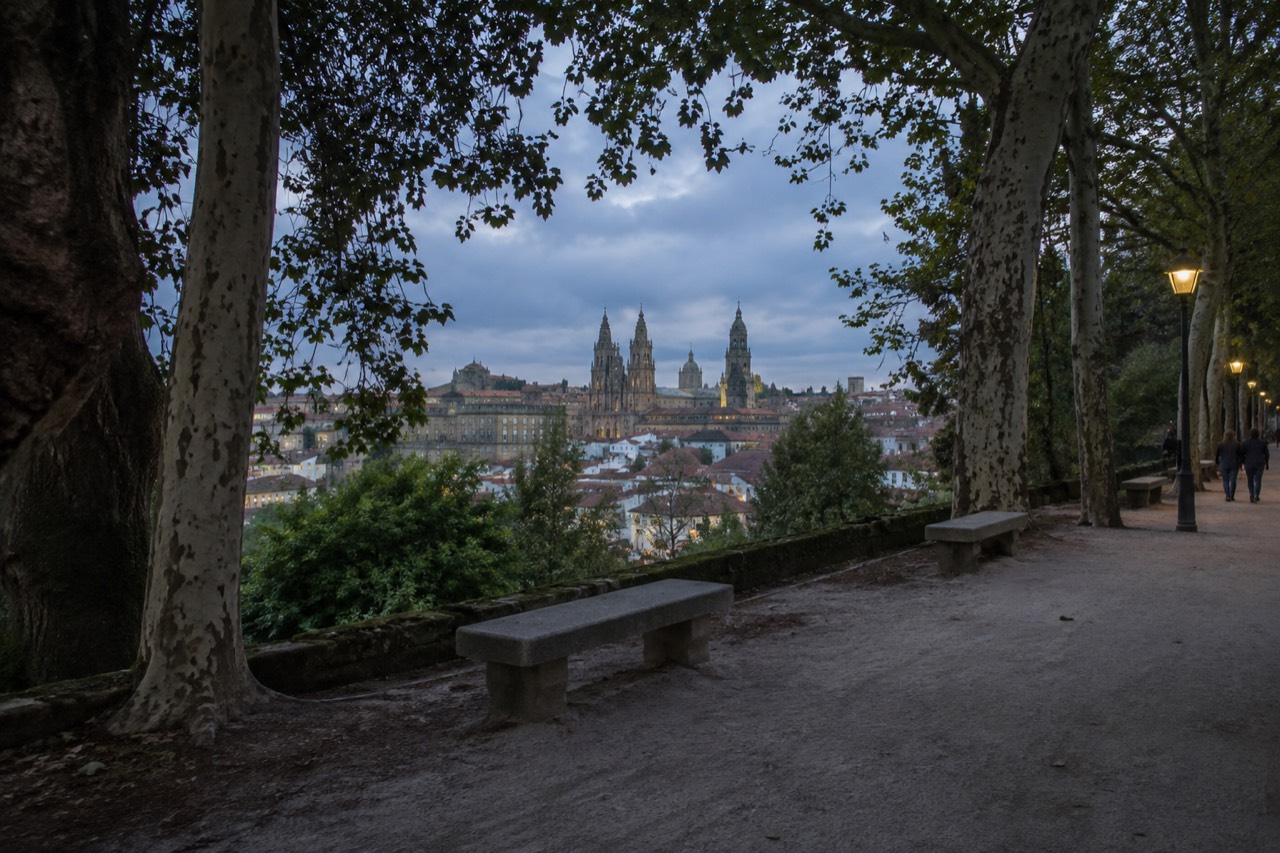
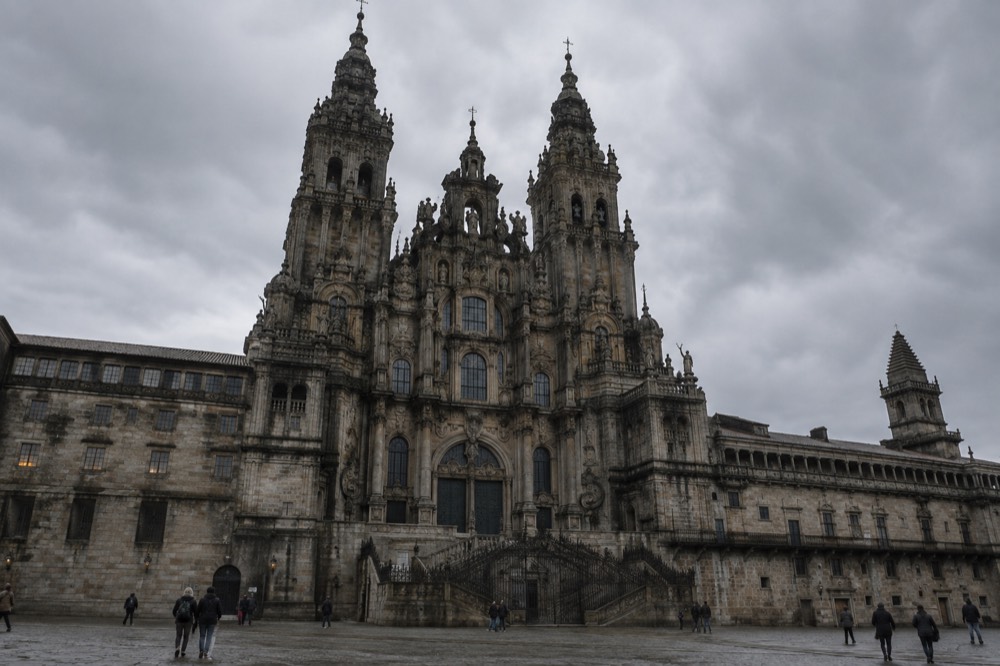
Alameda Park sits directly opposite the west front of the cathedral of Santiago de Compostela and holds the most photographed viewpoint in the city, the Paseo da Ferradura, where the granite towers of Praza do Obradoiro line up over the tree canopy.
Short answer
Alameda Park is the green esplanade west of the old town of Santiago de Compostela, a short uphill walk from Praza do Obradoiro, known for its chestnut trees, gardens, bandstand and the Paseo da Ferradura promenade whose curved balustrade frames the classic postcard view of the cathedral's Baroque facade.
Alameda Park, or Parque da Alameda as the Galician signage names it, is the oldest public garden in Santiago de Compostela and the place where nearly every classic photograph of the city's cathedral is actually taken from. The park climbs the low hill directly west of the old town, so close that a walker leaving Praza do Obradoiro by the Rua das Hortas side reaches its gravel paths in a few minutes. What it offers is the reverse angle: instead of standing under the cathedral's Obradoiro facade, the visitor stands back from it, elevated among horse chestnut trees, and watches the granite towers of the cathedral of Santiago de Compostela rise over the rooftops with nothing in the frame but sky, stone and greenery.
The park is not a single garden but a sequence of them, and the differences matter to anyone planning a visit. The upper Alameda holds the formal walks and the bandstand, the Carballeira de Santa Susana below it is an oak grove, and the Paseo da Ferradura is the horseshoe promenade along the edge facing the old town. Each part has its own character, its own crowd level and its own role in the city's calendar, which is why locals treat the whole ensemble as several places at once rather than one park.
What Is The Alameda Park In Santiago de Compostela?
The Alameda is Santiago de Compostela's principal public park, a hillside garden of roughly three linked parts west of the old town, planted with horse chestnuts and oaks, containing formal gravel walks, a bandstand, a children's playground, fountains and the Paseo da Ferradura viewpoint. It is free to enter, open as a public space without gates or tickets, and it functions as the city's communal front garden facing the cathedral of Santiago de Compostela across the valley.
The park's history is tied up with the way the city grew westward. The area has long served as the city's promenade, a genteel walk with balustrades created at the point where the land slopes down from the Santa Susana chapel toward the Sar river valley. The chestnut and oak planting that defines the park today matured over the generations that followed, which is why the biggest trees now carry the scale of a botanical garden rather than a municipal square of flowerbeds.
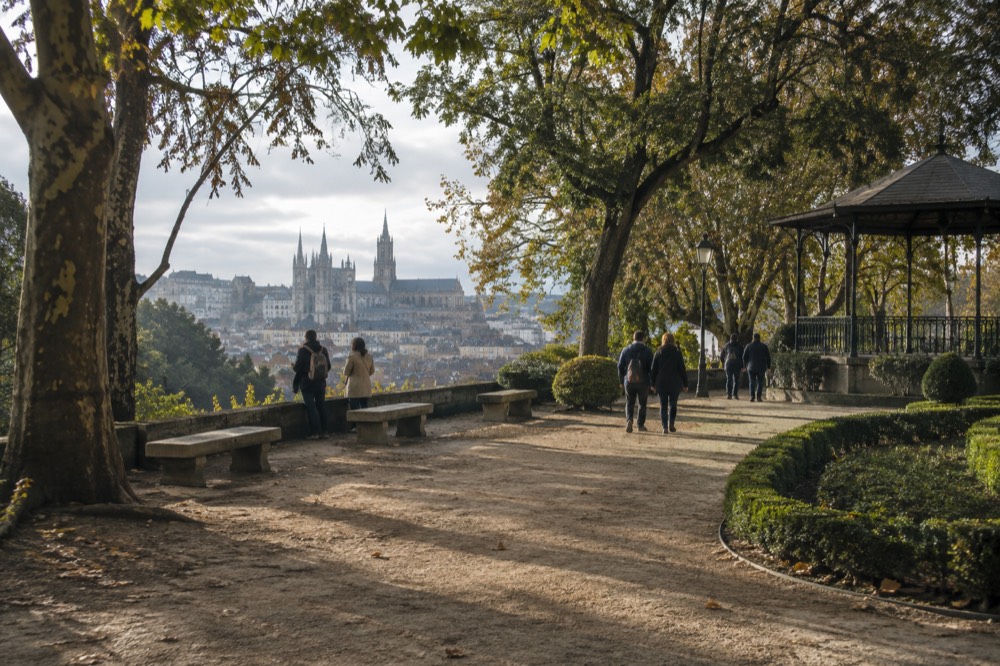
Locals use the park in distinct ways at distinct hours. Early morning belongs to dog walkers and older residents doing laps of the gravel circuit. Midday brings tour groups stopping for the cathedral view. Late afternoon is family time around the playground, and evening turns the benches above the Ferradura balustrade into the city's best free seats for sunset light on the Obradoiro facade. There is no ticket, no queue and no time limit, which in a city whose headline attraction draws long lines for timed entry is a genuine practical advantage.
Where Does The Alameda Park Sit And How Do You Get There?
The park sits immediately west of the old town of Santiago de Compostela, separated from Praza do Obradoiro by only a few minutes of uphill walking via Rua das Hortas or the steps beside the San Francisco convent, and it is reachable on foot from every part of the old town. From the cathedral itself the walk is short and entirely pedestrian, and the park also sits directly on the line pilgrims follow when they arrive from the west on the Camino route toward Monte do Gozo and the city.
The geography is simple once you see it once. The old town occupies one hill, crowned by the cathedral. The Alameda occupies the facing rise. Between them the ground drops into the shallow valley where the Sar district lies, and the park's edge is the exact rim of that drop. The Paseo da Ferradura follows that rim in a horseshoe, which is what gives the viewpoint its sweep: standing anywhere along the curved balustrade, the whole west front of the cathedral and the towers of San Martino Pinario present themselves across the gap with the old town's roofline stepping down below them.
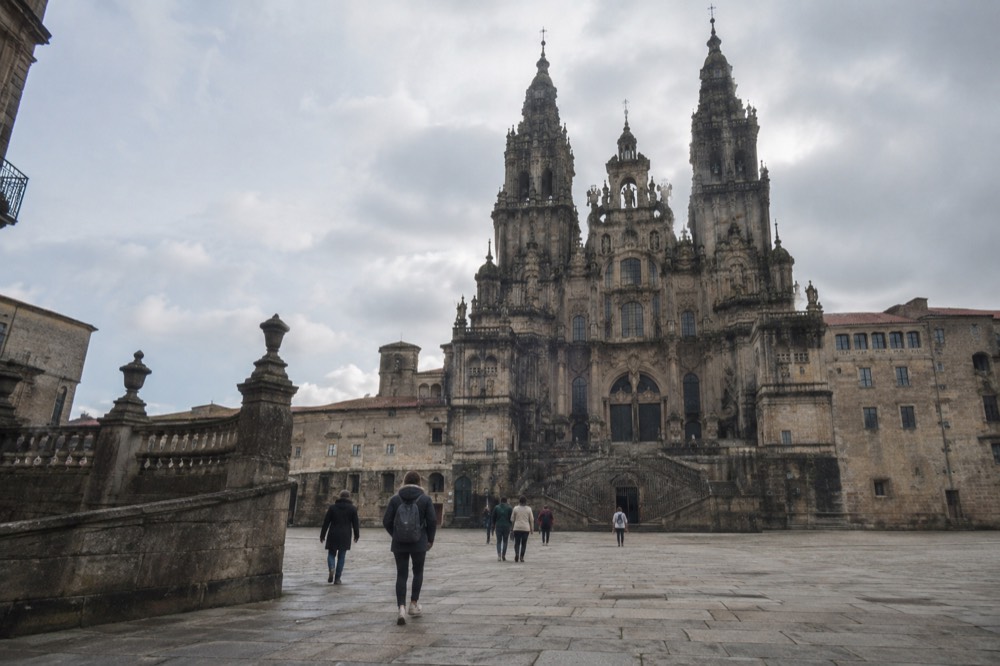
There are three practical approaches. From Praza do Obradoiro, the Rua das Hortas descent and reascent is the direct one and passes small grocery shops and bars used by locals rather than visitors. From the Bonaval direction, the park can be entered level from the north end near the Museu do Pobo Galego area. From the Sar side, the visitor climbs from the valley floor, which is the slowest approach but delivers the park as a reward, appearing suddenly at the top of the stairs with the cathedral framed ahead. Pilgrims walking into the city from Monte do Gozo or continuing out toward Fisterra pass near this western edge, one reason the benches fill with backpacks in the afternoon.
For orientation, this table maps the park's parts to what each is actually for.
| Part of the park | Character | What people go there for |
|---|---|---|
| Upper Alameda (formal walks and bandstand) | Formal, gravel paths, trimmed hedges | Strolling, benches, morning exercise, bandstand events |
| Paseo da Ferradura (horseshoe promenade) | Open balustraded rim facing the old town | The cathedral viewpoint, sunset, photographs |
| Carballeira de Santa Susana (oak grove) | Shaded, quieter, grassy | Shade on hot days, picnics, relaxed wandering |
| Playground and gardens area | Family zone | Children's play, family afternoons |
| Santa Susana chapel corner | Historic, small, quiet | A moment of calm, the oldest layer of the site |
A first visit that walks the whole horseshoe and stops in each zone takes a comfortable hour; anyone only chasing the photograph needs a fraction of that.
Why Is The Paseo Da Ferradura The Classic Viewpoint Over The Cathedral?
The Paseo da Ferradura is the curved stone promenade along the park's eastern rim, and it is the viewpoint that appears in almost every published image of the cathedral of Santiago de Compostela, because from its balustrade the Obradoiro facade, the Berenguela clock tower and the towers of the Monasterio de San Martino Pinario line up over the tree canopy in one clean frame. It is free, open at all hours as a public walk, and it faces due east, so the facade lights up as the day ends.
The reason this particular spot works so well is geometry. The cathedral is large but hemmed in: from Praza do Obradoiro itself the visitor stands too close to take in the facade, and inside the old town the towers keep disappearing behind eaves. From the Alameda rim, the viewer is far enough west and high enough that the whole western mass of the old town becomes a silhouette, with the cathedral as its highest element and the Baroque facade presented almost flat-on. The horse chestnuts that fill the foreground complete the picture, giving the frame the green horizontal band that makes the composition.
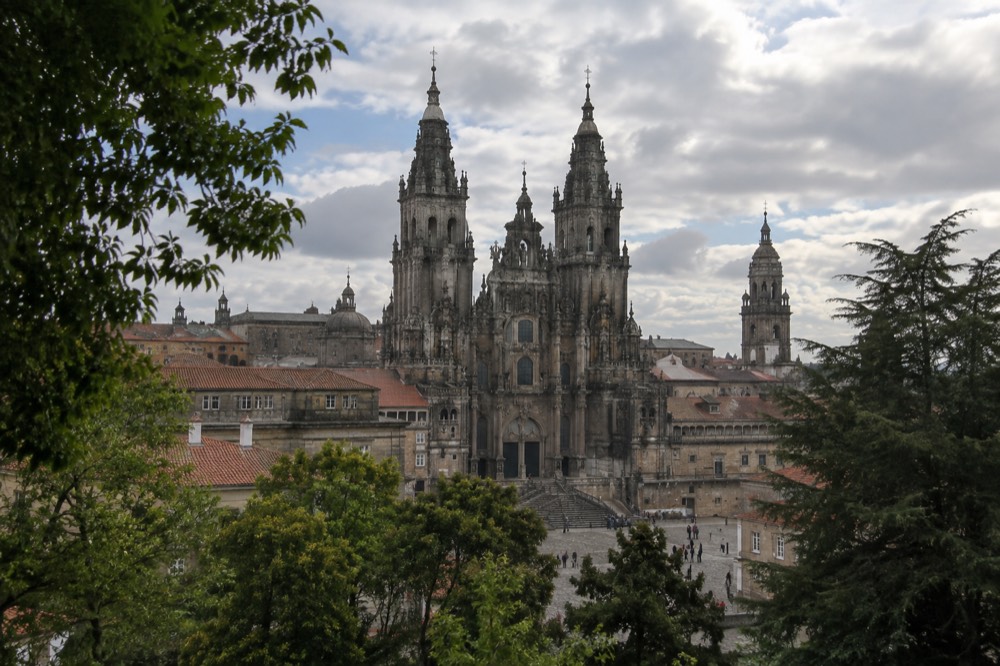
Photographers have habits here that are worth borrowing. The midday frame is the flattest light and the busiest walk. Late afternoon gives warm directional light on the facade. Evening, as the interior lights come on behind the Obradoiro windows and the stone turns gold, is the postcard hour, and the benches nearest the curve fill first. Because the walk is public and un-gated, there is no closing time to plan around, though sensible practice in any city park after dark applies, and the area is well used by locals at all hours.
The viewpoint also answers a question many visitors only realize they had: which direction does the cathedral actually face? The Obradoiro facade is the west front, the one pilgrims arriving on the Camino Frances see first as they enter the city. The Alameda is the only central vantage that shows that arrival face whole, which is why the image from the Ferradura has become, in effect, the emblem of arriving.
A guided old-city walk is a natural pairing with the park, since a guide explains the facades you then go see framed.
The hidden-city walking tour in that band covers the lanes between Praza do Obradoiro and the park's approaches, the kind of route that turns the walk up to the Alameda from a slog into a sightline tour. Availability and current pricing for it and the other tours named on this page can be checked on each operator's live listing, and the city walking options in the old town guide cover the free and paid alternatives.
What Can You Do In The Alameda Park Besides The View?
Beyond the viewpoint, the park offers a bandstand used for seasonal concerts, a children's playground, shaded walks under mature chestnut and oak trees, benches and small fountains, a running and strolling circuit for locals, and the Carballeira de Santa Susana grove for quiet shade, all free and unscheduled, with the city's Feiras do Dos de Mayo and July festival events historically spilling into the green spaces around it, including the fireworks that mark the Feast of St. James on 25 July.
The honest description of a visit here is unhurried. This is not a sight with a queue; it is the place people come to when they have seen the sights. Families use the playground zone in the late afternoon. Readers and couples hold the benches along the Ferradura. Early risers use the flat gravel circuit of the upper Alameda as a walking loop. The shade matters more than visitors expect: the city's climate is oceanic, wet and cool from October to March and driest in July and August, so a green, sheltered space changes character with the seasons, bare and structural in winter, deep and leafy in summer.
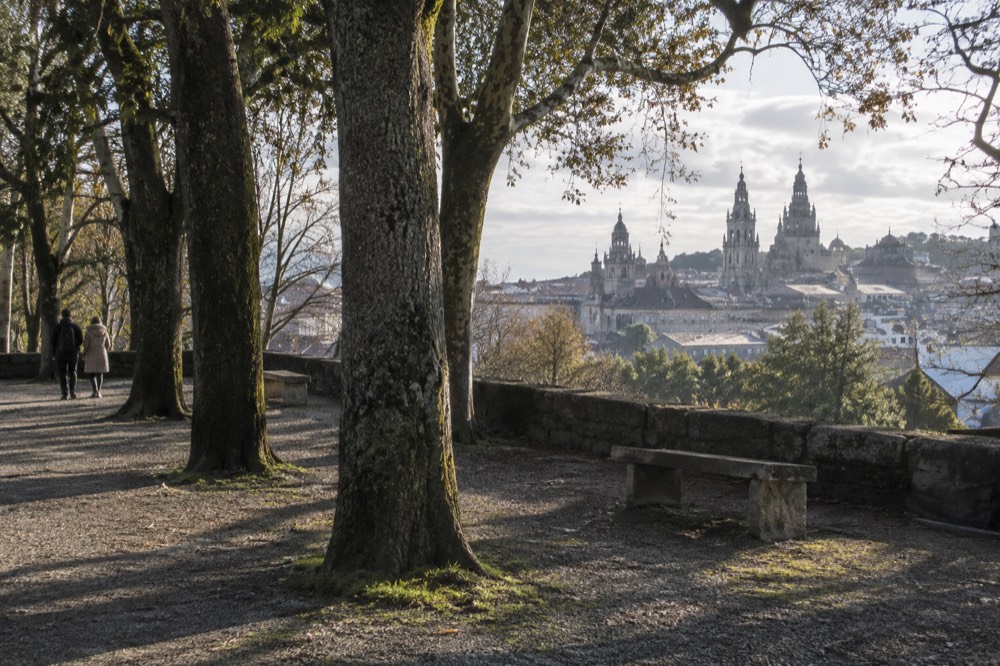
The seasonal rhythm of the city shapes the park's calendar, and a few fixed dates are worth knowing in advance.
| Period | What happens in and around the park | Practical note |
|---|---|---|
| Spring, Dos de Mayo weekend | The city's Feiras do Dos de Mayo, Galician folklore, popular crafts and food fairs around the old town and green spaces | Busiest local weekend of spring |
| 25 July, Feast of St. James | City celebrations with a Pontifical Mass, the national offering to the Apostle, concerts and fireworks | The park's rim is a favored place to watch the sky |
| Holy Year 2027 | Holy Door open from 31 December 2026 through 31 December 2027, elevated visitor numbers citywide | Expect fuller parks all year |
| Wet months, October to March | Oceanic climate, wet and cool, annual rainfall on the order of 1,690-1,890mm | Grass and gravel paths stay usable; bring a layer |
One caution for anyone planning a 2026 or 2027 trip around cathedral events: the Botafumeiro, the giant thurible that normally swings on twelve fixed liturgical solemnities a year, is currently out of action, with scaffolding for the dome restoration covering its hanging mechanism, and the Cathedral confirmed in writing on 5 September 2026 that no return date has been published. The famous censer should be described as suspended, not scheduled.
The tour in that box, Santiago al Complete, is the pairing this page recommends most often: it bundles the cathedral with tickets included in a half-day format, and it leaves the rest of the day free for the walk up here. Check availability on the operator's live listing. The cathedral museum and the rooftops tour covered by that ticket are the indoor half of the same visit, and the editors' guide at Santiago de Compostela Travel Guide explains how the pieces fit together.
When Is The Best Time Of Day To Visit The Alameda Park?
Late afternoon into evening is the best time for the classic view, because the Paseo da Ferradura faces east and the Obradoiro facade catches warm light as the sun drops, while early morning is the quietest and best for photographers who want the benches and walk empty, and midday is the busiest with tour groups stopping for the framed cathedral picture before moving on. Season-wise, July and August are the driest months and October to March the wet and cool stretch.
The AEMET station for Santiago de Compostela describes a temperate oceanic climate, wet year-round, wetter from October to March, and driest in July and August, with annual precipitation on the order of 1,690-1,890mm. For park purposes that means the summer visitor gets long golden evenings on the balustrade, and the shoulder-season visitor gets dramatic low cloud over the towers, which is its own photograph. Rain in this city is a texture rather than a catastrophe; the gravel paths drain well and the chestnut canopy gives real cover in summer.
| Time of day | Light and crowd | Best for |
|---|---|---|
| Early morning | Flat quiet light, almost empty | Photographers, runners, a lone bench with coffee |
| Midday | Bright but flat, busiest with groups | A quick viewpoint stop on a walking route |
| Late afternoon | Warm directional light on the facade | The classic photograph |
| Evening and sunset | Facade lights and interior glow, benches filling | The postcard hour, and the local atmosphere |
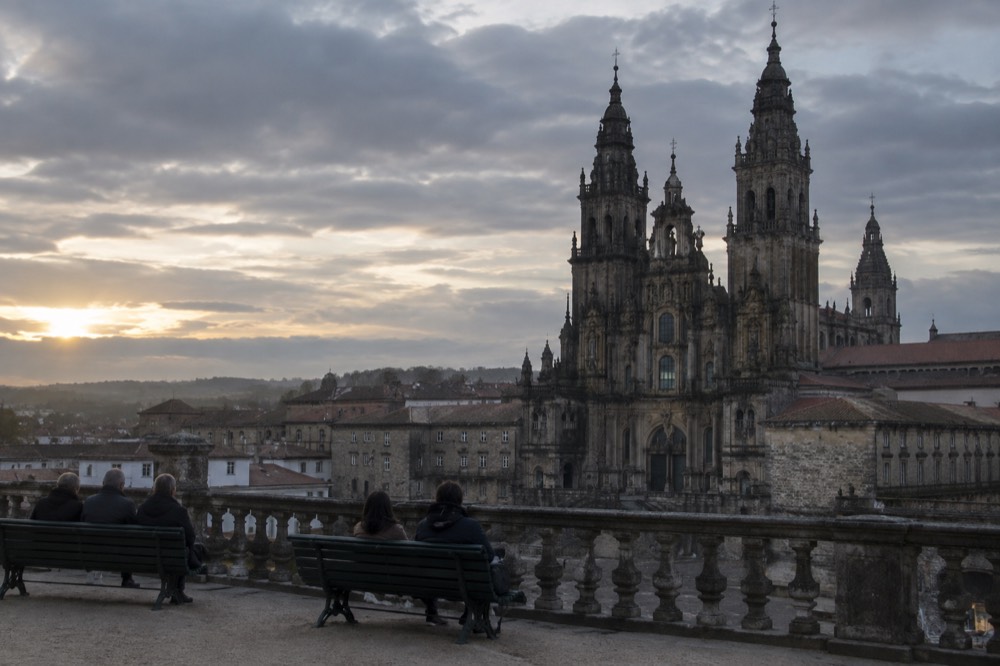
Families should simply reverse the logic: the playground and grove hours are the mid to late afternoon, and the viewpoint can be an after-dinner stroll, since the park never closes. Pilgrims arriving in the city, a group that numbers in the hundreds of thousands each year, with the Pilgrim's Office recording a record 530,987 Compostelas issued in 2025, often make the Alameda their first stop after collecting the certificate, because it requires nothing: no ticket, no timing, no walking far on legs that have already carried them a hundred kilometres.
How Does The Alameda Fit Into A Day In Santiago de Compostela?
The park works best as the hinge between the two halves of a day in Santiago de Compostela: a morning inside the old town visiting the cathedral, museum and squares, an afternoon in the Alameda and the Santa Susana grove, and an evening back down into the Rua do Franco and tapas lanes, with the whole loop walkable on foot and the park sitting midway as the natural rest stop, viewpoint and orientation point above the rooftops.
A one-day circuit that locals would recognize runs like this. Start at Praza do Obradoiro in the morning, visit the cathedral while queues are shortest, and take in either the museum or the rooftops depending on tickets. Walk the old town's other squares, the Praza da Quintana with the Holy Door on its east side, the Platerias and the lanes of Rua do Franco. Then climb to the Alameda for the afternoon, take the hour to walk the horseshoe, rest in the grove, and let the light turn. Come down for dinner. The park is the one piece of that day that costs nothing, which is worth noting in a city whose paid entries are the cathedral museum at EUR9-23 depending on ticket type and the guided rooftop tour at EUR15 general or EUR12 reduced, both per the cathedral's own ticketing.
For visitors with more time, the park also anchors a broader westward arc: the Museu do Pobo Galego and the San Martino Pinario complex to the north, the Cidade da Cultura on the farther hill, and Monte do Gozo, where pilgrims first glimpse the cathedral, beyond that. The Camino de Santiago guide and the question of whether Santiago de Compostela is worth visiting are worth reading before locking a plan; for the itinerary itself, see our how many days should I spend in Santiago de Compostela answer.
The Alameda's mid-city position makes it the reference point for every kind of visitor, and the table below matches it to each.
| Visitor type | How the park fits the day |
|---|---|
| First-time sightseer | Morning cathedral, afternoon Alameda view, evening tapas |
| Pilgrim finishing a Camino | Post-certificate rest, the arrival face of the cathedral seen whole |
| Family with children | Playground hour, grove shade, easy walk down to dinner |
| Photographer | Golden hour on the Ferradura, morning for emptiness |
| Local resident | The daily circuit: morning laps, evening benches |
Which Nearby Attractions Sit Within Walking Distance Of The Alameda?
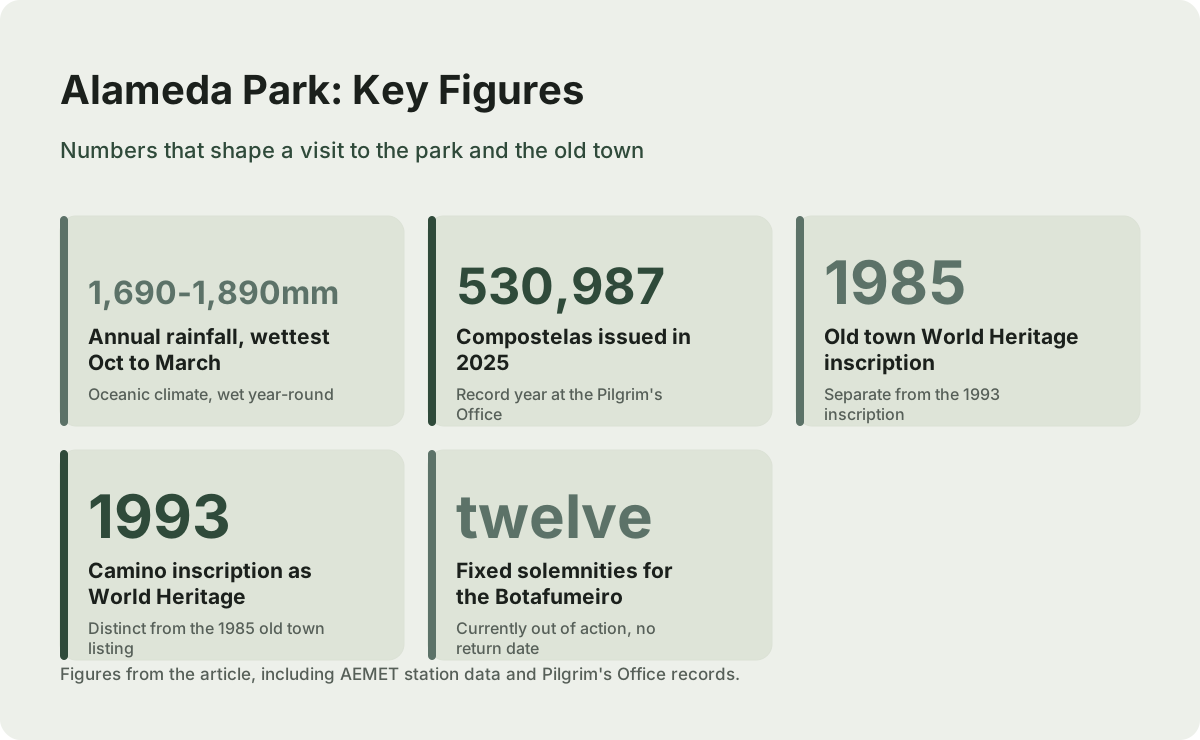
Within a short walk of the park sit the cathedral of Santiago de Compostela and its museum, the Hostal dos Reis Catolicos parador on Praza do Obradoiro, the Monasterio de San Martino Pinario, the Museu do Pobo Galego, the Mercado de Abastos, the Praza da Quintana with the Holy Door, and the whole of the UNESCO-listed old town, whose 1985 inscription as a World Heritage site is separate from the 1993 inscription of the Camino routes themselves, two distinct listings that visitors often merge into one.
The distances involved are all old-town scale, a few minutes between each. The parador, the Hostal dos Reis Catolicos, stands directly on Praza do Obradoiro and is itself one of the city's landmark buildings, originally the royal hospital founded for pilgrims. The Mercado de Abastos is the working food market where the city's restaurants shop, and the museums cluster on the northern edge of the old town. Hours and prices for the museums should be checked on each venue's own site, as they are not part of the verified pack for this page.
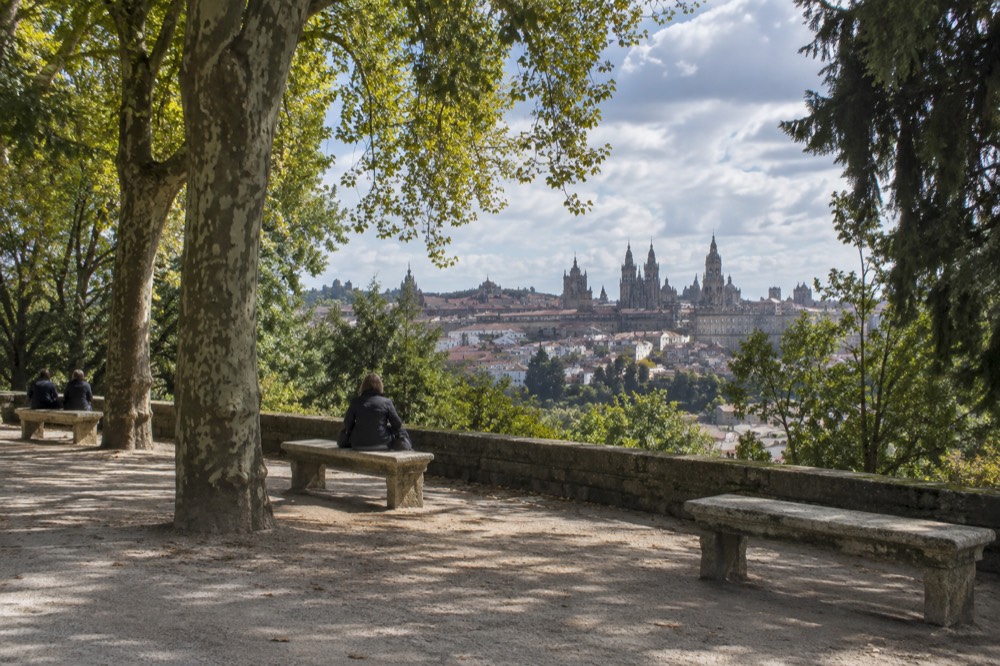
| Nearby attraction | Direction from the park | Nature of the visit |
|---|---|---|
| Cathedral and Obradoiro facade | East, downhill then up, minutes | Free general entry, timed tickets for museum and rooftops |
| Hostal dos Reis Catolicos parador | East, on Praza do Obradoiro | Landmark building, hotel, historic courtyard visits |
| Monasterio de San Martino Pinario and Museu do Pobo Galego | North-east edge of the old town | Museum and church complex, its towers share the Ferradura view |
| Mercado de Abastos | East, south of Rua do Franco | Working market, food culture |
| Praza da Quintana and the Holy Door | East, behind the cathedral | The Holy Door, open only in Holy Years |
| Cidade da Cultura | West, uphill | Modern architecture and city panorama |
Two notes of timing matter for anyone combining the park with the cathedral's liturgical life. First, pilgrim masses are currently held at 7:30am, 9:30am, noon and 7:30pm at the High Altar, but from 16 October 2026 the 9:30am, noon and 7:30pm masses relocate to the nearby Church of San Agustin while main-chapel remodelling continues, and only the 7:30am mass stays in the cathedral's own Communion chapel. Second, the next Holy Year is 2027, not 2026: the Holy Door opens on 31 December 2026 and the Holy Year runs through 31 December 2027, so a visit in 2027 will find the door open and the city, and this park, busier.
Which Tours And Day Trips Pair Well With The Alameda Park?
The natural pairings are an old-city or cathedral walking tour in the morning, a food or tapas experience in the evening, and a coast day trip the next day: the Finisterre, Muxia and Costa da Morte circuit from around $59-60 per person and rated 4.7 from 2,312 reviews, the Rias Baixas winery and mussel boat trips from around $53-54, or the Catedrais beach and Lugo excursion from around $68-75, all full-day departures from Santiago de Compostela.
The park sits in the middle of the city's tour geography, so almost any product pairs with an Alameda afternoon. What follows are the categories with their verified figures, so the reader can see the shape of the market rather than a single pushed option.
| Tour category | Example verified option | Price | Rating |
|---|---|---|---|
| Old-city walking tour with official guide | Old Town Walk, Official Guide | from $12 | 4.8 from 338 reviews |
| Cathedral and museum skip-the-line | Cathedral & Museum, Skip Line | from $26 | 4.8 from 2,425 reviews |
| Cathedral rooftops and Carraca tower | Cathedral Roofs, Carraca Tower | from $42 | 4.6 from 132 reviews |
| Finisterre, Muxia, Costa da Morte full day | Finisterre, Muxia & Costa da Morte | from $59 | 4.7 from 2,312 reviews |
| Rias Baixas winery with optional mussel boat | Winery, Optional Mussel Boat | from $54 | 4.8 from 322 reviews |
| Catedrais beach, Lugo and Asturias full day | Catedrais Beach, Lugo, Asturias | from $68 | 4.9 from 181 reviews |
The night tour in that band is a particular fit for this page, because the Secrets of Compostela night walk covers the lanes and legends of the old town after dark, and the Alameda's own Ferradura is the free postscript: a lit balustrade over a lit city. Current dates and pricing sit on the operator's live listing for each option in the band above. To decide which layers of the city you want a guide to unpack, read what Santiago de Compostela is famous for.
For the day trips, the decision usually comes down to coast type. The Costa da Morte options deliver cliffs, lighthouses and the Fisterra lighthouse at what was long considered the end of the world. The Rias Baixas options deliver the Albarino wine country, the Cambados area and mussel-boat sailing on the estuaries. The Ribeira Sacra options trade the sea for river canyons, monasteries and a Sil river cruise. Our best day trip from Santiago de Compostela answer compares them directly, and the wider regional guides, including the Porto and north-bound planning pages, carry the detail.
What Should You Know Before You Go?
Bring nothing but comfortable shoes and a layer, because the park is free, un-gated and public, the paths are gravel and stone, the climb from Praza do Obradoiro is short but uphill, the oceanic climate means a rain layer is wise from October to March, there is no ticket or timetable to plan around, and the best single planning decision is simply to arrive in the last two hours before sunset when the facade catches the light.
There is a municipal tourist tax in the city, charged since 1 October 2025 as a surcharge on Galicia's tourist-stay tax: per person per night for up to 5 nights, from 1 EUR in private albergues, campsites and tourist apartments to 2.50 EUR in five-star hotels, with under-18s and stays in Xunta-run public albergues exempt.
The Alameda rewards the unhurried. Walk the horseshoe once for the picture, then sit down for a while and watch the city do the same thing, because that is what the park is for, and it has been doing exactly that for as long as the city has kept promenades.
Common Questions About The Alameda Park In Santiago de Compostela
Is the Alameda Park in Santiago de Compostela free to enter?
Yes. The park is an un-gated public space with no tickets, no timed entry and no closing time, which makes it one of the few headline views in the city that costs nothing and requires no planning.
How far is the Alameda Park from the cathedral?
The park faces the cathedral's west front from the neighbouring hill, and the walk from Praza do Obradoiro up via Rua das Hortas takes only a few minutes on foot, uphill and entirely pedestrian.
Where is the classic cathedral photograph taken from?
From the Paseo da Ferradura, the curved balustraded promenade along the park's eastern rim, which frames the Obradoiro facade, the Berenguela clock tower and the towers of San Martino Pinario over the tree canopy.
When is the best time to visit the Alameda Park?
Late afternoon into evening for warm light on the cathedral facade, or early morning for quiet, empty paths. July and August are the driest months; October to March is the wet, cool stretch under the city's oceanic climate.
Is the Alameda Park suitable for children?
Yes. The park contains a children's playground and family gardens, the Carballeira de Santa Susana gives shaded grass, and the paths are flat gravel suitable for strollers in the upper circuit.
Does the Alameda Park close at night?
No. As a public park it has no gates or hours, and the Ferradura benches are used into the evening, though normal care applies after dark, as in any city park.