Santiago de Compostela To Porto
Santiago de Compostela and Porto sit barely a border apart, yet no direct train links them. Here is the verified way to make the trip, what it costs, and how to split your time between Galicia's pilgrim capital and Portugal's riverside second city.
Short answer
There is no direct train from Santiago de Compostela to Porto. The verified rail routing is Santiago to Vigo in roughly one hour, then a change in Vigo onto a regional cross-border service into Porto. Many travellers also drive, take a bus, or fly. An overnight stay in Porto beats a same-day dash, and the Camino Portugues connects the two cities on foot over about a week.
Santiago de Compostela and Porto are the two anchor cities of the northwest Iberian coast, one the end point of a thousand-year pilgrimage, the other the wine port the pilgrimage economy once traded through. They sit close enough that travellers routinely bolt one onto the other, yet the rail map never gave them a direct connection, so every journey between them is a small routing puzzle. This guide sets out the verified ways to make the trip, what each one costs, and how to plan a route that does justice to both cities rather than turning Porto into a blur.
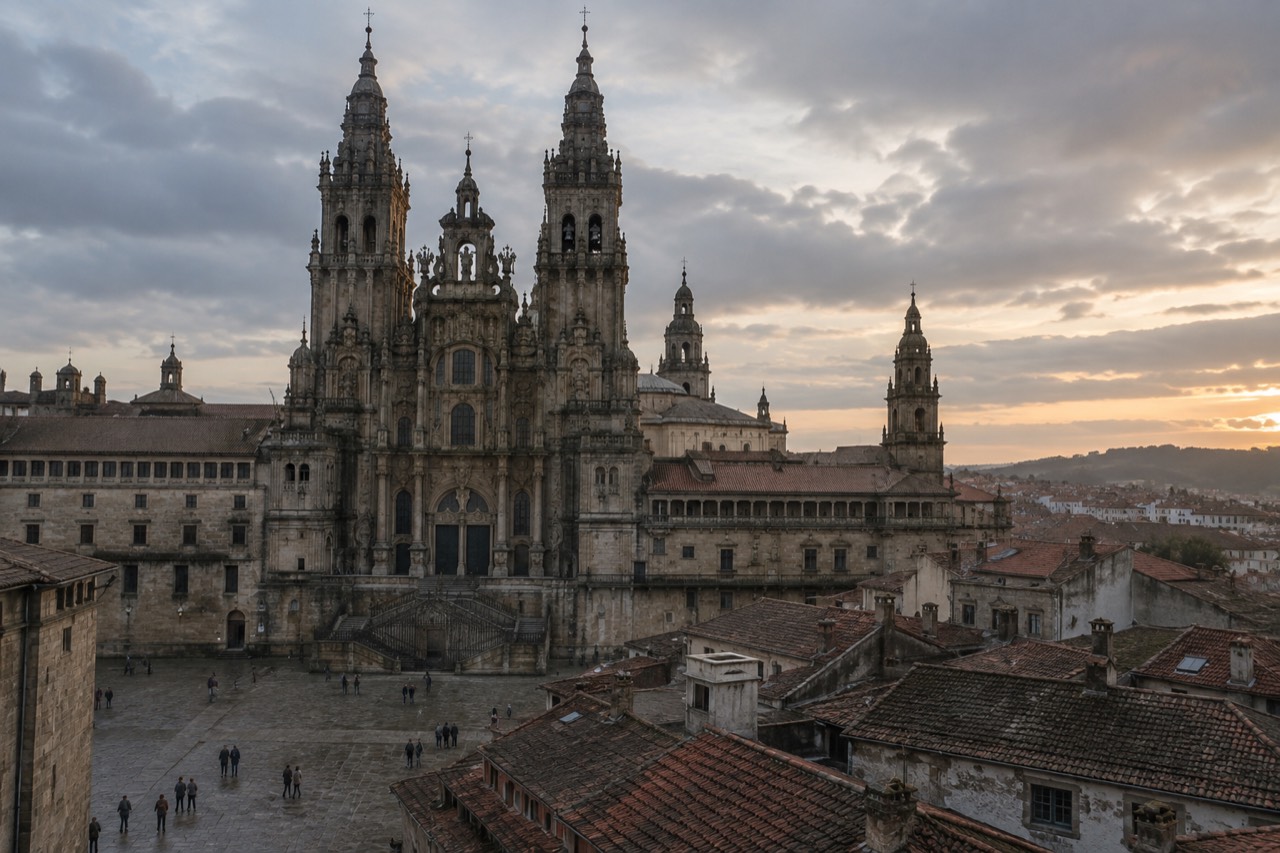
Before leaving Santiago de Compostela, it is worth giving the old town at least a full day of its own. The Cathedral of Santiago de Compostela holds free general entry, its rooftop tour runs at €15 general or €12 reduced, and the old town around it has been UNESCO-listed since 1985, with the Camino routes themselves inscribed separately in 1993. The Santiago de Compostela Travel Guide editors cover all of that in depth elsewhere on this site; this page is about the road south.
Can You Do Santiago de Compostela To Porto As A Day Trip?
As a single day out, Santiago de Compostela to Porto is possible but stretched, because there is no direct train: the verified routing is Santiago to Vigo in roughly an hour, then a change onto a regional cross-border service for the leg into Portugal. Most travellers do it far better as an overnight trip, or as one half of a two-city break split between the two historic centres, with the second night protecting Porto from becoming a rushed footnote.
The case against the day trip is not the distance so much as the structure. A same-day return means changing trains in Vigo in both directions, eating into whatever remains of the day in Porto itself, and arriving back in Santiago late. The pilgrim city rewards slow evenings, from the stone arcades of Praza do Obradoiro to the tapas bars of Rua do Franco, and a day spent mostly in transit sacrifices that.
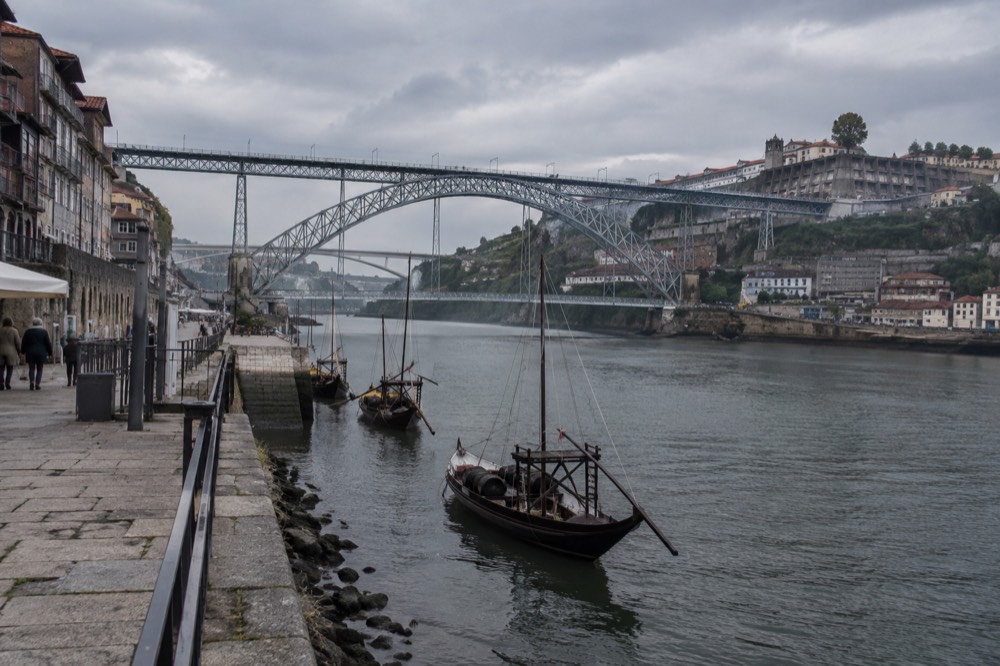
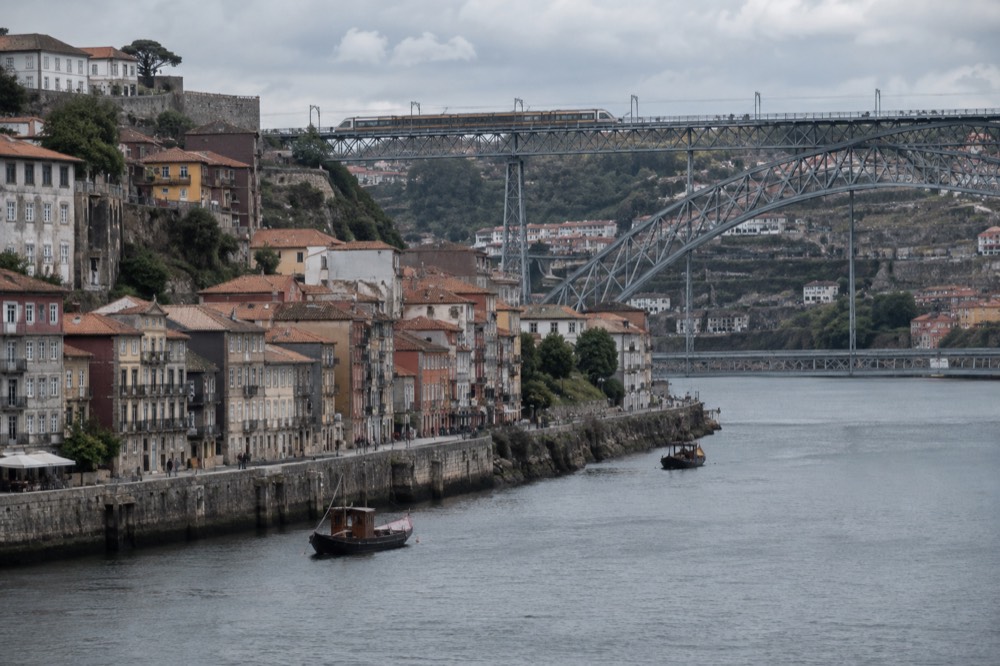
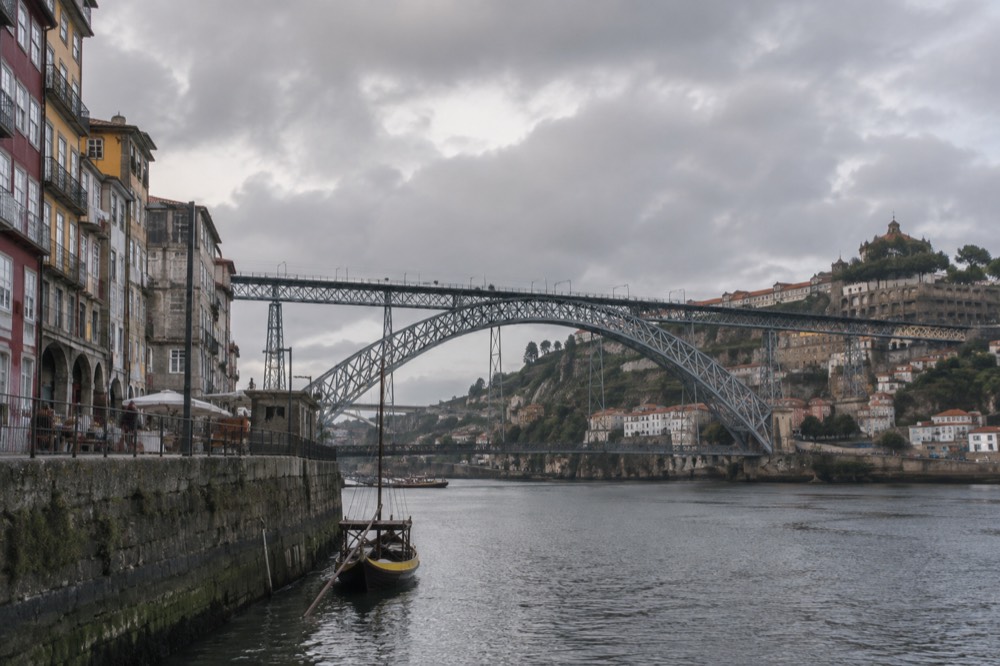
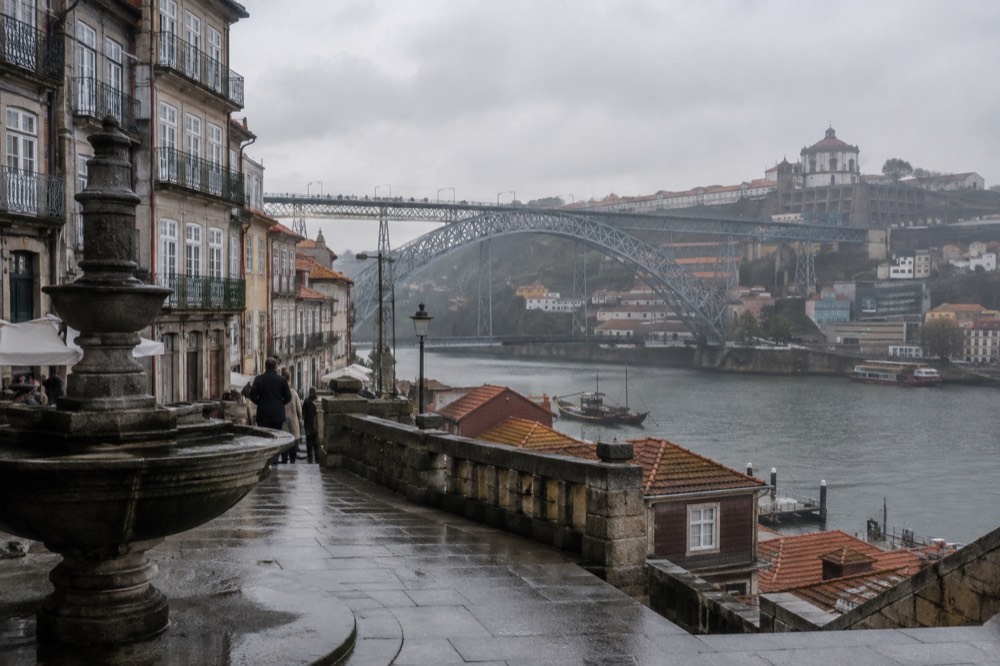
The case for the overnight version is strong and simple. Porto's riverside quarter, its port wine lodges, and its iron bridge over the Douro justify a night, and an early evening arrival lets you walk the river bank after the day-trippers have gone. If your total time in Galicia is short and you cannot spare the night, the honest alternative is to skip Porto on this trip and spend the day on one of the full-day coastal excursions from Santiago instead, then save Porto for a dedicated visit. For help weighing that trade-off, see the best day trip from Santiago de Compostela.
If a coastal excursion is what your schedule allows, a guided option covers the Finisterre and Muxia headlands in one long loop from the city:
How Do You Travel From Santiago de Compostela To Porto?
The train is the backbone of the trip. Santiago de Compostela to Vigo runs on direct regional and high-speed services in roughly one hour, and from Vigo a regional cross-border train, the Celta, carries passengers onward into Porto. No direct rail line connects the two cities, so every rail journey changes at Vigo, and buying the two legs as separate tickets is normal practice on this corridor.
The table below sets out the routing as the verified sources describe it. Note what it does not say: no source officially publishes an exact end-to-end journey time in minutes, so treat any total you see elsewhere as an estimate and check the live timetable when booking.
| Leg | Service | Typical Time | Planning Note |
|---|---|---|---|
| Santiago de Compostela to Vigo | Direct regional and high-speed services | Roughly 1 hour | Multiple daily departures; book either leg independently |
| Vigo to Porto | Regional cross-border service (the Celta) | Timetabled regional leg | The only rail route into Porto; no direct Santiago service exists |
| Whole journey | Train with one change | Verify on the operator's booking page | Exact minutes are not officially published, so plan by connection, not by a fixed total |
Two practical points follow from the structure. First, the connection in Vigo is the whole game: a tight inbound arrival into Vigo can strand you, so choose a Santiago departure with a comfortable gap. Second, because the two legs are separate tickets, a delay on the first does not automatically protect the second, which is the standard argument for padding the change rather than chasing the fastest-looking combination.
Buses also run on this corridor, and for some travellers they beat the train on price, though a specific operator, fare, or frequency for the Santiago to Porto bus is not officially published, so treat any figure quoted elsewhere with caution and confirm with the operator before committing. The train's advantage is the border crossing: rail links the two city centres without a station change in the middle of nowhere, which is exactly the kind of corridor where buses sometimes excel and sometimes require their own change.
If you would rather put your remaining Galicia time into a guided coastal or wine-country day trip from Santiago before heading south, these are the strongest options in the roster:
Is Porto Or Santiago de Compostela The Better City Break?
Santiago de Compostela is the denser, more atmospheric single visit: a UNESCO-listed old town wrapped around one great cathedral, walkable end to end in a day, with the pilgrim arrival tradition giving it a mood no other European city quite copies. Porto is broader and longer, a working port city with riverside wine lodges and a bigger restaurant and nightlife spread, better for two or three days than one.
Neither city loses this comparison, which is precisely why the pairing works. Santiago's strength is concentration: the Cathedral of Santiago de Compostela, the rooftop and museum visits, the Hostal dos Reis Catolicos parador on the main square, and the market at Mercado de Abastos all sit within a few minutes' walk of one another. A first-time visitor can see the essential city between a morning arrival and an evening meal without hurrying.
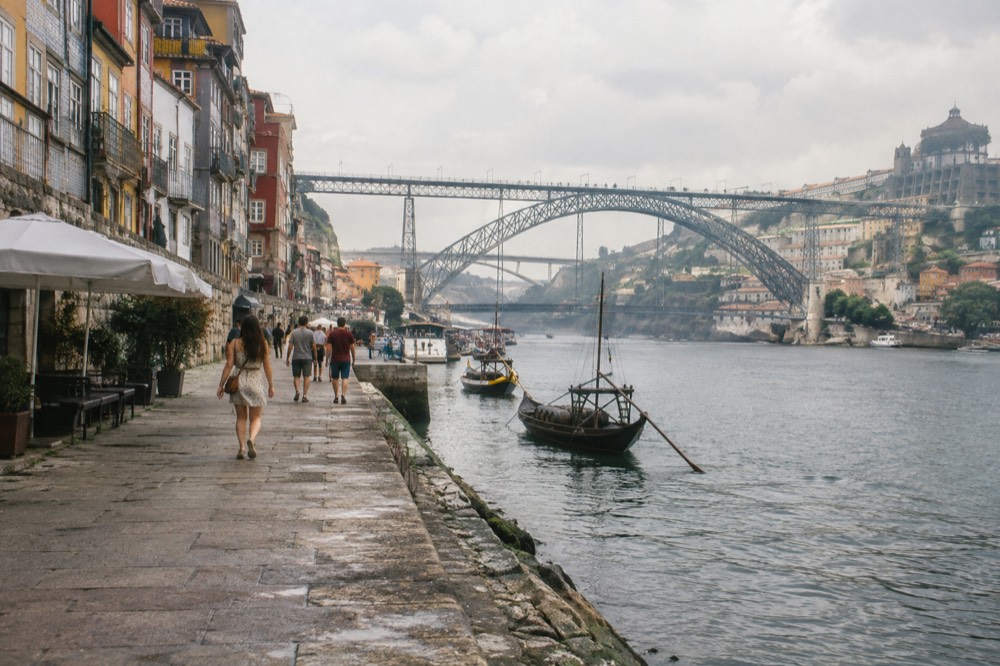
Porto rewards the opposite pace. Its historic centre climbs a steep riverbank, the port lodges across the water need an afternoon of their own, and the city's food scene deserves unhurried evenings. Travellers who give Porto a single squeezed afternoon tend to remember the transit more than the city.
The editors' full head-to-head, including where each city wins on food, cost, and pace, is in Santiago de Compostela versus Porto. The short version for trip planning: lead with Santiago if the Camino or the cathedral is your reason for travelling, lead with Porto if food and wine are the point and the pilgrimage is a bonus, and split evenly if you can spare four or five nights for the two cities together.
What Should A Three-Day Santiago To Porto Itinerary Look Like?
The strongest three-day plan gives Santiago de Compostela a full day and a morning, travels south on day two with the Vigo rail change, and banks the second night into Porto so the riverside city gets one unhurried evening and one full morning before the journey home. Reversing it works just as well, and either direction leaves room for a market breakfast or a rooftop visit at the start.
Here is the shape of it, with the verified anchor activities in place:
| Day | Base | Focus | Verified Anchor |
|---|---|---|---|
| 1 | Santiago de Compostela | Cathedral, rooftops, old town, tapas evening | Cathedral entry free; rooftop tour €15 general, €12 reduced; museum €9-23 by ticket type |
| 2 morning | Santiago de Compostela | Market at Mercado de Abastos, then departure | Abastos hours should be checked on the venue's own site |
| 2 | Vigo to Porto | Rail change in Vigo, evening on the river in Porto | Santiago to Vigo roughly 1 hour, then the regional cross-border leg |
| 3 | Porto | Port lodges, historic centre, return journey | Allow the full afternoon for the trip back north |
Two Santiago details deserve care on day one. First, if you plan to attend the pilgrim mass before departing, the arrangement changes on a fixed date: until 15 October 2026 the 9:30am, noon, and 7:30pm masses are held at the Cathedral's High Altar, while from 16 October 2026 they relocate to the nearby Church of San Agustin, with only the 7:30am mass remaining in the Cathedral's own Communion chapel. Second, do not build the day around the Botafumeiro: the giant censer is currently out of action, with restoration scaffolding for the dome covering its hanging mechanism, and the Cathedral confirmed the suspension in writing on 5 September 2026 with no return date published. The cathedral tickets and opening hours are covered in detail on a dedicated page.
If a third night frees up, the best use of it is either a second Porto night or a stop in the Rias Baixas wine country between the two cities. The Albarino towns sit within day-trip range of Santiago, and a guided excursion can compress the winery visit and the mussel-boat leg into a single day before you leave Galicia.
How Much Does The Santiago To Porto Trip Cost?
The verified anchor costs are these: the Cathedral of Santiago de Compostela enters free, its rooftop tour costs €15 general or €12 reduced, and the Cathedral Museum runs €9 to €23 depending on ticket type. Rail fare for the two legs south is not fixed, so budget it from the operator's live booking page, and add roughly one night's accommodation in Porto for the overnight plan.
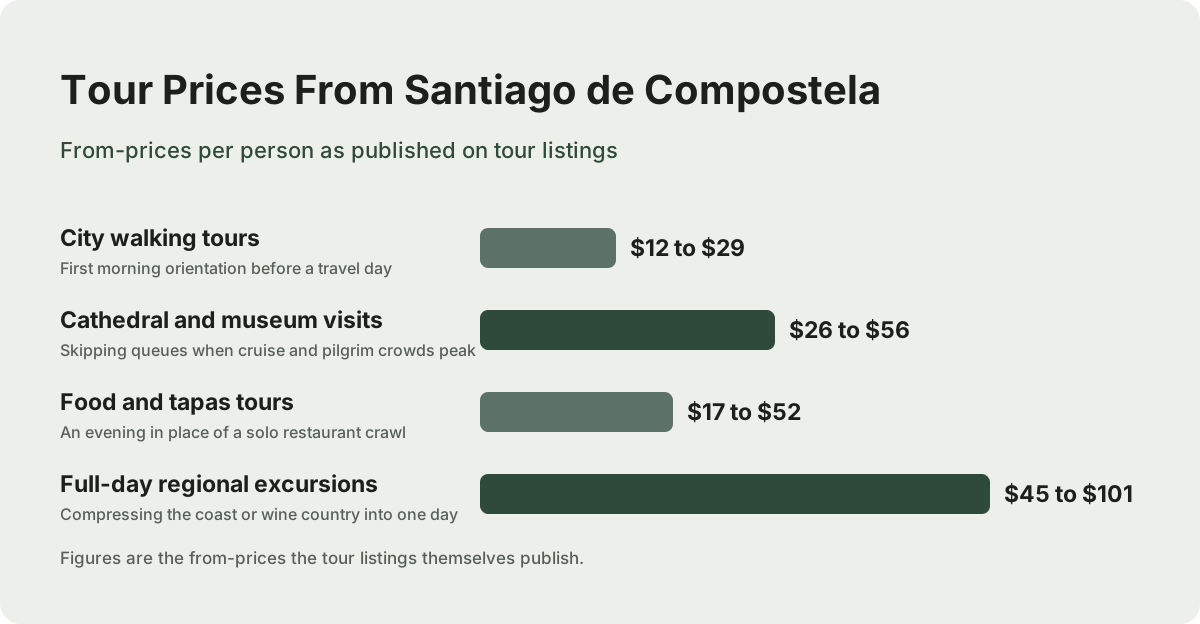
Guided activities, where you prefer them to independent wandering, price out as follows from the verified roster:
| Activity Type From Santiago | Verified Price Range | Best Use |
|---|---|---|
| City walking tours | From $12 to $29 per person | First morning orientation before a travel day |
| Cathedral and museum visits | From $26 to $56 per person | Skipping queues when cruise and pilgrim crowds peak |
| Food and tapas tours | From $17 to $52 per person | An evening in place of a solo restaurant crawl |
| Full-day regional excursions | From $45 to $101 per person | Compressing the coast or wine country into one day |
Two framing notes keep this honest. Prices on tour listings move with season and demand, and the figures above are the from-prices the listings themselves publish, not promises. And the tourist-tax situation in Santiago should be treated as current policy rather than a permanent fact: Santiago de Compostela has charged a municipal tourist tax since 1 October 2025, a surcharge on Galicia's tourist-stay tax upheld by Galicia's high court in September 2026, ranging from 1 EUR per person per night in private albergues, campsites and tourist apartments up to 2.50 EUR in five-star hotels, for a maximum of 5 nights, with under-18s and stays in Xunta-run public albergues exempt, but several Spanish regions have introduced or changed these levies in 2025 and 2026, so re-check close to your travel date.
For the leanest version of the trip, the free-entry cathedral, the free general old town, and one paid rooftop visit carry a whole Santiago day for under €20 per person before food, and Porto's historic centre is largely a walking experience. For a fuller budget treatment of the pilgrimage region, see the average cost to walk the Camino de Santiago, which covers the nightly spending most first-time visitors underestimate.
A guided tapas evening is one of the few paid Santiago activities that substitutes directly for money you would spend anyway on dinner, which makes it a rare budget-neutral upgrade: Check availability
Can You Walk From Porto To Santiago de Compostela?
Yes, and walking is the oldest way to make this journey: the Camino Portugues runs north from Porto to Santiago de Compostela and is one of the busiest recognized routes into the city. To earn the Compostela certificate, a pilgrim must walk at least the last 100km, or cycle the last 200km, collecting a minimum of two stamps per day on the credencial, and the certificate is issued in person only at the Pilgrim's Office on Rua das Carretas 33.
The scale of the walking traffic is the striking part. The Pilgrim's Office recorded 530,987 Compostelas issued in 2025, a record year, and the Portuguese routes supply a large share of the summer flow. Walking the full Porto to Santiago distance typically takes about a fortnight at pilgrimage pace, a commitment far beyond a city break, but the certificate rules mean a shorter final stretch also qualifies, which is why many travellers combine a Porto city stay with the last stage on foot.
For planning the walking version, three companion pages on this site do the heavy lifting: the full Camino de Santiago guide, the route-by-route breakdown in Camino de Santiago routes, and the practical mapping in the Camino de Santiago map. The reverse direction, covered in Porto to Santiago de Compostela, is the version most walkers choose, with the wind and the gradient generally kinder to a northbound pilgrim.
Accommodation along the way runs through the pilgrim albergue system, whose etiquette and booking realities are explained in Camino accommodation and albergues. Even travellers who never sleep in one benefit from knowing how the system works, because the evening rhythm of arriving walkers is part of what gives Santiago its atmosphere, and the length of the whole undertaking is a question this site answers in its guide to how long the Camino takes.
Should You Drive, Take A Bus, Or Fly Between The Two?
Driving is the most flexible option, since the corridor south from Santiago de Compostela passes through Vigo and the border towns and lets you stop at will, though no verified distance or driving time for the full run is officially published. Flying is the least useful: Santiago's airport sits about 12km from the old town, and a short hop between two nearby cities rarely beats the train once airport time is counted.
The airport detail worth knowing, because it changes in late 2026, concerns the bus link. As of late September 2026, line 6A run by Tussa connects the airport with the city centre at €1 paid to the driver, or €0.36 per trip on a rechargeable card, per the city's own transport page. A new Monbus contract with a substantially higher fare, around €6 single, is expected to take over in autumn 2026, possibly by December, so treat the current €1 fare as subject to change rather than a standing fact, and verify the line number after December.
| Travel Method | What Is Verified | Planning Note |
|---|---|---|
| Train via Vigo | Santiago to Vigo roughly 1 hour, then a regional cross-border leg | The standard choice; build a comfortable change in Vigo |
| Car | Corridor runs south through Vigo toward the border | No verified distance or drive time in this pack; plan stops, not hours |
| Bus | Services run on the corridor; operator, fare, and frequency unverified | Confirm directly with operators before booking |
| Plane | Santiago airport about 12km from the old town; line 6A at €1/€0.36, Monbus change pending | Short-haul flights rarely win once airport time is counted |
The 2027 Holy Year deserves a mention here because it will transform this corridor. When the Holy Door opens on 31 December 2026 and the Xacobeo runs through 2027, the flow of pilgrims and visitors between Portugal and Galicia swells, and both the trains into Santiago and the beds in the old town tighten. Anyone planning this trip around the Holy Year should book the rail legs and the first night in Santiago well ahead of the summer. For whether the city justifies the trip at all, see is Santiago de Compostela worth visiting, and for pacing the stay, how many days to spend in Santiago de Compostela.
When Is The Best Time Of Year For The Santiago To Porto Trip?
The driest window is July and August, but that is also the busiest, with pilgrim numbers at their annual peak and both cities at their most crowded. The shoulder months of late spring and early autumn give the best balance of weather and room to move, while October to March is the wet, cool season on the Galician side, when an umbrella matters more than a timetable.
No month-by-month normals table has been officially published, so the honest planning frame is seasons, not precise monthly figures:
| Season | Character In Galicia | Trip Impact |
|---|---|---|
| July to August | Driest months of the year | Best weather, heaviest pilgrim and visitor crowds |
| Late spring | Mild, showers still common | Good balance of conditions and availability |
| Early autumn | Softening temperatures, rain returning | Pleasant pace once the August peak passes |
| October to March | Wet and cool, the wettest stretch | Cheapest beds, but plan indoor afternoons |
Two timing notes follow from the calendar rather than the weather. First, the Feast of St James falls on 25 July every year and fills Santiago with concerts, fireworks, and civic events, so the days around it book out early. Second, the choice of month interacts with the walking question: for walkers, the planning factors lean toward the same shoulders rather than the July peak, and this site's guide to the best month to walk the Camino covers them in detail.
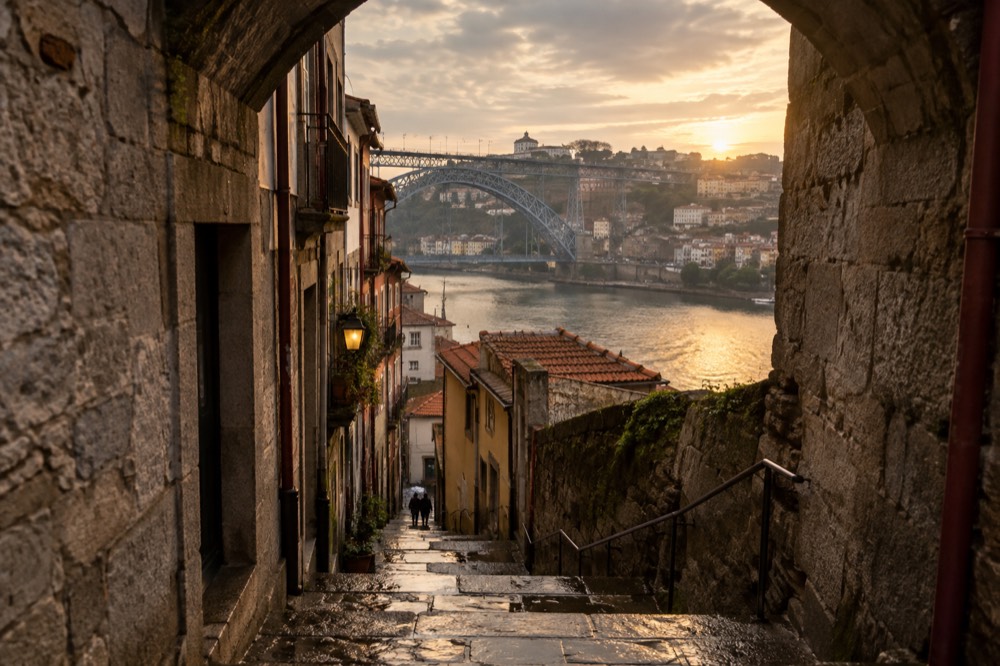
Rain, for the record, is part of the identity rather than a defect: whether it rains a lot in Santiago de Compostela is one of the most-asked questions about the city, and the answer shapes what the old town looks like, all wet granite and glossy stone arcades. Travellers pairing the two cities should expect the Portuguese side to be a shade drier and warmer on average, without treating either as guaranteed.
Before locking dates, it is worth deciding how much of Galicia itself belongs on this trip, because the corridor south passes within reach of the Rias Baixas wine coast, and a single guided day can absorb the winery and mussel-boat experience without displacing a Porto night:
Common Questions About Santiago de Compostela To Porto
Is there a direct train from Santiago de Compostela to Porto?
No. The verified routing is Santiago de Compostela to Vigo in roughly one hour, then a change onto the regional cross-border service for the leg into Porto. Every rail journey between the two cities changes at Vigo.
Can you do Santiago de Compostela to Porto in one day?
It is possible but stretched, because the rail journey requires a change in Vigo in both directions. An overnight stay in Porto gives the riverside city the evening and morning it deserves, and most travellers find that the better structure.
How much does the trip cost?
Verified anchor costs: the Cathedral of Santiago de Compostela enters free, the rooftop tour is €15 general or €12 reduced, and the Cathedral Museum runs €9 to €23 by ticket type. Rail fares for the two legs should be taken from the operator's live booking page, since no fixed price is published for the corridor.
Is it better to visit Santiago de Compostela or Porto?
Santiago de Compostela is the denser single visit, a compact UNESCO-listed old town around one great cathedral; Porto is broader, better suited to two or three days, with riverside wine lodges and a larger food scene. The full comparison is in this site's Santiago de Compostela versus Porto guide.
Can you walk from Porto to Santiago de Compostela?
Yes, along the Camino Portugues. The Compostela certificate requires walking at least the last 100km, or cycling the last 200km, with a minimum of two credencial stamps per day, and it is issued in person at the Pilgrim's Office on Rua das Carretas 33. The office issued a record 530,987 Compostelas in 2025.
What is the best time of year to travel between the two cities?
July and August are the driest months but the busiest, with pilgrim numbers at their peak. Late spring and early autumn give the best balance of weather and space, while October to March is the wet, cool season in Galicia, with annual precipitation on the order of 1,690 to 1,890mm.
The pairing of Santiago de Compostela and Porto works because the two cities are close enough to combine easily and different enough that neither repeats the other, and the one structural fact to hold onto, that every rail journey changes at Vigo, shapes the rest of the plan around it.