Porto To Santiago de Compostela
Porto to Santiago de Compostela is one of Europe's most rewarding travel corridors: a walkable pilgrim route, a short train ride and a city that is a UNESCO World Heritage Site twice over.
Short answer
You can travel from Porto to Santiago de Compostela by walking the Camino Portugués (about 10 days from Porto), by train with a change at Vigo, or by bus in a single day. There is no direct rail line to Porto from Santiago, so walkers and riders alike change at Vigo or cross by road.
The Camino Portugués is the reason most people travel from Porto to Santiago de Compostela, and the Portuguese border sits closer to the pilgrim cathedral city than almost any other international starting point on any Camino route. The Oficina del Peregrino's own figures recorded 530,987 Compostelas issued in 2025, a record year, and a large share of those pilgrims started their walk in Portugal, where the border crossing at Valença or Tui is roughly the last 100km of walking that the Compostela certificate requires. But the Porto to Santiago de Compostela corridor is not only for walkers. Renfe's own route structure runs direct high-speed services from Santiago to Madrid in roughly 3 to 4 hours and a direct regional connection to Vigo in about 1 hour, and the Celta service links Vigo onward into Portugal, which makes this a genuine rail corridor too, with a change required at Vigo because no direct rail line to Porto exists.
This guide from the Santiago de Compostela Travel Guide editors covers the three ways to make the journey, what each one costs in time and effort, and what happens once you arrive in the city itself: the mass schedules, the pilgrim office, the certificate rules and the day trips that make sense from a base in Galicia. One thing worth knowing before anything else: Santiago de Compostela's Old Town was inscribed by UNESCO in 1985, and the Routes of Santiago de Compostela hold a separate UNESCO inscription from 1993. Two listings, two dates, never one.
How Do You Get From Porto To Santiago de Compostela?
There are three practical ways: walking the Camino Portugués (roughly ten days from Porto's cathedral square), taking a train with a mandatory change at Vigo, or riding a direct bus across the border in a single day. There is no direct rail line from Santiago de Compostela to Porto, so every rail journey between the two cities involves changing at Vigo, and the verified research on this route states the Santiago to Vigo leg takes roughly one hour.
The rail structure matters more here than most travellers expect. The verified facts for this build state that Santiago to Madrid runs direct on high-speed services in roughly 3 to 4 hours, that Santiago to A Coruna is a short direct hop, and that Santiago to Vigo is roughly one hour on regional services. The same research is explicit that no direct rail line to Porto exists: travellers change at Vigo, where the cross-border Celta service continues into Portugal. Anyone planning a day trip from Santiago back down to Porto, or a two-city itinerary, should build the Vigo change into the timetable from the start rather than discovering it at the ticket counter.
Bus services run the Porto to Santiago road corridor directly, and the two cities are close enough that the whole journey fits into a single day by road. For walkers, the distance is the point rather than the obstacle: the Camino Portugués from Porto covers roughly the last 200km-plus of pilgrimage on foot, comfortably more than the 100km minimum for a certificate. If you are weighing the two cities as destinations in their own right, our Porto vs Santiago comparison breaks down what each one does better.
How Long Does It Take To Walk The Camino Portugués From Porto?
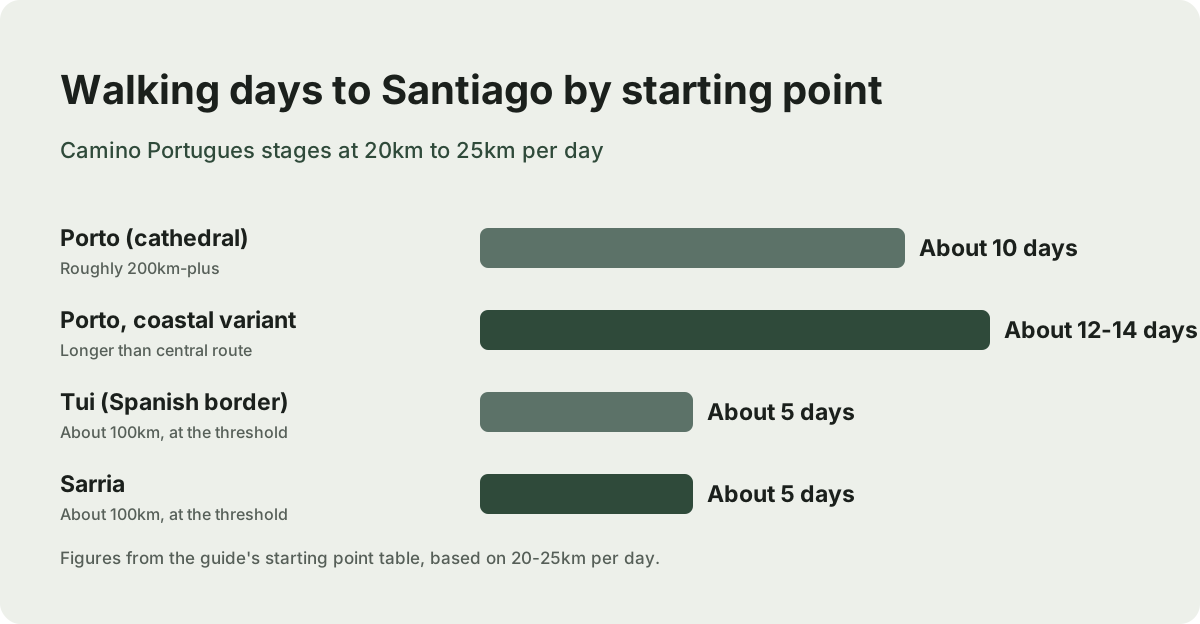
Walking the Camino Portugués from Porto to Santiago de Compostela takes most pilgrims about ten days at an average of 20km to 25km per day, with the coastal variant adding a few days because the route runs longer and the coastal and central paths merge only in the final stages. The Oficina del Peregrino's FAQs state the certificate requires the last 100km walked continuously, so a walker starting in Porto far exceeds the minimum.
The route from Porto has two main branches: the central way through Valença and Tui, and the coastal way that runs up the Portuguese seaboard before joining inward toward Redondela in Galicia. The border crossing itself is a signature moment of the walk, because pilgrims leave Portugal and enter Spain on foot across the old international bridge, and from Tui the remaining distance sits inside the 100km minimum that the Compostela certificate requires. Two stamps per day, from official stamping points, are needed in the credencial, as the pilgrim office's own FAQs set out.
Accommodation along the way splits between public albergues, private albergues, guesthouses and small hotels, and the albergue and accommodation guide covers how each tier works. The rough day-count picture looks like this, and note these are typical planning ranges rather than fixed timetables:
| Starting point | Approximate walking distance to Santiago | Typical days at 20-25km/day | Certificate eligible? |
|---|---|---|---|
| Porto (cathedral) | Roughly 200km-plus | About 10 days | Yes, well over 100km |
| Porto, coastal variant | Longer than central | About 12-14 days | Yes |
| Tui (Spanish border) | About 100km | About 5 days | Yes, at the threshold |
| Sarria | About 100km | About 5 days | Yes, at the threshold |
The full Camino routes guide compares the Portugués against the French, Northern, Primitive and English routes, and the Camino map page puts every route on one picture.
Can You Do Porto To Santiago de Compostela In One Day?
Yes, by bus or by car the journey fits into a single day, and by train it is possible but tighter because of the change at Vigo, which the verified route research confirms is unavoidable on rail. Walkers cannot do it in one day: the Camino Portugués from Porto is roughly a ten-day walk, and there is no shortcut on foot that still qualifies for the Compostela certificate.
For a one-day rail journey, the structure is Porto to Vigo by cross-border service, then Vigo to Santiago de Compostela in roughly one hour on the direct regional connection. The bus corridor runs the whole way by road. Neither option requires an overnight stop, but the Vigo change eats slack in the schedule, so a morning departure is the safer plan for anyone intending to arrive in Santiago with the afternoon still ahead of them.
Two practical notes from the verified research for this build. The city's airport is about 12km from the old town, a 20 to 30 minute drive, with the airport bus running on a roughly 30-minute frequency and a fare in the EUR1-3 range, although a new operator contract expected in late 2026 is expected to change that fare, so check the live situation rather than assuming the old price. And the Cathedral's own liturgy page lists pilgrim masses at 7:30am, 9:30am, noon and 7:30pm daily, but from 16 October 2026 the 9:30am, noon and 7:30pm masses relocate to the Church of San Agustin while main-chapel works for the 2027 Holy Year continue, with only the 7:30am mass staying in the Cathedral's own Communion chapel. Plan an arrival-day mass accordingly.
What Should You Do On Arrival In Santiago de Compostela?
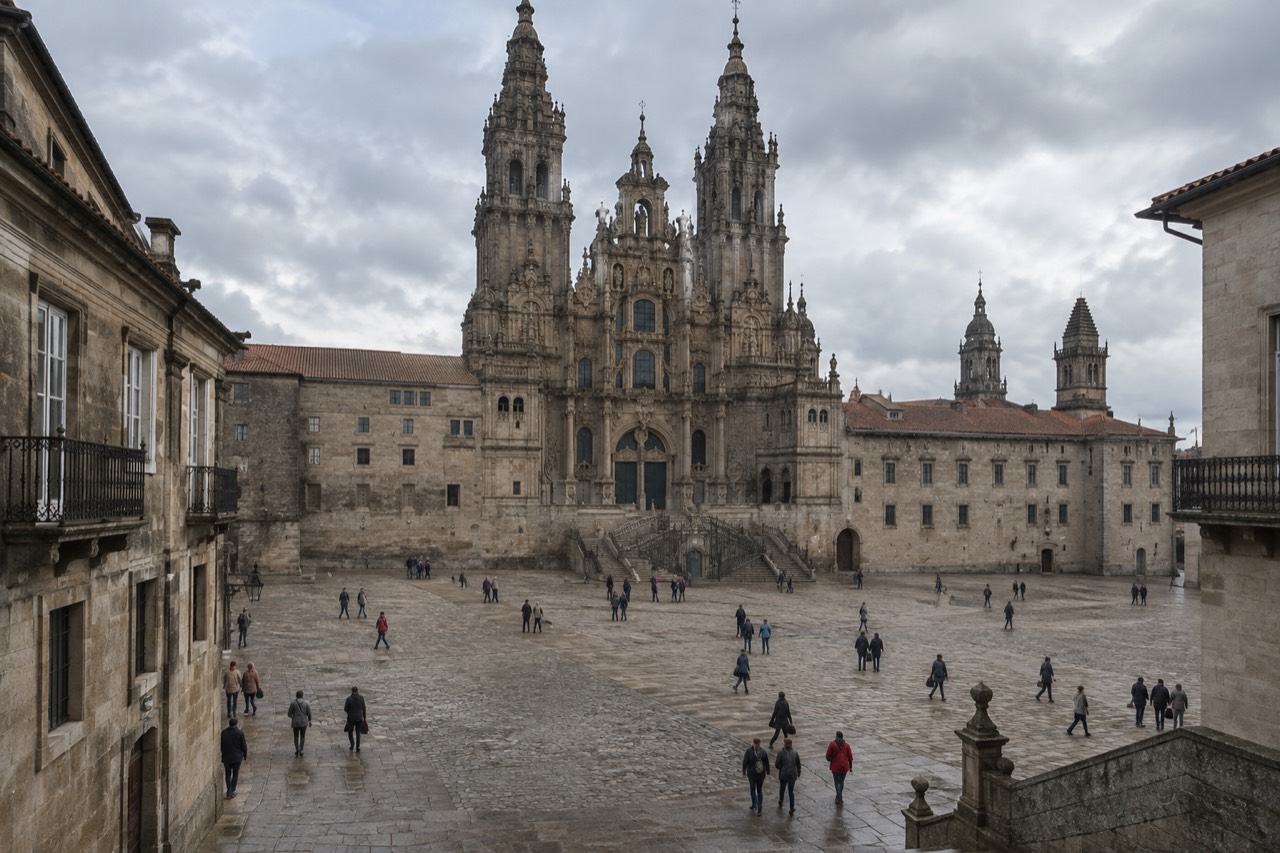
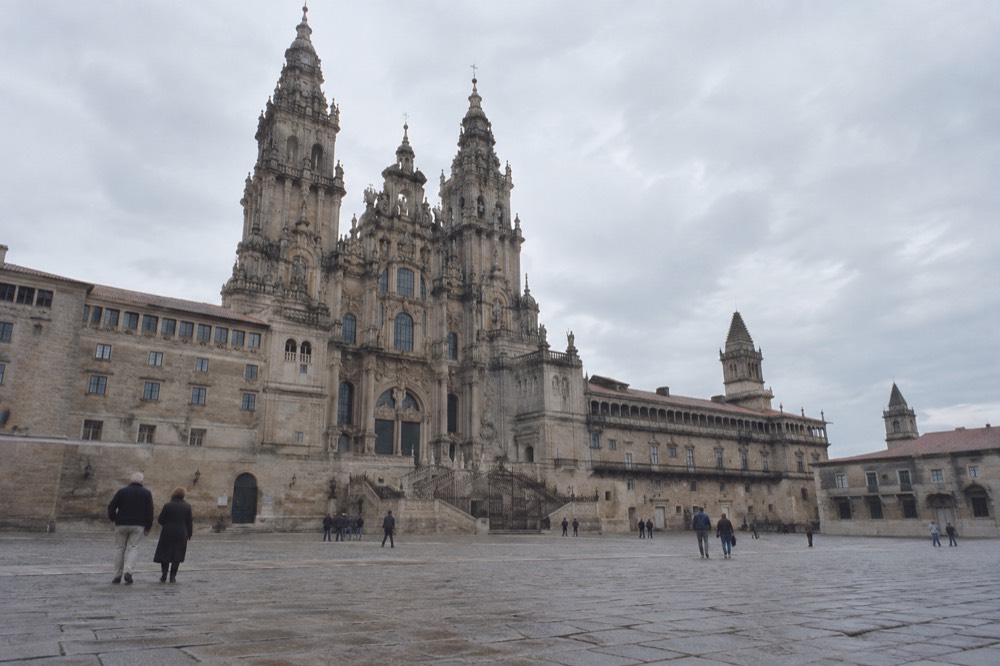
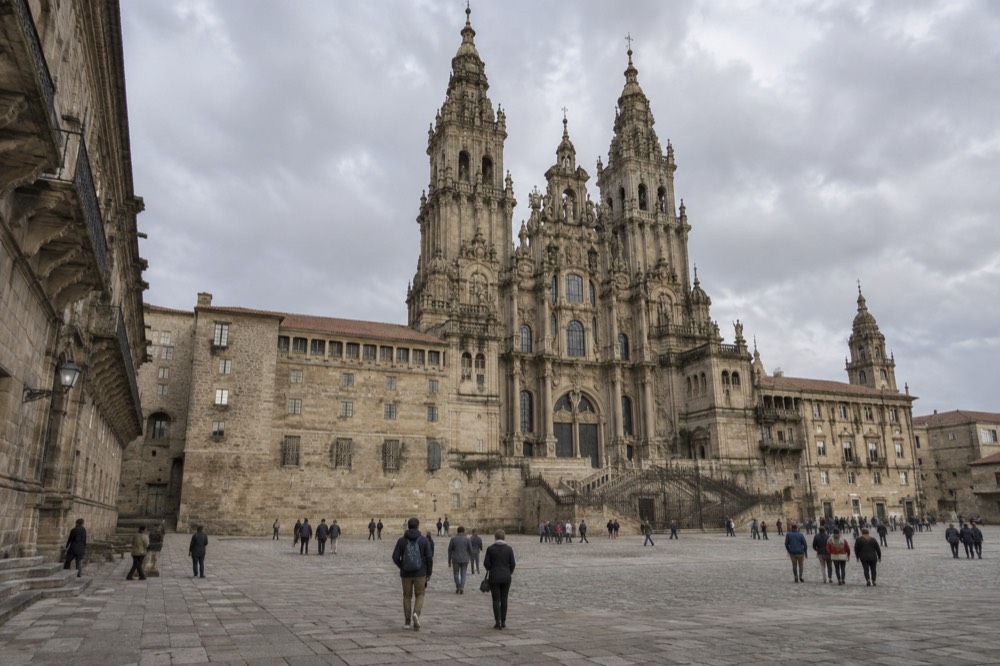
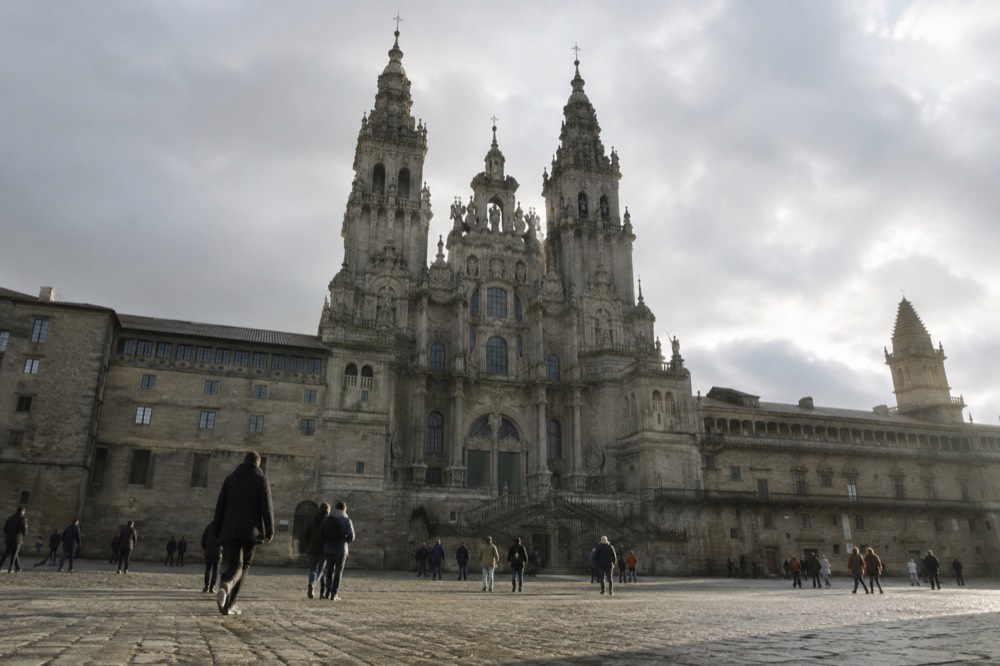
Arriving pilgrims head for the Oficina del Peregrino at Rua das Carretas 33, which issues the Compostela certificate in person only, then to the Cathedral for the pilgrim mass and the apostle's tomb, then to Praza do Obradoiro, where the baroque facade of the cathedral faces the Hostal dos Reis Catolicos and the town hall across one single square. The old town beyond that square is compact enough to walk end to end in under half an hour.
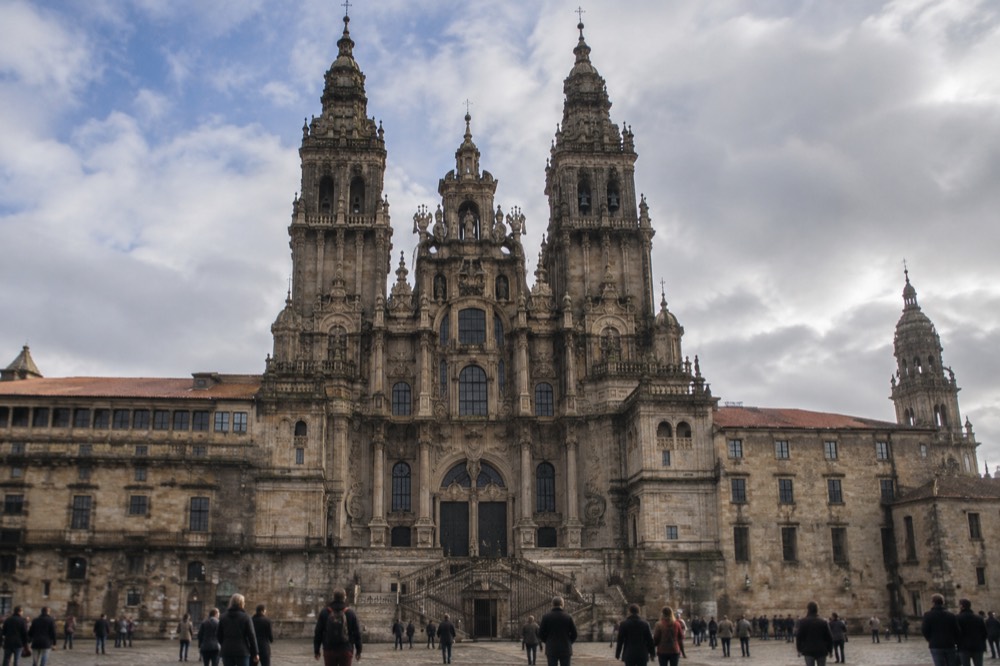
The arrival sequence is a ritual in itself. The pilgrim office issues the certificate to anyone with a completed credencial showing the last 100km on foot, or the last 200km by bicycle, stamped twice a day. The pilgrim mass then gathers the day's arrivals, and the Cathedral itself is free to enter, open daily from roughly 7am to 9pm, closing earlier on Saturday evenings in summer for the pilgrim vigil. The tomb of the apostle beneath the high altar is the endpoint of the whole journey, and the traditional embrace of the statue on the level above is the other half of that ritual.
The Cathedral guide covers the interior in depth, and the one day in Santiago itinerary sequences a first day for anyone arriving with limited time. A walking tour is the fastest way to decode a city whose history is layered this thickly.
Is The Botafumeiro Flying Right Now?
No. The Botafumeiro is currently out of action because scaffolding for the cimborrio restoration covers its hanging mechanism, and the Cathedral confirmed this in writing on 5 September 2026 with no return date published. It normally swings at 12 fixed solemnities a year, including the Feast of St. James on 25 July, but no visitor should plan a trip around seeing it swing until the Cathedral announces its return.
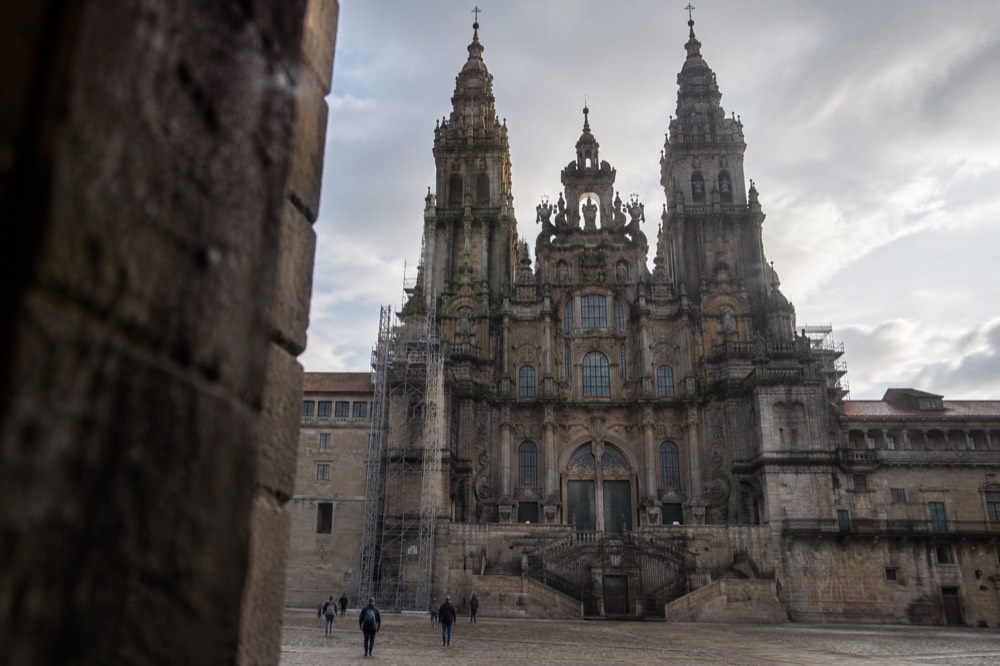
This matters for Porto-to-Santiago walkers more than most, because the Botafumeiro is the single most famous thing the pilgrim mass can deliver. The Cathedral's liturgy page lists the normal schedule: Epiphany on 6 January, Easter Sunday, the Ascension, the Apparition of the Apostle at Clavijo on 23 May, Pentecost, St. James on 25 July, the Assumption on 15 August, All Saints on 1 November, Christ the King, the Immaculate Conception on 8 December, Christmas and the Transfer of the Apostle on 30 December. All of that is the normal mechanism, clearly flagged as currently suspended, and the private request option, at an indicative EUR450-500, is likewise unavailable while the scaffolding stands. The Botafumeiro guide carries the full solemnity list.
The dome works do not close the Cathedral. The naves, the tomb and the embrace area remain fully open with normal free entry, the museum and Portico da Gloria visits continue with timed tickets, and the rooftop tour runs as normal. The one change beyond the Botafumeiro is the mass relocation from 16 October 2026, described above.
What Are The Best Day Trips From Santiago de Compostela?
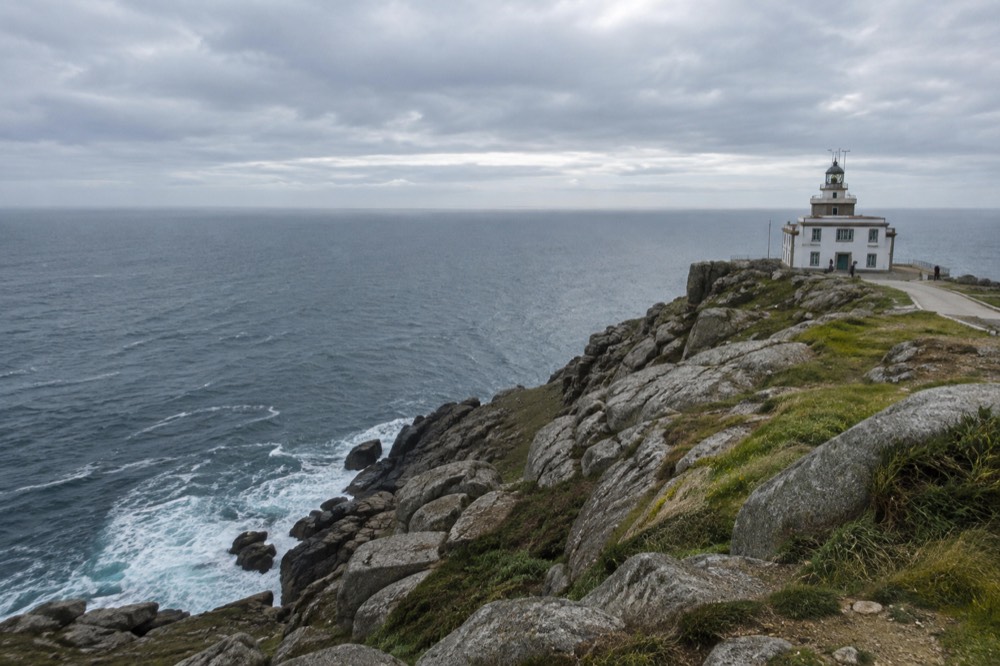
The strongest day trips from Santiago de Compostela are Finisterre and Muxia on the Costa da Morte, the Rias Baixas wine region around Cambados with its wineries and mussel boats, the Cies Islands, and the Roman walls of Lugo, and all of them run as full-day guided excursions from the city or are reachable on a self-drive day. Finisterre is the classical pilgrim extension, because the medieval tradition held that pilgrimage ended at the sea, not at the tomb.
The pattern most Porto-to-Santiago travellers settle into is simple: walk or ride to Santiago, spend a rest day in the city, then add one or two excursions before heading home. A rest day after the Camino deserves real planning, because the legs that carried you 200km will not want a second long walk on the same day. The options compare like this, with prices drawn from the verified tour roster for this build:
| Day trip | Duration | From (per person) | Rating |
|---|---|---|---|
| Finisterre, Muxia & Costa da Morte, 7 stops | Full day | $60 | 4.8 from 1,714 reviews |
| Rias Baixas winery with optional mussel boat | Full day | $54 | 4.8 from 322 reviews |
| Catedrais Beach, Lugo and Asturias | Full day | $68 | 4.9 from 181 reviews |
| Ribeira Sacra canyons, Sil river and Ourense | Full day | $64 | 4.3 from 11 reviews |
| Cies Islands visit | Full day | $101 | No rating published |
The Costa da Morte is the most thematically linked extension for pilgrims, and the Finisterre guide explains the end-of-the-world naming and what the cape actually delivers. The Cies Islands are the alternative for anyone whose journey began on the Portuguese coast and wants to end on a Galician one.
When Is The Best Time Of Year For The Porto To Santiago Journey?
The best months for travelling from Porto to Santiago de Compostela are late spring and early autumn, because AEMET's climate data for the city shows a temperate oceanic pattern that is wet year-round, wetter from October to March, and driest in July and August. August is the driest month but also the busiest around the Feast of St. James, so May, June and September offer the best balance of dry walking and thinner crowds.
The research for this build deliberately publishes no month-by-month climate table, because AEMET's monthly normals were not extracted at that granularity, and the honest position is seasonal ranges. Annual precipitation runs on the order of 1,690 to 1,890mm depending on station and year measured, which puts this among Europe's wetter cities and makes rain gear non-negotiable on any Camino packing list, in any month. The weather guide and the best time to visit guide cover the seasonal picture in more depth.
One date reshapes every crowd calculation: 25 July, the fixed Feast of St. James, when the city marks the day with a pontifical mass, the national offering to the apostle, fireworks and concerts. And one date reshapes the next decade: the next Holy Year is 2027, not 2026, because a Holy Year is declared whenever 25 July falls on a Sunday. The Holy Door opens on 31 December 2026 and the Holy Year runs through 31 December 2027. Anyone walking from Porto in 2027 will find the busiest Camino Portugués in over a decade, and the Holy Year 2027 guide covers what that means in practice.
| Period | Typical conditions | Crowd level | Notes |
|---|---|---|---|
| January-March | Wettest season, cool | Low | Quietest walking, wettest days |
| April-June | Drying out, mild | Moderate | Popular balance month |
| July-August | Driest, warmest | Highest | St. James feast on 25 July peaks it |
| September | Mild, showers returning | Moderate | Peak shoulder-season choice |
| October-December | Wet and cool | Low | Holy Door opens 31 Dec 2026 |
How Much Does The Porto To Santiago Trip Cost?
A ten-day Camino Portugués walk from Porto to Santiago de Compostela typically costs a walker the least of any Camino route, because Portuguese stages are cheap and Galician albergues undercut hotels heavily, while a train-and-hotel version of the same journey costs multiples of the walking budget. The verified tour roster prices guided experiences from $14 for a city walking tour to $101 for a Cies Islands full day, and the Cathedral's own rooftop tour costs EUR15 general, EUR12 reduced.
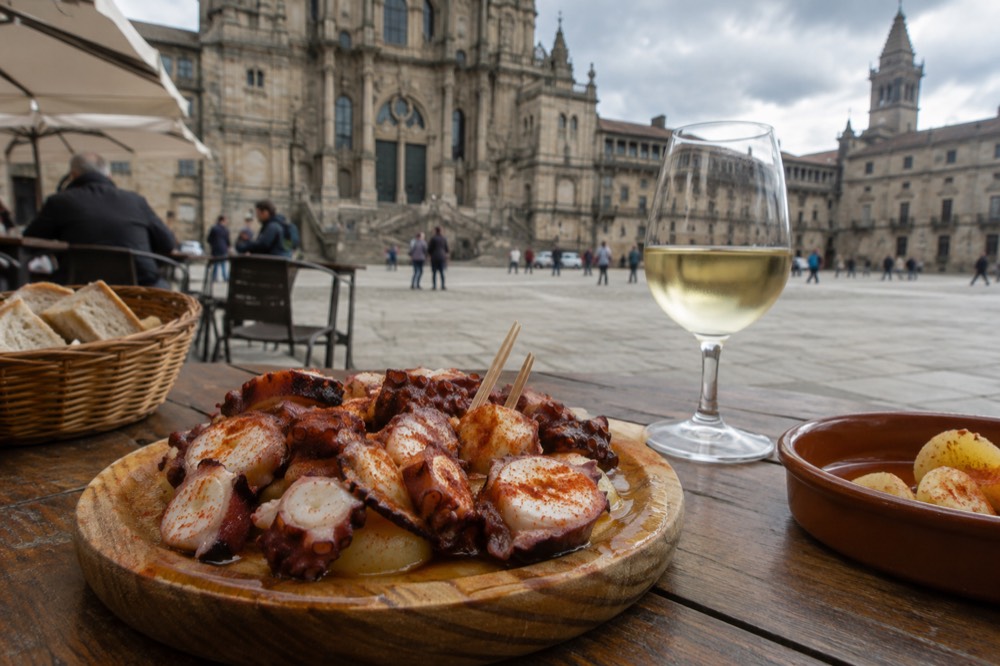
The honest budget answer for this page is ranges rather than invented line items, because per-night prices for the Portuguese stages are not officially published, and inventing them would break the site's sourcing rules. What the details below do include are verified anchor figures. The Cathedral's own ticket site prices the rooftop and Carraca Tower guided visit at EUR15 general and EUR12 reduced, including the museum permanent collection, valid seven days. The Cathedral tickets and opening hours guide has the full ticket ladder. The pilgrim office issues the Compostela free to qualifying walkers, though pilgrims who walk for non-religious reasons can request a different certificate of welcome instead.
Santiago de Compostela has charged a municipal tourist tax since 1 October 2025 (a surcharge on Galicia's tourist-stay tax): per person per night for a maximum of 5 nights, from 1 EUR in private albergues, campsites and tourist apartments up to 2.50 EUR in five-star hotels, with under-18s and stays in Xunta-run public albergues exempt. The budget guide and the where to stay guide cover the arrival-city end of the budget in depth.
What Do You Need Before You Start Walking From Porto?
You need a pilgrim passport, the credencial, before you start walking from Porto, because the Oficina del Peregrino's rules require at least two stamps per day on the final 100km walked, and the document itself is the only proof the certificate accepts. You also need a realistic daily distance plan, because the ten-day Porto walk assumes 20-25km days, and the border at Tui must be crossed with enough walking left in Spain to meet the 100km rule on the correct side of it.
The pilgrim passport guide explains where the credencial is obtained, how the stamping cadence works and what counts as an official stamping point. The main planning failure on this route is underestimating the Portuguese stages: walkers who rush through Portugal on short days can end up short of the 100km in Spain, though anyone starting from the Porto cathedral itself is so far over the minimum that the error only bites those starting from intermediate points.
The arriving in Santiago on the Camino guide walks through the final approach into the city, stage by stage, and the where to eat guide covers the first proper Galician dinner, which most Porto-to-Santiago walkers have earned about ten times over.
Common Questions About Porto To Santiago de Compostela
Can you walk from Porto to Santiago de Compostela?
Yes. The Caminho Portugués from Porto to Santiago de Compostela takes most walkers about ten days at 20-25km per day, with the coastal variant running a few days longer. Starting from Porto puts you well over the 100km walked minimum the Oficina del Peregrino requires for the Compostela certificate.
Is there a direct train from Porto to Santiago de Compostela?
No. The verified rail research for this route states there is no direct rail line between the two cities: travellers change at Vigo, where the Santiago to Vigo leg takes roughly one hour on direct regional services and the cross-border Celta service continues into Portugal.
How far is Porto from Santiago de Compostela?
The Camino Portugués from Porto to Santiago de Compostela is roughly 200km-plus of walking, which is why the route takes about ten days on foot. By road the journey fits into a single day by bus or car.
Can you get the Compostela certificate walking from Porto?
Yes. The Oficina del Peregrino's FAQs state the certificate requires the last 100km walked continuously with at least two stamps per day in the credencial, and a Porto start far exceeds that minimum. The certificate is issued in person only at Rua das Carretas 33.
Can you do Porto to Santiago de Compostela by bike in a shorter time?
Cyclists need the last 200km ridden for the certificate, which a Porto start satisfies, and the ride typically takes a fraction of the ten-day walking time. The research for this build does not carry a verified cycling day-count for this specific route, so plan from your own daily distance rather than a published figure.
Will I see the Botafumeiro when I arrive in Santiago de Compostela?
Not currently. The Botafumeiro is out of action due to cimborrio restoration scaffolding, confirmed by the Cathedral in writing on 5 September 2026, with no return date published. Nobody should book travel around seeing it swing until the Cathedral announces otherwise.
The journey from Porto to Santiago de Compostela is short by Camino standards, rich by any standards, and ends at a cathedral that holds two separate UNESCO inscriptions, the Old Town from 1985 and the Routes of Santiago de Compostela from 1993, in a city that will be the centre of the next Holy Year from 31 December 2026 onward. Walk it, ride it, or split the difference, but arrive in time for the pilgrim mass, wherever it is being held that week.