One Day In Santiago de Compostela
One day is enough to see the Cathedral, the old town's granite squares, the market and two plates of Galician food in the pilgrim capital of Galicia, if the hours are spent in the right order.
Short answer
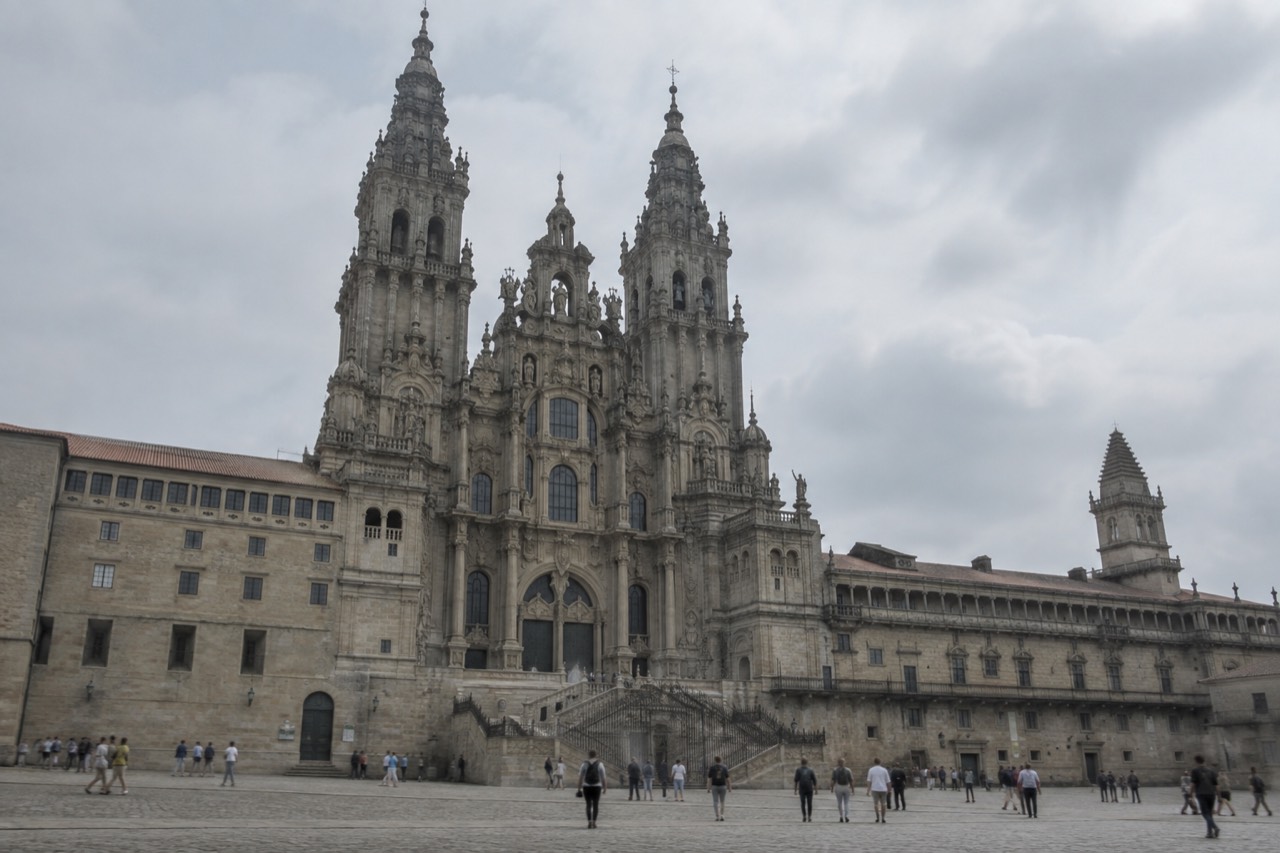
Spend the morning inside the Cathedral of Santiago de Compostela and its rooftops, the early afternoon in the old town and Mercado de Abastos, and the evening on Rua do Franco and Praza do Obradoiro. The Botafumeiro is currently out of action, pilgrim masses move from 16 October 2026, and 2027, not 2026, is the next Holy Year.
The Cathedral of Santiago de Compostela opens its Praterias door to visitors at 7:00am, and the day that follows it shapes up around a simple fact: this is a walkable city of granite squares stacked on a hillside, and the itinerary that works best moves from the Cathedral outward. The Old Town was inscribed by UNESCO in 1985, and the Routes of Santiago de Compostela carry a separate inscription from 1993, two listings rather than one. The Oficina del Peregrino's own figures recorded 530,987 Compostela certificates in 2025, a record year, which explains why the city's rhythm is set by arrivals rather than by departure boards. This Santiago de Compostela Travel Guide itinerary spends the day in the order the city rewards.
What Does One Day In Santiago de Compostela Look Like?
The workable shape is a morning inside and on top of the Cathedral, a middle of the day in the old town's squares and the Mercado de Abastos, and an evening of tapas along Rua do Franco ending back on Praza do Obradoiro after dark. Everything in this plan sits within the UNESCO-listed Old Town except the market's stone halls a few minutes downhill, so the whole day runs on foot. Two guided options anchor the walking: the historic town walk with an official guide and the small-group private historic walk, both short, both cheap relative to what they unlock.
Start with the framing fact most first pages of Google miss: the two UNESCO inscriptions cover different things. The 1985 inscription protects the Old Town's urban fabric. The 1993 one protects the Camino routes themselves, the Camino Frances and the Routes of Northern Spain, as cultural landscape. A one-day visitor walks through both, the town and the terminal point of the routes, every time they cross Praza do Obradoiro.
The schedule below is the skeleton the rest of this page fills in. Times are deliberately loose: the Cathedral's interior is free and does not need a timed ticket, but the museum, the rooftops and the Portico da Gloria visits do, and those sell on the Cathedral's own ticket site with timed slots that can vanish in peak season.
| Hour | Where | What you are doing |
|---|---|---|
| 8:00 | Praza do Obradoiro | First look at the facade, thinnest crowds of the day |
| 9:00 | Cathedral interior | Naves, high altar, the Apostle's tomb, the crypt |
| 10:30 | Cathedral rooftops | Guided Cubiertas and Torre de la Carraca tour, timed ticket |
| 12:00 | Portico da Gloria | Audio-guided visit of the carved portico, timed slot |
| 13:30 | Mercado de Abastos | Stone market halls, lunch ingredients or a market bar |
| 15:00 | Old town loop | Praza da Quintana, San Martino Pinario, the Alameda viewpoint |
| 17:00 | Rua do Franco | Early tapas and Albarino, before the evening rush |
| Evening | Praza do Obradoiro | The lit facade after dark, the day's quietest grand moment |
Readers weighing a second day should look at the two days in Santiago de Compostela plan or, with more time, three days in Santiago de Compostela, which adds day trips this single day cannot fit.
How Do You Plan The Morning Around The Cathedral?
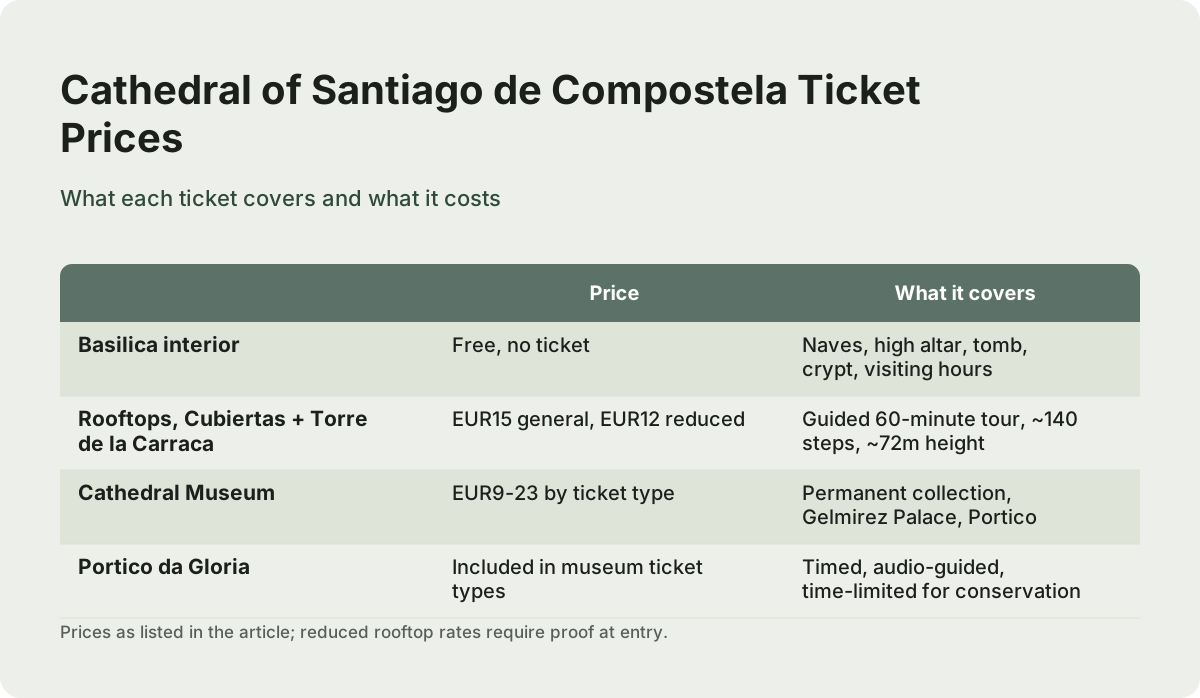
Enter through the Praterias door when general visiting opens around 7:00am, see the naves and the Apostle's tomb free of charge, then use pre-booked timed tickets for the rooftops at 15 euro general rate or 12 euro reduced, and the museum at 9 to 23 euro depending on ticket type. The Cathedral's own ticketing site sells all of these in advance, and the rooftop tour includes the museum's permanent collection on the same pass, valid for seven days, one use per space. The rooftop visit is guided only, runs about 60 minutes, climbs roughly 140 steps, and reaches a height of about 72 metres above the square.
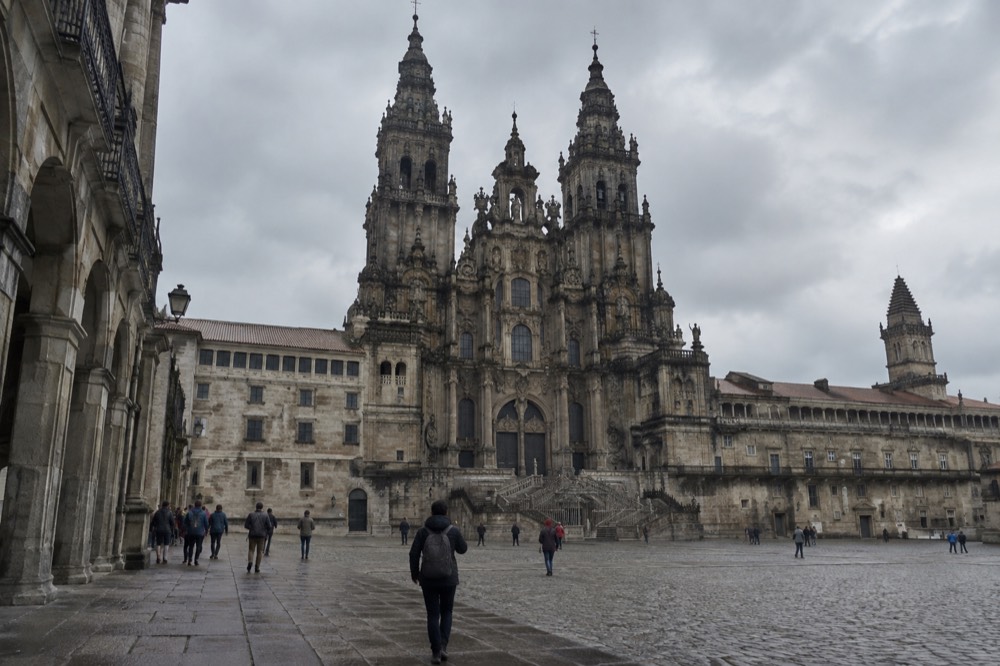
The order matters because of light. The facade on Praza do Obradoiro faces west, so it is backlit until late afternoon and at its best after sunset and early evening. The rooftop views are the reverse: morning gives clear light across the Berenguela clock tower, currently wrapped in exterior restoration scaffolding through a project running 2026 into 2027. Those works are exterior-focused and do not block visits, per the city's own Cathedral page.
Three things inside deserve the full morning. The tomb of St. James in the crypt below the high altar is the structural reason the city exists at all. The Botafumeiro, the giant swinging censer, normally flies on 12 fixed liturgical solemnities a year, from Epiphany on 6 January through the Feast of St. James on 25 July to the Transfer of the Apostle on 30 December. It is currently suspended: scaffolding for the cimborrio restoration covers its hanging mechanism, the Cathedral confirmed this in writing on 5 September 2026, and no return date has been published. Do not plan a day around seeing it swing. The Portico da Gloria, the Cathedral's sculpted stone porch, is visited on a separate timed, audio-guided basis with time-limited slots for conservation, and its major restoration was completed in 2018.
| Cathedral ticket | Price | What it covers |
|---|---|---|
| Basilica interior | Free, no ticket | Naves, high altar, tomb, crypt, general visiting hours |
| Rooftops, Cubiertas + Torre de la Carraca | EUR15 general, EUR12 reduced | Guided 60-minute tour, ~140 steps, ~72m height, museum permanent collection included |
| Cathedral Museum | EUR9-23 by ticket type | Permanent collection, Gelmirez Palace, Portico options |
| Portico da Gloria | Included in museum ticket types | Timed, audio-guided, time-limited for conservation |
Reduced rooftop rates apply to accredited pilgrims, students, unemployed visitors, large families, disabled visitors, over-65s and under-12s, with proof at entry. The full detail sits on the Cathedral of Santiago de Compostela guide page. A guided option bundles the queueing logic for you: the skip-line Cathedral visit runs from $31 per person, rated 4.7 from 582 reviews on the operator's live listing.
Where Do You Eat And Shop Midday?
Walk downhill to the Mercado de Abastos, the city's stone market halls, for the middle of the day, then eat tapas along Rua do Franco and the streets off it, where Galician standards like pulpo a la gallega and Padron peppers anchor most counters. The market's own opening hours are not officially published, so check the venue's own site before setting out; the plan leaves a 13:30 arrival with fallback bars nearby. Rua do Franco is the classic pilgrim tapas street, moments from Praza do Obradoiro.
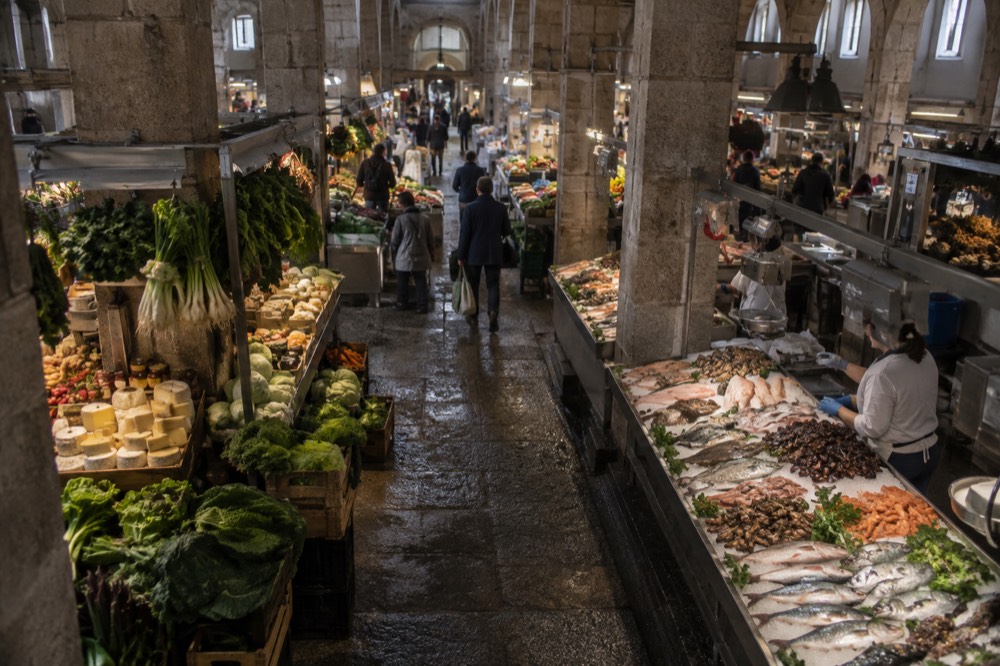
The logic of the midday split is Galician meal times. Lunch runs late and long here, and a market bar or a tapas crawl fits the gap between a 12:00 museum slot and a 17:00 walk better than a seated restaurant does. Empanada, the Galician savoury pie, Padrón peppers with their famous uneven heat, and tetilla cheese are market-hall staples. Pulpo a la gallega, octopus with paprika and olive oil on a wooden plate, is the region's signature plate and appears in both market bars and tapas counters.
| Dish | What it is | Where it fits the day |
|---|---|---|
| Pulpo a la gallega | Octopus, paprika, coarse salt, olive oil, wooden plate | Market bar lunch or evening tapas |
| Pimientos de Padron | Fried small peppers, salt, occasional hot one | Tapas crawl, Rua do Franco |
| Empanada | Savoury pie, usually tuna or cod | Market hall, midday snack |
| Tarta de Santiago | Almond cake, St. James cross stencil | Afternoon with coffee |
| Tetilla cheese | Soft, mild, shell-shaped cow's milk cheese | Market hall, tapas counters |
A private tapas tour runs from $52 per person, rated 4.7 from 243 reviews on its listing, and a guided foodie tour with drinks, tapas and live music runs from $51 per person, rated 4.7 from 227 reviews. For the planning frame rather than any operator's promises, the where to eat in Santiago de Compostela guide covers the city's food geography neighborhood by neighborhood.
What About The Pilgrim Mass And The Botafumeiro?
The pilgrim masses are currently held at 7:30am, 9:30am, noon and 7:30pm at the Cathedral's high altar, but from 16 October 2026 the 9:30am, noon and 7:30pm masses relocate to the nearby Church of San Agustin while main-chapel remodelling for the 2027 Holy Year proceeds, and only the 7:30am mass stays in the Cathedral, in its Communion chapel. The Botafumeiro does not swing daily even in normal times: the Cathedral Chapter guarantees it on 12 solemnities a year, and outside those dates it moves only by private request, which is itself suspended while dome-restoration scaffolding covers its mechanism.
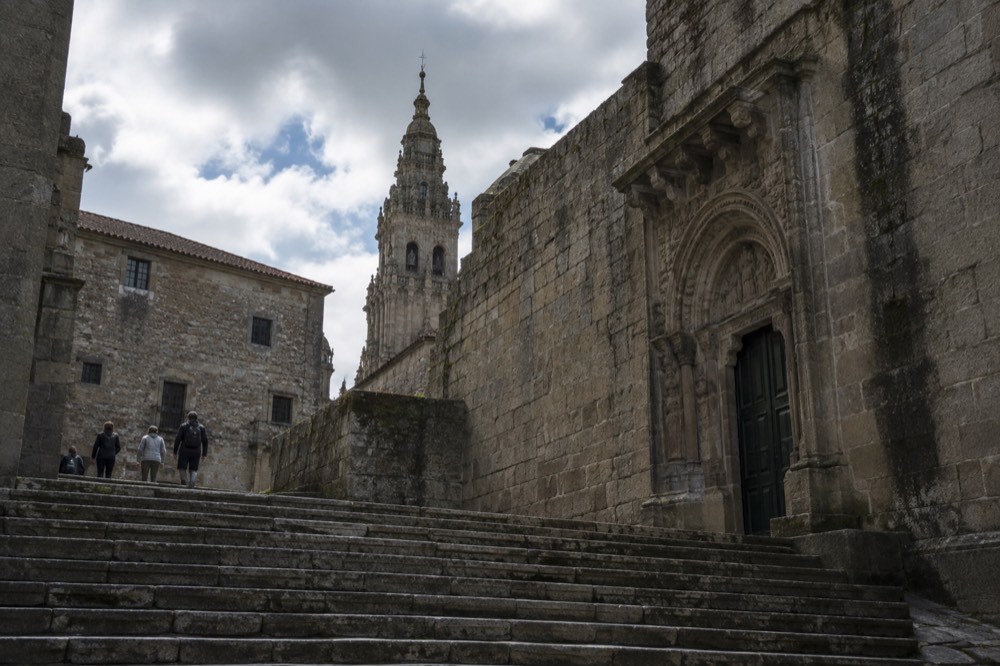
Both facts matter to a one-day visitor in practical ways. If your day falls before 16 October 2026, the noon mass at the high altar fits the schedule above, between the museum and lunch. If it falls after that date, the noon mass is in San Agustin, a short walk from the Cathedral, and the Cathedral's own 7:30am mass in the Communion chapel is the one held on site. And 2027, not 2026, is the next Holy Year: the Holy Door on Praza da Quintana opens solemnly on the evening of 31 December 2026 and stays open through 31 December 2027, so a 2026 visitor sees the door closed, which is its normal state in a non-Holy Year.
The deeper background on both is in the Botafumeiro and Holy Year guides on this site. The schedule of guaranteed Botafumeiro solemnities, currently suspended, runs to 12 dates: Epiphany, Easter Sunday, Ascension, the Apparition at Clavijo on 23 May, Pentecost, 25 July, the Assumption, All Saints, Christ the King, the Immaculate Conception, Christmas and the Transfer of the Apostle on 30 December.
How Do You Fill The Afternoon In The Old Town?
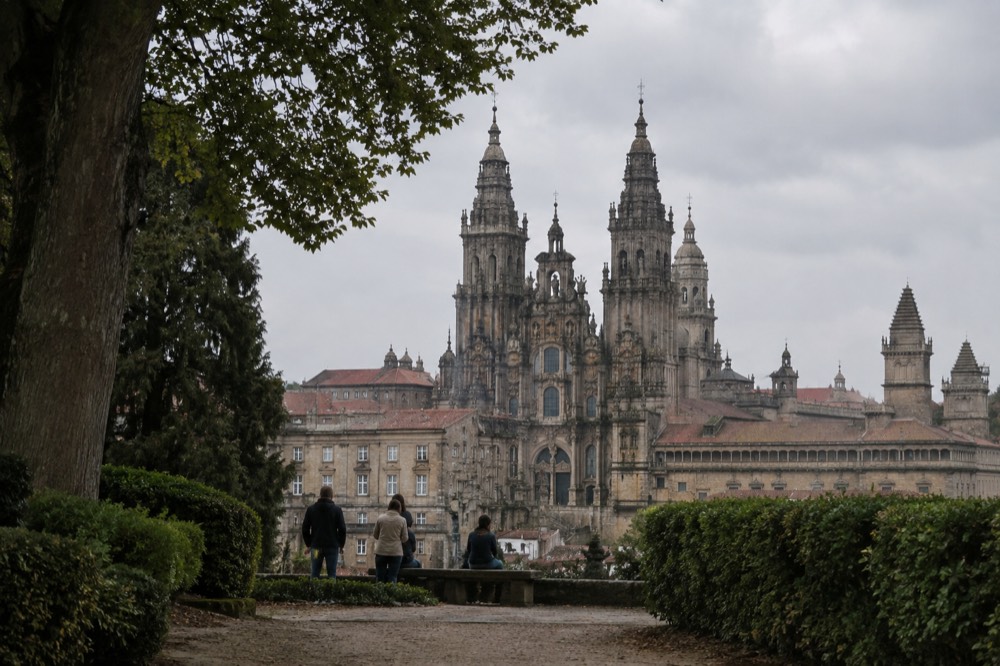
Work the loop in this order: Praza da Quintana and the Holy Door's outer face, the Mosteiro de San Martino Pinario, the Alameda park's viewpoint over the Cathedral's west facade, then back through the narrow streets to Rua do Franco. Each of these sits inside the Old Town inscription area and none needs a ticket except the San Martino Pinario museum spaces, whose current hours should be checked on the venue's own site. The Alameda viewpoint, a short uphill walk, is where the postcard photograph of the full Cathedral skyline is taken, and late afternoon is when the light finally reaches the west facade.
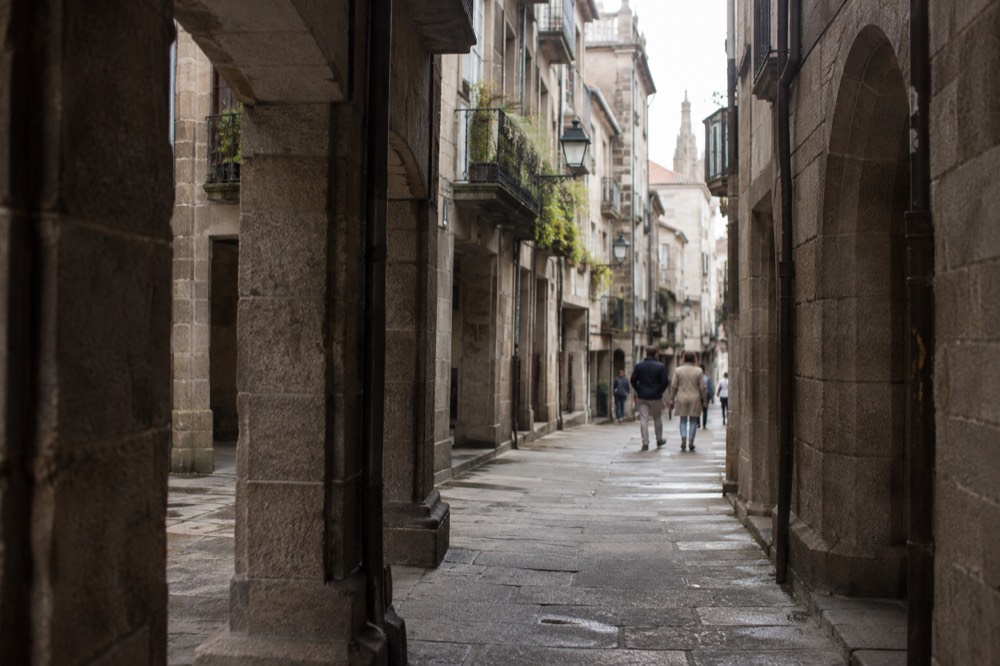
The old town's structure rewards aimlessness more than a checklist, but a spine helps. Praza do Obradoiro, the grand square facing the Cathedral, is flanked by the Hostal dos Reis Catolicos, the parador that began life as a pilgrim hospital and now serves as the city's most storied lodging. Praza da Quintana behind the Cathedral holds the Holy Door and the long steps where pilgrims sit and decompress. Praza das Platerias, with its fountain and the Praterias door, is the smallest of the set.
A guided walk turns the same loop into an explanation. The old town walking tour with an official guide runs from $12 per person, rated 4.8 from 338 reviews, and the historic walking tour and highlights option runs from $17 per person, rated 4.9 from 29 reviews. For the Camino context that gives the streets their meaning, the old town guide carries it in full.
What If It Rains, Or The Day Runs Long?
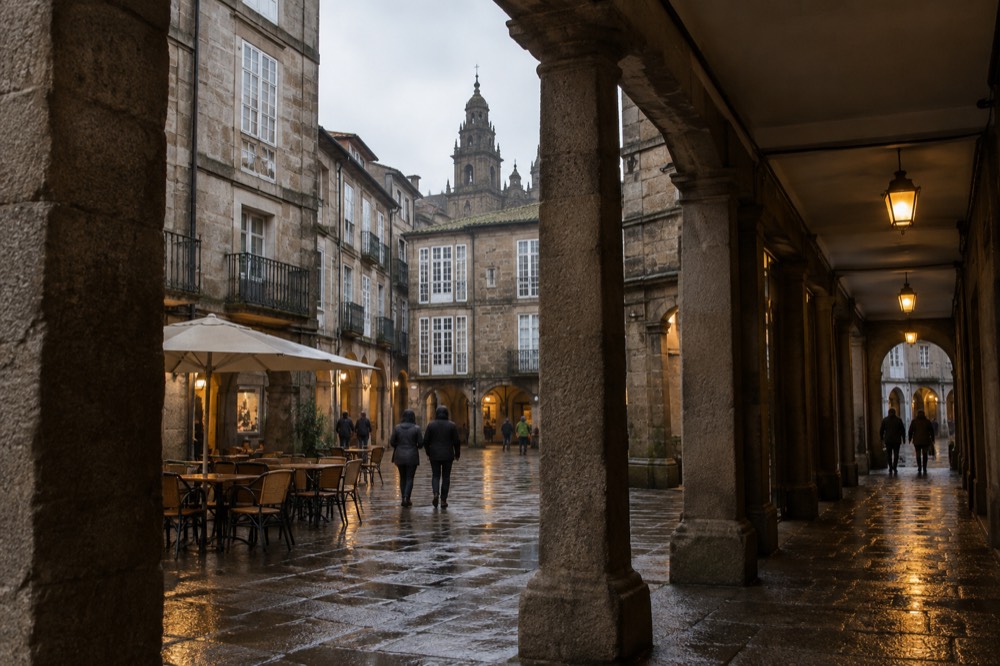
Hold a rainy-day version of this plan as the fallback: the Cathedral, the museum, the Portico da Gloria, the Museo das Peregrinacions and the market halls are all under roofs, and this is a wet, temperate-oceanic city where rain falls year-round and is heavier from October to March, with July and August the driest months. AEMET's climate data for the Santiago de Compostela station shows annual precipitation on the order of 1,690 to 1,890 millimetres depending on the station year measured, which is why every local itinerary carries an indoor spine. The full rainy day in Santiago de Compostela plan and the weather guide cover the seasons and the indoor options in detail.
Museum hours are the one thing not to plan from memory. The details below are confirmed as unverified for specific opening hours and free-day policies for the Museo do Pobo Galego, the CGAC, the Museo das Peregrinacions and the Mercado de Abastos, so the rule is to check each venue's own site the day before. What is verified is the city's tourist-tax status: Santiago de Compostela has charged a municipal tourist tax since 1 October 2025, a surcharge on Galicia's tourist-stay tax, upheld by Galicia's high court in September 2026, of 1 EUR to 2.50 EUR per person per night for a maximum of 5 nights, with under-18s and stays in Xunta-run public albergues exempt, so the phrase belongs on any accommodation math with that caveat.
| Situation | Swap |
|---|---|
| Steady rain all day | Cathedral, museum, Portico da Gloria, covered market halls |
| Rooftop slots sold out | Museum permanent collection plus Portico, both on the same ticket types |
| Arriving mid-afternoon | Swap the morning order: squares first, Cathedral interior from 7pm as light fades |
| Walking in with a credential | Pilgrim Office at Rua das Carretas 33 for the Compostela, then the itinerary as written |
Pilgrims finishing a route get a specific payoff at the end of the day. The Compostela certificate requires the last 100km walked or ridden on horseback, or the last 200km cycled, on a recognized route, with at least two stamps per day in the credencial, and it is issued in person only at the Pilgrim Office on Rua das Carretas 33; the Compostela certificate guide and the rest day after the Camino itinerary are built around exactly that endgame.
Should You End The Day With A Day Trip, Or Stay For The Evening?
Stay for the evening: the lit facade on Praza do Obradoiro after dark is the single view the day has saved for last, and the Costa da Morte trip to Finisterre, Muxia and Cabo Vilan is a full-day tour that deserves its own day, running from $60 per person, rated 4.8 from 267 reviews on the operator's live listing. The tour covers the lighthouse at Finisterre, the sanctuary at Muxia and a stop at Cabo Vilan on the Costa da Morte, the Coast of Death, whose name records its shipwreck history rather than any present danger. It is a day trip, not a city activity, so it replaces a Santiago day rather than extending one.
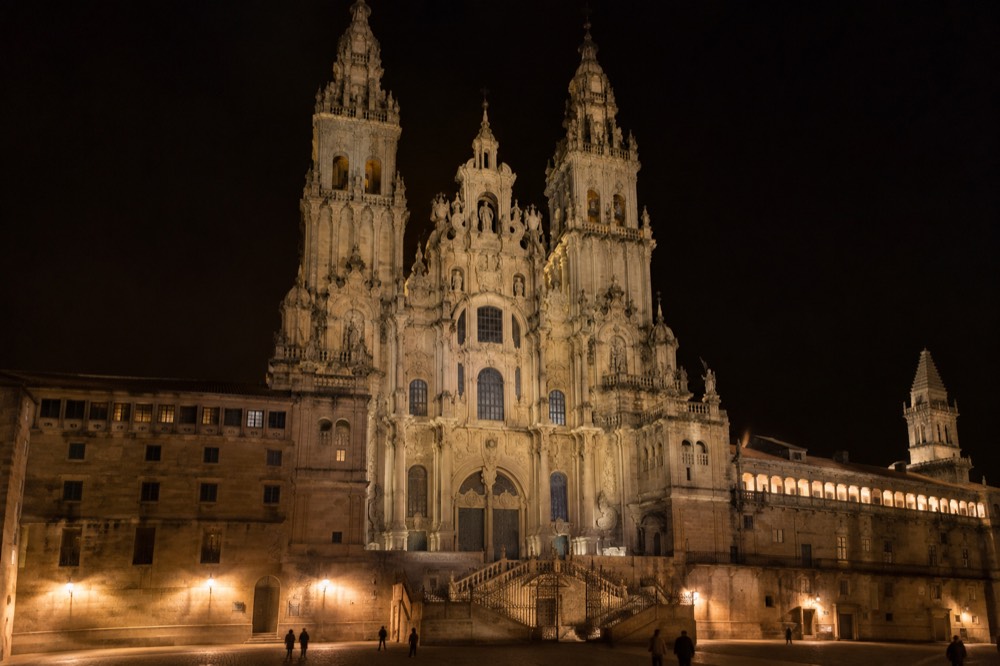
The evening in the city itself has two acts. First, dinner: Galicia eats late, and the tapas bars around Rua do Franco fill from 20:00 onward, with the night owls moving later toward the streets off Praza de Fonseca. Second, the return to Praza do Obradoiro once the day-trippers have gone: the facade floodlit against a dark sky, with the parador's Renaissance front opposite, is the image that ends the day well. A queimada show, the flaming Galician punch ritual recited over with the conxuro, runs from $17 per person, rated 4.4 from 69 reviews, and turns an evening into a small spectacle.
The choice between a day trip and a second city day is worth making deliberately. The question of the best day trip from Santiago de Compostela has a different answer for coastline, wine country and Roman walls, and the coastal, wine and inland options each argue their case.
| Full-day option from Santiago | Kind | From (per person) |
|---|---|---|
| Finisterre, Muxia and Costa da Morte, 7 stops | Coastal day trip | $60 |
| Finisterre and Costa da Morte, most complete tour | Coastal day trip | $60 |
| Costa da Morte with Cabo Vilan stop | Coastal day trip | $60 |
| Rias Baixas with winery, optional mussel boat | Wine and seafood day trip | $54 |
| Ribeira Sacra cruise, monasteries and Ourense | River-canyon day trip | $68 |
| Catedrais beach, Lugo and Asturias | Cliffs and Roman walls | $68 |
Prices are the listings' own current figures and change with date and demand; the live page is the source of truth for any given day.
For travellers who want a guided food ending instead of a coastal one, a private tapas tour of the city runs from $52 per person and covers the Rua do Franco circuit with a local guide.
Common Questions About One Day In Santiago de Compostela
Is one day enough for Santiago de Compostela?
One day covers the Cathedral interior, a rooftop tour, the old town squares, the market halls and an evening of tapas, which is the core of the city. It does not cover a Costa da Morte or Rias Baixas day trip, which each take a full day on their own, and it leaves the deeper museums for a second visit.
Can you walk everywhere in Santiago de Compostela in one day?
Yes. The UNESCO-listed Old Town is compact and steep, and every stop in this itinerary, from the Cathedral to the Mercado de Abastos and the Alameda viewpoint, is within a short uphill or downhill walk of Praza do Obradoiro.
Does the Botafumeiro swing every day?
No. The Cathedral Chapter guarantees it on 12 fixed solemnities a year, and outside those dates it moves only by private request. It is currently out of action entirely: dome-restoration scaffolding covers its mechanism, confirmed in writing by the Cathedral on 5 September 2026, with no return date published.
What time is the pilgrim mass in Santiago de Compostela?
Until 15 October 2026 the pilgrim masses are at 7:30am, 9:30am, noon and 7:30pm at the Cathedral's high altar. From 16 October 2026 the 9:30am, noon and 7:30pm masses relocate to the Church of San Agustin, and only the 7:30am mass remains in the Cathedral, in its Communion chapel.
Is 2026 a Holy Year in Santiago de Compostela?
No. The next Holy Year is 2027, because 25 July 2027 falls on a Sunday. The Holy Door opens solemnly on 31 December 2026 and the Xacobeo runs through 31 December 2027.
How much does the Cathedral rooftop tour cost?
The official Cubiertas and Torre de la Carraca guided rooftop tour costs EUR15 at the general rate and EUR12 reduced, booked with timed slots on the Cathedral's own ticket site. English-language visits are a flat EUR15, and the pass includes the museum's permanent collection.
Whether the day ends under the floodlit towers or with a glass of Albarino on a street named for a Franco of stone, the plan holds: Cathedral in the morning, market and squares in the middle, tapas and darkness on Praza do Obradoiro at the end.