Rua do Franco: The Food Street Of Santiago de Compostela
Rua do Franco is the restaurant street that leaves Praza do Obradoiro, the cathedral square of Santiago de Compostela, and runs downhill into the old town. This page covers what it is, what to eat there, what a meal realistically costs, and how it fits into a day in the city.
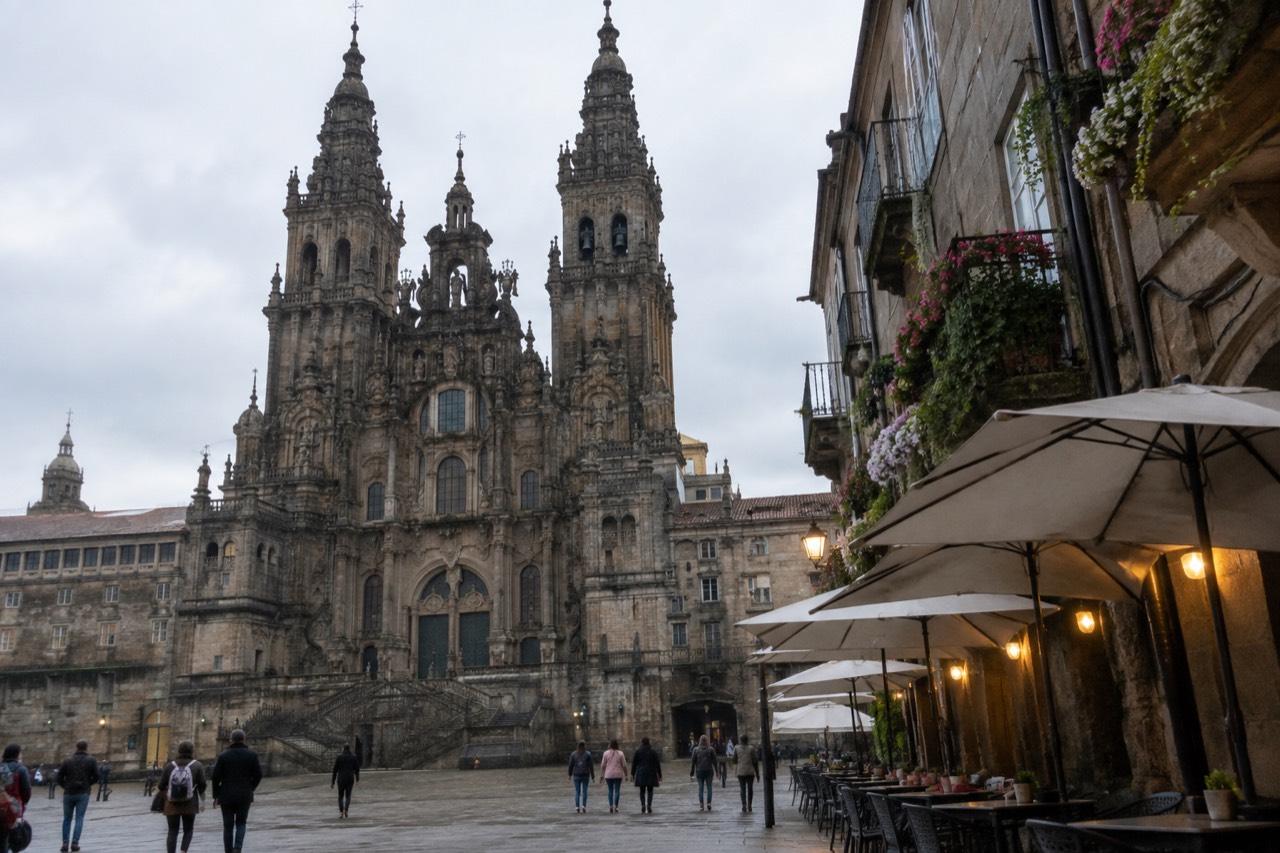
Short answer
Rua do Franco is Santiago de Compostela's best-known eating street, a short pedestrian lane of restaurants and terraces starting at Praza do Obradoiro. It suits first-night dinners, quick tapas and pilgrim celebrations; menus lean on Galician staples such as pulpo a la gallega, Padron peppers and Tarta de Santiago, with prices varying by terrace and room, so check the posted menu before sitting down.
Rua do Franco is the restaurant street of Santiago de Compostela, the UNESCO-listed pilgrim city in Galicia, northwest Spain. It leaves the cathedral square, Praza do Obradoiro, and runs downhill toward the tangled lanes of the old town, and for most visitors arriving here, whether after a week on the Camino de Santiago or off a morning flight, it is the first street they eat on. The city's tourism listings treat it as the city's established dining lane, a place of granite facades, street-level terraces and menus built around Galician staples, and this guide from the Santiago de Compostela Travel Guide editorial desk sets out what the street is, what to order, what a meal costs in practice, and what sits within a short walk of it.
The street's name keeps a wrinkle of Galician spelling that matters more than it looks. In Galician and in the city's own signage it is Rua do Franco, and the particle "do" stays lowercase inside the proper name, the same convention that keeps the "de" lowercase in Santiago de Compostela and the "do" lowercase in Praza do Obradoiro. Menus, maps and hotel signs alternate between the Galician "Rua" and the Spanish "Calle", and both point at the same lane. None of this changes dinner, but getting the name right keeps a reader oriented when the map, the menu and the street sign each use a different word for the same place.
What Is Rua do Franco In Santiago de Compostela?
Rua do Franco is Santiago de Compostela's best-known restaurant street, a short pedestrian lane of dining rooms and terraces that begins at Praza do Obradoiro, the square in front of the Cathedral, and drops toward the older lanes south of it. It exists because of foot traffic, not because of any single famous restaurant: nearly every visitor to the city passes the top of the street within minutes of arriving in the square, and the kitchens have organized themselves around that flow ever since pilgrim tourism became the city's main business.
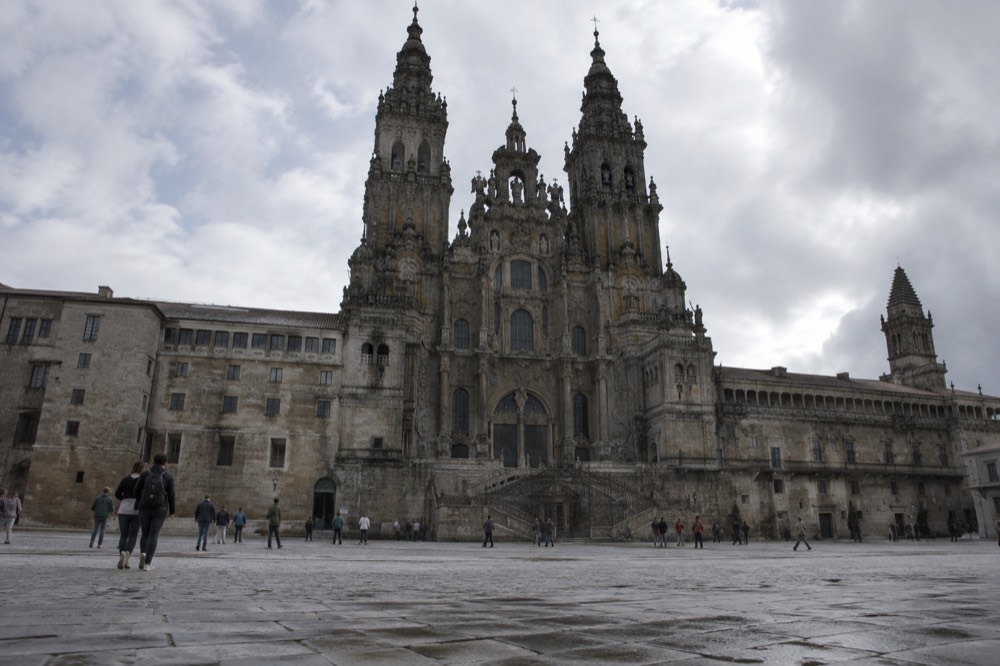
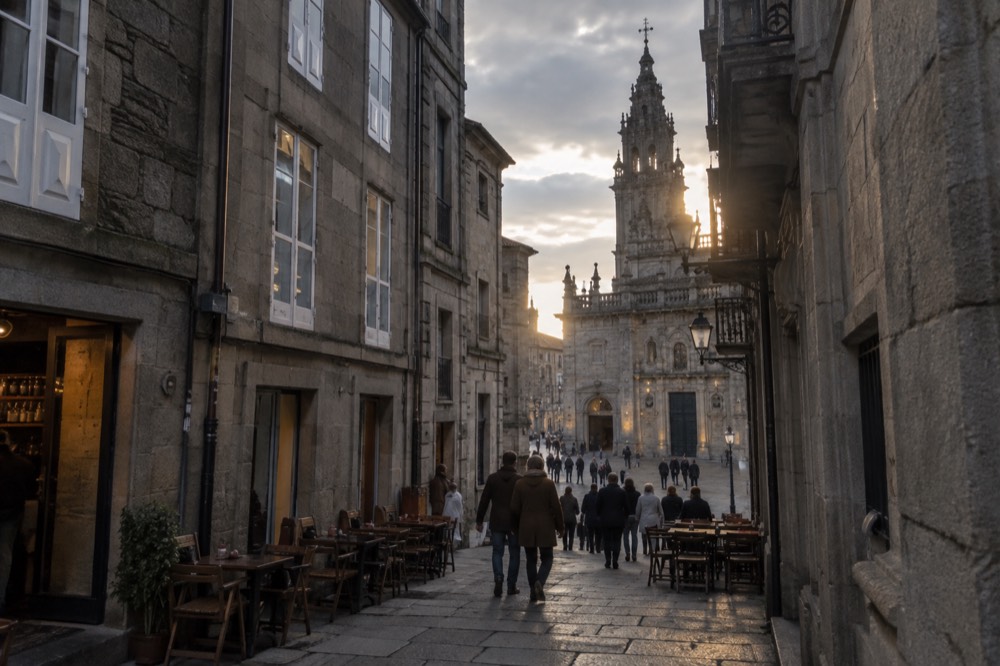
The street works as a first dinner more than as a food destination in the way a market is. The setting is the draw. At the top of the street, Praza do Obradoiro frames the baroque facade of the Cathedral of Santiago de Compostela, the Hostal dos Reis Catolicos parador, the town hall, and Rua do Franco is the quickest way downhill from that ensemble into the eating lanes. Terraces sit under the facades, and in the evening the lane fills with pilgrims who finished walking that day.
The food on offer is Galician rather than experimental. Menus run to pulpo a la gallega, the octopus dish the region is known for, Padron peppers, empanada, Galician beef, Tarta de Santiago and the local Albarino wine, and the honest kitchens and the tourist-facing ones sit side by side along the same hundred metres. Telling them apart is mostly a menu-reading exercise, which the section on costs below covers in detail.
For orientation, the street matters as much as the food. It connects three things a visitor usually wants on a first evening: the cathedral square, a reliable dinner, and the lanes around Rua do Vilar and the market that carry the old town's everyday life. Walking it downhill takes minutes, but the lanes either side of it reward the slow route.
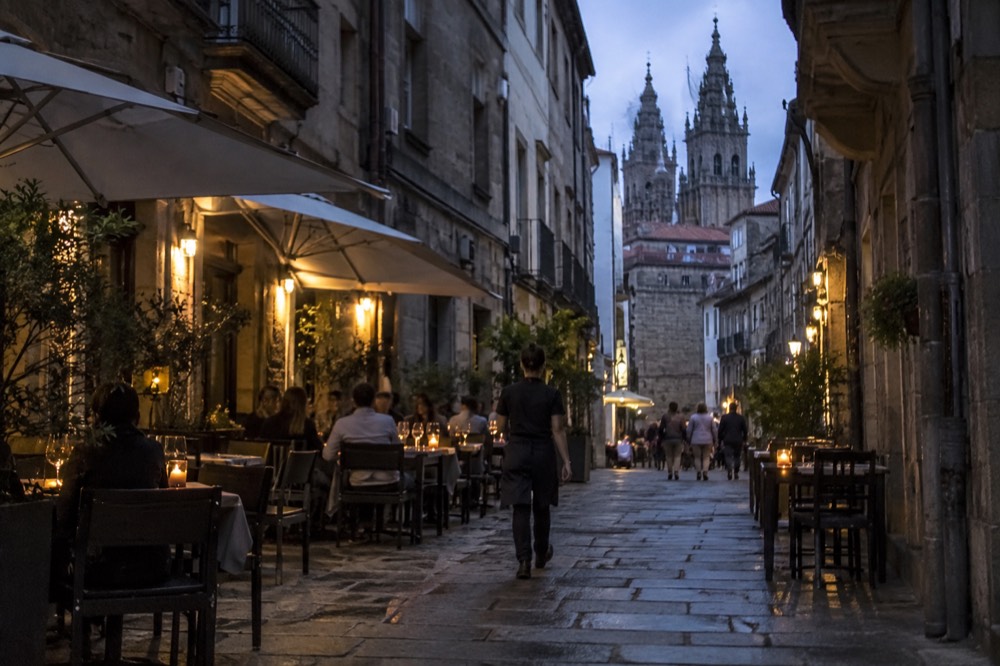
Where Does Rua do Franco Start And End?
Rua do Franco starts directly at Praza do Obradoiro, the main cathedral square, where it leaves the square's southwest corner, and it runs downhill for one short block to meet Rua das Hortas and the lanes that continue south toward the San Francisco convent area. In practice, the eating street is that single block: everything a visitor comes for, the terraces, the menu boards and the dining rooms, sits between the square and the junction, with the character changing noticeably once the lane leaves the terrace zone.
The start is the useful part. Standing in Praza do Obradoiro with the Cathedral facade behind you, the lane drops away to your left, and the first terraces appear within a few steps. The top of the street is where arriving pilgrims pause, because the square itself is the emotional endpoint of the Camino de Santiago, and the street inherits that mood. This is why the evening scene here feels different from an ordinary restaurant row: a good share of the people at the tables walked there.
The lower end matters less for eating and more for continuing. Past the restaurant block, the street merges into quieter residential lanes, and the walking route toward the Alameda park viewpoint passes this way. A visitor planning a first evening can treat Rua do Franco as a single ordered sequence: arrive in the square, walk the block downhill, choose a terrace, then either eat there or turn back uphill and explore the parallel lanes, Rua do Vilar and Rua Nova, which carry bookshops and fewer dining rooms.
Guided walking tours of the old town use the street in exactly this way, as a connecting piece between the cathedral square and the southern lanes. The small-group historic walk linked below covers it as part of an old-town route, which suits a first-day orientation before dinner. Booking it for the first afternoon means the evening meal on this street lands with the lanes already familiar.
The walk runs around two hours with an official guide, in a small group, and the operator's live listing carries the current price and the available time slots. Free cancellation terms are shown at booking, so a plan can be held loosely until the weather forecast firms up.
What Should You Eat On Rua do Franco?
The order to make on Rua do Franco is Galician: pulpo a la gallega as the signature plate, Padron peppers and empanada as starters, Tarta de Santiago with the local aguardiente-based queimada as the finish, and Albarino white wine from the Rias Baixas region as the glass alongside. That set of dishes appears on nearly every menu on the street, so the choice between restaurants matters less than the choice between dishes, and a table that orders across the region's staples eats well almost anywhere on the lane.
Pulpo a la gallega is the one to explain, because it is the region's defining plate and the one most worth ordering in the city. Octopus is boiled, cut into rounds, laid on boiled potato slices, dressed with olive oil and sweet paprika, and served on a wooden plate. This site's guide to pulpo a la gallega covers the dish in full, but on Rua do Franco the practical point is simpler: it is a dish where quality varies visibly between kitchens, and a plate served rubbery or paprika-heavy says the kitchen is cooking for turnover.
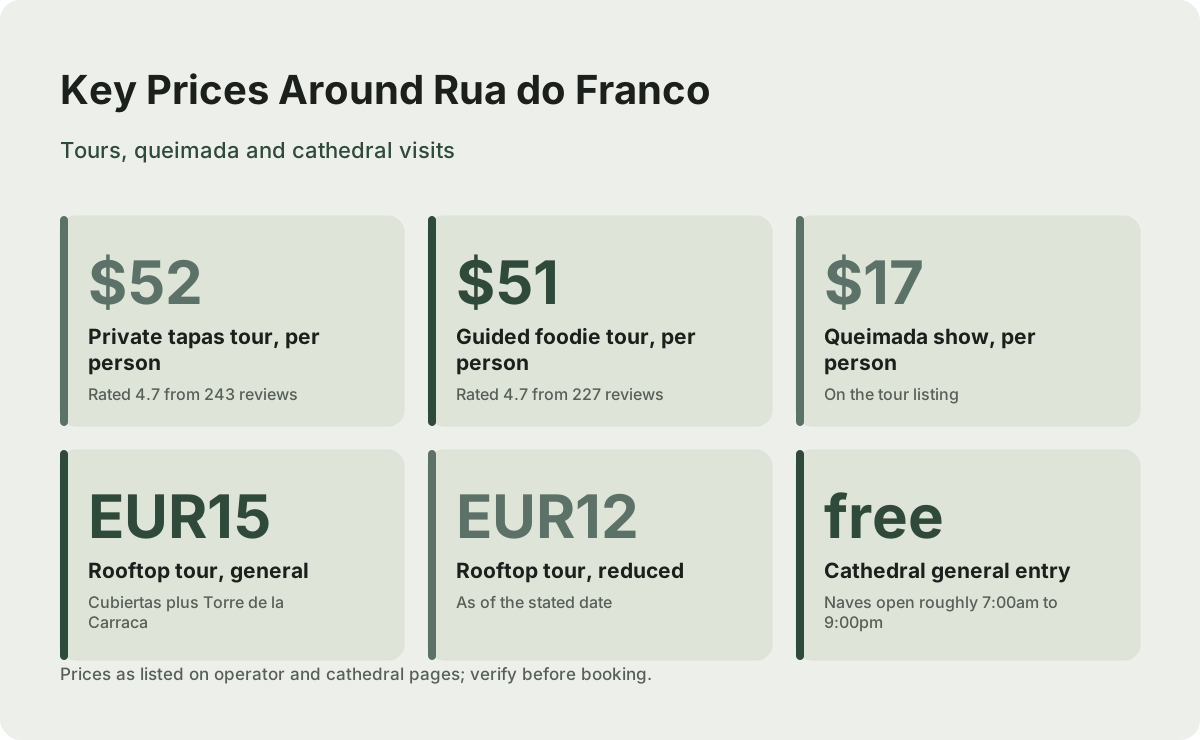
Padron peppers carry the famous Galician lottery: most are mild, and a few are hot, and no one can tell which until bitten. They arrive blistered in olive oil and piled with coarse salt, and the site's Padron peppers page covers their origins. Empanada, the savory pie, usually appears in tuna or cod versions here. Tarta de Santiago, the almond cake stamped with the cross of Santiago, is the standard dessert, and that cake has its own page on this site for readers who want the full story. Queimada, the flame-lit punch ritual, is offered as a show on this street, and there is a dedicated experience for it, listed at around $17 per person, rated 4.4 from 69 reviews, details on the operator's live listing.
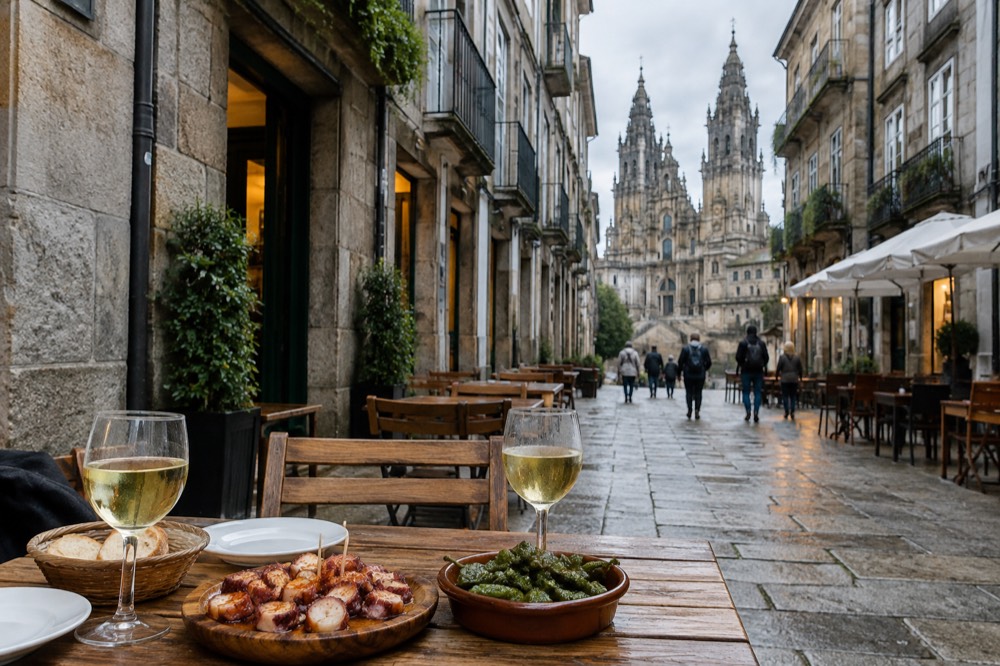
The wine list needs one decision. Albarino, the white of the Rias Baixas estuaries to the south, is the regional pour and the one this site's Albarino wine guide covers at length. Red drinkers will find Galician reds from Ribeira Sacra and Bierzo-adjacent listings on the better menus. A tapas route rather than a single sit-down dinner is a workable alternative here, and the city has a dedicated option for that, listed from $52 per person, rated 4.7 from 243 reviews, again priced on the operator's live listing.
A table of the standard dishes and what to expect from each:
| Dish | What it is | Order it when |
|---|---|---|
| Pulpo a la gallega | Boiled octopus rounds, potato, olive oil, paprika | You want the region's signature plate |
| Padron peppers | Blistered green peppers, coarse salt, mostly mild | You want a shared starter with a gamble |
| Empanada | Savory pie, usually tuna or cod filling | You want something to split early |
| Tarta de Santiago | Almond flourless cake, cross stencil | You want the standard dessert |
| Queimada | Flaming aguardiente punch, ritual serving | The table wants a show with the digestif |
For a fuller eating map of the city beyond this one street, the where to eat in Santiago de Compostela guide expands on neighborhoods, market food and the tapas bars of Rua do Franco's neighbours. Reading it before the first evening is the single best preparation for the street, because it separates the rooms worth a sit-down from the ones serving turnover food.
When Is The Best Time To Walk Rua do Franco?
The best time to walk Rua do Franco is early evening, between roughly 7pm and 10pm, when the terraces are full, the light comes low across Praza do Obradoiro and the kitchens are at service, with mid-morning as the quieter alternative for photographs and menu-comparing before kitchens open. Spanish dinner hours run later than northern European ones, so a visitor arriving at 6pm finds closed kitchens and a quiet lane, while arriving at 9pm finds the street at full volume.
That timing tracks the city's own rhythms rather than any rule. Galicia's climate, per AEMET's data for the Santiago station, is temperate oceanic, wet year-round and wetter from October to March, with July and August the driest months. What that means for this street is simple: the terraces are at their best and most reliably usable in the July and August evenings, and in the wetter half of the year the indoor rooms matter more, so the menu-checking advice in the cost section below carries extra weight. The best time to visit guide covers the whole seasonal picture for the city.
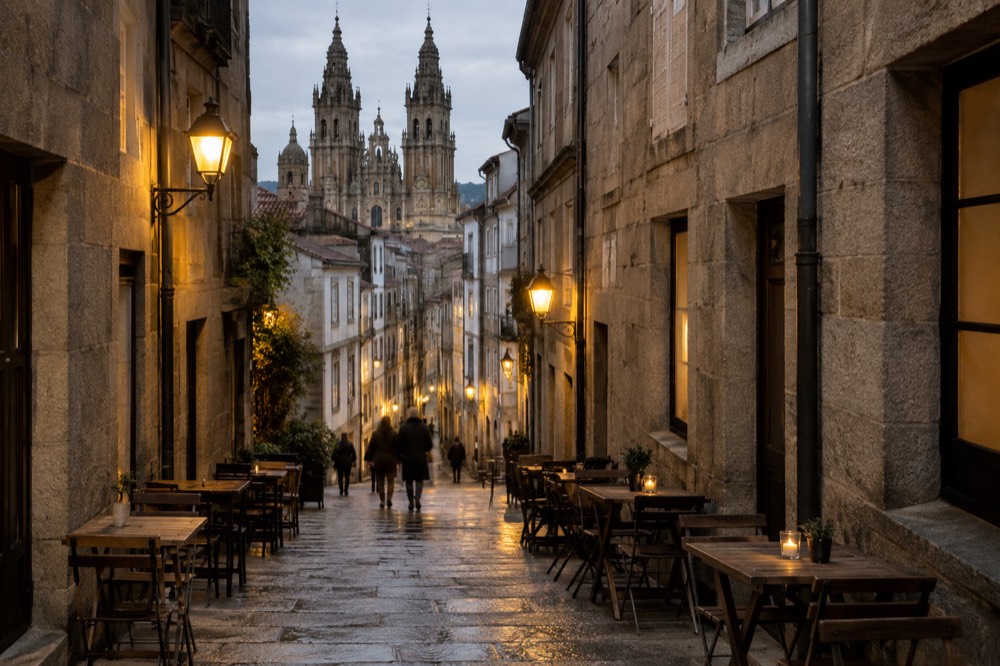
Evening also happens to be when the street's theatrics happen. Arriving pilgrims, many of whom collected their Compostela certificate that afternoon at the Pilgrim's Office on Rua das Carretas 33, celebrate here in groups. The feast of St. James on 25 July is the single busiest moment of the year for the whole square, with the national offering to the Apostle and fireworks, and the street that night is at its most crowded. The site's festivals and events guide gives the calendar.
One caution specific to this page's moment: do not plan an evening around seeing the Botafumeiro, the cathedral's great swinging censer, swing. As of 5 September 2026, confirmed in writing by the Cathedral, it is out of action, with scaffolding for the dome restoration covering its mechanism and no published return date. It normally flies only on 12 fixed solemnities a year, never daily, and any dinner-story that promises it is false today.
How Does Rua do Franco Compare To Other Eating Streets In Santiago de Compostela?
Rua do Franco is the most central and most tourist-weighted eating street in Santiago de Compostela, sitting one block off the cathedral square, while Rua do Vilar and Rua Nova nearby carry a quieter mix of local commerce and fewer dining rooms, and the Mercado de Abastos market a few minutes east holds the city's serious food reputation among residents. In short: Rua do Franco trades a little authenticity for unbeatable position, and the alternatives split along exactly that line.
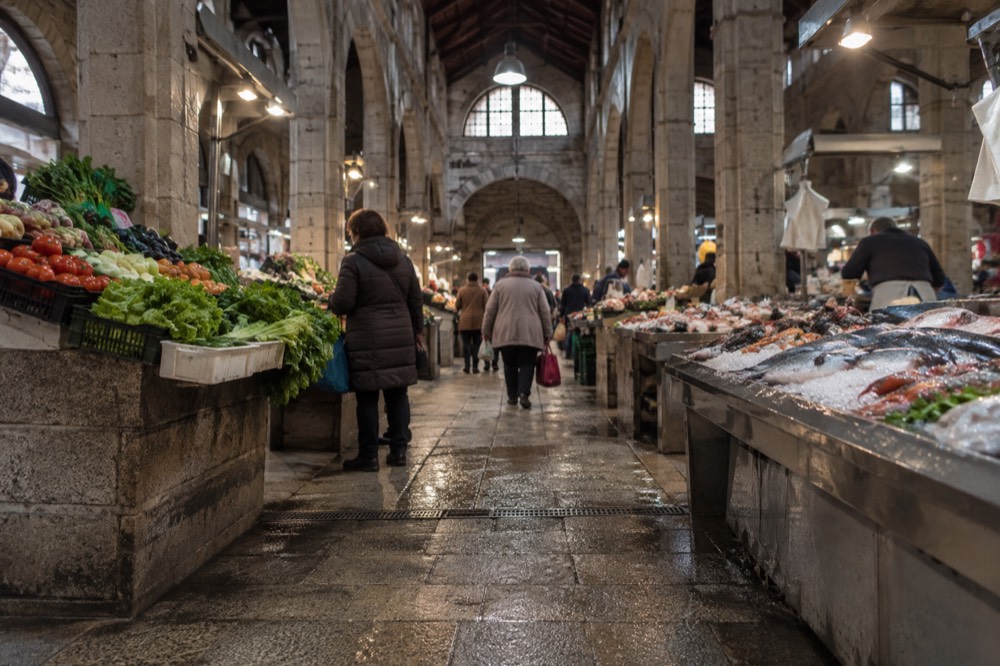
The comparison is honest in both directions. The market is where the city's cooks shop, and its food stalls, hours, and days should be checked on the venue's own site, as the current schedule is not officially published. Rua do Franco, by contrast, is where the visitors eat, and the price of that position is a menu set aimed squarely at first-time visitors. That is not a dismissal: the kitchens here cook the same regional repertoire, and the convenience of eating five steps from the square after a day of walking is worth something.
How the main options around the old town differ:
| Eating area | Position | Character | Best for |
|---|---|---|---|
| Rua do Franco | Directly off Praza do Obradoiro | Terraces, Galician staples, visitor-facing | First-night convenience |
| Rua do Vilar / Rua Nova | Parallel arcaded lanes | Bookshops, quieter rooms | A local-feeling evening walk |
| Mercado de Abastos area | A few minutes east of the square | Market halls and their tapas bars (hours unverified, check the venue's site) | Serious food shopping and market tapas |
| Praza da Quintana side | Behind the Cathedral | Monastery facades, fewer terraces | Views and quiet, not dinner |
A tapas tour is one way to bridge the streets rather than choosing between them, moving between bars instead of committing to one dining room. Two options exist on the roster: a private tapas tour from $52 per person, rated 4.7 from 243 reviews, and a guided foodie tour with drinks, tapas and live music from $51 per person, rated 4.7 from 227 reviews, both priced on the operators' live listings rather than here. Either one turns the evening into a moving dinner, which suits a second night in the city better than the first.
Is Rua do Franco Expensive?
A meal on Rua do Franco sits at the middle of Santiago de Compostela's price range: expect tapas-and-a-drink stops at the lower end and full three-course dinners with regional wine at the higher end, with exact prices posted on every menu at the door, so the honest advice is to read the posted menu before sitting down rather than trusting any single figure printed here. The street's premium is position, not cuisine, and a table can control most of the bill by choosing the room over the terrace and the menu of the day over the a la carte list.
This site's honesty rule matters on this page more than on most: restaurant prices in the city move with season and demand, and this page carries no verified price list for individual restaurants on the street, so no specific per-dish figure is printed here. What the details below do verify is the shape of eating costs in the city, covered in full on the Santiago de Compostela on a budget guide, and the general answer to whether the city itself is expensive sits on this site's dedicated page on that question.
Practical cost control on this street comes down to three moves. First, eat at the bar or an interior table rather than the terrace, where the same kitchen often charges more for the square-adjacent seats. Second, ask for the menu del dia, the fixed lunch menu, which exists across the city's dining rooms. Third, order the regional staples rather than the translated showpieces, because pulpo, peppers and empanada are the dishes every kitchen here makes constantly.
A planning table, framed as ranges a visitor should verify on the posted menu:
| Meal style | Typical planning range | How to verify |
|---|---|---|
| Tapas and a glass at a bar | Lower end of the range | Menu board at the door |
| Menu del dia fixed lunch | Mid range, usually the best value | Ask for the menu del dia by name |
| Full dinner, three courses, wine | Higher end, terrace premium possible | Posted menu, check room vs terrace prices |
| Queimada show experience | Around $17 per person on the tour listing | Operator's live listing |
What Is Close To Rua do Franco In Santiago de Compostela?
Within a short walk of Rua do Franco sits almost everything a visitor comes to Santiago de Compostela for: the Cathedral itself with its free general entry, the Cathedral Museum and rooftop tour, the Holy Door on Praza da Quintana, the San Martino Pinario monastery, the Hostal dos Reis Catolicos parador, and the Alameda park viewpoint, all reachable on foot within minutes of the street's top end. The street's position is its strongest argument: it sits inside the UNESCO World Heritage old town, inscribed in 1985, with the separate 1993 Routes of Santiago listing covering the Camino itself.
The Cathedral needs its own paragraph, because a first evening on this street usually pairs with a first cathedral visit the next morning. General entry to the interior is free, with the naves open daily roughly 7:00am to 9:00pm. The Cathedral Museum runs a ticket range of EUR9-23 depending on ticket type, and the rooftop tour, the Cubiertas plus Torre de la Carraca visit, costs EUR15 general or EUR12 reduced, booked on the Cathedral's own ticketing site, with full ticket details on this site's page.
One dated note for anyone planning around a mass. Pilgrim masses are held at 7:30am, 9:30am, noon and 7:30pm, and until 15 October 2026 they take place at the Cathedral's High Altar. From 16 October 2026, the 9:30am, noon and 7:30pm masses relocate to the nearby Church of San Agustin while main-chapel remodelling continues ahead of the 2027 Holy Year, and only the 7:30am mass stays in the Cathedral, in its Communion chapel. The pilgrim mass guide keeps the current arrangement.
Nearby attractions in table form:
| Attraction | Relation to Rua do Franco | Entry facts (verified where stated) |
|---|---|---|
| Cathedral of Santiago de Compostela | At the top of the street | Free general entry; open roughly 7:00am-9:00pm |
| Cathedral rooftop tour | Booked via the museum ticketing | EUR15 general, EUR12 reduced, ~60 minutes, ~140 steps |
| Praza da Quintana and Holy Door | Behind the Cathedral, minutes away | Holy Door opens 31 December 2026 for the 2027 Holy Year |
| San Martino Pinario | Faces the square at the street's top | Baroque monastery complex, hours on the venue's site |
| Hostal dos Reis Catolicos parador | On Praza do Obradoiro | Historic hotel, rates on the live listing |
| Alameda park | Downhill, end of the walking lanes | Free public park, city viewpoint |
Guided options cover this cluster of sights well, and the trio below is the set this site rates for a stay built around the street. The historic walk covers the lanes themselves, the cathedral-and-museum tour adds the interior in depth, and the Lugo excursion extends a third day beyond the city. Each is priced on its operator's live listing.
The third of those is a day trip, the Lugo and Cathedrals Beach excursion from $75 per person, rated 4.6 from 189 reviews, useful for a second or third day, and covered in this site's Lugo guide. For the question of which single day trip suits a short stay best, this site's page on the best day trip from Santiago de Compostela compares them properly.
How Many Days Should You Give Rua do Franco And The Old Town?
One evening on Rua do Franco is enough to eat well, but the streets around it justify two full days in Santiago de Compostela: a first day for the Cathedral, museum and old-town lanes, and a second for a day trip to the coast at Finisterre and Muxia or the Rias Baixas wine country, both of which return you to this street for dinner. That is the shape nearly every itinerary on this site recommends, and the street's position at the centre of it is exactly why it earns its reputation.
The itinerary pages break the days down. The one day in Santiago de Compostela guide covers the compressed version, the two-day plan adds the museums at a human pace, and the three-day version makes room for a day trip. The coast trips are the natural pairing: the Finisterre, Muxia and Costa da Morte excursion runs from $60 per person, rated 4.8 from 1,714 reviews, and the Rias Baixas winery trip with optional mussel boat from $54 per person, rated 4.8 from 322 reviews, both full-day and priced on the operators' live listings. This site's Costa da Morte and Rias Baixas guides cover the ground.
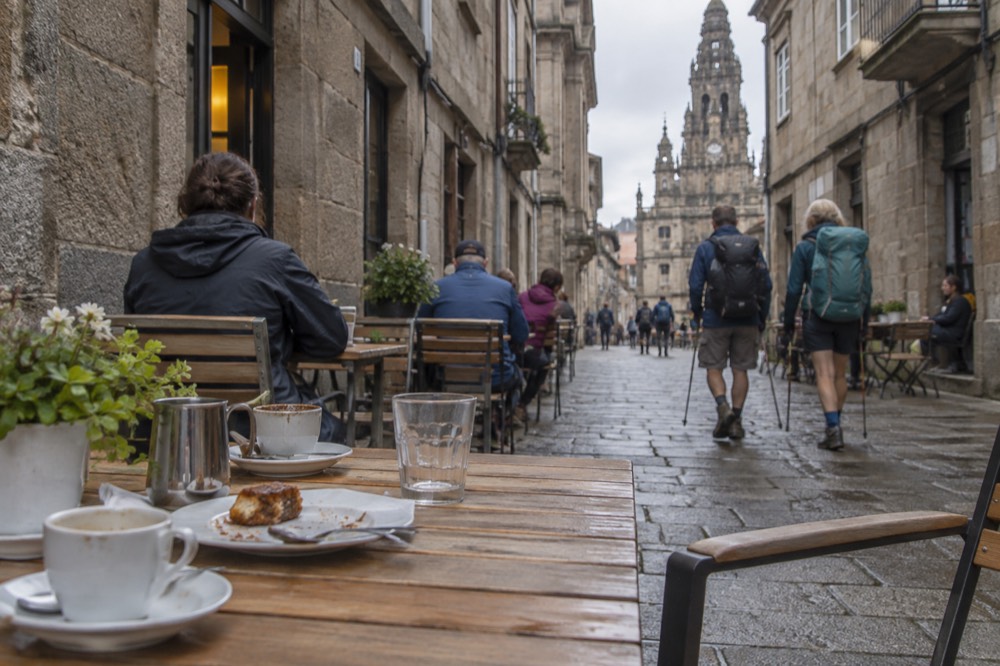
For walkers finishing the Camino, the street has a specific role. This site's guide to arriving in Santiago on the Camino walks through the arrival sequence: the square, the Pilgrim's Office on Rua das Carretas 33 for the Compostela, which requires the last 100km walked or the last 200km cycled with at least two stamps per day, and then the first dinner, which usually lands here. The office issued a record 530,987 Compostelas in 2025, and a share of those pilgrims ate their first city meal on this street.
A rough shape for a two-day plan:
| Day part | Plan | Notes |
|---|---|---|
| Day 1 morning | Cathedral, Portico da Gloria, rooftop tour | Rooftop EUR15/EUR12, book the timed slot ahead |
| Day 1 evening | Rua do Franco dinner and the lanes around it | Read the posted menu before choosing |
| Day 2 | Coastal day trip, Finisterre and Muxia or Rias Baixas | Full-day tours from $54-$60 per person |
| Day 2 evening | Second dinner, market-side or Rua do Vilar | Quieter than the first night |
How Do You Get To Rua do Franco From Outside The City?
Getting to Rua do Franco is getting to Santiago de Compostela's old town: the airport bus line runs from the terminal to the city's intermodal station with the street a short walk or one further connection beyond it, trains arrive from Madrid in roughly three to four hours and from A Coruna and Vigo on short direct hops, and from the airport the distance to the old town is about 12km. Once in the old town, the street is pedestrian and reached on foot from anywhere in the historic centre, most directly from Praza do Obradoiro.
The airport detail carries a caution. As of late September 2026, the city's transport page lists line 6A, operated by Tussa, at 1 EUR to the driver or 0.36 EUR per trip on a card, but a new Monbus contract with a fare around 6 EUR is expected in autumn 2026, possibly by December, so the fare should be treated as subject to change rather than permanent. The airport guide holds the fuller picture, including the question of whether the airport closes in 2026, which this site answers directly elsewhere.
Rail visitors arrive at the station north of the old centre and walk down into the lanes. From Madrid the direct high-speed services take roughly three to four hours; from Vigo roughly one hour; A Coruna is a short hop; and there is no direct line to Porto, Portugal, with a change via Vigo instead, all covered in this site's train pages for Madrid and Porto routes. Drivers should note the old town is essentially pedestrian, and parking sits outside the historic centre, with the getting around guide mapping the options.
The same trio of tours below works for visitors using the street as a base, since all three depart from the city centre within walking distance of Praza do Obradoiro. Checking availability a day or two ahead is the pattern this site recommends in peak season, when the cathedral tours and the Lugo excursion both fill.
Each of the three is bookable with free-cancellation terms shown on the operator's live listing, so nothing needs to be committed before the forecast is clear. That flexibility matters most for the full-day Lugo trip, which spends the day on the coast and in the Roman walls rather than under a terrace awning.
Where Do You Sleep Near Rua do Franco?
The sleeping options around Rua do Franco run from hostels built for finishing pilgrims, through mid-range hotels in the old town lanes, up to the Hostal dos Reis Catolicos parador on Praza do Obradoiro itself at the top of the street, and rates across all of them move with season and demand, so the honest advice is to check live rates rather than plan from any printed figure. Location matters more than usual here: a room within the old town puts the cathedral square, and therefore this street, within a walk of minutes, which is worth prioritizing for a short stay.
The site's accommodation pages break the tiers down properly. The best hotels guide covers the upper end, the hostels guide covers the pilgrim-oriented end, and where to stay in Santiago de Compostela maps the neighbourhoods. The parador at the top of the street is the historic option, a former royal hospital founded for pilgrims, and the parador page covers it; its nightly rate is a live price, and the question of one night's cost there is answered on its own page on this site.
Common Questions About Rua do Franco In Santiago de Compostela
Is Rua do Franco the same street as Rua do Vilar?
No. Rua do Franco is the restaurant lane running from Praza do Obradoiro downhill; Rua do Vilar is a separate, arcaded parallel lane with more local commerce and fewer dining rooms. They sit a block apart in the same part of the old town.
Do you need a reservation on Rua do Franco?
For most evenings, no: the street has enough terraces and dining rooms that walk-ins work. Around the feast of St. James on 25 July and in the peak July and August season, booking ahead is wise, and a table wanting a specific room should reserve directly with that restaurant.
Is Rua do Franco pedestrian?
The eating block of the street functions as a pedestrian lane, part of the old town's walkable historic fabric. Arrive on foot from Praza do Obradoiro; there is no driving or parking need anywhere along it.
What is the most famous dish to order on Rua do Franco?
Pulpo a la gallega, the boiled octopus dressed in olive oil and paprika, is the region's signature plate and appears on nearly every menu on the street. Padron peppers and Tarta de Santiago are the other staples almost every kitchen carries.
Can you see the Botafumeiro swing after dinner on Rua do Franco?
Not currently. The Cathedral confirmed in writing on 5 September 2026 that the Botafumeiro is out of action, with dome-restoration scaffolding covering its mechanism and no return date published. It normally flies only on 12 fixed solemnities a year, never daily.
How far is Rua do Franco from the Cathedral?
The street begins at Praza do Obradoiro, the cathedral square itself, so the Cathedral facade stands at the top of the lane. Everything on the eating street sits within a short walk of the Cathedral's entrance.
Rua do Franco earns its place in a Santiago de Compostela plan not because any single room outshines the rest of the city, but because no other street puts the Galician table this close to the square every visitor arrives in. Eat the regional staples, read the posted menu, time the evening to the terraces rather than the clock, and the street does what it has done for arriving pilgrims and travellers for decades of tourist seasons.