Tarta de Santiago, The Almond Cake Of Santiago de Compostela
Tarta de Santiago is the almond cake that pilgrims meet at the end of the Camino de Santiago, a flourless round of ground almonds, eggs and sugar with the cross of Saint James stenciled in sugar across the top. This guide covers what it is, where to eat it in the old town, and how to carry one home.
Short answer
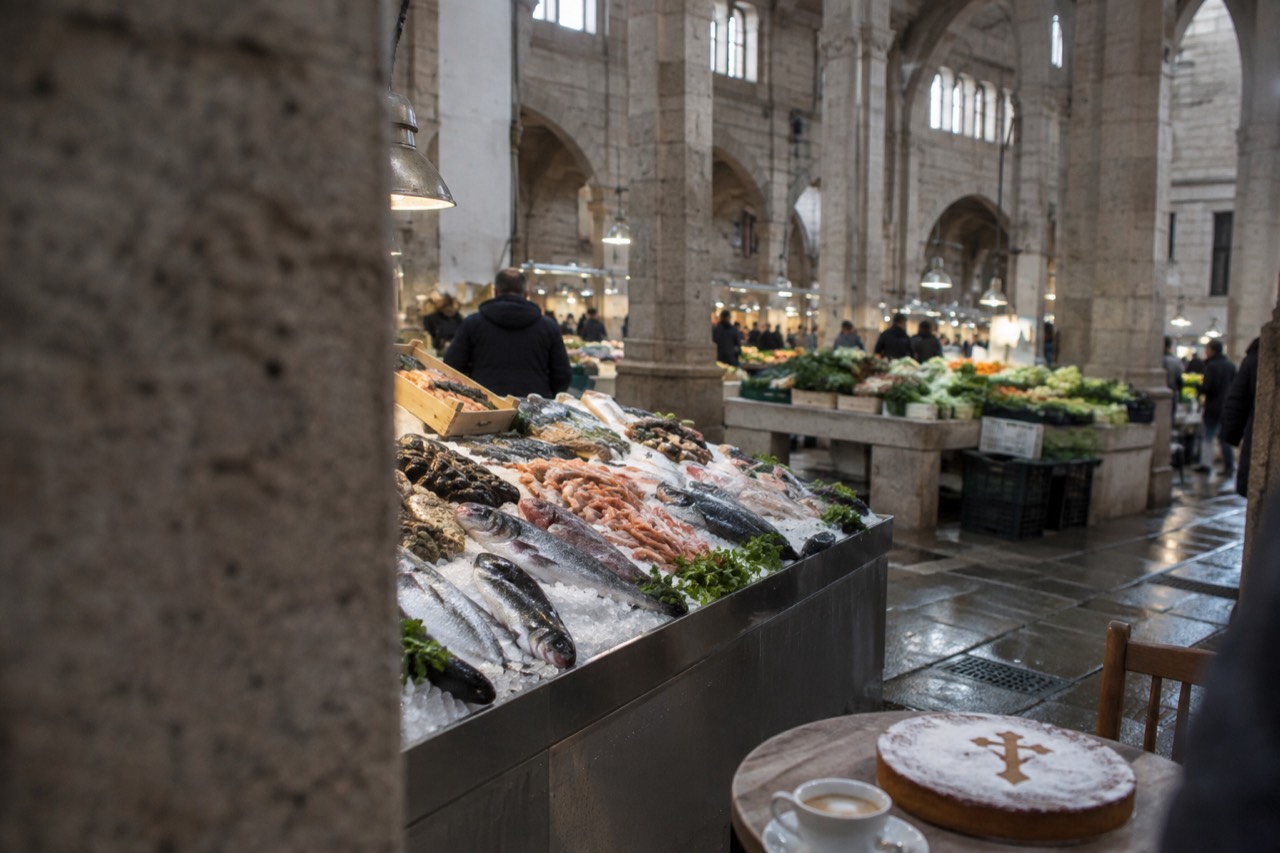
Tarta de Santiago is a traditional Galician almond cake served across Santiago de Compostela, made from ground almonds, eggs, sugar and lemon zest, and finished with a powdered-sugar stencil of the cross of Saint James.
The last stage of the Camino de Santiago ends at a cathedral, and for many walkers it also ends at a slice of cake. In Santiago de Compostela, the pilgrim capital of Galicia in northwest Spain, that cake is tarta de Santiago: a dense, flourless round of ground almonds, eggs and sugar, dusted with powdered sugar and marked with the stenciled cross of Saint James. The Oficina del Peregrino's own figures show how many people reach that moment, 530,987 Compostela certificates issued in 2025 alone, a record year, and the bakeries of the old town have spent generations feeding them. This guide from the Santiago de Compostela Travel Guide editors covers what the tart actually is, where to eat it, what distinguishes a good one from a forgettable one, and how to carry a whole cake home.
What Is Tarta de Santiago?
Tarta de Santiago is a traditional Galician almond tart from Santiago de Compostela, made without flour from ground almonds, eggs, sugar and usually a little lemon zest, baked into a flat round and finished with a heavy dusting of powdered sugar. Before serving, a stencil of the cross of Saint James is laid over the top so the sugar lands around it, leaving the cross visible as a dark silhouette in the pale surface. It is the single most recognizable sweet in the city.
The cake is dense rather than airy. Because the base is almonds rather than wheat flour, the crumb is moist, slightly grainy and intensely nutty, closer to a French almond financier in spirit than to a sponge cake. Recipes vary from bakery to bakery, some add cinnamon, some use a splash of Galician spirit such as orujo or a spoonful of sweet wine, but the core is always the same short list of ingredients. That simplicity is the point. A good tarta de Santiago tastes of almonds first and everything else second.
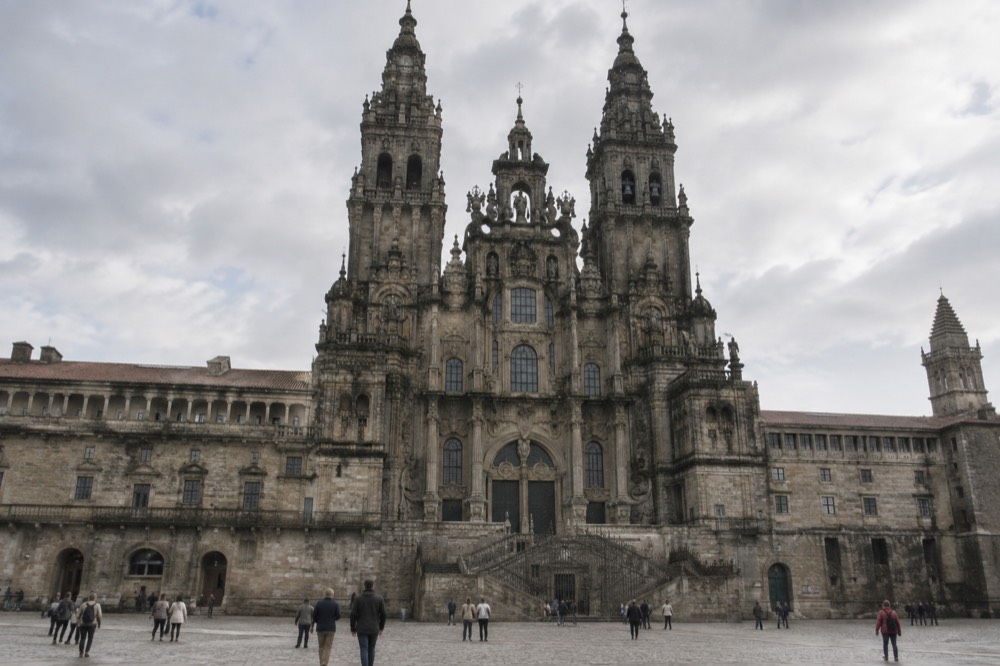
The cross of Saint James, the sword-shaped emblem of the apostle, is what makes the cake instantly identifiable. The stencil is laid on after baking and the powdered sugar is sifted over the whole surface, then lifted off, and the contrast between sugar and bare crust draws the cross. In a city whose entire identity is built on the apostle's shrine, the decoration turns dessert into a small act of pilgrimage iconography. The cathedral guide covers the same emblem carved in stone on the facades you will walk past on the way to buy a slice.
It is also a cake with a seasonless schedule. You will find it in pastry shops year round, but it peaks around the Feast of St. James on 25 July, when the city fills with pilgrims and festival visitors and bakery windows stack whole tarts in rows. Unlike some regional Spanish sweets tied to one festival, this one belongs to every day of the year in Santiago de Compostela.
Where Does The Almond Cake Of Santiago de Compostela Come From?
Though the cake in its modern stenciled form is far younger than the city itself. The cross-of-Saint-James sugar stencil became common only in relatively recent times, and the cake spread from Galician home kitchens and pastry shops to become the signature sweet of Santiago de Compostela, carried home by generations of pilgrims as an edible souvenir of the journey.
Galicia has a long tradition of almond sweets made in convents, and the city's great monastic buildings, San Martino Pinario among them, housed kitchens that produced such confections for centuries. What those kitchens made and what a modern pastry counter sells are related but not identical. The stenciled cross is the modern signature, and it is what transformed a regional almond cake into a branded product of the pilgrim city.
The cake's rise ran parallel to the Camino's modern revival. As walking the Camino de Santiago grew from a trickle into hundreds of thousands of arrivals a year, the tart became the taste people associated with the finish line. Bakeries near the cathedral cluster, along Rua do Franco and around the squares of the old town, sell slices to people who have just collected their Compostela at the Pilgrim's Office, and whole cakes boxed for the flight home.
A short guided walk is the most efficient way to place the cake in context. The historic center of Santiago de Compostela is compact enough to cross in half an hour, but its stories, the stonemasons, the pilgrim rites, the legends attached to particular squares, are not visible from street level alone. A couple of hours with a guide turns a pastry stop into a chapter of a much longer story.
Where To Eat Tarta de Santiago In Santiago de Compostela?
The best slices are found in the pastry shops and cafe counters of the old town, within a few minutes' walk of Praza do Obradoiro, especially along Rua do Franco, around the Alameda side of the center, and in the traditional pasticeras that bake on site. Order at the counter, eat it there or take it away, and expect the freshest examples in shops that sell whole tarts by the slice throughout the day rather than pre-cut portions sitting under glass.
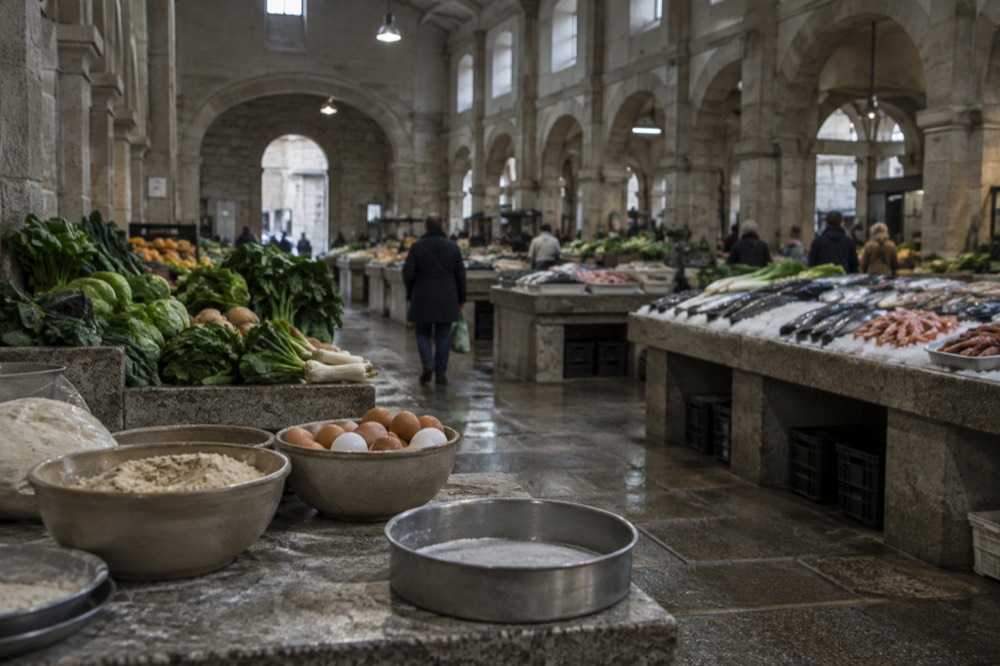
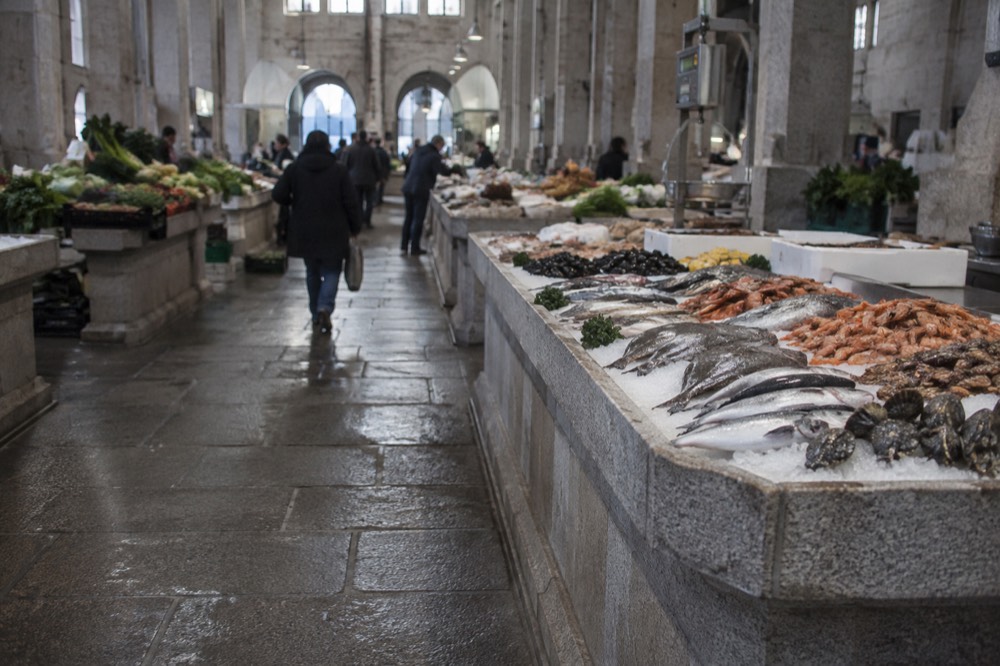
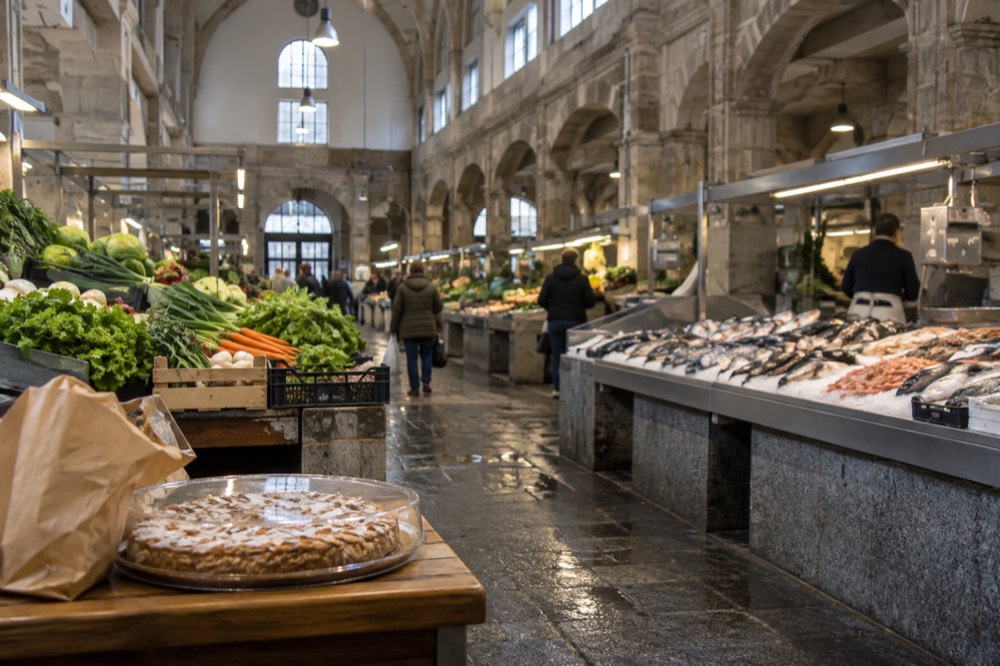
The old town is small, so geography does most of the work for you. Rua do Franco, the restaurant street running south from the cathedral, has a high concentration of cafe counters where a slice and a coffee cost a few euros, and the streets off Praza da Quintana and toward the Mercado de Abastos area hold the older family pastry shops. The where to eat guide maps the wider food landscape, from tapas bars to sit-down restaurants, for the rest of the day's eating.
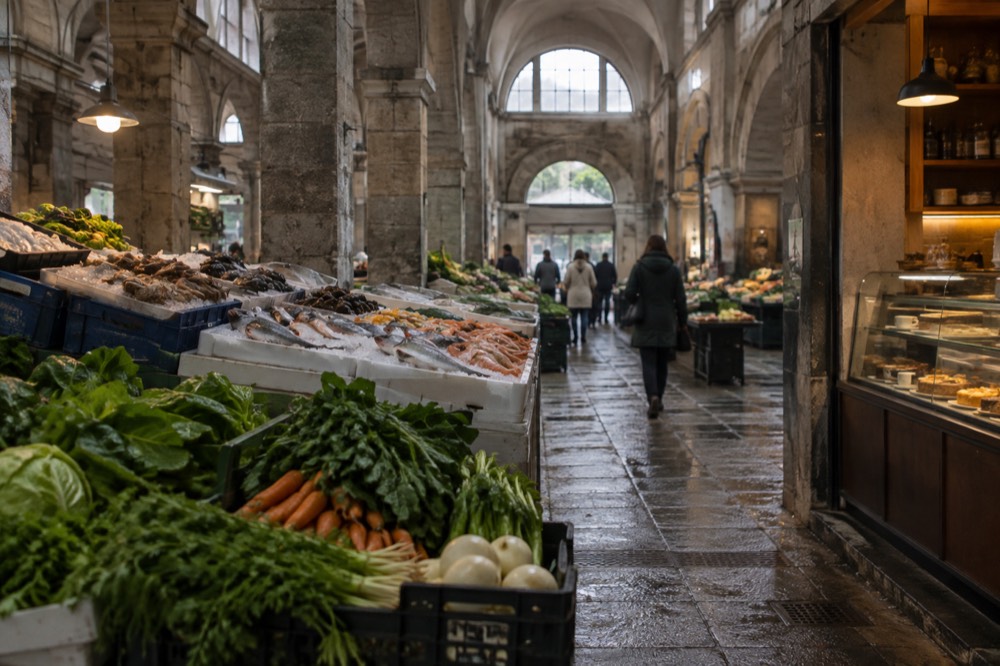
What separates a good slice from a poor one is freshness and almond quality. A tart cut the same morning has a moist, tight crumb and a clean almond flavor. A tart that has sat for days dries out, the sugar topping yellows, and the flavor goes flat. Shops that bake on site and rotate stock quickly are the reliable bet, and the plain test is simple: look for whole tarts being cut to order rather than trays of pre-wrapped portions.
Pairing it with the day matters too. Locals treat it as a mid-morning or afternoon treat with coffee, and it appears on restaurant dessert menus in the evening, often with a glass of local liqueur. It is also a standard breakfast item in cafes along the pilgrim arrival routes, where walkers who have crossed Galicia for a week or five weeks meet it on their first morning in the city.
If you want the cake placed in its setting rather than eaten on the run, the Santiago: Historic Walking Tour and Highlights, from $17 per person and rated 4.9 from 29 reviews, covers the center's key sites with a guide, and you can plan a counter stop before or after. Check availability on the operator's live listing.
How Do Bakers In Santiago de Compostela Make The Tart?
The classic recipe is flourless: ground almonds, sugar, eggs and lemon zest, beaten together and baked slowly in a shallow round tin until the top is firm and the interior stays moist. Some bakers line the tin with a short pastry base, a variation rather than the norm, and a few add cinnamon or a splash of orujo. The powdered sugar and the cross stencil go on only after the tart cools, which is why the cross looks crisp on a fresh tart and smudged on a stale one.
The flourless version is the one most closely associated with the city, and its simplicity is deceptive. With only three or four ingredients carrying the flavor, the almonds carry the tart. Bakers who skimp on almond quality or stretch the mix with flour produce a drier, blander cake, and there is nowhere for a poor ingredient to hide.
The variations you will meet in shop windows form a small family rather than a single fixed recipe:
| Version | What Changes | Where You See It |
|---|---|---|
| Classic flourless | Almonds, eggs, sugar, lemon zest, no flour | Every traditional pastry counter |
| Pastry-based | Short crust base under the almond filling | Older family pasticeras, some cafes |
| With cinnamon | Cinnamon folded into the almond mix | Common in home-style bakeries |
| With orujo or wine | A spoonful of spirit or sweet wine in the batter | Some restaurant dessert versions |
| Individual minis | Small single-portion tarts, sometimes with base | Cafe counters and gift boxes |
None of these is wrong, and shops will defend their own version as the true one. What stays constant is the shape, the flat round, the sugar dusting, and the cross. If a cake in a window has all three, it is a tarta de Santiago regardless of what the baker did with the batter.
The stencil itself is a piece of practical theater worth watching if a shop is cutting tarts while you wait. The metal or card template sits flat on the surface, the sugar is sifted evenly, and the lift-off reveals the cross in one motion. A steady hand matters, because a slipped stencil smears the outline, and the cross is the part that photographs.
How Much Should You Pay For A Slice In Santiago de Compostela?
Slice prices are not fixed anywhere in the city, and no verified price list exists for the old town's pastry counters, so treat any single figure you read online with caution. As a planning range, a slice with coffee in a central cafe is a modest outlay, a few euros, and whole tarts are sold by weight or by the unit in traditional shops. The honest advice is to check the price at the counter before ordering, since central locations and seasonal demand move prices.
The same caution applies to the city generally. Santiago de Compostela has charged a municipal tourist tax since 1 October 2025, a surcharge on Galicia's tourist-stay tax, so check whether your accommodation price includes it. Food prices in the old town run higher per square meter than anywhere else in Galicia simply because of where the counters sit, a few hundred meters from the cathedral door.
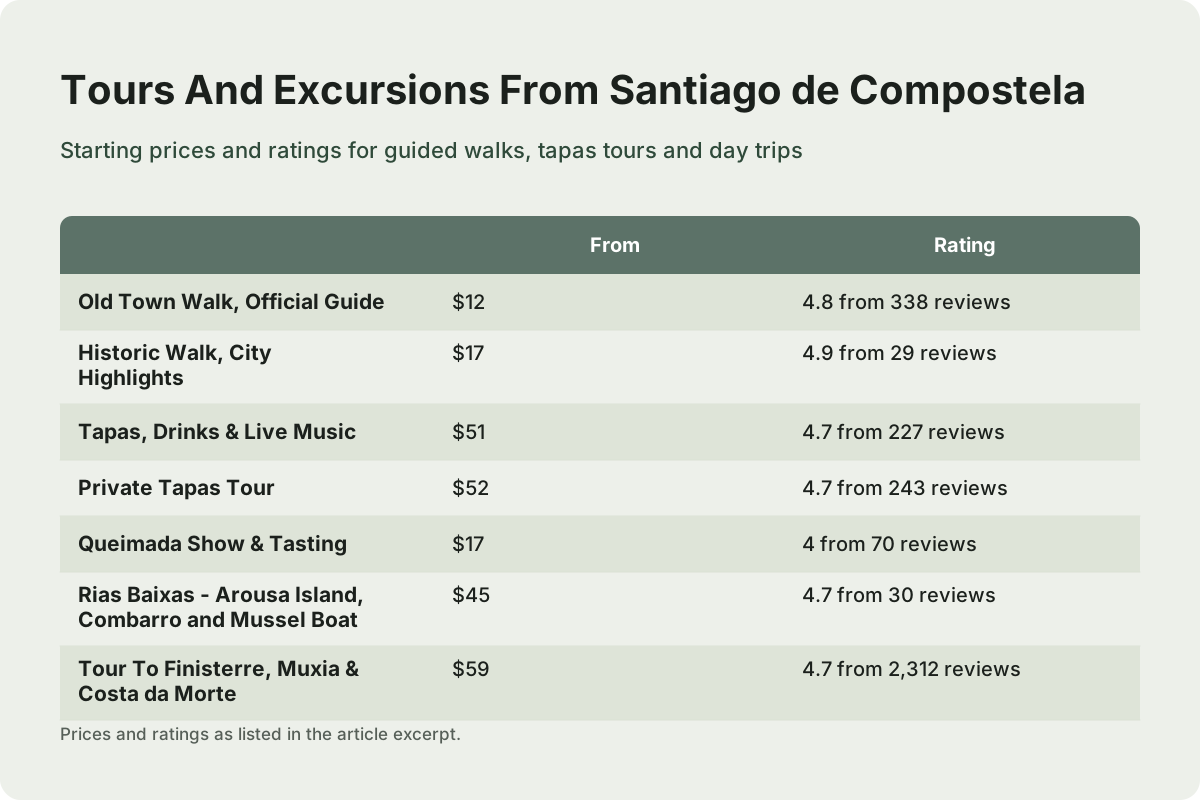
For travelers building a food-focused day around the old town, these are the guided options that pair naturally with a pastry stop, with prices and ratings as listed by each operator:
| Experience | Decision Name | From | Rating |
|---|---|---|---|
| Old town walk | Old Town Walk, Official Guide | $12 | 4.8 from 338 reviews |
| Historic center walk | Historic Walk, City Highlights | $17 | 4.9 from 29 reviews |
| Tapas with drinks and music | Tapas, Drinks & Live Music | $51 | 4.7 from 227 reviews |
| Private tapas tour | Private Tapas Tour | $52 | 4.7 from 243 reviews |
| Queimada show and tasting | Queimada Show & Tasting | $17 | 4 from 70 reviews |
The queimada option deserves a note, because it is the other great Galician ritual drink: a punch of spirits, sugar, lemon peel and sometimes coffee, flamed while an incantation is recited. A queimada tasting and a slice of almond cake are the two most theatrical edible experiences the city offers, and they sit comfortably in one evening.
For a deeper dive into the city's food culture beyond the sweet counter, the Galician food guide covers pulpo a la gallega, padron peppers and the rest of the regional canon, and the tapas bars guide maps the evening route through the old town.
Can You Bring A Tarta de Santiago Home From Santiago de Compostela?
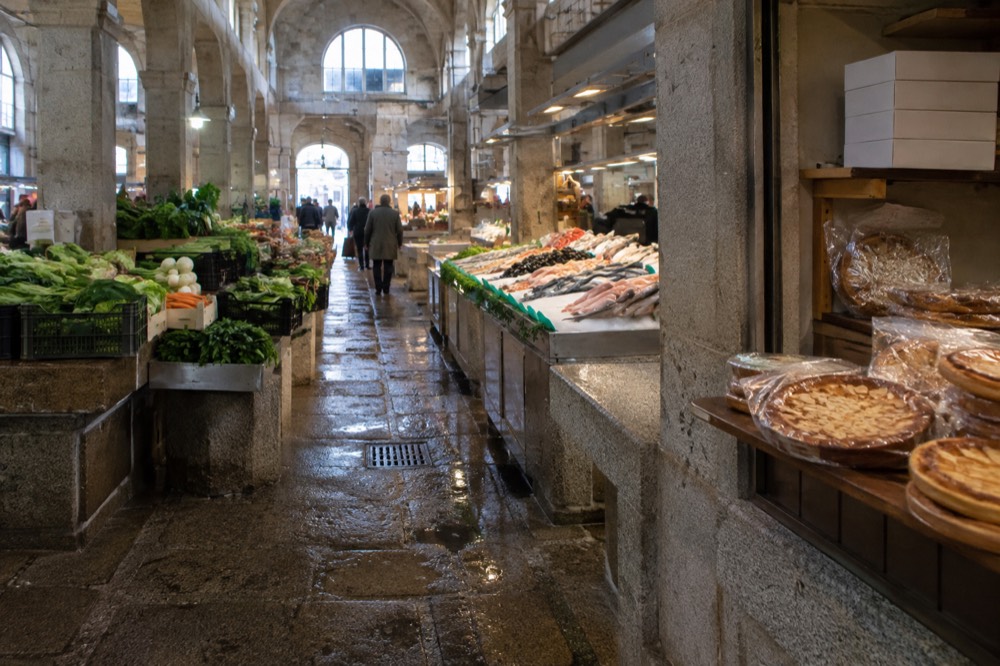
Yes, and the shops are set up for it: whole tarts are boxed in sturdy cardboard carriers designed for travel, and the flourless cake keeps better than most pastries because its dense almond crumb holds moisture for days. Buy one the day before you fly rather than hours before, keep it cool and flat, and it will survive a journey of a day or two in good condition. Some travelers freeze it at home, and the texture survives that too.
The cake travels well for structural reasons. No cream, no custard, no fresh fruit, nothing that spoils fast or weeps into the crumb. The sugar topping is the fragile part, so keep the box upright and flat, and expect the cross to lose a little definition in transit. The flavor does not care about the stencil.
A quick comparison of the two ways most visitors buy:
| Slice At The Counter | Whole Boxed Tart | |
|---|---|---|
| Best for | Eating in the city, tasting freshness | Gifts, bringing home |
| Freshness check | Watch it being cut | Ask what day it was baked |
| Shelf life | Same day | Several days, longer if frozen |
| Fragility | None | Sugar topping marks in transit |
| Where | Any cafe or pastry counter | Traditional pasticeras, most bakeries |
If you are flying out of the city, the Santiago de Compostela airport guide covers the transfer from the center, and the airport bus fare has been in flux: as of late September 2026 line 6A charged 1 EUR to the driver, but a new Monbus contract with a higher fare of around 6 EUR was expected during autumn 2026, so check the current fare rather than assuming either figure.
What Should You Pair With Tarta de Santiago In Galicia?
The classic local pairings are coffee, which is how most of Santiago de Compostela eats it, and the sweet wines of the Rias Baixas region south of the city, whose albarino and other whites cut the tart's density with acidity. A glass of orujo or a queimada works in the evening, and restaurants often serve the tart with a liqueur on the side. Beyond drinks, it pairs with everything the region does well, which is why it belongs at the end of a long Galician meal.
Galician eating is a sequence: seafood, octopus, peppers, empanada, then something sweet, and the almond tart is the standard finish. The albarino wine guide covers the white that anchors the region's table, grown in the same Rias Baixas estuaries that the day trips visit.
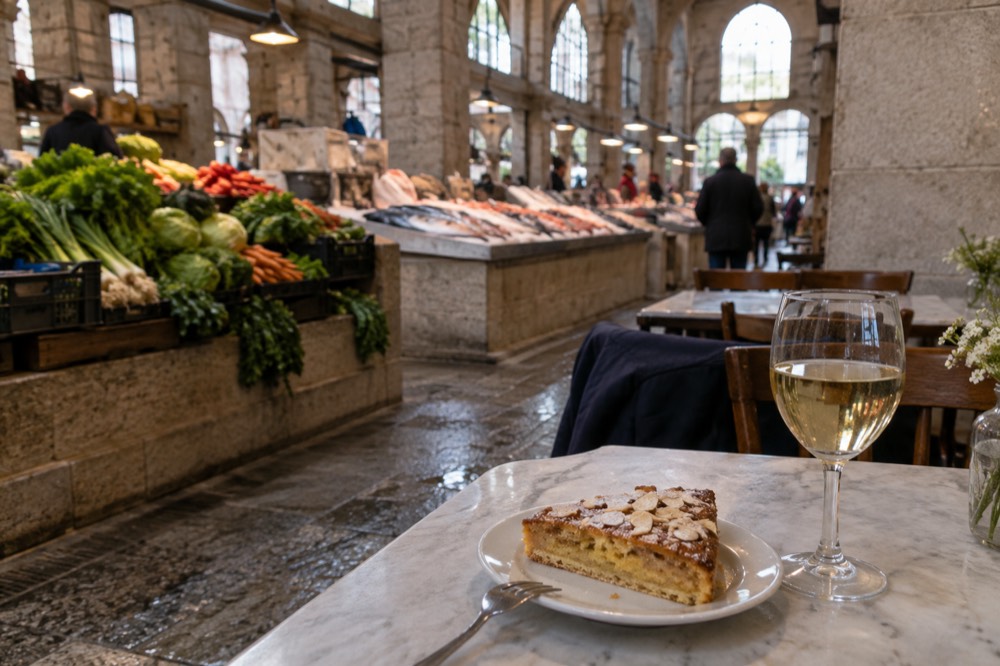
The region's other signature plates each have their own guide: pulpo a la gallega, padron peppers, and the tart's closest rival for the dessert slot, none, really, because in Santiago de Compostela the almond cake has no serious competitor. It is the dessert that appears when a restaurant wants to serve something local, and it is the box that appears in departure lounges.
For visitors with a spare day, the coast south of the city combines the wine country with the estuaries. The Rias Baixas - Arousa Island, Combarro and Mussel Boat excursion, from $45 per person, rated 4.7 from 30 reviews, full day, takes in the fishing village of Combarro, an island in the Arousa estuary and a mussel boat, and it is the natural companion to a bottle bought for home.
Is The Tart Worth Planning A Day Around In Santiago de Compostela?
On its own, no: a slice takes ten minutes and the best bakeries are all within a short walk of the cathedral. As the anchor of a food day, absolutely: a morning walk through the old town, a mid-morning slice with coffee, a market visit, a long seafood lunch, and an evening queimada gives the cake its proper context. The city is compact enough that the tart never needs its own trip, but it rewards being scheduled rather than stumbled upon.
The practical shape of that day is easy to draw. Start on Praza do Obradoiro while the morning light is on the cathedral's west facade, walk the old town's squares with a guide or without, take the slice mid-morning when the counters are busiest and the tarts are freshest, and leave the afternoon for the market or a day trip. The one day in Santiago de Compostela itinerary sequences the full day for first-time visitors, and the best time to visit guide explains why July around the Feast of St. James, and the 2027 Holy Year, will be the busiest windows of all.
A guided pairing helps when time is short. The Old town walking tour with an official guide, from $12 per person and rated 4.8 from 338 reviews, is the cheapest way to get the center's history in one pass, and the guide's local knowledge extends to where the counter slices are cut fresh.
For visitors staying longer, the coast west of the city makes a strong second day. The From Santiago: Tour To Finisterre, Muxia & Costa da Morte excursion, from $59 per person, rated 4.7 from 2,312 reviews, full day, runs to the lighthouse at Fisterra, the traditional "end of the world" that many pilgrims treat as the true finish of their walk, and it returns to the city in time for dinner and dessert.
However you schedule it, the tart is the city's most portable souvenir and its most reliable dessert. Order it where the whole tarts are being cut to order, eat the first slice standing at the counter, and box the second one for the journey home.
Common Questions About Tarta de Santiago
What is tarta de Santiago made of?
The classic version is flourless: ground almonds, eggs, sugar and lemon zest, baked in a shallow round tin and dusted with powdered sugar stenciled with the cross of Saint James. Some bakers add a pastry base, cinnamon or a splash of orujo, but the almond, egg and sugar core is constant.
Does tarta de Santiago contain gluten?
The traditional flourless version contains no wheat flour, only ground almonds, eggs and sugar, which is why many shops describe it as naturally gluten-free. Always confirm at the counter, though, because some bakeries use a pastry base or share equipment with wheat products.
Where did tarta de Santiago originate?
Its roots lie in Galicia's medieval convent baking tradition. The modern form, with the powdered-sugar cross of Saint James stenciled on top, spread through the pastry shops of Santiago de Compostela alongside the revival of the Camino de Santiago.
How long does a whole tarta de Santiago keep?
The dense almond crumb holds moisture well, so a whole tart keeps for several days at room temperature in its box and freezes successfully for longer storage. Buy it the day before a long journey, keep it flat and cool, and expect the sugar cross to soften slightly in transit.
Can you buy tarta de Santiago at Santiago de Compostela airport?
The reliable selection is in the city's pastry shops, not the terminal, so buy a boxed tart in the old town before you travel to the airport. The airport is about 12km from the old town, and the bus fare has been changing in late 2026, so check the current fare on the city's transport information before assuming the old 1 EUR figure.
What do you drink with tarta de Santiago?
Coffee is the everyday pairing, and a glass of albarino or another Rias Baixas white works at the table, its acidity cutting the tart's density. In the evening, restaurants often serve it with a glass of orujo or a flaming queimada, the region's ritual spirit punch.