Will Santiago de Compostela Airport Be Closed In 2026?
No, Santiago de Compostela Airport is not closed in 2026. What is changing is the airport bus contract, fare and operator. Here is the verified situation and what it means for your arrival.
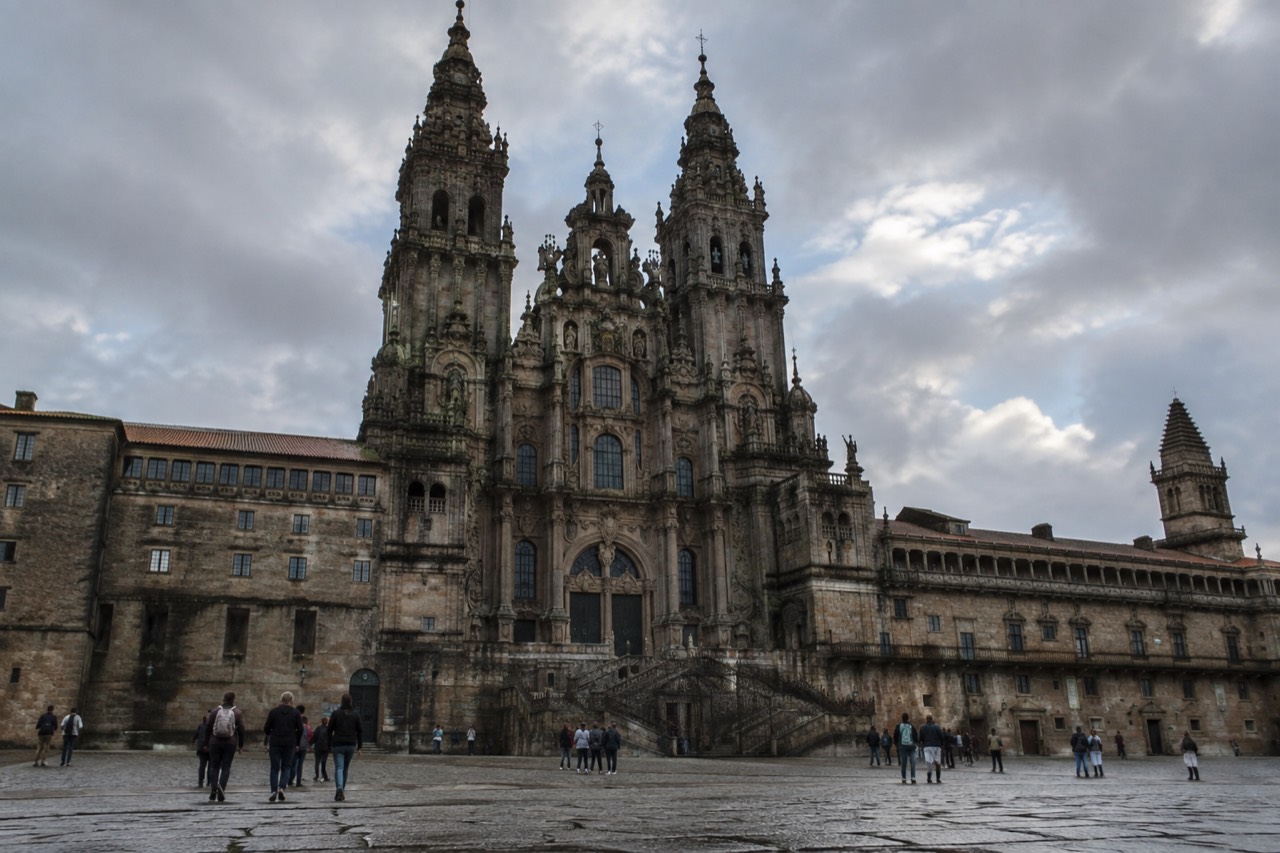
Santiago de Compostela Airport (SCQ), formally Santiago-Rosalía de Castro, sits about 12km from the old town, and it is open, running its normal flight schedule and serving the pilgrim city the way it has for years. The closure question circulates every time a Galician transport story makes the rounds, but the verified situation is simpler: the airport is not the thing changing in 2026. The thing changing is the bus that connects it to the city, where a new operator and a new fare structure arrive this autumn. That distinction matters a lot if you are booking flights or planning a Camino start, so this page lays out exactly what is confirmed, what is in transition, and how to reach the old town either way.
Will Santiago de Compostela Airport Be Closed In 2026?
No. Santiago de Compostela Airport is open and operating normally, with its public bus link to the city centre running daily on line 6A. Nothing in the primary sources consulted for this page, including the city's own current transport pages, announces any closure of the airport in 2026. The only documented change at the airport concerns the ground transport contract, not the terminal or the runways.
That is the direct answer, and it is worth being precise about where it comes from. The city of Santiago de Compostela's own transport page, updated on 23 September 2026, still lists an active, operating airport bus service with its current operator and fares, which is not the picture of an airport preparing to shut. An airport facing closure does not typically have a live public transport contract being renegotiated around it; it has cancellations and notices.
What tends to feed the closure rumour is a mix of three real, separate stories: the change of bus operator at the airport, the wider works happening around the Cathedral in the run-up to the 2027 Holy Year, and general nervousness about regional airport funding in Spain. None of those equals a closed airport. The Cathedral works do not touch the airport at all, and the Holy Year itself, which begins when the Holy Door opens on the evening of 31 December 2026, is a reason for the airport to be busier, not quieter.
If you are flying in for the Camino, the practical takeaway is to plan around transport on the ground rather than around a closure that the sources do not show. For a broader comparison of arrival points, our page on the best airport to fly into for the Camino weighs SCQ against the alternatives, and the full Santiago de Compostela Airport guide covers terminals, airlines and arrival logistics in detail.
What Is Actually Changing At Santiago de Compostela Airport In 2026?
The real change is the airport bus contract. As of 23 September 2026, line 6A, operated by Tussa, runs from the airport to the city centre and Estación Intermodal for 1 EUR paid to the driver, or 0.36 EUR per trip on a rechargeable card. A new contract awarded to Monbus in mid-2026 brings a reorganised, higher-fare dedicated airport line at roughly 6 EUR one-way, expected to start in autumn 2026, possibly by December.
That fare gap, from 1 EUR toward something in the region of 6 EUR, is the single biggest practical change for visitors at this airport in years, and it is genuinely still in flux. The city's transport page still shows the Tussa service and the 1 EUR fare, but it also advises travellers to verify line numbers after December, which is the clearest public signal that the handover date is close. If you are reading this after autumn 2026, treat every fare figure here as historical and check the operator's or the city's own page before you travel.
The service itself, while it lasts in its current form, is frequent and simple. Buses run roughly every 30 minutes from about 06:30 to 07:00 in the morning until about 00:30 at night, with a journey time of roughly 25 to 45 minutes depending on traffic and the exact stop. Children aged 4 to 14 often travel free with a card, and other concessions apply. Tickets are typically bought on board, with cash or contactless.
Here is the current picture in one table, with the change flagged where it applies:
| Detail | Current (as of 23 Sep 2026) | Expected change |
|---|---|---|
| Route and operator | Line 6A, Tussa, airport to city centre and Estación Intermodal | Reorganised network under Monbus ("Estela") |
| Single fare | 1 EUR to the driver, 0.36 EUR per trip on a rechargeable card | Roughly 6 EUR one-way on the dedicated airport line |
| Frequency | Roughly every 30 minutes | Not yet published |
| Operating hours | About 06:30 to 00:30 | Not yet published |
| Journey time | Roughly 25 to 45 minutes | Not yet published |
| Expected start | Active now | Autumn 2026, possibly by December |
The honest planning advice for anyone arriving between now and the end of 2026: carry a little cash or a contactless card for the bus, expect that the 1 EUR fare may not survive the season, and do not build a tight connection around a fare you read on a page written before December. The distance from the airport to the old town is about 12km, a 20 to 30 minute drive, so a taxi or private transfer is the fallback if the bus situation is mid-handover when you land, at a higher cost the research does not put a firm figure on.
How Do You Get From Santiago de Compostela Airport To The Old Town?
In late 2026 the options are the line 6A bus, a taxi or a pre-booked private transfer. The bus costs 1 EUR to the driver as of 23 September 2026, runs about every 30 minutes from roughly 06:30 to about 00:30, and takes 25 to 45 minutes to reach the city centre and Estación Intermodal. From there the old town is a short walk, and the airport sits about 12km from it, a 20 to 30 minute drive.
Estación Intermodal on Rúa do Hórreo is the practical landmark: it is the main intermodal station in the city, close to the edge of the historic centre, and it is where the airport bus terminates. From that point, a walker reaches the edge of the old town within minutes, and Praza do Obradoiro and the Cathedral beyond it on foot from there. Arriving pilgrims with heavy packs sometimes prefer to walk it in stages, and the terrain from the station into the centre is gentle compared with anything on the Camino itself.
For arrivals that are late at night or very early, the bus hours matter. The last departures run to roughly 00:30, and the first buses leave from about 06:30 to 07:00 depending on the schedule and the season, so an arrival outside that window needs a taxi or transfer. No firm taxi tariff is officially published for this run, so check the price with the driver or the operator's live listing before committing rather than trusting a number quoted on an older page.
If your first hours in the city matter to you, a guided walk is a good way to spend them. A licensed official guide can turn the first hour after arrival into orientation, history and a route map for everything else you plan to see:
The trio above is chosen for arrival-day logic: a historic town walk for the first afternoon, a Finisterre and Costa da Morte day trip for the day after, and a cathedral, museum and old town tour for the visit's anchor sight. Each has its own page on this site with full details, and the historic town walk with an official guide is the one most arrivals book first.
Can You Reach Santiago de Compostela Without Flying?
Yes, and for many travellers the train is the better route. Direct high-speed services connect Santiago de Compostela with Madrid in roughly 3 to 4 hours, Santiago to Vigo takes roughly 1 hour, and Santiago to A Coruna is a short direct hop. There is no direct rail line to Porto in Portugal: rail travellers change at Vigo, using the regional Celta service, and continue from there.
That rail picture is the reason the airport closure question matters less than it first appears. Even in a hypothetical where SCQ were disrupted, the city is not an island: the train network reaches it from Madrid in a few hours, and A Coruna and Vigo both have their own connections that feed into Santiago. Our page on getting to the Camino de Santiago from Madrid covers the Madrid route in detail, including the trade-offs between flying and taking the train.
Here are the verified rail links in one table:
| Route | Type | Typical journey time |
|---|---|---|
| Santiago de Compostela to Madrid | Direct high-speed | Roughly 3 to 4 hours |
| Santiago de Compostela to A Coruna | Direct regional or high-speed | A short hop |
| Santiago de Compostela to Vigo | Direct regional | Roughly 1 hour |
| Santiago de Compostela to Porto | No direct line | Change at Vigo via the regional Celta service |
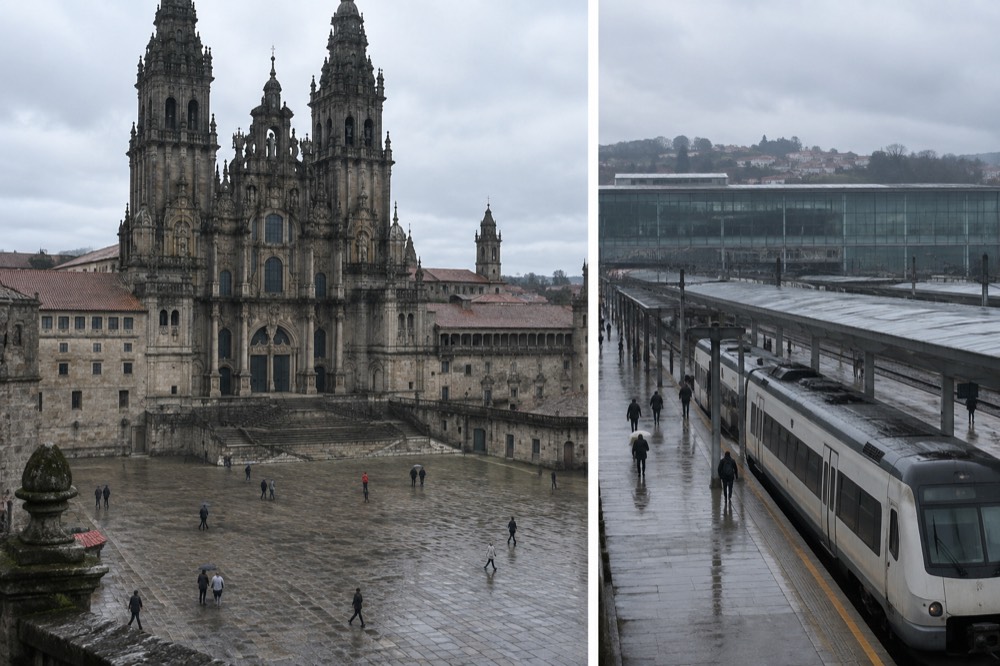
The Porto point deserves a flag for anyone combining northern Portugal and Galicia. Travellers from Porto reach Santiago by changing at Vigo, which turns the journey into a two-leg trip rather than a single through ticket, and the Porto to Santiago de Compostela route guide covers it properly. For day-trip planning once you have arrived, the best day trip from Santiago de Compostela page ranks the coastal and inland options, from Finisterre to the Rias Baixas.
Arrival day is also when the weather question lands. Galicia's climate is temperate oceanic, wet year-round and wetter from October to March, with July and August the driest months, so an arrival by train or bus in the rainier half of the year is a normal Santiago de Compostela experience rather than a mishap. Pack for it and the season stops being a constraint on the itinerary.
Once you are settled, the city itself rewards the first afternoon. The old town is compact, walkable and UNESCO-listed since 1985, and a guide who knows the stones can compress days of wandering into a couple of informative hours. The official-guide walk below is the site's standard recommendation for exactly that:
Common Questions About Santiago de Compostela Airport
These are the questions travellers ask most about the airport and the transfer into the city.
Will Santiago de Compostela Airport be closed in 2026?
No. The airport is open and operating, with its public bus link running daily. The documented change at the airport is the bus contract and fare, not any closure of the terminal.
How far is Santiago de Compostela Airport from the old town?
About 12km, a 20 to 30 minute drive. Sources vary between roughly 11 and 15km depending on the measured point, so treat 12km as the working figure rather than a precise number.
How much does the airport bus cost?
As of 23 September 2026, line 6A charges 1 EUR paid to the driver, or 0.36 EUR per trip on a rechargeable card. A new Monbus contract with a higher, roughly 6 EUR dedicated airport fare is expected in autumn 2026, possibly by December, so check the operator's or the city's page close to your travel date.
How often does the airport bus run?
Roughly every 30 minutes during operating hours, from about 06:30 to 07:00 in the morning until about 00:30 at night, with a journey time of roughly 25 to 45 minutes depending on traffic and stops.
Is there a train from the airport to the city?
The verified transport facts for this route cover the bus, taxi and transfer options; no rail link from the airport terminal itself is officially documented. Rail travellers arrive instead at Estación Intermodal or the city's rail station via the Madrid, Vigo or A Coruna lines.
Is flying still the best way to arrive for the Camino?
It depends on your starting point. SCQ suits anyone beginning the final 100km at Sarria or arriving straight into the city, while Madrid flights plus the 3 to 4 hour direct train suit travellers who prefer rail. The comparison on our best-airport page breaks down the trade-offs route by route.
The short version of this whole page: Santiago de Compostela Airport is open in 2026, the bus fare is the moving part, and the city has enough arrival routes, by air, rail and road, that no single closure rumour should derail a Camino plan. This Santiago de Compostela Travel Guide will keep tracking the bus handover as the December deadline approaches.