How Do I Get To Camino de Santiago From Madrid?
How to reach the Camino de Santiago from Madrid by train, bus or plane, with connections to Santiago de Compostela and Sarria, verified journey ranges and arrival logistics.
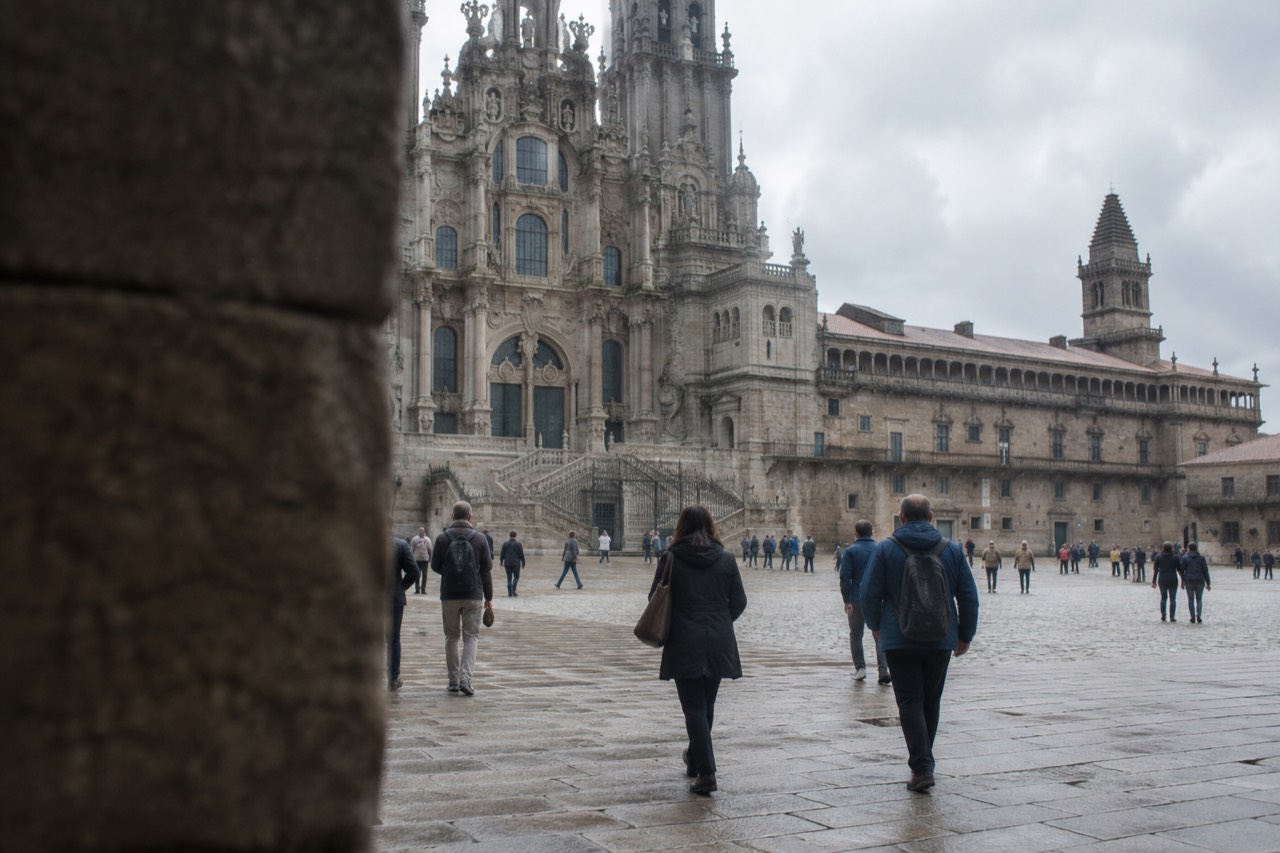
Madrid is the transport hub most international pilgrims pass through on the way to the Camino de Santiago, and the cathedral city of Santiago de Compostela sits at the end of a direct high speed rail line from the Spanish capital, roughly 3 to 4 hours away. That single fact shapes every itinerary decision: you can step off a long haul flight at Madrid Barajas and be standing in Praza do Obradoiro the same afternoon, or you can ride the same rail line partway and start walking from a trailhead such as Sarria. The editors at Santiago de Compostela Travel Guide lay out the verified connections below, because the details that trip people up are rarely the big ones, they are the transfers, the last 100km rules and the day you actually arrive.
How Do I Get To Camino de Santiago From Madrid?
The two main routes from Madrid are the direct AVE or Avlo high speed train to Santiago de Compostela, which takes roughly 3 to 4 hours, or a short flight into Santiago de Compostela airport, about 12km from the old town. From Santiago, regional rail runs toward A Coruna as a short hop and to Vigo in roughly 1 hour, and there is no direct rail line to Porto: travellers change at Vigo. Pilgrims aiming to walk the last 100km typically connect onward toward Sarria.
Neither option wins outright, they just answer different itineraries. The train drops you inside Galicia already, with the option of leaving the high speed line partway and starting the walk. The flight wins on raw speed from Madrid and pairs well with a departure straight out of the capital, but the airport is only the start of the story once you land. The full rail picture, including the Madrid to Sarria question this page targets, sits in the sections below.
A useful overview of the rail route itself lives on our Madrid to Santiago train guide, which covers the high speed line in depth. For the broader walking routes once you arrive, see Camino de Santiago routes.
Should You Take The Train Or Fly From Madrid To Santiago de Compostela?
Take the train if you want to arrive inside the old town without a second transfer: the direct AVE or Avlo service covers Madrid to Santiago de Compostela in roughly 3 to 4 hours and terminates close to the historic centre. Fly if schedule beats everything, since a flight into Santiago de Compostela airport puts you about 12km from the old town, connected by bus. There is no third fast option: the bus and the car are slower and neither offers anything the train does not.
The train is the backbone of Madrid pilgrim logistics for one reason beyond speed: it is the line that serves Galicia, and the same corridor carries walkers toward the classic starting points. Flights from Madrid into Santiago de Compostela airport exist and are quick, but the airport run adds a surface leg. The verified fare picture at the airport end is in flux: as of late September 2026 the city's own transport page lists line 6A, operated by Tussa, at 1 EUR paid to the driver, with a new Monbus contract and a higher fare of around 6 EUR expected in autumn 2026, so treat the fare as subject to change rather than fixed. The airport sits about 12km from the old town, a 20 to 30 minute drive.
What follows is the decision table in short form, built only from verified figures.
| Option from Madrid | Typical journey time | Where you arrive | Notes |
|---|---|---|---|
| AVE or Avlo high speed train, direct | Roughly 3 to 4 hours | Santiago de Compostela station | Terminal station, short transfer to the old town |
| Flight to Santiago de Compostela airport (SCQ) | Flight plus surface transfer | Airport, about 12km from the old town | Line 6A bus currently 1 EUR to the driver, fare subject to a coming Monbus change |
| Train toward Sarria | High speed line then onward connection | Sarria, on the Camino Frances | Check the onward connection on the rail operator's own timetable before booking |
| Car | Not officially published | Flexible | No verified drive time published here, plan from the rail options |
The one planning mistake worth flagging early: booking a Madrid to Santiago train and expecting to hop off at Sarria without checking. Connections toward Sarria sit on the Galician rail network, and the exact pattern should be confirmed on the operator's own timetable search rather than assumed, because the research behind this page verified the Madrid to Santiago range and the Galicia regional hops, not every intermediate stopping pattern.
How Do You Get From Madrid To Sarria By Train?
Madrid to Sarria by train means the Galicia high speed line followed by an onward connection: the direct Madrid services run to Santiago de Compostela in roughly 3 to 4 hours, and Sarria sits on the region's rail network reached via a connecting service rather than a dedicated nonstop train from the capital. Sarria is the classic starting point because it sits almost exactly 100km from Santiago de Compostela, the minimum walked distance for the Compostela certificate.
That 100km threshold is the whole reason Sarria matters. The Oficina del Peregrino's own rules state that the certificate requires the last 100km walked, or on horseback, or the last 200km cycled, on a recognized route, with at least two stamps per day in the credencial, and the certificate is issued in person only at Rua das Carretas 33 in Santiago de Compostela. Walkers who start at Sarria therefore qualify, walkers who start closer do not. The walk itself is demanding in its own way over the qualifying distance, and the full route is laid out in our Sarria to Santiago guide.
For the rail logistics, book in two stages and check each on the operator's own search. The verified spine is Madrid to Santiago de Compostela, direct, roughly 3 to 4 hours. From there, and from other Galician stations on the same corridor, regional services knit the region together: Santiago to A Coruna is a short hop, Santiago to Vigo roughly 1 hour. The specific stopping pattern that serves Sarria changes with the timetable, so confirm the connection when you book rather than trusting a remembered pattern. If the timings fight you, an overnight in Santiago de Compostela before travelling out to start the walk is a pleasant failure mode rather than a disaster, and the city rewards the extra half day.
What About The Bus Or Driving From Madrid?
The bus from Madrid to Santiago de Compostela exists but this page does not publish a journey time for it, because no verified figure was pulled from the operator's own timetable in the research behind this site, and driving gives flexibility without any published drive time here either. Both are slower than the direct train, which covers the route in roughly 3 to 4 hours, and neither reaches anything the rail line does not already serve. Treat them as fallbacks, not plans.
The honest framing is that the train is not merely the fastest option, it is the option this site can verify. Long distance bus times across Spain vary by service and season, and printing a specific number without a primary source would be exactly the kind of plausible sounding gap fill this editorial desk refuses to publish. If a coach suits your budget, check the operator's own booking page for the real duration and fare on your date. The same logic applies to driving: the route is well signed, but no verified drive time appears here.
One thing that does deserve a flag is the timing of your arrival in Santiago de Compostela itself. Pilgrim masses are on the move: until 15 October 2026 the Cathedral's 9:30am, noon and 7:30pm masses are held at the High Altar, and from 16 October 2026 they relocate to the nearby Church of San Agustin while main chapel works prepare the Cathedral for the 2027 Holy Year, with only the 7:30am mass staying in the Cathedral's own Communion chapel. Arriving with that in mind changes which train you pick.
What Should You Do When You Arrive In Santiago de Compostela?
Most pilgrims arriving from Madrid go straight to the Pilgrim's Office at Rua das Carretas 33, where the Compostela certificate is issued in person only, then to the Cathedral, which opens daily around 7:00am to 9:00pm with free general entry through the Praterias door. The office closes seasonally between roughly 8 or 9am and 7 or 8pm, so a late afternoon train from Madrid can arrive after the queue has closed for the day.
That last point catches people every season. A Madrid departure in the morning lands you in Santiago de Compostela with the afternoon free for the office and the Cathedral; a late departure means the certificate waits until tomorrow. The arrival logistics, including where to get the final stamps and how the queue works, are laid out on our page on arriving in Santiago on the Camino, and the wider question of how long to stay is answered in how many days you should spend in Santiago de Compostela.
Once the certificate is sorted, the city itself is compact and walkable, and a guided introduction pays for itself in context. The Cathedral, Museum, Old City guided tour covers the three anchors in one walk, from $34 per person and rated 4.9 from 115 reviews, Check availability on the operator's live listing. For the smaller alternative, the private historic walk in a small group runs from $29 per person.
Which Madrid Route Should A First Time Pilgrim Choose?
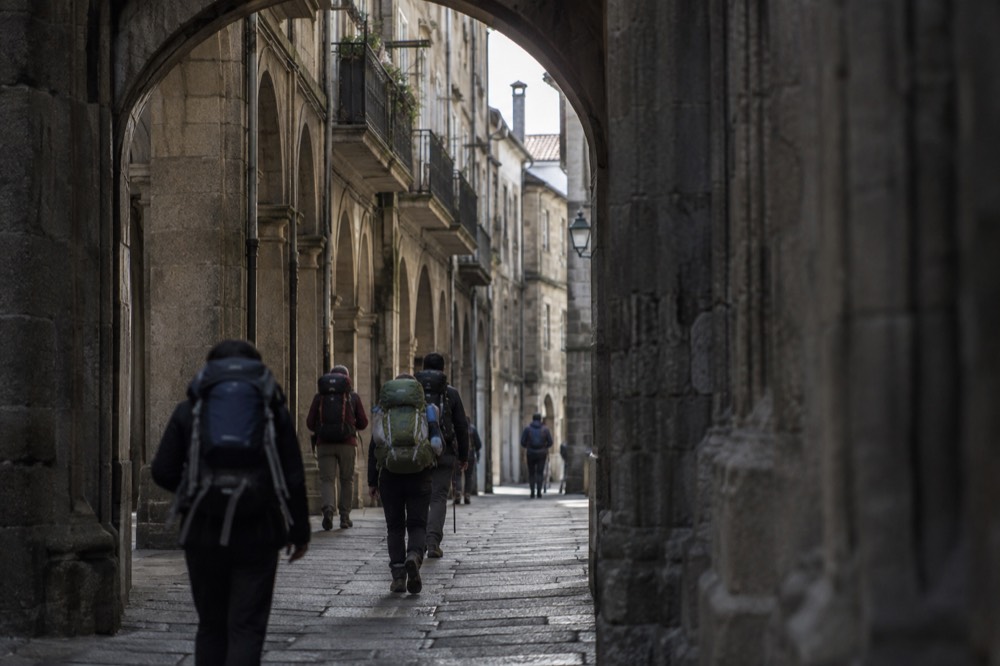
A first time pilgrgrim should take the direct train from Madrid to Santiago de Compostela, roughly 3 to 4 hours, spend a night in the city, then travel out to Sarria by onward regional rail connection and start walking back toward Santiago de Compostela, covering the qualifying last 100km of the Camino Frances. That loop satisfies the 100km rule, keeps luggage simple and builds a rest day into the schedule before the walk begins.
The alternative order, going straight from Madrid toward Sarria on arrival day, works only if your connections line up, and it burns your buffer before you have one. The beginner case for the overnight in Santiago de Compostela is strong: you confirm your credencial and stamps strategy, you see the Cathedral before you walk toward it, and any rail hiccup out of Madrid costs you a hotel night rather than your walking schedule. Which route to walk from Sarria is its own question: the Camino Frances from Sarria is the classic beginner choice, and the timing and budget comparisons are covered across our pages on the best month to walk the Camino and the average cost to walk the Camino.
The packing side deserves a mention too, because Madrid in July and Galicia in the same week are different climates. Santiago de Compostela sits in a temperate oceanic climate: wet year round, wetter from October to March, driest in July and August, with annual precipitation on the order of 1,690 to 1,890mm depending on the station and year measured. Rain gear belongs in the bag even in the dry season.
Common Questions About Getting To The Camino From Madrid
How do I get to Camino de Santiago from Madrid?
Take the direct AVE or Avlo high speed train from Madrid to Santiago de Compostela, roughly 3 to 4 hours, or fly into Santiago de Compostela airport about 12km from the old town. Pilgrims starting at Sarria connect onward by regional rail once in Galicia, checking the connection on the rail operator's own timetable.
How long does the train from Madrid to Santiago de Compostela take?
The direct high speed service takes roughly 3 to 4 hours. That is a verified range, not a timetabled minute count, so check the operator's own search for your exact departure.
Can I take a train from Madrid straight to Sarria?
Not as a dedicated nonstop service in any pattern this site can verify. Madrid's direct trains run to Santiago de Compostela; Sarria is reached on the Galician regional network via a connection, and the stopping pattern should be confirmed when booking.
Is there a train from Santiago de Compostela to Porto?
No. There is no direct rail line to Porto: travellers change at Vigo, which sits roughly 1 hour from Santiago de Compostela by regional service, then continue onward.
How do I get from Santiago de Compostela airport to the old town?
The airport is about 12km from the old town, a 20 to 30 minute drive. As of late September 2026 the city's transport page lists line 6A at 1 EUR paid to the driver, with a Monbus contract at a higher fare of around 6 EUR expected in autumn 2026, so verify the fare at the time you travel.
Do I need to book the Madrid to Santiago train in advance?
This page does not publish a booking window because none was verified from the operator's own channels. High speed services on busy corridors commonly fill in peak season, and July around the Feast of St James on 25 July is the busiest period in Santiago de Compostela, so book early in summer either way.