Madrid To Santiago de Compostela Train
The Spanish capital connects to the pilgrim cathedral city of Santiago de Compostela by direct high-speed rail, a journey of roughly three to four hours that ends within easy reach of the old town. This guide covers the route, the stations, the ticket reality, and what to do on arrival.
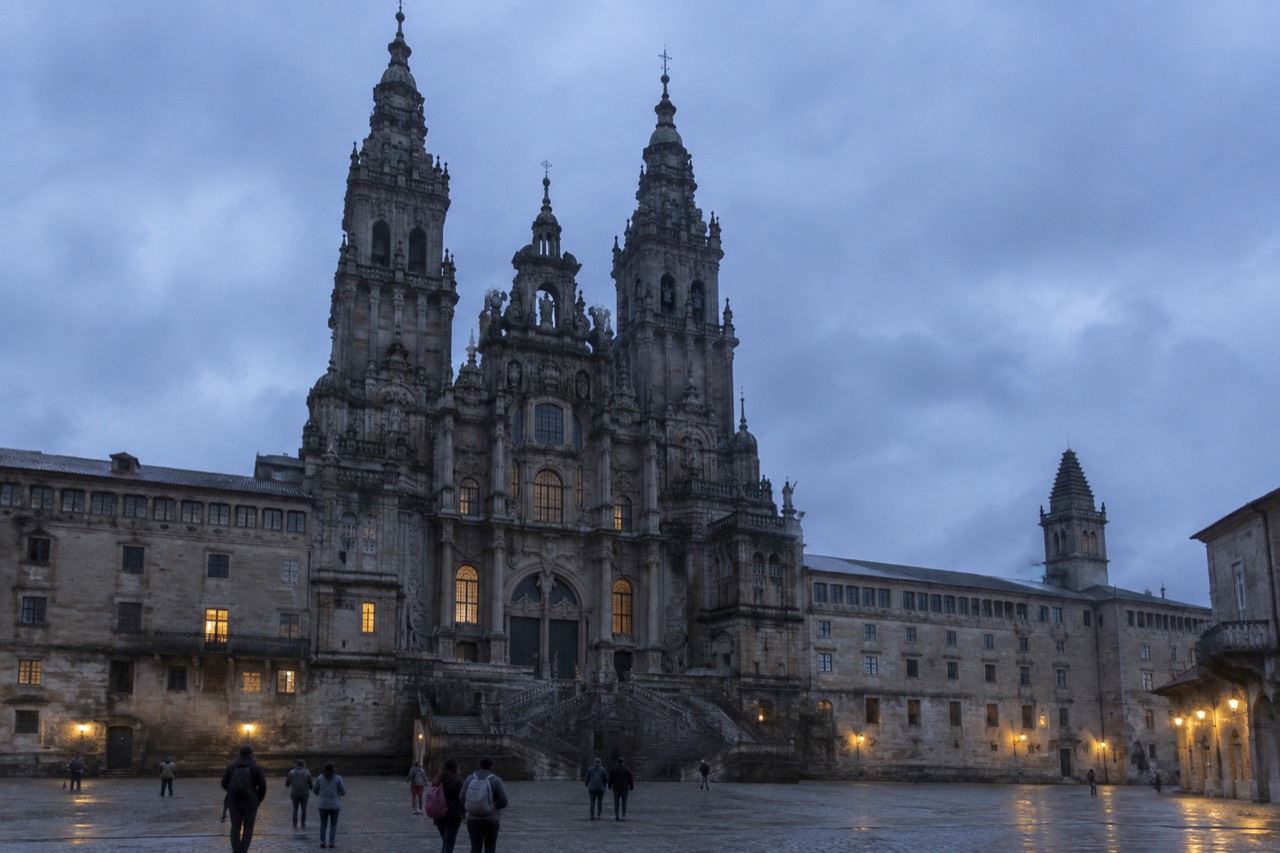
Short answer
A direct AVE or Avlo high-speed train runs from Madrid to Santiago de Compostela in roughly three to four hours, arriving at the city's Estación Intermodal on Rúa do Hórreo. Fares change with date and demand, so check the live price for your exact departure.
Spain's capital and its most famous pilgrim destination are linked by direct high-speed rail: AVE and Avlo services run from Madrid to Santiago de Compostela in roughly three to four hours, finishing at the Estación Intermodal on Rúa do Hórreo. For travellers used to thinking of Santiago de Compostela as the end of a long walk, the train is the fastest way to reach the cathedral city from the centre of the country, and it drops you into a transport hub that also connects the airport bus, regional trains and urban lines. This guide from the Santiago de Compostela Travel Guide editorial desk covers what the journey involves, what tickets really cost, and how to spend the first day in the city.
How Long Is The Train From Madrid To Santiago de Compostela?
A direct high-speed train between Madrid and Santiago de Compostela takes roughly three to four hours, using the AVE and Avlo services on Spain's high-speed network. The exact duration varies by departure, and no single timetabled figure applies to every train, so the honest planning number is the range: roughly three to four hours from the capital to the pilgrim city.
That range matters more than it sounds. Spanish high-speed timetables shift with the season and the specific service, and the verified research behind this guide, drawn from established rail references cross-checked against the route structure, deliberately records the journey as a typical band rather than a fixed minute count. Anyone planning a same-day connection in Santiago, a cathedral rooftop slot or a Pilgrim Mass should leave a buffer on top of the three-to-four-hour figure rather than treating the fastest possible run as the norm.
It is also worth remembering what the journey replaces. The Camino Francés, the most walked route into the city, takes weeks rather than hours on foot, and many people who arrive by train are doing so precisely to walk a final section, such as the last 100km from Sarria, which is the minimum distance that qualifies for the Compostela certificate. If that is the plan, the complete Camino de Santiago guide and the Camino route comparisons cover the walking options in detail, and the Sarria to Santiago guide handles the classic final-week walk.
| Journey | Typical duration | Service type | Direct? |
|---|---|---|---|
| Madrid to Santiago de Compostela | roughly 3-4 hours | AVE and Avlo high-speed | Direct services available |
| Santiago de Compostela to A Coruna | a short hop | regional and high-speed | Direct |
| Santiago de Compostela to Vigo | roughly 1 hour | Media Distancia and regional | Direct |
| Santiago de Compostela to Porto | varies, change required | regional plus connection | No direct rail line |
The table shows the honest picture: the Madrid run is the long leg, and everything beyond Santiago is either a short hop or, in the case of Porto, a journey with a change. The onward options get their own section below.
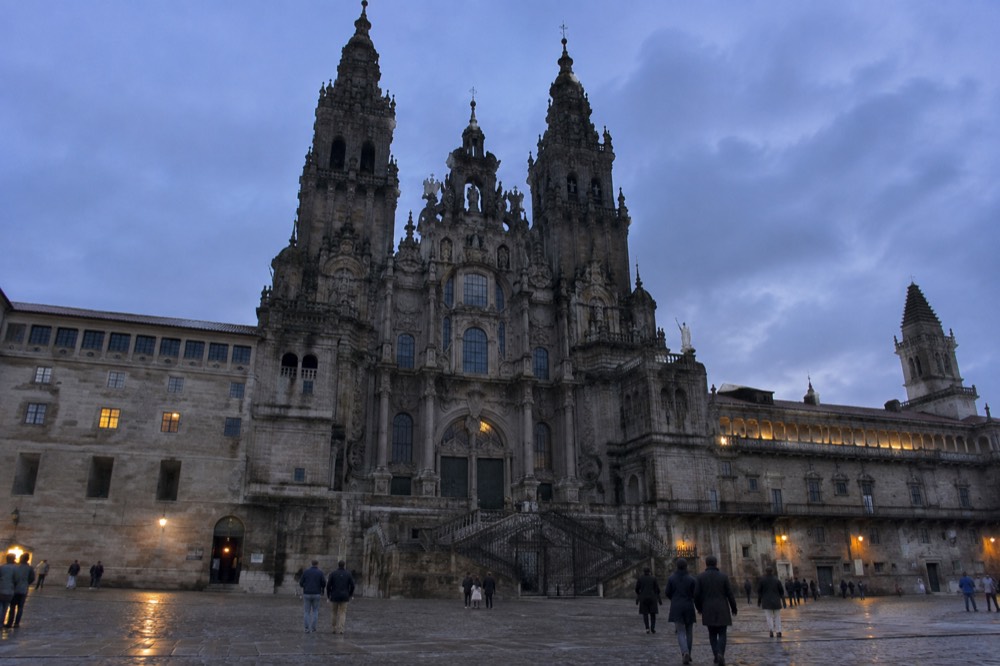
Which Stations Does The Madrid To Santiago de Compostela Train Use?
The Madrid to Santiago de Compostela train runs from Madrid on direct high-speed services and arrives at Santiago's Estación Intermodal on Rúa do Hórreo, the same interchange that serves the city's urban buses, including line 6A to Santiago-Rosalia de Castro airport. The specific departure station in Madrid is shown on the operator's own timetable at the point of booking.
The arrival end is the easy part to plan around. The city's own transport page lists the Estación Intermodal on Rúa do Hórreo as the hub for urban buses, and line 6A, the airport service, runs through it. The city's transport information also confirms the current 6A fare structure: 1 EUR paid to the driver, or 0.36 EUR per trip on a rechargeable card at the 2026 discounted rate. A new bus contract awarded to Monbus in mid-2026 is expected to reorganize services in autumn 2026, with a proposed higher unsubsidized airport fare around 6 EUR, so anyone arriving later in 2026 or beyond should treat those bus figures as subject to change and verify them on the city's transport page close to travel.
For the departure end, the practical advice is simple: the timetable shown at booking names the Madrid station, and that is the authoritative answer, not a general travel article. Madrid's rail network uses more than one terminal, and assuming the wrong one is a classic way to miss a high-speed departure.
What the arrival station gives you, once you step off the train, is a city that is genuinely walkable. The old town, the Cathedral and the main squares of Santiago de Compostela form a compact UNESCO-listed core, and many visitors cover the essentials on foot from the moment they arrive. That is one of the reasons a guided walk is such a common first activity.
Those three options cover the most useful first-day formats: a guided walk of the historic town with an official guide from $14 per person, rated 4.8 from 144 reviews, a cathedral visit with Portico, roofs and museum access from $56 per person, and an express half-day trip out to Muxía and Cape Finisterre from $45 per person. Each has its own listing with live availability, and prices shown here come from those listings.
How Much Do Madrid To Santiago de Compostela Train Tickets Cost?
Ticket prices for the Madrid to Santiago de Compostela train are not fixed. Like most Spanish high-speed fares, they move with travel date, departure time and demand, and no single published rate covers the route. Travellers should check the live fare for their exact date and departure at the point of sale, because a price quoted for one train rarely matches another.
This is deliberately the least specific section of the guide, and that is the honest position. The verified details behind this site do not include a rail fare table for the Madrid to Santiago de Compostela route, and inventing a "from X EUR" figure would be exactly the kind of stale price that misleads people. Spanish high-speed operators use dynamic pricing, with cheaper fares typically available further from the travel date and on off-peak departures, and the only reliable answer is the live fare shown when you book.
A few practical points stand up to scrutiny regardless of price. Booking ahead gives you a better choice of departures and fare levels than turning up on the day, especially around the Feast of St James on 25 July, when the city fills for the apostle's festival. And if your dates are flexible, avoiding the peak summer weeks and the festival period can change both the fare and the crowds, a trade-off the best time to visit Santiago de Compostela guide unpacks in more detail.
One more thing worth deciding before travel rather than after: what your first hour in the city looks like. A train arrival lands you in the middle of the old town with no transfer to arrange, which makes a timed activity easy to plan. The cathedral's own ticketing sells rooftop and museum visits online with timed slots, and the official-guided walking tours sell out on busy days too, so a little pre-booking converts a train arrival into a full first day.
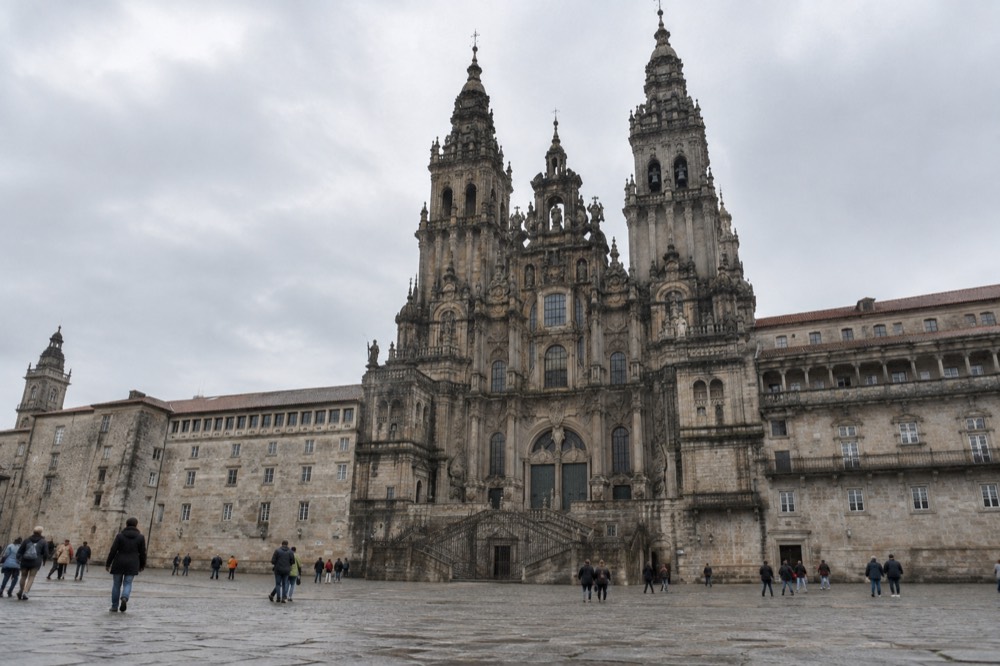
Should You Fly Or Take The Train From Madrid To Santiago de Compostela?
The train delivers passengers straight into Santiago de Compostela's Estación Intermodal on Rúa do Hórreo, while a flight lands at Santiago-Rosalia de Castro airport, about 12km from the old town, with bus line 6A running into the centre at 1 EUR to the driver or 0.36 EUR on a card. The direct train journey takes roughly three to four hours, and the airport transfer adds a leg that the train journey does not need.
Neither option is wrong, but they solve different problems. The flight exists: Santiago-Rosalia de Castro airport (SCQ) serves the city, and the Santiago de Compostela airport guide and the flights to Santiago de Compostela guide cover it in full. What the flight adds is a ground segment: the airport sits about 12km from the old town, and sources disagree on the precise distance depending on the measured point, so "about 12km" is the only defensible figure. Line 6A covers that leg in roughly 25-45 minutes depending on traffic and exact stops, running about every 30 minutes during operating hours, from around 06:30-07:00 until about 00:30, per the city's transport information.
| Factor | Train from Madrid | Flight to SCQ |
|---|---|---|
| Arrival point | Estación Intermodal, Rúa do Hórreo, in the city | Santiago-Rosalia de Castro airport, about 12km from the old town |
| Local transfer needed | None, the station is the destination | Bus line 6A or taxi |
| Current bus fare (if flying) | Not applicable | 1 EUR to the driver, 0.36 EUR by rechargeable card |
| Bus frequency | Not applicable | Roughly every 30 minutes, about 06:30-07:00 to about 00:30 |
| Fare caveat | Train fares are dynamic, check live | A new Monbus contract may raise the bus fare to around 6 EUR from autumn 2026 |
The train's advantage is simplicity. You step off inside the city, with the old town, the cathedral and the hotel districts of Santiago de Compostela all within the compact historic core. The flight's advantage is that it may fit better with onward international connections or with a schedule that the rail timetable does not serve. The decision usually comes down to total door-to-door time from wherever in Madrid you actually start, and that calculation is personal.
One honest caveat applies to the bus figures in that table. As of late September 2026 the city's transport page still lists Tussa as the line 6A operator at the 1 EUR fare, but the new Monbus contract is expected to reorganize the airport service within months, possibly by December 2026. Any plan made for late 2026 or 2027 should verify the fare and line number on the city's own transport page before relying on it.
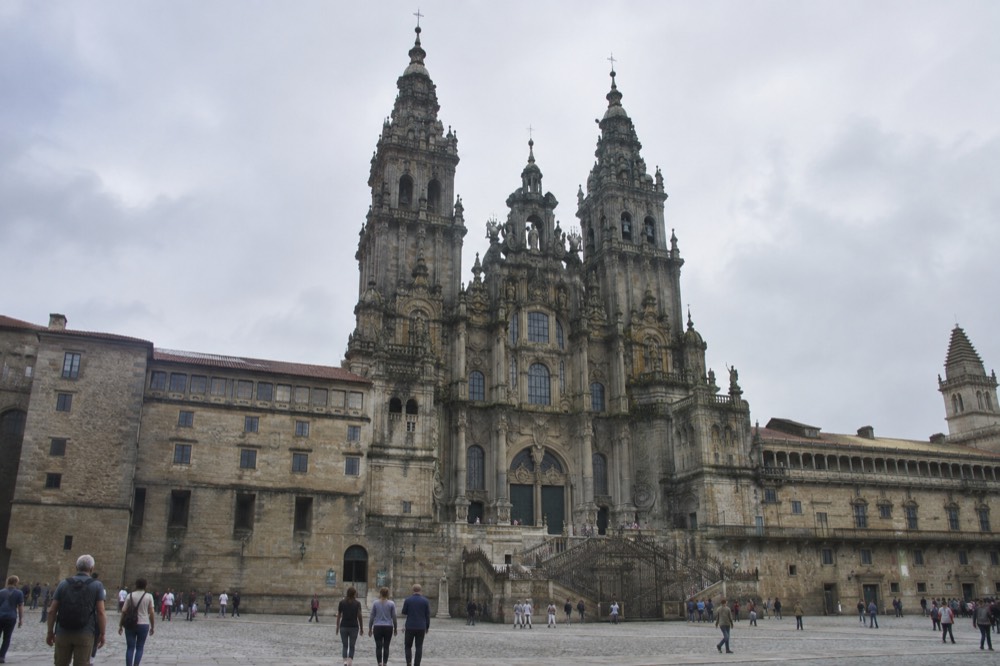
What Should You Do On Your First Day In Santiago de Compostela?
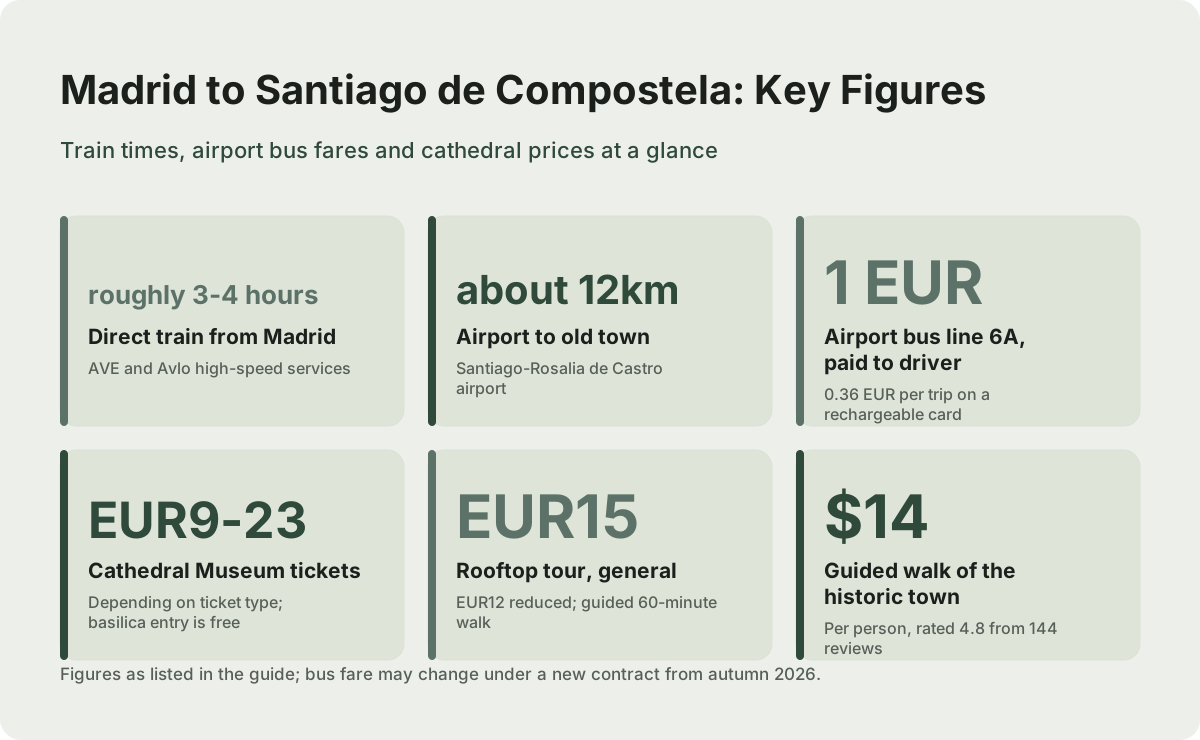
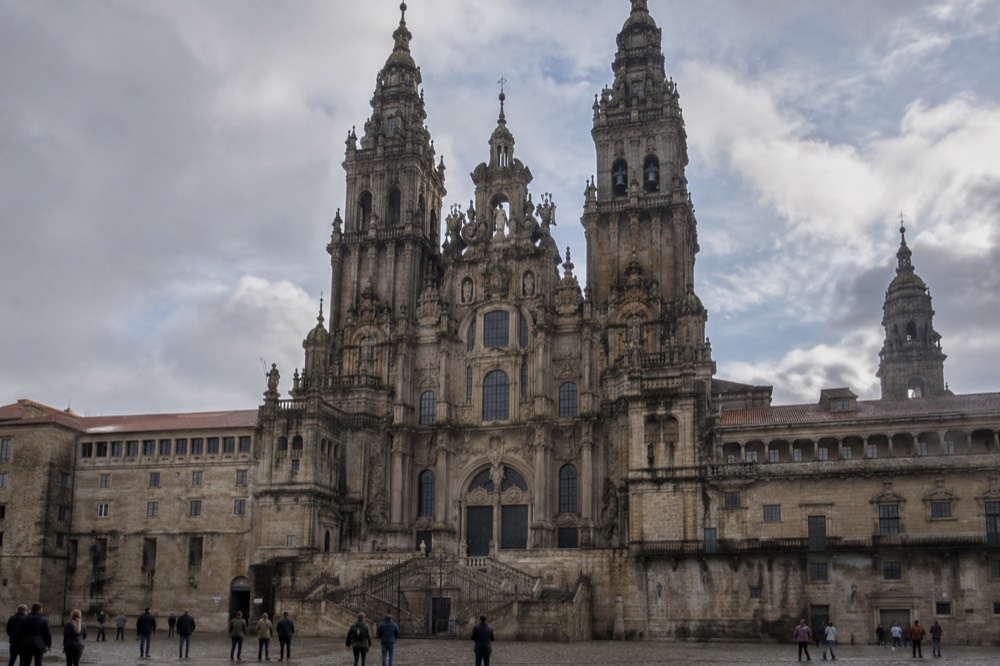
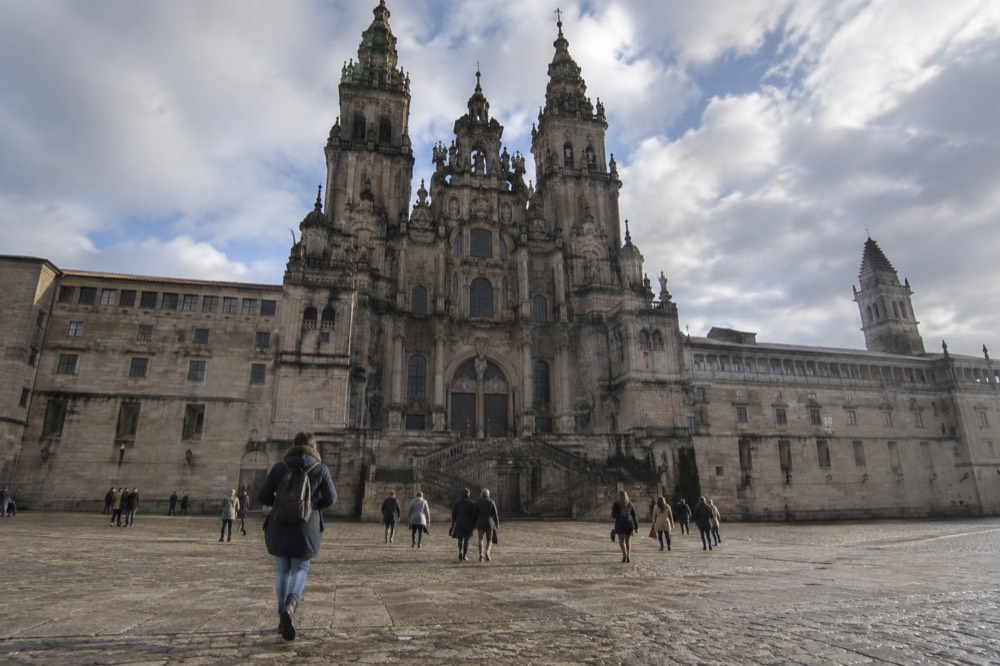
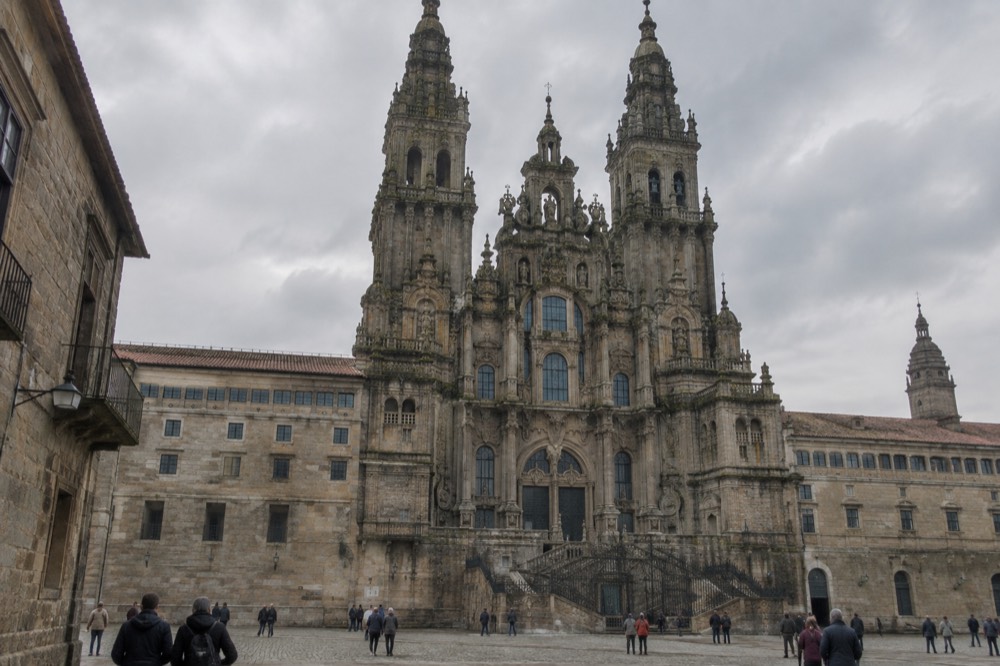
Most first-time arrivals head straight to the Cathedral of Santiago de Compostela on Praza do Obradoiro: general entry to the basilica is free, Cathedral Museum tickets run EUR9-23 depending on type, and the rooftop tour costs EUR15 general or EUR12 reduced. The Pilgrim's Office at Rua das Carretas 33 issues Compostela certificates in person, for walkers who have earned one.
The basilica is open daily from about 7:00am to 9:00pm, with entry generally through the Praterías door, and it closes about 8:30pm on summer Saturdays for the pilgrim vigil. The Cathedral Museum's permanent collection, in the Gelmirez Palace, runs daily about 10:00am to 8:00pm with the ticket office closing 30 minutes earlier. The rooftop tour, the Cubiertas and Torre de la Carraca visit, is a guided 60-minute walk with about 140 steps and views from around 72m, priced at 15 EUR general and 12 EUR reduced, with the reduced rate covering accredited pilgrims, students, over-65s, under-12s and several other groups. The cathedral tickets and opening hours guide keeps the full detail.
| Cathedral visit | Price | Notes |
|---|---|---|
| Basilica interior, general entry | Free | About 7:00am-9:00pm daily, Praterías door |
| Cathedral Museum, permanent collection | EUR9-23 depending on ticket type | About 10:00am-8:00pm, ticket office closes 30 min earlier |
| Rooftops and Torre de la Carraca tour | EUR15 general, EUR12 reduced | Guided, about 60 minutes, about 140 steps, about 72m height |
| Rooftops, English-language visit | Flat EUR15 | Per the cathedral's own ticket page |
If the walk is why you came, the formal end of the Camino runs through the Pilgrim's Office at Rua das Carretas 33, which issues the Compostela in person only, to walkers who have covered at least the last 100km on foot or horseback, or the last 200km by bicycle, with at least two stamps per day in the credencial. The pilgrim passport guide, the Compostela certificate guide and the arriving in Santiago on the Camino guide cover that paperwork end to end.
A guided historic town walk with an official guide is the natural first-evening activity after a train arrival: from $14 per person, rated 4.8 from 144 reviews, it covers the old core that the station drops you beside, and it costs less than most dinners in the city. Check availability for your arrival date, since the official guides run small groups.
The other natural pairing is a deeper cathedral visit. The full option with Portico, roofs and museum access runs from $56 per person and is rated 4.6 from 79 reviews, a good fit for anyone who wants the rooftop views without booking the cathedral's own channel directly.
For dinner, the where to eat in Santiago de Compostela guide maps the eating streets, and the where to stay in Santiago de Compostela guide sorts the neighbourhoods, from the Parador itself on Praza do Obradoiro to the hostels that serve arriving pilgrims.
| Guided option in the city | From (per person) | Rating | Reviews |
|---|---|---|---|
| Historic town walk, official guide | $14 | 4.8 | 144 |
| Old town walk, official guide | $12 | 4.8 | 338 |
| Cathedral and museum, skip the line | $26 | 4.8 | 2,425 |
| Cathedral, Portico, roofs and museum | $56 | 4.6 | 79 |
| "Secrets of Compostela" night tour | $17 | 4.9 | 74 |
When Is The Best Time To Travel To Santiago de Compostela By Train?
The driest window for arriving in Santiago de Compostela is July and August, when AEMET's station data shows the climate at its driest; October to March is wetter and cooler, with annual precipitation on the order of 1,690-1,890mm. The next Holy Year, Xacobeo 2027, opens with the Holy Door on the evening of 31 December 2026 and runs through 31 December 2027.
The climate of Santiago de Compostela is temperate oceanic: wet year-round, wetter from October to March, driest in July and August, with that high annual precipitation total measured at AEMET's station 1475X at Labacolla. A full month-by-month normals table is not officially published, so the honest planning advice is seasonal rather than numeric: expect rain whenever you come, expect more of it between October and March, and expect the driest, busiest streets in July and August. The Santiago de Compostela weather guide carries the full breakdown.
The calendar matters as much as the rain. The Feast of St James falls on 25 July every year, and the city marks it with a Pontifical Mass, the national offering to the Apostle, fireworks and concerts, as the Feast of St James guide describes. 2026 is not a Holy Year. The next one, 2027, begins when the Holy Door opens solemnly on the evening of 31 December 2026 at the Praza da Quintana ceremony and stays open through 31 December 2027, with subsequent regular Holy Years listed as 2032, 2038 and 2049. The Holy Year 2027 guide tracks what that means for visitors.
The Botafumeiro deserves its own warning here, because visitors often plan a whole trip around it. Normally the giant thurible swings during the main solemn mass on 12 fixed liturgical dates each year, from Epiphany on 6 January through the Transfer of the Apostle on 30 December. At this moment it does not swing at all: the Cathedral confirmed in writing on 5 September 2026 that cimborrio restoration scaffolding covers its hanging mechanism, and no return date has been published. The ~450-500 EUR private-request arrangement is also unavailable while works continue. The Botafumeiro guide carries the full list and status.
| Liturgical date | Recurring date | 2026 date (where fixed) |
|---|---|---|
| Epiphany | 6 January | 6 January |
| Easter Sunday | moves with Easter | 5 April |
| Ascension of the Lord | moves | about 14 May |
| Apparition at Clavijo | 23 May or transferred | 23 May |
| Pentecost | moves | 24 May |
| Feast of St James the Apostle | 25 July | 25 July |
| Assumption of the Virgin | 15 August | 15 August |
| All Saints | 1 November | 1 November |
| Christ the King | last Sunday before Advent | 22 November |
| Immaculate Conception | 8 December | 8 December |
| Christmas | 25 December | 25 December |
| Transfer of the Apostle | 30 December | 30 December |
Mass times themselves are in flux, which is unusual and worth knowing before you plan a train arrival around one. The Pilgrim Mass is celebrated daily at 7:30am, 9:30am, noon and 7:30pm. Until 15 October 2026 those masses are held at the Cathedral's High Altar; from 16 October 2026, the 9:30am, noon and 7:30pm masses relocate to the nearby Church of San Agustin while main chapel remodelling continues, and only the 7:30am mass stays in the Cathedral's own Communion chapel. The Pilgrim Mass guide keeps the current arrangement.
Where Can You Travel Onward From Santiago de Compostela By Train?
From Santiago de Compostela's Estación Intermodal, direct trains run to A Coruna as a short hop and to Vigo in roughly one hour on Media Distancia and regional services. There is no direct rail line to Porto in Portugal: travellers change at Vigo and continue onward from there, typically on the regional Celta service.
The onward map is simple and Galicia-shaped. A Coruna sits a short direct hop to the north, Vigo roughly an hour to the south, and the Portuguese border has no rail crossing on a direct line from Santiago de Compostela, so Porto itineraries change at Vigo. The Porto to Santiago de Compostela guide covers that cross-border journey in the other direction, and it is worth reading even if you only travel one way, because the same connections apply.
For many train arrivals, though, the best onward journey is not by rail at all but by road to the coast. The Costa da Morte, Fisterra and Muxía lie west of the city, at the "end of the world" headland that drew pilgrims centuries before rail existed, and the Finisterre guide, the Muxía guide and the Costa da Morte guide describe the stops along that shore. A full-day excursion covering Finisterre, Muxía and the Costa da Morte runs from $59-60 per person with the two most-reviewed options rated 4.7 from 2,312 reviews and 4.8 from 1,714 reviews respectively.
| Onward journey from Santiago de Compostela | Rail reality | Notes |
|---|---|---|
| To A Coruna | Direct, a short hop | Regional and high-speed services |
| To Vigo | Direct, roughly 1 hour | Media Distancia and regional services |
| To Porto | No direct line, change via Vigo | Regional Celta service forms part of the connection |
| To Fisterra / Muxía / Costa da Morte | No rail line, road trip | Guided tours from $45 per person |
| To the Rías Baixas winery region | No rail line, road trip | Full-day tours from $53-54 per person |
If a full day on the coast feels like too much after a morning on the train, the express format is the compromise. The half-day express tour to Muxía and Cape Finisterre runs from $45 per person, rated 4.1 from 9 reviews, and gets you back to Santiago de Compostela with the evening free.
For a slower second act, the Rías Baixas options combine a winery visit with an optional mussel boat: the full-day excursion runs from $54 per person, rated 4.8 from 322 reviews, and its closest rival from $53 per person, rated 4.7 from 482 reviews. Wine country rather than ocean cliffs, and a different Galicia again. The Rías Baixas wine guide and the Albariño wine guide explain why that region justifies the detour.
Common Questions About The Madrid To Santiago de Compostela Train
How long is the train from Madrid to Santiago de Compostela?
The direct AVE and Avlo high-speed services take roughly three to four hours. The exact duration varies by departure, so treat that range, not a single minute count, as the planning figure, and leave a buffer if you have a timed activity booked on arrival.
Where does the Madrid to Santiago de Compostela train arrive?
It arrives at Santiago de Compostela's Estación Intermodal on Rúa do Hórreo, the interchange that also serves the city's urban buses, including line 6A to Santiago-Rosalia de Castro airport. The old town and the Cathedral sit within the compact historic core around the station.
How much does the Madrid to Santiago de Compostela train cost?
There is no fixed published fare. Spanish high-speed pricing is dynamic and moves with date, departure and demand, so check the live fare for your exact train at the point of sale rather than trusting a quoted "from" price.
Should I book my train tickets in advance?
Advance booking generally gives a better choice of departures and fare levels, especially around the Feast of St James on 25 July and the summer high season. The live timetable and fare at the point of sale are the authoritative source for availability.
Can I take a train from Santiago de Compostela to Porto?
Not directly. There is no direct rail line to Porto: travellers change at Vigo, which is roughly one hour from Santiago de Compostela by direct Media Distancia or regional service, and continue onward from there.
Is the Botafumeiro running when I arrive?
Currently, no. The Cathedral confirmed in writing on 5 September 2026 that the Botafumeiro is temporarily out of action because cimborrio restoration scaffolding covers its hanging mechanism, and no return date has been published. Its normal schedule of 12 solemnities a year is suspended until the works finish.
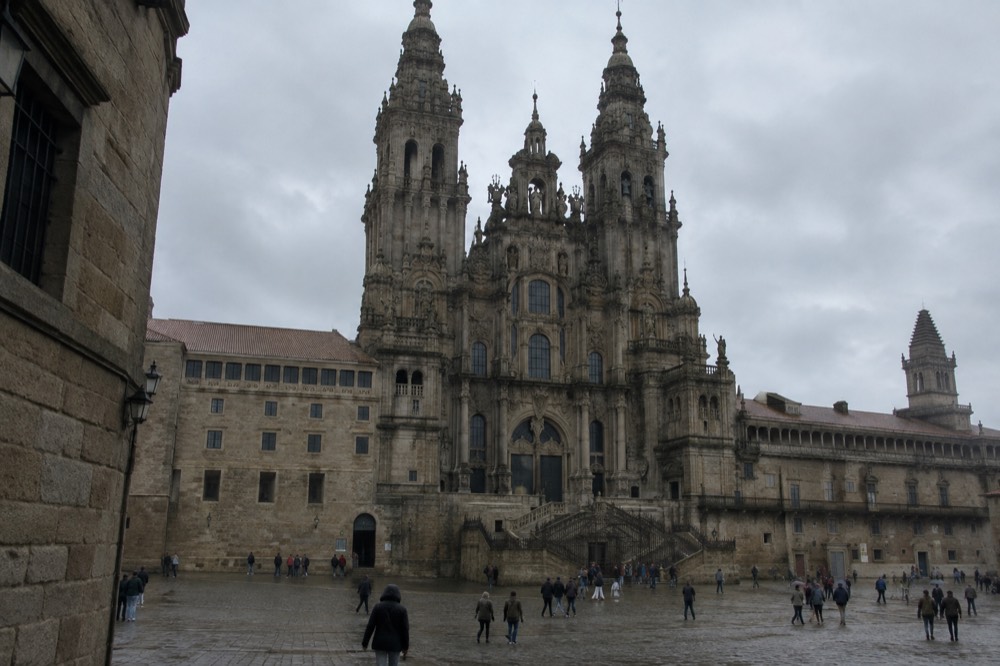
A final word on planning. The Madrid to Santiago de Compostela train turns a journey that once took weeks of walking into an afternoon, but the city rewards the same slow attention the Camino demands: free basilica entry early or late in the day, a booked rooftop slot for the view from about 72m, a guided walk to learn the old town's layers, and a mass schedule that, from 16 October 2026, splits between the Cathedral and the Church of San Agustin. Arrive with the live fare checked, the current mass arrangement noted and the Botafumeiro's suspension understood, and the train delivers you into a city that is easy to read on foot from the moment the doors open at Rúa do Hórreo.