Flights To Santiago de Compostela
Santiago de Compostela has its own airport about 12km from the old town, its own high-speed rail link, and a calendar that shifts with pilgrim seasons and the 2027 Holy Year. This guide sets out what is verified about getting there by air and what to plan for once the wheels are down.
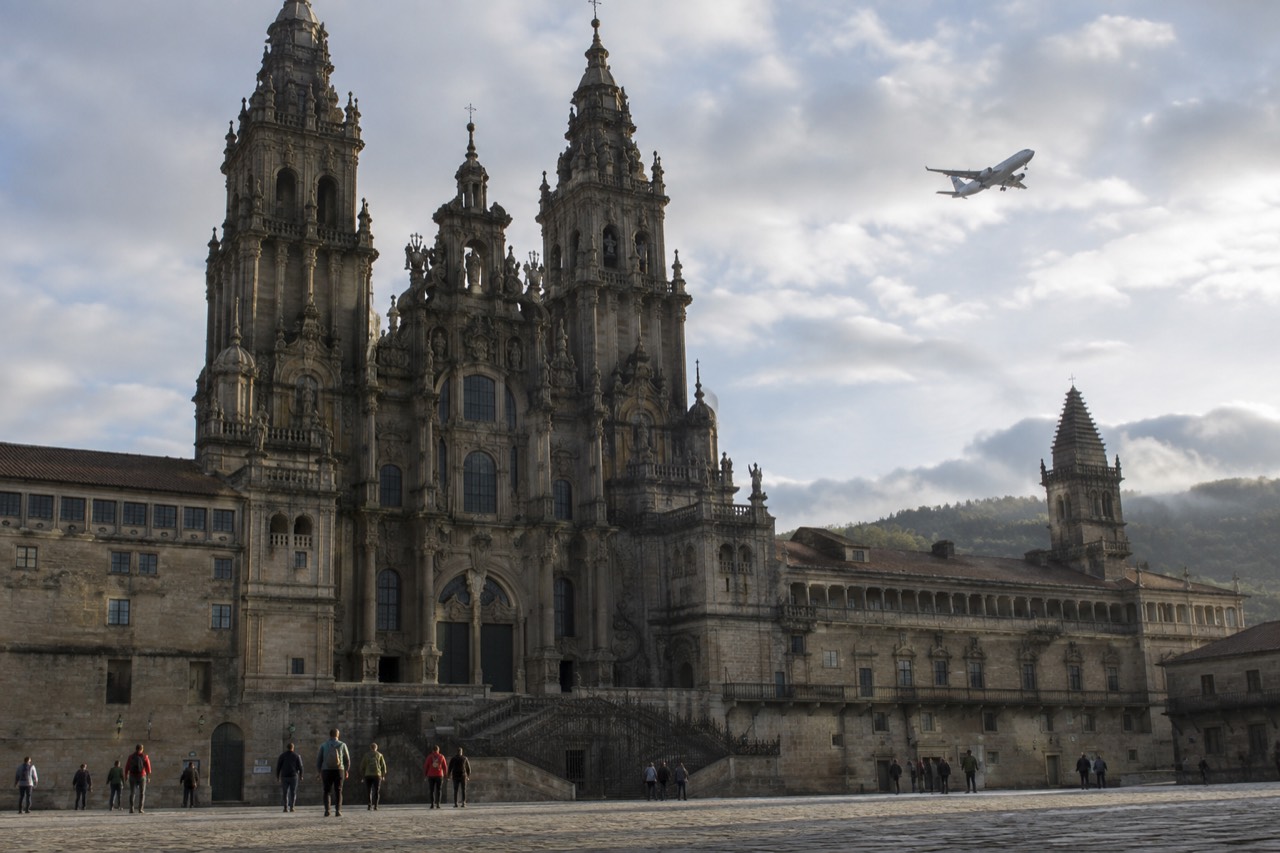
Short answer
Fly into Santiago-Rosalia de Castro airport (SCQ), about 12km from the old town. Tussa line 6A currently runs to the centre for a 1 EUR cash fare, though a new Monbus contract with a fare near 6 EUR is expected in autumn 2026. Direct AVE trains also link Santiago de Compostela with Madrid in roughly 3-4 hours.
Santiago de Compostela, the pilgrim cathedral city in Galicia in northwest Spain, is served by its own airport, Santiago-Rosalia de Castro (SCQ), which sits about 12km from the old town. The airport's own bus line, Tussa's 6A, currently costs 1 EUR paid to the driver, one of the cheapest airport transfers in Spain, though the city's transport page, updated 23 September 2026, warns that a new Monbus contract with a fare near 6 EUR is expected to start in autumn 2026. That mix of a small regional airport, a fast train link from Madrid and a city that changes shape with the pilgrim calendar makes flying here a planning question with several moving parts.
This guide works through the questions in order: which airport you actually land at, how the transfer into the city runs, when to fly, whether a train beats a flight from Madrid or Porto, and what the verified costs are once you arrive. Every figure here comes from the city's own transport page, the Cathedral's own ticketing site and the national weather agency's station data for Santiago de Compostela, and where a number is not verified, this page says so instead of guessing.
Where Is The Airport For Santiago de Compostela And How Far Is The City?
Santiago de Compostela is served by Santiago-Rosalia de Castro airport, airport code SCQ, which sits about 12km from the old town, a 20-30 minute drive depending on traffic and the exact point measured. Sources disagree between roughly 11 and 15km depending on which endpoints are used, so treat about 12km as the working figure. The airport is small, regional, and connected to the city centre by a local urban bus rather than a dedicated airport express.
The distance figure deserves the caveat because published guides measure from different spots: the terminal building, the airport boundary, or the edge of the UNESCO-listed old town. The verified research for this site settles on "about 12km" as the honest answer, with a 20-30 minute drive time. Nothing in the verified pack supports a precise minute count door to door, so this page will not print one.
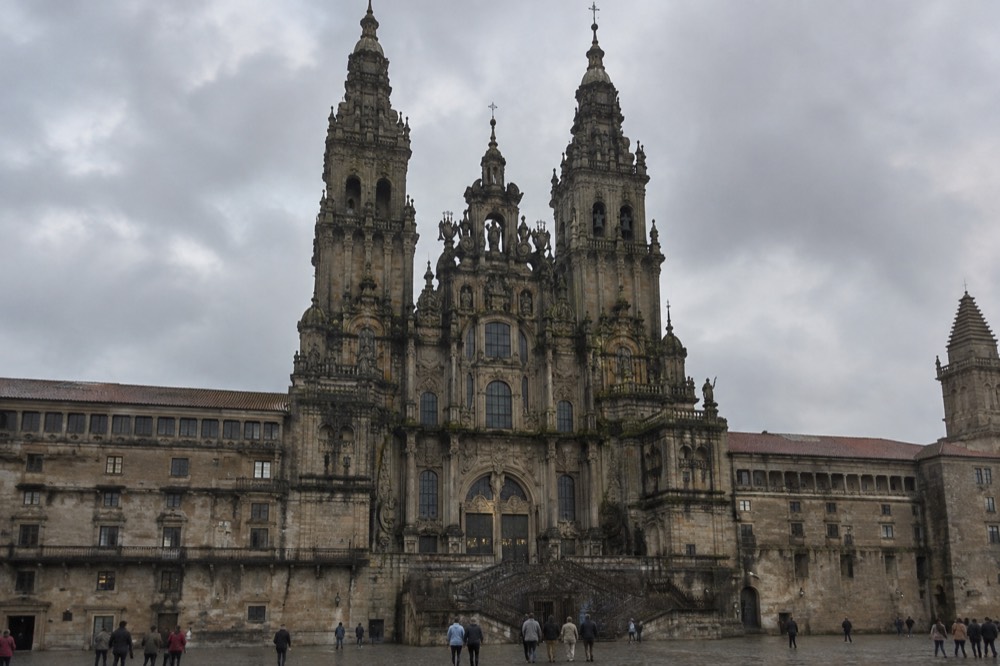
SCQ handles domestic and a modest set of European connections, and its size is part of its charm: arrivals walk out into a small terminal with a bus stop and taxi rank within sight of the doors. Pilgrims finishing a Camino in reverse, heading home rather than arriving, use the same terminal. For the full picture of the airport itself, including its layout and facilities, the dedicated Santiago de Compostela airport guide covers it in detail.
One thing worth knowing before you book: because the airport is the smallest of Galicia's three main gateways, fares and schedules swing with the seasons, and the pilgrim high summer fills planes well beyond what the city's resident population would suggest. The Feast of St. James on 25 July, with its Pontifical Mass, fireworks and concerts, is the annual peak, and flights around that date fill early.
How Do You Get From Santiago de Compostela Airport To The City Centre?
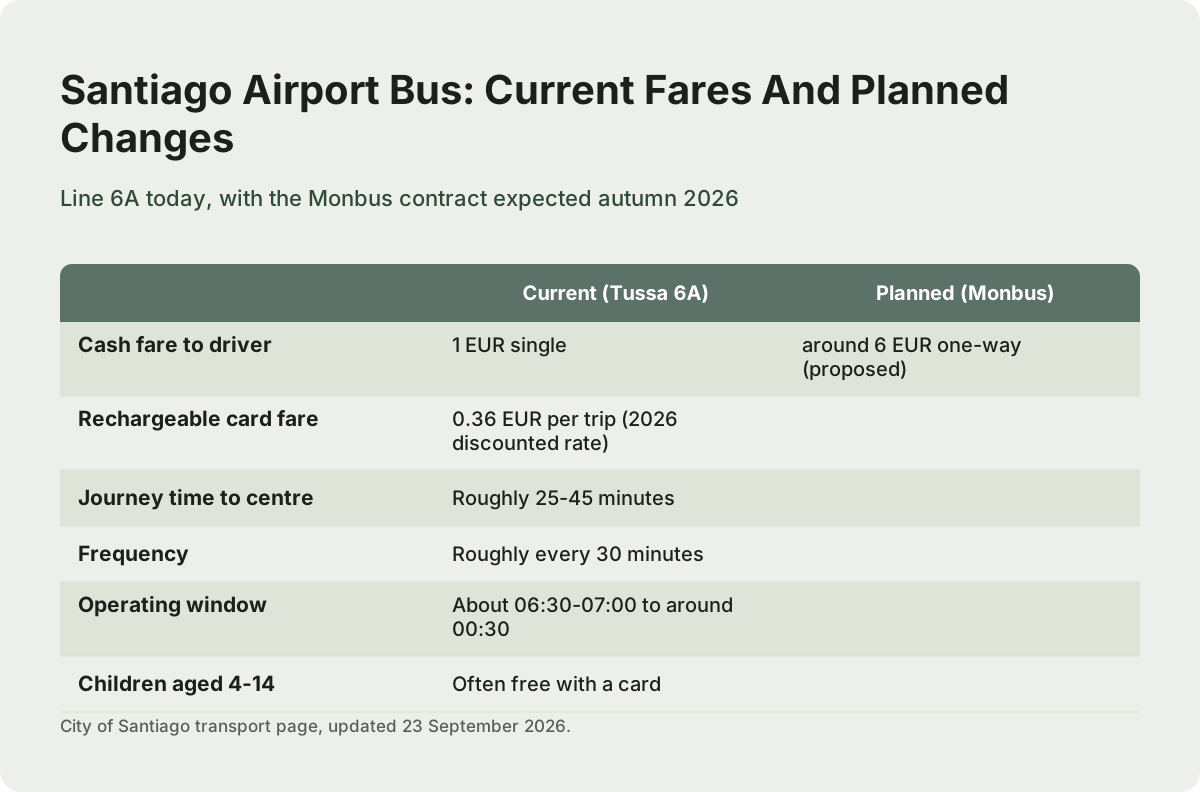
Line 6A, run by the local operator Tussa, connects the airport with Santiago de Compostela city centre and the Estación Intermodal on Rúa do Hórreo for a 1 EUR fare paid to the driver, or 0.36 EUR per trip on a rechargeable card at the 2026 discounted rate. Buses run roughly every 30 minutes from around 06:30-07:00 until about 00:30, and children aged 4-14 often travel free with a card.
That is the service as the city's own transport page describes it, updated 23 September 2026, and it makes the transfer one of the cheapest in Spain. The ride itself takes roughly 25-45 minutes depending on traffic and the number of stops, terminating at the Estación Intermodal on Rúa do Hórreo, which sits a short walk from the old town's edge. But there is a live change on the horizon that any flyer in late 2026 or 2027 should know about, and the page itself flags it.
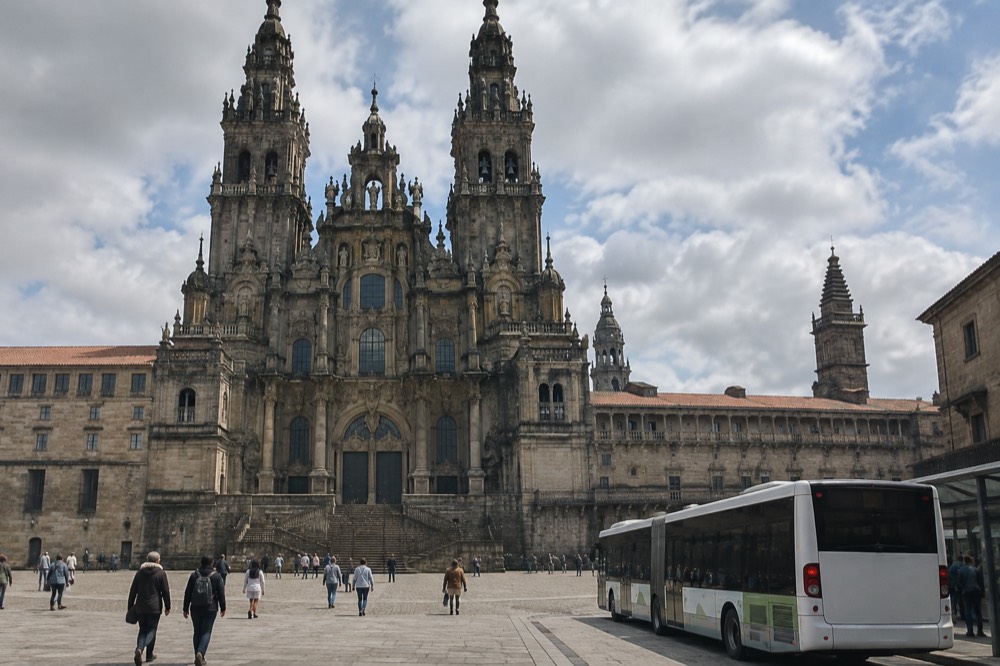
A new bus contract was awarded to Monbus, the "Estela" network operator, in mid-2026, and the reorganized service, including a dedicated airport line, is expected to start in autumn 2026, possibly by December, at a proposed unsubsidized fare of around 6 EUR one-way. The official page still lists Tussa, line 6A and the 1 EUR fare and advises travelers to verify line numbers after December. Until the handover happens, the 1 EUR fare stands, but this page will not promise it as permanent.
| Airport bus fact | Current detail |
|---|---|
| Line | 6A (Tussa, Transporte Urbano de Santiago) |
| Cash fare to driver | 1 EUR single |
| Rechargeable card fare | 0.36 EUR per trip (2026 discounted rate) |
| Frequency | Roughly every 30 minutes |
| Operating window | About 06:30-07:00 to around 00:30 |
| Journey time to centre | Roughly 25-45 minutes |
| Destinations | City centre and Estación Intermodal, Rúa do Hórreo |
| Children 4-14 | Often free with a card |
| Change coming | Monbus contract, fare near 6 EUR, expected autumn 2026 |
Taxis and private transfers exist as alternatives and cost significantly more, though the verified pack does not carry a specific taxi fare figure, so this page prints none. For context on how the city's buses work once you have dropped your bags, the getting around overview is the companion page.
Once you are in the old town, the compactness rewards walking: the whole UNESCO-listed core, inscribed in 1985 as a listing separate from the 1993 Routes of Santiago inscription, is a network of granite streets navigable on foot in under half an hour end to end. Many flyers book a first walking tour for the arrival afternoon, and a guided option with an official guide is a good use of the jet-lagged first hours.
When Is The Best Time Of Year To Fly To Santiago de Compostela?
The driest and warmest window is July and August, which is also peak pilgrim season around the 25 July Feast of St. James; the wet, cool stretch runs October to March, with rain a factor year-round in this temperate oceanic climate. The next Holy Year, Xacobeo 2027, runs from 31 December 2026 through 31 December 2027, when the Holy Door opens, and it will multiply crowds through all of 2027.
AEMET's climate data for station 1475X, Santiago de Compostela at Labacolla, describes a temperate oceanic climate: wet year-round, wetter from October to March, driest in July and August, with annual precipitation on the order of 1,690-1,890mm depending on the station and year measured. A full month-by-month normals table has not been extracted from AEMET's own data in this site's research, so this guide deliberately writes in ranges rather than inventing monthly figures. The weather guide carries the same discipline.
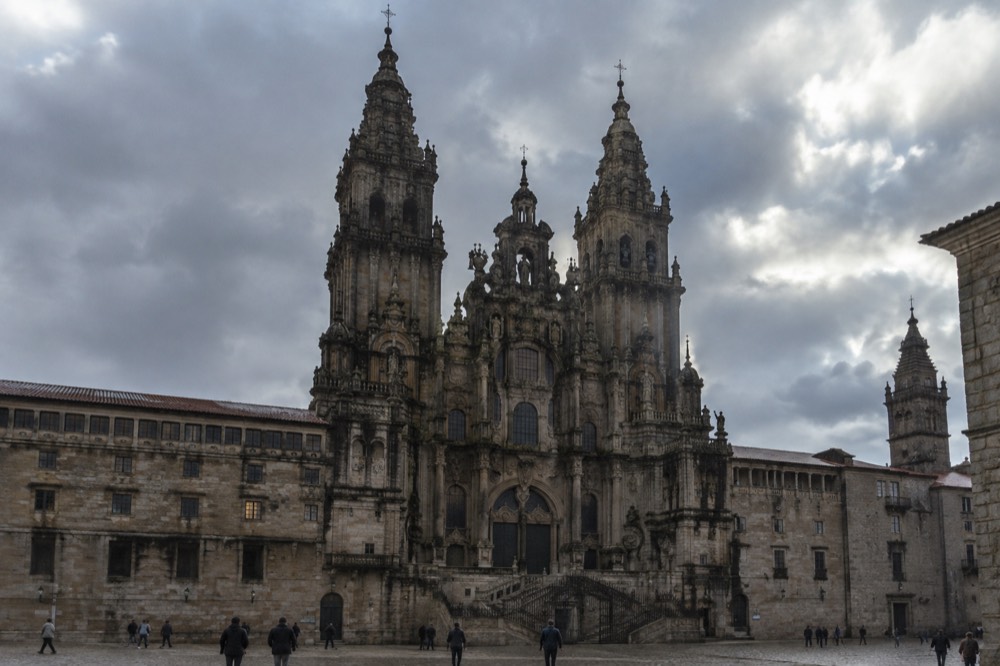
What that means for flights is practical. Summer flights should be booked early because pilgrim demand fills them, especially the week either side of 25 July. Spring and early autumn split the difference: fewer pilgrims than July, less rain than November, though the rain never fully leaves the forecast here. Winter flights are the cheapest and the quietest, and the city's granite arcades exist precisely because locals have walked through Galician rain for centuries.
| Season in Santiago de Compostela | What the verified data says | Flight-planning takeaway |
|---|---|---|
| July-August | Driest months per AEMET; peak pilgrim season; Feast of St. James on 25 July | Book earliest; highest fares and fullest planes |
| Spring (around April-June) | Between the wet and dry seasons; no verified monthly figures published here | Shoulder fares; rain still possible |
| Autumn (around September-October) | Transition toward the October-March wet stretch | Good balance of weather and crowds |
| Winter (November-March) | Wet and cool stretch per AEMET | Cheapest flights; quietest old town |
| 31 Dec 2026 through 2027 | Holy Year: Holy Door opens 31 December 2026, open through 31 December 2027 | Expect elevated demand all year, not just July |
The 2027 Holy Year is the big calendar event. It is declared whenever 25 July falls on a Sunday, which it does in 2027, and the Holy Door opens solemnly on the evening of 31 December 2026, with the ceremony in Praza da Quintana. The Holy Year 2027 guide covers what changes in the city when it runs.
Should You Fly Into Santiago de Compostela Or Arrive By Train?
If you are coming from Madrid, a direct AVE or Avlo high-speed train takes roughly 3-4 hours, and for city-centre-to-city-centre travel it competes directly with flying once airport transfers are counted. Santiago to A Coruna is a short direct hop, Santiago to Vigo takes roughly 1 hour, and there is no direct rail line to Porto in Portugal: travelers change, typically via Vigo on the regional Celta-adjacent services.
The train case is strongest from Madrid. The Madrid to Santiago de Compostela train guide walks through it in full, but the headline is that the 3-4 hour range, verified as a range rather than a timetabled minute count, means a flight plus airport time at both ends is often no faster once you total the journey.
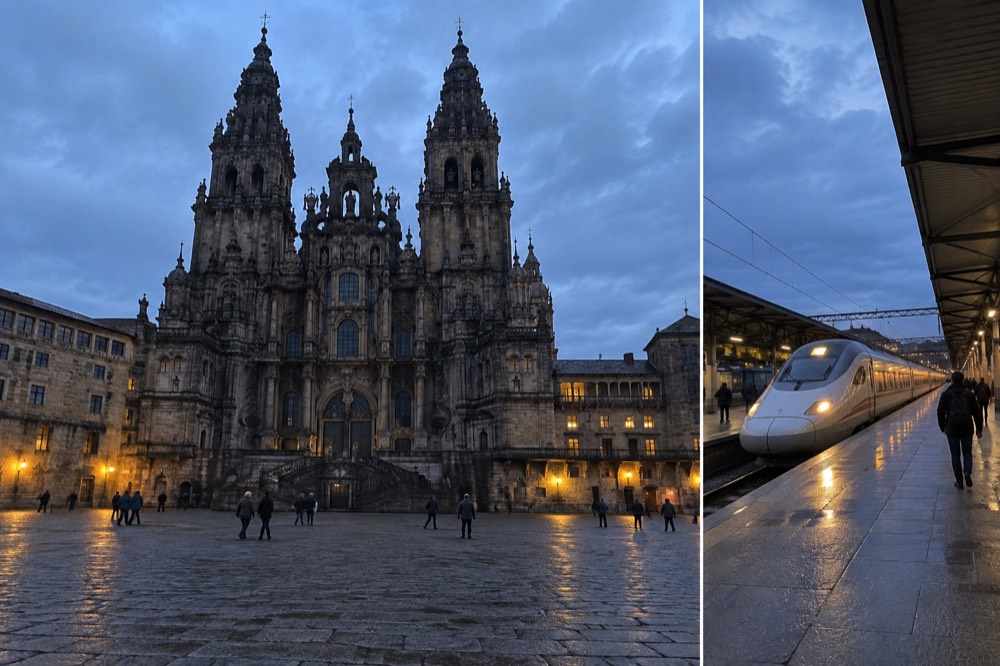
From Porto, the calculus favors neither mode cleanly. There is no direct rail line, so the overland route involves a change via Vigo, and the Porto to Santiago de Compostela guide compares the options in detail. Flyers from Porto land in under an hour in the air but still face the airport-to-centre transfer at the Santiago end.
| Route to Santiago de Compostela | Verified status | Journey time as stated |
|---|---|---|
| Madrid to Santiago | Direct AVE/Avlo high-speed services | Roughly 3-4 hours |
| A Coruna to Santiago | Direct regional and high-speed services | A short hop; no minute count verified |
| Vigo to Santiago | Direct Media Distancia and regional services | Roughly 1 hour |
| Porto to Santiago | No direct rail line; change via Vigo | No single verified figure; two legs |
These are ranges, not timetabled minutes, and the details below are confirmed to avoid exact minute counts because they shift with each timetable revision. Check the live timetable for your date rather than relying on any guide's static figure, including this one.
For pilgrims, the train-versus-flight question usually resolves differently: the Camino itself is the point, and many walkers fly into Madrid or Porto, train or walk to a Camino starting point such as Sarria, and save the flight into SCQ for the journey home. The Camino de Santiago routes overview maps the main starting points.
What Should You Know About The Cathedral After Landing In Santiago de Compostela?
The Cathedral's interior, including the naves, high altar and crypt, opens daily roughly 7:00am to 9:00pm with general entry free, though it closes around 8:30pm on summer Saturdays for the pilgrim vigil. The Cathedral Museum runs about 10:00am to 8:00pm with tickets from EUR 9-23 depending on type, and the official rooftop tour costs EUR 15 general or EUR 12 reduced, including about 140 steps up to roughly 72m of height.
Those are the Cathedral's own figures from its ticketing operation, and they are the anchor costs of any first-day plan. The basilica itself is free and needs no ticket, which surprises flyers who budget for a Westminster-style entry fee and find the door open. The wider set of guides lives on Santiago de Compostela Travel Guide.
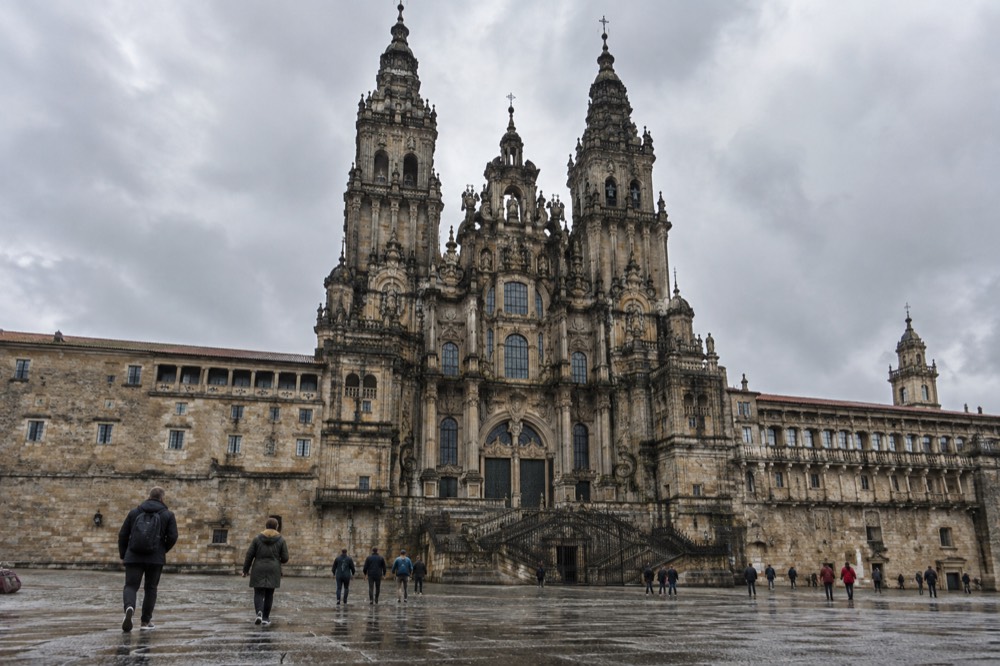
Two live changes matter if your flight lands after mid-October 2026. First, pilgrim masses: until 15 October 2026 they are held at the High Altar at 7:30am, 9:30am, noon and 7:30pm; from 16 October 2026 the 9:30am, noon and 7:30pm masses move to the nearby Church of San Agustín, and only the 7:30am mass remains in the Cathedral's Communion chapel. The pilgrim mass guide carries both arrangements in full.
| Cathedral visit | Verified detail |
|---|---|
| Basilica interior (naves, altar, crypt) | Free general entry, daily roughly 7:00am-9:00pm |
| Summer Saturday closing | Around 8:30pm for the pilgrim vigil |
| Cathedral Museum hours | About 10:00am-8:00pm, ticket office closes 30 minutes earlier |
| Museum ticket range | EUR 9-23 depending on ticket type |
| Rooftop tour (Cubiertas + Torre de la Carraca) | EUR 15 general, EUR 12 reduced, guided, about 60 minutes |
| Rooftop tour specifics | About 140 steps, roughly 72m height, bookable online with timed slots |
| Rooftop reduced rates | Pilgrims, students, over-65s, under-12s and others with proof |
| Pilgrim masses to 15 Oct 2026 | 7:30am, 9:30am, noon, 7:30pm at the High Altar |
| From 16 Oct 2026 | 9:30am, noon, 7:30pm move to San Agustín; 7:30am stays in the Cathedral |
Second, the Botafumeiro. It is currently out of action: scaffolding for the cimborrio, the dome over the crossing, covers its hanging mechanism, the Cathedral confirmed this in writing on 5 September 2026, and no return date has been published. Normally it swings on 12 solemnities a year, and the 2026 schedule below shows what that normally looks like, but no visitor should book a flight expecting to see it swing until the Cathedral says otherwise. The Botafumeiro guide tracks its status.
| 2026 solemnity | Date the Botafumeiro was scheduled to fly |
|---|---|
| Epiphany | 6 January |
| Easter Sunday | 5 April |
| Ascension of the Lord | Around 14 May (transfer varies) |
| Apparition of the Apostle in Clavijo | 23 May (or transferred) |
| Pentecost | 24 May |
| Feast of St. James the Apostle | 25 July |
| Assumption of the Virgin | 15 August |
| All Saints | 1 November |
| Christ the King | 22 November |
| Immaculate Conception | 8 December |
| Christmas | 25 December |
| Transfer of the Apostle | 30 December |
Private requests, which normally run around EUR 450-500 by email to the Cathedral, are also unavailable while the mechanism is covered. A rooftop tour remains bookable, and the views from about 72m over the old town are unaffected by the scaffolding.
A guided first visit solves the sequencing problem that catches many flyers: the museum, the Portico, the rooftops and the tomb sit across multiple doors and ticket types, and a guide with timed entry handles the order. Check availability on the operator's live listing if you want that handled for you.
How Does The 2027 Holy Year Affect Flights To Santiago de Compostela?
The 2027 Holy Year does not change the airport, the bus fare or the Cathedral's opening hours, but it will change demand: the Holy Door opens on the evening of 31 December 2026 in Praza da Quintana and stays open through 31 December 2027, and pilgrim volumes, already at a record 530,987 Compostelas issued in 2025, will rise through the whole year rather than peaking only in July.
The record figure comes from the Oficina del Peregrino's own counts as reported in the Spanish press, and it is the most recent verified annual number. A Holy Year redistributes that flow: the July peak sharpens, but January, Lent and every shoulder month in 2027 also fill with pilgrims who want the Holy Door while it is open. Flyers will feel it in fares and in how early the good central hotels sell out, which the where to stay guide covers room-type by room-type.
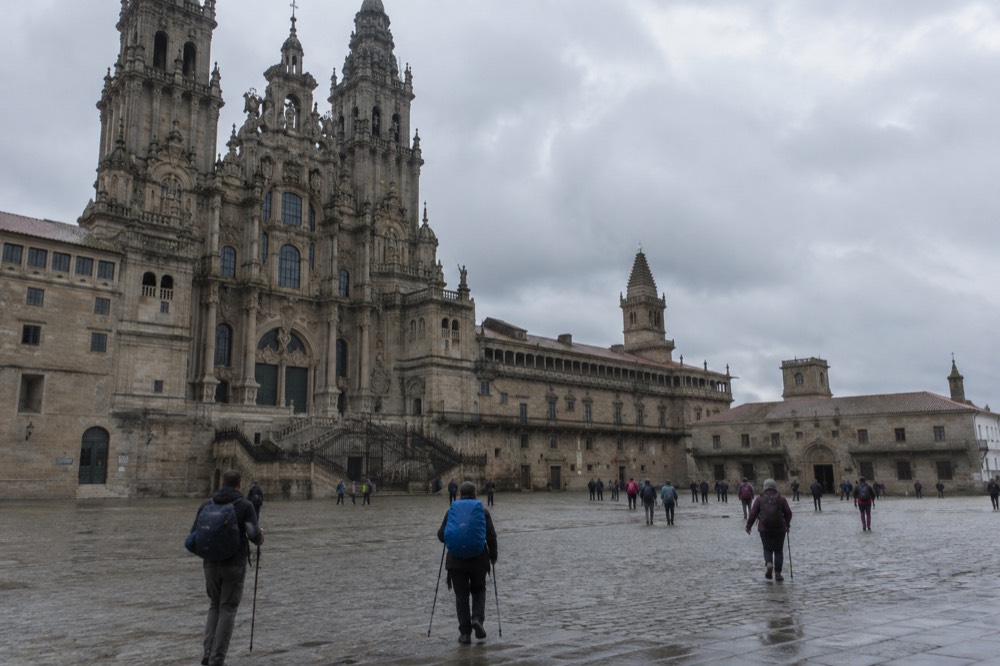
The structural fact worth folding into any 2027 flight search is the Holy Year cycle itself: a Xacobeo is declared whenever 25 July falls on a Sunday, and after 2027 the next ones listed are 2032, 2038 and 2049. Anyone planning a once-in-a-decade trip around the Holy Door should treat 2027 as the near-term window, with the feast of St. James guide explaining what the 25 July celebrations add on top.
For pilgrims flying in to walk, the Compostela rules stay the same in a Holy Year: the last 100km walked or on horseback, or the last 200km cycled, with at least two stamps per day in the credencial, collected in person at the Pilgrim's Office at Rua das Carretas 33. The pilgrim passport guide covers the credencial itself, and the arriving in Santiago on the Camino guide covers the first hours in the city.
Which Day Trips From Santiago de Compostela Are Easy To Add To A Flight-Based Trip?
The verified day trips from Santiago de Compostela are the Finisterre, Muxia and Costa da Morte circuit along the Atlantic coast; the Rias Baixas wine region with its wineries and mussel-boat trips; the Ribeira Sacra canyons with a Sil river cruise; and the Roman-wall city of Lugo with the Catedrais beach. All are sold as guided full-day tours from the city, with prices starting from roughly $45 to $75 per person depending on the route.
Those starting prices come from this site's own verified tour roster, and they are the simple way to fold Galicia's coast and wine country into a short city break built around a flight. The mathematics favor it: SCQ's regional connections mean many international travelers change planes anyway, so adding two nights of coastline costs little more flight time than the city alone.
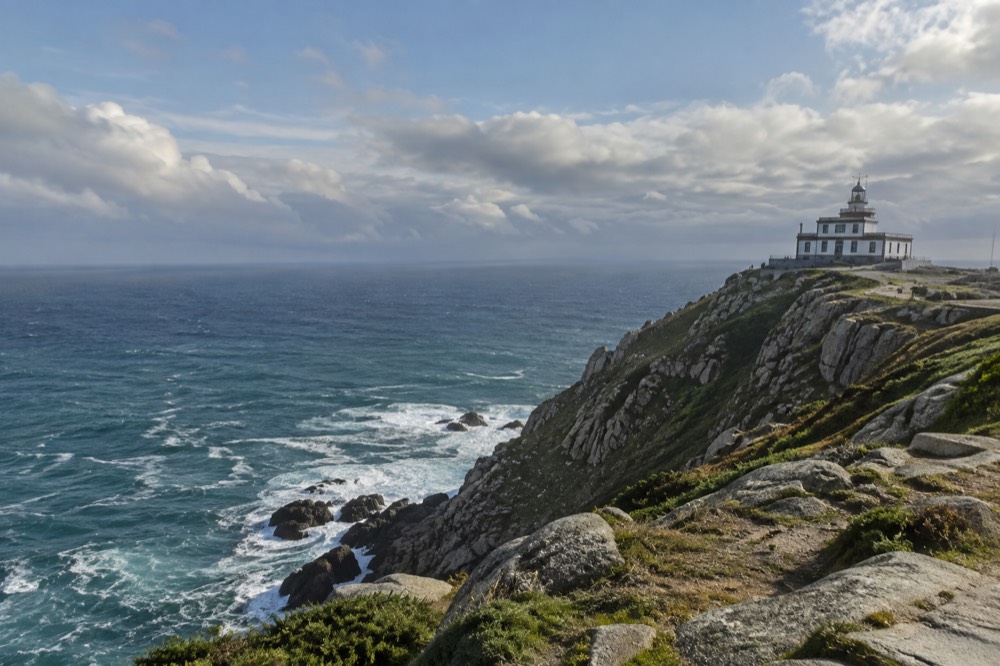
The Rias Baixas option pairs a winery visit with an optional mussel-boat trip through the estuaries, and the verified roster lists versions from $53-54 per person rated around 4.7-4.8 from several hundred reviews, with an Arousa Island and Combarro variant from $45. The Finisterre circuit, the symbolic end-of-world cape where some pilgrims continue walking after Santiago, runs full-day versions from $59-60 rated 4.7-4.8 across well over a thousand reviews each. The Finisterre guide and the Rias Baixas wine and Cambados guide cover both regions on the ground.
The Cíes Islands, the Atlantic islands off Vigo, are also sold as a full-day visit from the roster at from $101 per person with no rating published, a nature option rather than a cultural one. The Cíes Islands guide explains the access constraints that make a guided visit simpler than an independent one.
What Does A Santiago de Compostela Trip Cost After The Flight?
The verified per-person city costs are: the airport bus at 1 EUR cash or 0.36 EUR by card, due to rise to near 6 EUR under the new Monbus contract; Cathedral entry free; the museum at EUR 9-23; the rooftop tour at EUR 15 or EUR 12 reduced; a guided historic town walk from about $14; and a tapas tour from about $52. A municipal tourist tax has applied since 1 October 2025, charged per person per night for up to 5 nights, from 1 EUR in private albergues, campsites and tourist apartments to 2.50 EUR in five-star hotels, with under-18s and stays in Xunta-run public albergues exempt.
The tourist-tax point matters because several Spanish regions introduced or changed such levies in 2025 and 2026, and no such levy has been found to apply to Galician accommodation as of the research date. Treat that as "none currently" rather than "none ever," and check before booking.
| Cost item | Verified figure | Notes |
|---|---|---|
| Airport bus 6A, cash | 1 EUR single | Fare change near 6 EUR expected autumn 2026 |
| Airport bus 6A, card | 0.36 EUR per trip | 2026 discounted rate |
| Cathedral basilica entry | Free | Daily roughly 7:00am-9:00pm |
| Cathedral Museum | EUR 9-23 | Depending on ticket type |
| Rooftop tour | EUR 15 / EUR 12 reduced | Timed slots, about 60 minutes |
| Historic town walk (guided) | From $14 | Operator listing price |
| Tapas tour | From $52 | Operator listing price |
| Queimada show and tasting | From $17 | Operator listing price |
| Tourist tax | Santiago de Compostela has charged a municipal tourist tax since 1 October 2025: per person per night (max 5 nights), from 1 EUR in private albergues, campsites and tourist apartments up to 2.50 EUR in five-star hotels; under-18s and Xunta-run public albergue stays exempt | Re-check current rates before booking |
Food spending has its own page: the where to eat guide covers the Rua do Franco strip and the market-adjacent eating, and the Galician food guide covers pulpo a la gallega, Padron peppers and the rest of the regional plate. A tapas tour with drinks and live music, from $51 on the current roster, is the fastest way for a short-stay flyer to sample across several bars in one evening.
The honest summary for a flyer is that the city is cheap to enter and cheap to move around, and the meaningful costs sit in the museum-tier tickets, the guided tours and the food. A two-night break built on a cheap flight, the 1 EUR bus while it lasts, free Cathedral entry and one rooftop ticket lands the essentials at a very modest total, with everything beyond that a choice rather than a toll.
Common Questions About Flights To Santiago de Compostela
Which airport do you fly into for Santiago de Compostela?
Santiago-Rosalia de Castro, airport code SCQ, about 12km from the old town. It is a small regional airport with domestic and a modest set of European connections, and its transfer to the centre is the local urban bus line 6A.
How much is the bus from Santiago de Compostela airport to the city centre?
Currently 1 EUR paid to the driver, or 0.36 EUR per trip on a rechargeable card at the 2026 discounted rate. The city's transport page, updated 23 September 2026, notes that a new Monbus contract with a fare near 6 EUR is expected to start in autumn 2026, possibly by December, so treat the 1 EUR fare as subject to change.
Is it better to fly or take the train from Madrid to Santiago de Compostela?
The direct AVE and Avlo high-speed trains take roughly 3-4 hours city centre to city centre, which competes with flying once airport transfers at both ends are counted. Neither mode has a verified door-to-door minute count, so compare the total journey, not just the flight or rail leg, for your specific dates.
Can you fly from Porto to Santiago de Compostela?
Overland there is no direct rail line from Porto: travelers change, typically via Vigo. A flight is short in the air but still involves the airport transfer at the Santiago end, so the comparison depends on where in Porto you start and how much you value the centre-to-centre train-and-bus route.
What is the cheapest time of year to fly to Santiago de Compostela?
Winter, from November to March, sits in AEMET's wet and cool stretch and carries the lowest demand outside events. The trade-off is rain: the climate is wet year-round, wetter October to March, driest July and August, which is also the most expensive and most crowded window.
Will 2027 be busier for flights to Santiago de Compostela?
Yes. 2027 is the next Holy Year, or Xacobeo: the Holy Door opens on the evening of 31 December 2026 in Praza da Quintana and stays open through 31 December 2027, lifting pilgrim volumes across the whole year, not just around the 25 July feast, on top of a record 530,987 Compostelas already issued in 2025.
The flight itself is the smallest part of a Santiago de Compostela trip. What the airport actually buys you is a city where the basilica is free, the bus in costs 1 EUR while the current contract lasts, the rooftops and the coast sit within a day's reach, and the calendar, from the 2027 Holy Door to the mass relocation on 16 October 2026, does more to shape your visit than any fare difference ever will.