Santiago de Compostela Weather
Santiago de Compostela sits in one of the wettest corners of Spain, and that shapes everything from Camino packing lists to rooftop tour booking. Here is what AEMET's climate data and the city's own sources say about the weather, season by season.
Short answer
Santiago de Compostela has a temperate oceanic climate: mild temperatures and rain somewhere in every month, wet and cool from October to March, and driest in July and August. Annual precipitation runs on the order of 1,690-1,890mm. Pack a rain layer year-round.
Santiago de Compostela, the pilgrim cathedral city in Galicia in Spain's green northwest, has a climate that surprises visitors who expect Spanish heat. AEMET, the Spanish national weather agency, classifies the city as temperate oceanic at its Santiago de Compostela/Labacolla station: mild, wet, and green year-round, with annual precipitation on the order of 1,690-1,890mm depending on the station and year measured. That is more rain than falls on most of Spain, and it is the reason the landscape around the city looks closer to Ireland than to the Mediterranean coast.
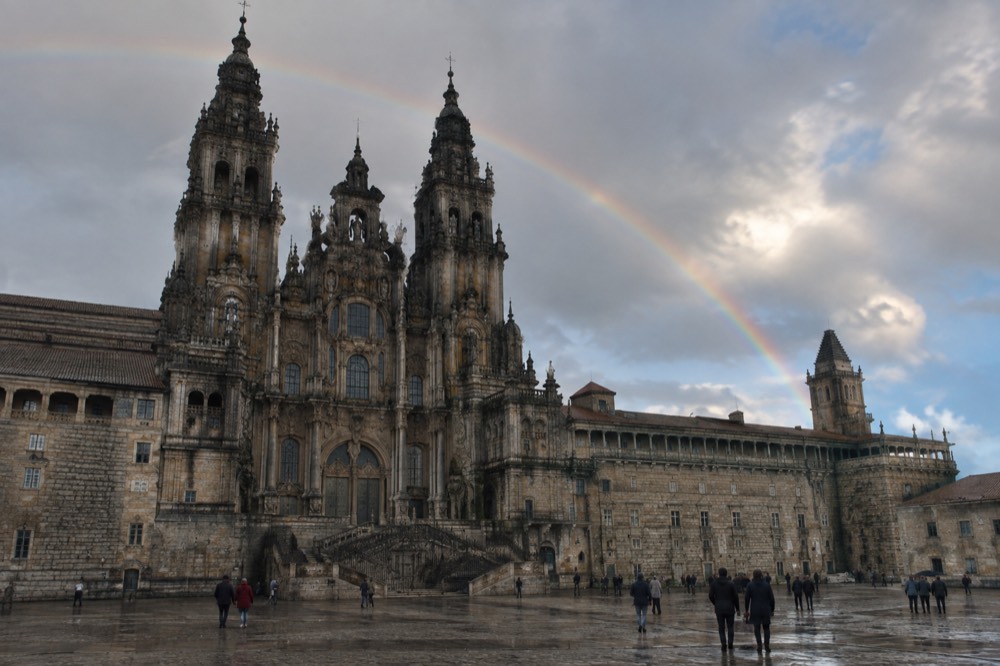
For Camino pilgrims finishing their walk into Praza do Obradoiro, and for city-break visitors alike, the weather question matters more than the average guide admits. Rain shapes what you pack, which day trips are worth booking, and whether the Cathedral's rooftop tour slots are pleasant or punishing. This guide lays out what is verified about the city's climate, what the seasons actually feel like, and what to do with a wet afternoon, without inventing monthly figures AEMET's own portal has not yet supplied.
What Is The Weather Like In Santiago de Compostela?
Santiago de Compostela has a temperate oceanic climate: mild temperatures in every season, rain arriving somewhere in every month, and a clear split between a wet, cool stretch from October to March and a much drier, warmer spell centered on July and August. Annual precipitation runs on the order of 1,690-1,890mm according to AEMET data for the city's Labacolla station, which is why Galicia is green while most of Spain is not.
The Atlantic is the controlling influence. Weather systems roll in off the ocean, drop their moisture on the hills of Galicia, and move on, so the city rarely sits under the stagnant summer heat that builds over the Spanish interior. Winters are cool rather than cold, summers are warm rather than hot, and the practical difference between seasons is mostly about rainfall, not extremes of temperature.
Two consequences matter for planning. First, this is not a city you visit for a beach weather guarantee, even in August; the driest months are simply the months where you are least likely to need the rain jacket. Second, the green scenery that makes the Camino de Santiago approach into the city so memorable is a direct product of that rainfall. You cannot have one without the other.
When Does It Rain Most In Santiago de Compostela?
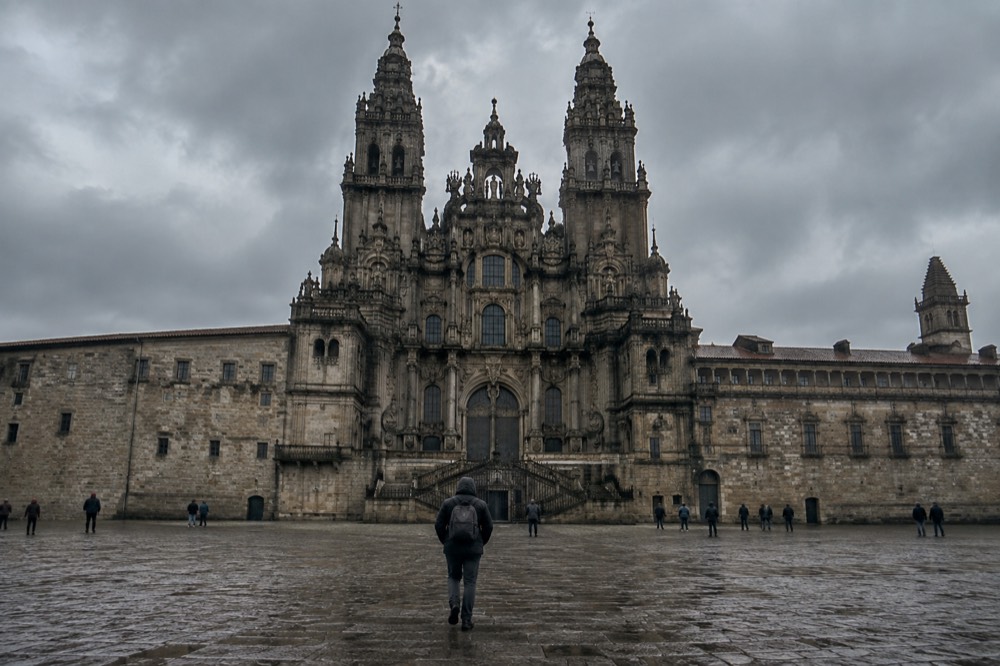
Rainfall in Santiago de Compostela is heaviest and most frequent from October through March, when Atlantic fronts arrive in long wet sequences, and lightest in July and August, the two driest months of the year. AEMET's climate data shows annual precipitation on the order of 1,690-1,890mm at the city's station, one of the highest totals of any major Spanish city. Spring sits between the two, with showery, changeable conditions.
The practical pattern: an October-to-March umbrella is not optional, while a July or August visit can often get away with a light packable shell. The in-between months, April through June and September, are the gamble months, capable of delivering either brilliant clear weeks or full Atlantic soakings, sometimes in the same day.
| Season | Months | Rainfall Character | Planning Implication |
|---|---|---|---|
| Wet season | October to March | Frequent frontal rain, long grey stretches, part of the 1,690-1,890mm annual total | Rain jacket and waterproof shoes essential; museum days planned as fallbacks |
| Shoulder | April to June | Changeable, showers alternating with clear spells | Packable rain layer; flexible itinerary |
| Dry season | July and August | Driest months of the year, occasional showers still possible | Lightest rain risk; book tours and rooms early, this is peak season |
| Shoulder | September | Cooling and gradually wetter after summer | Good balance of crowds and weather; rain possible |
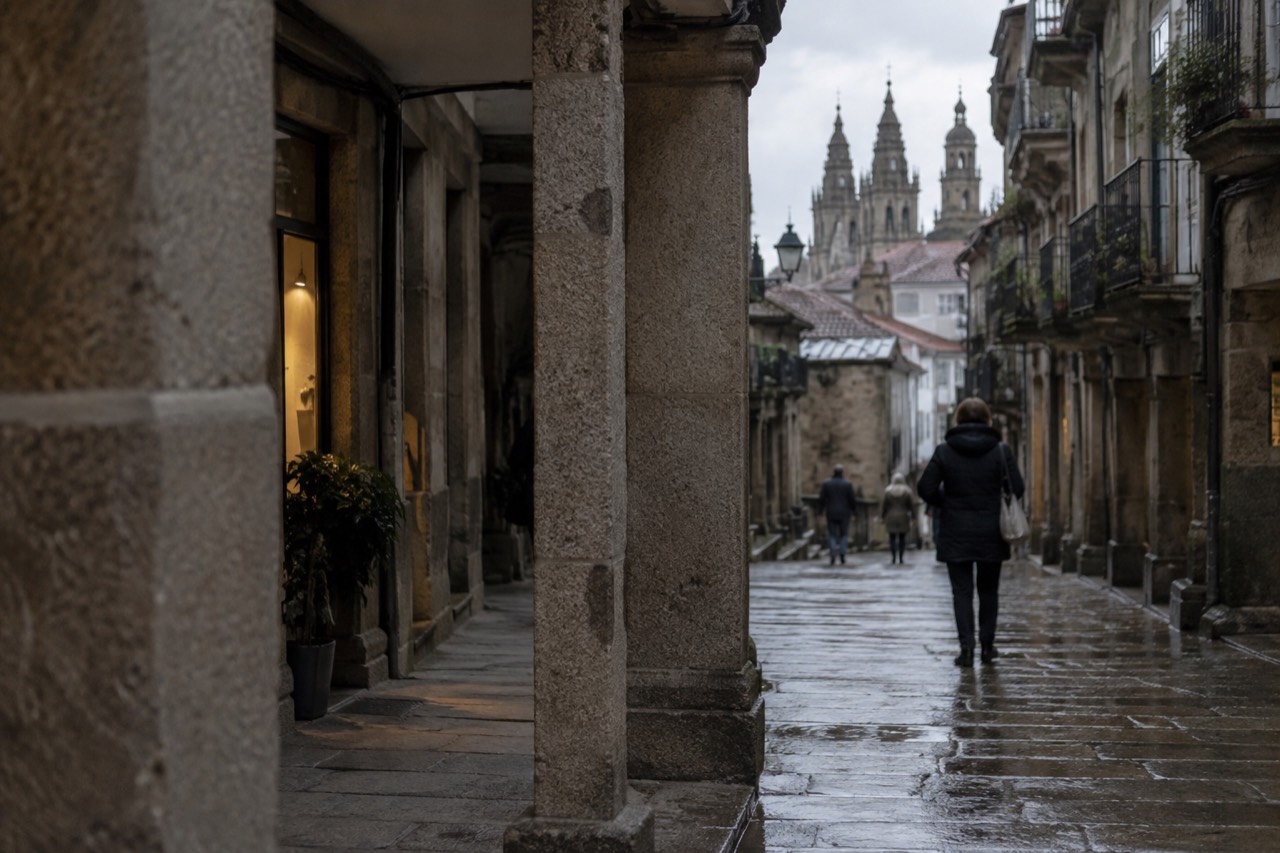
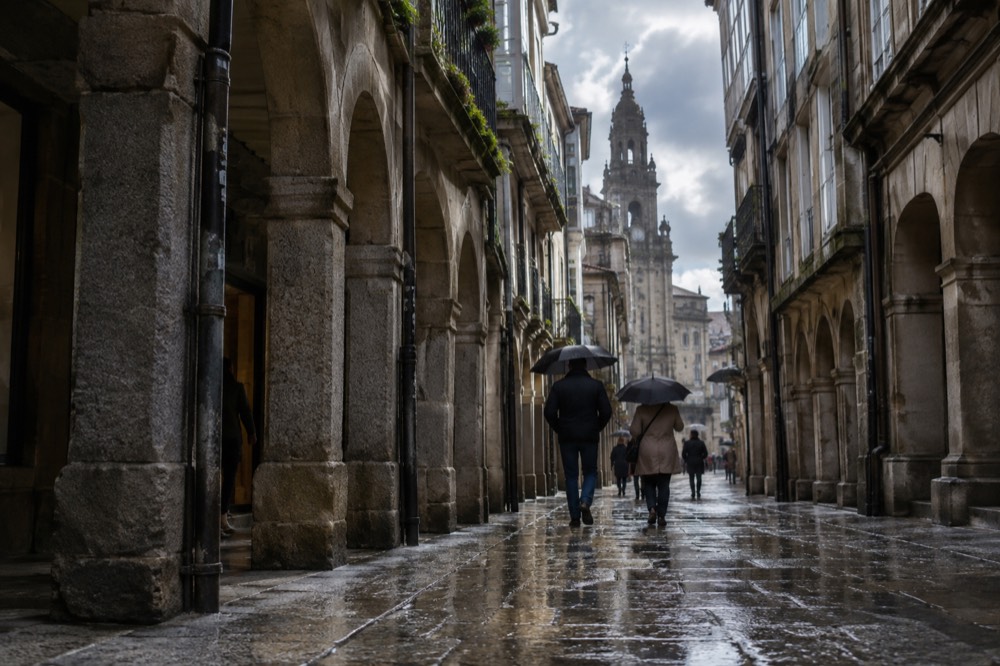
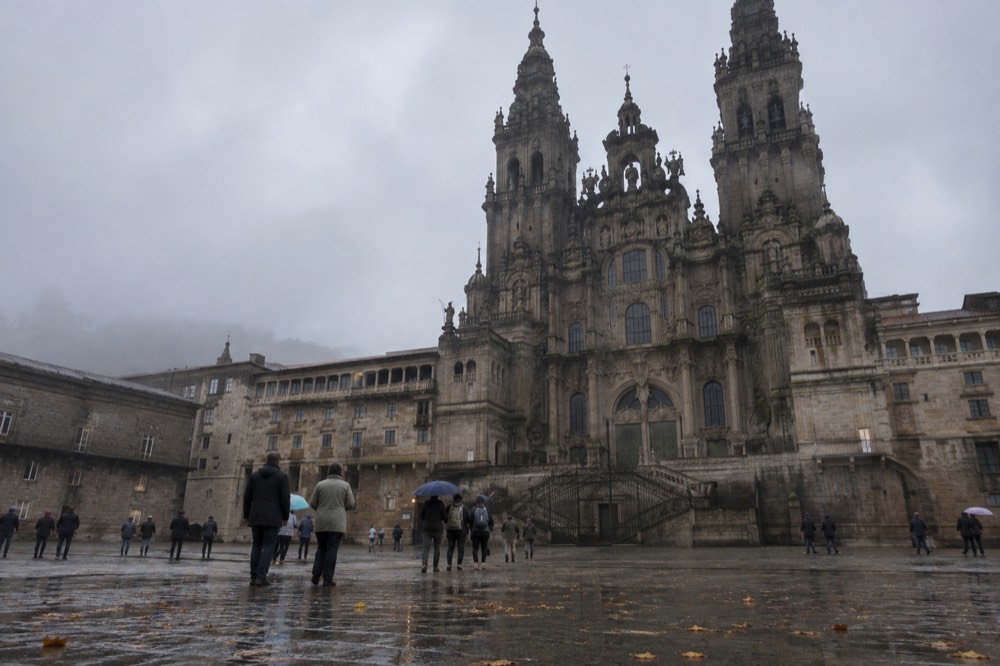
That annual precipitation figure deserves a pause. On the order of 1,690-1,890mm a year is roughly three to four times what falls on Madrid, and it falls steadily across the wet season rather than in dramatic single storms. Locals do not wait for the rain to stop; they walk through it. Visitors who adopt the same habit, with the right gear, find the city arguably at its best under moody skies, when the granite of the old town goes dark and glossy.
For travelers whose whole trip is a walking route, the seasonal rainfall split drives the timing decision more than anything else. The most popular starting point for a final-week Camino stage is covered in the Sarria to Santiago guide, and the season you choose there determines what those five or six walking days will feel like.
What Should You Pack For Santiago de Compostela Weather?
Pack a genuine waterproof rain jacket rather than a water-resistant one, waterproof or fast-drying shoes with grip for wet granite, a warm mid-layer for cool evenings even in summer, and a compact umbrella for city use. The rain is frontal and persistent from October to March, so packing around it matters more than packing around temperature, and a hood beats a handheld umbrella when the wind picks up.
The single most common mistake is treating Santiago like the rest of Spain. Arriving with sandals and a single cotton layer in October is how a wet, chilly week happens. The granite streets of the old town become slick in rain, so footwear with tread matters as much as waterproofing.
| Item | Why It Earns Pack Space | Season It Matters Most |
|---|---|---|
| Waterproof rain jacket with hood | Frontal rain from October to March is steady, not brief | Wet season, but packable year-round |
| Waterproof shoes with grip | Wet granite paving in the old town is slippery | Year-round |
| Warm mid-layer | Oceanic climate keeps evenings cool even after warm days | All seasons |
| Compact umbrella | Useful for city wandering when hands are free | Wet season |
| Quick-dry trousers | Damp legs dry between museum and dinner | All seasons |
| Daypack rain cover | Protects the credencial, camera and guidebooks | Wet season |
Pilgrims walking in need more than this, and the full breakdown lives in the Camino packing list guide, which treats rain gear as the non-negotiable core of the loadout rather than an optional extra. One wet Camino week without a real rain layer is enough to teach anyone that lesson permanently.
What Does Each Season Actually Feel Like In Santiago de Compostela?
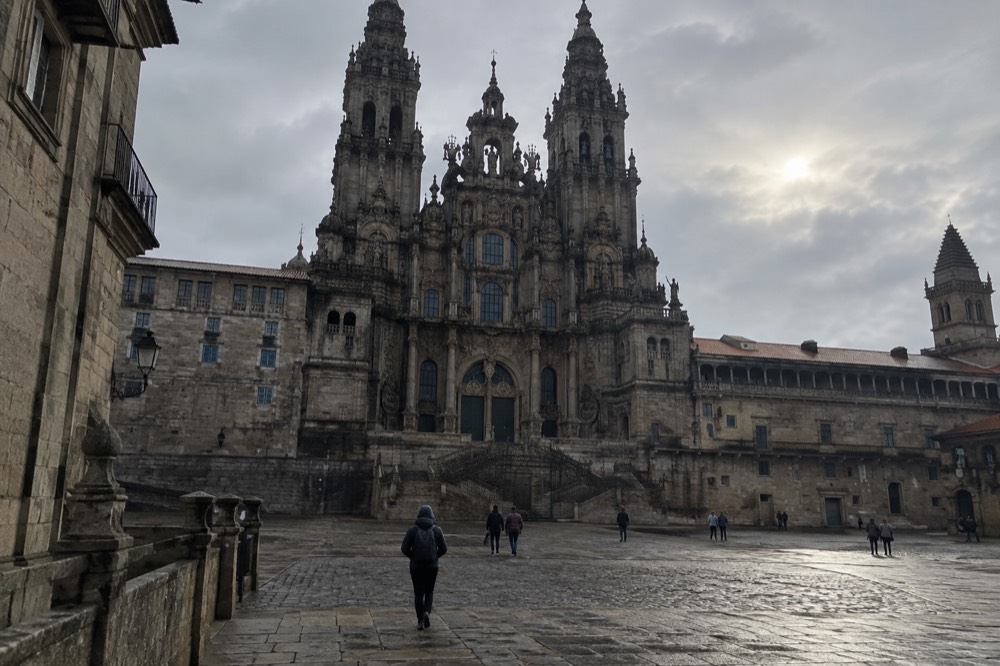
Winter, December through February, is cool and the wettest stretch of the year, with short days and rain arriving in multi-day sequences. Spring, March through May, turns showery and gradually brighter as flowers open across the parks. Summer, June through August, is the driest and busiest period, warm by day and cool at night. Autumn, September through November, starts dry and cools into steady rain as the Atlantic fronts return, with October the month where the season visibly turns.
Winter has real compensations. The city is quiet, hotel rates drop, and the Cathedral interior, open daily roughly 7:00am to 9:00pm per the city's own tourism page, is warm, vast, and free to enter. A grey afternoon inside the naves of the Cathedral of Santiago de Compostela is not a consolation prize; for many visitors it is the highlight.
Spring is the photographer's season. The parks, including the Alameda with its view down onto the Cathedral towers, are at their greenest, and the showers that pass through tend to leave clear, dramatic light behind them. It is also the season of April's variable weather, where a morning that looks like winter becomes an afternoon that feels like early summer. Other pages covering the same trip are gathered on Santiago de Compostela Travel Guide.
Summer is when the city fills. The Feast of St. James on 25 July anchors the peak, and the best time to visit Santiago de Compostela question is mostly a weather-plus-crowds calculation, with July and August trading the lowest rain risk for the highest visitor numbers. Nights stay cool thanks to the oceanic regime, so a summer visit still wants that mid-layer for late evenings outdoors.
Autumn is the connoisseur's choice. September often behaves like summer with fewer people, and by October the returning rain brings the mood locals actually prefer: chestnut season, mist on the hills, and the old town at its most atmospheric.
How Does The Weather Affect The Camino de Santiago?
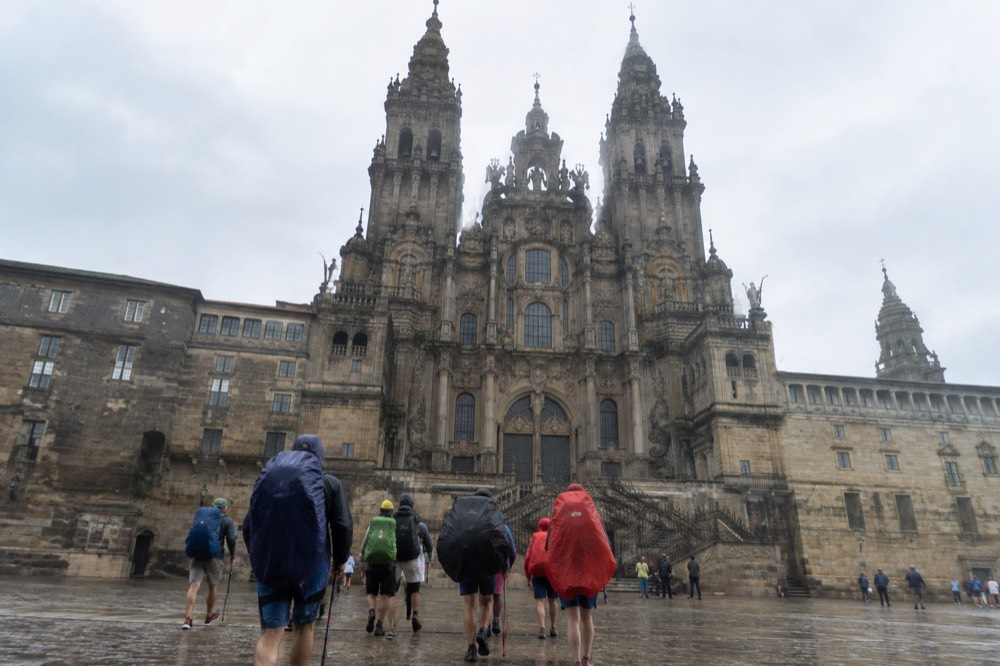
Weather on the Camino into Santiago de Compostela matters most in the wet season, when October-to-March rain makes trail surfaces muddy, raises the value of waterproof gear, and makes daily distances feel longer. In July and August the concern flips from rain to heat and crowds on the popular final stages. The Compostela certificate itself requires the last 100km walked or the last 200km cycled with at least two stamps per day, and no weather exempts anyone from that rule.
The final approach into the city, covered in the arriving in Santiago on the Camino guide, is where the weather is felt most keenly, because it is the moment weeks of walking end at the Cathedral. Pilgrims walking the classic route can follow the breakdown in the Camino Frances guide, while those weighing options across the north of Spain should compare the Camino routes before committing, since coastal and inland routes sit under slightly different rainfall regimes.
| Camino Planning Factor | Wet Season (Oct-Mar) | Dry Season (Jul-Aug) |
|---|---|---|
| Trail surface | Muddy, slick descents near the city | Dry, dusty in open stretches |
| Gear priority | Waterproofs, grip, spare dry socks | Sun protection, ventilation |
| Crowds on trail | Low | Highest of the year |
| Accommodation pressure | Low, walk-in availability common | High, book stages ahead |
| The 100km/200km rule | Applies, two stamps per day minimum | Applies, two stamps per day minimum |
Pilgrims collecting their certificate at the end should check the pilgrim office guide for location and seasonal hours, because the office at Rua das Carretas 33 is the only place the Compostela is issued, in person, whatever the weather did to the walk. A record 530,987 Compostelas were issued in 2025, a figure reported from the office's own numbers, and every one of those pilgrims finished through some version of Galician weather.
What To Do In Santiago de Compostela When It Rains?
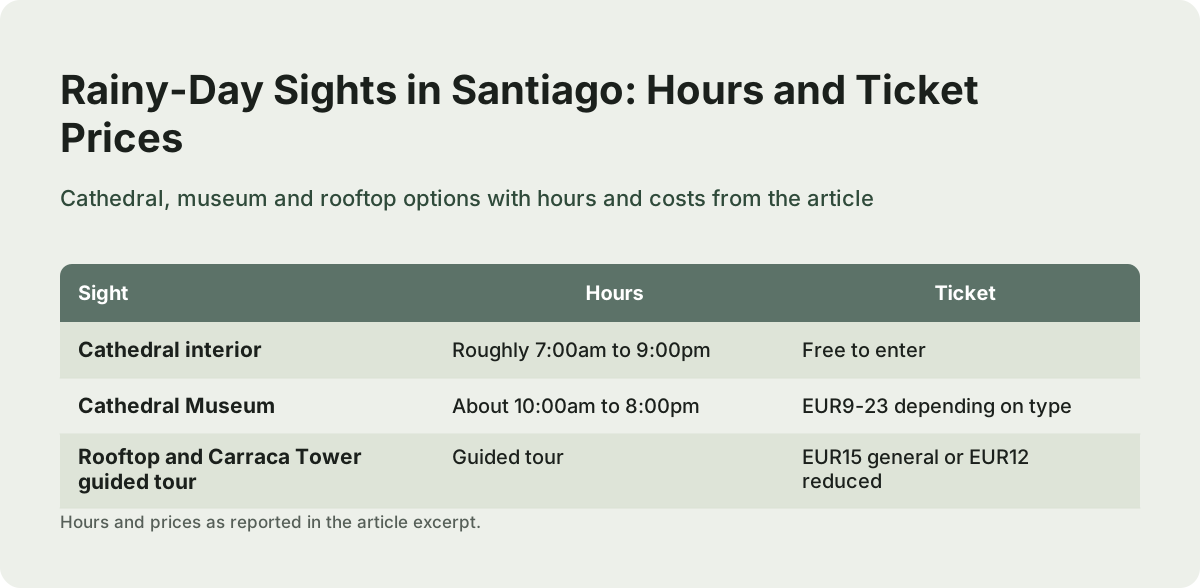
Santiago de Compostela handles rain better than almost any Spanish city its size: the Cathedral interior is free and open daily roughly 7:00am to 9:00pm, the Cathedral Museum runs about 10:00am to 8:00pm with tickets in the EUR9-23 range depending on type, the rooftop and Carraca Tower guided tour costs EUR15 general or EUR12 reduced, and the covered arcades around Praza do Obradoiro let you cross the old town partly under shelter. Rain rarely stops the program here; it just moves it indoors.
The rooftop tour deserves a note. It runs about 60 minutes, involves roughly 140 steps, and reaches about 72 metres up, per the Cathedral's own ticketing, so it is genuinely weather-dependent: book it for a clear slot and keep the museum as the wet-day fallback. Ticketing details and current options are collected in the Santiago Cathedral tickets and opening hours guide.
| Rainy-Day Option | Indoor or Covered | Cost Basis | Time Needed |
|---|---|---|---|
| Cathedral naves, altar and crypt | Indoor | Free entry | 1-2 hours |
| Cathedral Museum and Gelmirez Palace | Indoor | EUR9-23 depending on ticket type | 2-3 hours |
| Rooftop and Carraca Tower tour (best in dry windows) | Outdoor, ~60 min, ~140 steps | EUR15 general, EUR12 reduced | Book ahead |
| Old town arcades and covered streets | Covered walking | Free | 1-2 hours |
| Tapas crawl on Rua do Franco | Mostly indoor bars | Pay per dish | An evening |
The evening version of that last row is its own weather strategy. The tapas bars in Santiago de Compostela scene is built for exactly the kind of evening where moving between warm rooms with a glass of Albarino is the whole plan, and the broader where to eat in Santiago de Compostela guide maps the neighborhoods worth walking between showers.
Does The Weather Affect The Botafumeiro And Pilgrim Masses?
Indirectly, yes. The Botafumeiro does not operate daily in any case; it normally swings only on 12 fixed liturgical solemnities a year or by private request, and it is temporarily out of action right now because cimborrio restoration scaffolding covers its hanging mechanism, with no return date published.
Pilgrim masses at 7:30am, 9:30am, noon and 7:30pm continue at the High Altar until 15 October 2026, then relocate to the Church of San Agustin from 16 October 2026, with only the 7:30am mass staying in the Cathedral.
None of that is weather, but it is exactly the kind of live, dated information a weather-focused planner needs alongside the forecast, because it changes what a given day in the city can offer. The solemnity list is worth knowing for future years even now, since the suspension is temporary.
For travelers timing a visit around the liturgical calendar rather than the rain chart, the pilgrim mass and feast of St. James on 25 July guides carry the detail, and the Holy Year 2027 guide covers what the Xacobeo means for crowds and weather-adjacent planning alike.
Which Day Trips From Santiago de Compostela Depend Most On The Weather?
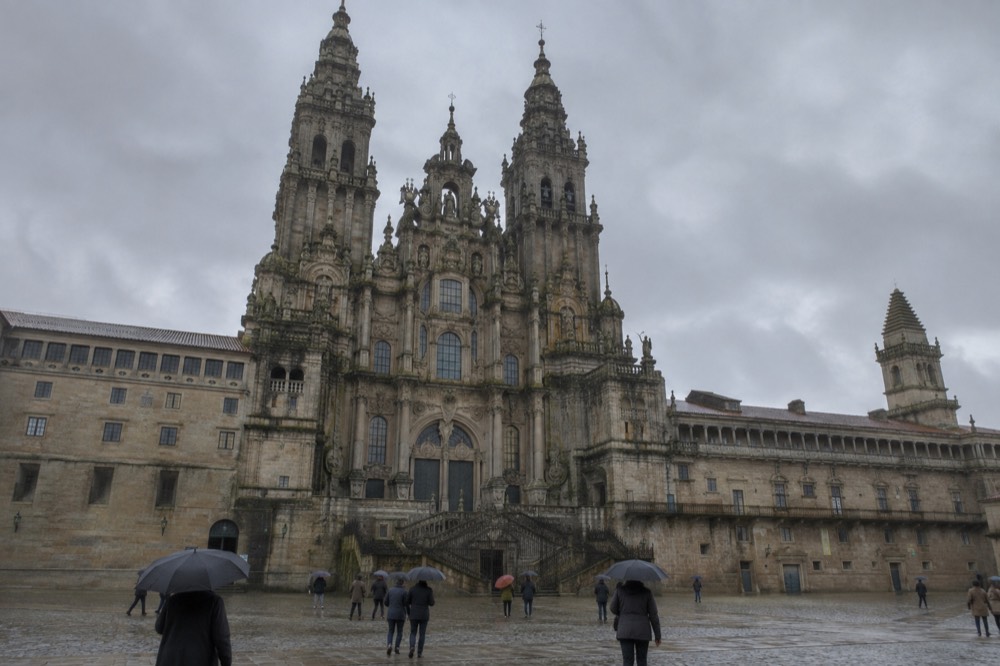
Coastal day trips depend most on the weather. The Finisterre, Muxia and Costa da Morte circuits, the Rias Baixas winery and mussel-boat trips, and the Cies Islands visit all spend significant time outdoors at cliff edges, on boats and on beaches, so a grey, wet Atlantic day degrades them far more than it degrades a city visit. Inland options such as the Ribeira Sacra canyons and the city walking tours degrade least, because their cores are views from shelter and interior spaces.
The logic is simple: the coast west and south of the city is where the same oceanic weather that wets Santiago arrives first, amplified. A Costa da Morte headland in driving rain is memorable for the wrong reasons, while the same headland in a clear July window is the highlight of a Galicia trip. Weather-appropriate picks for each destination live in the Finisterre, Rias Baixas and Costa da Morte guides.
| Day Trip Direction | Weather Sensitivity | Best Season To Book |
|---|---|---|
| Costa da Morte, Finisterre, Muxia | High, exposed cliffs and beaches | July and August, dry windows |
| Rias Baixas winery and mussel boat | High, boat portion weather-bound | Summer and early autumn |
| Cies Islands | High, beach day by definition | July and August |
| Ribeira Sacra canyons and Ourense | Medium, cruise portion exposed | Late spring through early autumn |
| Lugo and inland heritage towns | Low, mostly walls and interiors | Any season |
The fallback rule: check the forecast the evening before, keep coastal bookings for the clearest window of your stay, and hold the inland and city options for the wet days. Travelers arriving through the airport should also note that the Santiago de Compostela airport connection, currently line 6A at about 1 EUR paid to the driver as of late September 2026, with a fare change expected under a new contract later in autumn, runs in all weather but adds a rain-soaked walk at the city end, so the rain layer belongs in the carry-on, not the checked bag.
When Is The Best Time To Visit Santiago de Compostela For Weather?
For the best weather odds, visit in July or August, the two driest months, accepting peak crowds and higher accommodation demand. For the best balance, aim for late May, June or September, when rainfall is lower than the October-to-March wet season, crowds thin, and the city and surrounding hills are at their greenest. Winter visits trade weather risk for quiet streets and the most atmospheric version of the granite old town.
The honest framing is that there is no bad month, only different trade-offs. A wet October walk across Praza da Quintana with the Holy Door wall darkened by rain is, for many repeat visitors, the definitive Santiago image, more so than a blue-sky August version of the same square. The weather you get and the Santiago you remember are usually the same thing.
| Visit Priority | Recommended Window | What You Trade |
|---|---|---|
| Lowest rain risk | July and August | Biggest crowds, peak prices |
| Best overall balance | Late May, June, September | A gamble on showers |
| Quietest and cheapest | November to March | Frequent rain, cool days |
| Atmosphere and mood | October and November | Wet streets, early dusk |
Whatever the window, the city's rain-readiness means the itinerary survives. The covered arcades, the free Cathedral hours, the EUR9-23 museum range, the EUR15 rooftop tour on the dry slots, and the food scene documented in the Galician food and tarta de Santiago guides together make Santiago de Compostela one of the few Spanish cities where a forecast of rain changes the plan barely at all.
Common Questions About Santiago de Compostela Weather
Does it rain a lot in Santiago de Compostela?
Yes, by Spanish standards. AEMET's data for the city's station shows annual precipitation on the order of 1,690-1,890mm, wet and cool from October to March, with July and August the driest months. Rain is possible in any month.
What is the driest month in Santiago de Compostela?
July and August are the driest months of the year in the city's temperate oceanic climate. They are also the busiest, which is the trade-off for the lowest rain risk.
Is Santiago de Compostela cold in winter?
Cool rather than cold. The oceanic climate keeps winter temperatures mild by continental standards, but the frequent October-to-March rain makes it feel colder, so warm layers and a real rain jacket matter more than heavy insulation.
What should I pack for Santiago de Compostela weather?
A waterproof hooded jacket, shoes with grip for wet granite, a warm mid-layer for cool evenings even in summer, and a packable umbrella for city wandering. The Camino packing list covers the walker's version in full.
Does the rain stop the Botafumeiro?
The Botafumeiro does not operate daily in any case, and it is temporarily out of action right now due to cimborrio restoration scaffolding, with no return date published. It normally swings only on 12 fixed solemnities a year or by private request.
When is the best time to visit Santiago de Compostela?
July and August for the lowest rain risk, late May, June or September for the best balance of weather and crowds, and November to March for quiet streets and the most atmospheric old town.