Sarria To Santiago de Compostela
The Sarria to Santiago de Compostela walk is the busiest stretch of the entire Camino de Santiago, because it is the shortest route that still qualifies a walker for the official Compostela certificate. Here is how the stages work, what the Pilgrim's Office requires, and what has changed in the city for 2026 and 2027.
Short answer
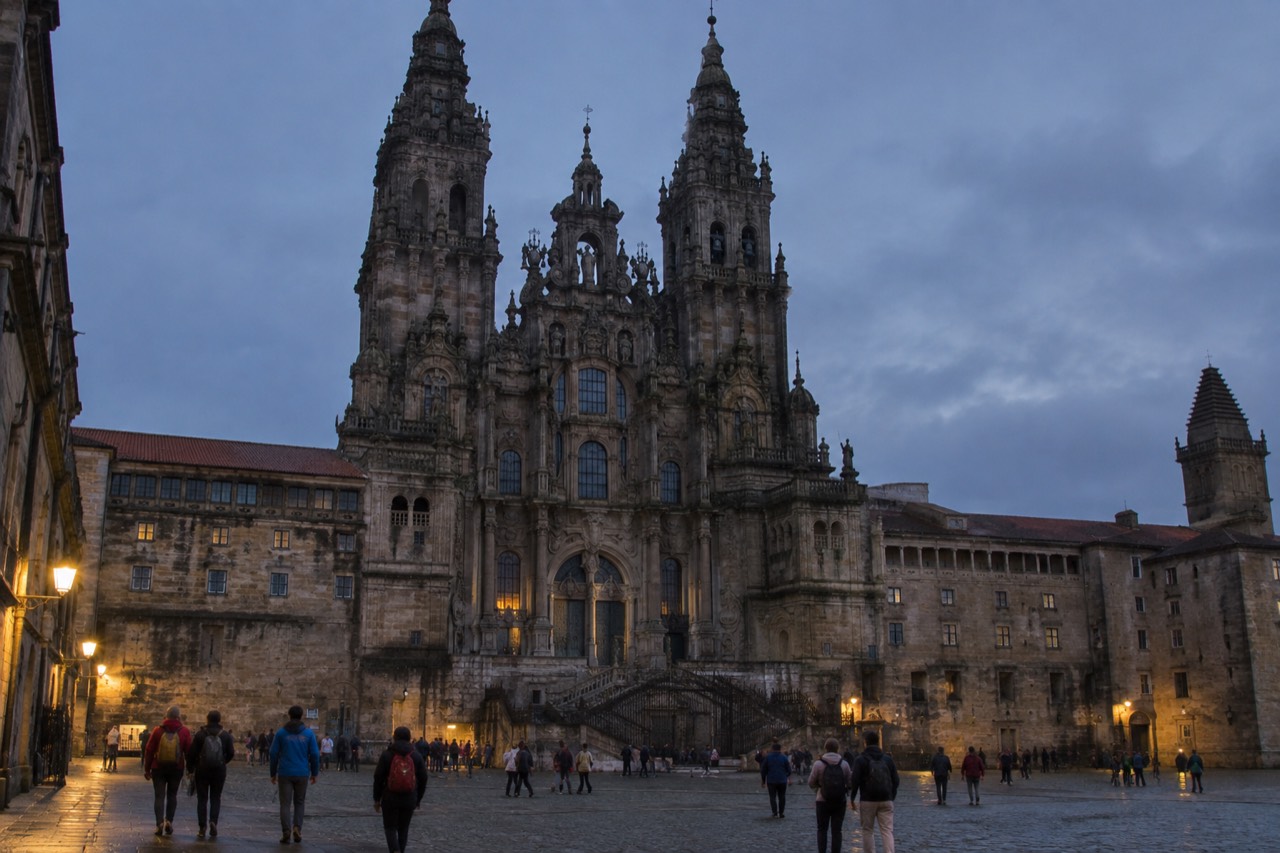
Sarria is the most popular starting point on the Camino de Santiago because it sits just inside the 100km minimum distance the Pilgrim's Office requires for the Compostela certificate on foot. Walkers typically spread the route over five or six days, collect two stamps a day, and finish at the Cathedral in Santiago de Compostela.
Sarria, a small town in the interior of Galicia, is where the Camino de Santiago becomes a crowd. The Pilgrim's Office requires a pilgrim to walk at least the final 100km of a recognized route to earn the Compostela certificate, and Sarria sits just inside that line on the Camino Frances, which is why more people start there than anywhere else on any route. The Oficina del Peregrino's own figures point the same way: 530,987 Compostelas were issued in 2025, a record year, and the Sarria stretch carries the largest single share of that traffic. This guide lays out the stages, the certificate rules, the practicalities of beds and food, and what awaits at the end in Santiago de Compostela itself, including the changes that take effect in the city in late 2026.
Why Does Everyone Start The Camino In Sarria?
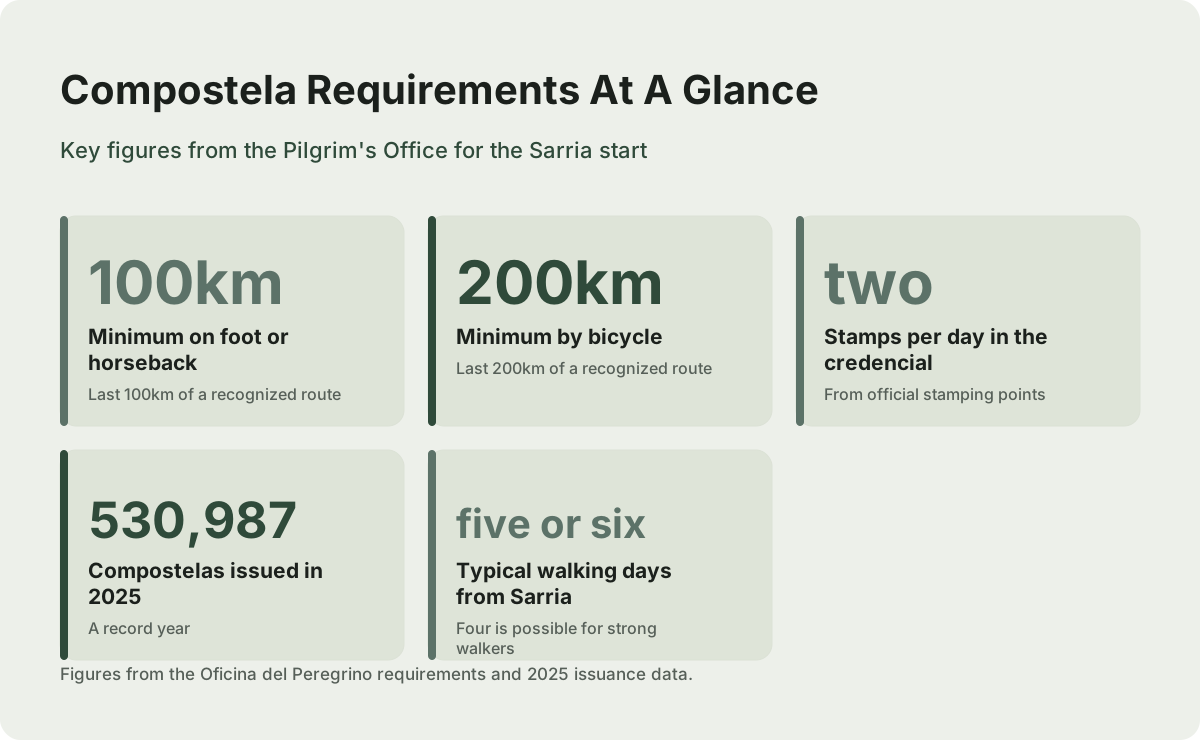
Sarria is the busiest starting point on the whole Camino de Santiago because it sits just inside the 100km minimum that the Oficina del Peregrino requires before a walker on foot can receive the Compostela certificate. The office's FAQs are explicit: the last 100km must be covered on foot or horseback, or the last 200km by bicycle, on a recognized route, continuously. Starting at Sarria satisfies that rule in the shortest possible number of walking days, which is why the town fills with pilgrims every morning of the season.
The logic is blunt but sound. A walker who begins in Sarria collects the qualifying distance without committing to a month on the road, which opens the Camino to people with one week of holiday. The trade-off is density: the Sarria stretch carries far more traffic than the meseta sections further east, and in July the path can feel like a moving village rather than a solitary trail. The full Camino de Santiago is a different experience from this final slice, and walkers who enjoy the Sarria week often come back to do a longer route such as those compared in the Camino routes overview.
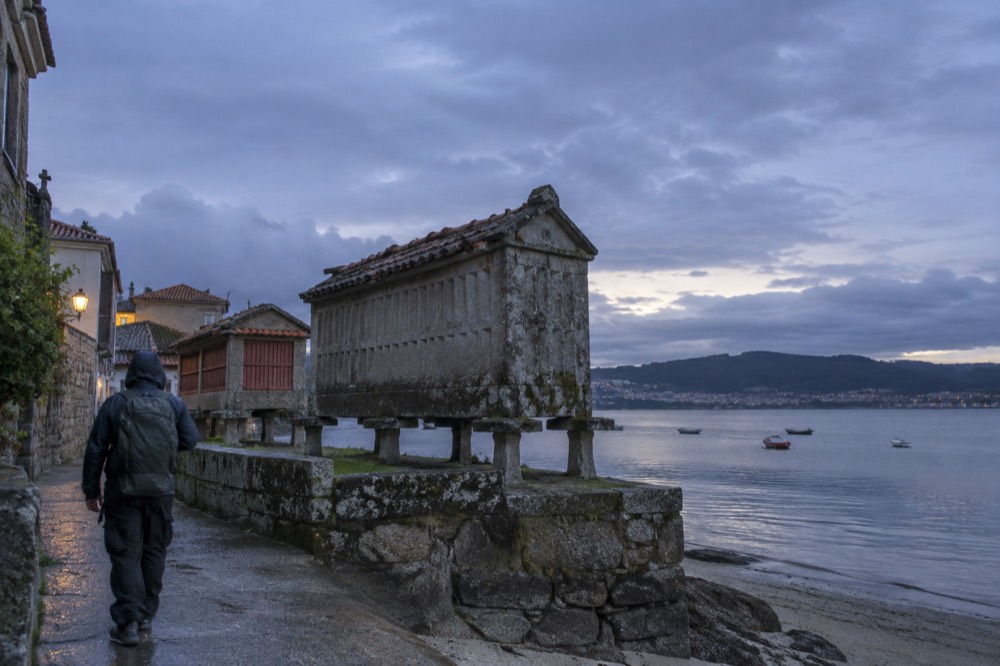
There is a second, quieter reason. Galicia's interior is beautiful in a low, green, stone-walled way, and the Sarria stretch distills it: oak and eucalyptus lanes, hamlets of a dozen houses, horreos raised on granite mushrooms, and rivers crossed on old stone bridges. The walking is not severe. If you want a sense of how demanding the days actually are, the dedicated difficulty of the Sarria to Santiago walk page breaks the terrain down day by day.
The baseline facts for the certificate are worth setting out in one place, because they are the rules every Sarria walker is implicitly signing up to:
| Requirement | What The Pilgrim's Office Says |
|---|---|
| Minimum distance on foot or horseback | Last 100km of a recognized route |
| Minimum distance by bicycle | Last 200km of a recognized route |
| Stamps on the credencial | At least two per day from official stamping points |
| Where the Compostela is issued | In person only, Rua das Carretas 33, Santiago de Compostela |
| Compostelas issued in 2025 | 530,987, a record year |
How Far Is Sarria From Santiago de Compostela, And How Many Days Does The Walk Take?
Sarria sits roughly 100km from Santiago de Compostela, which is precisely the distance the Pilgrim's Office requires for the Compostela, and most walkers plan the route as five or six walking days with a night in each stage town. Some complete it in four long days, others stretch to seven, but the underlying geometry is fixed: start inside the 100km line, finish at the Cathedral, and collect two stamps a day in between. The stage towns between Sarria and the city are where the week takes its shape.
The traditional overnight stops are well established on the ground, and walkers rarely invent their own, because beds in the small towns sell out first. The week runs through Portomarin, Palas de Rei, Arzua and O Pedrouzo before the final half-day into the city, and each town lives almost entirely off pilgrim traffic. A typical shape looks like this:
| Walking Day | Overnight Stop | Character Of The Day |
|---|---|---|
| Day 1 | Sarria to Portomarin | Farmland and oak lanes, then a reservoir crossing into the rebuilt town |
| Day 2 | Portomarin to Palas de Rei | Rolling hills, chestnut groves and the busiest cafés on the route |
| Day 3 | Palas de Rei to Arzua | Eucalyptus forest and long quiet sections |
| Day 4 | Arzua to O Pedrouzo | Cheese country, gentle walking, the calm before the city |
| Day 5 or 5-6 | O Pedrouzo to Santiago de Compostela | Villages thin out, then the suburbs and finally Praza do Obradoiro |
The two-stamps-a-day rule shapes the day more than most first-timers expect. The pilgrim passport, the credencial, has to be stamped in Sarria before you leave and then twice daily, and cafés, albergues and churches along the Sarria stretch all keep stamps for exactly this purpose. Walkers who collect only one stamp on a short day risk a gap in the record that the Pilgrim's Office can question when the certificate is issued at Rua das Carretas 33.
For planning purposes, five or six days is the honest range. Four is possible for strong walkers and unpleasant in summer heat. Seven gives you rest mornings, and many people take one in Arzua, the last town of any size before the city. If you are coming from the capital first, the Madrid to Santiago de Compostela train guide covers the roughly 3-4 hour high-speed ride that ends a short local connection away from Sarria itself.
Once the walk is behind you, the part of the trip most people under-plan is the city itself. These are the three tours that fit an arrival in Santiago de Compostela best, from the cathedral visit that explains the endpoint to the day trip that extends the week:
What Do You Need For The Compostela Certificate?
The Compostela requires the last 100km walked on foot or horseback, or the last 200km cycled, on a recognized route and without gaps, with at least two stamps per day in the credencial from official stamping points. It is issued in person only at the Pilgrim's Office at Rua das Carretas 33 in Santiago de Compostela, which closes on 25 December and 1 January and otherwise opens roughly from mid-morning until early evening depending on season.
The word "continuous" is the one that catches people. The Oficina del Peregrino's FAQs treat the qualifying stretch as a single unbroken walk, so a bus or taxi ride inside the final 100km breaks the chain. Rest days are fine, and walking the section in either direction order is not, the route has to be covered start to finish. Walkers who begin at Sarria on the Camino Frances are on the most heavily stamped route in the world, which makes compliance almost automatic: every bar in every hamlet between Sarria and the city has a stamp, and most will ask to see your credencial before you ask them.
The office itself is a five-minute walk from the Cathedral, and in high season the queue for a Compostela can take longer than the queue for the pilgrim mass. Go in the afternoon of your arrival day or the following morning, not in the first hour after walkers flood in. The certificate is free in the sense that nobody sells it, though the office accepts donations, and the document itself is a Latin text confirming you completed the pilgrimage "devotionis causa".
A practical table of what the office checks, in the order it checks it:
| Check | Detail To Have Ready |
|---|---|
| Credencial | Stamped in Sarria and twice daily along the route |
| Start point | Recorded as inside the qualifying 100km |
| Dates | Consistent with the stamps, with no unexplained gaps |
| Identity | Passport or ID card for the certificate |
| Collection | In person only, no postal option stated by the office |
Where Do You Sleep Between Sarria And Santiago de Compostela?
Beds between Sarria and Santiago de Compostela split into three kinds: public albergues with bunks priced for pilgrims, private albergues that take bookings in advance, and small hotels and casas rurales in the stage towns. Public albergues run on a first-arrival basis and open their doors in the early afternoon, while private ones fill by reservation first. In the busiest weeks the week is won or lost at the booking stage, not at the door.
The etiquette and the systems behind these three bed types are covered in detail in the Camino accommodation and albergues guide. The single most useful thing to know about the Sarria stretch specifically is that its bed supply is shaped by the five-day structure of the walk. Portomarin, Palas de Rei, Arzua and O Pedrouzo all size their accommodation to the standard stage ends, so a walker who stops short or long of a stage town sometimes finds the next village nearly empty of beds. In July and August, and in the last week of May when school groups walk, booking the private beds in advance is the difference between sleeping in a town and pushing on.
Once you reach the city, the picture changes completely. Santiago de Compostela has a full urban hotel stock, and the where to stay in Santiago de Compostela guide maps the districts, from the old-town paradores to the modern belt near the station. Arriving walkers traditionally want to be inside the old town, because the point of the last morning is to walk the final few hundred metres into Praza do Obradoiro without a commute.
A planning comparison of the three bed types as they actually operate on the Sarria stretch:
| Bed Type | How You Get It | What To Expect |
|---|---|---|
| Public albergue | First come, first served, doors open early afternoon | Bunk rooms, a set lights-out, one night maximum in most places |
| Private albergue | Bookable in advance, often online | Similar bunks, but a bed guaranteed before you start walking |
| Casa rural or hotel | Reservation, any season | Private rooms, more rest, the same stage towns |
Food needs less planning. Every stage town has pilgrim menus at lunch and dinner, and the region's staples, pulpo a la gallega, padron peppers, empanada and tarta de Santiago, appear on nearly every menu along the route. For the arrival end of the trip, the where to eat in Santiago de Compostela guide goes deeper into the old town's dining than a walking week allows.
When Is The Best Time Of Year To Walk From Sarria To Santiago de Compostela?
The best months for the Sarria to Santiago de Compostela walk are May, June and September, when the weather is settled enough for walking without the peak crowds, while July and August are the driest but by far the busiest, and October through March is wet and cool. AEMET's climate data for the Santiago station shows a temperate oceanic pattern, wet year-round, wetter from October to March, driest in July and August, with annual precipitation on the order of 1,690-1,890mm depending on the station and year.
That rainfall figure deserves a pause. Santiago de Compostela sits in one of the wettest corners of Europe, and the same greenery that makes the Sarria lanes beautiful is fed by rain that arrives on no schedule. Even in the driest weeks of summer, a rain layer lives at the bottom of every pack. The full Santiago de Compostela weather guide covers the pattern in depth, and the best-time question weighs the seasons against crowd levels across the whole year.
For the walk itself, the trade-offs are straightforward:
| Season | Weather Pattern | Crowd Level |
|---|---|---|
| May to June | Mild, showers possible, green at its fullest | Busy, rising toward July |
| July to August | Driest months of the year per AEMET data | The heaviest walking traffic of the year |
| September | Cooling, still mostly settled | High, easing late in the month |
| October to March | Wet and cool, the wettest part of the year | Thin, many albergues cut hours or close |
One dated note belongs here. The Holy Year cycle matters to crowd planning: 2027 is the next Xacobeo, not 2026, with the Holy Door opening on 31 December 2026 and the Holy Year running through 31 December 2027. A walker planning a Sarria start for 2027 should expect the busiest year on this stretch in a decade, and the Holy Year 2027 page explains what that means in practice.
What Do You Do When You Arrive In Santiago de Compostela?
Arrival day runs to a well-worn script: walk into Praza do Obradoiro, go to the Pilgrim's Office at Rua das Carretas 33 for the Compostela, attend the pilgrim mass, and visit the Apostle's tomb in the Cathedral, whose interior opens daily roughly 7:00am to 9:00pm with free general entry.
Until 15 October 2026 the masses are at the main altar; from 16 October 2026 three of the four daily times move to the nearby Church of San Agustin, so check which arrangement is in force for your dates. Everything else covered here is indexed on Santiago de Compostela Travel Guide.
Until 15 October 2026 the pilgrim mass is held at the Cathedral's main altar at 7:30am, 9:30am, noon and 7:30pm daily, per the Cathedral's own liturgy page. From 16 October 2026, because of main chapel remodelling works preparing for the 2027 Holy Year, three of the four daily masses move to San Agustin, and only the 7:30am mass stays in the Cathedral's own Communion chapel. The pilgrim mass guide keeps the full picture, and any walker arriving in late 2026 or 2027 needs the new arrangement in mind when planning the day.
The mass table, dated, as the two arrangements actually stand:
| Mass Time | Until 15 October 2026 | From 16 October 2026 |
|---|---|---|
| 7:30am | Cathedral, main altar | Cathedral, Communion chapel |
| 9:30am | Cathedral, main altar | Church of San Agustin |
| 12:00 noon | Cathedral, main altar | Church of San Agustin |
| 7:30pm | Cathedral, main altar | Church of San Agustin |
One thing no arrival guide should currently promise: the Botafumeiro. The giant censer is out of action while scaffolding for the cimborrio restoration covers its hanging mechanism, the Cathedral confirmed this in writing on 5 September 2026, and no return date has been published. It normally swings on 12 fixed liturgical solemnities a year, but for now that schedule is suspended, and no visitor should build a day around seeing it.
The Cathedral's paid offerings are unaffected by the works, and they are the best-structured way to spend the arrival afternoon:
| Visit | Details | Price |
|---|---|---|
| Cathedral interior | Naves, high altar and crypt, daily roughly 7:00am-9:00pm | Free |
| Cathedral Museum | Permanent collection and Gelmirez Palace, daily roughly 10:00am-8:00pm | EUR9-23 depending on ticket type |
| Rooftops and Carraca Tower | Guided, about 60 minutes, some 140 steps, views from roughly 72m | EUR15 general, EUR12 reduced |
The Santiago Cathedral tickets and opening hours page carries the full breakdown, and the rooftop slots sell out first in high season, so they are the one Cathedral item worth booking before you leave Sarria. A guided visit that bundles the Cathedral, its museum and the old town saves the queueing and puts the week you just walked into context, and it is the tour most arriving pilgrims end up wishing they had booked:
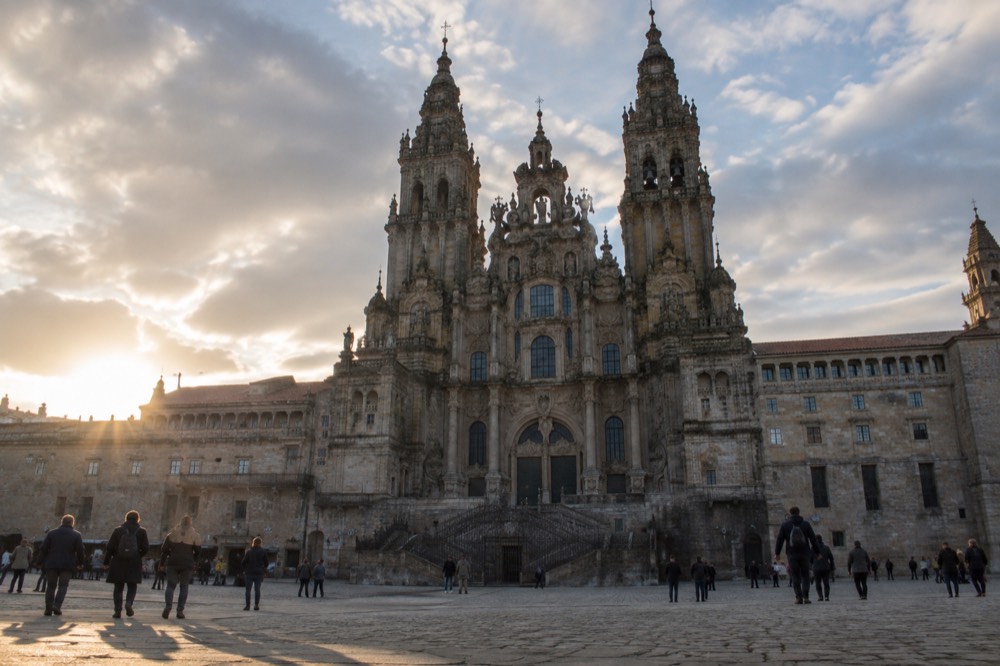
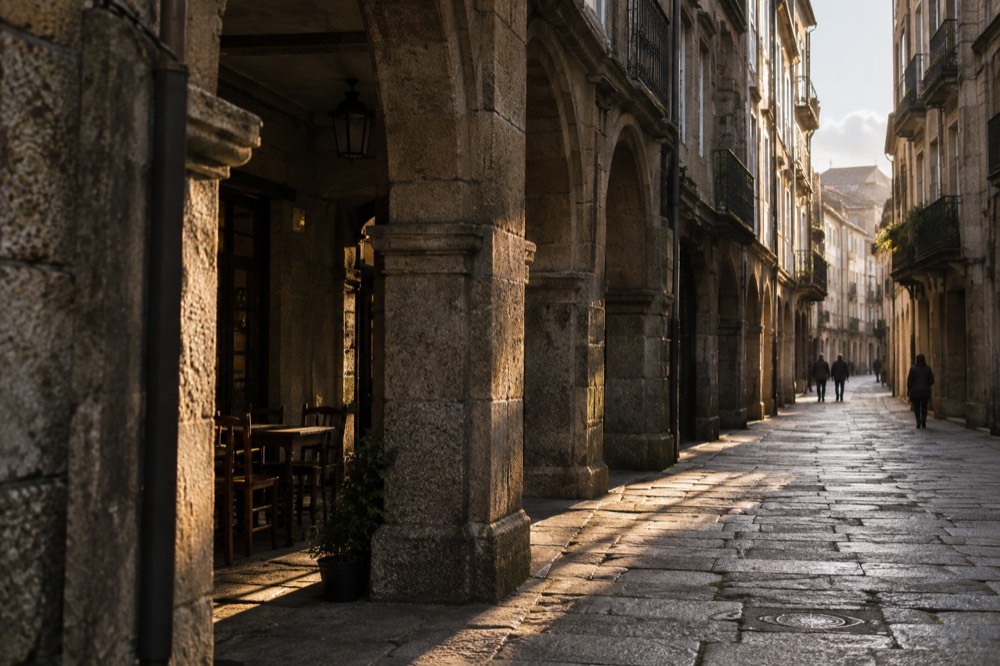
The old town around the Cathedral rewards an unhurried afternoon, and a walk led by an official guide is the most efficient way to read it. The stones of Santiago de Compostela have carried pilgrim traffic since the Middle Ages, and the Old Town has held UNESCO World Heritage status since 1985, a separate listing from the 1993 inscription of the Camino routes themselves. A guided historic walk with an official guide covers that layered ground in a couple of hours:
Should You Add Finisterre Or Muxia After Reaching Santiago de Compostela?
Many pilgrims extend the trip beyond Santiago de Compostela with a day trip west to Fisterra, long called the end of the world, and to Muxia on the Costa da Morte, and the full-day tours from the city cover both coastlines in one loop. Historically some walkers continued on foot for several more days to the sea, a tradition that lives on as the Camino Finisterre, but the modern version is usually a bus day trip from the city the morning after arrival.
The logic of the extension is old. Medieval pilgrims who had crossed a continent sometimes walked on to the Atlantic at Fisterra, where a lighthouse stands on cliffs above the ocean, and Muxia holds its own sanctuary legend tied to a stone boat. The full-day excursions from Santiago de Compostela stop at Fisterra, Muxia and points along the Costa da Morte, and they leave the logistics to someone else, which suits a body that has just walked a hundred kilometres.
The two natural options are a full-day Finisterre, Muxia and Costa da Morte loop, which suits a proper rest day with the coast included, or a half-day express version hitting just the two headline stops and returning by early afternoon, which fits a tight schedule or an evening train out of the city. For walkers with a late-afternoon departure from Santiago de Compostela, the express version fits the gap:
Common Questions About Walking From Sarria To Santiago de Compostela
How far is Sarria from Santiago de Compostela?
Sarria sits roughly 100km from Santiago de Compostela, just inside the minimum distance the Pilgrim's Office requires before a walker on foot can receive the Compostela certificate, which is exactly why it is the busiest starting point on the entire Camino de Santiago.
How many days does the Sarria to Santiago de Compostela walk take?
Most walkers plan five or six walking days between Sarria and Santiago de Compostela, with nights in the stage towns of Portomarin, Palas de Rei, Arzua and O Pedrouzo. Strong walkers compress it into four days, and a gentler plan stretches it to seven with a rest morning in Arzua.
Where do I collect my Compostela in Santiago de Compostela?
The Compostela is issued in person only at the Pilgrim's Office at Rua das Carretas 33 in Santiago de Compostela, a short walk from the Cathedral. Bring your stamped credencial, with two stamps per day recorded along the final 100km, and a passport or ID card.
What time is the pilgrim mass in Santiago de Compostela?
Until 15 October 2026 the pilgrim masses are held at the Cathedral's main altar at 7:30am, 9:30am, noon and 7:30pm. From 16 October 2026 the 9:30am, noon and 7:30pm masses relocate to the nearby Church of San Agustin, while the 7:30am mass stays in the Cathedral's Communion chapel.
Is the Botafumeiro swinging right now?
No. The Botafumeiro is currently out of action because scaffolding for the cimborrio, the Cathedral's dome, restoration covers its hanging mechanism. The Cathedral confirmed this in writing on 5 September 2026 and has published no return date, so no visit should be planned around seeing it swing.
When is the next Holy Year in Santiago de Compostela?
The next Holy Year, the Xacobeo of 2027, opens when the Holy Door is opened on 31 December 2026 and runs through 31 December 2027. 2026 is not a Holy Year, and a Sarria start in 2027 should expect the heaviest traffic this stretch has seen in years.
What Should You Not Miss In The City Itself After The Walk?
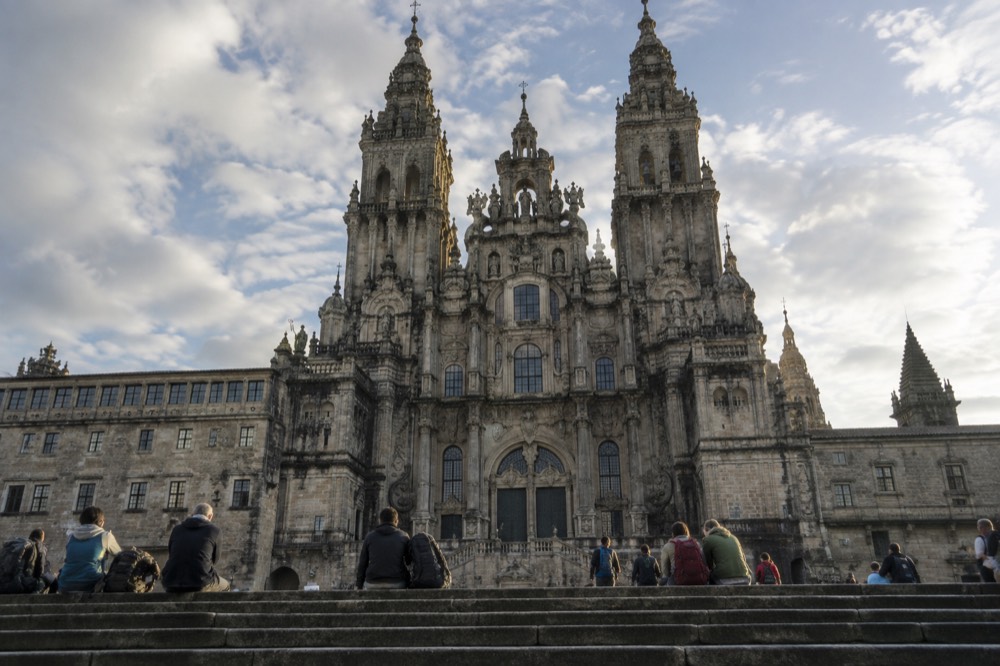
The old town of Santiago de Compostela deserves at least a full day beyond the arrival ritual: the Cathedral rooftop view from roughly 72 metres above Praza do Obradoiro, the Gelmirez Palace inside the museum complex, the Alameda park viewpoint where the Cathedral's whole skyline is framed, and the food streets around Rua do Franco. The UNESCO-listed Old Town is compact enough to cover on foot in a day, and every one of these sits within a ten-minute walk of the pilgrim office.
Start high. The rooftop and Carraca Tower tour runs about 60 minutes, climbs some 140 steps, and shows the city from a height almost nobody associates with a walking pilgrimage. The reduced EUR12 rate applies to accredited pilgrims among others, which makes it the one Cathedral ticket that quietly acknowledges the week you just finished.
Then go low and slow. The Alameda park's viewpoint is the classic postcard angle on the Cathedral's towers, and the walk out to it takes minutes. If your legs still work, the city's arrival traditions page collects the small rituals, from hugging the medieval Apostle figure behind the altar to descending to the tomb in the crypt, in the order most pilgrims do them. And if the calendar cooperates, the Feast of St. James on 25 July transforms the whole city, mass and procession, fireworks and concerts, though it also brings the year's biggest crowds to a stretch of path that already carries the most pilgrims anywhere.
These three picks cover the arrival weekend in the city, from the Cathedral itself to the coast beyond it:
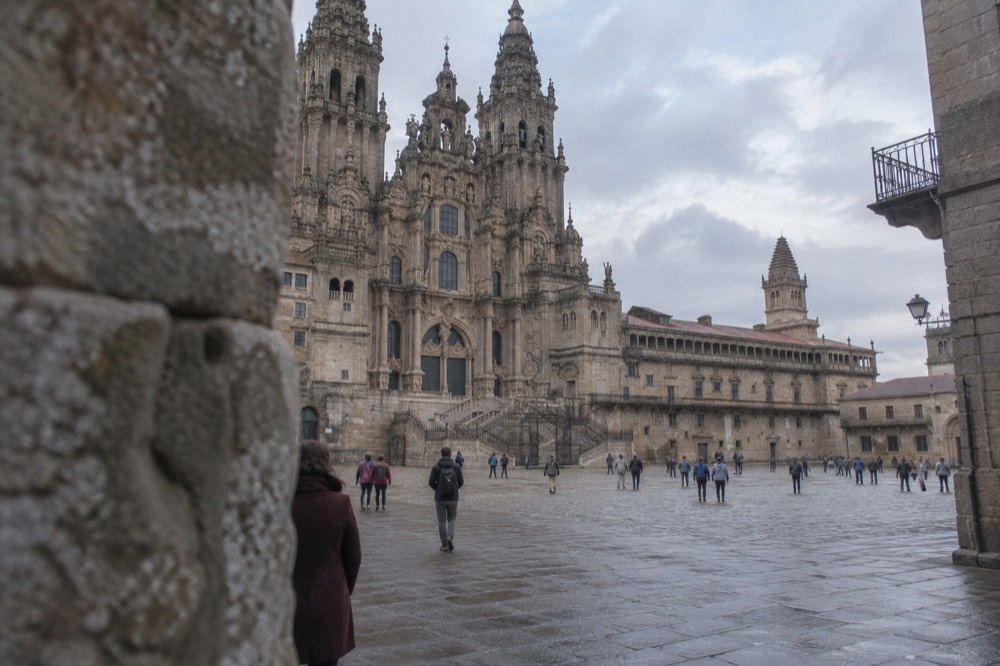
A week from Sarria to Santiago de Compostela is the shortest walk that still counts as a pilgrimage in the eyes of the office that invented the paperwork, and it ends, every single time, in the same square, under the same towers, in front of the same door that opens for the 2027 Holy Year on 31 December 2026. Walk it in May or September, book the busy beds ahead, stamp the credencial twice a day, and the city will do the rest.